REVIEW · 3-HOUR EXPERIENCES
Rome: 3-hour guided city tour by electric golf cart
Book on GetYourGuide →Operated by Experiences Of Rome · Bookable on GetYourGuide
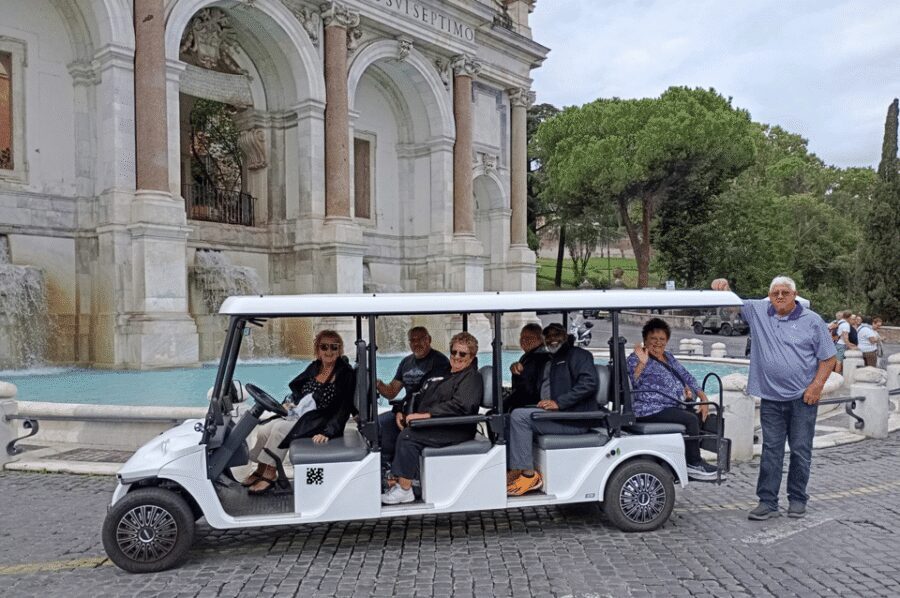
Rome looks different at golf-cart speed. An electric golf cart keeps you gliding through Rome with less stress, and it gives 360-degree views for easy photos of the Colosseum, Trevi Fountain, and the lookout terraces above the city.
My favorite part is how the guide turns famous stops into something you actually understand, not just photograph. Andrea (yes, that’s the name I’m hearing over and over) brings a friendly, practical feel, and he’s even known to help guests get as close as possible—especially helpful if you’re traveling with mobility needs. The one thing to watch: each stop is timed, so you won’t have hours at any single monument.
In This Review
- Key highlights worth planning for
- Why an electric golf cart is the smart Rome move
- Start at Piazza della Repubblica: the route makes sense fast
- Pincio Terrace and Piazza del Popolo: the best early “wow” photos
- Piazza di Spagna to Trevi Fountain: quick icons without losing your whole day
- Pantheon and Vatican City photo stops: big scenes, no long detours
- Janiculum Hill and the terrace-to-neighborhood shift
- Trastevere, Aventine Hill, and Circus Maximus: Rome beyond the main loop
- Colosseum Arena Floor stop: the final big moment
- Guide stories and smart photo stops: why it feels worth it
- Price and value: what $135.94 buys you
- Who this Rome electric golf cart tour fits best
- Should you book this Rome electric golf cart tour?
- FAQ
- FAQ
- How long is the Rome golf cart tour?
- Where does the tour start?
- How big is the group?
- What language is the guide?
- Is the tour private?
- What kind of transportation is used?
- What stops and sights are included?
- Are there breaks for food or coffee?
- Is the tour wheelchair accessible?
- What does the price include?
- Is free cancellation available?
Key highlights worth planning for
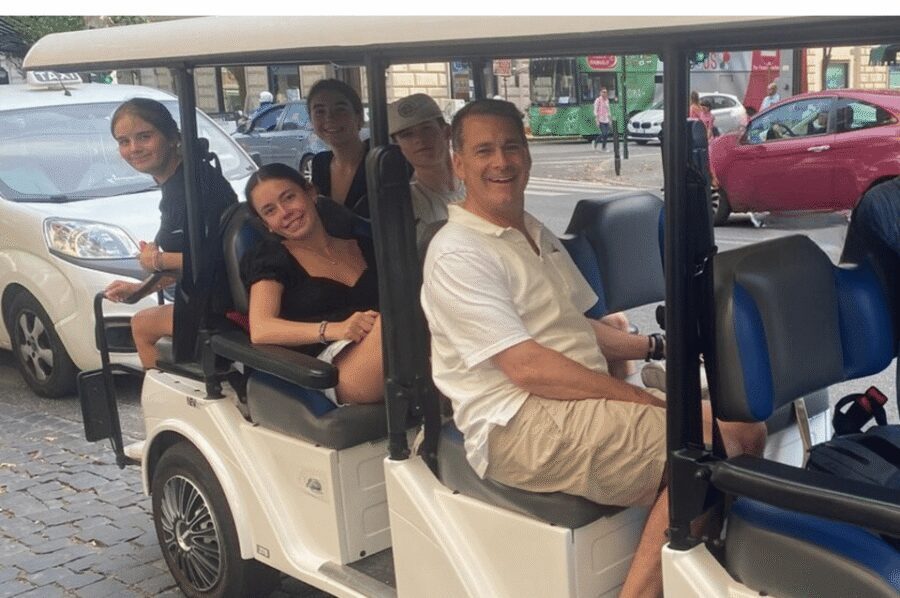
- Small group (up to 7) means you can hear stories and still move at a comfortable pace.
- Photo-first pacing includes planned stops at big icons plus extra photo breaks for your camera and phone.
- Terraces and viewpoints like Pincio and Janiculum help you see Rome from above without a long hike.
- Electric cart + restricted-traffic access helps you reach places without fighting the usual city constraints.
- Trastevere time with food breaks gives you a real neighborhood moment, not only sightseeing photos.
- Andrea-style guide energy makes the route feel like a guided story, not a checklist.
Why an electric golf cart is the smart Rome move
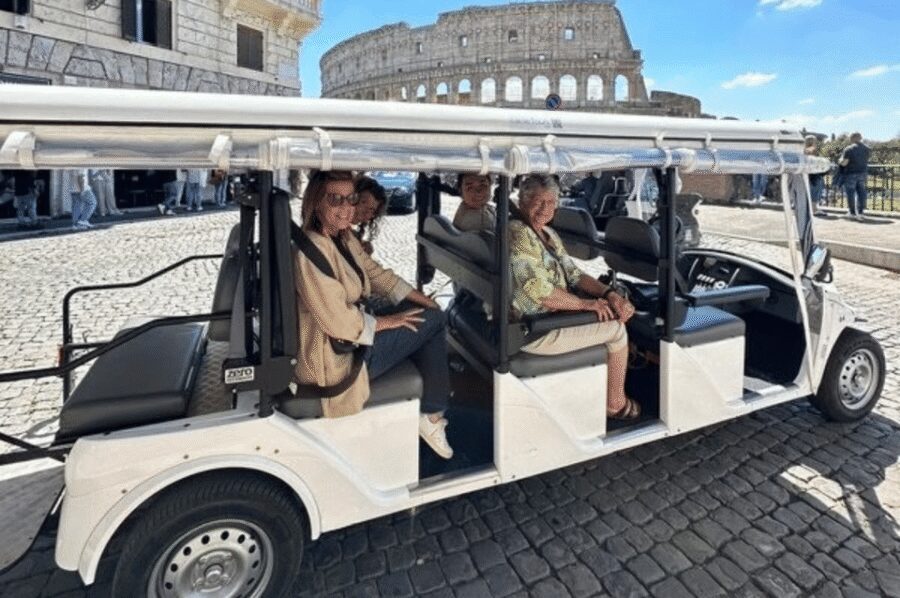
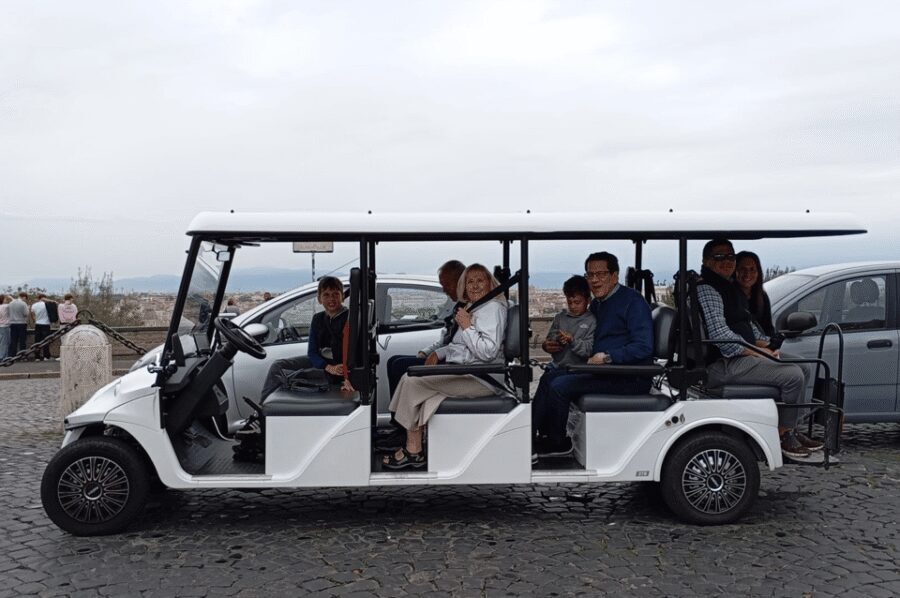
Rome is gorgeous, but it can be tiring. This tour solves that by doing the heavy lifting for you: you ride in a comfortable electric golf cart while a guide shares what matters as you go. The car is quiet, so conversation feels easy, and the ride keeps your day from turning into a nonstop sidewalk sprint.
You also get a 360-degree view from the cart, which is a big deal at Rome’s viewpoints. From Pincio Terrace or Janiculum Hill, you can actually frame the city without needing to stand awkwardly in a crowd for your turn. And from iconic piazzas, you can line up photos without spending your whole energy weaving through throngs.
The value question is simple: you’re paying to save time and walking, while still getting the story and photo opportunities. If you only have 2 or 3 days in town, this format is a great way to build your bearings fast—and learn what you’ll want to revisit more slowly later.
You can also read our reviews of more guided tours in Rome



Start at Piazza della Repubblica: the route makes sense fast
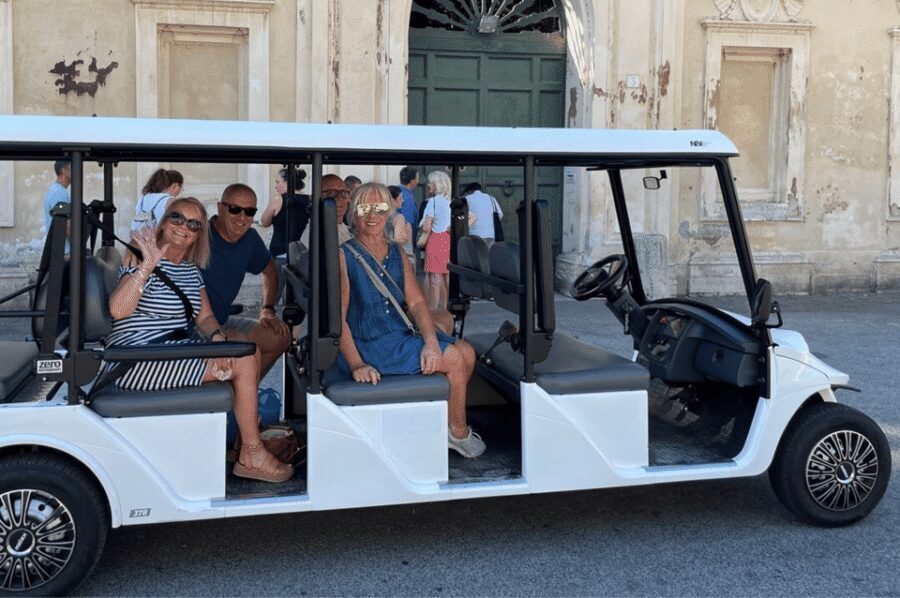
The tour begins near the Repubblica Metro stop, in front of the Hotel Anantara Palazzo Naiadi, and it uses Piazza della Repubblica as its starting point. That matters because Repubblica is a convenient “hub” for getting moving through central Rome without starting in the thickest crush right away.
From the start, you’ll settle into the rhythm: drive a few minutes, stop for photos, move again, then stop again. Those short cart segments sound quick on paper, but in practice they help you cover a lot without the fatigue that comes from walking block after block.
You’ll also get a kind of mental map as you go. This route strings together Rome’s most recognizable scenes—viewpoints, piazzas, fountains, and big landmarks—and it does it in an order that feels logical. Even if you later tour the Colosseum or Vatican museums on your own, you’ll remember how the neighborhoods connect.
Pincio Terrace and Piazza del Popolo: the best early “wow” photos
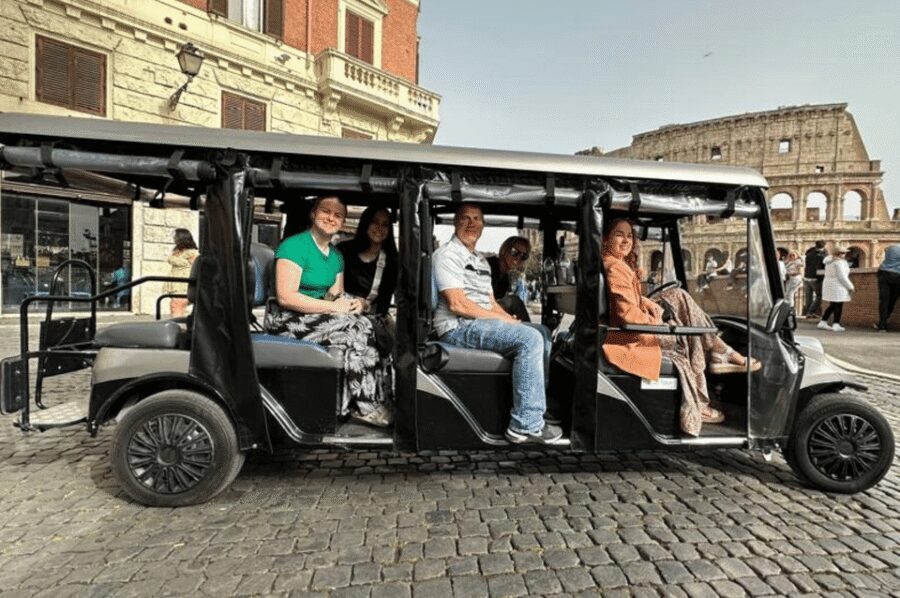
Your first real photo-and-view moment is Pincio Terrace. This is where Rome starts showing off: you look out across rooftops and toward the city’s landmarks, and you get that classic elevated angle that postcards always promise. The stop is short, so treat it like a quick setup: take your hero shot, then grab a second angle before you rush to the next piazza.
Right after, you pass through Piazza del Popolo for a photo stop and a brief visit. Popolo is a wide, dramatic square, and it’s one of those places that makes Rome feel theatrical. It also helps you understand how the city’s “main stages” connect—because once you’ve stood here (even briefly), you’ll recognize the geometry of the area later when you explore on foot.
The trade-off with all of these quick stops is obvious: you won’t have time for long walks or extended sightseeing. But the payoff is you’re getting the view and the orientation without burning your energy.
Piazza di Spagna to Trevi Fountain: quick icons without losing your whole day
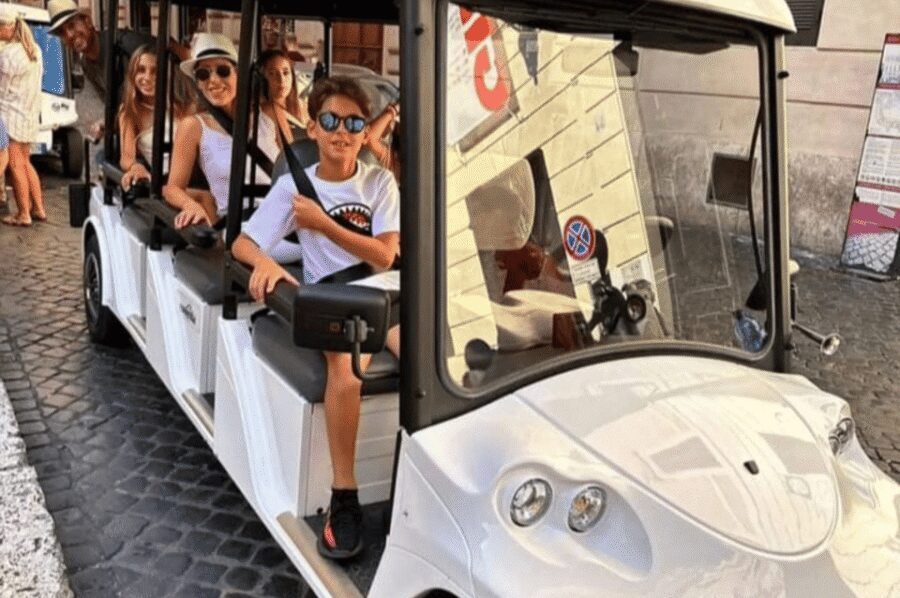
Next comes Piazza di Spagna—another short photo stop with a bit of time to look around. This area is famous for its steps and lively central placement, and it’s usually busy. Riding up and stopping here by cart helps you avoid some of the worst sidewalk congestion while still letting you see what all the fuss is about.
Then you hit Trevi Fountain, one of the most photographed spots on earth. Here’s the practical expectation: Trevi is always a mix of tourists and photographers, and time matters. You’ll get a focused photo stop so you can capture it with less wandering than you’d do solo. If you travel on an evening or special slot, you might get even better lighting—but also keep in mind that fountains can be closed for cleaning at times of year. If you’re unlucky with timing, you’ll still see the area and the vibe, just don’t assume perfect conditions every day.
One smart way to use your limited time: take photos from more than one angle. The cart pacing helps because you can reposition quickly, instead of spending 20 minutes stuck waiting for your turn.
Pantheon and Vatican City photo stops: big scenes, no long detours
After Trevi, you’ll move to the Pantheon for a photo stop and brief visit. Even if you’re planning to come back for a full visit later, seeing it from the right approach on a timed stop gives you context. The Pantheon’s proportions and the way it sits in the street layout can feel different once you’ve seen it from outside first.
Then the route includes a Vatican City photo stop. This is another “see it, photograph it, and understand it” moment rather than a long museum day. You’re there to connect the neighborhoods and recognize what’s where, not to replace a dedicated Vatican visit.
You’ll also benefit from the way the cart handles the logistics. Getting around central Rome on foot can turn into an endurance test. By keeping you in motion and using access points that cut through restricted traffic areas, you spend your time on views and viewpoints instead of detours.
You can also read our reviews of more city tours in Rome

Janiculum Hill and the terrace-to-neighborhood shift
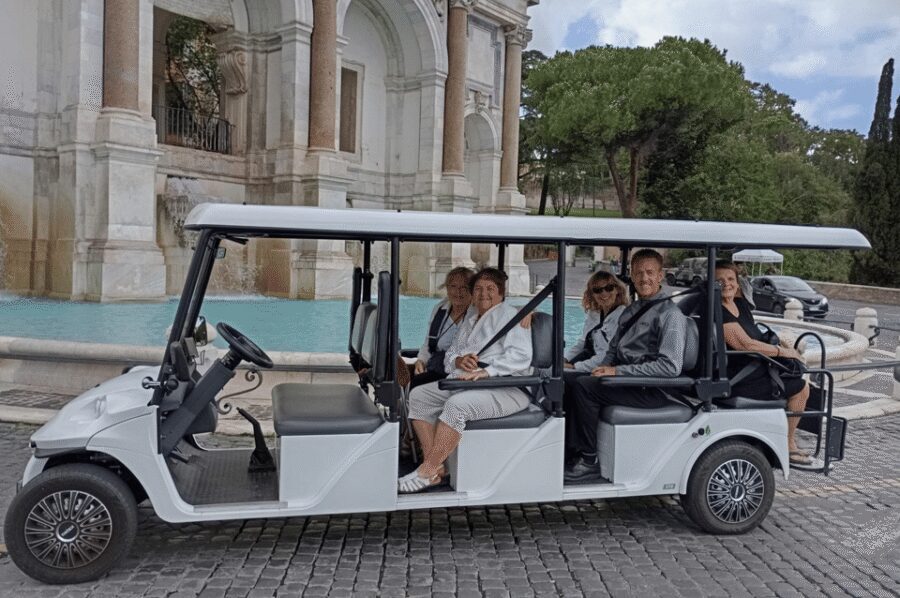
One of the standouts on this route is Janiculum Hill, reached for a photo stop and visit. Janiculum is a place where you’ll feel the scale of Rome—especially if you’re seeing it for the first time. Even with a short stop, the elevated position gives you a different perspective from street level.
This hill moment also helps with pacing psychology. Rome’s icons are intense when you keep hitting them back-to-back. A viewpoint stop gives your brain a breather, and then you’re ready for a more intimate neighborhood experience next.
That sets you up perfectly for Trastevere. You’ll get a photo stop and a real neighborhood feel, not just a quick drive-by. The cart brings you close enough to soak in the energy, and you’ll have the chance to add food breaks here—like a gelato stop—if the timing works with your route.
A useful tip: when you’re in Trastevere, don’t just hunt for the biggest photo corner. Look for a short stretch of street that feels like everyday Rome, then take a couple of photos that show texture—signs, doorways, and that warm chaos.
Trastevere, Aventine Hill, and Circus Maximus: Rome beyond the main loop
After Trastevere, you’ll head to Aventine Hill for a photo stop and visit. Aventine is another viewpoint area, and it gives you a second look at the city from a different angle. If Pincio is your early “overview,” Aventine helps you compare: you’ll see how the skyline and streets shift depending on where you stand.
Then you’ll pass to Circus Maximus for photo stop and visit. Circus Maximus is one of those sites that can feel vague if you only know it from pictures. On this kind of tour, you can at least connect the site’s scale to the modern city around it. Even if you don’t get long time for study, the photo pause helps your later explorations make more sense.
This part of the route is valuable because it balances Rome’s headline attractions with places that feel more grounded. You’re not only chasing the most famous face of Rome; you’re getting a sense of how the city’s ancient spaces fit into real streets today.
Colosseum Arena Floor stop: the final big moment
The tour closes with a Colosseum Arena Floor photo stop and visit. This is the kind of stop that changes how you think about the Colosseum. From ground level near the arena area, the sight hits differently than a distant skyline photo.
You may have only a short time here, so keep your expectations aligned. Think of it as a powerful photo and context moment, not a full replacement for a long Colosseum visit. The upside is that you’re ending on an emotional high point—perfect if you want to come back later with a plan.
Finally, you head back to Piazza della Repubblica, where the tour ends near the same starting meeting point area. That return matters: it prevents the “I saw everything but now I’m stranded across town” problem.
Guide stories and smart photo stops: why it feels worth it
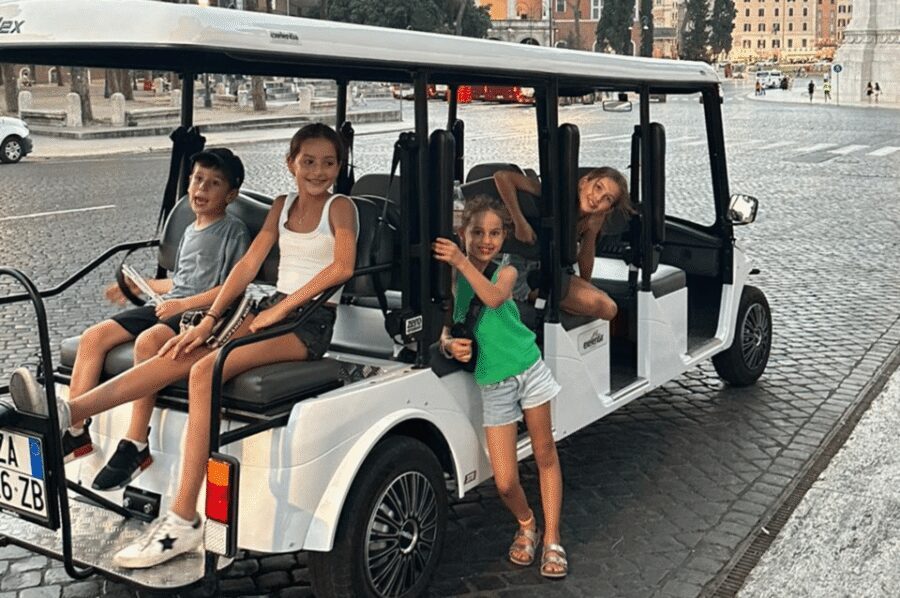
A huge reason this tour works is the guide’s style. Andrea’s reputation (based on what I’m seeing) is consistent: friendly, fun, and focused on explaining what you’re looking at in a way that sticks. That’s important because Rome’s biggest landmarks can be confusing if you don’t get context. The cart seat turns each stop into a mini lesson.
The tour also builds in short breaks for photos and sometimes for coffee or gelato. Those aren’t random add-ons. They help you reset your pace so you can still enjoy the sights instead of only surviving them.
One more practical benefit: the guide can handle the “what do I do with my time” question for you. At the end, you’ll have tips on what to see and do during your stay—useful if this is your first time in Rome.
Price and value: what $135.94 buys you
At $135.94 per person for a 3-hour private tour with electric transportation, you’re paying for more than a drive. You’re paying for:
- a local guide with live commentary (and bilingual support in Italian and English),
- the electric cart ride (including access to restricted traffic zones),
- photo stops at major landmarks,
- short stops for ice cream or coffee,
- and a route designed to cover a lot without marathon walking.
Is it expensive compared to public transport? Yes. Is it good value compared to spending your day in crowds, walking between far-flung sights, and missing viewpoints because you’re too tired? Usually, yes.
If you’re traveling with anyone who tires easily—or if you want a photo-focused overview—this is the kind of spend that can make the rest of your trip smoother. If you love long solo wandering and want to control every minute, you might get more satisfaction from going independently. But if you want structure, guidance, and easy logistics, the math works.
Who this Rome electric golf cart tour fits best
This tour is a strong match if:
- you have only 2 or 3 days and want a fast overview,
- you’d rather photograph and listen than walk for miles,
- you appreciate viewpoint stops as part of the sightseeing plan,
- you like the idea of a small group capped at 7 participants.
It’s also a good option if you’re traveling with mobility needs. The tour is wheelchair accessible, and the guide can help get you close to points of interest where possible.
If you’re the kind of traveler who wants to linger, go deep inside buildings for long periods, and tour museums slowly, you’ll likely use this as your opener (or closer) day—not as your whole Rome plan.
Should you book this Rome electric golf cart tour?
If you want an efficient, guide-led introduction to Rome’s top sights and terraces—with less walking and more photography time—then yes, it’s a smart booking. The combination of electric comfort, photo stops at key icons, and a guide who explains what you’re seeing makes it feel more like a guided experience than a bus tour.
Book it especially if you value viewpoints and neighborhoods (Pincio, Janiculum, Trastevere, Aventine) as much as the headline monuments. If you’re very sensitive to time limits, expect quick stops everywhere and plan a follow-up visit for anything you fall in love with.
FAQ
FAQ
How long is the Rome golf cart tour?
It lasts 3 hours.
Where does the tour start?
It starts at Piazza della Repubblica, with the meeting point in front of the Hotel Anantara Palazzo Naiadi near the Repubblica Metro stop.
How big is the group?
It’s a small group limited to 7 participants.
What language is the guide?
The live guide offers Italian and English.
Is the tour private?
Private tour is included as part of the offering.
What kind of transportation is used?
You’ll ride in an environmentally friendly electric golf cart.
What stops and sights are included?
The route includes stops for photos and brief visits at places like Pincio Terrace, Piazza del Popolo, Piazza di Spagna, Trevi Fountain, the Pantheon, Vatican City (photo stop), Janiculum Hill, Trastevere, Aventine Hill, Circus Maximus, and the Colosseum Arena Floor.
Are there breaks for food or coffee?
Yes. There are short stops for ice cream or coffee, plus photo stops at iconic sites.
Is the tour wheelchair accessible?
Yes, the tour is listed as wheelchair accessible.
What does the price include?
Included items are a private tour, electric golf cart transportation, a local guide, a customizable itinerary and route, photo stops at iconic sites, short stops for ice cream or coffee, informative comments, and access to restricted traffic zones.
Is free cancellation available?
Yes, free cancellation is available up to 24 hours in advance for a full refund.