REVIEW · PRIVATE
Papal Churches of Rome Special Jubilee Tour with Private Guide
Book on Viator →Operated by Raphael Tours & Events · Bookable on Viator
Jubilee Rome feels personal on foot. I love how a private guide helps you move through three basilicas without wasting time, and I also love the mosaics and relics you can actually pick out when you know what to look for. The main catch is the dress code: knees and shoulders must be covered, or you risk being turned away.
This tour starts at Piazza di Santa Maria Maggiore and ends on Via Urbana, so you get a guided dose of Rome’s “inside history” and then you’re free to keep exploring on your own. With free church entry at each stop and a mobile ticket, the structure is simple and the payoff is big for a short 3-hour walk.
In This Review
- Key Highlights to Know Before You Go
- Three Papal Stops in 3 Hours: Why This Route Works
- Santa Maria Maggiore: The Five Doors, the Jubilee Holy Gate, and Roman-Time Mosaics
- San Pietro in Vincoli: Relic Storytelling and the Meaning of Vincula
- Santa Prassede: Mosaic Walls, a Savior in the Vault, and Bernini’s First Sculptural Work
- How a Private Guide Changes What You Notice
- Price and Value: What $340.34 Buys You
- Dress Code and Entry Reality: The One Thing That Can Ruin Your Day
- Practical Timing: Where You Meet and How You End Your Walk
- Who Should Book This Tour (and Who Might Skip)
- Should You Book the Papal Churches of Rome Special Jubilee Tour?
- FAQ
- How long is the Papal Churches of Rome Special Jubilee Tour?
- Where do I meet the guide, and where does the tour end?
- Which churches are included in the tour?
- Is admission required for the churches?
- Is this tour private?
- Do I get hotel pickup and drop-off?
- What dress code do I need to follow?
- Will I get a confirmation after booking?
- What is the cancellation policy?
Key Highlights to Know Before You Go
- Santa Maria Maggiore’s five doors and Jubilee holy gate explained step-by-step
- The chains of Saint Peter at San Pietro in Vincoli, with the story behind the name
- Santa Prassede mosaics culminating in the Savior medallion in the vault
- Bernini connections: his tomb at Santa Maria Maggiore and his early sculptural work at Santa Prassede
- A true private walking tour where your group only goes at your pace
Three Papal Stops in 3 Hours: Why This Route Works
Rome has plenty of church tours. This one works because it’s focused on how Christianity in the city evolved across time. You’ll see one papal basilica that preserves an early Christian core, then a 5th-century basilica tied to a major relic tradition, and finally a 9th-century mosaic church restored again and again.
That time-jump matters. Without guidance, it’s easy to admire beautiful interiors and still miss the meaning. With a guide, you start noticing how power, devotion, and art styles show up in stone, gold, and tile. The walk is long enough to feel substantial, but short enough that you’re not stuck indoors all day.
The other big win is the private format. You’re not stuck waiting for ten different people to find the same view. You can ask questions as you go, and you’re more likely to get pointed out the right detail—like where to stand for the mosaics that are easy to overlook.
You can also read our reviews of more guided tours in Rome



Santa Maria Maggiore: The Five Doors, the Jubilee Holy Gate, and Roman-Time Mosaics
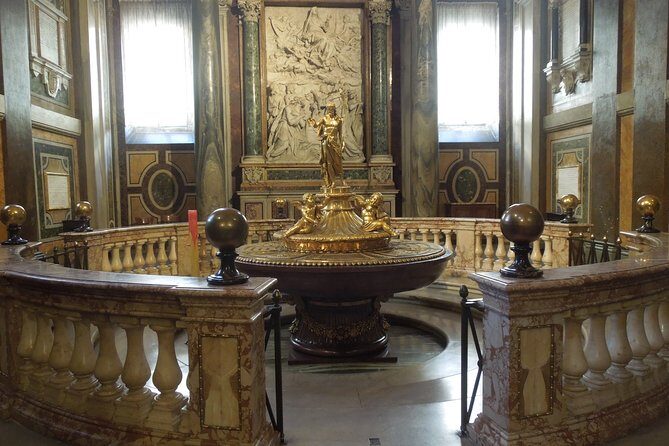
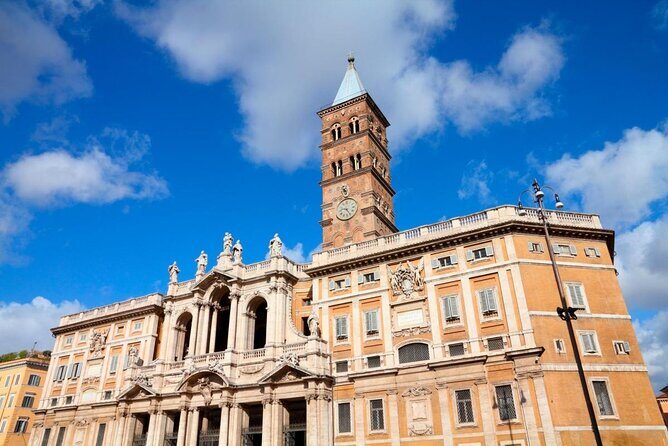
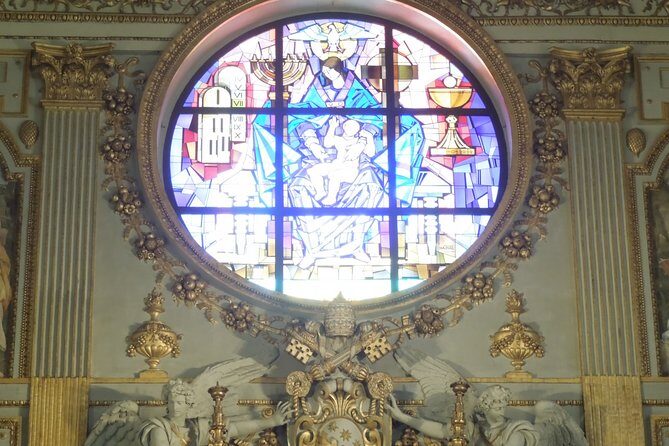
Your tour begins at Basilica di Santa Maria Maggiore on the Esquilino hill, one of Rome’s four papal basilicas. It’s also a UNESCO World Heritage Site, and it’s the one that most clearly preserves the original early Christian structure, even with later additions. That combination is why it’s such a smart first stop: you’re seeing a church that feels layered, not replaced.
Inside, you’ll enter through one of the basilica’s five doors. Your guide explains the symbolism behind the doors and, importantly for Jubilee season, the holy gate—opened during jubilees. Even if you’re not there in a Jubilee year, it helps you understand why this place carries such a heavy spotlight during special church celebrations.
Once you’re in, don’t just “look around.” Follow the guide’s path. This is where the tour earns its reputation. You’ll focus on:
- Well-preserved mosaics from Roman times, which you can easily miss if you don’t know what you’re scanning for
- The chapels connected to Popes Sixtus V and Paul V, showing how later leaders shaped what you see today
- Paintings by disciples of Raphael and Michelangelo, so you’re not only seeing the big names but also the workshop culture that kept producing art in their orbit
- Medieval relics and tombs of pontiffs, which bring the church’s political and devotional roles into view
- The tomb of Gian Lorenzo Bernini, an architect tied to Baroque Rome—yes, that Bernini, whose influence stretches around the city
Practical note: Santa Maria Maggiore is visually busy, and it can get crowded. Your guide’s job here is to point you toward the details you’d otherwise spend hours hunting for. That’s the difference between sightseeing and actually understanding what you’re seeing.
San Pietro in Vincoli: Relic Storytelling and the Meaning of Vincula
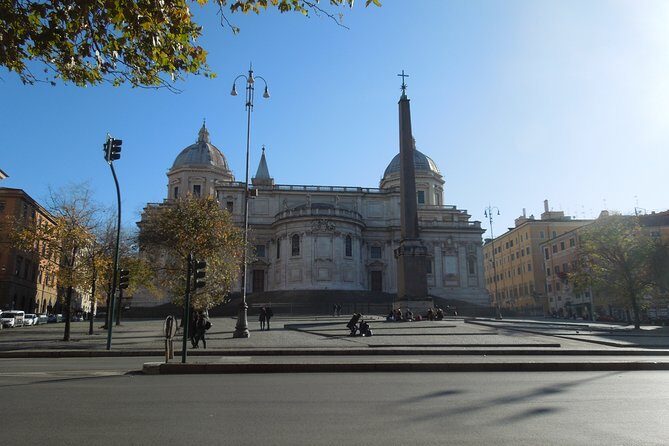
Next up is San Pietro in Vincoli, also known as the Eudoxana basilica. This stop is built in the 5th century and has a tight, compelling narrative baked into its identity. If Santa Maria Maggiore is about long continuity, San Pietro in Vincoli is about a specific moment—and a relic that became a destination.
Here’s the story you’ll hear in plain terms:
- The basilica was built in the 5th century by Licinia Eudoxia, daughter of Theodosius II, Emperor of the East.
- Her mother, Elijah Eudocia, received the chains said to have bound Saint Peter during captivity in Jerusalem.
- Those chains were given by Juvenal, the Patriarch of Jerusalem.
- The name comes from the chains preserved under the high altar—in Latin, vincula.
This is where you’ll feel the value of a guide. The relic tradition isn’t just a trivia nugget. It explains why people kept returning, why the basilica became important, and how meaning travels across generations.
You’ll also learn when the chains are made visible to the faithful. The info you get is specific: they’re visible on August 1st each year. So even if you’re not there on that day, you’ll understand the basilica’s rhythm and what that altar area represents in local devotion.
One consideration: this is a shorter stop compared with what some solo visitors might want. If you like to linger in every niche and chapel, plan to come back later with your own time. With a 3-hour overall tour, the point is to hit the highlights with context.
Santa Prassede: Mosaic Walls, a Savior in the Vault, and Bernini’s First Sculptural Work
Your final church is Basilica di Santa Prassede, nearby in the Esquilino area. It was built in the 9th century and restored several times, so it carries the look of a church that kept being loved—and corrected—over centuries.
Santa Prassede’s reputation comes from its interiors, especially the mosaics. You’ll see figures of saints arranged across the church surfaces, and your guide will help you track the way the artwork leads your eye upward. The mosaics culminate in the vault with the figure of the Savior within a medallion, which is the kind of detail that’s hard to appreciate if you only glance quickly.
The tour also pulls in mosaics from multiple zones:
- At the bottom of the nave
- On the triumphal arch
- In the apse
That matters because it changes the whole experience. Instead of one focal artwork, you’re seeing a program—images placed to shape how worshippers move through the space.
Then there’s the Bernini connection, which is a great example of how this tour pulls you beyond the obvious “major landmark” formula. You’ll be able to admire the first sculptural work by Bernini at Santa Prassede. It’s a satisfying bridge between the medieval mosaic world and Baroque Rome’s later artistic explosion.
If you love art that you can’t photograph perfectly, this is a strong stop. Mosaics reward standing still and looking carefully. The guide helps you pick the best angles so the details make sense rather than just looking like colorful glass.
How a Private Guide Changes What You Notice
In three hours, you’re asking a lot of your own eyes. The best part of a private setup is that someone is actively translating what you’re seeing.
The most praised aspects of this tour aren’t about speed or volume. They’re about attention and guidance in the moment—showing you the right spot, pacing the route so you’re not overwhelmed, and being ready with friendly, clear explanations.
That’s exactly what you want for churches like these, where the difference between appreciating and understanding is often one sentence. For example:
- At Santa Maria Maggiore, the guide helps you connect the holy gate tradition to the layout and doorway symbolism.
- At San Pietro in Vincoli, the guide connects the basilica’s name to the relic story instead of treating it as an isolated artifact.
- At Santa Prassede, the guide helps you read the mosaics as a whole composition, not scattered decoration.
Private also means your group controls the energy. If one detail grabs you, you can spend a little longer—within reason—without feeling like you’re slowing down a busload.
You can also read our reviews of more private tours in Rome


Price and Value: What $340.34 Buys You
At $340.34 per person, this tour isn’t the cheapest way to see three churches. But it can be good value if you’re prioritizing inside guidance and time saved.
Here’s what’s included that matters:
- Local guide
- Private tour
- Mobile ticket
- Church entry is free at each stop (Santa Maria Maggiore, San Pietro in Vincoli, and Santa Prassede)
So you’re paying mainly for the experience design: the route, the sequencing, and the guide’s job of helping you spot and understand the important details while you’re inside. In other words, this price is largely for interpretation and pacing—not for ticket fees.
You’re also getting group discounts (depending on your booking size), which can make the math better if you’re traveling with one or two people who want the same focused plan.
The biggest value question is simple: do you want to walk into churches and figure things out yourself? If you do, you might get by cheaper. If you’d rather stand where it counts and get the stories connected, this type of private route often pays off quickly.
Dress Code and Entry Reality: The One Thing That Can Ruin Your Day
This is not a take-anything-you-want kind of church visit. The tour requires a dress code for places of worship and selected museums.
Plan for this:
- No shorts
- No sleeveless tops
- Knees and shoulders must be covered for both men and women
If you forget, you might be refused entry. That’s not a minor inconvenience. It’s the difference between a smooth 3-hour tour and scrambling to solve a clothing problem on the spot.
Bring a light layer if you’re visiting in warm weather. Think scarf, overshirt, or a top that covers your shoulders. It’s one of those small travel moves that saves energy for the real work—looking closely at mosaics and relic details.
Practical Timing: Where You Meet and How You End Your Walk
You meet your guide at Piazza di Santa Maria Maggiore and your tour ends on Via Urbana. That ending location is handy because you don’t get stuck at the last church with no clear next step. You’re dropped into a part of central Rome where you can keep moving at your own pace.
The tour is about 3 hours total, with about 1 hour at each basilica. That structure is good for two reasons:
- You get enough time to see the main highlights without feeling like you only peeked inside.
- You can plan the rest of your day without building in a huge extra buffer.
Also, the start is near public transportation, so you can usually manage the trip in a low-stress way.
Who Should Book This Tour (and Who Might Skip)
I’d book this if you:
- Love art, especially mosaics, and want to know what you’re looking at
- Want church stories tied to real relic traditions and named historical figures
- Like a guided route that turns three “pretty interiors” into a clear timeline
- Prefer a private experience where you can ask questions and not feel rushed
I might skip it if you:
- Want to spend long, quiet hours inside one church without a set route
- Get frustrated by dress code rules and don’t want to plan around them
- Are traveling extremely light and can’t manage covering shoulders and knees
Should You Book the Papal Churches of Rome Special Jubilee Tour?
Book it if you want three Roman basilicas tied together by meaning, not just by geography. The value is strongest when you care about details—mosaics, relics, tombs, and the way Jubilee traditions shape what people emphasize.
Skip it if you’re mainly after casual sightseeing and you’d rather wander freely on your own time. This tour is intentionally structured, so it rewards focus.
My final advice: if you can meet the dress code and you like guided context, this is an efficient way to get under the skin of Rome’s papal and relic traditions in just a few hours—then walk away with a clearer map of how the city’s faith and art connect.
FAQ
How long is the Papal Churches of Rome Special Jubilee Tour?
The tour lasts about 3 hours.
Where do I meet the guide, and where does the tour end?
You meet at Piazza di Santa Maria Maggiore and the tour ends on Via Urbana.
Which churches are included in the tour?
The tour includes Basilica di Santa Maria Maggiore, San Pietro in Vincoli, and Basilica di Santa Prassede.
Is admission required for the churches?
The church admission is listed as free for each stop.
Is this tour private?
Yes. It’s a private tour, and only your group participates.
Do I get hotel pickup and drop-off?
No. Hotel pickup and drop-off are not included.
What dress code do I need to follow?
You must cover knees and shoulders. No shorts or sleeveless tops are allowed for entry to places of worship and selected museums.
Will I get a confirmation after booking?
Confirmation is received within 48 hours of booking, subject to availability.
What is the cancellation policy?
You can cancel for a full refund up to 24 hours before the experience starts. Cancellation within 24 hours of the start time is not refunded.