REVIEW · PRIVATE
Chauffeured Private Tour of Rome
Book on Viator →Operated by AIM LIMO ROME · Bookable on Viator
Rome in one smooth day.
This private chauffeured tour is built for getting your bearings fast, then seeing the big names without spending your whole day figuring out transit. You’ll ride in an air-conditioned sedan or minivan, meet your English-speaking driver, and hit major stops that mix ancient Rome, baroque Rome, and early Christian sites in one go.
Two things I really like: the hotel (or airport/port) pickup and drop-off that removes the stress, and the way drivers like Andrea, Andy, Daniele, Livio, and Cladio are described as prompt, friendly, and helpful with timing and on-the-ground choices. One consideration: your driver is not a licensed tour guide, so on-foot explanations are limited and entrance fees (and food) are on you.
In This Review
- Key takeaways before you go
- Getting Oriented in Rome With a Chauffeured 8-Hour Plan
- Price and Logistics: What the $427.96 Per Person Really Buys
- The Real Difference: How the Private Car Changes Your Sightseeing
- Stop 1: Foro Romano (Roman Forum) in a Tight 15 Minutes
- Stop 2: Circus Maximus—A Huge Ancient Space, Now a Public Park
- Stop 3: St. Paul Outside the Walls—Early Christian Rome Without the Ticket Hassle
- Stop 4: Trevi Fountain—Icon Photos, Fast Timing, and Film-Scene Energy
- Stop 5: Pantheon—The Dome You Can’t Stop Thinking About
- Stop 6: Piazza Navona and the Stadium-of-Domitian Story
- The Vittoriano (Altare della Patria Area): Big National Italy Views
- Stop 7: Piazza del Campidoglio—Capitoline Hill’s Commanding Position
- Stop 8: Parco Regionale dell’Appia Antica—Walking Rome’s Most Famous Road
- Stop 9: Catacombe di San Callisto—The Crypt of the Popes
- Dress Code and Practical Timing: How to Avoid Getting Turned Away
- Who This Chauffeured Rome Tour Suits Best
- One Last Thought: Should You Book This Chauffeured Rome Tour?
- FAQ
- How long is the Chauffeured Private Tour of Rome?
- What’s included in the price?
- What isn’t included?
- Do we pay admission for all stops?
- Is the driver a licensed tour guide?
- What is the cancellation policy?
Key takeaways before you go
- Private door-to-door pickup saves time, especially if you have limited hours in Rome.
- Short, focused stops help you see more landmarks in 8 hours without feeling trapped in one museum.
- Major sites with free entry options (like Trevi Fountain and Circus Maximus) keep costs under control.
- Drivers can’t fully guide on foot, so plan to bring a bit of curiosity or consider an official guide if you want deeper commentary.
- Maximum 8 people keeps the day feeling personal rather than crowded.
Getting Oriented in Rome With a Chauffeured 8-Hour Plan
Rome is gorgeous, but it can also be a maze. A day like this is designed for first-time visitors who want the headline sights, plus the confidence of knowing where things are once they step out.
The value is in the rhythm. You’re not just “driving by famous places.” You’re getting a tight loop that covers key zones—Forum area, the historic core, and even outward routes like the Appian Way—so your next days in Rome make more sense.
This is also a good fit if your schedule is tight. You get a full-day experience, but the stops are sized so you can actually walk, look, and move on without burning half the day on transit and lineups.
You can also read our reviews of more private tours in Rome


Price and Logistics: What the $427.96 Per Person Really Buys
At $427.96 per person for about 8 hours, you’re paying for three things: private transport, pickup/drop-off, and driver time. Entrance fees and meals aren’t included, so you should budget extra once you know which stops you’ll enter.
This cost can feel high if you’re traveling solo. But the tour supports a maximum of 8 people per booking and also notes group discounts—so the per-person value often improves when you split the vehicle cost with others.
One underrated benefit: the tour includes a mobile ticket, which helps reduce the friction of getting moving. And you’ll get English support from the driver, which matters when your day depends on quick decisions.
The Real Difference: How the Private Car Changes Your Sightseeing
Public transport in Rome is fine, but it’s not ideal when your goal is “see a lot, not wait around.” A private car solves the big problems: where to start, where to park, and how to avoid wasting daylight.
You’ll also feel the advantage of air-conditioned comfort. Rome summers can be intense, and even in cooler months, the simple act of resetting in a car between walking stops is worth something.
One more practical note: pickup is possible from hotels, Fiumicino airport, and Civitavecchia Port. That’s huge if you arrive mid-day and don’t want to immediately fight with getting to the city and then back out later.
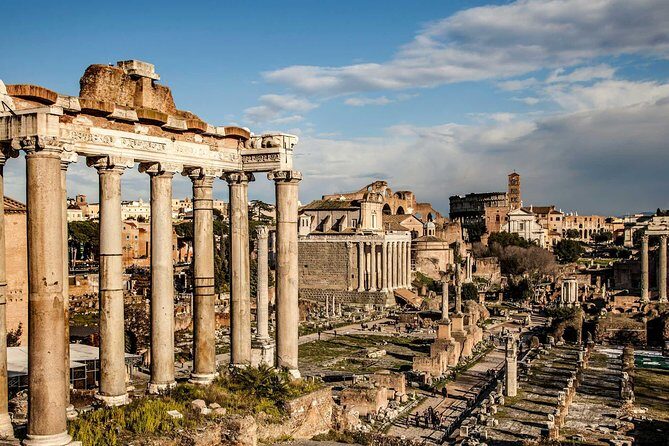
Stop 1: Foro Romano (Roman Forum) in a Tight 15 Minutes
The Roman Forum is the classic “this is what ancient power looked like” place. Even if you only have a short visit, it’s still one of the most effective sites for understanding how Rome worked—government, law, and public life all clustered in one area.
You’ll spend about 15 minutes here, with admission ticket not included. That means you’ll want to decide in advance whether you want to pay for entry to make the most of it. If you’re the type who likes to read signs and connect the ruins to the stories, 15 minutes can feel quick—but it’s still enough to grasp the scale and layout.
Practical tip: dress for walking uneven ground. And if the day is hot, treat the Forum stop like a sprint. Pick a couple of viewpoints, take your photos, then move on.
Stop 2: Circus Maximus—A Huge Ancient Space, Now a Public Park

Circus Maximus is easy to underestimate because it looks open and grassy—then you realize how massive it was. It was a chariot-racing stadium and major entertainment venue, and the scale is the point.
This stop is about 10 minutes and marked as free. That’s a smart use of time: you can get the “wow, that’s ancient” moment without paying extra, then spend your paid time (if you choose) on sites where entry really matters.
Since it’s now a public park, it’s also a calmer stop in your itinerary. It gives your legs a chance to reset without the stress of a strict museum schedule.






Stop 3: St. Paul Outside the Walls—Early Christian Rome Without the Ticket Hassle
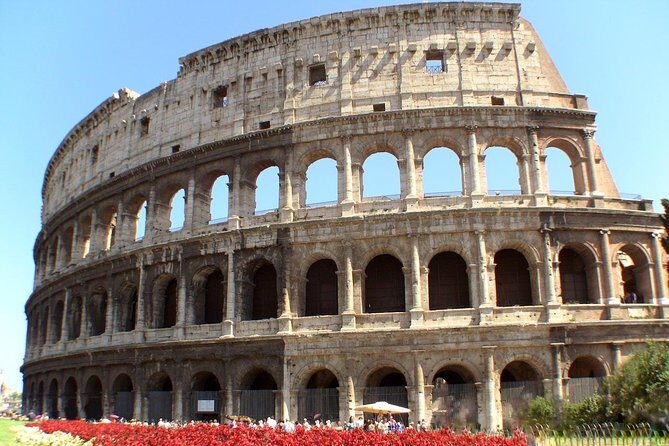
St. Paul Outside the Walls is one of Rome’s major papal basilicas. It’s also one of the “big church” stops where you can shift from ruins to living religious heritage.
You’ll have about 20 minutes, and admission is free. If you care about how Rome’s story changes over centuries—from empire to church this is the kind of stop that makes the timeline feel real.
This is also a good place to remember the dress code. The rules are strict for churches and selected museums: no shorts or sleeveless tops, and knees and shoulders must be covered for both men and women. If you’re traveling with light summer clothes, plan ahead.
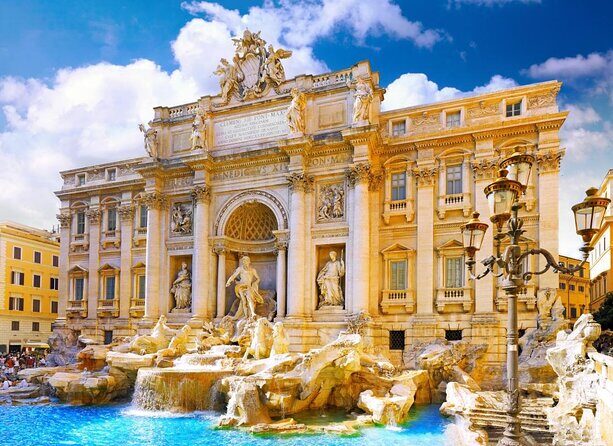
Stop 4: Trevi Fountain—Icon Photos, Fast Timing, and Film-Scene Energy

Trevi Fountain is one of those places you either love right away or feel overwhelmed by. Either way, it’s central to the “Rome first impressions” experience.
You’ll spend around 20 minutes, and admission is free. That combination is why it works in an 8-hour plan: you’re not paying entry, but you still get enough time to get your photos and then enjoy the surrounding streets at your own pace afterward.
A practical reality: Trevi can be crowded. The advantage of a private car day is that you’re not stuck with slow routing and uncertain arrival times. Your driver can manage the day so you’re arriving as smoothly as possible.
Stop 5: Pantheon—The Dome You Can’t Stop Thinking About
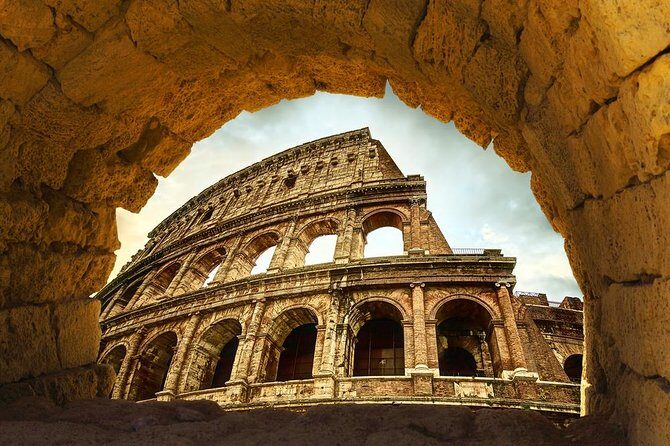
The Pantheon is a former Roman temple that’s now a church, and it’s famous for a reason. Even if you only get 20 minutes, you’re seeing one of the most iconic interiors in Rome.
This stop is listed as free, which is a huge value point in a day that otherwise includes paid entry options elsewhere. It’s also one of the best “one-stop education” sites: you see ancient engineering, then understand how the building lived on through later religious use.
Since it’s also a church, the same dress rule applies. Knees and shoulders covered, or you risk being turned away.
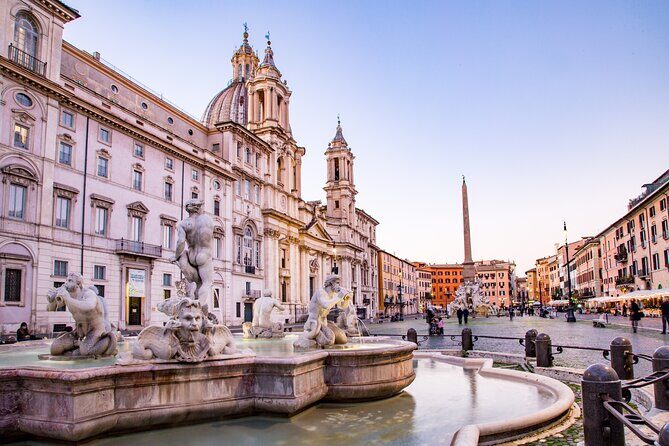
Stop 6: Piazza Navona and the Stadium-of-Domitian Story
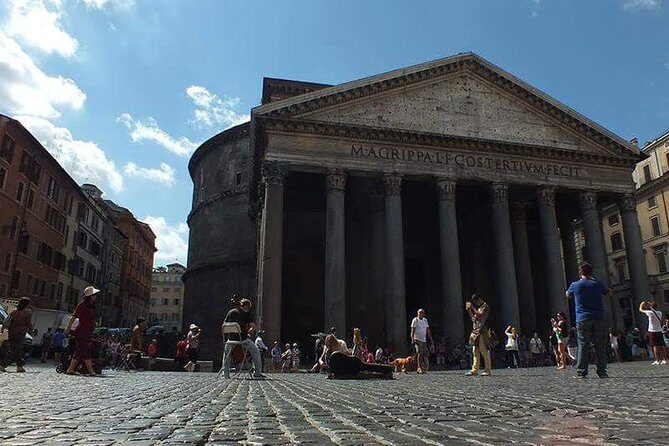
Piazza Navona sits on the site of an ancient stadium, and the shape of the square reflects that history. It’s a great stop because it’s not just ruins in the distance—you’re in the space.
You’ll have about 15 minutes here. It’s marked as free, and the experience is described as the Stadio di Domiziano–Navona Square Underground angle. Even if you keep it brief, it’s a memorable contrast: you’re looking at a lively square while knowing an ancient arena sits beneath the pavement pattern.
This is also a good stop for photos and people-watching, but keep your expectations realistic. You’re moving through the day, not having a long linger.
The Vittoriano (Altare della Patria Area): Big National Italy Views
The Vittoriano is a massive monument area between Piazza Venezia and the Capitoline Hill. It honors Vittorio Emanuele II and is managed by Italian institutions connected to national history.
Your schedule includes this stop without a stated admission note in the information you have. Either way, it works well as a visual break in the itinerary—less “ancient ruin close-up,” more “grand Rome from a viewpoint.”
If you’re someone who likes wide city views, this stop is worth the time. If you prefer only archaeology, you might treat it as a quick photo stop and move along.
Stop 7: Piazza del Campidoglio—Capitoline Hill’s Commanding Position
The Capitoline Hill sits between the Forum and the Campus Martius, and it’s one of Rome’s iconic power-hill locations. You’ll have about 10 minutes, and admission is noted as not included.
Even with a short visit, the key value here is orientation. You start linking what you saw earlier in the day—ancient Rome power—with what you’re seeing now—another layer of Rome’s shifting centers over time.
This is a low-pressure stop. Think: step out, take in the view, snap a couple of photos, and get ready for the more “out of central Rome” energy next.
Stop 8: Parco Regionale dell’Appia Antica—Walking Rome’s Most Famous Road
The Appian Way (Via Appia) is one of the earliest and most important Roman roads. It connected Rome to Brindisi, and it’s basically a time machine road that shaped how people and goods moved through the empire.
You’ll spend about 10 minutes in the Parco Regionale dell’Appia Antica, and it’s marked as free. This is another value win: you get a meaningful connection to the broader Roman world without adding ticket costs.
In that short window, focus on the feeling of the place rather than “finishing” the road. Even a brief visit gives you context for why the Appian Way is so symbolic in Roman history.
Stop 9: Catacombe di San Callisto—The Crypt of the Popes
This is the stop that most often makes a Rome day feel different. The Catacombs of Callixtus are one of Rome’s catacomb sites, and the Crypt of the Popes—containing tombs of popes from the 2nd to 4th centuries—is the standout feature.
You’ll have about 45 minutes, and admission is not included. That’s a longer block than most stops, which makes sense because it’s the kind of place where time helps you process what you’re seeing.
Because it’s underground and emotionally heavier than some of the open-air stops, I like having a longer slot here. It also means you should plan for the practical side: wear comfortable shoes, keep your phone brightness low if the light is dim, and take your pace seriously.
Dress Code and Practical Timing: How to Avoid Getting Turned Away
Rome loves rules, and this tour comes with a clear one: dress code is required for places of worship and selected museums. That means no shorts or sleeveless tops, and your knees and shoulders must be covered for both men and women.
If you’re traveling with only summer clothes, you might want to pack a light layer. A thin shawl or cardigan can be the difference between entering smoothly and losing time.
Also remember the stop style. This is an 8-hour day with multiple landmarks, so you won’t get “sit and read every sign” time. You’ll enjoy it most if you treat each stop as a chapter: look, absorb, move.
Who This Chauffeured Rome Tour Suits Best
This is a strong match if you:
- Want the big Roman highlights in one day and hate transit stress
- Have limited time and want a clean, organized route
- Travel in a small group (max 8 per booking) and want it to feel private
- Like photography breaks and quick orientation across multiple areas
It may not be perfect if you:
- Want deep museum-level explanations on foot at every stop
- Expect a driver to behave like a licensed guide inside all sites
- Are counting on a fully guided experience with museum entry fees included (those aren’t included)
One Last Thought: Should You Book This Chauffeured Rome Tour?
If you’re trying to do Rome efficiently, this is a smart way to structure a first day. The mix of free entry icons (Trevi, Pantheon, Circus Maximus, and others) plus paid-entry options where you choose to go in makes it flexible for different budgets and interests.
I’d book it when you value comfort, pickup convenience, and a tight route that helps you understand where everything sits. I’d think twice if you want long, slow guided wandering through major interiors—because your driver can only provide limited commentary outside the vehicle and entrance fees aren’t part of the price.
FAQ
How long is the Chauffeured Private Tour of Rome?
The tour is about 8 hours.
What’s included in the price?
Included are hotel pickup and drop-off, a full-day private Rome tour (8 hours), transport by air-conditioned sedan or minivan, and an English-speaking driver.
What isn’t included?
Food and drinks aren’t included. Entrance fees at museums and historical sites aren’t included, and an official guide at listed destinations isn’t included.
Do we pay admission for all stops?
Not all stops require paid admission. Some stops are listed as free (for example, Circus Maximus, St. Paul Outside the Walls, Trevi Fountain, and the Pantheon), while others are listed as admission not included (such as the Roman Forum and the Catacombs of San Callisto).
Is the driver a licensed tour guide?
No. The driver is not a licensed tour guide and can comment and explain attractions only from inside the vehicle. They cannot elaborate on attractions when outside.
What is the cancellation policy?
Cancellation is free up to 24 hours in advance of the experience start time for a full refund. If you cancel less than 24 hours before the start time, you won’t receive a refund.