REVIEW · POMPEI CAMPANIA
From Sorrento: Pompeii with an Archaeological Guide & Ticket
Book on GetYourGuide →Operated by Amo Italy S.r.l. · Bookable on GetYourGuide
Pompeii gets real fast. I like that this tour pairs you with an archaeologist guide so the site makes sense, and that transport plus tickets are handled for a smooth, time-efficient day. The one drawback: it’s still Pompeii—crowds and walking mean you’ll want comfortable shoes and a patient attitude.
You’ll start from Bar Kontatto in Sorrento at 8:00 a.m. and return after about 4 hours, with a guided visit inside the ruins plus a coach ride that includes scenic lookouts along the route. If you’re sensitive to noise, heat, or crowds, plan your mindset for a busy day rather than a quiet stroll.
A practical bonus: when groups get larger, you get headsets so you can actually hear the guide. Bring water and sun protection, because a “one day” Pompeii means you’ll be outside for much of it.
In This Review
- Key highlights to know before you go
- From Bar Kontatto to Pompeii: the early start that actually pays off
- The archaeologist guide and headsets: hearing the story in crowds
- Coach-route viewpoints: Lupanare, Terme Stabiane, and the city’s layout
- Inside Pompeii: the 2-hour guided walk that hits the essentials
- Forum Baths: practical Roman life, not just drama
- Large Theatre: where entertainment becomes architecture
- Temple of Apollo: religion in plain sight
- Macellum (market): food, supply, and street-level economy
- Foro Civile di Pompei: the civic center that tells you who mattered
- Villa of the Mysteries: the stop that usually sticks with you
- Timing, comfort, and what to bring (so you enjoy it)
- Price and value: is $94 worth it for a one-day Pompeii hit?
- Who this tour suits best (and who should pick something else)
- Should you book this Pompeii with an archaeologist guide?
Key highlights to know before you go
- A proper archaeologist guide in English so Pompeii doesn’t feel like random stones
- Headsets included for groups over 10, which makes a big difference in loud crowds
- Coach transfer from Sorrento saves you time and stress compared to figuring out transit
- One-day timing built for the essentials (you’ll hit the big public spaces and showpiece villas)
- On-route photo stops/viewpoints that help you understand where things sit in the city plan
- Meeting point is close to the Sorrento transport area, so getting there is simple
From Bar Kontatto to Pompeii: the early start that actually pays off
Starting at 08:00 in Sorrento is smart. Pompeii is famous, which means it’s also famous for being crowded. Leaving early gives you a better shot at seeing more of the ruins before the densest crush and before your energy level starts to fade.
Your pickup is at Bar Kontatto, Corso Italia n.257, a short walk from the main station area. That matters because one of the biggest stressors on day trips is “Where exactly do I meet?” This one is straightforward and easy to find if you show up around the time requested (give yourself a little buffer so you’re not sprinting with your backpack).
Then you’re on a 50-seat coach to Pompeii, roughly 50 minutes each way. On the ride, you’re not just sitting there. The tour is designed so you build context while you travel—so when you step into the ruins, you already understand what you’re looking at and why it mattered.
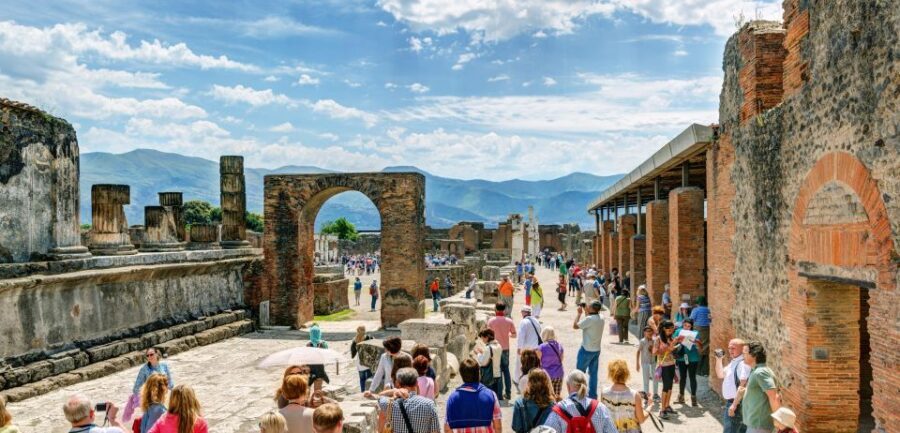
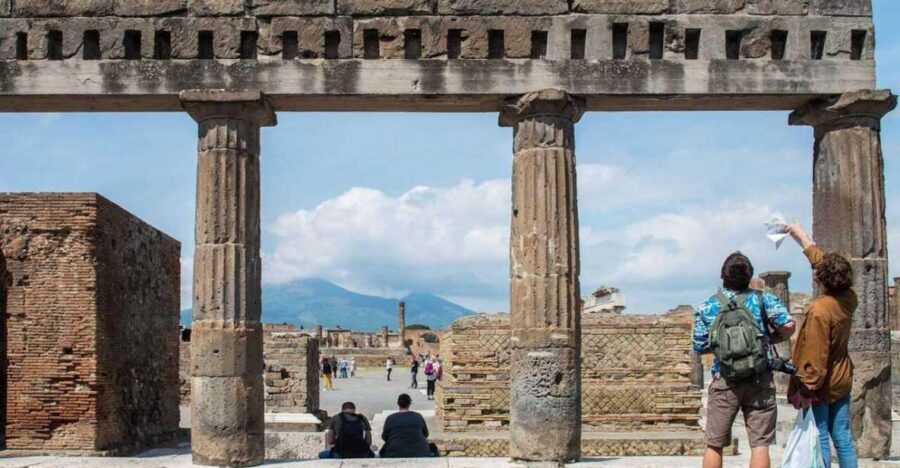
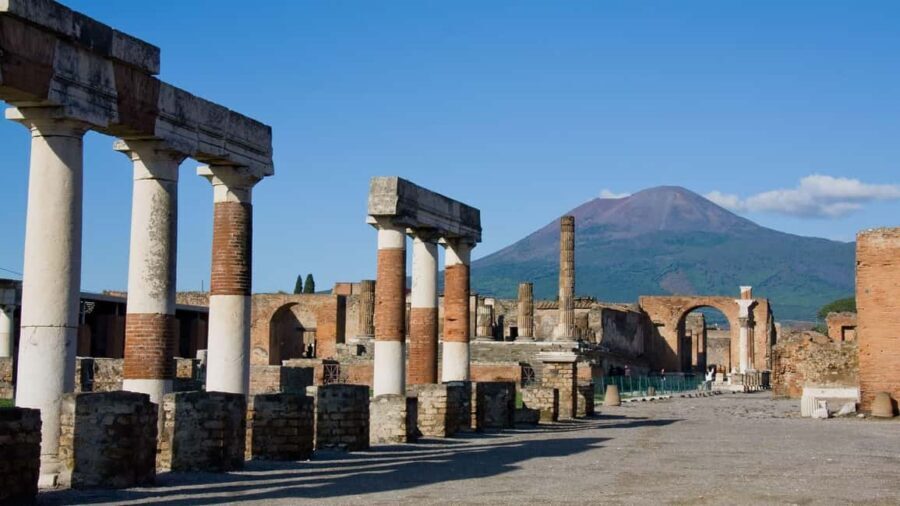
If you’ve only seen Pompeii in photos, the first thing that hits you is how much is still legible as a city: streets, public buildings, and the way spaces connect. Getting that “mental map” on the bus is the difference between Pompeii feeling like a museum slideshow versus feeling like a walk through a real place.
You can also read our reviews of more tours and experiences in Pompei Campania


The archaeologist guide and headsets: hearing the story in crowds
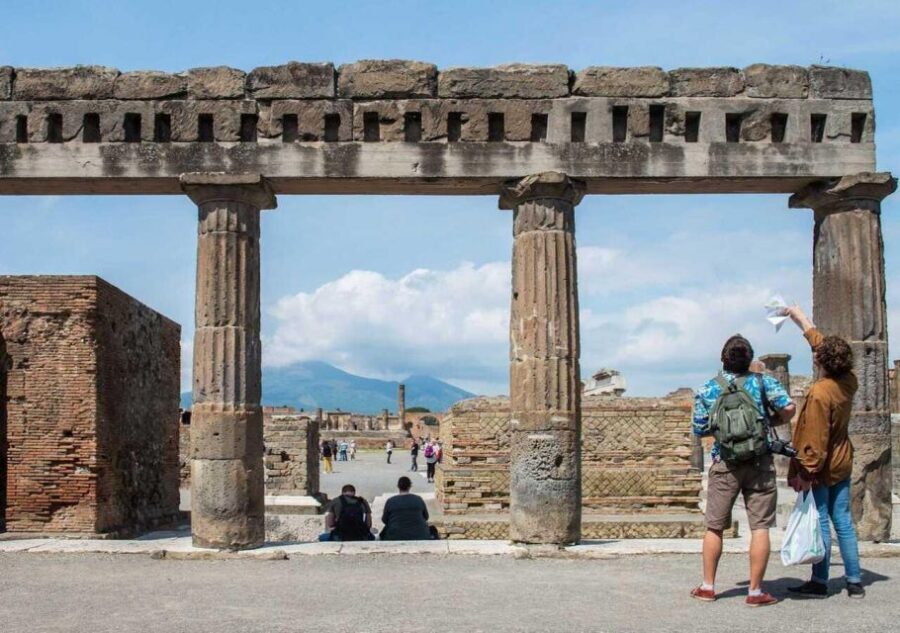
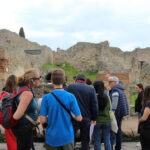
This is the heart of the value. A Pompeii visit can go one of two ways: you either wander and read a few signs, or you get guided through the site like a living story. The tour gives you the second option with an English live archaeologist guide.
What I appreciate is that the guide’s job isn’t just to name locations. They help you understand relationships between places—how the city worked day to day, and what you’re seeing that reflects Roman life.
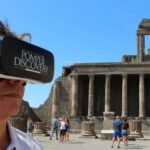
Then there’s the very practical thing: headsets for groups larger than 10. Pompeii crowds get loud, and if you’ve ever been on a tour where you’re leaning forward to catch every sentence, you already know how exhausting that is. Headsets keep the experience readable. Even if you’re standing in a cluster, you can still follow along.
You may also get a guide on the travel portion who brings energy and useful tidbits before you ever reach the stones. In one account, the bus/lead guide was Gino, and that kind of onboard context can set the pace for the day—especially if you’re arriving to Pompeii with only a basic sense of the eruption story.
Coach-route viewpoints: Lupanare, Terme Stabiane, and the city’s layout
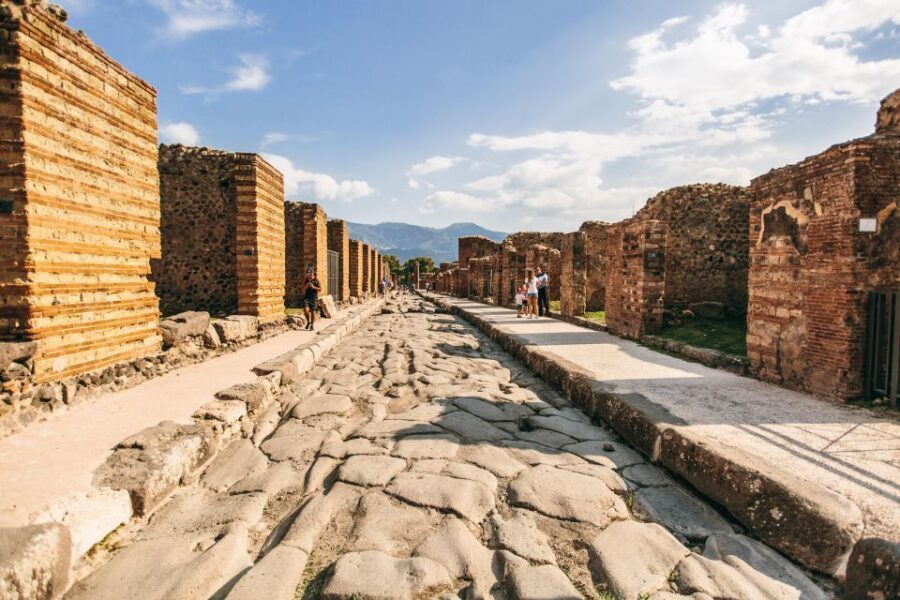
One-day Pompeii tours need to be efficient, and this one uses the coach ride to do a bit of visual orientation.
Along the way, you’ll get scenic views connected to major areas such as:
- Lupanare (a well-known building associated with adult entertainment in Roman Pompeii)
- Terme Stabiane (the Stabian Baths area)
- Forum Baths
- and other key landmarks that connect back to the public core of the city
Even if you’re not walking to every location from the bus, these lookouts matter. They show you how Pompeii isn’t a random scatter of ruins. It’s a planned urban environment, with districts and landmarks that relate to one another.
The other advantage of these stops is rhythm. Instead of only speeding up inside the ruins, you get brief shifts in attention—look out, get oriented, then focus again when the walking part starts.
This is also where I’d be honest about expectations: Pompeii can be emotionally intense. The whole story of a city buried by ash and lava after Vesuvius’ eruption in 79 A.D. can feel heavy. Context from the guide helps you carry that without getting overwhelmed—turning shock into understanding.
Inside Pompeii: the 2-hour guided walk that hits the essentials
The guided portion inside Pompeii is about 2 hours. That’s a good length for first-timers because it’s long enough to connect the dots, but short enough that you don’t get lost in the sheer scale.
In that time, the tour focuses on the public spaces people remember from Pompeii, including major architecture around the civic and cultural center.
Here’s how I think about the big hits you’ll cover:
Forum Baths: practical Roman life, not just drama
The Forum Baths (part of the larger bath culture in Pompeii) are a perfect early anchor because they show daily life in action. Baths were more than hygiene—they were social hubs. By seeing baths in the same breath as theaters, forums, and temples, the guide can help you understand Roman priorities: public routine, civic identity, and social interaction.
The drawback? If you’re expecting the “best photo” instantly, baths can feel a bit technical at first—there’s plumbing, rooms, and layout. This is exactly where a guide earns their keep, helping you see what’s meaningful instead of just what’s visible.
You can also read our reviews of more guided tours in Pompei Campania



Large Theatre: where entertainment becomes architecture
Pompeii’s Large Theatre is a standout because it shows spectacle and city-scale planning. Even if you’re not a theatre nerd, the building makes sense quickly: audience space, stage orientation, and the sense that crowds gathered here for shared moments.
What you’ll likely feel is the contrast between what used to happen there and what exists now—empty seats, weathered stone, and lines in the space where people once stood and watched.
Temple of Apollo: religion in plain sight
The Temple of Apollo brings in the religious side of Pompeii, but in a very tangible way. Temples weren’t distant; they were part of public identity. Seeing Apollo alongside civic buildings helps you understand that religion and daily life weren’t separate worlds.
If you’re the type who likes “why would people do this” questions, this stop tends to satisfy. Even if you’re not memorizing dates or names, you’ll start noticing patterns in how Romans organized space.
Macellum (market): food, supply, and street-level economy
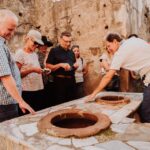
The Macellum is your cue that Pompeii wasn’t just monuments. It was commerce. Markets are where people’s routines met the city’s supply chain, and the guide can link what you’re seeing to how people ate, shopped, and traded.
This is also a good place for photos that feel less like postcard ruins and more like you’re standing inside a functional town.
Foro Civile di Pompei: the civic center that tells you who mattered
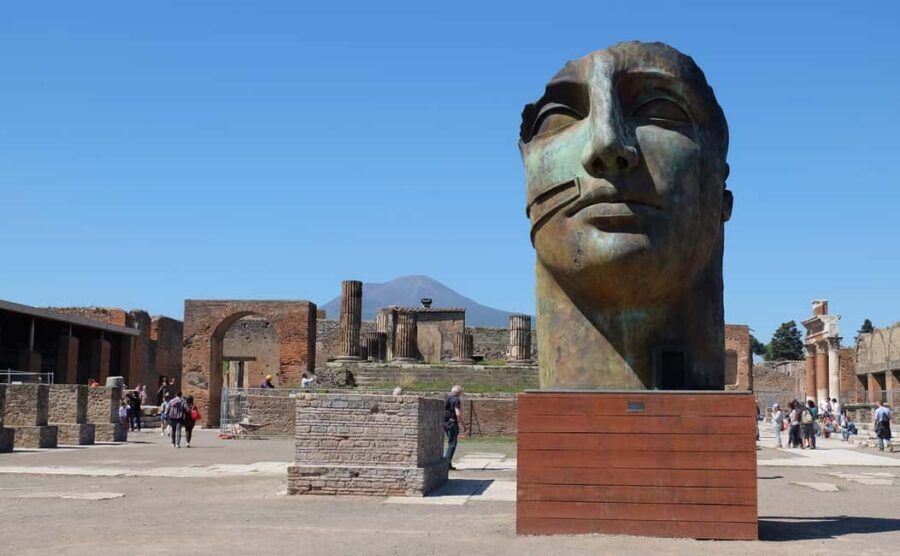
The Foro Civile di Pompei (civic forum) is the part where Pompeii starts to click as a system. Forums weren’t just about speeches; they were where the city performed its identity—law, community leadership, and daily public movement.
The useful thing about having a guide here is that you get a sense of scale and purpose. Without guidance, you might focus only on the most impressive facade. With guidance, you learn what each area did in the city’s rhythm.
Villa of the Mysteries: the stop that usually sticks with you
If Pompeii has a “wow” moment for many first-timers, it’s often the Villa of the Mysteries. Even when your time is limited, this is a location that can make the whole day feel worth it.
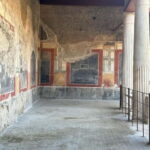
Why? Because villas aren’t public buildings where everyone gathers. They reveal private tastes, beliefs, and how wealth translated into space and decoration. When you’re walking Pompeii with a trained guide, you’re not just seeing a house—you’re seeing a window into the personal world behind the public city.
One practical point: this final phase of the day can feel like a lot—lights, crowds, and images in your head all at once. If you want your photos to turn out and you want the visit to land, slow down here. Let the guide’s explanations do the heavy lifting, then take a few minutes to look without rushing.
Timing, comfort, and what to bring (so you enjoy it)
This tour is 4 hours total, with around 2 hours guided time at the site and coach time in between. That means it’s designed for “see the big Pompeii” rather than “do Pompeii at your own pace all day.”
So you’ll want to match the pace with practical choices:
- Comfortable shoes are non-negotiable. Pompeii’s ground isn’t ideal for fragile footwear.
- Water helps more than you think, especially if the day is sunny.
- Sun hat and sunscreen matter because you’ll spend a lot of time outside.
- A camera is useful, but I’d also plan on simply looking—some of the most meaningful views are the ones you don’t screenshot.
It’s also a good idea to bring cash and have your passport or ID card on hand as requested. You’ll also want to arrive a bit early at Bar Kontatto. The pickup starts at 08:00, and being late can scramble your day faster than you’d expect.
One more reality check: the tour is not suitable for wheelchair users. If mobility is an issue, ask about alternatives rather than assuming you can adapt on the fly.
Price and value: is $94 worth it for a one-day Pompeii hit?
At $94 per person, you’re paying for a very specific blend: coach transport from Sorrento, a guided tour at Pompeii, and the admission ticket handled as part of the experience.
Here’s how I think about value:
You’re not just buying entry to Pompeii. You’re buying:
- less time figuring out transportation
- a guide to interpret what you’re seeing
- headsets for better audio in crowds
- and a schedule that returns you to Sorrento around mid-afternoon
If you tried to do Pompeii on your own, you might spend time coordinating tickets and timing—time you don’t really have when you want just one day. And if you arrive without a guide, the site can feel overwhelming, which can turn a “big dream trip” into “I saw stuff, but I’m not sure what it meant.”
That said, $94 is not a casual splurge, so it’s worth asking yourself one question: do you want Pompeii as a guided storyline or as a self-directed wander? If you want the storyline and you like the idea of hitting major highlights in a tight timeframe, this price starts to look fair.
Who this tour suits best (and who should pick something else)
This experience is a strong fit for:
- first-timers to Pompeii who want the essentials without spending a whole day
- people who prefer a structured plan with a guide to interpret ruins
- travelers who want easy logistics from Sorrento
It’s less ideal for:
- anyone who wants long, slow exploration with lots of breaks
- people who need wheelchair-friendly access (it’s listed as not suitable)
If you’ve got kids, the tour might work depending on your family’s tolerance for walking and crowd noise—but you’d need to judge your comfort level with the site pace.
For couples and solo travelers, it’s often a great format because you get a guided framework, then can still take your own photos during the stops.
Should you book this Pompeii with an archaeologist guide?
I’d book it if you want a smooth one-day Pompeii plan that’s built for hearing the explanations clearly and seeing the key areas without the stress of organizing everything yourself. The best part is the combination: archaeologist-led guidance plus coach transport and tickets, all wrapped into a realistic 4-hour window.
Skip it if you’re hoping for a quiet, flexible, slow exploration. Also skip it if mobility is a concern, since it’s not suitable for wheelchair users.
If you want Pompeii to feel like a place—not just a famous ruin—this is the kind of tour that makes that happen.