REVIEW · POMPEI CAMPANIA
Pompeii: Entry Ticket and Guided Tour with an Archaeologist
Book on GetYourGuide →Operated by Askos Tours · Bookable on GetYourGuide
Pompeii can feel like sensory overload. This 2-hour walking tour turns the ruins into a real story, with an archaeologist leading the route and helping you spot what matters. You’ll follow a smart loop through standout places like the Forum area and major houses, all tied to Pompeii’s life before the 79 AD eruption of Mount Vesuvius.
I especially like the small-group setup (up to 20 people) because it keeps the pace human and lets you ask questions without shouting over other tours. The main drawback is practical: the site is uneven, with steps and rough surfaces, so it’s not the choice for wheelchair users or mobility scooters.
Key things I’d plan around
- Small group of up to 20: easier conversations and more attention to details.
- Archaeologist guide + local storytelling: you get context, not just place names.
- Skip-the-line entry via Pompei Express: less time stuck at the gate.
- Headsets for groups of 10+: better hearing in crowded spots.
- A tight route that keeps you from wandering for hours and missing the best scenes.
- Guides with humor (names like Teresa, Anna, Alfredo, and Giancarlo show up often in feedback) that helps the facts stick.
In This Review
- Why an archaeologist tour makes Pompeii click
- The 2-hour walk: what the route is really doing for you
- Meeting the ruins at Porta Marina and the Temple zone
- Foro Civile di Pompei: your first real taste of civic life
- House of the Faun: learning to read the grand home
- Lupanar: where the stories get real
- House of Menander: art, rooms, and daily rhythm
- Macellum and Forum Baths: food, services, and public routines
- Headsets, pace, and why you might still feel the walk
- Price and value: how $35 pencils out
- Who this Pompeii tour is best for
- Tips to make your visit feel easy (even when Pompeii isn’t)
- Should you book the Pompeii entry and archaeologist guided tour?
- FAQ
- How long is the Pompeii guided tour with an archaeologist?
- Is the entrance ticket included?
- Does the tour include skip-the-line access?
- Will I be able to hear the guide?
- What languages are available?
- Is this tour suitable for wheelchair users or mobility scooters?
- Are there restrictions for children or pets?
Why an archaeologist tour makes Pompeii click
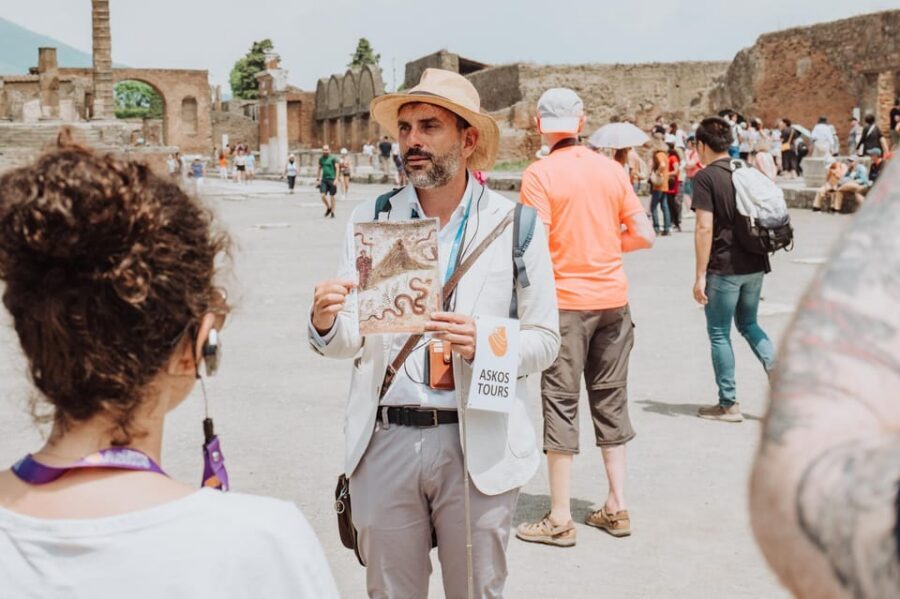
Pompeii is famous for being well preserved. But without context, you can end up staring at stone and guessing what you’re looking at. That’s where this format helps: you don’t just walk from one label to the next. You’re taught how the pieces fit together—streets, homes, civic buildings, and the daily routines behind them.
An archaeologist guide matters because Pompeii isn’t only dramatic ruins. It’s also evidence: worn thresholds, workshop spaces, room layout, and the way public and private life overlapped. With an expert steering the conversation, you start seeing patterns instead of random fragments. I like that the tour doesn’t treat Pompeii like a museum display; it treats it like a town you can understand.
The 2-hour walk: what the route is really doing for you
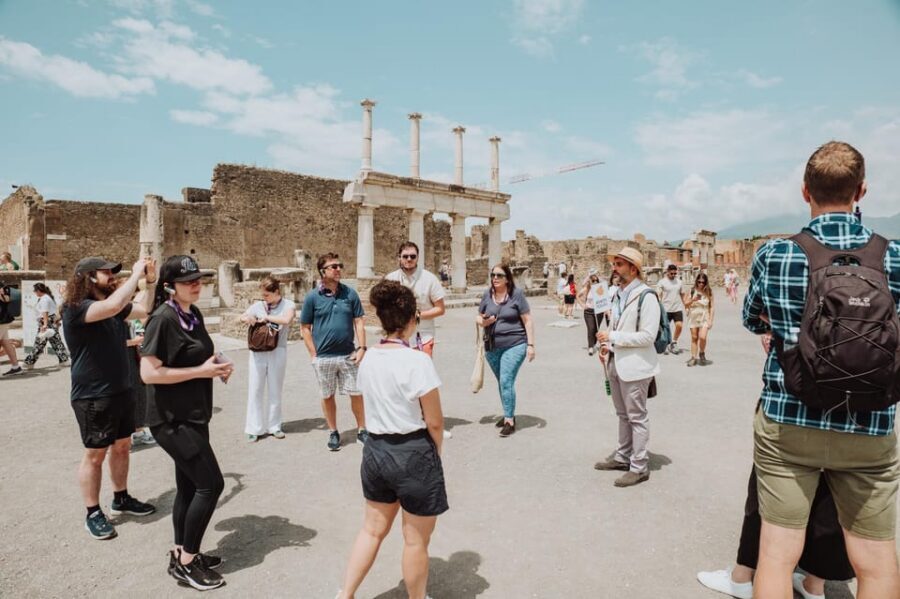
This tour is built as a quick but focused loop. It starts at one of the meeting points in the Pompeii area (one common option is Via Villa dei Misteri, 2), then moves through a sequence of passes and guided house visits. Expect a mix of short viewing stops and longer explanations inside the best-known areas.
Two hours is a useful time limit. It’s long enough to get your bearings and learn how to read the site, but short enough that you can still explore on your own after the tour. If you’ve ever visited a big archaeological site and felt lost in the crowd, this route is designed to stop that early spiral.
You can also read our reviews of more tours and experiences in Pompei Campania



Meeting the ruins at Porta Marina and the Temple zone
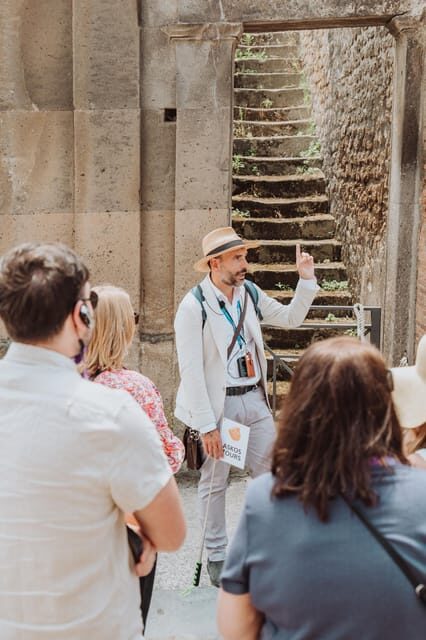
You’ll begin near Porta Marina, then head toward the Temple of Apollo. These are quick pass-by moments, about 10 minutes each, but don’t treat them as filler. Think of them as orientation points.
Porta Marina helps you visualize how people entered the city and how movement shaped daily life. The Temple of Apollo gives you a sense of the sacred landscape—where religion sat within the urban layout and how civic space and ritual space were connected.
A useful thing here: these early stops set your mental map. Once you know where you are in relation to major civic and residential areas, the rest of Pompeii stops feeling like a maze.
Practical note: even early on, you’ll want good shoes. The site is uneven, and you may climb a couple of steps.
Foro Civile di Pompei: your first real taste of civic life
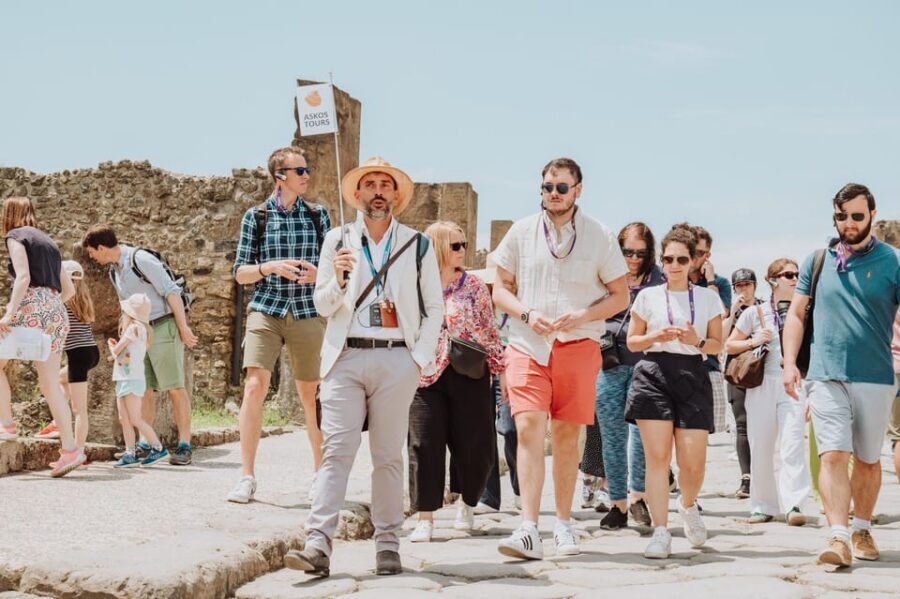
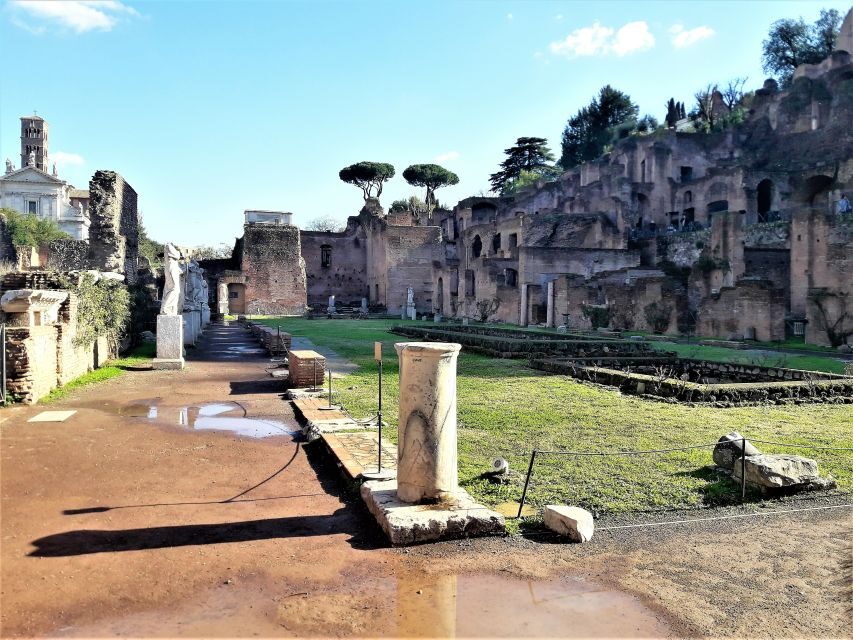
Next comes the Foro Civile di Pompei, roughly a 20-minute guided focus area. This is where you start seeing Pompeii as a functioning community, not just a collection of houses and walls.
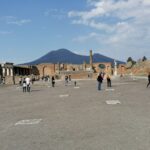
The Forum area is where public life happened: gatherings, civic decisions, and the buildings that made the city feel like it had a heartbeat. If you pay attention to how spaces connect—walkways, entrances, and sight lines—you’ll start understanding how people would have moved through the day.
The civic setting also helps the houses make sense later. Once you grasp the public backbone of the city, you can better appreciate what Roman domestic life was responding to: status, privacy, entertainment, and social reputation.
House of the Faun: learning to read the grand home
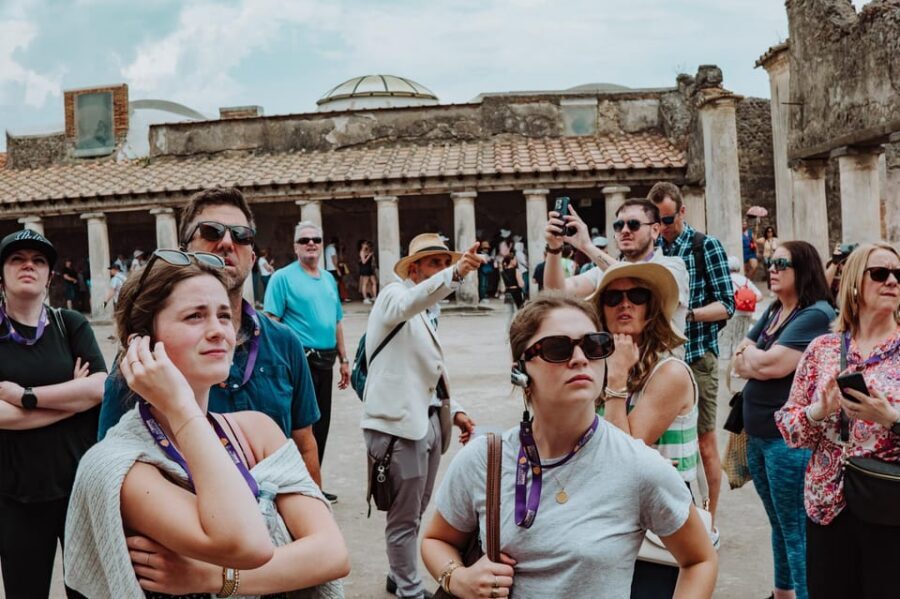
The House of the Faun is one of Pompeii’s signature stops, and you’ll get a full guided visit (about 20 minutes). This isn’t just about a famous façade. It’s about how elite life looked on the ground.
As you walk through the rooms and corridors, you’ll learn to notice layout clues—how movement worked inside the house, how open areas supported social events, and how art and decoration signaled wealth and taste. The guide’s job is to help you connect visual details to living behavior.
This stop is often the one people remember later. A big reason: it shows how different “private” life still depended on public ideas. Even a home had social rules.
Possible drawback: this is an architectural site, so if you hate walking and prefer one or two deep stops, you might find Pompeii’s scale a bit much. That said, a guided route usually fixes the feeling of aimless wandering.
Lupanar: where the stories get real
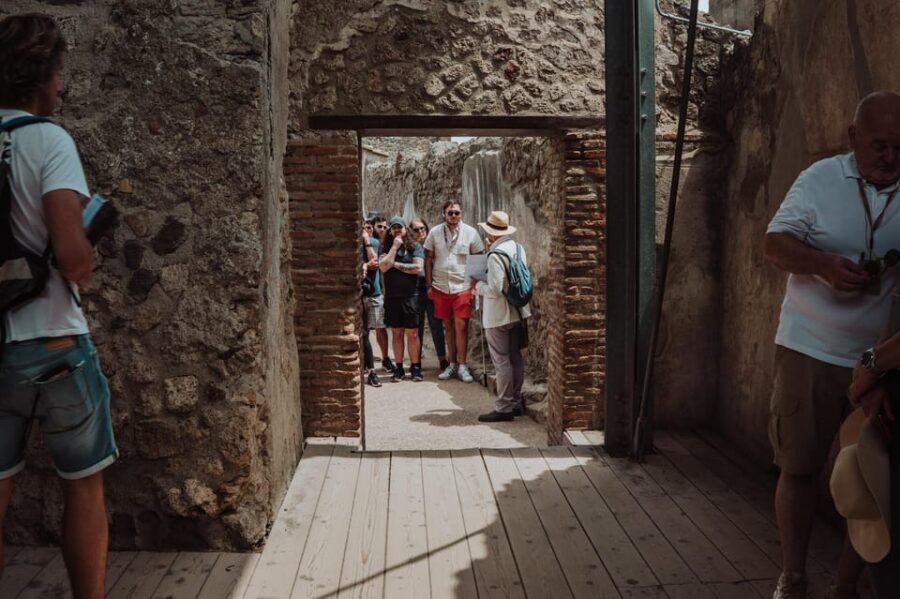
Then you’ll head to the Lupanare (the brothel), another guided segment (about 20 minutes). This is not a sightseeing stop for everyone, but it’s one of the most historically revealing.
The value here is plain: you get a window into the economy of the city and the kind of services that existed in Pompeii. The guide’s context is key, because you’re not meant to stare at ruins with a modern morality lens. You’re meant to understand what the building reveals about how people interacted and how a town like Pompeii organized commercial life.
This stop can also be a turning point for your understanding of Pompeii. After it, the site feels less like a distant tragedy and more like a complete social system—messy, human, and ordinary.
Small-group advantage: with up to 20 people, you’re more likely to hear the explanation clearly and see the spaces rather than only catching glimpses while the crowd surges.
You can also read our reviews of more guided tours in Pompei Campania


House of Menander: art, rooms, and daily rhythm
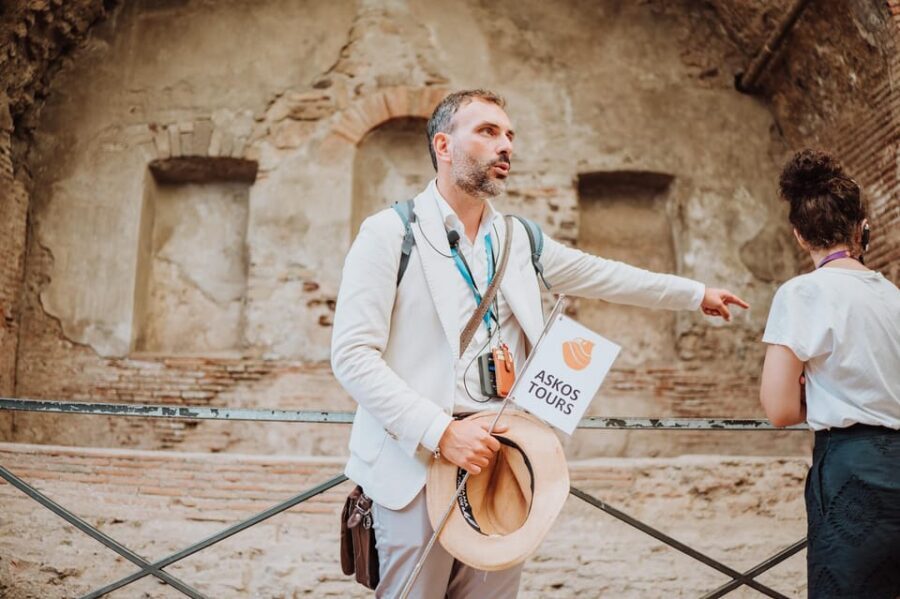
Next comes the House of Menander (about 20 minutes guided). This one pairs well with the House of the Faun because it helps you compare “elite” in different forms. You’ll learn how art, room use, and spatial design could reflect personality and family priorities.
A good guide will point out features you’d normally miss: small layout decisions, how spaces were organized for function, and what decoration hinted about identity. Even if you’re not a museum person, this style of explanation helps you start building a mental picture of daily rhythm.
Also, this is where many tours really start to feel lively. Pompeii isn’t just stone; it’s the stage for people’s routines, their tastes, and their status games. When the guide brings that to life—often with humor—your brain stops filing everything under ancient and starts making connections.
Macellum and Forum Baths: food, services, and public routines
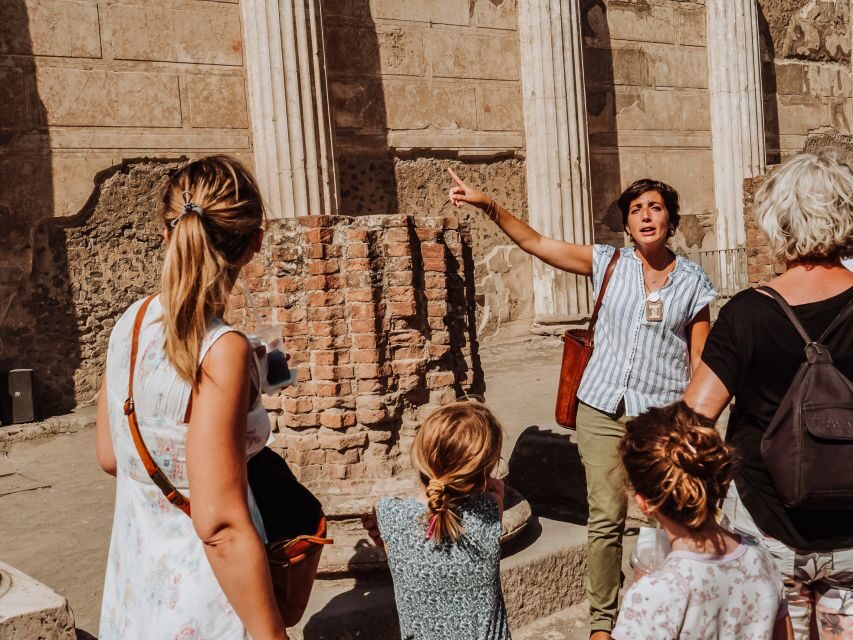
The tour continues with the Macellum of Pompeii (about 10 minutes guided) and the Forum Baths (about 10 minutes guided). These are shorter stops, but they’re important because they shift you from homes and civic space to services and daily habits.
The Macellum is essentially the food-market zone. You’ll get a sense of where people went for goods and how commerce worked in a dense city. Even in a brief visit, it helps you understand Pompeii as an economic place, not just a visual one.
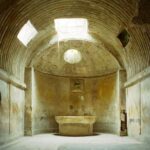
Then the Forum Baths bring you into the public-sociability world. Baths were social centers as much as they were places to clean. You’ll likely notice how these spaces fit into the city’s overall circulation—where you’d pass, meet, linger, and talk.
These two stops also improve your overall balance of the tour. You’re not only seeing the most dramatic houses and monuments. You’re seeing the parts that made the city feel normal day to day.
Headsets, pace, and why you might still feel the walk
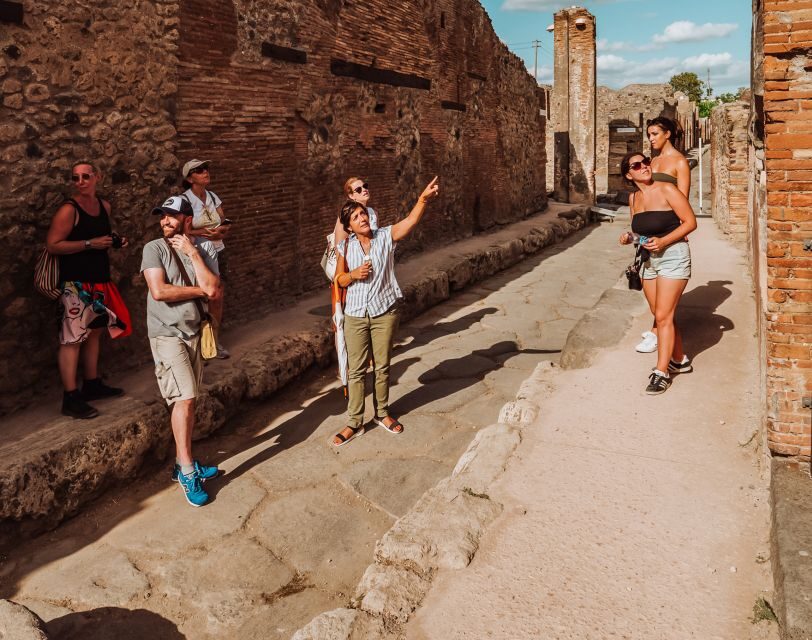
The tour includes headsets for groups of 10 or more. That’s smart. Pompeii gets crowded, and it’s easy for you to miss key explanations when a guide has to speak over foot traffic.
One practical caution from real-world experience: if you have trouble hearing, don’t assume the headset is the only answer. Some people found they had to hold the earpiece to hear clearly in very crowded moments. So if you’re picky about audio, plan to adjust it.
On the pace: even though the tour is 2 hours, the walk can feel longer because you’re stopping often and learning while you move. That’s normal. And it’s exactly why I recommend it. If you try to do Pompeii solo on your first visit, you can easily spend hours without knowing what to look for—then feel like you didn’t get your money’s worth.
Price and value: how $35 pencils out
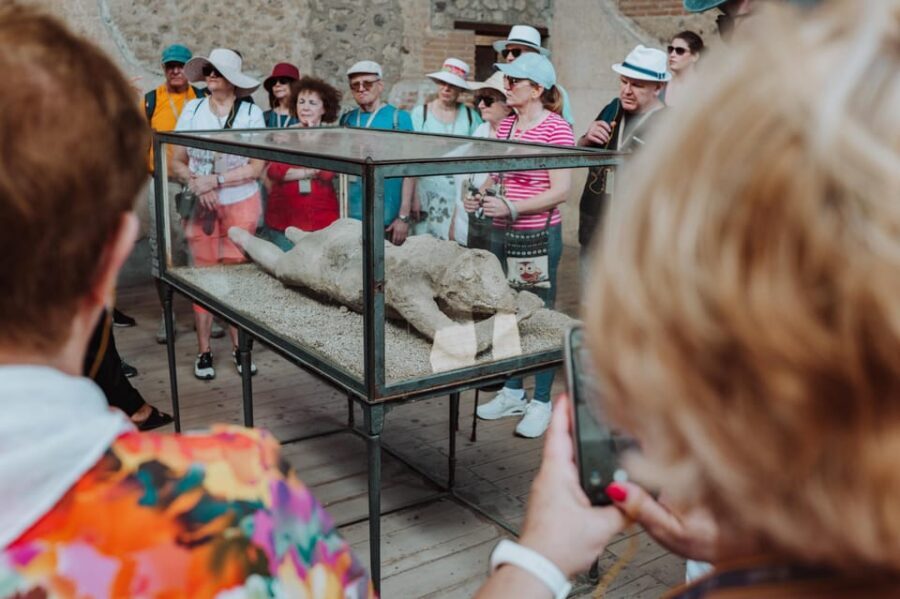
At about $35 per person, this tour looks simple on paper. The value comes from what’s bundled and what’s avoided.
You get:
- an entrance ticket included through Pompei Express
- an archaeologist guide
- a small group format
- headsets when the group size calls for it
- skip-the-line access, which saves time right when queues usually feel worst
For Pompeii, time is money. The site is large, and ticket lines can eat your morning. When you combine faster entry with an expert route, you spend your limited hours learning rather than figuring out where to go next.
Is it “cheap”? No. But it’s also not paying for fluff. If you care about understanding what you’re seeing, this is a solid use of a short trip to the area.
Who this Pompeii tour is best for
This tour fits you best if you:
- want a guided route so you don’t get lost in the scale of Pompeii
- like houses and civic life, not only the most famous snapshots
- enjoy explanations tied to how people actually lived
- prefer a group that stays small enough for questions and clear guidance
It also works well if you’re short on time. Two hours gives you structure, then you can extend your visit on your own after the tour ends.
It’s not a good match if you use a wheelchair or need mobility scooter access. The terrain and the visit style aren’t built for that.
Tips to make your visit feel easy (even when Pompeii isn’t)
Here are the real-world things that will help you enjoy the day more:
- Wear comfortable, supportive shoes. Paths are uneven, and you may climb a few steps.
- Bring water. Pompeii heat and crowd time adds up quickly, and it’s easy to underestimate how long you’ll feel on your feet.
- If you’re using the headsets, test them early. Adjust for hearing in the busiest sections.
- Expect a lot of walking and a lot of looking. If you hate constant movement, consider shorter stops elsewhere or plan a slower day around it.
- If weather turns rainy, it doesn’t automatically ruin the tour. Still, bring a rain layer you can move in.
One more smart move: after the guided portion, ask your guide for a short follow-up plan. The tour ends with recommendations for what else to explore, and that can help you choose what fits your interests rather than wandering randomly.
Should you book the Pompeii entry and archaeologist guided tour?
If you want the fastest path from Pompeii overwhelm to Pompeii understanding, I’d book this. The combination of skip-the-line entry, a small group, and an archaeologist-led walk makes the two hours feel purposeful instead of rushed.
I’d skip it only if walking on uneven ground is a deal-breaker for you, or if you prefer to wander without stopping for explanations. Otherwise, this is one of the better ways to see Pompeii on a first visit and leave with a clearer sense of what the city was—civic, commercial, private, and deeply human.
FAQ
How long is the Pompeii guided tour with an archaeologist?
The tour lasts 2 hours.
Is the entrance ticket included?
Yes. Your Pompei Express entrance ticket is included.
Does the tour include skip-the-line access?
Yes. You get skip-the-ticket-line access.
Will I be able to hear the guide?
Headsets are provided for groups of 10 people or more.
What languages are available?
The live tour guide is offered in English, Spanish, French, Italian, Portuguese, and German.
Is this tour suitable for wheelchair users or mobility scooters?
No. Mobility scooters are not allowed, and it is not suitable for people with mobility impairments or wheelchair users.
Are there restrictions for children or pets?
Unaccompanied minors are not allowed. Only dogs up to 10 kg and up to 40 cm are permitted, and they must be on a leash, held in arms inside buildings, with excrement collected.