REVIEW · POMPEI CAMPANIA
Pompeii: Small Group Tour with an Archaeologist
Book on GetYourGuide →Operated by Askos Tours · Bookable on GetYourGuide
Pompeii hits you fast, and hard. The ruins were sealed in time when Mount Vesuvius buried the city in 79 AD, and an archaeologist guide turns those stones into daily life you can almost picture. I love the way this tour gives you clear orientation so you’re not wandering lost. I also love the close-up art moments that are usually missed when you only do a self-guided stroll.
The tour moves at a pace that makes sense for a UNESCO site this large, and the storytelling stays focused on what you’re actually looking at. Guides like Roxanne, Alessandra, and Teresa have a knack for turning big ruins into small, human details, and that’s the real magic here. One consideration: Pompeii’s terrain is uneven, with steps and ramps, so this isn’t a great match if you have mobility impairments or use a wheelchair.
If you go in expecting a quick history lecture, you’ll miss the point. Go in expecting Roman streets, homes, and public spaces to start behaving like a city again, then finish with time to roam on your own.
In This Review
- Key highlights at a glance
- Why an archaeologist guide changes everything at Pompeii
- 2-hour vs 3-hour: what you’re really choosing
- Entering through Porta Marina Superiore: get your bearings early
- The Forum and civic buildings: learn how Roman city life worked
- Great Theater and the show of everyday Pompeii
- Houses with art: frescoes, mosaics, and what those rooms tell you
- The Villa of the Mysteries: when the 3 hours feel worth it
- Headsets, walking flow, and planning your post-tour time
- Price and value: is $40 worth it?
- Should you book Pompeii: Small Group Tour with an Archaeologist?
- FAQ
- How long is the Pompeii tour?
- Is the entry ticket included?
- What does the guided portion include?
- Can I explore Pompeii on my own after the tour?
- Where does the tour start?
- What languages are available for the live guide?
- Is this tour wheelchair-friendly?
- What identification do I need to bring?
- Is cancellation free?
Key highlights at a glance
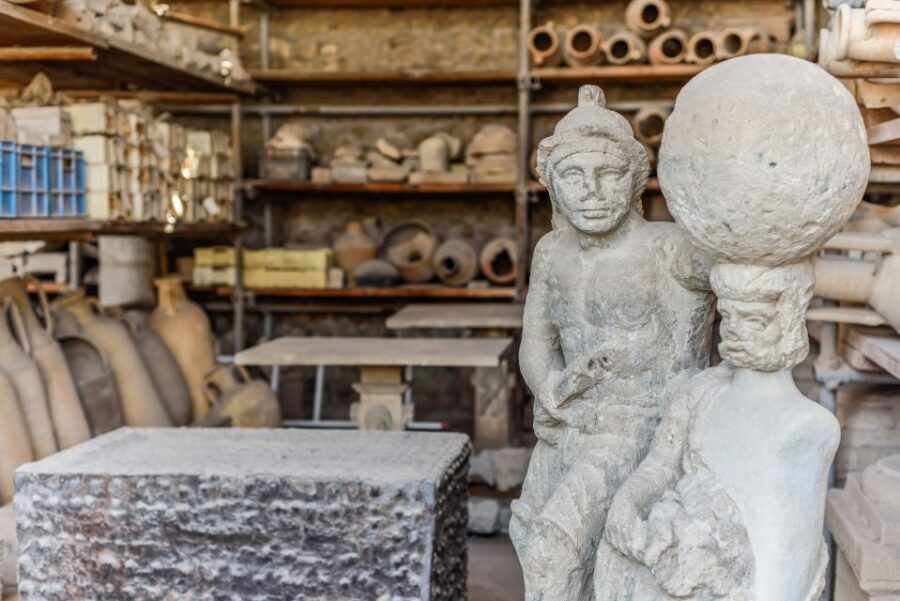
- Archaeologist-led narration that connects structures to real Roman routines and objects
- Porta Marina Superiore entry to get you into the main action early
- Forum, temples, Basilica, and Great Theater in a tight, efficient route
- Frescoes, mosaics, and preserved wall art up close (plus House of the Vettii and House of the Faun)
- Lupanar stop with context for what it was and how it worked
- Optional Villa of the Mysteries for the standout 3-hour experience
Why an archaeologist guide changes everything at Pompeii
Pompeii can feel like a pile of ancient rooms until someone gives you the map in your head. That’s where an archaeologist guide earns their fee. You’ll spend most of the tour inside the Archaeological Park, but the value is in the explanations: how the city functioned, who lived where, and why certain buildings matter.
This tour is designed to help you read the ruins. You learn to spot what looks like a home versus what reads like a shop or public space, and you get pointers that make details pop instead of blending together. Many guides (including Anna, Teresa, and Nicoletta from the experience) explain things in a way that keeps the group listening, and headsets are available—especially helpful for larger groups (they mention headsets for groups of 16 or more).
There’s also something practical here: an archaeologist doesn’t just list what’s famous. They help you build a quick framework, so when you’re walking on your own afterward, you’re not staring at walls and hoping you understand them.
2-hour vs 3-hour: what you’re really choosing
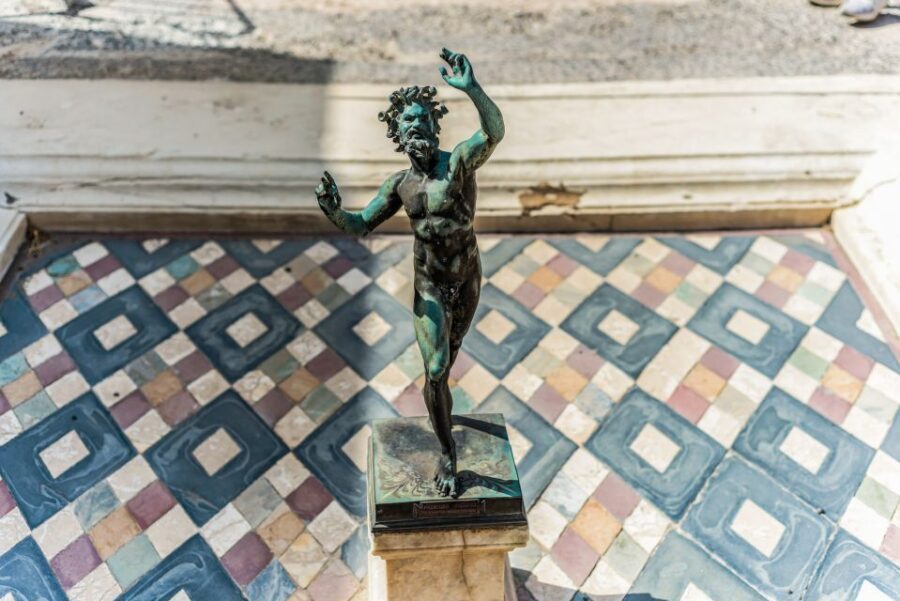
You have two main options: a shorter tour and a longer one that adds one of the most important fresco sites in Pompeii.
- The 2-hour option is a strong hit list. You cover the essentials: entering through Porta Marina Superiore, walking main streets, and moving through the Forum and key public buildings like the Basilica and the Great Theater area. You also see major residential highlights such as the House of the Vettii and the Lupanar.
- The 3-hour option keeps everything above and adds the Villa of the Mysteries, famous for its frescoes. If you care about art and symbolic scenes, that extra time is usually the difference between a good overview and a “this is why I came” moment.
My rule for choosing: if this is your only time at Pompeii (or you’re also doing Vesuvius and Naples), go 2 hours. If you’re travel-scheduling for a museum-level experience and you want more art, go 3 hours.
Entering through Porta Marina Superiore: get your bearings early
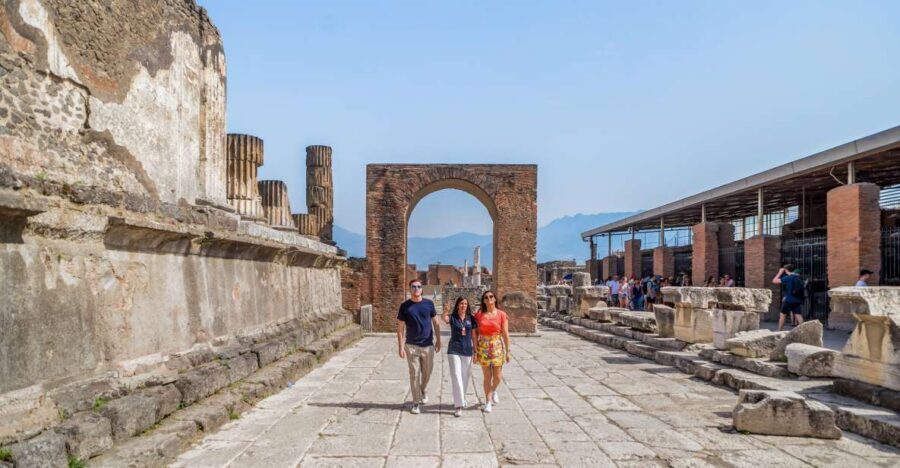
A lot of Pompeii visitors wander in and then spend the rest of the day trying to figure out what’s connected to what. This tour starts you at Porta Marina Superiore, one of the city’s seven gates. That matters because the gate-to-street-to-Forum path is the fastest way to understand how people moved through the city.
From there, you’ll walk main streets and start orienting to the urban shape. The route funnels you toward the Forum, the old heart of civic life, where you’ll see key public buildings and the broader layout. You may also get views of Mount Vesuvius looming over the city—use those moments to realize the disaster wasn’t abstract. It was right there, physically watching the streets.
This first phase is about momentum. You don’t just arrive; you start mapping Pompeii in your head, which pays off later when you’re looking at houses and baths and suddenly they make functional sense.
The Forum and civic buildings: learn how Roman city life worked
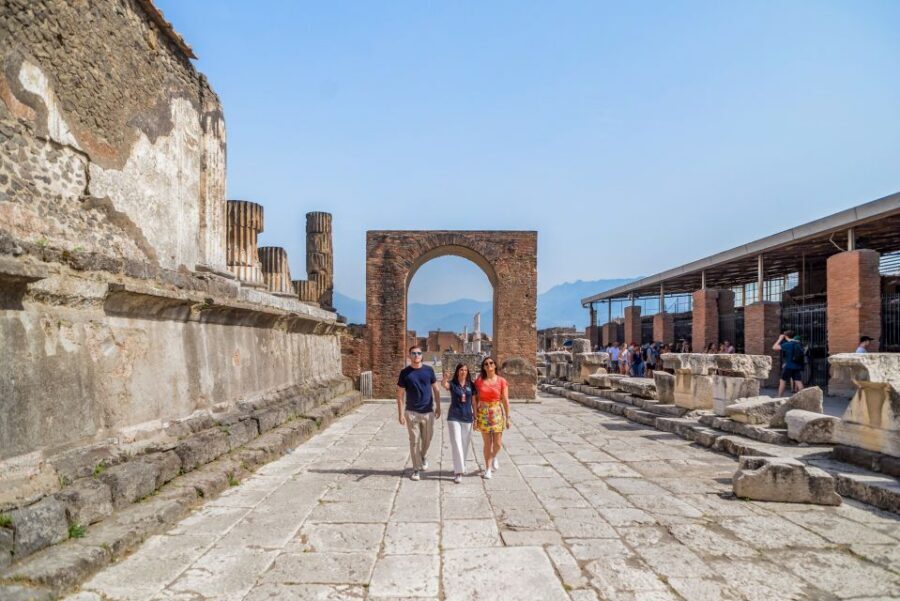
Once you reach the Forum area, you’re in the zone where Pompeii shows its rhythm. The tour includes major stops tied to public life, and each one gives you a different lens on the city.
Here’s what you’ll get:
- The Foro Civile (civic Forum): the center of public activity, where social and business life overlapped.
- Basilica: described as a business and legal center, so it helps you understand why certain buildings were built for work, not worship.
- Temples such as Apollo and Jupiter: these add the religious layer that sat alongside commerce and politics.
- Forum Baths: practical, not romantic. Baths show daily routines and city infrastructure, which is often what people remember most after the tour.
What I like about this structure is that you see the city as systems. Public religion sits near public administration. Work spaces sit near social spaces. Even if you don’t memorize Roman names, you start recognizing the purpose behind the architecture.
Great Theater and the show of everyday Pompeii
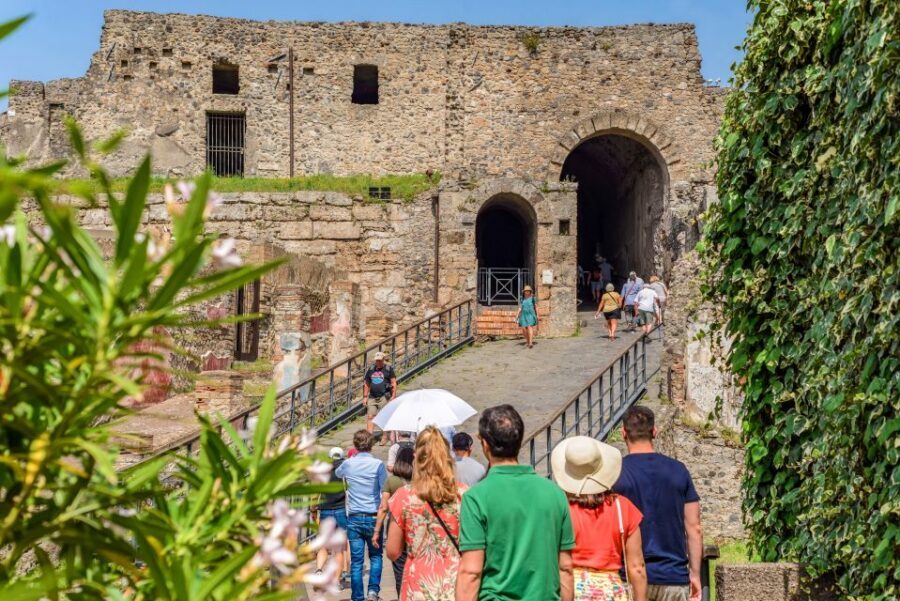
Pompeii isn’t only temples and tombs. It also had crowds, leisure, and street-level business. This tour typically brings you to the Great Theater and nearby highlights that help you sense how people passed their free time.
The theater stop is useful because it makes the city feel social. You’re not just looking at walls; you’re imagining noise, events, and gatherings. Many guides also point out small “reads” in the architecture and surfaces that help you understand how Pompeii worked as a functioning town.
You’ll also get a tour path that tries to avoid the worst bottlenecks. Some guides are praised for steering away from the most congested areas, so you’re more likely to spend time looking rather than waiting. That’s a real comfort factor at Pompeii, where the scale is huge and the crowds can get thick.
Houses with art: frescoes, mosaics, and what those rooms tell you
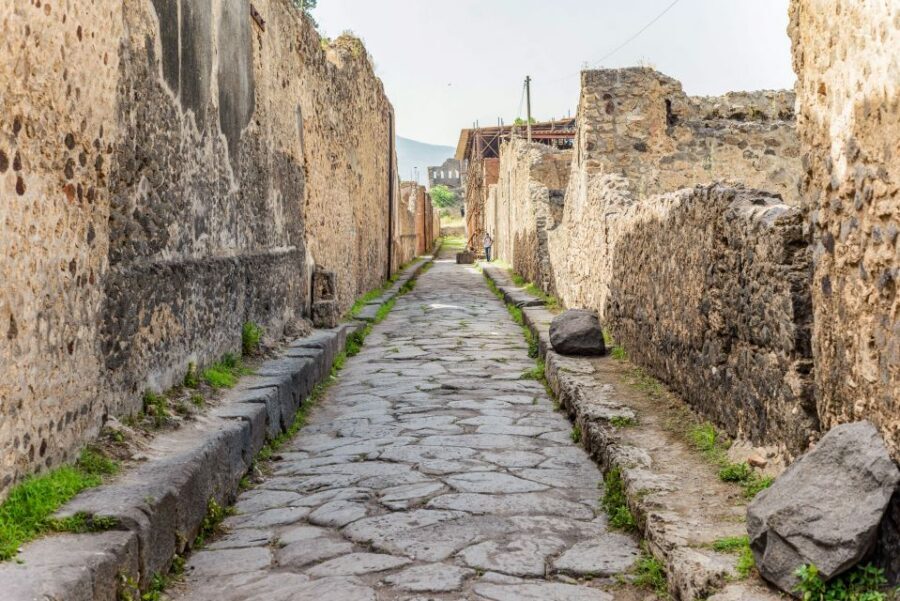
One of Pompeii’s biggest draws is that you can see art and decoration preserved on-site. In this tour, you’re guided toward house highlights where plasterwork, frescoes, and mosaics are key parts of the story.
Two standouts included in the tour experience are:
- House of the Vettii: linked with preserved decoration, and it’s often where people start thinking beyond basic “ruins.”
- House of the Faun: another major household highlight where you can connect the size and layout to the people who lived there.
You’ll also encounter the Lupanar, Pompeii’s famous brothel. This stop is not just about the topic; it’s about interpretation. You’ll see preserved elements tied to how it functioned—stone beds and wall frescoes—and you’ll learn how it got its name. If you’re traveling with kids, plan for some adult-themed content tied to the location and the graffiti you may see in the area; the tour description notes that the material is handled with sensitivity.
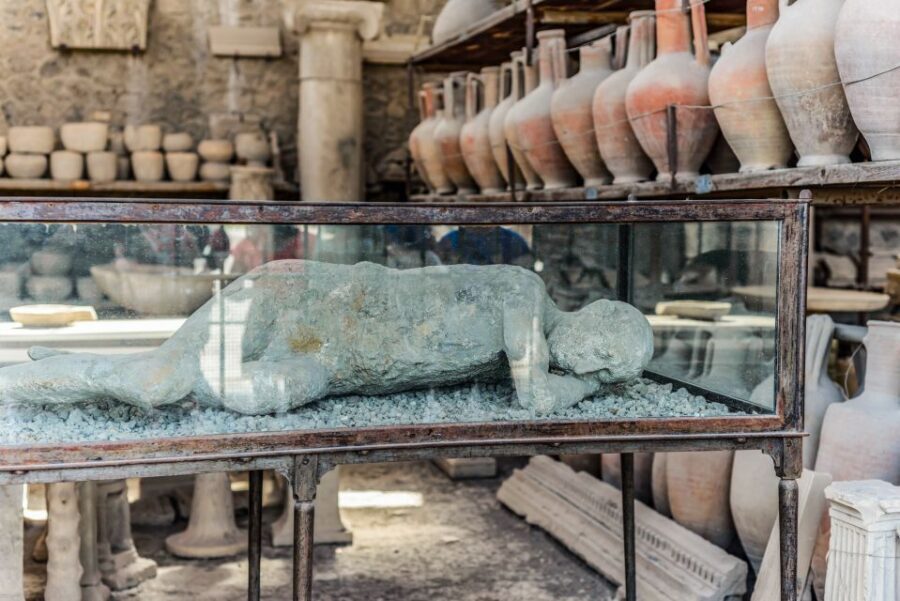
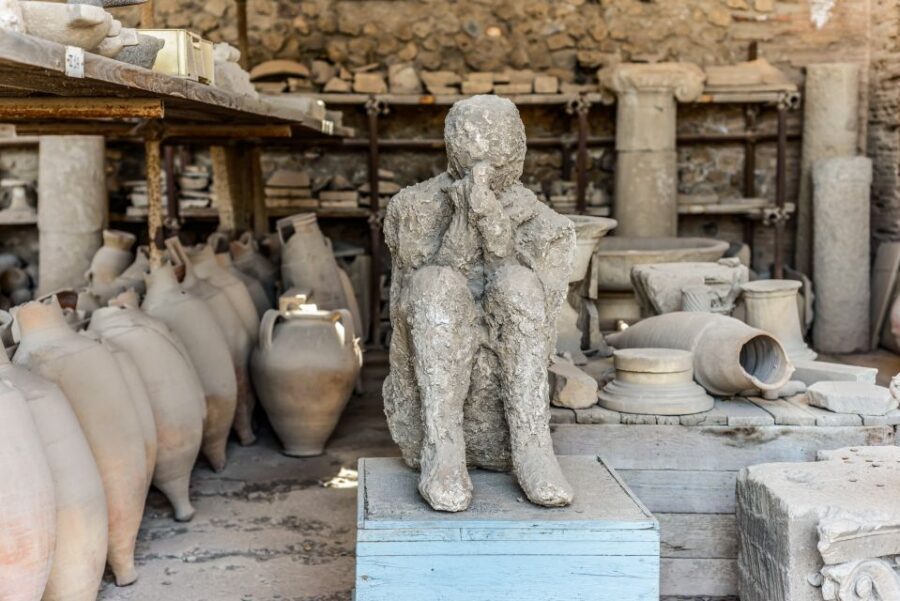
There’s one more detail worth flagging: plaster casts. The tour mentions plaster casts of people from the eruption. A recent note indicates plaster casts are not placed in dwellings the way they were in older displays, and instead there are three on display in sealed glass cases. Either way, these casts help you anchor the tragedy in human form, and they’re a powerful part of the stop.
The Villa of the Mysteries: when the 3 hours feel worth it
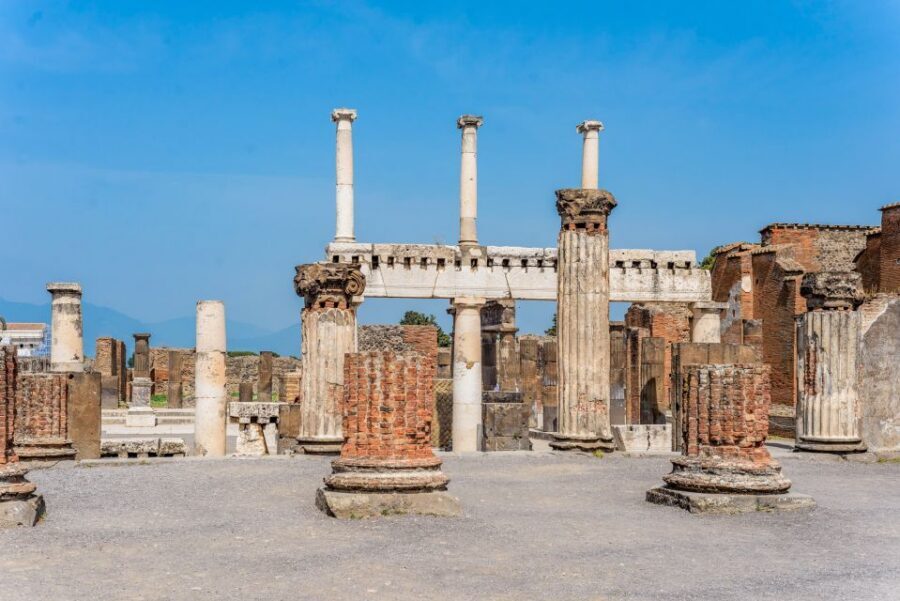
If you choose the 3-hour version, the Villa of the Mysteries is the big reason. This is where the tour shifts from “how a city worked” into “look at what people painted and believed.”
The villa is described as an add-on that focuses on the preserved frescoes, and that lines up with why many visitors rate the longer tour so highly. Frescoes need time—not just eyeballing from across the room. With a guide pointing out themes and visual structure, you’re more likely to understand what you’re seeing rather than simply noticing it’s colorful.
This stop is also a good match for art lovers. Even if you’re not trying to decode every symbol, it gives you a sense of the culture behind the city. And because it’s included in the longer tour option, it tends to make people feel like they got more than a highlight reel.
Headsets, walking flow, and planning your post-tour time
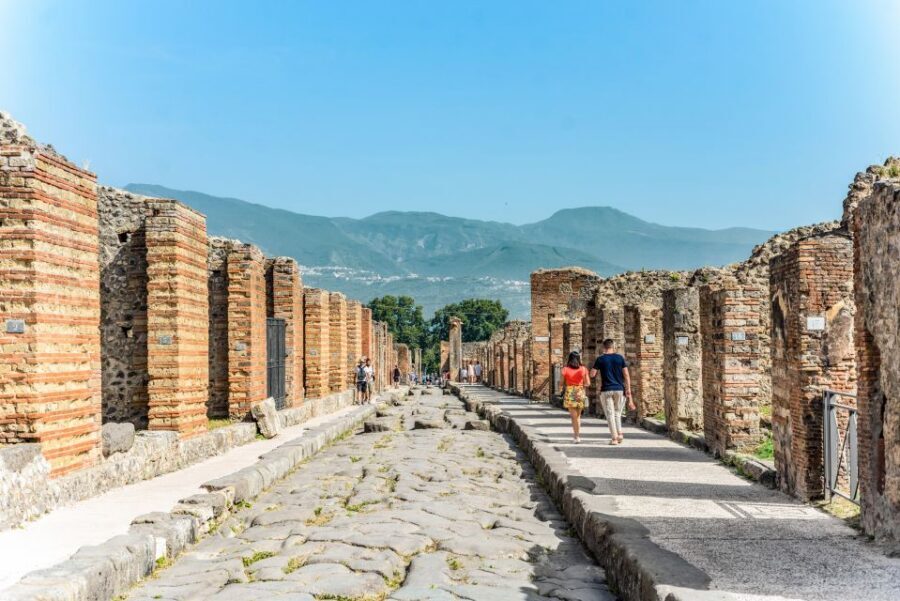
The tour is built around a guided loop, then you’re free to stay inside the site longer and explore on your own afterward. That freedom is a big deal at Pompeii, because so much is outside the guided time window.
A few practical points I’d follow:
- Use the guide time to learn what to look for, then switch to self-exploration with purpose. If you remember which streets lead where, you won’t waste hours backtracking.
- Expect the route to be walking-heavy, with steps and ramps sprinkled throughout. The experience itself notes it isn’t recommended for travelers with mobility issues.
- Arrive with an ID (passport or ID card). A copy is accepted, but bring something.
- Know the site rules: no smoking, no luggage or large bags, and mobility scooters aren’t allowed.
- Plan your “extra time” wisely. Pompeii’s opening hours matter, so if you do the later tour, you may have less time for independent exploring.
For smooth listening, headsets are available for larger groups. Even if you’re in a smaller group, the guide’s narration is part of what makes Pompeii readable.
Price and value: is $40 worth it?
At about $40 per person, you’re paying for three things: entry ticket access through Pompei Express, a 2- or 3-hour guided tour with an archaeologist, and headsets if needed. Since you can also keep exploring afterward, the guide becomes more like an orientation session plus a highlight walk.
The value works best if you want Pompeii to make sense quickly. If you love art but don’t know the layout, the guide helps you stop guessing. If you’re more interested in everyday life than big names, you’ll appreciate the focus on buildings like baths, the Forum, the Basilica, and households.
If you already know Pompeii well and want to roam slowly with zero structure, you might not need the cost. But for most first-timers, paying for an archaeologist-led intro is usually the fastest way to turn a huge site into something you can actually enjoy.
Should you book Pompeii: Small Group Tour with an Archaeologist?
I’d book this tour if you want a guided backbone and you’d like your visit to feel coherent fast. The route covers the major civic places (Forum, Basilica, temples), the big public setting (Great Theater), and signature art and household stops (including the House of the Vettii and the Lupanar). If you care about frescoes, the Villa of the Mysteries makes the 3-hour option especially tempting.
Skip it if mobility is a concern. The tour is not recommended for wheelchair users or travelers with mobility impairments because of steps, ramps, uneven ground, and a little steep climb.
If your schedule allows flexibility, this is also the kind of tour where language selection matters. Shared group and private options can differ in available guide languages, so check the language list before you lock in.
FAQ
How long is the Pompeii tour?
The experience runs about 2 to 3 hours, depending on which option you book.
Is the entry ticket included?
Yes. The Pompei Express entry ticket is included.
What does the guided portion include?
You’ll get a guided tour led by an archaeologist for the selected duration, with stops around Pompeii’s key areas and highlights.
Can I explore Pompeii on my own after the tour?
Yes. After the guided part, you have freedom to explore the archaeological site further on your own.
Where does the tour start?
The meeting point may vary depending on the option you booked, with multiple starting location options listed.
What languages are available for the live guide?
The tour offers live guides in French, Spanish, German, Portuguese, English, and Italian.
Is this tour wheelchair-friendly?
No. It is not recommended for wheelchair users or people with mobility impairments due to steps, ramps, and uneven terrain.
What identification do I need to bring?
You should bring a passport or an ID card (a copy is accepted).
Is cancellation free?
The tour offers free cancellation if you cancel up to 24 hours in advance for a full refund.