REVIEW · POMPEI CAMPANIA
Pompeii: AR Glasses Augmented Reality Tour
Book on GetYourGuide →Operated by AR Tour srl · Bookable on GetYourGuide
Pompeii changes when you add AR glasses. With AR glasses and holographic reconstructions, you can see key buildings in place as they were before the 79 A.D. eruption, right on top of the existing stone. It turns a pile of ruins into something you can actually follow.
I like two things a lot: a tour assistant who stays with you and helps you use the gear, and an audio guide that explains what you’re seeing with detailed narration. One consideration: the 3D video layer isn’t perfect for everyone, so if you’re picky about video quality, you might find it could be improved.
In This Review
- Key points worth knowing
- AR Glasses and Pompeii: Why It Feels Different
- Coffee Shop Vittoria Start: Gear, Timing, and Setup
- Walking the Ancient City for Two Hours (Stops Explained)
- Seeing 79 A.D. on Top of the Ruins
- Audio, Language, and How to Use the Tech
- Practical Stuff That Makes or Breaks the Experience
- Price and Value for $20
- Should You Book This AR Tour?
- FAQ
- What’s the duration of the Pompeii AR glasses tour?
- How much does it cost?
- Where do I meet the tour assistant?
- Is Pompeii entry included in the price?
- What does the tour include?
- What languages are available?
- Can I wear the AR glasses if I wear prescription eyeglasses?
- What should I bring?
- Is the tour suitable for everyone?
Key points worth knowing
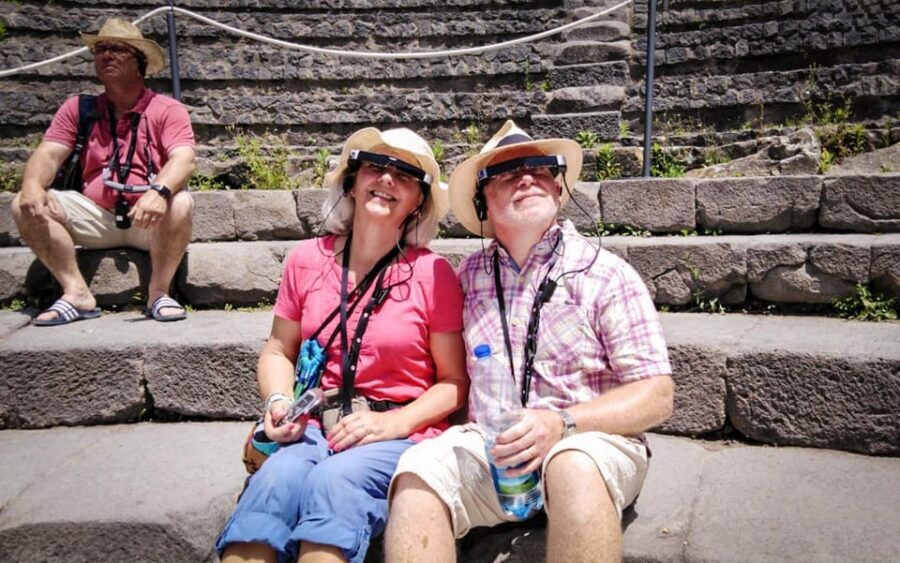
- Holograms over ruins: you’ll compare the pre-eruption city and the present-day remains in the same view.
- Built with experts: the reconstructions were developed with input from archaeologists and specialists.
- Tech support included: your assistant handles setup and stays close during the walk.
- Two hours, focused route: you’ll cover major sights without the day-long grind.
- Entry ticket not included: you’ll need your own ticket before you go in.
- Rain or shine: it runs outdoors in typical Pompeii weather.
AR Glasses and Pompeii: Why It Feels Different
Pompeii is famous for what’s left behind, but it can be tough to picture what it looked like in real life. This tour tackles that exact problem. The AR glasses add a second layer on your path: reconstructions of temples, theaters, houses, squares, and other major structures, placed right where you’re standing now.
What makes this setup useful is that it’s not either-or. You don’t have to choose between reading about Pompeii or looking at the ruins. You get a direct comparison—how the same spot changes from today’s fragments to an imagined, reconstructed past. That’s especially helpful if you’re not a deep-roman-history person. You can still connect the dots as you walk.
The “secret sauce” is timing and attention. The audio description and the AR visuals push you to look at specific building parts instead of drifting through the site. If you’ve ever felt that Pompeii tours can turn into random photos, this format gives you a reason to look closer.
You can also read our reviews of more tours and experiences in Pompei Campania.



Coffee Shop Vittoria Start: Gear, Timing, and Setup
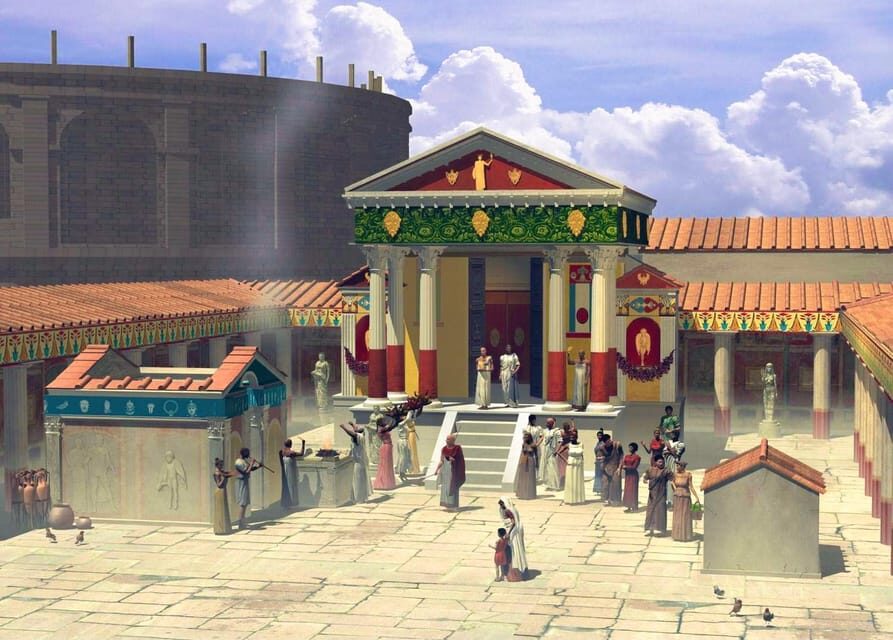
Your tour begins at Coffee Shop Vittoria in Piazza Esedra (near Porta Marina Inferiore), right next to the entrance. The assistant meets you holding a sign that says AR Tour, so you should be able to spot the group fast.
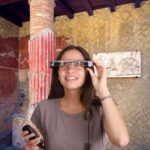
Before you step into the ruins, you’ll get quick instructions on how to use the AR glasses and what the route will focus on. The good part here is that you’re not left figuring things out on your own. The assistant stays with you throughout the entire experience, so if you need help adjusting the gear or understanding what you’re looking at, it’s handled.
A few practical notes matter for making this smooth:
- Plan to arrive on time. If you’re late, the tour waits for a maximum of 5 minutes, then starts out of respect for other participants.
- Bring the right basics: comfortable shoes, water, sunscreen, and a sun hat help a lot in Pompeii.
- No large bags or luggage are allowed, so travel light.
- If you wear eyeglasses, you can still wear the AR glasses over them.
Also, the tour runs rain or shine. So if clouds threaten, you’ll want weather-appropriate clothing ready rather than hoping for good luck.
Walking the Ancient City for Two Hours (Stops Explained)
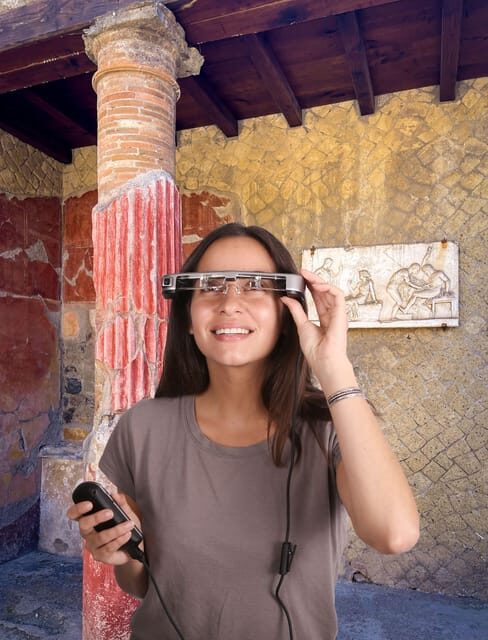
This is a simple route with a clear rhythm: meet, walk, return.
Stop 1: Coffee Shop Vittoria (starting location)
You’ll meet your tour assistant here, confirm the plan, and get the AR glasses set up. This start is more than a formality. It’s when you learn how the audio and AR visuals work together, which makes the walk inside the archaeological area much easier to follow. If you’re the kind of person who likes knowing what’s coming next, this portion helps you feel oriented quickly.
Stop 2: Pompeii (guided walk on site)
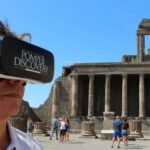
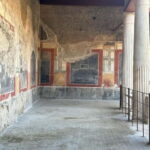
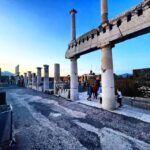
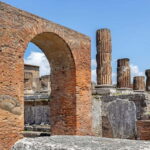
This is the main event and where the AR magic happens. As you walk through Pompeii, the glasses create holograms that overlap the ruins. The experience compares reconstructed life before the eruption with the remains you see today. You’ll focus on the city’s most significant public and residential areas, including temples, theaters, houses, squares, and major buildings.
One thing to note: the tour does not include suburban villas, including Villa dei Misteri. If that’s a must-see for your Pompeii day, you’ll need a different plan for it.
The format also keeps the walk manageable: it’s designed as a small-group experience, not a crowded herd. That tends to be friendlier with tech gear, because you can actually hear the audio and look closely without feeling rushed.
Stop 3: Coffee Shop Vittoria (ending point)
You finish back at the meeting spot. That’s helpful because you don’t have to figure out transport from a random exit. You can plan your next stop in Naples or around Pompeii with less stress.
Seeing 79 A.D. on Top of the Ruins
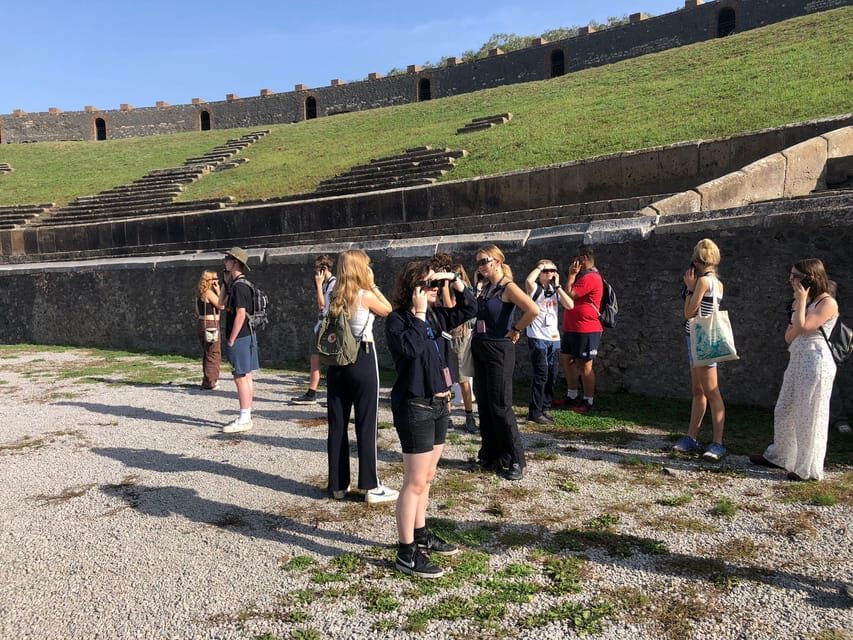
The core benefit of this tour is the overlap view: you’re standing at real remains while AR shows what the same place likely looked like before the eruption in 79 A.D. That means you can use the physical clues around you—columns, foundations, shapes, and spacing—while the AR layer fills in missing structure.
In practice, you’re encouraged to watch how the glasses bring back:
- major temple and civic areas (so you can understand the layout and public spaces),
- theaters and performance spaces (where the reconstructed shapes help you “read” the building),
- houses and residential zones (so you can visualize how daily life might have worked),
- squares and connecting points (so your walking route feels like a city, not separate ruins).
The experience is paired with audio narration that’s meant to guide your attention. The narration is available in multiple languages, and it describes what you’re seeing in detail—explaining the difference between reconstructed Pompeii and today’s visible remains. This matters because AR can otherwise feel like cool visuals without context. Here, the audio acts like a map for your eyes.
Also, the reconstructions are said to be developed by a team of archaeologists and experts. That’s a big deal for expectation-setting. You’re not looking at random sci-fi guesses. You’re looking at informed reconstructions designed to help you understand the city’s structure and how it might have functioned.
Audio, Language, and How to Use the Tech
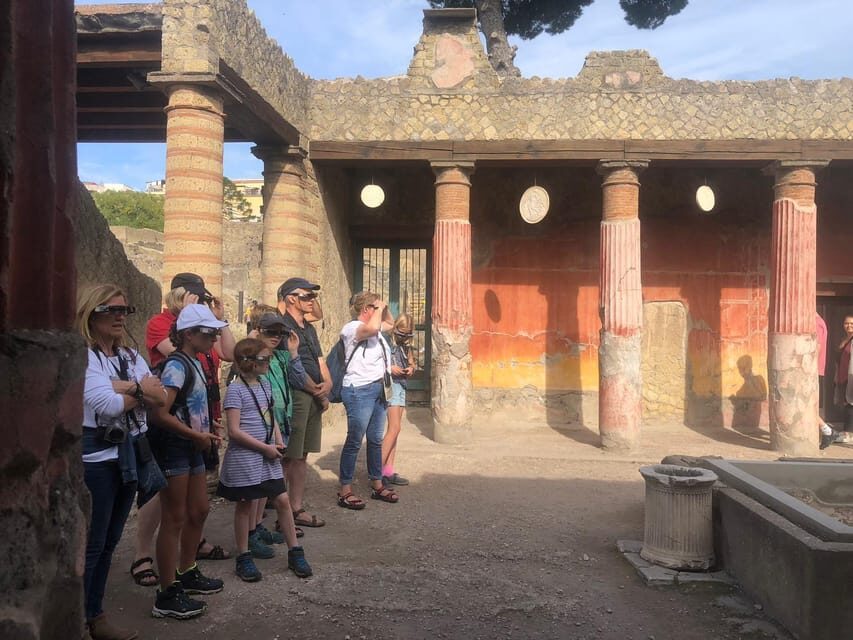
You get a mix of human guidance and recorded narration. The live tour assistant is listed as English and Italian, but the audio guide is available in several languages: Italian, English, French, German, Portuguese, and Spanish.
Here’s how to use this to your advantage:
- Pick the language you’re most comfortable with before the walk gets going, so you can focus on the sights instead of switching tracks midstream.
- If you feel distracted by the visual layer, lean into the audio description. It’s designed to tell you what features to notice on the screen and on the ground.
- Give yourself a few seconds when you arrive at a major stop. AR visuals are clearer when you’re still and ready to look.
From the overall feedback, the tour assistant support is a strong point—people appreciated friendliness and help on the spot, and the guide was described as prepared and not boring. That aligns with what you should want from tech-forward tours: someone who can keep it moving and troubleshoot small issues without turning the walk into a tech lesson.
One caution from reviews: there’s a note that the 3D video experience could be better. So if you’re very sensitive to video quality or timing, keep expectations realistic. The AR idea is strong, but technology isn’t magic, and not every setup will feel perfect for everyone.





Practical Stuff That Makes or Breaks the Experience
A Pompeii walk is outdoor walking first, AR experience second. So your comfort matters.
Plan for:
- Comfortable shoes. The ruins involve walking on uneven ground.
- Sun protection: sunglasses, sun hat, and sunscreen are specifically recommended.
- Water. You’ll be outside for about two hours.
- Weather-appropriate clothing. The tour runs rain or shine, so bring what helps you stay comfortable even if it’s wet.
Also remember the small details that prevent stress:
- If you arrive late, expect the tour to start after 5 minutes.
- Don’t bring luggage or large bags.
- This tour is not suitable for children under 8, and it’s not suitable for wheelchair users.
The good news is that the AR setup is designed to be wearable even if you already wear eyeglasses. That reduces one of the common barriers for AR-style tours.
Finally, the route is flexible within limits. The experience offers a wide range of predefined stops and can be customized depending on needs and available time. That’s useful if you’re traveling with family or you want the focus to land on specific types of buildings rather than a strict script.
Price and Value for $20
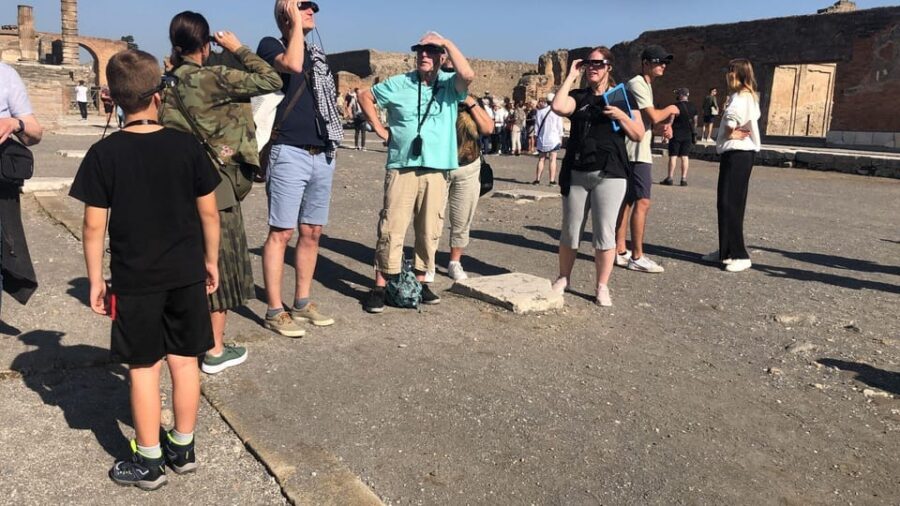
At $20 per person for about two hours, this is one of the more budget-friendly ways to add guided interpretation to Pompeii. You’re paying for three things that often cost extra elsewhere: the AR glasses, the tour assistant support, and the audio guide.
But don’t forget the fine print that affects value: entry ticket is not included. So your real spend is the tour price plus whatever Pompeii entry costs you choose. Still, once you factor that in, the tour can be good value because you’re getting organized narration and the AR comparison layer that standard self-guided visits don’t provide.
When does it make the most sense?
- If you want structure for your Pompeii day and prefer learning while you walk.
- If you like tech that has a clear purpose, not tech for tech’s sake.
- If you’ve visited ruins before and felt disconnected from the past, this comparison style can help you feel oriented faster.
When might it be a weaker choice?
- If you’re mainly after a classic lecture-style guide, you may find AR adds more “visual layer” than you want.
- If you’re extremely sensitive to the quality of on-screen video or timing, the 3D video note is something to keep in mind.
Should You Book This AR Tour?
I’d book this if you want Pompeii to feel like a city again, not just archaeology. The combination of AR reconstructions overlapping the ruins, a live assistant who helps with the gear, and audio narration in many languages makes it a practical way to learn without getting stuck in long explanations.
If you’re traveling with kids older than 8, this can be a fun option because it turns stone into story. If you rely on wheelchair access, you’ll want another Pompeii plan, since this one isn’t designed for it.
My main decision rule is simple: if you’re curious about how Pompeii looked before the eruption and you like guided attention, this is a solid pick for a two-hour slot. Just budget for your entry ticket separately, and bring the basics for outdoor walking.
FAQ
What’s the duration of the Pompeii AR glasses tour?
The tour lasts about 2 hours.
How much does it cost?
It costs $20 per person.
Where do I meet the tour assistant?
Meet at Coffee Shop Vittoria in Piazza Esedra (Porta Marina Inferiore), right next to the entrance. The assistant will hold a sign that says AR Tour.
Is Pompeii entry included in the price?
No. The Pompeii entry ticket is not included.
What does the tour include?
You get AR glasses, a tour assistant to accompany and assist you, and an audio guide.
What languages are available?
Live tour guidance is listed as English and Italian. The audio guide is available in Italian, English, French, German, Portuguese, and Spanish.
Can I wear the AR glasses if I wear prescription eyeglasses?
Yes. The AR glasses can be worn by participants who already wear eyeglasses.
What should I bring?
Bring comfortable shoes, sunglasses, a sun hat, sunscreen, and water, plus weather-appropriate clothing.
Is the tour suitable for everyone?
It is not suitable for children under 8 years old and not suitable for wheelchair users. It also does not allow luggage or large bags.