REVIEW · POMPEI CAMPANIA
Pompeii Ruins: Virtual Tour 360° with Authorized Storyteller
Book on GetYourGuide →Operated by POMPEII DISCOVERY VIRTUAL TOUR 360° · Bookable on GetYourGuide
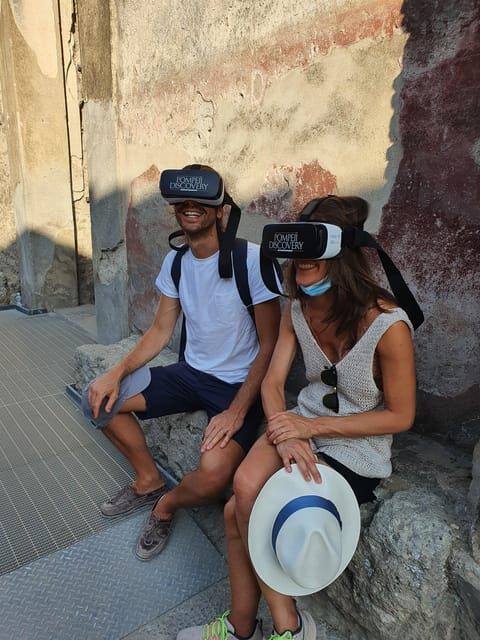
Pompeii gets a second life with VR. This 360° virtual tour pairs a live, local Storyteller with headset views that help you understand how the city functioned before Vesuvius in 79 A.D. I like the way the VR doesn’t replace the guide. It adds missing “in-between” details so the stones start making sense.
I especially like the live narration from an authorized guide, including sessions led by Maria Novella. You also get headsets set for each participant, so the focus stays on the ruins and the story, not on fiddling with tech. One consideration: the Ruins entrance ticket is not included, so you’ll need to budget that on top.
In This Review
- Key takeaways before you go
- Pompeii, But With a 360° Time-Shift
- The price question: what $226.57 per group actually buys
- Private-group timing and how the Storyteller keeps you on track
- Nine Pompeii stops, stitched together by 3D context
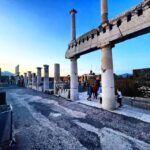
- The Forum: where Pompeii did business
- The Basilica: justice, meetings, and public routine
- Baths: social life in a place of routine
- House of the Faun or House of Menander: domestic life, made legible
- The Bakery: food work that kept the city going
- Large Theatre: performances and public culture
- Quadriporticus: gladiator training and controlled intensity
- The Lupanar: nightlife, explained with care
- What makes the VR component feel useful (and not gimmicky)
- Practical tips that will help your day feel easier
- Who this Pompeii VR tour is best for
- Quick decision: should you book this tour?
- FAQ
- Is the entrance ticket to the Pompeii ruins included?
- What languages are available for the live guide?
- Are VR headsets provided for participants?
- Is the tour wheelchair accessible?
- Is this tour suitable for kids or people with epilepsy?
- Can I cancel, and is there a pay-later option?
Key takeaways before you go
- 360° VR at nine iconic stops turns fixed ruins into moving context.
- A live, authorized guide keeps the story accurate and easy to follow.
- Headsets for each participant means less waiting and more time on site.
- You’ll see daily life moments, including shop activity and a theatrical performance.
- Plan for an extra ticket for the archaeological site since it’s not included.
Pompeii, But With a 360° Time-Shift
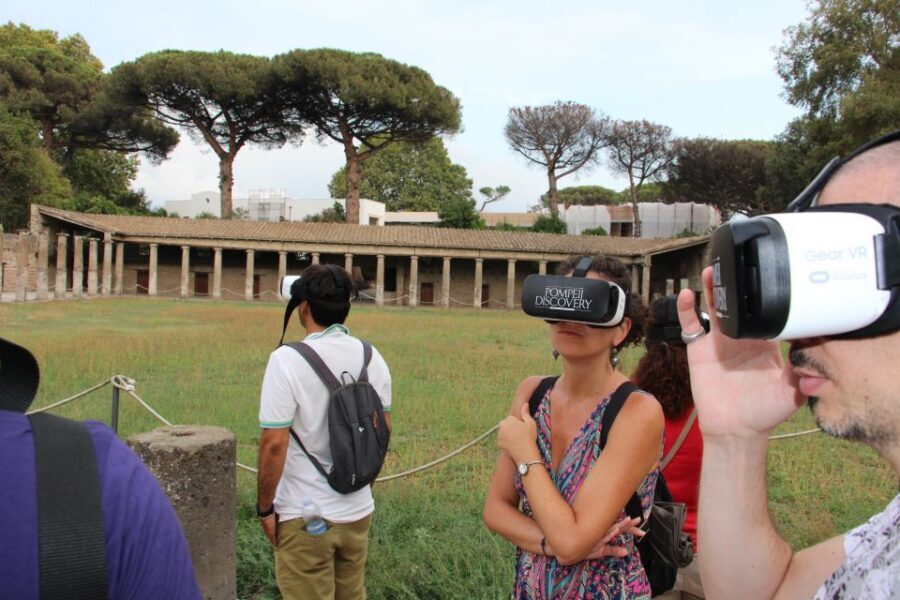
Pompeii can feel like a museum of fragments. That’s not wrong. The challenge is your brain has to do the hard work of rebuilding everyday life from stone outlines. This is where the 3D VR component changes the rhythm.
With a live guide, you walk the real site while 360° visuals layer in a reconstructed sense of what you’re looking at. Think of it as a guided tour that also teaches you how to read Pompeii. The VR focuses on nine famous places, so you’re not wandering randomly or hoping you guessed correctly what a specific doorway, hall, or courtyard once did.
And because the tour is guided in English or Italian by a local “Storyteller,” you get explanations timed to what you’re seeing. That matters more than it sounds. Pompeii is big, and it’s easy to lose the thread when every corner looks like the next corner.
You can also read our reviews of more tours and experiences in Pompei Campania.


The price question: what $226.57 per group actually buys
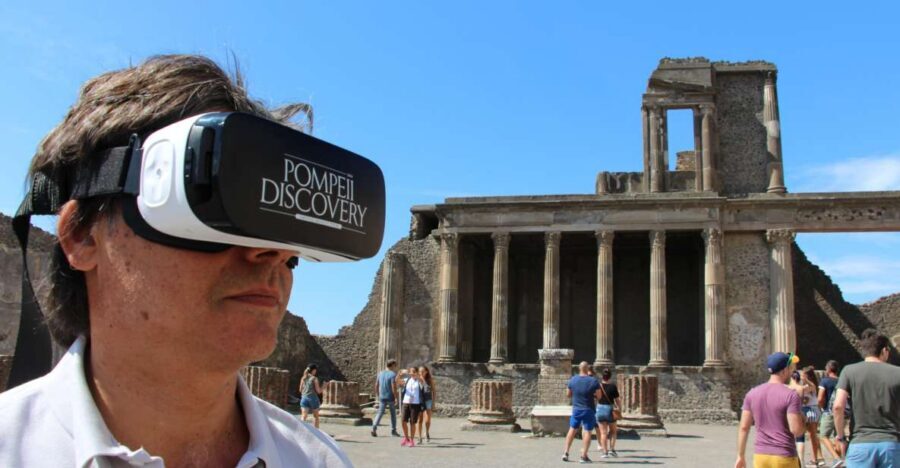
This tour costs $226.57 per group, up to 2 people. That sounds like a lot until you compare what’s included:
- a local authorized guide in your language
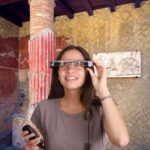
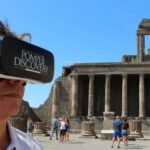
- VR headsets for each participant
- “skip the ticket line” at the ruins
- a private-group setup (not a crowded herd)
If you’re traveling as a couple or duo, this price can work out well because you’re paying for guided access plus the tech add-on, not just a normal walk. The entrance ticket is separate, but the big value is the guided storytelling paired with the 3D reconstructions at multiple landmarks.
If you’re traveling solo, the per-group model might feel less friendly. In that case, you’ll want to weigh how much you’ll use the VR versus a standard guided tour. If you like visuals and want help connecting the dots, VR is the point. If you prefer a quiet walk and pure archaeology, you may decide differently.
Private-group timing and how the Storyteller keeps you on track
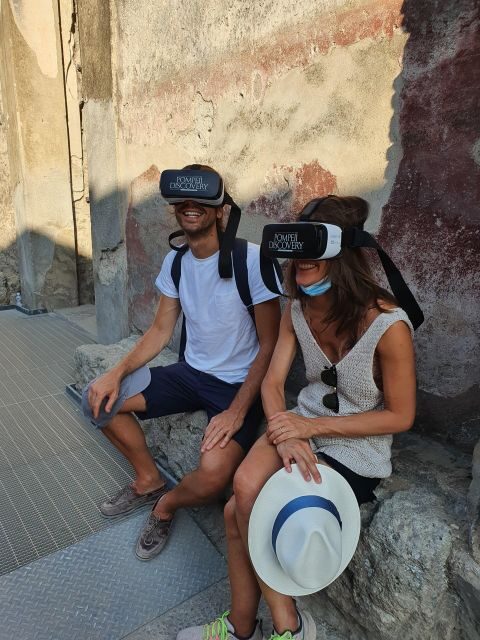
This is a private group experience, which is a quiet advantage in Pompeii. You avoid the stop-and-go pace of very large groups. You can also keep your questions more direct.
The tour is valid for 1 day, and you pick from available starting times. That’s practical because Pompeii can get busy, and timing affects the quality of your photos and how crowded the ruins feel around you. The “skip the ticket line” part is also useful. It saves a bit of the frustrating waiting that can cut into your best energy.
You’ll also want to know the basic suitability rules before you plan:
- Not suitable for children under 8
- Not suitable for people with epilepsy
- Wheelchair accessible
So yes, you can plan inclusively. Just double-check the age and health fit.
Nine Pompeii stops, stitched together by 3D context
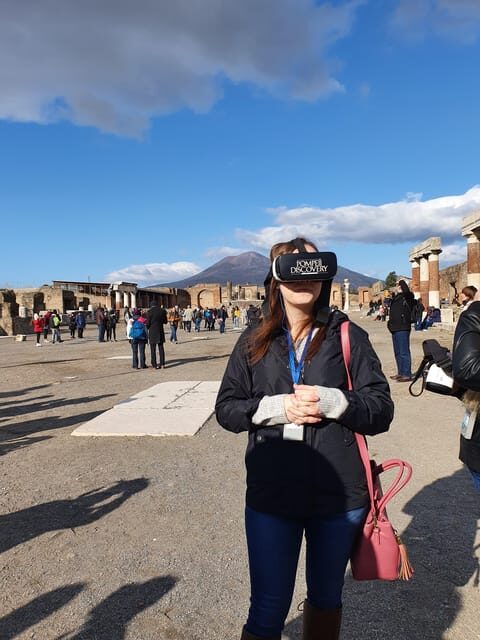
Here’s the backbone of what you’ll cover, with the key idea behind each stop. The VR component is what helps the layout click, because it brings in city-life context instead of leaving you with static ruins.
The Forum: where Pompeii did business
The Forum is the civic heart. Even when it’s in ruins, you can see why it mattered: it’s the natural place for crowd movement, announcements, decisions, and daily talk.
With the VR layer, you’re not just looking at stone remnants. You’re guided to understand the Forum’s role as the center of city life. This is one of the best areas to start because it gives you a mental map. Once you grasp where public life happened, the rest of Pompeii reads better.




The Basilica: justice, meetings, and public routine
Next comes the Basilica, a place that functioned like a major public building. The name can mislead you if you’re expecting religion. In Pompeii, the Basilica is tied to public business and gatherings.
The value here is clarity. The Basilica helps you see how authority and routine were organized in the city. The VR helps you picture how a large public space supported work and decisions, not just architecture.
Baths: social life in a place of routine
The Baths are where Pompeii feels human fast. Bathing wasn’t only cleanliness. It was a regular social rhythm.
In this tour, the VR context supports that idea. You’re guided to connect the bathing spaces with how people spent time together, how movement likely worked, and what the area was for beyond the visible walls. If you’ve ever stood in ruins and thought, Okay, but what did people do here daily, this is the stop that usually answers that.
House of the Faun or House of Menander: domestic life, made legible
You’ll see either the House of the Faun or the House of Menander. The point isn’t just to admire a home. It’s to learn how Pompeians lived inside their own city.
These houses are great for understanding social class, how spaces were arranged, and how private life connected to the wider neighborhood. The VR layer helps make the difference between a courtyard, a corridor, and a functional room. Without that, you can miss how the home was designed to work.
This stop is also where the tour’s “storytelling” approach shines. You get guided interpretation that turns layout into meaning.
The Bakery: food work that kept the city going
The Bakery brings you back to practical survival: bread and daily food needs. When you’re in Pompeii, it’s easy to get stuck on big public buildings. A bakery is a reminder that cities are powered by work you don’t always romanticize.
With VR support, you get a sense of activity tied to that everyday function. This isn’t about pretending you can recreate every detail. It’s about giving you a realistic mental picture of what this space represented in the city’s rhythm.
Large Theatre: performances and public culture
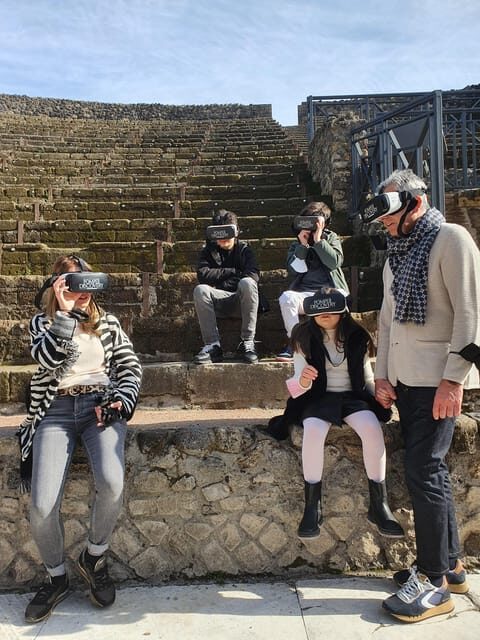
At the Large Theatre, you’re looking at Pompeii’s public stage. Theatre wasn’t only entertainment. It was a community event.
The tour includes a theatrical moment, which fits naturally here. If you’ve ever visited ruins and felt you were missing the “how it felt” side, this is the designed cure. You get the structure, then you get the reminder that people gathered, watched, and participated in the culture.
Quadriporticus: gladiator training and controlled intensity
The Quadriporticus is more than a colonnaded courtyard. It’s tied to training space and the kind of disciplined spectacle Pompeii was known for.
In this tour, you’ll experience gladiators’ training as part of the story flow. That’s a big deal because it gives movement and purpose to a space that can look static if you approach it like architecture only.
This stop is often where the VR earns its keep. It’s easier to understand the space when you can visualize use, not just form.
The Lupanar: nightlife, explained with care
The Lupanar is Pompeii’s most infamous stop. You’ll be guided through the idea of nightlife around and inside the brothel.
This part of the tour is valuable for context. Pompeii wasn’t only temples and homes. It had complicated adult life, and the Lupanar helps you understand that side of the city instead of treating it as a shock factor.
The VR component supports that “what it was like” question. I’d treat this stop as a place to listen carefully to the guide’s framing, because the meaning matters more than the subject label.
What makes the VR component feel useful (and not gimmicky)
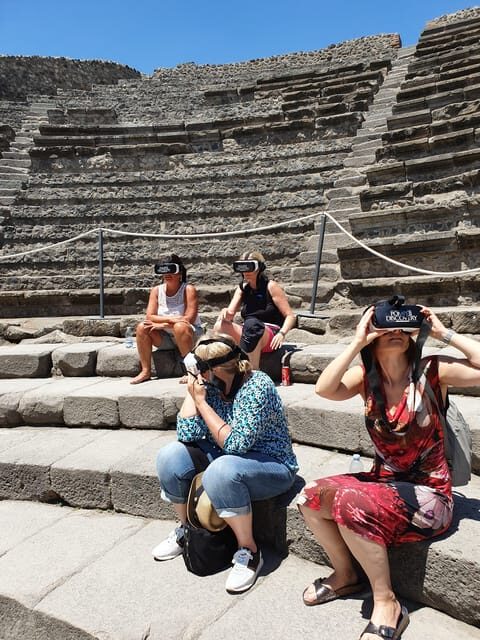
I’ve seen VR in travel turn into a distracting screen fest. This doesn’t seem built that way. The tour uses VR to support the guide’s narrative and connect nine key areas into one story.
That’s why the choice of a live “Storyteller” matters. With a human guide, the VR can stay focused: what you’re seeing in 3D matches the physical space you’re standing in. And because headsets are provided for each participant, you’re less likely to lose time waiting for one person to finish a sequence.
Also, there’s a credibility angle in the highlights: the experience has been appreciated for its informative value by the European Parliament, and it was even used as a case study at the University of Amsterdam. I can’t tell you the academic details from here, but it does suggest the concept wasn’t built as random entertainment.
Practical tips that will help your day feel easier
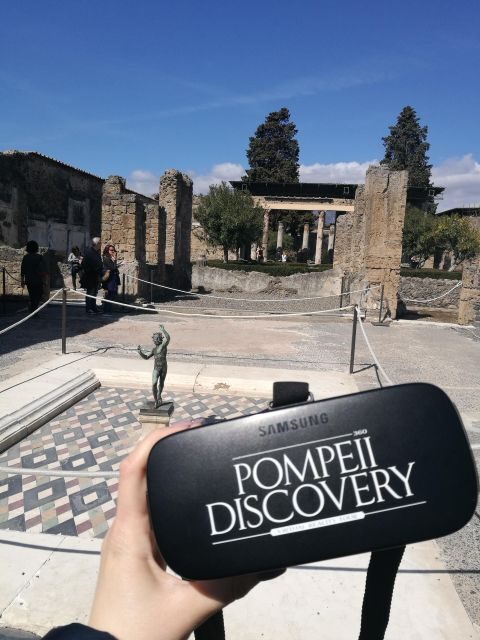
Pompeii has uneven ground and a lot of walking. That part is universal, and this tour is no exception. The simple advice that keeps you happy:
- Wear comfortable shoes you trust.
- Bring a passport or ID for children (if you’re traveling with kids close to the minimum age).
- Plan to move between stops while your guide sets expectations for what the VR will show.
One more small tip: VR headsets can make you want to stand still. Try not to freeze. Follow your guide’s pace, because the best comparisons happen when your eyes go from stone to reconstruction quickly.
Who this Pompeii VR tour is best for
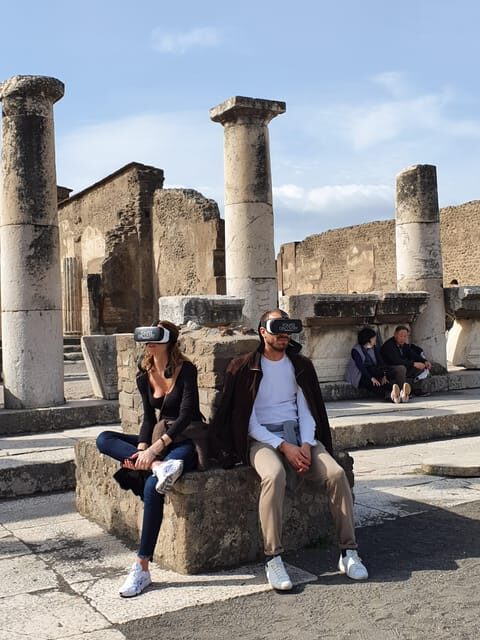
This works particularly well if you:
- want a guided tour but feel lost without context
- like the idea of seeing how people lived in 79 A.D.
- enjoy a structured route that hits major landmarks instead of wandering
- travel with a partner or small group and want private attention
It may not be your best choice if you:
- prefer a classic Pompeii walk without headsets
- want to spend long stretches only on free-form self exploration
- are sensitive to rules around epilepsy or age limits
The tour is also a solid pick for first-time Pompeii visitors. It gives you a map and story arc. Repeat visitors might still like the VR layer for the “what did this function feel like” angle.
Quick decision: should you book this tour?
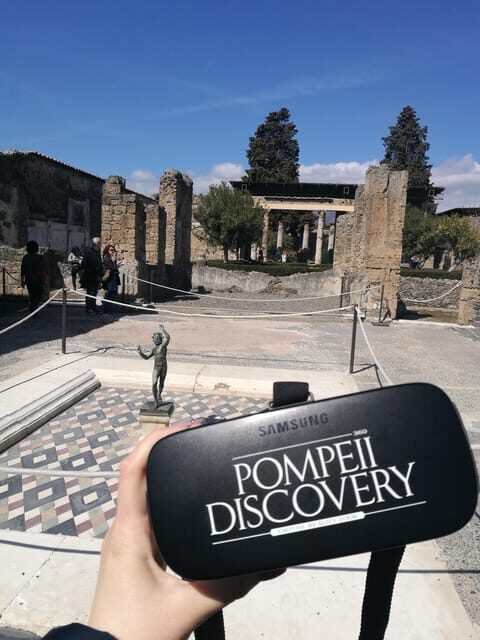
If your top goal is to understand Pompeii as a working city—not just a scattering of ruins—this tour is a smart bet. The combination of a live authorized guide plus VR across Forum, Basilica, Baths, major houses, bakery, theatre, Quadriporticus, and the Lupanar is built to reduce the biggest common frustration: not knowing what you’re looking at.
Book it when you want clarity, structure, and visual context, especially if you’re visiting with one other person. Just remember the ruins entrance ticket is not included, so check that budget before you commit.
FAQ
Is the entrance ticket to the Pompeii ruins included?
No. The tour does not include the entrance ticket for the ruins.
What languages are available for the live guide?
The live tour guide is available in English and Italian.
Are VR headsets provided for participants?
Yes. Virtual Reality headsets are provided for each participant.
Is the tour wheelchair accessible?
Yes, the tour is wheelchair accessible.
Is this tour suitable for kids or people with epilepsy?
It is not suitable for children under 8 years. It is also not suitable for people with epilepsy.
Can I cancel, and is there a pay-later option?
You can cancel up to 24 hours in advance for a full refund. You can also reserve now and pay later.