REVIEW · POMPEI CAMPANIA
Pompeii: Small-Group Tour of Pompeii and Herculaneum
Book on GetYourGuide →Operated by Askos Tours · Bookable on GetYourGuide
Two Roman cities, one volcanic night. With an archaeologist guiding a small group of up to 20, this day tour turns Pompeii and Herculaneum from ruins into lived-in stories. Guides such as Diego and Sergio are praised for steering you to the most meaningful areas and explaining what you’re actually looking at.
The tour really shines because you get context for the Vesuvius disaster and then see two very different “before and after” cities. Pompeii was buried under about four meters of ash, while Herculaneum suffered an even deeper mud burial that kept more details intact. The possible drawback is the pace: after Pompeii you only have a 30-minute break for lunch or quick bites, so you’ll want to plan for a fast meal and a long day.
In This Review
- What Makes This Pompeii + Herculaneum Tour Work So Well
- Key Highlights You’ll Feel on the Walk
- Starting at Porta Marina Inferiore (Find the Right Entrance Fast)
- Pompeii for About Two Hours: Ash, Streets, and Last Moments
- The 30-Minute Break After Pompeii: Lunch Strategy for a Tight Window
- Circumvesuviana to Ercolano: The Transfer That Keeps the Day Moving
- Herculaneum in Two Hours: Smaller Site, Better Preserved Details
- Earsets, Crowd Control, and Comfort Tips for a Long Walk Day
- Tickets, Skip-the-Line, and What You’re Really Paying For
- Who This Tour Is Best For (and Who Should Rethink It)
- Should You Book This Pompeii and Herculaneum Archaeologist Tour?
- FAQ
- How long is the Pompeii and Herculaneum tour?
- What is the group size?
- Where do we meet the guide?
- What languages is the tour offered in?
- Do we need headsets?
- How do we travel from Pompeii to Herculaneum?
- How much time do we have for lunch?
- What should I bring and wear?
- Is the tour suitable for wheelchair users or mobility impairments?
- When does the tour end?
What Makes This Pompeii + Herculaneum Tour Work So Well
This is one of those rare combos that helps you understand both cities instead of just collecting photos. Pompeii and Herculaneum aren’t just two archaeological stops; they’re two different preservation stories from the same catastrophe.
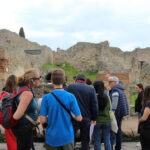
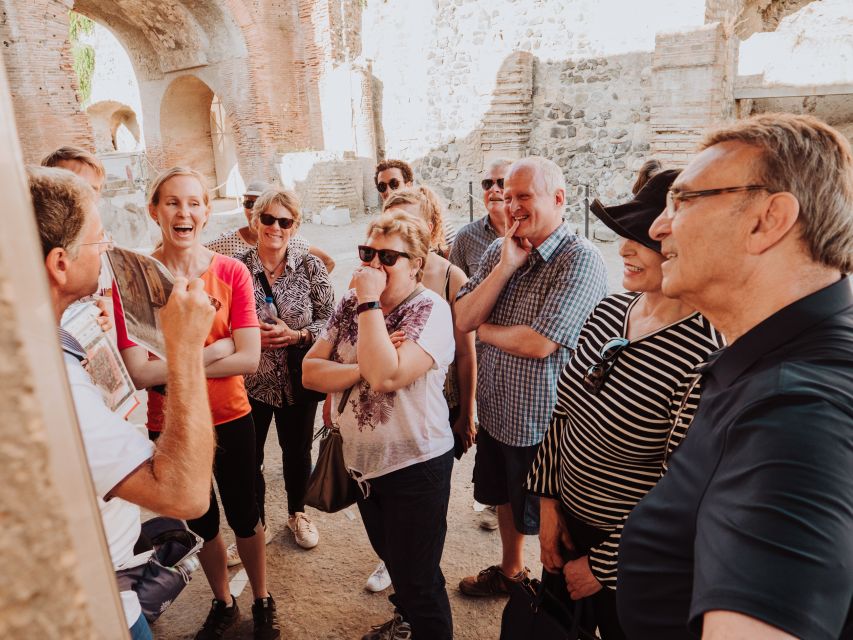
You’ll walk in English with a working archaeologist-type guide, and small-group size matters. With a group of around 20, you can actually hear explanations and follow the logic of the route instead of getting swept along. Many people also highlight that the guide points out the best spots, not just the most famous ones.
Another big win: Herculaneum is smaller, and that’s the point. It’s easier to “read” as a neighborhood and household-based town, especially when you’re shown how the disaster affected materials. Reviews also make it clear that guides like Diego and Alfredo (described as an archaeologist) are good at answering questions without turning the walk into a lecture.
Key Highlights You’ll Feel on the Walk
- Archaeologist-led interpretation that connects streets, buildings, and daily life to what survived after 79 A.D.
- Small-group pace (up to 20) so you can keep up and hear your guide, even in crowded ruins
- Pompeii’s ash burial (around four meters) explained in real-world terms as you walk the city
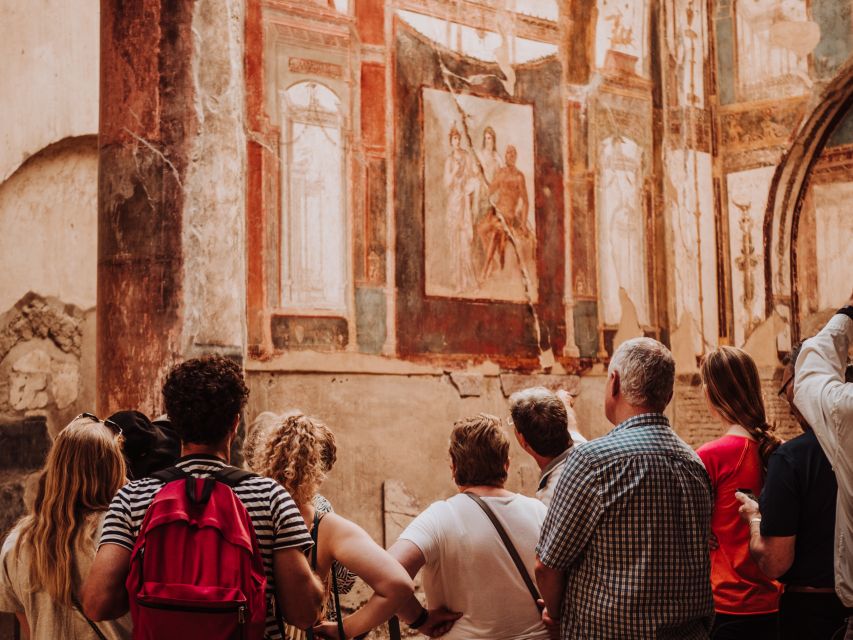
- Herculaneum’s mud burial (around 20 meters) that preserved second floors, carbonized wood, paintings, and mosaics
- A quick Circumvesuviana transfer between sites so your day stays focused
- Skip-the-ticket-line advantage that helps you spend more of the day walking
You can also read our reviews of more tours and experiences in Pompei Campania.

Starting at Porta Marina Inferiore (Find the Right Entrance Fast)
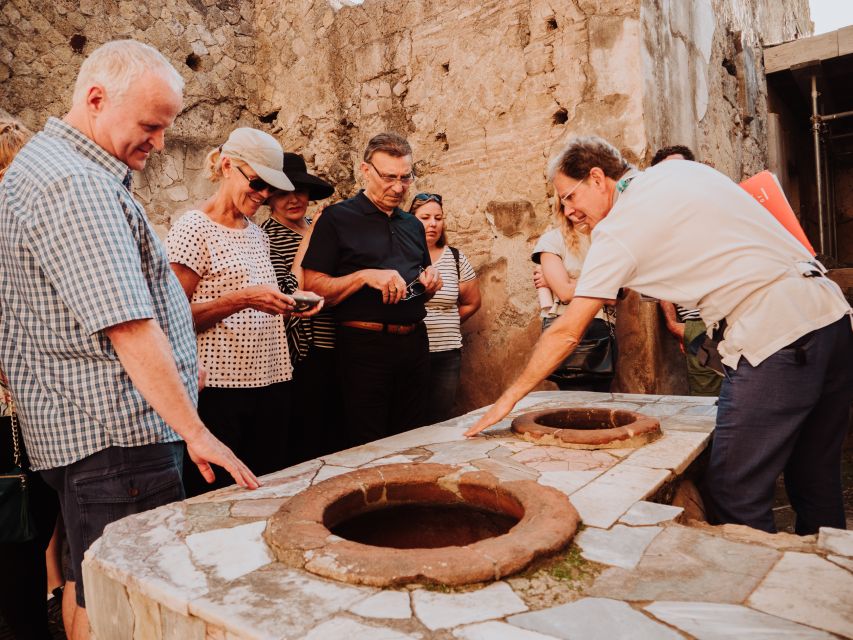
Your day begins at Piazza Porta Marina Inferiore 1, meeting your guide at the left side of the Pompeii entrance named Porta Marina Inferiore. You’re looking for an Askos Tours sign, and it’s near the Arte bus stop.
This matters because Pompeii has plenty of entrances and plenty of operators. If you arrive early, you’ll have time to confirm the exact spot instead of losing minutes. A few travelers note that signs around the meeting area aren’t always obvious, so I’d treat this as a “show up a bit early” kind of tour.
Once you’re together, you’ll head into Pompeii for a guided walk rather than trying to navigate the site solo. That’s the big mental shift: instead of searching for landmarks, you’re learning how the city functioned and what you’re seeing.
Pompeii for About Two Hours: Ash, Streets, and Last Moments
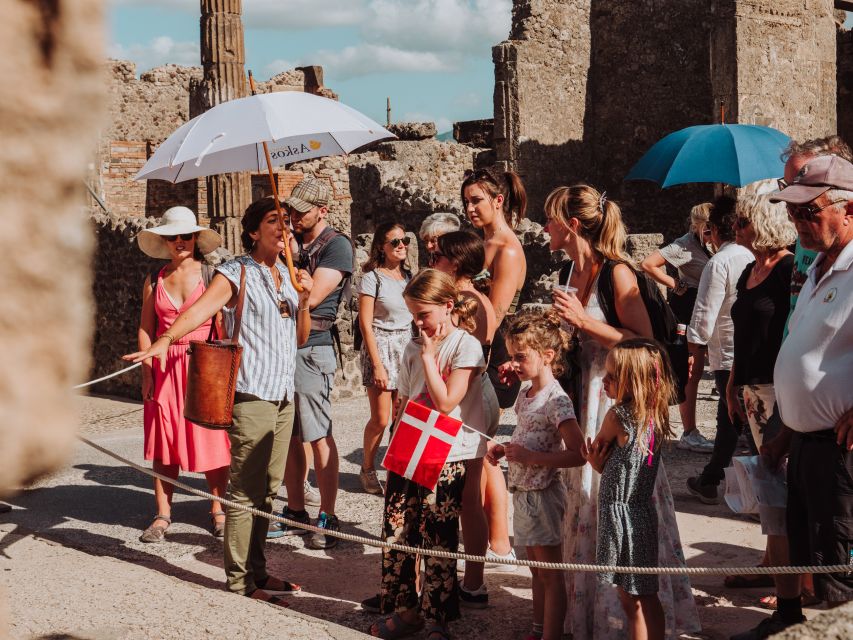
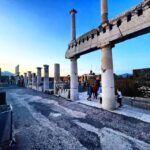
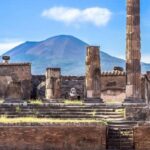
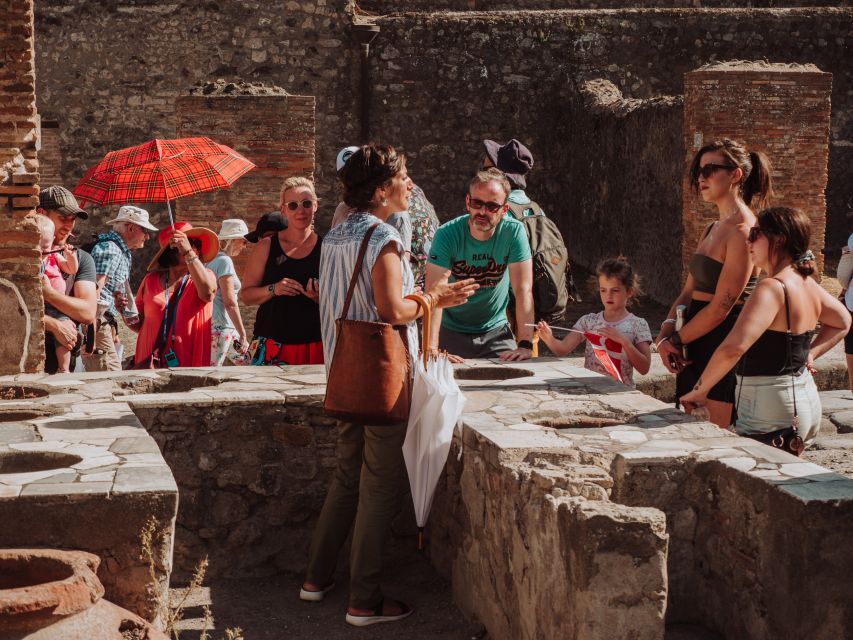
You’ll spend around two hours in the Pompeii Archaeological Site with your guide. Pompeii is huge, crowded, and full of fragments. A guide keeps it from turning into a blur by steering you through the areas that best show how people lived.
The core story is the Vesuvius eruption in 79 A.D. Pompeii and its inhabitants were buried by tons of pumice and volcanic ash, and that heavy coverage helped preserve many items and surfaces. With your guide’s explanations, those facts stop being trivia and start becoming a timeline you can picture as you walk.
A detail worth watching for in Pompeii is the role of plaster casts. Seeing these in person makes the disaster feel immediate: you stop thinking in centuries and start thinking in people. Your guide can also connect what you see—inscriptions, house layouts, and the way spaces were used—to everyday life in a first-century Roman city.
What can feel challenging here: two hours in Pompeii means you won’t “finish” everything. This tour is built for clarity and context, not for checking every box. If you’re the type who wants to linger at one spot for a long time, plan to save extra wandering for another day.
The 30-Minute Break After Pompeii: Lunch Strategy for a Tight Window
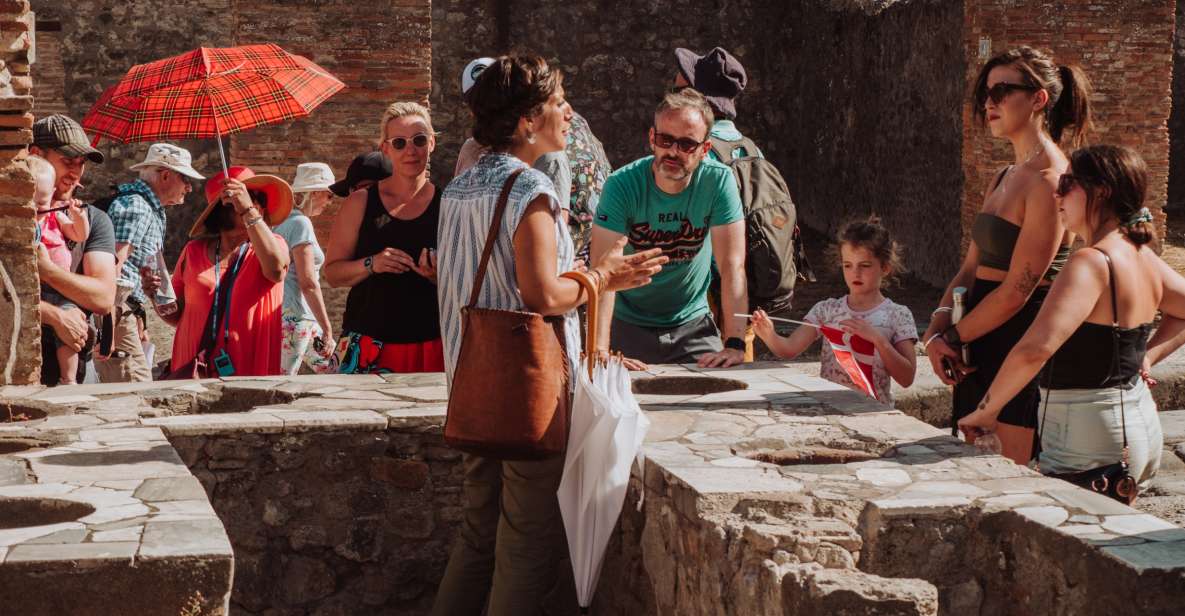
After Pompeii, you get a 30-minute break. This is meant for food, restrooms, and a quick reset before the transfer.
In practice, that half hour is enough to grab something and keep moving, but it’s not enough for a slow sit-down meal. A couple of people specifically wished the lunch stop was longer or more comfortable, especially in hot conditions. So my advice is simple: eat early in that window, and don’t count on finding a perfect table.
If you want the most pleasant break, treat it like logistics. Use the time for water, sunscreen, and a quick snack rather than a full lunch course. If you’re traveling in summer, bring sunglasses and a hat, because you’ll spend time outdoors again soon.
Also, keep your expectations realistic: this tour is designed to cover both sites, so the break is functional, not leisurely.
Circumvesuviana to Ercolano: The Transfer That Keeps the Day Moving
Next comes the Circumvesuviana train to Ercolano. The trip is about 20 minutes, and it’s part of what keeps the schedule workable.
This transfer gives you a breathing moment between two very different ruins. It’s also a practical way to avoid long, stressful road transfers. When the day is built around walking, shaving off transport hassle helps you show up mentally ready for the next site.
One important point: your tour doesn’t keep you “in transit” forever. You end at the Parco Archeologico di Ercolano, which means you’ll need your own plan for getting back to wherever you’re staying after the tour. If you’re staying near Naples, check your return route in advance so you don’t end the day figuring it out on the spot.



Herculaneum in Two Hours: Smaller Site, Better Preserved Details
You’ll then spend about two hours at the Archaeological Site of Herculaneum. This is where the tour often feels like it turns a corner.
Herculaneum is much smaller than Pompeii, and it’s better preserved. The big reason is the burial process: Pompeii was covered by ash, while Herculaneum was buried by mud—an avalanche described as about 20 meters thick. That difference is why you can see details that feel almost startling.
Your guide should help you notice the survival highlights:
- Second floors of buildings that are preserved enough to read
- Carbonized wooden objects that survived the heat and burial
- Intact paintings and mosaics that still show color and pattern
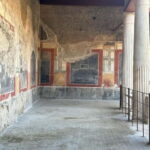
This is also where the lifestyle contrast becomes real. Herculaneum’s preservation can make it feel less like a museum of ruins and more like a snapshot of refined Roman living. Your guide can connect those surviving household details to what mattered to wealthier citizens—decor, daily routines, and the physical spaces where people spent their time.
Possible drawback to keep in mind: since the walk is guided, you’ll be moving steadily. If you like slow photography sessions or you want to stare at one mosaic for a long stretch, you may wish you had extra time here. Still, the route is built for comprehension in a limited window.
Earsets, Crowd Control, and Comfort Tips for a Long Walk Day
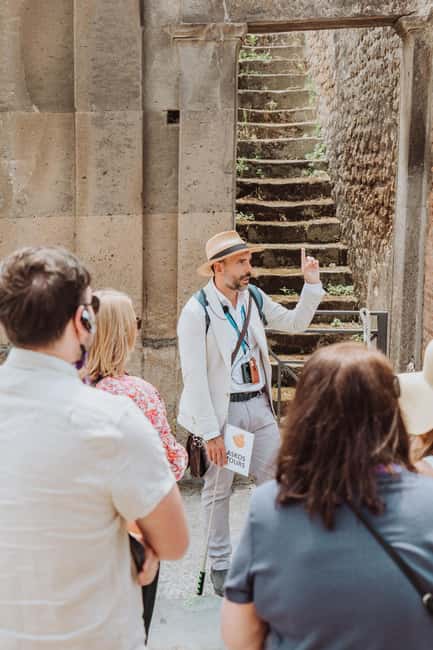
This tour is designed for a small group, and that’s part of why it works. If your group is larger than 10, headsets are provided, which makes it much easier to hear your guide while walking past other visitors.
Comfort is not optional for Pompeii and Herculaneum. You’re on your feet for hours and you’ll move between shaded and sunny areas. Bring water, and in summer add sunglasses and a hat. A raincoat or poncho is also smart, since sudden showers can happen and ruins don’t offer much cover.
Wear comfortable clothes and shoes with good grip. Pompeii and Herculaneum are uneven in places, and your energy will matter as the day goes on. Plan a simple clothing setup you can manage in heat: breathable layers beat fancy outfits.
Also note: this experience isn’t suitable for people with mobility impairments or wheelchair users. If that’s your situation, it’s worth looking for a different format.
Tickets, Skip-the-Line, and What You’re Really Paying For
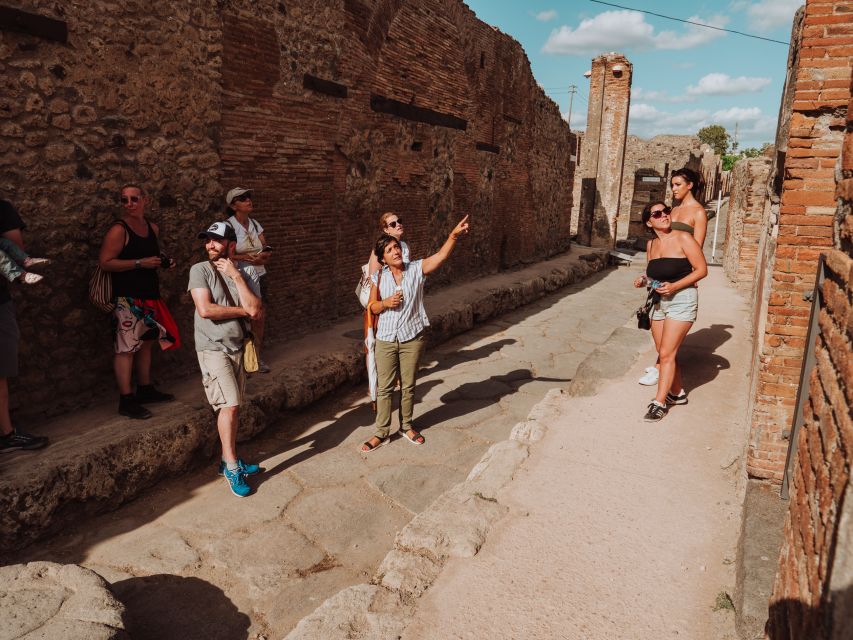
The tour highlights skip the ticket line, and that’s a real value, not a gimmick. Pompeii and Herculaneum can be crowded, and ticket lines can chew up time right when you want to start walking.
Herculaneum entry fees are listed as 16 euros for adults and 2 euros for EU citizens aged 18–25. Your guide can’t fix entry rules, but knowing the fee structure helps you budget and avoid last-minute surprises.
When it comes to money, I think the value is in what you can’t replicate alone. Yes, you can visit Pompeii and Herculaneum on your own. But the whole point of hiring an archaeologist is the way it turns stone and ash into something you understand: what survived, why it survived, and how it connects to daily Roman life.
In plain terms: you pay to spend your time seeing the right things and understanding them, not wandering and guessing.
Who This Tour Is Best For (and Who Should Rethink It)
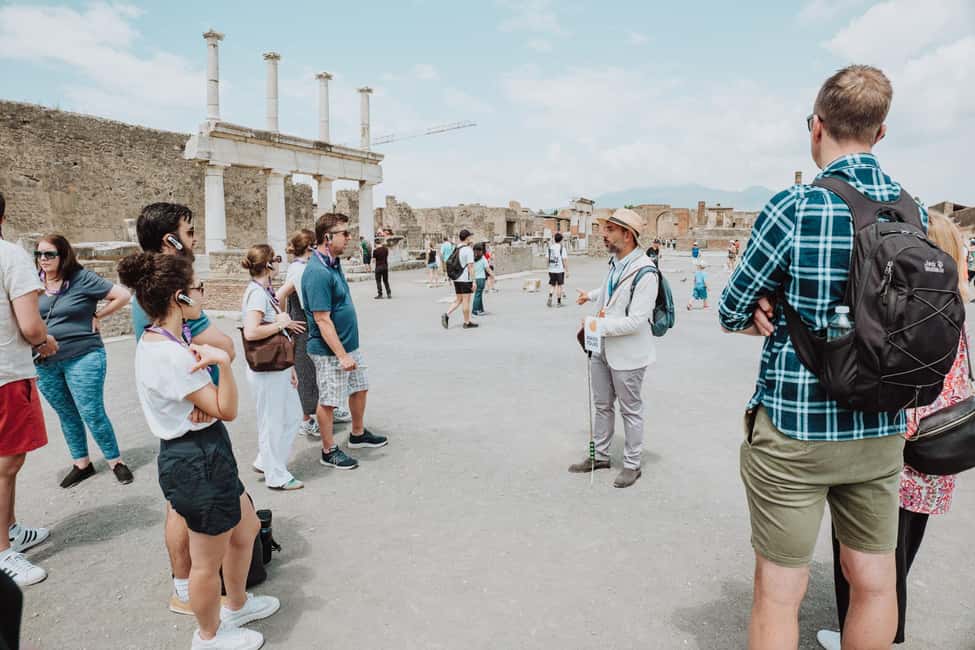
Book this if you want the Vesuvius story explained while you walk. It’s also a great fit if you’ll be overwhelmed by Pompeii’s size without guidance. The structure—Pompeii first, then the quick train hop, then Herculaneum—creates a helpful mental comparison between the two towns.
It’s especially good for history-minded travelers who like questions. Guides such as Diego, Julia, and Paolo have been described as funny and energetic, and they tend to answer questions in a way that keeps people engaged.
Reconsider if you need a slow pace or a long lunch. A 30-minute break works for quick food and moving on. It’s not designed for a full meal plus a long rest in the shade.
And if mobility is a concern, this one isn’t for you. The ruins are physical, and the tour route isn’t described as wheelchair-friendly.
Should You Book This Pompeii and Herculaneum Archaeologist Tour?
If you’re choosing between doing it yourself and doing it with an archaeologist, I’d pick the guided option for your first visit. This day tour is built around clarity: small group size, guided walks, and the big preservation contrast between Pompeii and Herculaneum.
The main trade-off is time. You’ll move through each site with purpose, not with leisurely wandering. Also, you finish in Ercolano, so line up your return plans before you start the day.
If those points fit your style, you’ll come away with a much sharper understanding of what happened in 79 A.D.—and why Herculaneum can look almost like a time capsule while Pompeii feels like a tragedy frozen mid-moment.
FAQ
How long is the Pompeii and Herculaneum tour?
The tour lasts about 5.5 hours.
What is the group size?
It’s a small-group tour with a maximum of 20 people.
Where do we meet the guide?
Meet at Piazza Porta Marina Inferiore, 1, at the left side of the Pompeii entrance named Porta Marina Inferiore near the Arte bus stop. The guide has an Askos Tours sign.
What languages is the tour offered in?
The tour is offered in Italian and English.
Do we need headsets?
Headsets are provided for groups of more than 10 participants.
How do we travel from Pompeii to Herculaneum?
You take the Circumvesuviana train to Ercolano, which is about a 20-minute trip.
How much time do we have for lunch?
After the Pompeii guided portion, you get a 30-minute break, which is enough for a quick lunch or to browse shops outside the ruins.
What should I bring and wear?
Wear comfortable clothes. In summer, bring sunglasses, a hat, and water. Bring a raincoat or poncho in case of rain. Bring a passport or ID card.
Is the tour suitable for wheelchair users or mobility impairments?
No. The tour is not suitable for people with mobility impairments or wheelchair users.
When does the tour end?
It finishes at Parco Archeologico di Ercolano.