REVIEW · ROME
Classic Fiat 500 Rental in Rome
Book on Viator →Operated by Rome for You Soc. coop · Bookable on Viator
That little Fiat changes the whole day.
Renting a classic Fiat 500 in Rome isn’t just transport—it’s a moving photo-op and a way to feel the city’s scale at your own speed. I like that the handoff includes practical street-level guidance (think how to work with ZTL restrictions and where to focus), and that you’re given a quick game plan so you can hit big sights without wasting time. One consideration: this is a vintage manual car, and Rome’s traffic asks for calm hands and steady focus.
My favorite part is how independent the experience feels. You can start in Trastevere, then stitch together your own day—from postcard headliners like the Colosseum area all the way out toward the Vatican. And since you keep the car for 24 hours, you’re not locked into a bus schedule; you can time photo stops, detours, and scenic pauses to your mood. The trade-off is simple: you won’t be able to drive right up at every famous spot, and car access rules mean you’ll do some sights with a short walk instead.
Expect a straightforward “get in, learn it, go” rhythm. You’ll meet at Via di S. Calisto, 9 in historic Trastevere, check in with a mobile ticket, and get a few minutes to get comfortable before you roll through the center. If the car has quirks—and with a 1969-era classic, it can—plan on treating it like an experience piece, not a rental appliance.
In This Review
- Key things that make this Fiat 500 rental worth it
- Why a vintage Fiat 500 feels different in Rome
- Getting Started in Trastevere: meet point, car basics, and the first 20 minutes
- Rome’s headliners by car: Colosseum to the Vatican without rushing
- ZTL and parking reality checks so your day stays fun
- Janiculum Hill and Castelli Romani: turning a rental into a mini escape
- Price and value: what you’re really paying for
- When vintage car issues happen (and how to plan for them)
- Who should book this Fiat 500 rental
- Should you book it?
- FAQ
- Where is the meeting point, and where do I end?
- How long is the rental?
- What’s included in the price?
- What extra costs should I expect at check-in?
- Do I get help with Rome driving rules like ZTL?
- What is the minimum age to drive?
Key things that make this Fiat 500 rental worth it
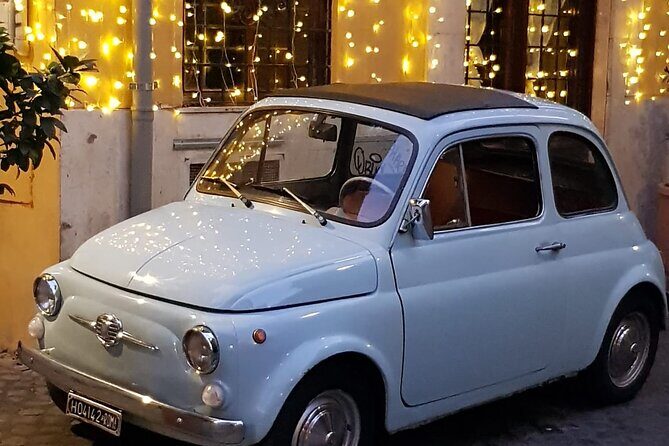
- Trastevere pickup that puts you near the action—easy to start your Rome driving day right where neighborhoods feel real.
- Real ZTL guidance from the host (drivers have been coached on zones to avoid and timing).
- A car you’re happy to “arrive” in—it attracts attention fast, so you get spontaneous photo moments.
- 24-hour flexibility—you can mix headliners with overlooks and a countryside hop.
- Vintage-car handling is part of the fun—the more you respect the manual, the smoother the day feels.
Why a vintage Fiat 500 feels different in Rome
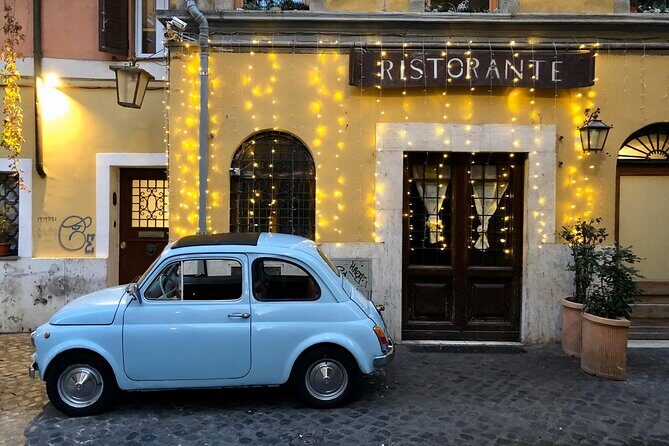
Rome is intense, even when you’re just walking. Add driving, and you get a new layer of the city—small streets, sudden views, and that sense that you’re threading your way through centuries. A classic Fiat 500 makes it playful instead of stressful.
You’re not just moving between attractions. You’re noticing Rome from the inside: the way neighborhoods change block by block, how viewpoints open up around corners, and how the city feels at night when the streets are less packed. One review experience described late-night cruising as a highlight—and that makes sense. In a tiny vintage car, Rome feels personal, not like a checklist.
The other big benefit is psychological. When you’re in something that looks like a movie prop, people smile, wave, and take pictures. That breaks up the usual museum-mode travel day. It turns “see the sights” into “live the streets.”
You can also read our reviews of more tours and experiences in Rome.



Getting Started in Trastevere: meet point, car basics, and the first 20 minutes
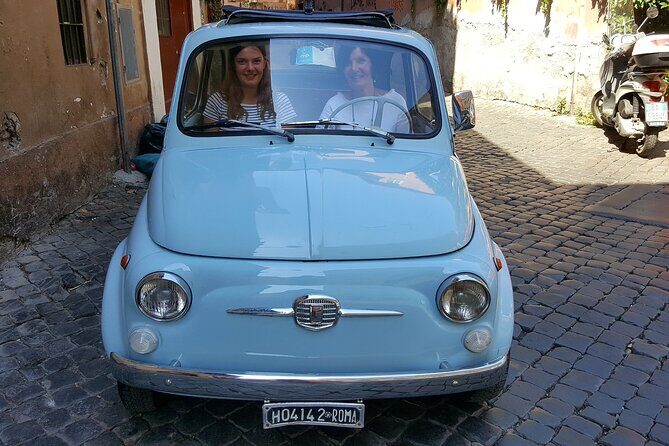
Your day starts at Via di S. Calisto, 9, 00153 Roma RM, in historic Trastevere. The location is useful: it’s central enough to get moving quickly, but it’s also in a neighborhood that feels like Rome, not just an arrival zone.
When you arrive, you’ll have a few minutes to:
- get familiar with the car,
- receive top-sight tips,
- and get reminders about Rome’s driving reality.
In past pickups, drivers noted that staff explained the basics in a very direct way—how to start the car and how to handle ZTL zones (and especially when to avoid certain periods). Names you may hear include Tiziano and Francesco, and the pattern matters more than the name: you should expect a short briefing that focuses on actually driving in Rome.
That “first 20 minutes” matters because this is not a modern car with driver-assist safety nets. You’re driving an older vehicle, and in Rome that means:
- smooth, slow decisions,
- extra attention at tight turns,
- and patience around other drivers.
If you’re comfortable with a manual transmission and you don’t mind taking things a little slower than your normal pace, you’ll enjoy this more.
Rome’s headliners by car: Colosseum to the Vatican without rushing
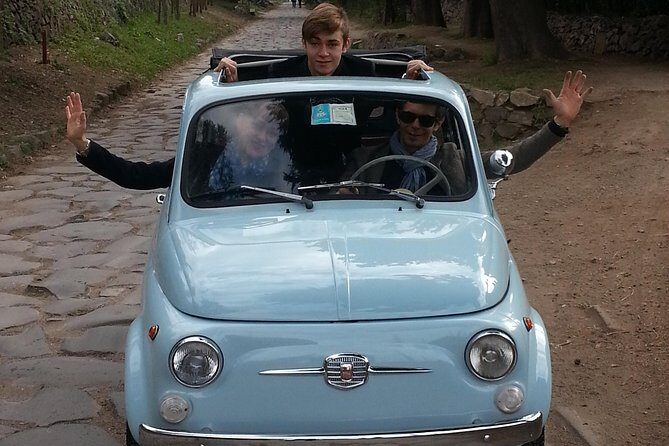
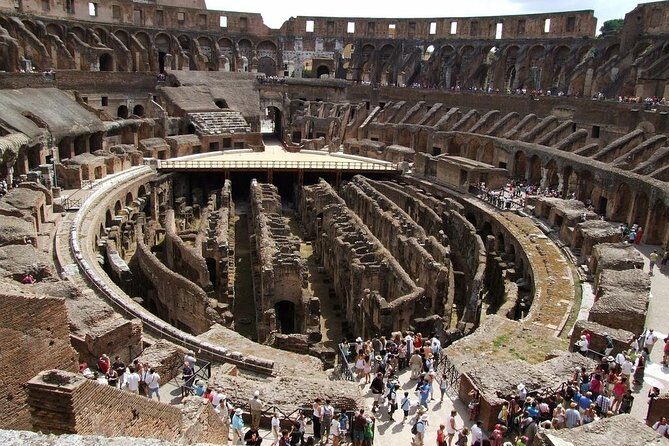
This rental is built for free-form sightseeing. After your handoff, you drive at your own pace and can set your own itinerary around the historic center. The classic big targets here are the Colosseum area and the corridor toward the Vatican—those A-list sights are absolutely the kind of places you’ll want to position for photos.
Here’s how to make that work in practice:
- Plan on stopping for pictures, not just passing by. The charm of the Fiat 500 is that people look at it. Use that.
- Expect to do some of the “arrive at the famous monument” part by car, and the “close-up view” part by short walk.
- Build in buffer time. Rome driving isn’t about distance; it’s about turns, stops, and when your route gets squeezed.
One useful detail: car access rules can prevent you from pulling up at certain sights exactly the way you’d imagine in a normal movie scene. You shouldn’t count on driving directly to places like the Pantheon or right at the Trevi Fountain. The payoff is still there—you can still reach many charming spots nearby, you just have to accept the walk component as part of the day.
Also, heat is real. One driver flagged that the car may not have air conditioning, so if you’re going in summer, start early and take breaks in shady side streets.
ZTL and parking reality checks so your day stays fun
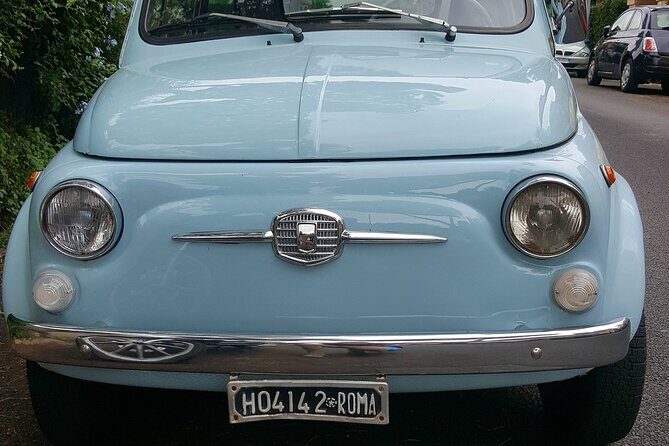
Rome rewards planning, especially if you’re driving a car through areas covered by ZTL (restricted traffic zones). The good news is that you’ll get guidance during pickup—tips about which zones to avoid and what times to avoid.
Here’s how I’d use that advice so it’s actually helpful:
- Treat ZTL as route planning, not guesswork.
- Before you set off for a dense sight area, decide which direction you’ll approach from and where you’ll park.
- When you’re unsure, slow down and re-check rather than forcing the move.
Parking is the other big reality. The listed price does not include the parking fee, which you pay at check-in. That means your final total isn’t just the rental price; you’ll want to budget for parking in Rome’s zones.
Practical tip from experience logic (and echoed by riders): if you’re keeping the car overnight, you’ll be happiest using a public garage rather than trying to guess street parking. A Fiat 500 is small, but your time is valuable—and Rome street rules can eat it.
Finally, remember what “safe and easy” means with a vintage car: safe means you drive defensively and avoid rushing. Easy means you don’t fight the car. One review pointed out that older Fiats can demand a bit more from you than just shifting gears, so don’t underestimate the first adjustment.
Janiculum Hill and Castelli Romani: turning a rental into a mini escape
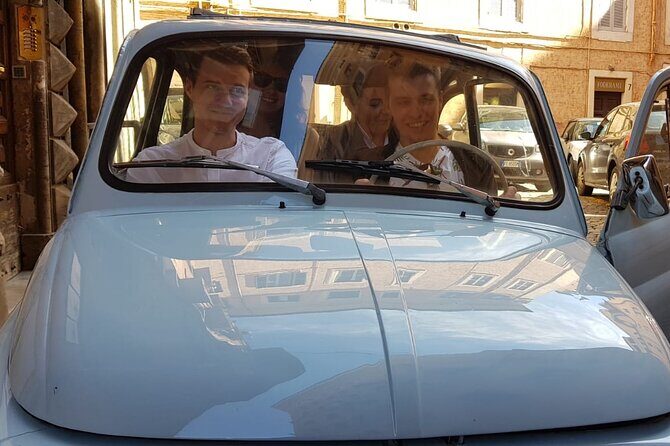
Once you’ve done the headliners, you can turn this into a “Rome plus” day. The car is yours for 24 hours, and that time is what makes the scenery options realistic.
Two areas specifically mentioned as great fits:
- Janiculum Hill for scenic overlooks
- Castelli Romani, with Frascati called out as a destination range
This is where the Fiat 500 really earns its keep. A normal rental car makes countryside roads feel generic. This car makes the same roads feel like a story. You can slow down, stop whenever something looks photogenic, and you’re not tied to a guided pickup schedule.
What’s the drawback? It’s extra time in traffic and a bit more driving. If you’re the kind of person who wants everything to be “close close close,” you might prefer staying inside the historic center. But if you like viewpoints, short countryside drives, and a calmer pace after the busy core, these outside-Rome detours are where the day can turn memorable.



Price and value: what you’re really paying for
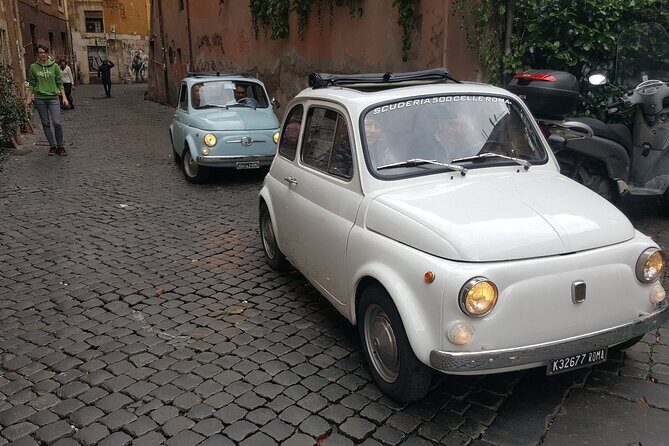
The price is $216.74 per group (up to 3) for about one day, and the car is effectively available for 24 hours. That’s the important value math: you’re not paying per person. If you’re traveling as a small group, you can spread the cost and turn it into the “main activity” of your Rome trip rather than a side thrill.
What’s included is simple: local taxes. What’s not included is what you need to plan for:
- parking fees, paid at check-in
- a fuel surcharge, paid at check-in (required by the local supplier)
So your real cost is the rental price plus those unavoidable extras. I’d treat it like a full-day driving activity with mandatory add-ons, not like a bare rental with only fuel on top.
Now the fairness check: some people expect to drive up to every major monument like a modern day taxi. If you go in expecting that, you’ll feel boxed in by driving rules. If you go in expecting the “approach + photo + short walk” rhythm, the value becomes obvious. You’re paying for flexibility, iconic vibes, and a memorable driving day—not for door-to-door drop-offs at every postcard spot.
When vintage car issues happen (and how to plan for them)
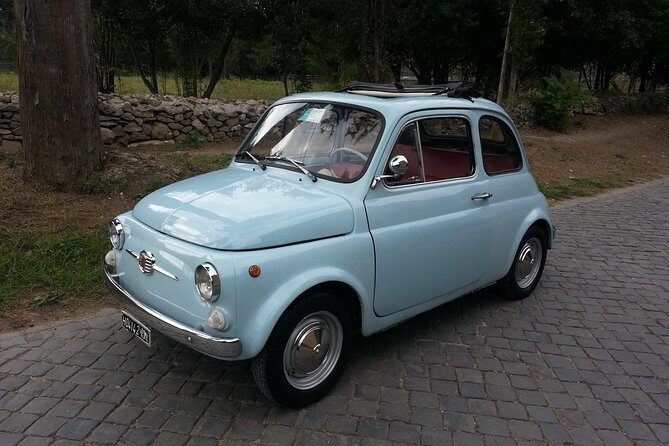
This is a classic car. That means minor problems can happen. The good part is that support seems to be part of the experience design: one rider reported a window issue and was reassured they wouldn’t be charged, with an offer to help fix it if they returned. Another described an ignition cable problem that got handled quickly, and they were back on the road within about an hour.
There’s also the other side of the coin: in at least one case, the car stalled early and the day got knocked off schedule. In that situation, it took multiple attempts to reach the right people before assistance came through, and the final outcome included a reimbursement process via the platform.
So here’s the honest planning advice:
- Build a little slack into your day. Don’t schedule a “must be at X at exactly 5 PM” plan.
- If a breakdown happens, expect the host team to work the problem, but keep your expectations flexible.
- If you’re doing this on a critical travel day with tight connections, consider whether you can absorb delays.
If you want zero unpredictability, pick a standard car. If you’re okay with vintage realities and you want the story that comes with it, this rental can deliver big.
Who should book this Fiat 500 rental
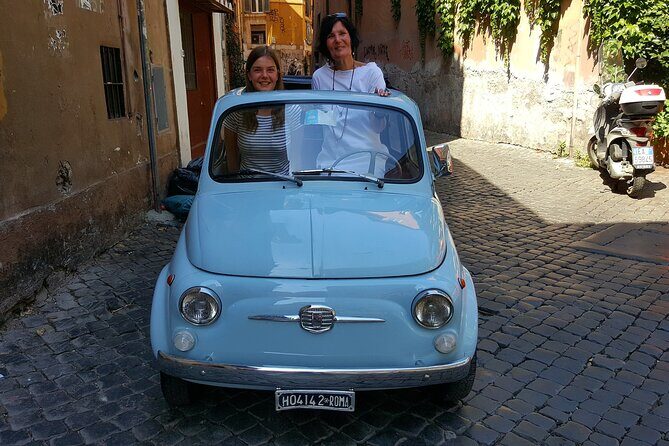
You’ll likely love this if you:
- enjoy classic cars or vintage-looking experiences,
- are comfortable driving a manual in busy areas,
- want a break from tour-bus pacing,
- and like making your own plan on the fly.
You might skip it if you:
- hate driving in tight historic streets,
- need modern conveniences like reliable air conditioning,
- or expect to drive directly to every major sight without any walking.
Also, consider timing. Rome traffic can feel more stressful if you’re not mentally ready. Having that calm mindset is what turns the day from “work” into “fun.”
Should you book it?
If your dream Rome day includes a small, iconic car, free-form stops, and scenic breaks beyond the center, I think it’s a strong pick. The best version of this experience is when you treat it like a guided-by-tips adventure: use the ZTL advice, plan your parking, and accept that some famous spots are best reached with a short walk.
If you want modern comfort, stress-free driving, and zero surprises, choose a standard rental instead. But if you’re chasing atmosphere—and you’re okay driving a vintage machine—you’ll probably feel like you’ve stepped into a Rome movie for a day.
FAQ
Where is the meeting point, and where do I end?
You meet at Via di S. Calisto, 9, 00153 Roma RM, Italy. The activity ends back at the same meeting point.
How long is the rental?
The experience is listed as about 1 day, and the car is yours for 24 hours.
What’s included in the price?
The price includes local taxes.
What extra costs should I expect at check-in?
You’ll pay parking fees at check-in, and there is also a fuel surcharge required by the local supplier, also payable at check-in.
Do I get help with Rome driving rules like ZTL?
Yes. The pickup includes a short orientation with tips about ZTL zones to avoid and times to avoid.
What is the minimum age to drive?
The minimum age is 21 years.