REVIEW · POMPEI CAMPANIA
Pompei: the Latest Discoveries with your Archaeologist
Book on GetYourGuide →Operated by Grand Tour Experience · Bookable on GetYourGuide
Pompeii, but with fresh discoveries. This tour takes you beyond the usual checklist and into Pompeii’s latest openings with an expert archaeology guide, including the story of 79AD and stops built around restoration work you can still see. I especially like how the guide connects art and everyday life through specific sites, and how the route highlights newer areas in Regio V instead of repeating the same crowded highlights. One drawback to plan for: it’s not suitable for wheelchair users, so it’s better if you can comfortably walk on uneven ancient stone.
You’ll start at Porta Marina Superiore, the original Roman gate, and you’ll keep the group small (max 15/17), with headsets if needed. I like that the pacing is structured for a 2-hour visit, but it also leaves room for real questions rather than a rushed “look and go” circuit. For a practical heads-up, the rules around entry are strict, and there are moments where filming isn’t allowed for security.
This is Pompeii as a living archaeological site: new access points, reopened spaces, and ongoing restoration. If you’re the type who wants the “what’s happening now” version of Pompeii, this works well. If you only care about the biggest best-known attractions in one sweep, you might find this format more focused than you expected.
In This Review
- Key things I think you’ll care about
- Entering Pompeii the right way: Porta Marina Superiore as your starting line
- The two-hour format: what it covers (and why it feels focused)
- 79AD context first: eruption, plaster casts, and the human scale
- Roman Forum and the reopened Forum Bath House: why preservation feels personal
- Macellum stop: how the tour stitches the city together
- Regio V and Torre di Mercurio XI: the view, the street grid, the new work
- Casa dei Vettii: fresco quality and a 27-year restoration story
- Casa delle Nozze d’Argento and Stabian Road: residential details you can actually track
- Insula dei Casti Amanti: a working archaeological site with strict photo rules
- From ancient stones to a practical finish: end point and new facilities
- Ticketing rules and ID checks: Pompeii’s anti-reseller system
- Price and value: what you’re really paying for
- Guides make the difference: what Daniela and Sonja’s tours reveal
- Who should book this Pompeii archaeology tour (and who should pass)
- Should you book it?
- FAQ
- FAQ
- Where do I meet for this tour?
- How long is the tour?
- What’s included in the price?
- Is this tour a private group?
- What languages are available?
- Do I need an ID to enter?
- Are photos or videos allowed?
- Is food or drink included?
- What if I need to cancel?
Key things I think you’ll care about
- Porta Marina Superiore start: you begin at the original Roman gate, with the tour’s story unfolding from there.
- Fresh openings in Regio V: the route is built around newer digs and access areas, not just standard highlights.
- Restoration you can see: including a major reopened spot and the work shown in multiple houses.
- Casa dei Vettii restoration story: a 27-year restoration effort is part of the visit.
- Insula dei Casti Amanti live work: you’ll see a working area and follow the photo/video rules there.
Entering Pompeii the right way: Porta Marina Superiore as your starting line
Meeting at Porta Marina Superiore matters more than it sounds. Instead of entering Pompeii from wherever’s easiest, you begin at the gate that fits the Roman layout, and your guide uses that first moment to set the historical stage. Expect a short orientation that frames what you’re about to see, including why Pompeii still feels “unfinished”—in the best way.
There’s also a practical benefit here. The meeting point is across the street from Hortus Garden Bar & Restaurant, and you can use that as a visual anchor if you’re navigating on foot. One tip from real-world experience: the start can be easy to mix up if you’re relying on map links that place you inside the ruins. If you want the stress-free start, use the name Porta Marina Superiore and look for the group form outside.
You can also read our reviews of more tours and experiences in Pompei Campania.


The two-hour format: what it covers (and why it feels focused)
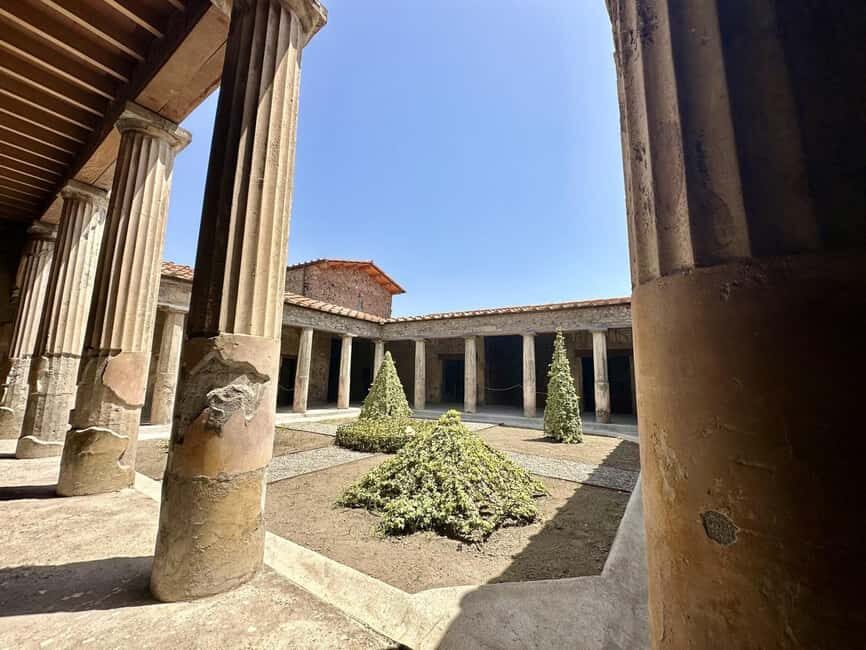
The tour lasts 2 hours, which is long enough to connect sites into a story without turning into a marathon. The trade-off is that this isn’t a full-day “see everything” Pompeii approach. You’re getting a curated run through the latest access and restoration areas, so some of the most famous stops might not be your top priority on this route.
What I like about this timing is the way it matches the theme: Pompeii’s new work needs context, and a guide can only do that well if the visit isn’t rushed. You’ll move through key spaces—starting with the Forum area, then shifting into Regio V, then ending at a site where active restoration is visible. For many people, that mix feels more meaningful than checking off landmarks one by one.
Group size is another big part of the value. With a max of 15/17, you’re far more likely to hear the guide clearly and actually ask questions. If your group grows beyond 12 people, you get headsets, which is a small detail that makes a big difference in ruins where sound can disappear.
79AD context first: eruption, plaster casts, and the human scale
Your tour doesn’t start by throwing you into ruins with no background. There’s an introduction to Pompeii’s tragedy during the eruption of Mount Vesuvius in 79AD, linked to the era of Emperor Titus. The emotional center of that setup is the plaster casts—often the most direct way Pompeii communicates the human cost of the disaster.
Even if you already know the basic story, the guide’s job is to turn “a famous event” into something you can actually place in the city’s spaces. That context helps later when you’re looking at walls, floors, and artwork that belonged to real routines: housing, public areas, and the visual language people used every day.
It’s also a reminder that Pompeii isn’t just a museum. It’s an active archaeological dig, and the tour’s “latest discoveries” theme keeps that sense of ongoing work in the foreground.
Roman Forum and the reopened Forum Bath House: why preservation feels personal
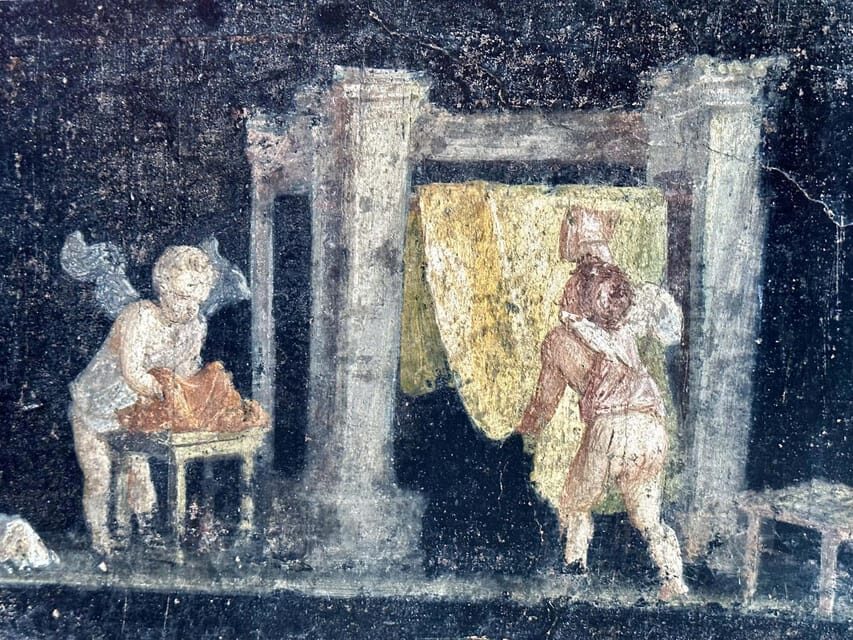
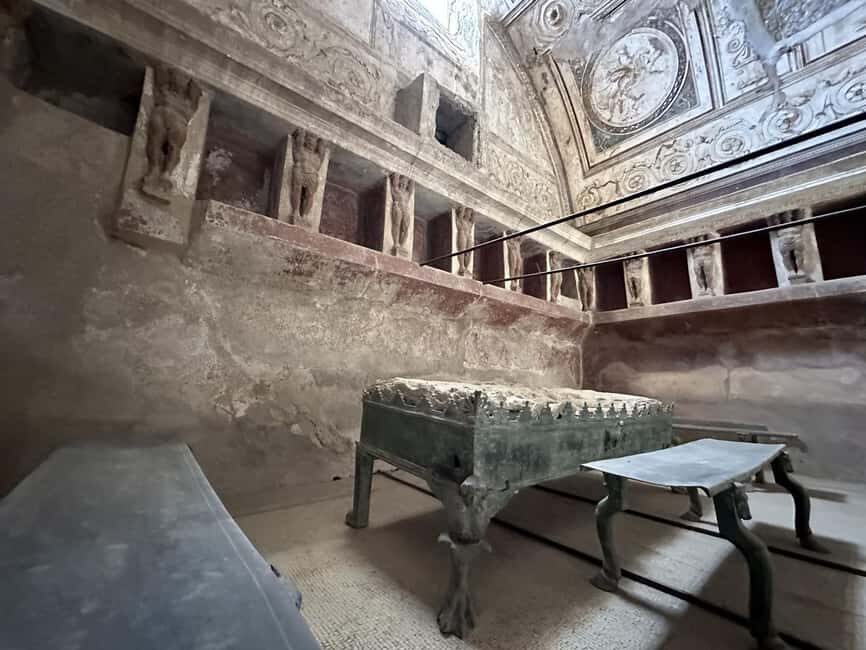
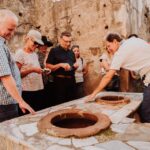
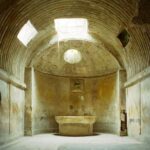
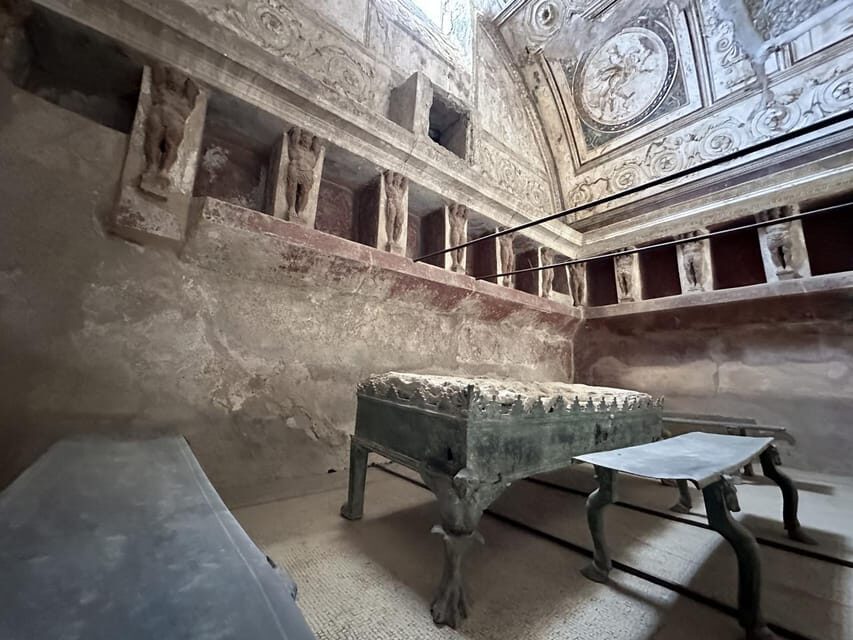
One of the standout parts of the route is the Roman Forum area, where you’ll also see the Forum Bath House that has recently reopened after years of maintenance. This stop works because it’s not only about admiring old stones. It’s about watching how restoration affects what you can understand today.
When you’re in a place where frescoes and mosaics are in strong condition, you get a clearer sense of how carefully Roman spaces were built and decorated. The guide points out the level of preservation—especially in relation to the visual details—so your attention stays on what’s still readable rather than on what’s missing.
This is where art-focused visitors usually find real satisfaction. Seeing the preserved surfaces isn’t passive. The guide helps you connect what you see to the larger pattern of Pompeii’s city layout and daily life, so the bath area becomes more than a pretty room—it becomes a clue.
Macellum stop: how the tour stitches the city together
After the Forum section, you’ll move into another major complex: the Macellum of Pompeii. The tour doesn’t treat each stop like a standalone postcard. Instead, your guide uses the sequence to build a sense of how spaces connect—public movement, neighborhood layout, and how different parts of the city served people.
The practical payoff is that you stop feeling like you’re just walking between “points of interest.” You’re following a guided logic: start with the story of Pompeii and the disaster, then anchor yourself in central public areas, then shift into the residential and newly accessed parts of Regio V.



Regio V and Torre di Mercurio XI: the view, the street grid, the new work
The tour’s biggest “now” element is Regio V, where the best of the new digs are happening. That matters because Pompeii isn’t a static display. New access and continuing excavations change what you can see and how you interpret the site.
A key moment here is a stop at the Tower of Mercury (Torre di Mercurio XI). It’s the only Roman defending tower in this opening set, and you’ll be able to admire Pompeii from the top. Even if you’ve seen photos before, getting that overhead perspective helps you read the city’s geometry—streets, blocks, and how neighborhoods relate to each other.
Then the route keeps pulling you back to lived-in space: houses, street facades, and areas where restoration work is visible.
Casa dei Vettii: fresco quality and a 27-year restoration story
One of the most praised stops on the route is the House of the Vettii (Casa dei Vettii). This isn’t just a house name on a route sheet. You’re shown the results of a major restoration effort that took 27 years, completed last year, and you’ll learn the secrets of the monument through the guide’s explanation.
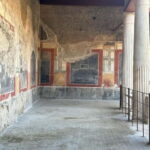
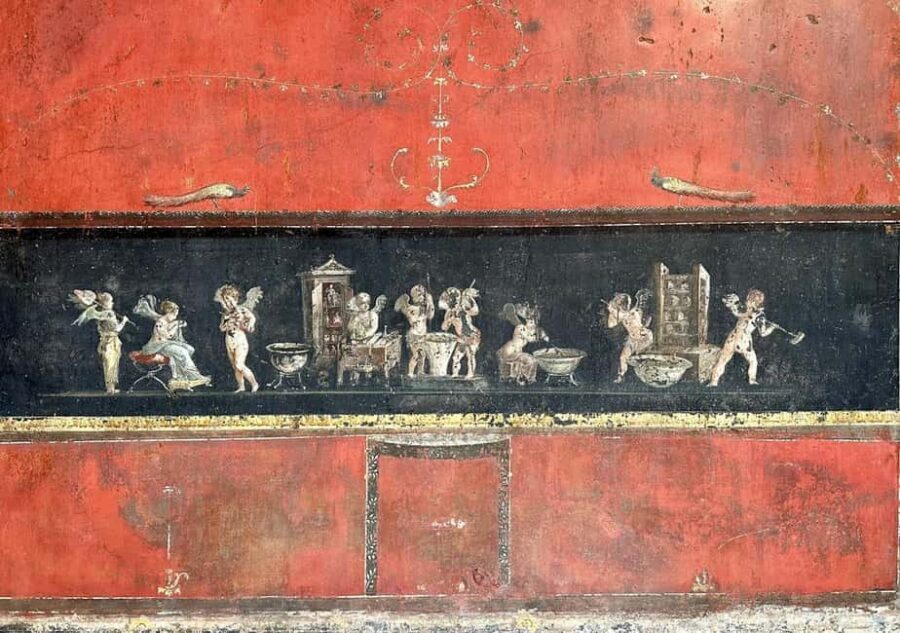
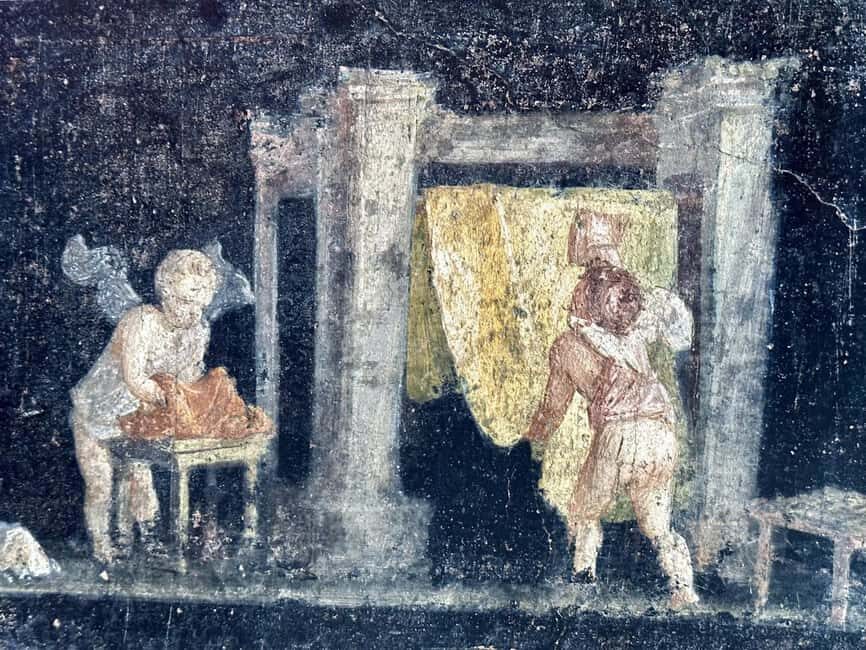
The reason this house lands so well is the artwork. The visit highlights the quality of the frescoes and the strong, distinctive Pompeian red tones that make Roman interior decoration feel immediate rather than faded. If you’ve ever looked at a Pompeii fresco and thought it was too fragmentary to read, this kind of restoration-forward visit can change how you see the whole room.
I also like how the guide frames restoration as interpretation. A restored area doesn’t just look better. It helps you understand what visitors would have experienced in daily life—color, design choices, and the overall sense of a carefully composed home.
Casa delle Nozze d’Argento and Stabian Road: residential details you can actually track
After Vettii, you’ll keep moving through Regio V with more residential stops that help you read the neighborhood like a map.
First up is the House of the Silver Weddings (Casa delle Nozze d’Argento). Then you’ll walk along Stabian Road, watching the facade of the house of Caecilius Iucundus. This is the kind of sequence I like when I’m learning a city: you keep seeing related architecture and street context instead of hopping randomly between distant areas.
And because this tour aims at the “latest openings” theme, it tends to feel like you’re seeing housing in a fresh context—especially if your previous Pompeii visits leaned heavily on the most obvious public landmarks.
Insula dei Casti Amanti: a working archaeological site with strict photo rules
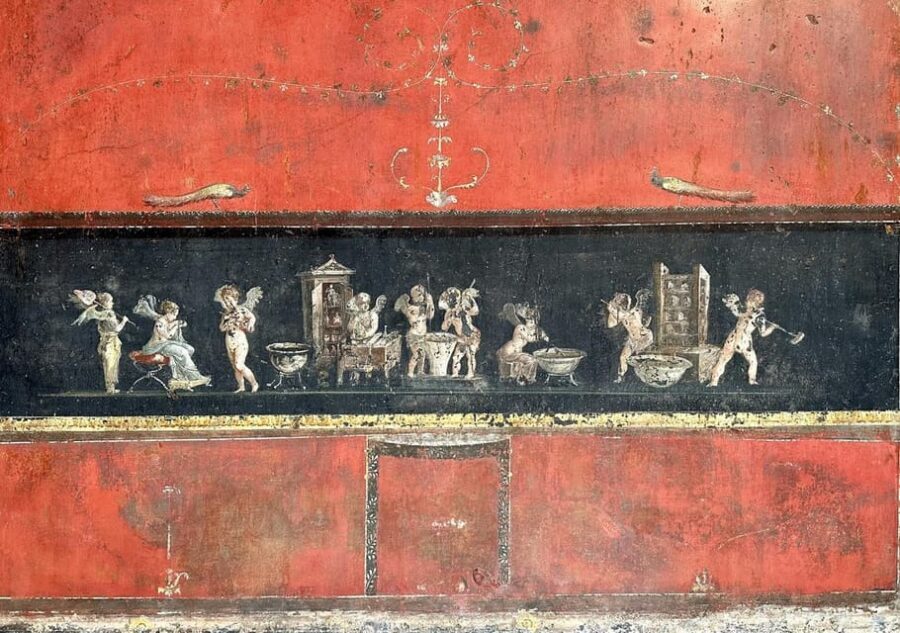
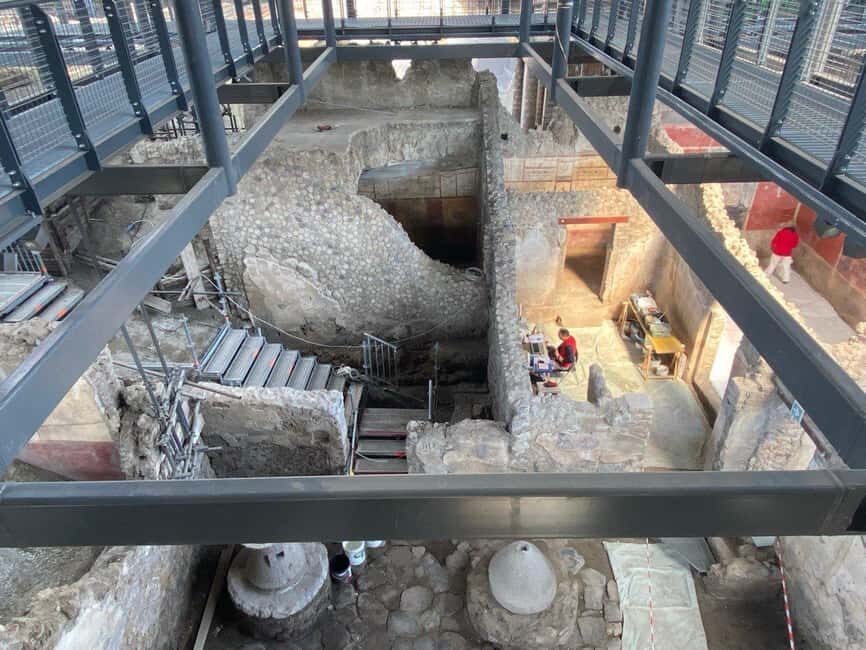
The final big “how Pompeii is still being made” stop is the Insula dei Casti Amanti. Here, restoration and archaeological work are actively happening on the spot, which changes the emotional tone of your visit. Instead of looking at a finished artifact behind glass, you’re seeing the real workflow of excavation and conservation.
There’s a clear rule here: photos or video are not allowed for security reasons. It may feel like an inconvenience at first, but it’s also the moment when the tour’s theme becomes real. You’re not trying to capture everything. You’re trying to understand what you’re seeing while professionals work around you.
This is also where the best guides earn their paycheck. One of the most impressive parts of the experience is how the guide can explain what’s happening now and why the site needs careful handling. If you prefer tours that treat Pompeii as a process (not only a product), this stop delivers.
From ancient stones to a practical finish: end point and new facilities
Your tour ends back at the meeting area at Pompeii Ruins. Along the way, you’ll finish near a newly inaugurated bar and restaurant corner with toilets. That’s genuinely useful. Pompeii can wear you down faster than you expect, and having facilities nearby makes the post-tour stretch easier.
It also means you don’t have to plan extra logistics to transition out. You can grab a drink or a quick bite after you’ve completed the main focused circuit.
Ticketing rules and ID checks: Pompeii’s anti-reseller system
This tour follows Pompeii’s ticketing rules designed to stop illegal resellers. You’ll need your original ID or passport. The key detail is that Pompeii requires your full name to be added to the ticket, and you’ll need to send participant information (full name, age, and booking code) to the email address provided by the organizer.
I strongly recommend you treat this as a “do not forget” task. It’s not about being bureaucratic for fun. It’s about avoiding entry headaches on the day—especially since tickets are personal and you’re asked to be on time.
Also note what’s not allowed: pets (assistance dogs are allowed), drones, feeding animals, skateboards, and scooters. If you’re planning around these rules, it’s worth double-checking your packing list before you head to the ruins.
Price and value: what you’re really paying for
The listed price is $294.54 per group up to 1 (check availability for starting times). At first glance, that can sound steep—until you factor in what’s included.
You get archaeological park tickets, an expert archaeology guide, a route designed to reach the “new openings,” and for larger groups, headsets. The private-group setup also matters. With a smaller group max, you’re not competing with a crowd for attention, and you’re more likely to hear the explanations clearly.
So the value isn’t just “a guided walk.” It’s a specialist route through Pompeii’s active archaeological areas, timed and organized around restoration and newly accessed spots. If you’ve been to Pompeii before and felt like the experience was mostly the same set of rooms, this format is built for a different reason.
Guides make the difference: what Daniela and Sonja’s tours reveal
Two guide names came up in standout experiences: Daniela and Sonja. The common thread in their tours is clarity and enthusiasm tied to real expertise. Daniela’s tours were described as captivating, with strong historical insight and a serious focus on the art and organization of the city, delivered with confidence in French.
Sonja’s visits were praised for structure and timing that doesn’t feel rushed, plus smart routing to avoid crowds where possible. One practical detail that really helps you plan: on a very hot day (nearly 40°C), Sonja worked to keep the group in the shade. That’s not guaranteed on every day, but it’s a good sign that the guide team understands the comfort side of a Pompeii visit, not just the lecture side.
There’s also a small reality check. Finding the host at the start can be slightly confusing if you’re expecting to queue inside. The fix is simple: go to Porta Marina Superiore and match the meeting-point instructions rather than a map shortcut. When your group shows up correctly, the entry process tends to run smoothly.
Who should book this Pompeii archaeology tour (and who should pass)
This tour is a strong fit if you want Pompeii to feel current—based on continuing work, reopened areas, and newly accessible sections in Regio V. It also suits art lovers who care about frescoes and mosaics, especially when restoration brings those surfaces into clearer view.
You might want to choose a different Pompeii option if:
- you need a wheelchair-accessible tour (this one is not suitable for wheelchair users),
- you’re only interested in a broad “greatest hits” checklist rather than a restoration-and-new-access focus,
- you expect to film throughout (there are photo/video restrictions in the working site area).
If your style is “give me the why, not just the what,” this works.
Should you book it?
Yes, if you like focused tours with an archaeology specialist and you’re curious about what’s new at Pompeii—openings, restoration results, and ongoing work in areas like the Insula dei Casti Amanti. This tour has a clear point of view: Pompeii isn’t finished, and a guide makes that visible in two hours.
I’d say book it especially if you’ve done a basic Pompeii visit before or you want your trip to include more than the usual crowd routes. If your priority is maximum coverage of famous sites, you may feel this one is intentionally selective.
FAQ
FAQ
Where do I meet for this tour?
You meet at PORTA MARINA SUPERIORE, the entrance gate to the Pompeii archaeological park. The closest station is Pompeii Scavi – Villa dei Misteri, and the closest parking lot is Parking Zeus.
How long is the tour?
The duration is 2 hours. Starting times depend on availability.
What’s included in the price?
Included are tickets to the archaeological park, an expert archaeology guide, and a special route designed to reach the new openings. You also get headsets if the group exceeds 12 people, and the group is kept small (max 15/17).
Is this tour a private group?
Yes. It’s listed as a private group experience.
What languages are available?
The tour guide is available in English, French, Italian, and Spanish.
Do I need an ID to enter?
Yes. Pompeii requires your full name on the ticket, and you must bring an original ID or passport for adults and children.
Are photos or videos allowed?
Photos or video are not allowed in the Insula dei Casti Amanti area for security reasons.
Is food or drink included?
No. Food and drinks are not included.
What if I need to cancel?
There is free cancellation up to 24 hours in advance for a full refund.