REVIEW · POMPEI CAMPANIA
Pompeii: Skip-the-line-Ticket and Guided Tour
Book on GetYourGuide →Operated by TOURISTATION · Bookable on GetYourGuide
Time-travel starts at the city gate. This Pompeii experience pairs skip-the-line reserved entrance with a Pompeii archaeologist-style guide, so you trade queues for real time walking the streets. You’ll start at Porta Marina Superiore, move through the forum, and catch views of Mount Vesuvius while learning what life looked like before the eruption. One thing to plan for: the meeting point can be slightly tricky to find, and the visit is only 2 hours.
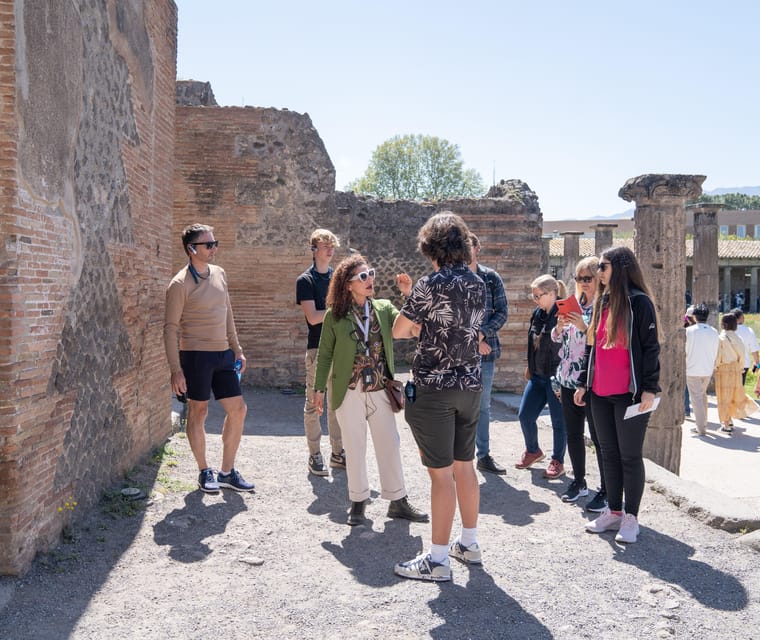
I especially like the guided format because it turns scattered stones into a place with jobs, habits, and daily routines. You also get headsets, which makes a difference when you’re in an open-air site with lots of background noise. Another practical note: this isn’t a good fit for wheelchair users or people with mobility impairments, and you’ll be walking a fair bit.
In This Review
- Key highlights I’d plan around
- Pompeii makes more sense with an archaeologist guide
- Skip-the-line entry: the best kind of speed-up
- Meeting at IBT Center: find it once, relax for the rest
- From Porta Marina Superiore into Pompeii’s main story
- The forum: where politics and daily life meet
- Baths, temples, and everyday services you can actually picture
- Frescoes and mosaics: how to look like you mean it
- Mount Vesuvius views: the moment the story clicks
- Pace and group size: you’ll cover a lot in 2 hours
- Price and value: what you’re really paying for
- Practical rules that affect your day
- Who should book this tour
- Should you book this Pompeii skip-the-line guided tour?
- FAQ
- FAQ
- What is included in the Pompeii skip-the-line guided tour?
- How long is the tour?
- Where do I meet the guide?
- Which languages are available for the live guide?
- Do I need to bring an ID?
- Is the Villa dei Misteri entrance included?
- Is this tour suitable for wheelchair users or people with mobility impairments?
Key highlights I’d plan around
- Reserved skip-the-line entry so you start seeing things faster
- Archaeologist guide storytelling that connects mosaics, frescoes, and daily life
- Headsets for clear listening even when the group gets spread out
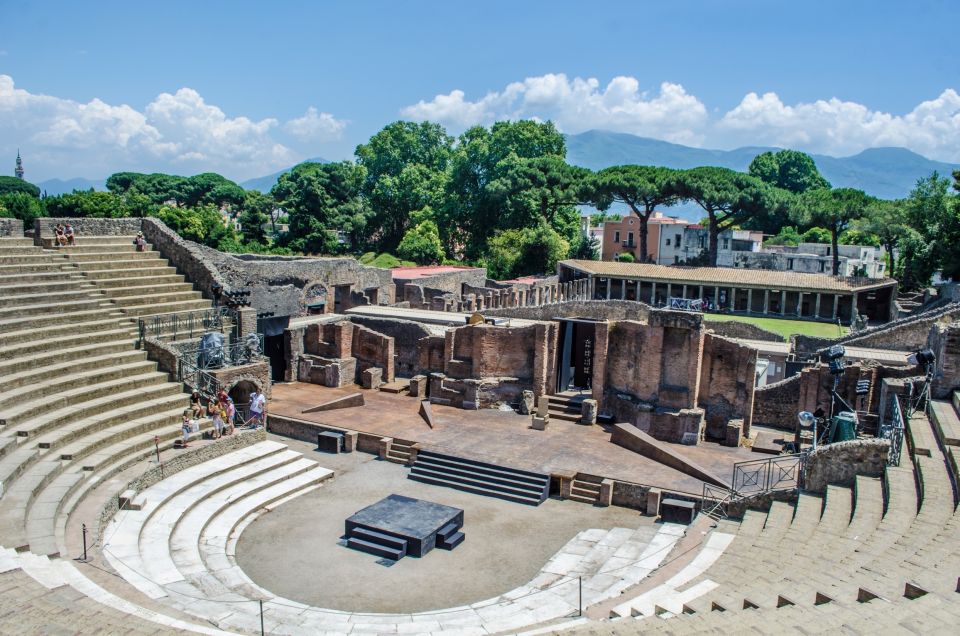
- Forum, baths, temples, theater, bakery, and a brothel all in one 2-hour circuit
- Mount Vesuvius viewpoints timed so the city actually makes sense
- Semiprivate option (max 12 people) for a calmer experience and easier questions
Pompeii makes more sense with an archaeologist guide
Pompeii is famous, but it’s also easy to misunderstand. Without context, you can end up doing the classic tourist move: looking at ruins and mentally guessing. With a guide, you learn how the city was laid out and why certain buildings mattered.
What I like most is the focus on interpretation—how art and architecture connect to everyday life. You’ll spend time on preserved frescoes, mosaics, and artworks, but you won’t just see them as decoration. You get the story behind them: what people did in those spaces and what the designs might have been saying in Roman culture.
This tour also makes space for the big geography lesson. Pompeii isn’t just a flat open-air museum; the city sits with Mount Vesuvius looming above it. Your route is designed so those views land at the right moments—when you’ve already learned enough to understand what you’re looking at.
You can also read our reviews of more tours and experiences in Pompei Campania.


Skip-the-line entry: the best kind of speed-up
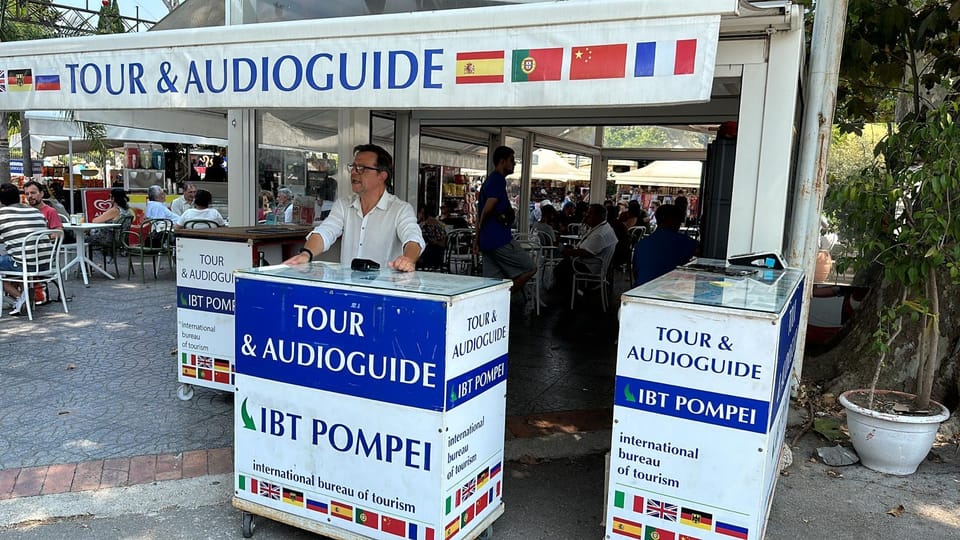
The skip-the-line piece sounds simple, but in Pompeii it matters. The site gets busy, and waiting can steal the best part of your day. Having a reserved entrance means you’re not stuck watching other people file past while you’re still outside thinking about time.
In practice, that means the first 30 minutes feel less stressful. You can get your bearings quickly and start walking while the visit still feels fresh. And since the tour is only 2 hours, every minute counts.
You also have other time-saving support built in: you get a city map, and the tour includes headset equipment. Those small details help you stay oriented rather than pausing every few steps to ask where you’re going next.
Meeting at IBT Center: find it once, relax for the rest
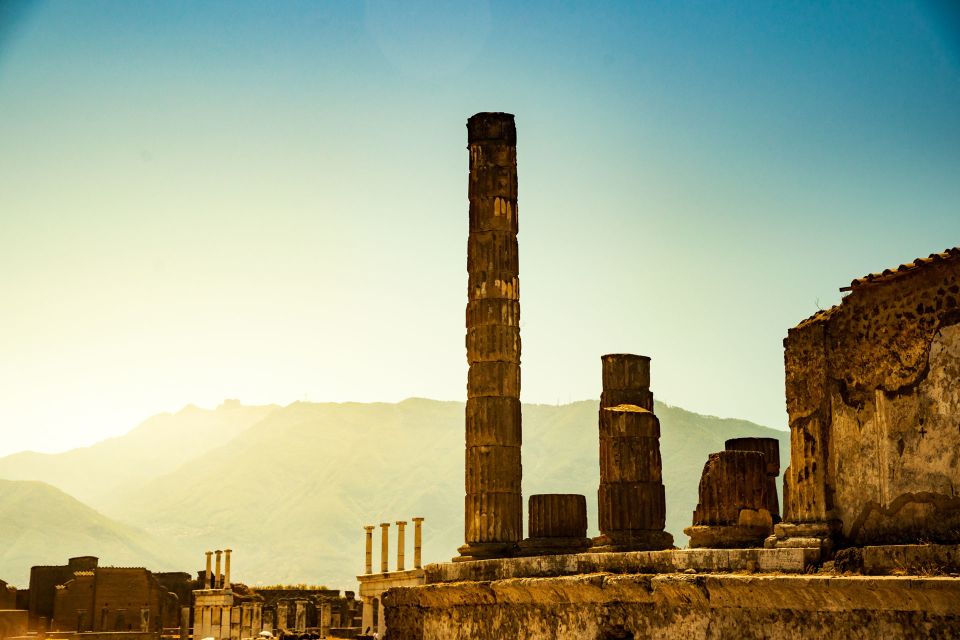
Meeting points can make or break day-one ease, and this one has a specific instruction set. Report to the Office labeled IBT Center/Touristation next to Chalet Donna Lucia.
The starting location is listed as Piazza Esedra, 11. That address is the anchor, but don’t assume it’s right next to every entrance you’ve been imagining. One practical tip: give yourself extra minutes to confirm you’re at the right office, because at least some visitors have found it a bit away from the station area.
Once you’re there, the tour runs like clockwork. You’ll be directed to your guide, and headset gear is checked at the beginning so everyone can hear. That’s a small thing that makes the whole tour smoother.
From Porta Marina Superiore into Pompeii’s main story
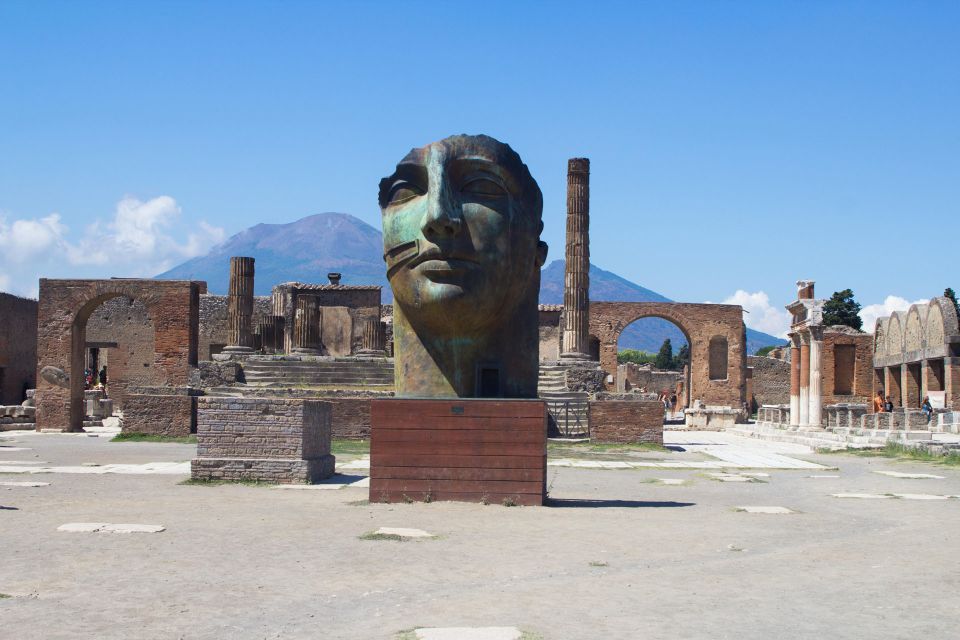
Your walk starts at Porta Marina Superiore, one of Pompeii’s seven gates. Starting at a gate is a smart move: it reminds you Pompeii wasn’t a single attraction. It was a working city with entrances, traffic flow, and neighborhoods that changed as you moved inward.
From there, the route shifts into the city’s movement—main streets first, then the forum. This helps you build a mental map as you go. You’ll see how quickly Roman life moved between public and private spaces.
Expect the guide to steer you through the city like a curated storyline, not a random scavenger hunt. The order matters. You’re learning what to look at as you pass it, so later stops land with more meaning instead of feeling like you already saw them.
The forum: where politics and daily life meet
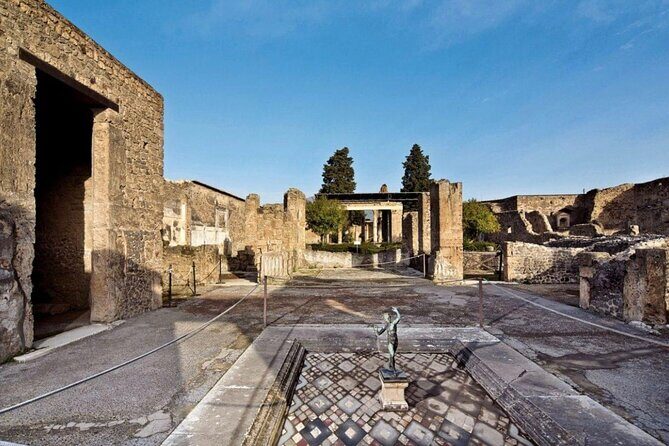
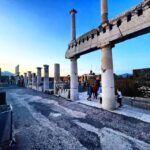
The forum is the heart of Pompeii, and it’s usually the place where visitors can feel the most awe—until they realize awe doesn’t explain much. The value of a guide here is that you learn what the forum meant in real Roman terms: public gatherings, civic life, and the social stage of the city.
In your walk, the forum becomes a reference point. Once you understand it as a center, you start noticing how nearby buildings fit into the rhythm of the day. You’ll also get anecdotes that make the city feel less like a frozen moment and more like a place that had routines.
It’s the stop where questions naturally pop up. People wonder about jobs, status, and what different spaces were for. A good guide helps you connect the dots without drowning you in facts.




Baths, temples, and everyday services you can actually picture
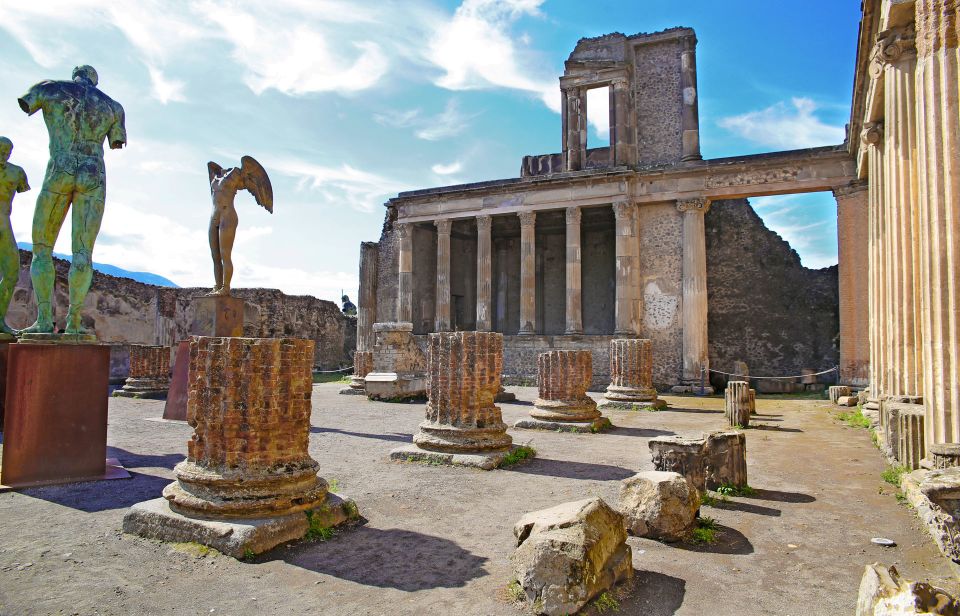
After the forum, the tour moves through the city’s core “life-support” zones: baths, temples, and service buildings. This is where Pompeii becomes practical.
Here’s what you can expect to see on your 2-hour circuit:
- Baths and the role of public bathing in Roman life
- Temples tied to religious practice and civic identity
- A bakery, which helps you imagine daily food production instead of just theory
- The great theater, pointing to entertainment and public gatherings
- A brothel, showing how the city worked in ways modern visitors sometimes prefer to skip
The best part is that these aren’t shown as isolated rooms. The guide connects them so you can picture how a person might move through their day: eat, bathe, worship, work, and socialize.
Also, you’ll get reminders that these buildings weren’t all identical in purpose. Pompeii’s layout makes it clear that religion, leisure, and commerce were intertwined. That’s a huge reason a guided tour is worth it here.
Frescoes and mosaics: how to look like you mean it
Pompeii is packed with art, and the temptation is to treat it like decoration. This tour helps you look at it with purpose.
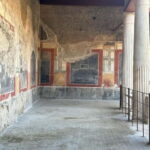
You’ll see well-preserved frescoes, artworks, and mosaics up close, and your guide’s job is to point out what matters visually and historically. That can mean explaining subject matter, how scenes might connect to status or beliefs, or why certain rooms were decorated the way they were.
The guide also helps you slow down in the right places. Even with a 2-hour tour, you don’t want to speed past the best details. With headsets on, you can actually listen while you look—rather than choosing one or the other.
If you’re the type who likes taking photos, do it here. But try not to turn art into a checklist. This is one of the best opportunities to learn what you’re seeing, then snap photos that you’ll understand later.
Mount Vesuvius views: the moment the story clicks
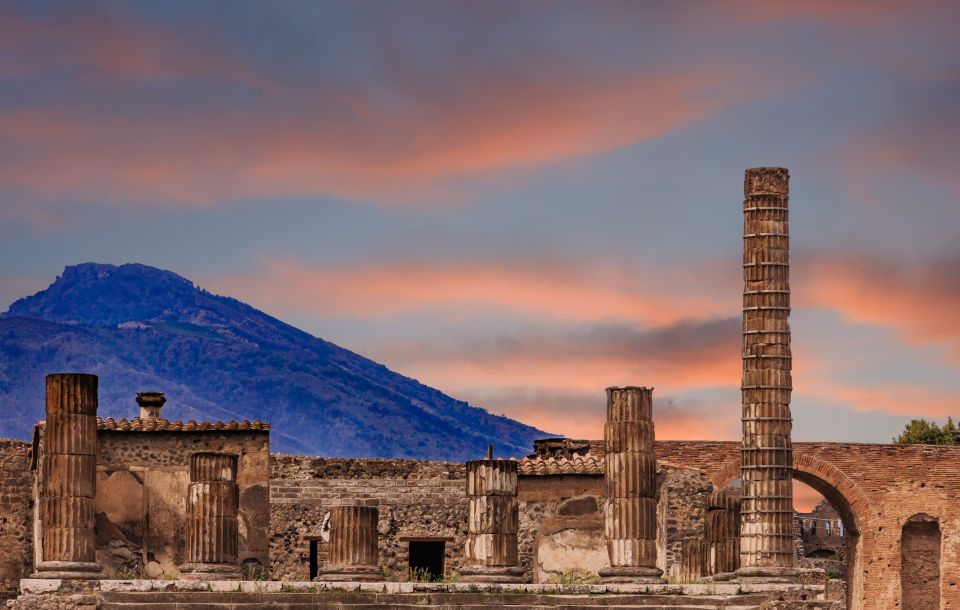
You’ll also get views of Mount Vesuvius beyond the city. This isn’t just a scenery break. It’s a reminder of the scale of what happened and why Pompeii was preserved the way it was.
The timing matters. If you get the Vesuvius perspective after you’ve learned the city’s street structure and key buildings, the view becomes a mental full stop. You can literally place the city in its setting.
The guide’s commentary helps you connect the ruins to the volcano without turning it into pure disaster talk. Instead, it stays focused on how the city lived—up until it didn’t.
Pace and group size: you’ll cover a lot in 2 hours
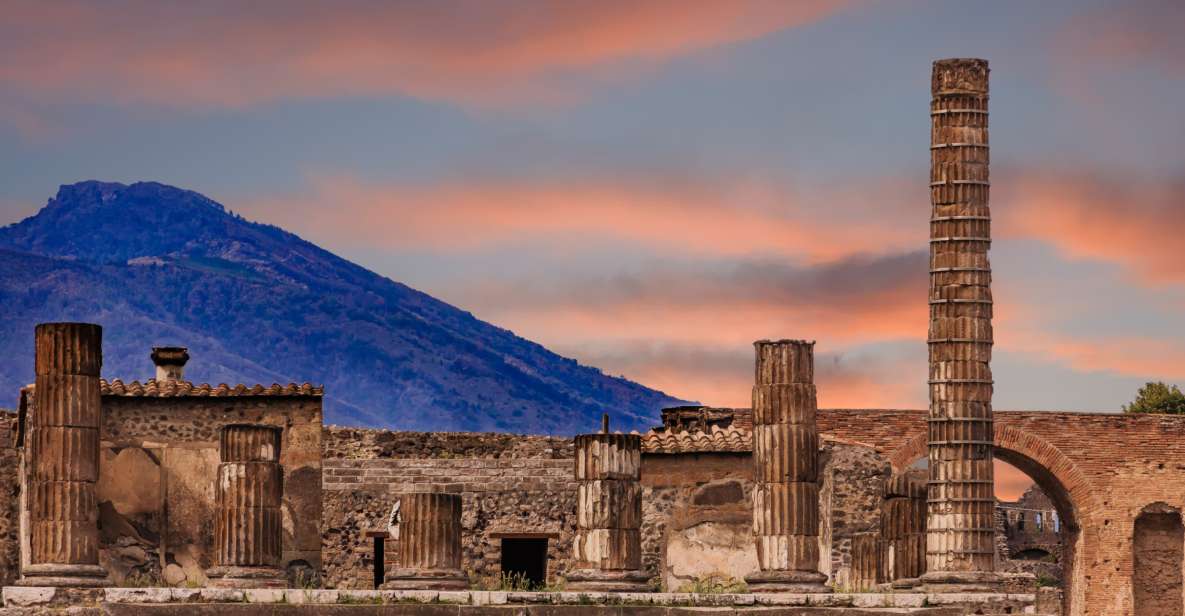
This tour lasts 2 hours, which is short enough to fit into many travel schedules but long enough to see major highlights. The trade-off is you won’t cover every corner of Pompeii.
The advantage of being in a guided group is that you’re not wasting time figuring out what’s worth your attention. Your guide is also expected to route you through the main areas while managing the group so you spend more time learning and less time herding.
There’s also a semiprivate option with a maximum of 12 people. If you want a quieter experience where hearing the guide doesn’t feel like a team sport, this is the version worth targeting.
Still, plan around walking. The tour isn’t suitable for wheelchair users, and people with mobility impairments may find it challenging. If you have any doubt, you’ll want to think carefully about the physical side of Pompeii before you commit.
Price and value: what you’re really paying for
The price is $64 per person for a 2-hour experience that includes a few key components:
- A skip-the-line ticket to the Pompeii archaeological area
- A 2-hour guided tour with a live guide
- Headsets so you can hear clearly
- A city map
- Assistance at the Tourist Office
- Wi-Fi
So what does that mean in real value terms? You’re paying for time savings and interpretation. Skip-the-line access gets you in faster. Headsets and a guide get you better information per minute once you’re inside.
It’s also not a “do it yourself” tour. Pompeii is one of those places where reading plaques doesn’t compare to having someone explain how the city functioned. If you’re visiting with limited time, paying for the guide is often the smartest way to avoid coming away with a pile of photos and no mental structure.
One thing not included: entrance to Villa dei Misteri. If that’s high on your personal list, you’ll need to plan it separately.
Practical rules that affect your day
A few restrictions matter because they shape what you carry and how you move:
- No smoking
- No luggage or large bags
- No umbrellas
- No oversize luggage
- Pets are not allowed, though small dogs are permitted inside the archaeological area if kept on a leash and carried when inside buildings
Also bring an ID card or passport—ID is required for all participants.
These rules might sound strict, but they’re common for archaeological sites. Pack light so you’re not juggling bags while you’re trying to hear the guide and keep pace.
Who should book this tour
This is a great match if:
- You want Pompeii highlights fast, in 2 hours
- You prefer context over wandering
- You like seeing preserved art (frescoes, mosaics) explained in a way that connects to real life
- You’re okay with walking and you’re not using a wheelchair
It’s less ideal if you want a slow, independent stroll through every section of Pompeii, or if mobility limitations make uneven surfaces a problem. Also, if Villa dei Misteri is a must-see, you’ll want a separate plan for that.
Should you book this Pompeii skip-the-line guided tour?
If you’re short on time, I think it’s a solid booking. The combination of reserved skip-the-line entry, a live guide, and headsets is exactly what you want when you’re trying to understand Pompeii instead of just staring at ruins.
Book it if you want the forum, major public buildings, and art all tied together into one clear storyline—and if you’ll appreciate Mount Vesuvius as part of the meaning, not just the background view.
Skip it (or choose a different format) if you need wheelchair-friendly routing, want to roam freely without a set route, or you’re specifically chasing Villa dei Misteri on the same day.
FAQ
FAQ
What is included in the Pompeii skip-the-line guided tour?
You get a Pompeii archaeological area skip-the-line ticket, a 2-hour guided tour, headset equipment, a city map, assistance at the Tourist Office, and Wi-Fi.
How long is the tour?
The guided visit is 2 hours. Starting times depend on availability.
Where do I meet the guide?
Meet at the Office IBT Center/Touristation next to Chalet Donna Lucia. The starting location is listed as Piazza Esedra, 11.
Which languages are available for the live guide?
The live guide runs in Italian, French, Spanish, and English.
Do I need to bring an ID?
Yes. You need a passport or ID card, and ID is required for all participants.
Is the Villa dei Misteri entrance included?
No. Entrance to Villa dei Misteri is not included.
Is this tour suitable for wheelchair users or people with mobility impairments?
No. The tour is listed as not suitable for people with mobility impairments and wheelchair users.