REVIEW · POMPEI CAMPANIA
Pompeii: Guided Tour with Archaeologist with max. 12 People
Book on GetYourGuide →Operated by Benedetto Tourist Guide · Bookable on GetYourGuide
Pompeii hits harder with an expert guide. On this small-group Pompeii tour led by archaeologist Benedetto, you walk through a city frozen by the AD 79 eruption, with the story made clear street by street. You start at Ristorante Suisse, then move through the highlights most visitors miss or misunderstand.
I love the way you see Pompeii as real daily life, not just ruins. The decorated spaces like the House of Menander, plus the famous plaster casts of the victims, turn the “wow” factor into understanding. I also like the group size, max 12 people, which keeps questions flowing and the pace comfortable.
One consideration: Pompeii involves lots of walking and uneven ground, and the tour is not suitable for mobility impairments or wheelchair users.
In This Review
- Key highlights worth your attention
- Pompeii with an archaeologist: what makes Benedetto’s approach different
- Where you start: Ristorante Suisse and how the route is paced
- Porta Marina Inferiore to the theaters: getting your bearings fast
- House of Menander: frescoes and the feel of Roman rooms
- Terme Stabiane: baths as a social engine
- Walk with shops and Roman street life: why the streets matter
- Forum and civic buildings: Temple of Jupiter, Basilica, and civic power
- The lupanare: understanding the controversial without getting lost
- The plaster casts of the victims: the moment the city becomes personal
- What the 2-hour format does well (and where you may want more time)
- Price and value: is $65 fair for what you get
- Practical details you should not skip before you go
- Who this Pompeii tour is best for
- Should you book this Pompeii archaeologist tour with Benedetto?
Key highlights worth your attention
- Archaeologist-led walkthrough with an expert who can explain what you are seeing, not just describe it
- Small group (max 12), which makes it easier to stay together and ask questions
- Frescoes, mosaics, and marbles in major houses, plus the famous plaster casts
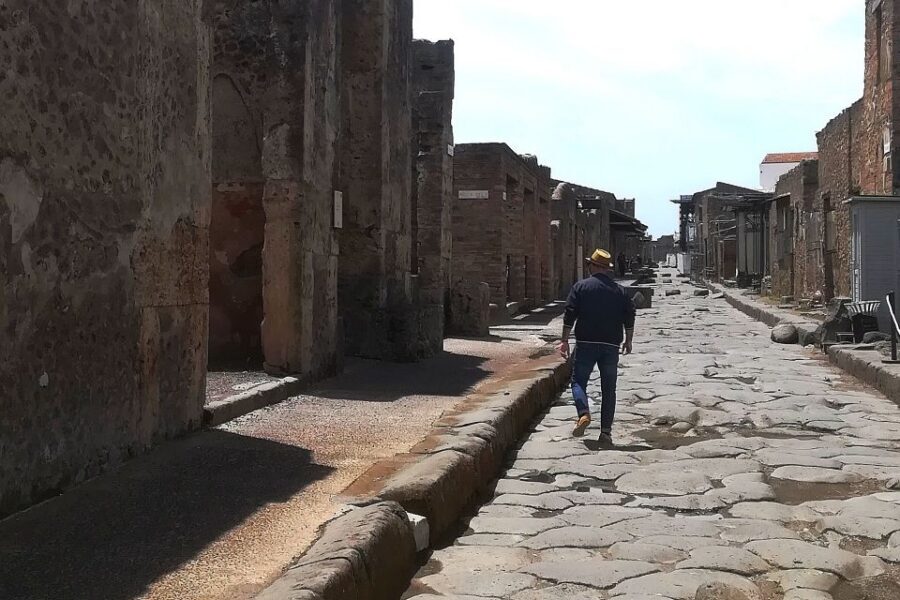
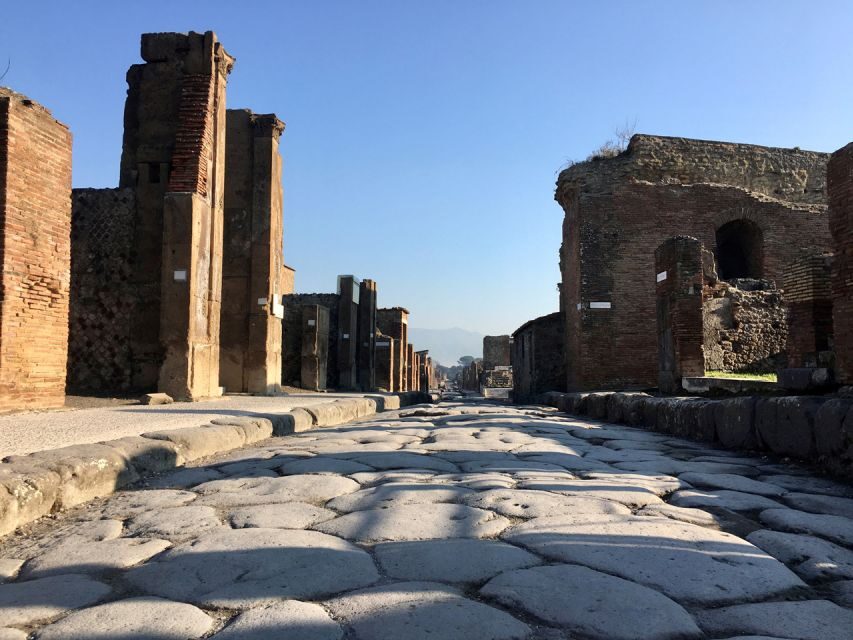
- Original Roman road walking, so you experience the street layout rather than just looking at stones
- Stops built around the city’s day-to-day mix: bakeries and shops, baths, public buildings, and the lupanare
Pompeii with an archaeologist: what makes Benedetto’s approach different
There’s a reason Pompeii feels intense even when you’ve only seen photos. The city is shattered, yes, but it’s also readable. With an archaeologist at your side, you learn what matters visually: how people moved through space, what buildings were for, and why certain details exist.
You meet Benedetto Tourist Guide at Ristorante Suisse. He guides in Italian, English, and French, and the tour is designed for a group of up to 12. In a place this big, a small group is not a luxury. It’s how you keep your bearings, avoid wandering into the wrong area, and get explanations while the scene is still fresh.
From the start, you’re not treated like a passive audience. The best part is that you get the “why” behind the “what.” You learn how Pompeii’s layout worked and how the eruption changed everything in one catastrophic moment. And because Benedetto is an archaeologist (and has long working experience on site, including university dig work), he can connect architectural details to Roman life in a way that feels practical, not textbook.
You can also read our reviews of more guided tours in Pompei Campania

Where you start: Ristorante Suisse and how the route is paced
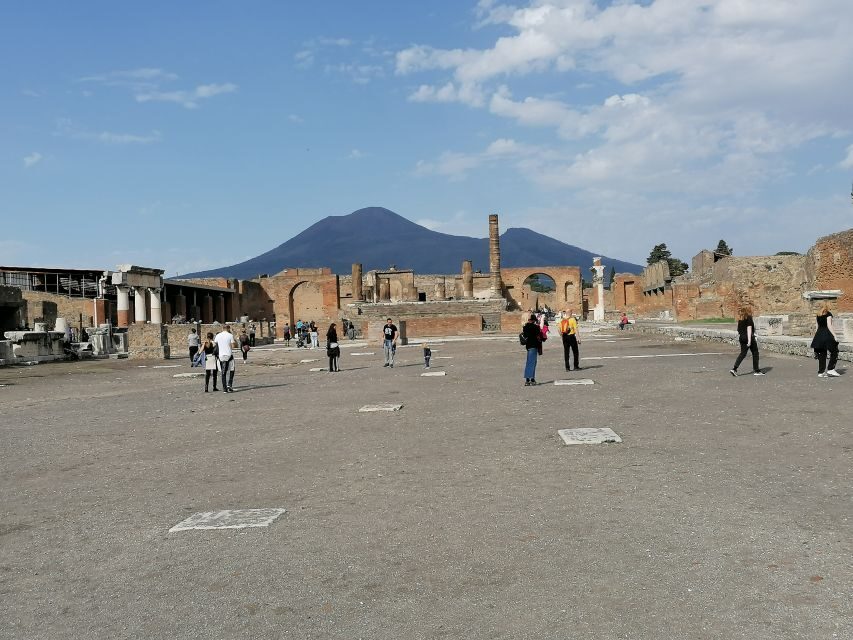
Your tour begins at Ristorante Suisse. Your guide waits for you there with a sign showing your name, which helps when you’re arriving on a busy day. Plan to show up on time with passport or ID card in original form. The ticket is named, so you also need to provide the first and last names of all participants after booking.
The tour runs for about 2 hours, and it’s built as a “greatest hits” loop that still feels connected. You’re not sprinted from one spot to the next. Instead, you keep moving through Pompeii’s main zones in a sequence that makes sense: theater area, residential spaces, daily-life streets, baths, entertainment and commerce, civic center, and finally the victim casts.
Crowds can be rough in Pompeii. One big theme from real guide feedback is that Benedetto works the timing and flow to help you avoid the worst bottlenecks. Even if you still hit busy areas, you’ll feel less stuck and more in control of your visit.
Porta Marina Inferiore to the theaters: getting your bearings fast
After the meeting point, the route starts from Porta Marina Inferiore. This isn’t just a random entrance. You begin near the part of the city that helps you understand movement into Pompeii, and how travelers and residents would experience the place.
From there, you head through the theaters area. This is where you start seeing Pompeii’s “public life” side, not only homes and shops. You’ll get context for what theater space meant in Roman culture, and how public buildings shaped social routines.
This early stage matters because Pompeii has no single, obvious “main strip.” Without guidance, you can spend time walking, but not really learning. With a guide, you start building a mental map: where you are, what you’re seeing, and what to watch for as you continue.
House of Menander: frescoes and the feel of Roman rooms
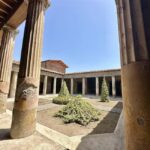
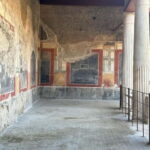
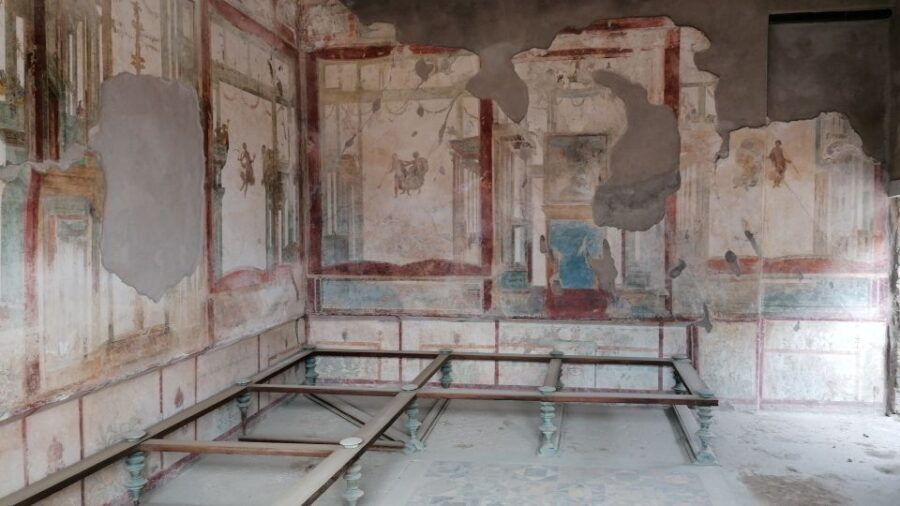
One of the stops you’ll be grateful for is the House of Menander. Roman houses in Pompeii aren’t just pretty walls. They show how families displayed status, how they organized space, and how art functioned as part of everyday life.
You’ll spend time in decorated areas where you can see frescoes and mosaics, and you’ll also hear explanations that help you interpret what you’re looking at. What stood out in the guide style: it’s not only “this is old.” It’s “this detail tells you something about how people lived.”
A practical upside here is pacing. You’re not rushing through an empty shell. You have a guided lens while you’re still close enough to observe surfaces, colors, and the layout. If you’ve ever visited ruins and felt like your photos didn’t match the story, this is the fix.
Terme Stabiane: baths as a social engine
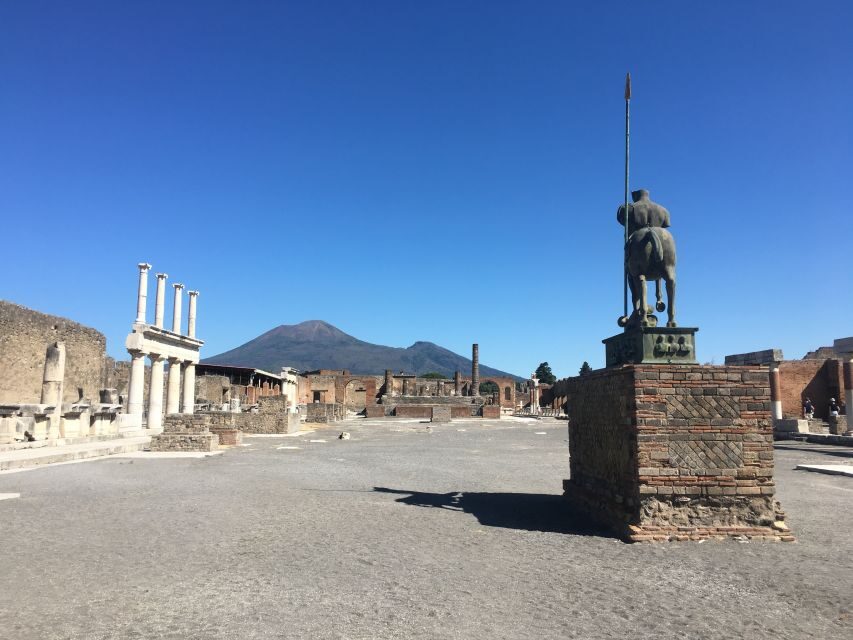
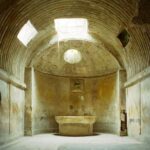
Next up is Terme Stabiane, Pompeii’s thermal baths zone. Baths were not just hygiene. They were meeting points, conversation spaces, and daily routines wrapped into architecture.
In the tour flow, you move from residential decoration to public bodily comfort, and that contrast helps you “read” Pompeii as a system. You learn how public buildings shaped Roman rhythms. You’ll also pick up details about how bathing spaces fit into the broader city life you’re seeing around you.
In hot weather, baths are also a helpful mental reset. You can find covered or shaded learning moments in this section compared with open street stretches, depending on the day. Just bring water and plan for sun.

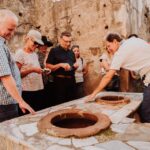

Walk with shops and Roman street life: why the streets matter
Between major sites, you walk through areas lined with shops, ancient bakeries, and snack-style spaces. This is where the tour avoids becoming only a sequence of grand monuments.
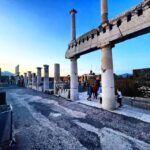
Pompeii’s streets are one of the most convincing parts of the whole site because they show movement patterns. You see road layout, storefront rhythm, and the idea that daily commerce was constant. The tour also includes walking along an original Roman road, which makes a huge difference. Standing on the actual street surface, even briefly, helps you understand scale and direction.
If you love taking photos, this is also where you can slow down without falling behind your group. And if you’re traveling with kids or just don’t want to feel like you’re in a museum lecture, street segments keep the visit lively.
Forum and civic buildings: Temple of Jupiter, Basilica, and civic power
After the more personal side of Pompeii, you step into civic life through the Forum area and major public buildings. The tour includes the Foro Civile di Pompei and stops like the Temple of Jupiter, plus other central structures such as the Basilica and the Macellum (the market).
Here’s why this matters: it’s easy to think Pompeii was only about private homes and daily errands. The civic center explains how power, religion, and public administration shaped the city. You’ll get help connecting the architecture to the roles Roman people expected of institutions.
The Temple of Jupiter stop gives you a religious anchor. The Basilica adds legal and administrative context. And the Macellum shows commerce in a structured market format, not just scattered street selling.
A tip for your mindset: spend your attention on spatial logic. On a guided tour, you learn where people would gather, how they would move through the center, and how the buildings work together as a civic stage.
The lupanare: understanding the controversial without getting lost
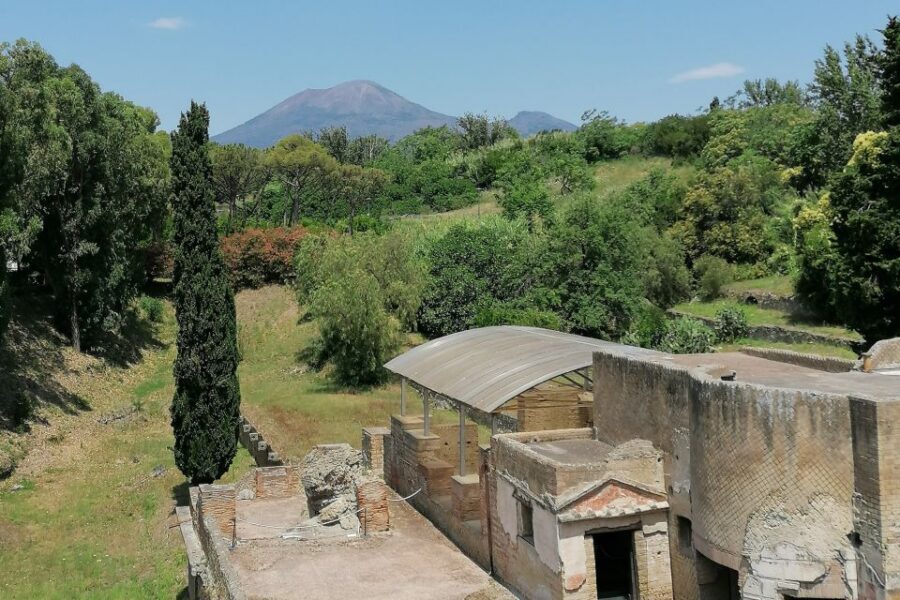
The tour also visits the lupanare, often described as a brothel in Roman sources. This is one of those stops that can feel uncomfortable if you go in unprepared. With a good guide, it becomes a way to understand how Romans organized sex work, branding, and transactions inside a city that also had temples, markets, and family houses.
You won’t be left guessing. The guided approach gives you context for why it’s located where it is, how the space functioned, and how Roman urban life included services you might not expect to see preserved so clearly.
If this topic makes you uneasy, you can still benefit from the stop. Not because it’s shocking, but because it reveals what “normal” looked like in Pompeii. Roman society included all kinds of activities, and Pompeii preserves the evidence.
The plaster casts of the victims: the moment the city becomes personal
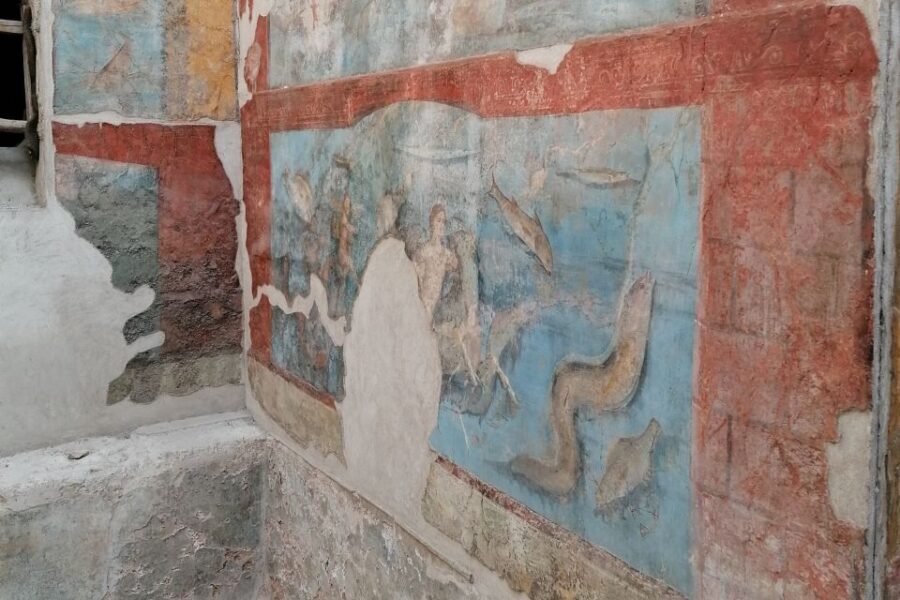
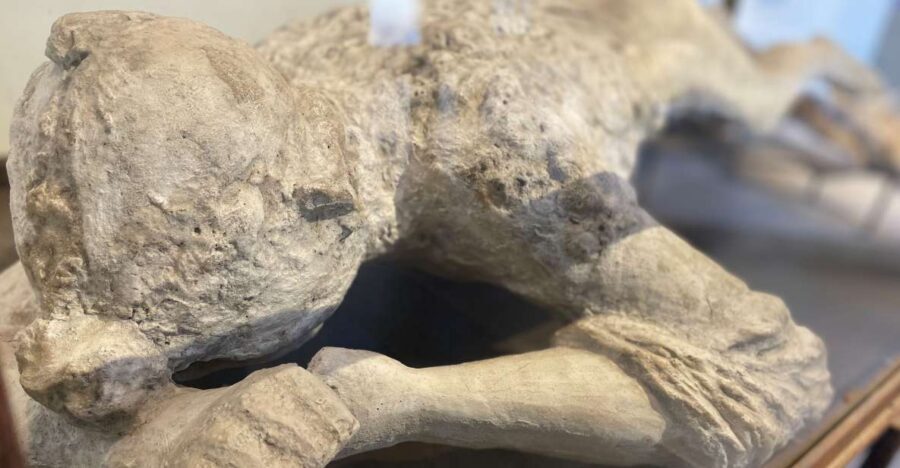
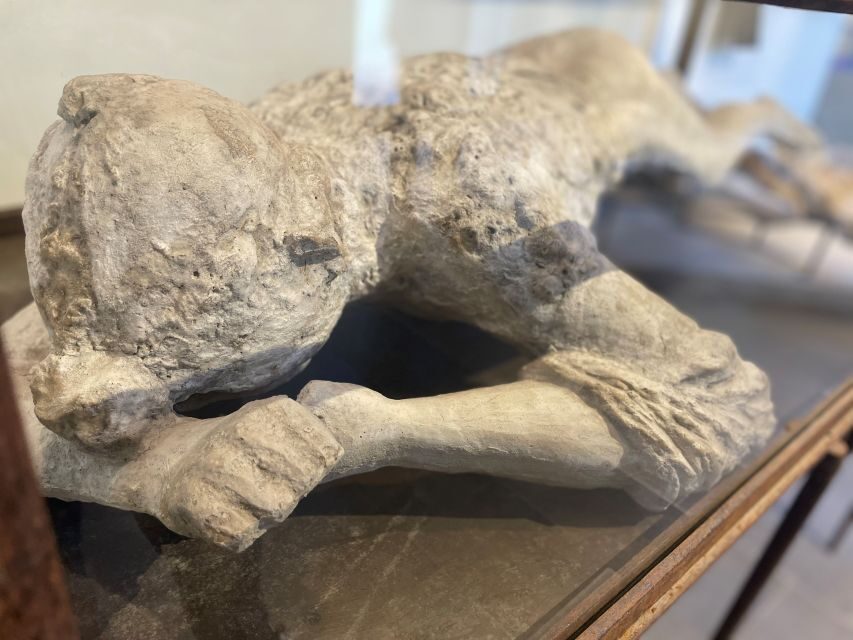
Finally, you reach the most famous and emotional part of the Pompeii story: the plaster casts of the victims. This is where Pompeii stops being an ancient-city spectacle and becomes a human tragedy.
The guide framing is important here. You learn what those casts represent and why they matter historically and ethically. It’s not just a highlight photo stop. It’s a reminder that the eruption didn’t erase a civilization in the abstract. It hit real people in real spaces.
You also get a smoother transition to this moment because earlier stops build context. When you know what a street or a home looked like, you can better imagine the final minutes inside the city. That’s the value of having the “life around the tragedy” explained first.
What the 2-hour format does well (and where you may want more time)
Two hours at Pompeii is both short and long. You’ll cover many major highlights, but you won’t see every street or every excavation area. That’s normal.
The key is how your guide uses time. With a small group and an archaeologist, you don’t waste minutes trying to interpret signs or guessing what’s important. You also don’t need to fight the chaos of big bus groups. The result is a tour that feels like it gives you a working map.
You also get free time to explore the archaeological site after the guided portion. This is where you can build your own favorite loop. If you were drawn to houses, you can look for more decorated areas. If the civic center grabbed you, you can linger around public buildings and streets.
My practical advice: don’t plan to cram another timed activity immediately afterward. Pompeii is the kind of place where you want to “stay in the world” for a bit.
Price and value: is $65 fair for what you get
At $65 per person for a 2-hour archaeologist-led tour, you are paying for three concrete things: expert interpretation, group size control, and included site access features.
First, you get an archaeologist guide, not a general storyteller. That changes what you hear at every stop: architecture, function, and how the city operated. Second, the group cap of 12 makes the experience more personal and easier to manage in a huge site. Third, you get an express entry ticket to Pompeii, which helps you spend time inside instead of waiting at the gate.
There are also small built-in conveniences. Headsets are included when groups exceed 8 people. And the tour includes free time after the guided segment, so you’re not done when the explanation ends.
What’s not included is just as important. You bring your own food and drinks, and you handle transportation to and from the area. Pompeii can be hot, so you’ll want to budget time for water breaks even if the guide keeps the pace smart.
Practical details you should not skip before you go
Pompeii runs on logistics. A few details will keep your day smooth.
- Bring passport or ID card in original. The ticket is named, and you must use your real details.
- Wear comfortable shoes. You’ll be walking through the site for the full experience.
- Bring water and plan for sun, since shade depends on where you are at each moment.
- Meeting point is Suisse Restaurant. Your guide will hold a sign with your name, which saves you stress.
Also note the language options: Italian, English, French. If your group needs a specific language, double-check when you book so you’re not stuck guessing.
Who this Pompeii tour is best for
This tour is a strong fit if you want Pompeii to make sense quickly. You’ll enjoy it if you:
- like learning from someone who can explain how buildings worked, not only when they were built
- prefer a small group over large crowds
- want both major highlights and the everyday context of streets, shops, and baths
It’s also a good option for families as long as everyone can handle walking. The tour’s pacing tends to keep questions going, and the setting encourages kids to ask why things look the way they do. That said, if mobility is limited, this one is not for you due to site conditions.
Should you book this Pompeii archaeologist tour with Benedetto?
If your priority is getting real understanding in a short visit, I think you should book it. The $65 price makes sense when you add up what you get: expert guidance, smart crowd handling, express entry, and then time to explore on your own.
I’d pass only if you want a purely self-guided wander with no structure at all, or if mobility issues make Pompeii’s walking difficult. Otherwise, this is one of the better ways to experience Pompeii without feeling lost or rushed.
If you can handle the walking and want Pompeii to become a story you can picture, this tour is the kind of plan that pays off fast.