REVIEW · POMPEI CAMPANIA
Pompeii: Skip-the-Line Entry & Audioguide
Book on GetYourGuide →Operated by TOURISTATION · Bookable on GetYourGuide
Pompeii is easier than you think.
This skip-the-line ticket gets you into Pompeii’s Archaeological Park quickly, then you explore at your own pace with an included audioguide and paper map. You’re walking through a Roman city frozen in time after the eruption of Vesuvius in 79 AD, with the layout still readable as you move from the forum area to homes, businesses, and public buildings.
What I like most is the mix of freedom and structure. You get to start right away, and the audioguide helps you understand what you’re seeing while you wander through streets, fountains, aqueduct remains, baths, private houses, and statues.
One drawback to plan around: at least one booking flagged pricing confusion and audioguide costs at the site. If the total price matters to you, check what’s actually included in your option before you pay—and keep in mind the experience is non-refundable.
In This Review
- Key things to know before you go
- Skip-the-line entry and audioguide: why this combo works
- Price and value: is $53 worth it for your style?
- Finding the meeting point near Chalet Donna Lucia
- Your walk through the Roman center: start at the forum
- Streets, water, and everyday life: aqueducts, fountains, baths, homes
- The entertainment duo: amphitheater and dramatic theater
- Frescoes and Roman details: how to spot what matters
- Logistics you can actually plan around
- Language options: audioguide coverage that fits real travel days
- Who this Pompeii visit suits best
- Should you book this Pompeii skip-the-line & audioguide?
- FAQ
- How long is the Pompeii skip-the-line entry experience?
- Where do I meet for this tour?
- What’s included in the ticket price?
- Is Villa dei Misteri included?
- What languages are available for the audioguide?
- What should I bring?
- Are pets and large bags allowed?
Key things to know before you go
- Skip-the-line entry helps you start exploring fast instead of losing time at the entrance.
- Audioguide in many languages (Italian, English, French, Spanish, German, Portuguese, Chinese, Japanese) keeps the ruins understandable as you walk.
- Forum-first route gives you a clear sense of the city’s center before branching into side streets and neighborhoods.
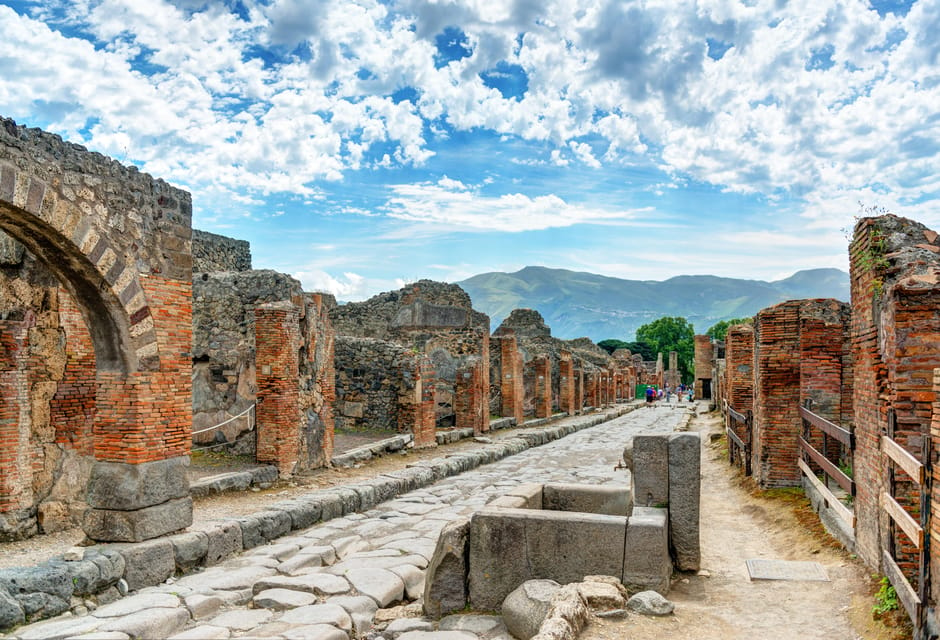
- You’ll see the everyday Pompeii stuff: homes, businesses, baths, fountains, and water system remains like aqueduct features.
- Major entertainment buildings are visible too, including the amphitheater and the dramatic theater.
- Villa dei Misteri isn’t included, so decide if you want that separate stop on your own.
Skip-the-line entry and audioguide: why this combo works
Pompeii can feel overwhelming on your own because the park is large and the ruins aren’t labeled in the same way as some museums. This experience is designed to fix that two ways: you avoid the slow start at the gate, and you have an audioguide to give context while you walk.
The skip-the-line part matters because Pompeii is a high-demand site. Even if you only have a limited window, arriving with a ticket that’s meant to move faster can mean more time among the streets and courtyards—the places where the city’s daily life shows up.
Then there’s the audioguide. It covers the main areas you’ll be walking through, using the included language options. You can keep it simple: press play when you reach a major spot, then pause mentally (or literally) when something clicks—like a doorway layout, a wall of a former shop, or the way water systems fed fountains and baths.
What you should expect from the audioguide
- Explanations that help you connect ruins to real Roman life (public center, private homes, and commercial spaces).
- Guidance for the key stops: forum area, streets, water features, baths, and entertainment buildings.
- A format you can follow without being stuck in a tight group schedule.
You can also read our reviews of more tours and experiences in Pompei Campania.


Price and value: is $53 worth it for your style?
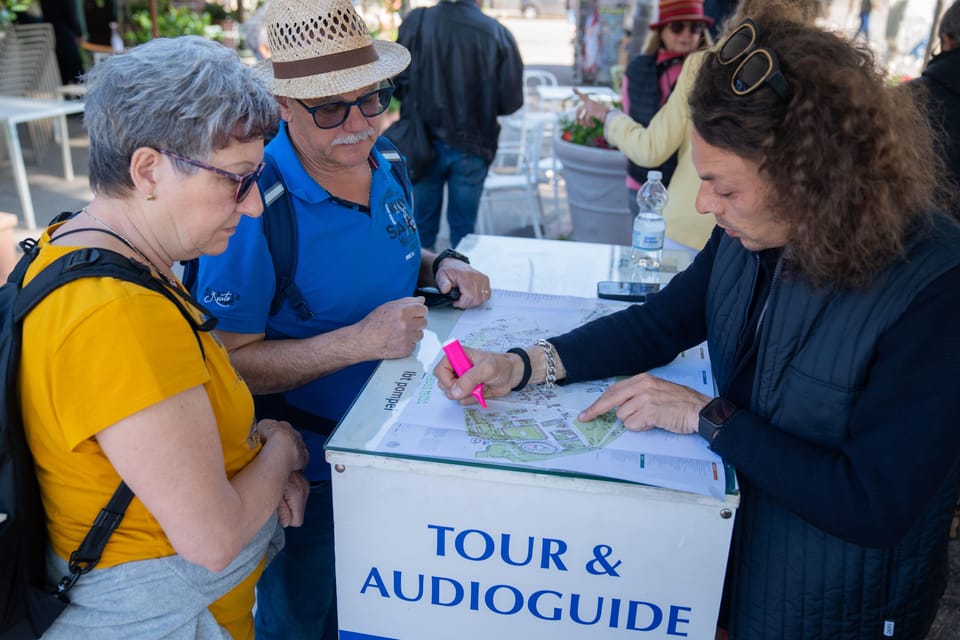
The listed price is $53 per person, with a duration that can range from about 2 hours up to a full day depending on the start time availability. Value here depends on two things: (1) what you would do without the tour, and (2) how important it is to you that the audioguide is included.
This option includes:
- Skip-the-line entry to Pompeii Archaeological Park
- Audioguide
- Paper city map
- A guided tour if that option is selected
Not included:
- Villa dei Misteri
- Hotel pickup/drop-off
- Drinks and food
So, what’s the “real” value math? If you plan to visit Pompeii anyway, the main decision is whether the package saves you time and hassle versus planning entry and audio yourself. One booking flagged that buying separately might be cheaper and that some pricing at the site may differ from the package expectation. That doesn’t automatically mean the package is a bad deal—it just means you should verify the all-in cost of your exact option and confirm audioguide terms.
My practical advice:
- If you want to get in quickly and start walking immediately, this package often feels worth it.
- If you’re the type who enjoys figuring everything out on arrival, you might compare total costs carefully.
- If you hate uncertainty about devices or deposits, double-check how your audioguide will be issued.
Finding the meeting point near Chalet Donna Lucia
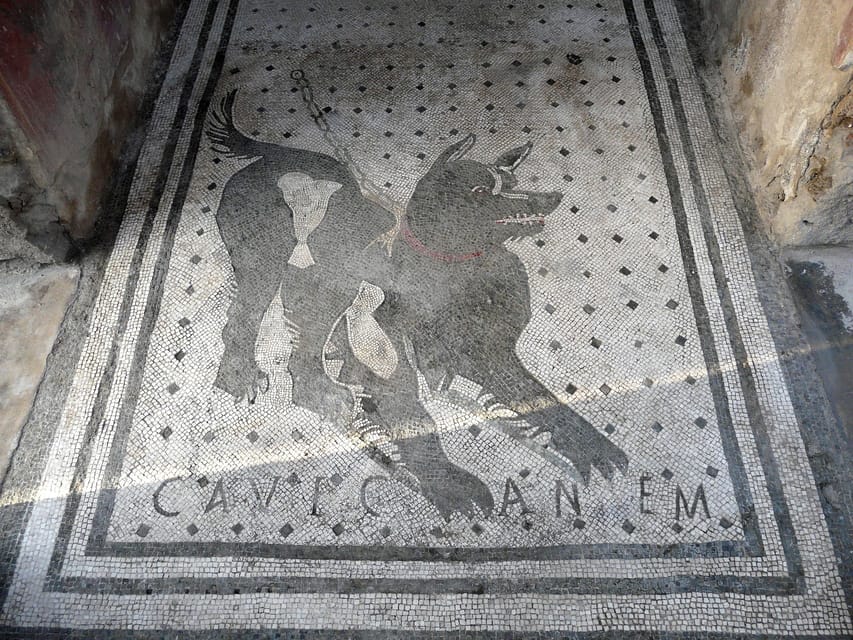
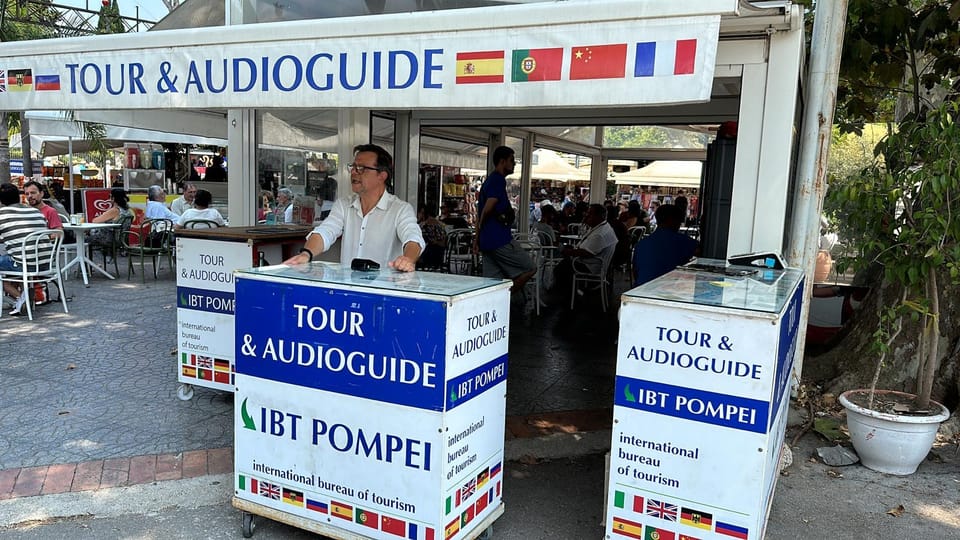
Meet at the IBT Center/Touristation next to Chalet Donna Lucia. That’s close to the kind of practical, land-based meeting points that work well if you’re already in the area.
Because Pompeii visits often run early and schedules can be strict, give yourself a buffer:
- Arrive early enough to locate the exact building and confirm your ticket.
- Bring your ID (passport or national ID card). This activity notes that ID is required for all participants.
If you’re building a day around this, try not to schedule back-to-back plans right after your start time. Pompeii’s best moments are often the unplanned pauses: a shadowed doorway, a courtyard perspective, or a view toward Mount Vesuvius.
Your walk through the Roman center: start at the forum
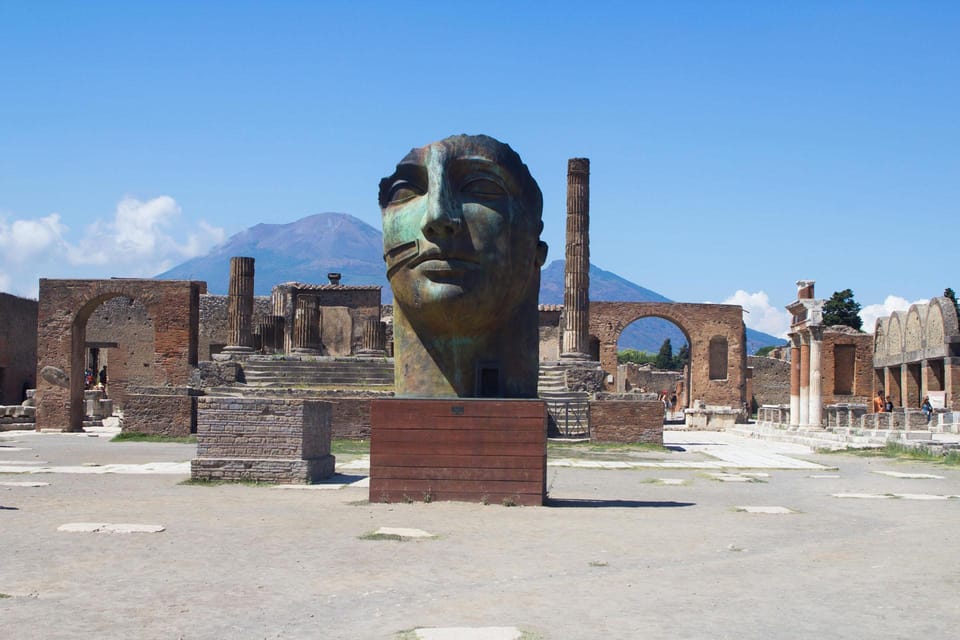
The experience begins with the central forum area. This is a smart place to start because it gives you the city’s “main room” before you wander into the side streets.
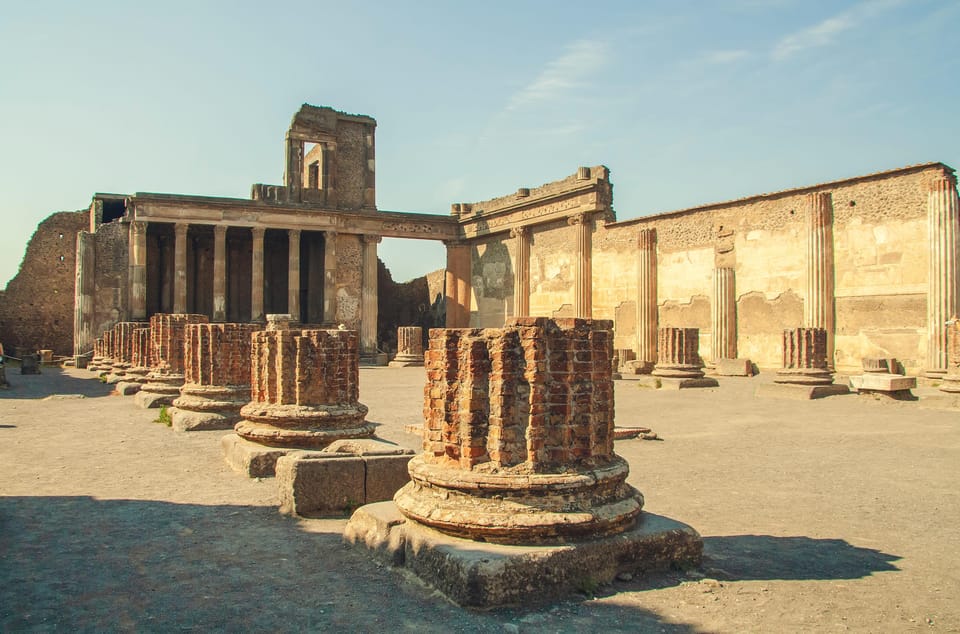
As you move around the forum, you’ll see remnants like columns and doorways that still show the shapes of public space. And with Mount Vesuvius in the background, you can better understand the city’s relationship to the volcano that ended it.
Why this stop is worth your attention:
- The forum helps you read Pompeii like a city, not like scattered ruins.
- You’ll recognize how people would have moved between civic space, commerce, and everyday neighborhoods.
- Even with just an audioguide, you get a mental map: public center first, then everything else branches out.
What to watch for:
- Spend a few extra minutes at major sightlines. The forum and its surrounding remains can look less dramatic if you only skim for photos.
Streets, water, and everyday life: aqueducts, fountains, baths, homes
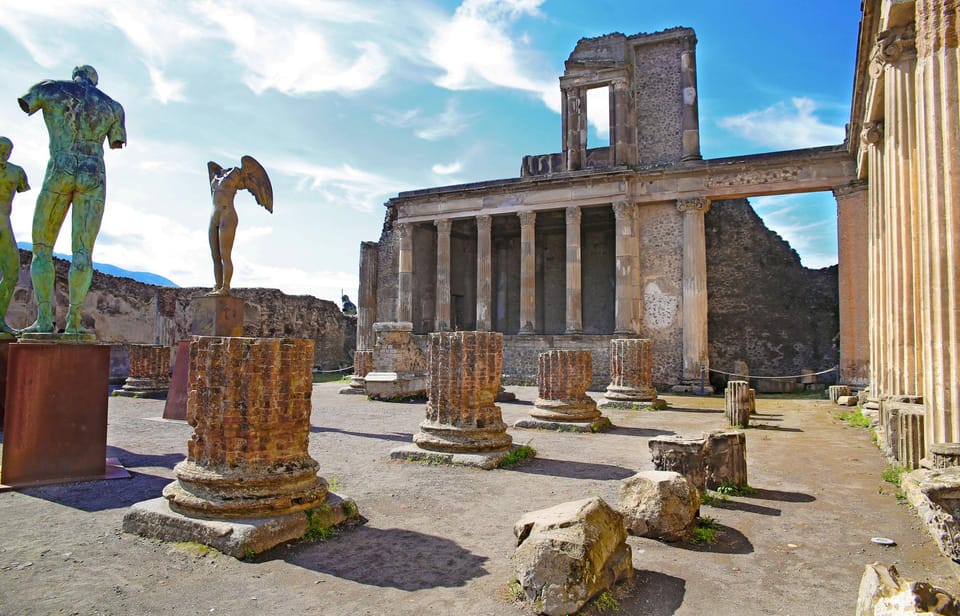
After the forum area, you’ll stroll the streets and see the parts that made Pompeii function. The description calls out the city’s aqueduct and fountains, plus public baths, private houses, businesses, and statues.
This is where the audioguide really helps. The ruins are physical, but without context they can blur together. With the audio running, you’re more likely to notice how water and public services shaped daily life—where fountains and aqueduct remains fit into the city’s rhythm, and why baths were a major social space.
Roman homes and businesses
You’ll walk past the remains of:
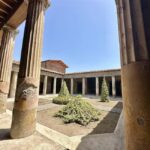
- Private houses with the outlines of rooms and courtyards
- Businesses where daily commerce would have happened
- Fountains and other water-related remnants connected to civic and domestic life
Colorful fresco remains
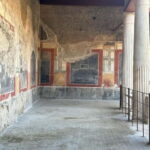
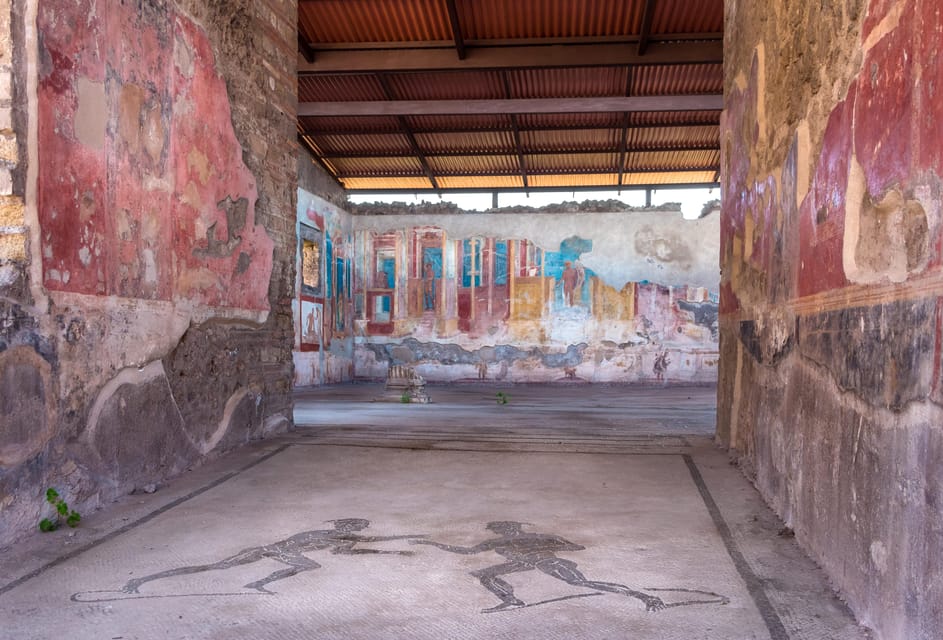
The experience also points out remains of colorful frescoes. Even when portions are faded or incomplete, fresco fragments help you see Pompeii wasn’t just gray stone. It had visual style—some homes and shops were decorated, and walls were meant to communicate identity and taste.
A small pacing tip
Don’t try to cover everything in one nonstop loop. Instead, pick a rhythm:
- Walk with a purpose for 10–15 minutes.
- Then slow down at one “anchor” spot you care about (a bath area, a home doorway, a fresco segment).
You’ll remember Pompeii better that way.




The entertainment duo: amphitheater and dramatic theater
Pompeii isn’t only about homes and streets. You’ll also see the amphitheater and the dramatic theater, which the description notes were once packed with eager spectators.
These places can be emotionally powerful because they’re built for crowds—meaning the space itself forces you to picture people arriving, cheering, and watching. With an audioguide, you get the context needed to interpret what you’re seeing rather than just appreciating the stones.
Practical ways to enjoy them more
- Pause before you enter or face the main seating areas. From the right angle, the geometry of the space starts to make sense.
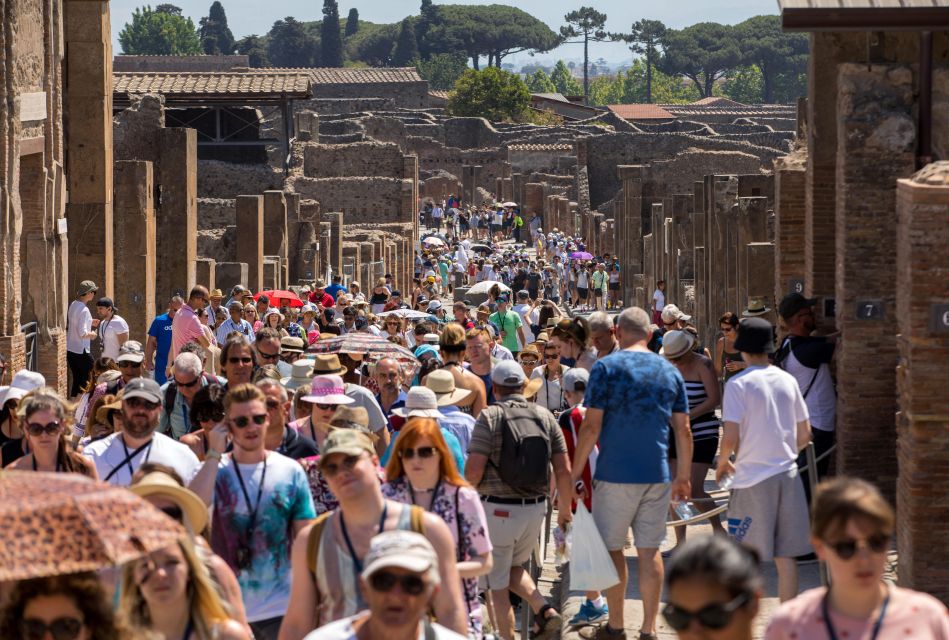
- If the park is busy, you may have to time your photos. Focus on understanding the layout first, then grab images when you can.
Even if you’re not a big theater fan, these ruins offer a different Pompeii perspective: entertainment, social gathering, and public life all in stone form.
Frescoes and Roman details: how to spot what matters
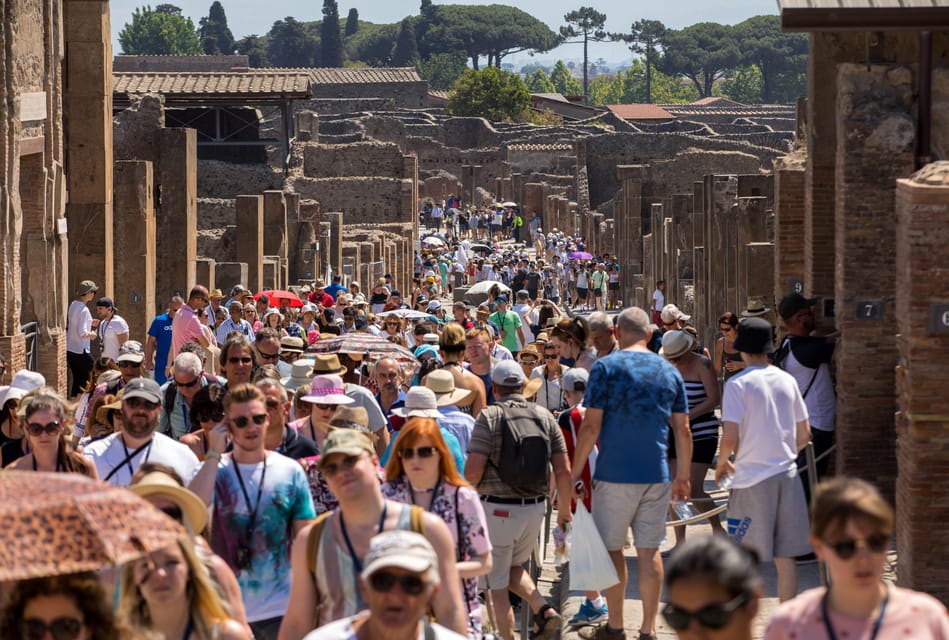
One of the most exciting parts of Pompeii is that the city’s “minor” details often turn into your favorite moments. You’ll hear and see references to fresco remains and statues, and it’s worth using the audioguide to decide what’s important rather than guessing.
Here’s a simple approach that works well in Pompeii:
- Look for what frames movement: doorways, thresholds, and openings.
- Then look for what frames identity: fresco remnants, decorated wall sections, or business-related layouts.
- Finally, look for what frames function: water-related remains, bath structures, and public-service clues.
If you’re the type who likes architecture, you’ll appreciate how the ruins reveal building logic—how rooms connect and how public spaces relate to everyday streets.
If you’re more into the human side, concentrate on the “where people stood” perspective. Even without full reconstructions, doorways and street alignments help you imagine daily routines.
Logistics you can actually plan around
This is where small rules matter, because they affect how you pack and move through the park.
What to bring
- Passport or ID card (ID is required for all participants)
What’s not allowed
- Pets (small dogs are permitted inside the archaeological area, but must be kept on a leash and carried when inside buildings)
- Smoking
- Luggage or large bags
- Alcohol and drugs
These restrictions are typical for heritage sites, but they’re still worth treating seriously. If you’re coming from a train station or walking with a day bag, you may want to travel light.
Duration and pace
The experience lists a duration window of 2 hours to 1 day, depending on availability and start times. That wide range matters. If you have only a short visit, prioritize:
- Forum area
- A cluster of streets with homes and businesses
- One entertainment building
If you have a full day, you can afford to slow down for fresco fragments, statues, and water/ bath remains.
Language options: audioguide coverage that fits real travel days
Your audioguide comes with a broad set of language options: Italian, English, French, Spanish, German, Portuguese, Chinese, and Japanese.
That matters if:
- You’re traveling as a mixed-language group.
- You want your audio to match your pace rather than relying on a single spoken guide voice.
You can also treat the audioguide like a menu. If something grabs your attention—say a bath-related area—you can spend more time there while the audio catches you up on what you’re seeing.
One caution from feedback: a booking raised concerns about depositing a passport for audioguide handling. You can’t assume every operation uses the same process, but it’s a reminder to consider your comfort level with any document handling system at the start.
Who this Pompeii visit suits best
This experience is especially good for you if you want:
- Skip-the-line entry so your day starts with ruins, not waiting
- Self-paced wandering with helpful interpretation through an audioguide
- A clear first stop at the forum, then a practical walk through Roman public and private spaces
It may be less ideal if:
- You want a deep, fully guided program throughout every minute (the included guided tour depends on the option selected)
- You’re very cost-sensitive and prefer comparing on-site pricing without a package
From the structure alone, this works well for couples, solo walkers, and small groups who enjoy independent exploration but still want the ruins explained.
Should you book this Pompeii skip-the-line & audioguide?
Yes—if your goal is to enter quickly, walk the city at your own pace, and rely on an audioguide to make the forum, streets, homes, baths, and theaters understandable without cramming.
I’d especially recommend it when you:
- Have limited time and want to reduce waiting
- Prefer self-guided pacing over a strict tour cadence
- Want interpretation support in a language you can follow
Before you book, do two quick checks:
- Confirm that your chosen option includes the audioguide as stated and that there’s no extra cost or confusing device issue for your situation.
- Be ready for the site rules: bring your ID, travel light, and plan for no big bags.
If you like Roman ruins that feel walkable and personal, Pompeii becomes much more than a highlight stop. With this setup, you spend your energy on the streets you can actually imagine life in, while Mount Vesuvius watches in the distance.
FAQ
How long is the Pompeii skip-the-line entry experience?
The duration is listed as 2 hours to 1 day, depending on availability and starting times.
Where do I meet for this tour?
You meet at the IBT Center/Touristation next to Chalet Donna Lucia.
What’s included in the ticket price?
It includes skip-the-line entry to Pompeii Archaeological Park, an audioguide, and a paper city map. A guided tour is included only if you select that option.
Is Villa dei Misteri included?
No. Entrance to Villa dei Misteri is not included.
What languages are available for the audioguide?
Italian, English, French, Spanish, German, Portuguese, Chinese, and Japanese.
What should I bring?
Bring your passport or ID card.
Are pets and large bags allowed?
Pets are not allowed, but small dogs are permitted inside the archaeological area if they are on a leash and carried when inside buildings. Luggage or large bags are not allowed.