REVIEW · POMPEI CAMPANIA
Pompeii: Tour with Archaeologist Guide & Skip-the-Line Entry
Book on GetYourGuide →Operated by Angelo (Travelcampania) · Bookable on GetYourGuide
Pompeii still feels shockingly alive. This archaeologist-led Pompeii Express tour skips ticket lines and gives you stop-by-stop context from Porta Marina to the Lupanare in about two hours. I like that you focus on everyday Roman life, not just postcard walls. One catch: the check-in meeting point can be a little hard to spot if you arrive late or without clear directions.
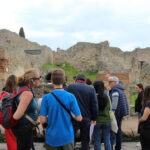
You meet at the Welcome box, and the tour ends back there, so your timing stays simple. Expect live guidance plus an audio setup: when the group goes beyond 8 people you’ll use a radioguide system, and for very small language groups you may get an audio guide with an English-speaking guide. One practical note: the earpieces can run loud in dense areas, but they’re what make the tight route workable.
At about $57 per person, the value is the combo: priority entry plus an authorized archaeology guide for a fixed, efficient walk through the excavations. You’re not paying for a long day. You’re paying for fewer headaches and better understanding while time is tight.
In This Review
- Key things to know before you go
- Why Pompeii still feels like a time machine
- What an archaeologist guide adds (and why it matters)
- The Welcome box meeting and how the two-hour route stays organized
- Porta Marina: the Roman city gate that sets the tone
- Teatro Piccolo: why entertainment matters in everyday Pompeii
- House of Menander: art, rooms, and the feel of private life
- Thermopolium and how to picture the quick-meal life of Rome
- Terme Stabiane: baths as a social engine
- Lupanare: Roman sexuality, social habits, and what the site can actually tell you
- Foro Civile: public life, power, and a short reset for your own exploring
- Skip-the-line entry: where you gain time without losing context
- Price, value, and who should pay for this exact format
- What to bring (and what to leave behind)
- A quick stop-by-stop guide to the pacing (so you don’t feel rushed)
- What to expect with the guide style and audio
- Who this tour is best for
- Should you book this Pompeii Express Tour?
- FAQ
- How long is the Pompeii Express tour?
- Does this tour include skip-the-line entry?
- What’s included in the price?
- What languages are available for the live tour?
- Where do I meet the guide, and where does the tour end?
- Is the tour suitable for wheelchair users or limited mobility?
- What ID do I need to bring?
- What items are not allowed during the tour?
Key things to know before you go
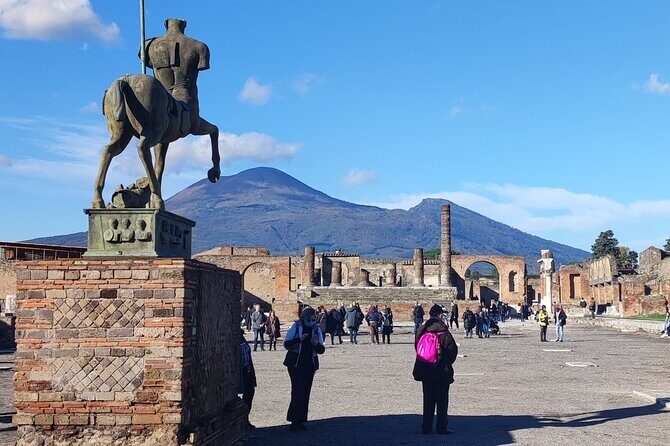
- Skip-the-line priority entry helps you start your Pompeii walk sooner, especially on busy days.
- Archaeologist guide, not just a storyteller: you get explanations tied to buildings, daily routines, and Roman customs.
- A tight route with smart pacing: roughly 2 hours focused on standout sites, then a short breather to reset your bearings.
- Audio/radioguide support can be essential in crowds (and yes, it may feel loud).
- You return to the same meeting point, which is handy if you’re pairing Pompeii with other plans in Campania.
- Not for wheelchair users or limited mobility: it’s not set up for that kind of movement.
Why Pompeii still feels like a time machine
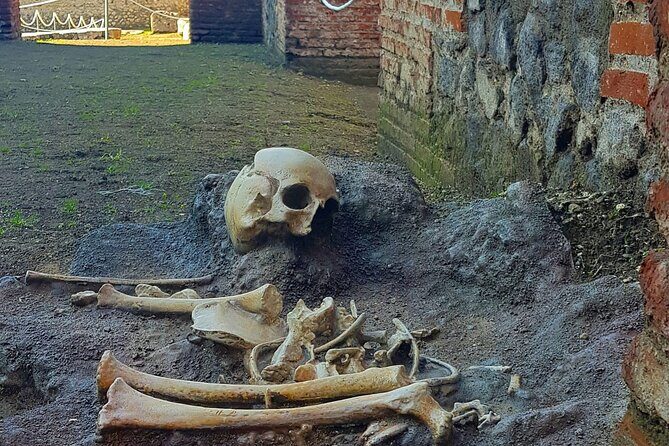
Pompeii is the rare case where an ancient city survives almost entirely, rather than as scattered ruins. The story is unforgettable: Vesuvius erupted in 79 AD, burying the city under ash and debris and trapping streets, homes, shops, and artwork in place.
This tour leans into that magic with a practical goal. You’re not just walking around looking for famous sights. You’re learning what you’re seeing and why the layout, rooms, and objects mattered to real people.
Even if you’ve studied Roman history before, Pompeii hits differently. You’ll move through a city founded as far back as the 7th century BC, then watch how daily life worked right up until the eruption.
You can also read our reviews of more guided tours in Pompei Campania


What an archaeologist guide adds (and why it matters)
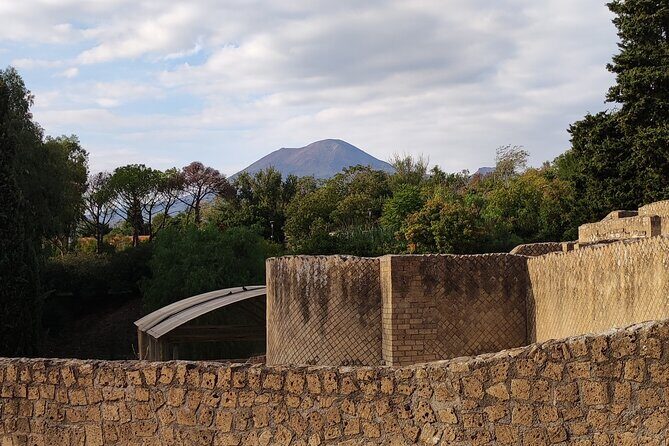
Pompeii can feel confusing at ground level. Streets, doorways, and rooms can look similar unless someone gives you a framework.
That’s where an authorized archaeology expert earns their keep. The tour aims to show you how each building fits into Roman art, customs, crafts, and routines. In other words, you’ll spend less time guessing and more time noticing details that make the site make sense.
The best guides also help you read the city like a map. They point out small clues in architecture and street design so you understand how people moved, worked, and socialized. Several guide styles have been praised for being funny, patient, and able to steer groups around the busiest areas when possible.
The Welcome box meeting and how the two-hour route stays organized

This is a short tour, so logistics matter. You’ll start at the Welcome box, and you’ll be brought back there at the end. That round-trip setup is useful if you have a train schedule or a tight day.
Plan for a bit of find-time when you arrive. Some people found the meeting spot tricky at first, so give yourself buffer time and take a screenshot of the meeting point instructions if you have them.
Communication is also part of the system. The tour uses live guidance, and the audio setup changes depending on group size:
- If the group exceeds 8 participants, you’ll use a radioguide.
- If the group stays at 4 or fewer participants in the same language, you’ll use an audio guide plus an English-speaking guide.
And yes, the earpieces can be loud. Still, they’re the difference between hearing every explanation and spending your time straining in a crowded site.
Porta Marina: the Roman city gate that sets the tone
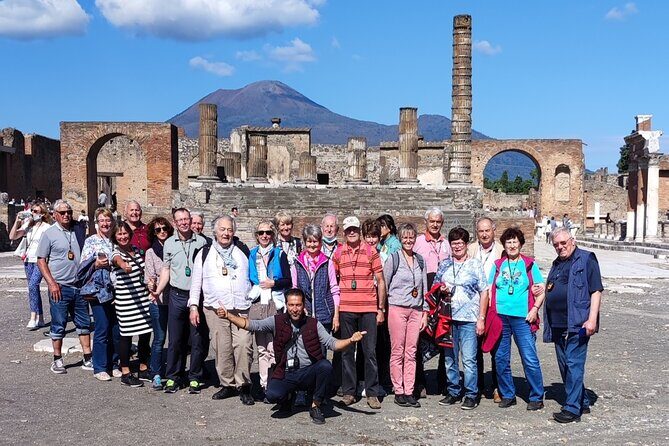
Your first guided stop is Porta Marina, where the tour begins the story of Pompeii as a living city rather than a museum. This area gives you the entry point into the urban layout. Think of it as your orientation: where you are, what kind of city you’re walking through, and how the streets connect.
The guide spend about 10 minutes here. That’s enough to frame the rest of the visit without turning the morning into a lecture.
If you’re the type who likes big context, this is a strong start. If you’re more of a wander-at-your-own-pace person, remember that you’ll have a short window later to explore on your own, so you don’t need to absorb everything at once.
Teatro Piccolo: why entertainment matters in everyday Pompeii
Next up is Teatro Piccolo, another roughly 10-minute guided stop. It’s not just about the structure. It’s about what the space says about leisure and community in Pompeii.
This is where the guide approach helps. You’ll get explanations that connect Roman performance spaces to social life. The goal is to help you look at the building and understand its role in daily routines.
A small consideration: this sort of stop can feel quick if you want lots of photos and long reading time. The tour is built to cover several anchor sites, so you’re moving.
You can also read our reviews of more tours and experiences in Pompei Campania





House of Menander: art, rooms, and the feel of private life
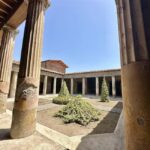
The tour then moves to the House of Menander, with about 15 minutes guided. This stop is designed to show you domestic Pompeii, where art and layout reflect status, taste, and everyday habits.
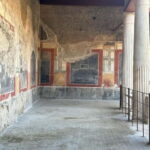
One of the big reasons this stop works is that Pompeii isn’t only grand public structures. Homes contain the “how did they live” evidence: room arrangement, decoration choices, and the practical logic of the space.
If you care about art and interpretation, keep an eye out for the tour’s emphasis on artifacts and plaster casts. Pompeii’s story isn’t only in buildings; it’s also in the discoveries and reconstructions that help you visualize what you might otherwise miss.
Thermopolium and how to picture the quick-meal life of Rome
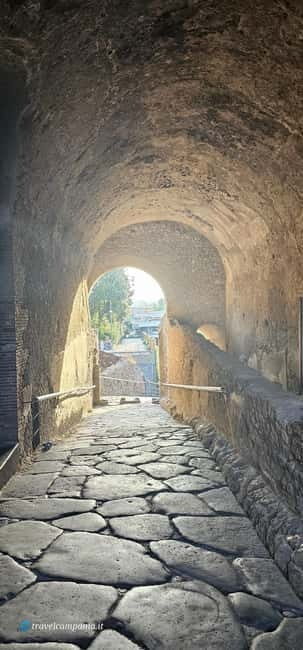
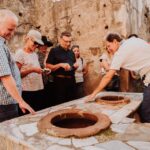
Then you’ll hit a Thermopolium, guided for about 15 minutes. A thermopolium is essentially a place for hot food and drink—street-level life, not elite dining.
This is one of the most useful stops for understanding daily routine. Instead of thinking of Pompeii as a set of monuments, you’re watching the city function: where people gathered for snacks, meals, and social chatter.
Time is still tight here. You’ll get an overview and a few key interpretive points, but you won’t have hours to roam every corner. If you’re the type who likes to linger, save your deep photo time for after the tour during your free window later.
Terme Stabiane: baths as a social engine

Next is Terme Stabiane, another 15-minute guided stop. Baths in Roman cities weren’t just hygiene. They were meeting places, conversation hubs, and part of how people passed time.
The guide’s job here is to make the building’s logic readable. You’ll learn how the spaces connect and what the layout suggests about flow and use.
This stop is a good check for comfort. If you’re sensitive to uneven ground or crowds, pace yourself and listen for when the group is about to move on. Baths can draw more people than some other sites, and the audio system can help you keep your place without falling behind.
Lupanare: Roman sexuality, social habits, and what the site can actually tell you
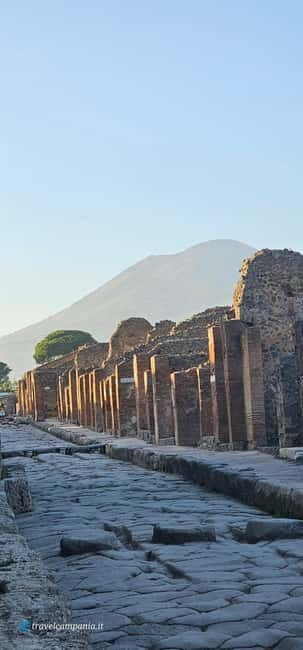
The tour’s longest mid-route stop is the Lupanare, guided for about 20 minutes. This is often the most talked-about location in Pompeii. But the real value is how your guide frames what you’re seeing.
Instead of treating it like shock entertainment, the tour approach focuses on daily customs and social organization. You’ll connect the site to the social world it served, and you’ll understand why spaces like this existed inside the broader urban pattern.
It can also be emotionally intense for some visitors, even if you’re prepared. If you’d rather keep a lighter tone, you might want to treat this stop as a moment to listen carefully, ask yourself what questions you have, and then move on without lingering too long.
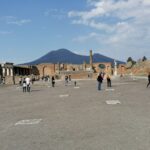
Foro Civile: public life, power, and a short reset for your own exploring
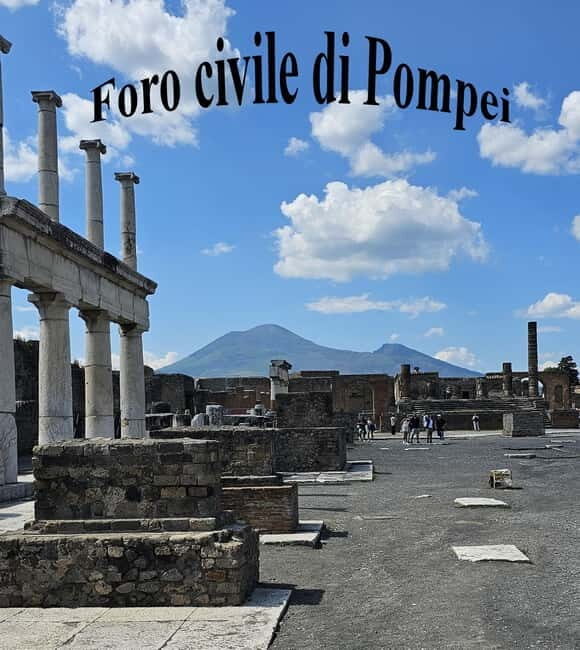
You’ll finish with the Foro Civile di Pompei for about 15 minutes, plus a short 10 minutes of free time back in the same main area.
This is the political and civic heartbeat of the city. It helps you see how Pompeii worked as a public community: decisions, gatherings, and the kinds of spaces where citizens showed up together.
The free time matters. In a short tour, that pause is your chance to:
- re-check what you want to photograph,
- look around without being rushed,
- or choose where to spend more time if you’re staying in Pompeii longer.
If you only do one guided experience, this ending works well. You finish with context and then you’re free to build your own plan.
Skip-the-line entry: where you gain time without losing context
Skip-the-line access is the big operational advantage here. Pompeii is popular, and the ticket lines can eat into your sightseeing time fast. When you skip that friction, you start the city sooner and you’re more likely to feel like you saw Pompeii, not just waited at the gates.
But here’s the deeper value. You’re not only saving time. You’re also getting a guide-led route that’s compressed into about two hours. That means you can pair this tour with additional time on your own later rather than burning the whole day in logistics.
If you like practical itineraries, this format is hard to beat: fixed duration, clear start and end point, and a guided sequence designed to cover a lot without pretending you can see everything in one go.
Price, value, and who should pay for this exact format
At $57 per person, you’re paying for two things bundled together:
1) Pompeii Express entrance ticket for the archaeological site
2) an authorized archaeology guide
For a site as large as Pompeii, the best value isn’t the ticket price alone. It’s the fact that you’ll spend your limited time understanding what you’re walking past—inside real spaces, not just from a brochure.
This format is especially good if:
- You’re short on time in Campania.
- You want Pompeii to make sense quickly.
- You prefer a guided route over a solo plan.
It may be less ideal if:
- You hate structured walking and want to wander without group rules.
- You’re someone who needs long stops and lots of unhurried reading at each site.
What to bring (and what to leave behind)
The tour asks you to bring passport or ID card. Copies are accepted, and you’ll also want the names and ages of participants noted as requested.
Not allowed items include bikes, alcohol and drugs, and bags. That last one matters: if you normally travel with a backpack, plan to use lockers at the site gates. There are lockers available, which can save you from carrying bags around during the walk.
Water is another practical detail. There are a few water fountains inside the site, though they may not be clearly marked. Bring a plan for hydration, especially if you’re visiting in warmer months or when crowds build up.
Comfort tip: wear shoes you trust on uneven stone and crowds. Pompeii can be rugged underfoot, and the tour route assumes you can move without pauses.
A quick stop-by-stop guide to the pacing (so you don’t feel rushed)
Here’s how the timing shapes your experience:
- Porta Marina (10 min): orientation and entry-story.
- Teatro Piccolo (10 min): leisure and social clues.
- House of Menander (15 min): domestic life and art cues.
- Thermopolium (15 min): street-level food habits.
- Terme Stabiane (15 min): baths as a social system.
- Lupanare (20 min): social reality explained, not just spectacle.
- Foro Civile (15 min) + free time (10 min): public life and self-directed exploring.
Because the total time is about two hours, you’ll get clarity and highlights, not deep study at every corner. The free time at Foro Civile is your escape hatch. Use it to decide where you want to linger after the group wraps.
What to expect with the guide style and audio
Guide personalities really shape this kind of tour. In past experiences, some guides have been described as funny and engaging, and many have focused on helping you notice details you might miss alone, like small bits of design logic in streets and practical features within the city.
Audio clarity is also part of the experience. The system is meant to keep everyone hearing the explanation while groups move. One note to plan for: the earpieces can feel loud, but they’re often necessary in crowded sections.
Who this tour is best for
This Pompeii Express format fits best if you:
- want an efficient, guided route in about two hours,
- value interpretation from an authorized archaeology expert,
- and prefer skip-the-line entry to protect your day.
It’s not suitable for people with mobility impairments or wheelchair users, based on how the tour is set up for walking through the excavations.
If you’re traveling with kids or multiple languages in your group, the audio system logic helps. It adapts with language grouping and radioguides depending on group size.
Should you book this Pompeii Express Tour?
Book it if you want Pompeii to feel understandable fast. The combination of skip-the-line entry and a structured, archaeology-focused walk is a strong match for limited time. At this price point, you’re not just buying admission—you’re buying interpretation that helps the ruins connect into a real city.
Skip it (or look for a different option) if you want long, slow wandering and lots of unstructured time in each location. This tour is built to cover key stops. If that sounds like your style, you’ll likely feel grateful you didn’t try to do Pompeii solo the first time.
If you do book, show up a little early for the Welcome box meeting, wear comfortable shoes, and decide in advance whether you’ll stay for more exploration after the tour’s free time. That’s where the day really expands.
FAQ
How long is the Pompeii Express tour?
The tour lasts about 2 hours.
Does this tour include skip-the-line entry?
Yes. It includes priority access that helps you skip the long ticket line.
What’s included in the price?
You get the Pompeii Express entrance ticket and an authorized archaeology guide.
What languages are available for the live tour?
The tour offers live guidance in Italian, Spanish, French, English, and German.
Where do I meet the guide, and where does the tour end?
You meet at the Welcome box, and the tour ends back at the meeting point.
Is the tour suitable for wheelchair users or limited mobility?
No. It’s not suitable for people with mobility impairments or wheelchair users.
What ID do I need to bring?
Bring a passport or ID card. Copies are accepted, and you’ll also need the names and ages of tour participants as requested.
What items are not allowed during the tour?
Bikes, alcohol and drugs, and bags are not allowed.