REVIEW · POMPEI CAMPANIA
Pompeii Small Group Tour – Tickets Included
Book on GetYourGuide →Operated by Tastethexperience · Bookable on GetYourGuide
Pompeii makes more sense with a guide. This small-group walk gets you into the UNESCO-listed heart of Pompeii and back to life around 79 AD, with an expert explaining what you’re seeing and why it mattered. I especially love the tight focus on the main highlights—theaters, temples, and Pompeii’s six bathing complexes—and I love how guides like Pina and Karolina can pack a lot of meaning into a short visit. One thing to consider: the core guided time is about two hours, so if you’re hoping to linger everywhere, you’ll want a plan for extra time.
You’re not just buying entry here. You’re paying for a person to turn ruins into a story—often in English or French—so you come away with a clearer sense of Roman daily life, not just pretty stone.
In This Review
- Key things to know before you go
- Pompeii is huge—this tour makes it workable
- Tour basics: tickets included, and guided time that’s realistic
- Entering Pompeii with a plan, not a maze
- Walking back to 79 AD through Pompeii’s public spaces
- Theaters and temples: not just ruins, but social signals
- Bathing complexes: where Roman routine gets real
- Pace, timing, and photo time (a real-world balance)
- Price check: why $48 can be good value
- Who this Pompeii tour is best for
- Special note: first Sunday free entry, but don’t count on it
- Should you book this Pompeii small-group tour?
- FAQ
- How long is the guided portion?
- What’s included in the price?
- What languages are offered?
- Where do I meet for the tour?
- Is the tour suitable for people with mobility impairments?
- Is Pompeii free on the first Sunday of the month?
Key things to know before you go
- Tickets included for the Archaeological Park of Pompeii, so you don’t have to manage a separate admission line.
- Two hours of guided time inside the site, with a walking route designed to hit major areas efficiently.
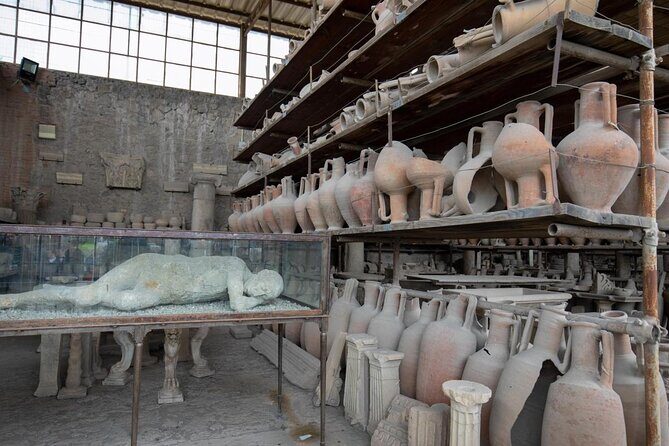
- Expert archaeologist-style interpretation that connects buildings to how people lived in Pompeii before the eruption.
- Theaters, temples, and bathing complexes are built into the highlights, so you see more than just “the big street.”
- Multiple start and end points (Hortus Pompei, Restaurant & Garden Bar, Starhotels Terminus, plus Pompeii Archaeological Park) to fit different schedules.
- First Sunday free entry can happen, but tickets can’t be reserved in advance, so entry isn’t guaranteed.
Pompeii is huge—this tour makes it workable
Pompeii is one of those places where your brain needs help. The ruins are fascinating, but they’re also spread out and full of details that don’t automatically click if you’re wandering on your own. This tour’s main value is simple: you get a guided walk that translates the site into context you can actually remember.
You’ll spend your time moving through standout areas tied to public life and daily routine. The tour focuses on theaters and temples, plus the city’s famous bathing complexes. Those aren’t random “sights.” They’re the social engine of Pompeii—where people gathered, exercised, and talked. When a guide explains that, the stones start telling you how the city functioned.
And because it’s small-group, the pace tends to stay human. One review mentions that the guide packed a lot into the full two hours, and that’s exactly what you want when you only have a half-day. Also, you’re not stuck listening to one long lecture. You’re stopping, looking, and understanding.
Possible trade-off: the tour is timed. If you’re someone who wants to sit on every bench-like surface and read every inscription, you’ll feel the schedule. The good news is you’ll finish with a map and enough structure to spend additional time on your own.
You can also read our reviews of more tours and experiences in Pompei Campania


Tour basics: tickets included, and guided time that’s realistic
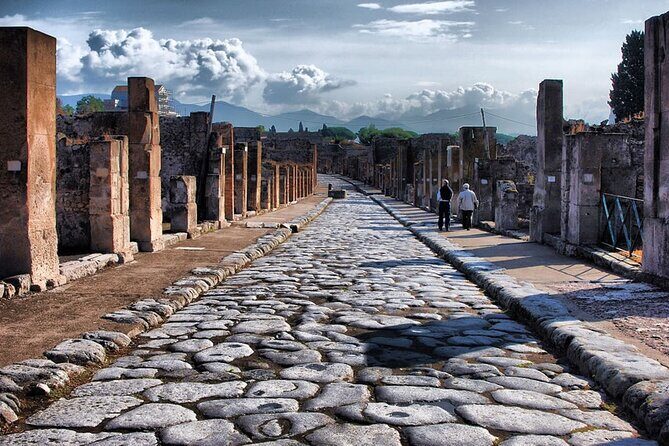
Let’s talk practicals. The experience runs 2 to 5 hours total, but the guided portion is listed as about 2 hours inside Pompeii. The extra time usually accounts for meeting, walking between points, and getting everyone started and dropped off smoothly.
You get:
- A 2-hour guided tour with a small group
- Entry tickets to the Archaeological Park of Pompeii
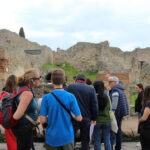
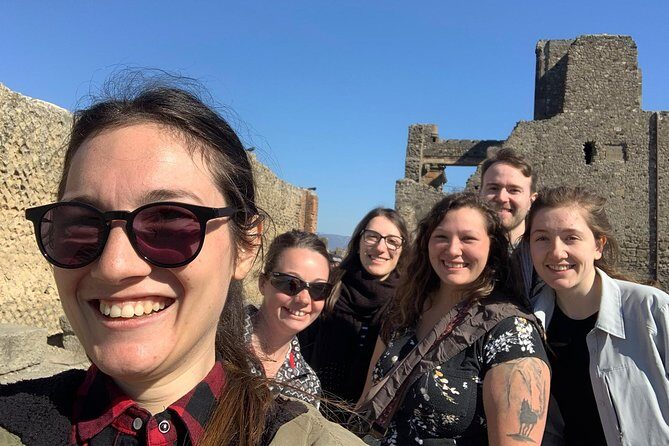
You’ll also have a live tour guide in English or French, and the company notes that private or small groups are available. That matters because Pompeii rewards attention. A smaller group means it’s easier to pause, ask questions, and avoid the “watch the guide from three steps behind” problem.
One detail that can help your sanity on-site: at least one group reported using earpieces/headsets that worked well. That’s not guaranteed from the tour data alone, but it’s worth knowing that some setups make it easier to hear commentary while you’re walking and looking.
Entering Pompeii with a plan, not a maze
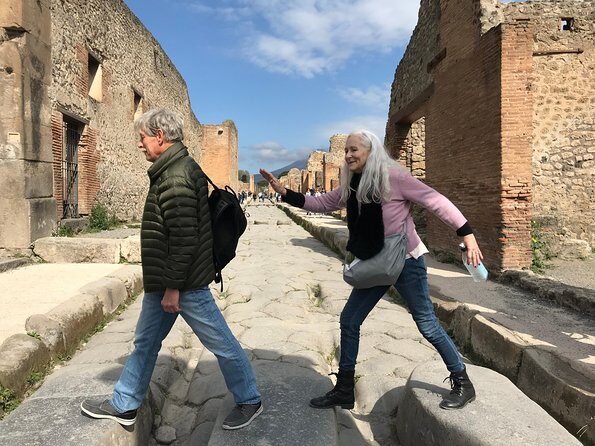
The tour offers three starting location options, and the meeting point can vary based on what you book. The options listed are:
- Pompeii Archaeological Park
- Starhotels Terminus
- Hortus Pompei, Restaurant & Garden Bar
This is more than just convenience. With Pompeii, the biggest early problem is orientation. If you meet in a confusing spot or arrive late, you can lose time you can’t get back later in the day. The “multiple start points” idea is meant to reduce that friction, especially if you’re coming from Naples, the train area, or a hotel neighborhood.
There are also three drop-off locations listed:
- Hortus Pompei
- Restaurant & Garden Bar
- Starhotels Terminus
- Pompeii Archaeological Park
So you’re not left wandering after the tour ends. You’ll have a nearby place to regroup, which is helpful if you’re trying to catch a train back or coordinate dinner plans.
Walking back to 79 AD through Pompeii’s public spaces
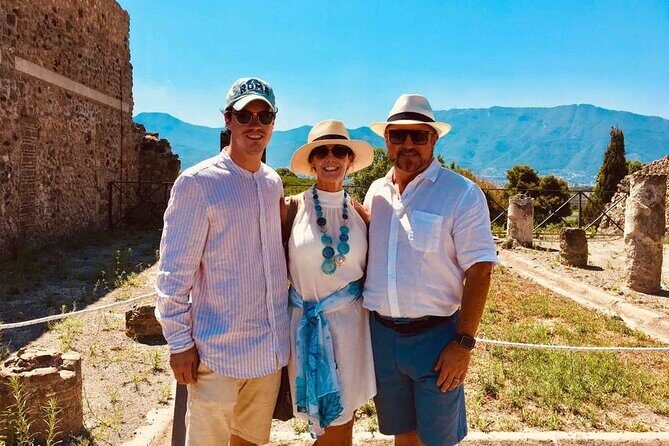
The core concept here is a walking tour back to 79 AD—the year Pompeii was buried after the eruption of Mount Vesuvius. The guide’s job is to connect what you’re seeing to the lives of people who lived there long before the ruins were turned into a museum.
The route centers on major civic and cultural sites:
- Theaters
- Temples
- Other key complexes tied to how the city worked
Why that order matters: theaters and temples show you “why people were outside,” not just how homes were built. Pompeii wasn’t only private rooms and kitchen corners. It was a city with public spaces where religion, entertainment, and community life all overlapped.
The better your guide is at explaining, the more you’ll notice details you might otherwise miss. In this kind of two-hour structure, you’re not trying to “cover everything.” You’re trying to cover the right things so the rest of Pompeii makes sense when you walk past it later.
Theaters and temples: not just ruins, but social signals
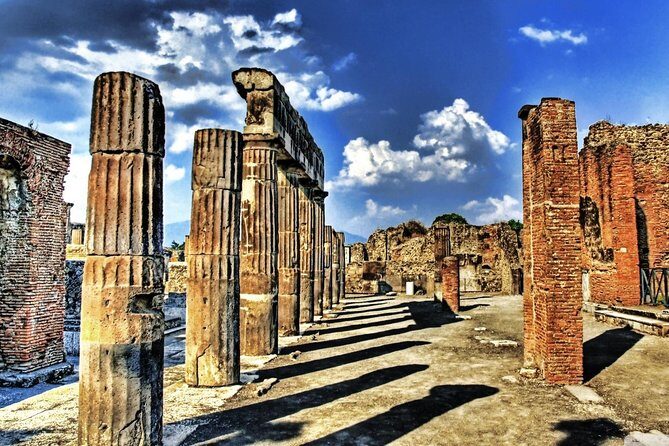
The theaters in Pompeii aren’t only architecture. They’re a window into how Romans organized entertainment and public identity. When a guide walks you through the space and connects it to the idea of gathering, the sight changes from “a big empty shell” into a stage for social life.
The temples do something similar. A temple view can feel flat if you don’t know what to look for, but a guided explanation can help you understand the role of religion in daily behavior and civic culture. You start to see buildings as functions, not just surfaces.
This is where names from real guides matter. In the provided experiences, guides including Pina, Daniel, and Viviana are highlighted for interpreting Pompeii in an engaging way—often answering questions and giving extra details that make the buildings feel less distant. If you’re the type who likes asking why a space looks the way it does, that’s a big reason to book a guided option instead of going fully self-guided.


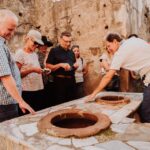
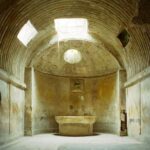

Bathing complexes: where Roman routine gets real
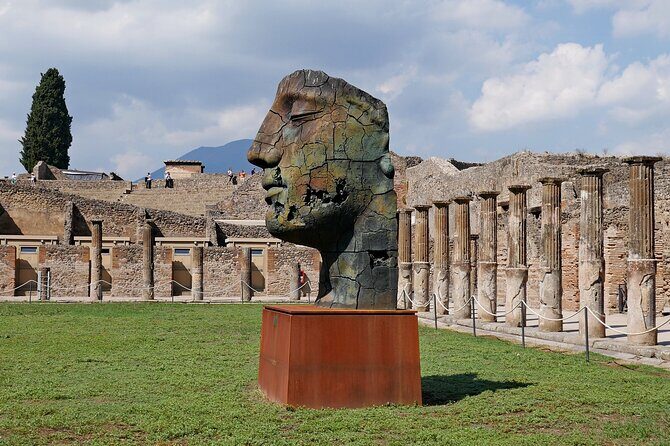
One of the strongest reasons to choose this specific format is the emphasis on Pompeii’s six bathing complexes. That’s not a random “bonus stop.” Bathing was tied to daily habits, social mixing, and even exercise. It was also part of how the city felt modern to its residents.
If you only see streets and houses, you miss a central piece of the puzzle: Pompeii wasn’t quiet. It was routine-driven and social.
In a guided visit, the value is in the interpretation:
- What these spaces likely felt like day to day
- How bathing fit into a bigger lifestyle
- Why the layout matters
This matters a lot because bathing areas can look confusing at first glance—rooms, openings, floors, and changing levels. A guide’s explanations give you the mental map to connect what you’re seeing with what people were doing.
Pace, timing, and photo time (a real-world balance)
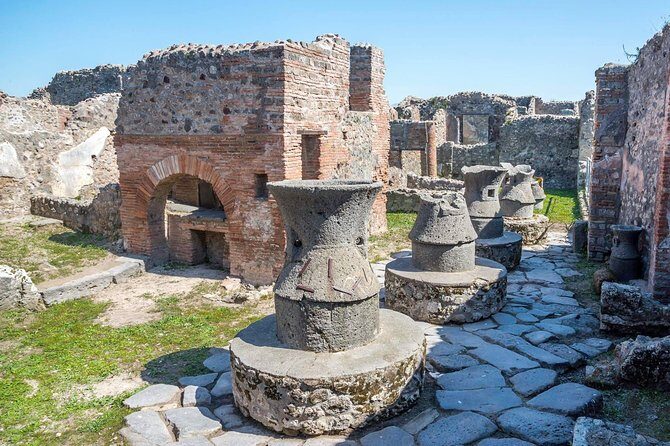
This tour is designed to be efficient. Some groups noted that the guide managed to cover the main highlights in the allotted time, especially when the park wasn’t at full crush level. Another practical tip from the experiences: if you’re able to visit in lower season, you may find it easier for the guide to move smoothly and include optional moments for photos or extra explanation.
But don’t plan your day on a “perfectly flexible” schedule. Pompeii runs on time windows, and the tour ends on time. One experience mentioned waiting briefly for the group to catch up because of train timing, and then the tour still ended as scheduled—meaning there was less commentary right at the end than expected.
My advice: treat this as a structured introduction. If you want more, plan to add extra self-guided time after the tour. You’ll have a better sense of where to go next, and you won’t feel rushed trying to figure out the site on the fly.
Price check: why $48 can be good value
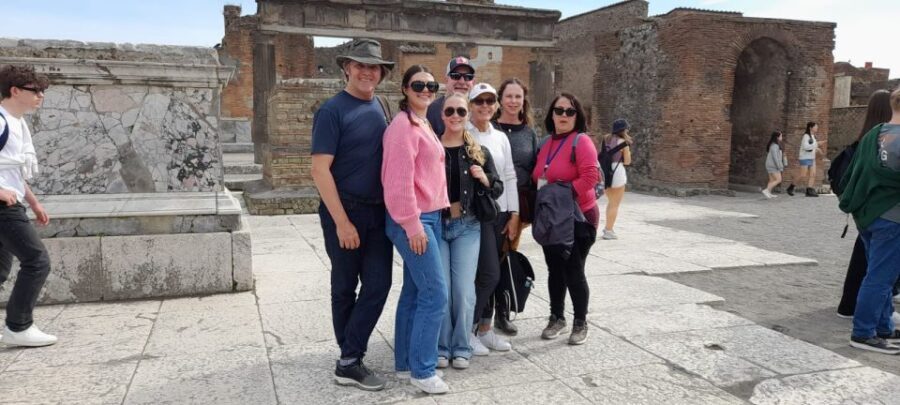
At $48 per person, this tour sits in a very reasonable zone for Pompeii—especially because entry tickets are included and you’re getting a 2-hour guided walkthrough.
Here’s how to think about value:
- If you would have paid for a guide anyway, the ticket inclusion reduces the “extra add-on” cost.
- Pompeii is the kind of place where interpretation matters. A guide can help you understand what you’re seeing, not just where to stand for photos.
- The small-group format is where you get more back: fewer people means it’s easier to ask questions and stay with the group.
Could you visit Pompeii cheaper on your own? Yes. But you’ll likely spend more time figuring out what matters, and you might miss the key connections between the public buildings and daily routines. If you want a well-used half day—one that gives you clarity—this price looks like a solid deal.
Who this Pompeii tour is best for
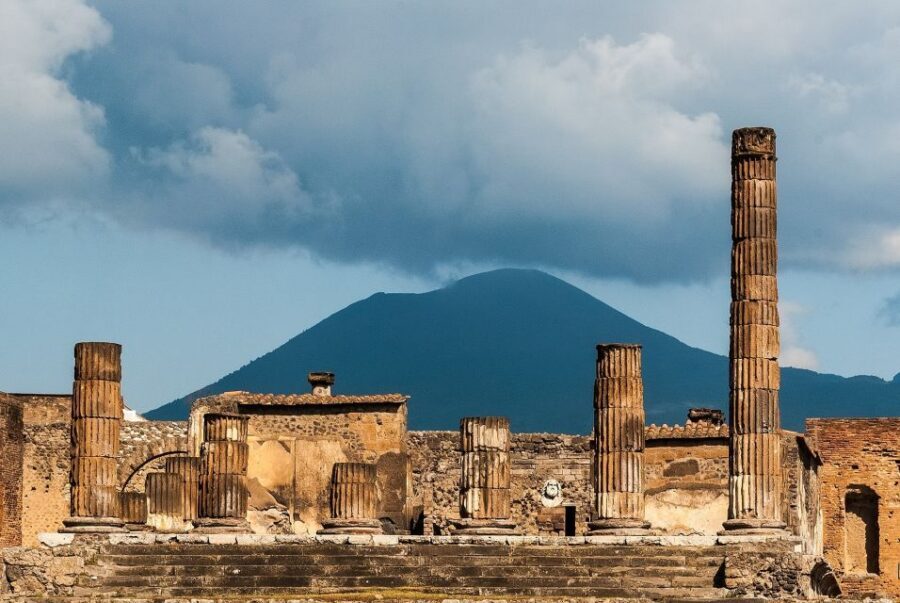
This tour fits best if you:
- Want a clear introduction to Pompeii’s big public highlights
- Prefer a guided explanation over reading solo
- Have limited time and want the most important areas covered efficiently
- Enjoy questions and interaction, not just passive listening
It’s likely less ideal if you:
- Need a fully flexible pace that allows long stops everywhere (the guided time is time-boxed)
- Have mobility impairments, since it’s noted as not suitable for people with mobility impairments
If you’re traveling with someone who wants structure and context, this format can also help prevent decision fatigue.
Special note: first Sunday free entry, but don’t count on it
There’s one scheduling wrinkle worth knowing. On the first Sunday of each month, entrance is free of charge. However, tickets can’t be reserved ahead of time, so entry isn’t guaranteed.
If you’re planning your visit for that day, I’d treat the guide and tour format as an opportunity, not a certainty. Build in backup options so you’re not stuck with a “maybe” when you arrive.
Should you book this Pompeii small-group tour?
If you want Pompeii to feel understandable and not just impressive, I’d book this tour. For $48 with tickets included, you’re essentially buying two things: time inside the park with a guide and an explanation of the city’s key public spaces—theaters, temples, and bathing complexes. That’s exactly where a guided visit adds real value.
I’d book it with extra confidence if you like thoughtful guides and clear pacing. The experiences shared here consistently point to guides who know how to translate the ruins into daily life, with friendly energy and good question time—names like Pina, Karolina, Viviana, Chiara, and Daniel come up for that reason.
Only hold off if you know you want to linger for long, unstructured hours. In that case, consider pairing this tour with additional self-guided time so you can slow down after you’ve learned the “what am I looking at” basics.
If you’re doing Pompeii as a half-day or you need structure to make the site click, this is a smart, efficient way to go.
FAQ
How long is the guided portion?
The guided tour is listed as about 2 hours inside Pompeii, with a total experience time of 2 to 5 hours depending on the starting time and logistics.
What’s included in the price?
Your tour includes a 2-hour guided tour (small group) and entry tickets to the Archaeological Park of Pompeii.
What languages are offered?
The live tour guide is available in French and English.
Where do I meet for the tour?
The meeting point can vary depending on the option booked. Listed options include Pompeii Archaeological Park, Starhotels Terminus, and Hortus Pompei, Restaurant & Garden Bar.
Is the tour suitable for people with mobility impairments?
No. The tour is listed as not suitable for people with mobility impairments.
Is Pompeii free on the first Sunday of the month?
Yes, entrance is free on the first Sunday of each month, but tickets can’t be reserved ahead of time, so entry isn’t guaranteed.