REVIEW · POMPEI CAMPANIA
Pompeii: Guided Tour and Skip-the-Line Ticket
Book on GetYourGuide →Operated by IAMME IA! - Gray Line Amalfi Coast · Bookable on GetYourGuide
Pompeii is not a quiet visit.
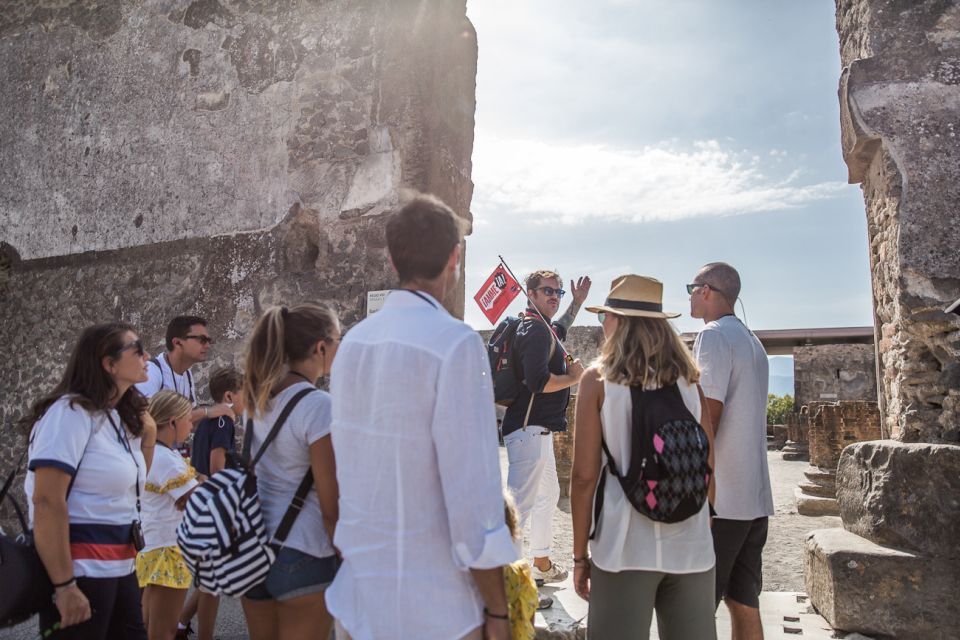
This guided tour is built to help you enter the Pompeii Archaeological Site quickly and then move through the streets with a local licensed guide who connects the dots between everyday life and the eruption that froze it in 79 AD. You start at Porta Marina, and the route steadily pulls you from public space to private homes, so you’re not just staring at ruins, you’re following how a city worked.
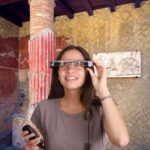
I especially like two things. First, the priority access means less time stuck in lines and more time walking the real streets. Second, you get audio headsets on larger groups (8+), which keeps the guide’s narration clear and lets you hear the details as you pass them, like chariot grooves and the stories tied to each building.
One consideration: this is a walking tour and it is not suitable for wheelchair users. Also, on the first Sunday of each month, priority entrance can be limited depending on crowd conditions at the ticket office, so plan for the possibility of a slower start that day.
In This Review
- Key things I’d circle before you go
- Entering Pompeii With Priority: Less Line, More City
- Porta Marina: Your Shortcut to Getting Oriented
- Civil Forum and Basilica: Where Power, Business, and Religion Collided
- Via dell’Abbondanza and the Theater District: Daily Life With Public Entertainment
- Forum Baths, Thermopolium, and Pistrinum: How Romans Relaxed and Ate on the Go
- House of the Faun and the Alexander Mosaic: Wealth You Can See
- Macellum Market Life and the Lupanare: Food and Taboo in One City
- Plaster Casts: When Pompeii Turns Personal
- How the 2–2.5 Hours Fit Together (And Why It Works)
- Price and Value: Is $43 Worth It?
- Practical Tips That Make Pompeii Easier
- Should You Book This Pompeii Guided Tour?
- FAQ
- FAQ
- How long is the Pompeii guided tour?
- Do I get skip-the-line or priority access?
- Where do I meet my guide?
- What languages are available for the live guide?
- Are audio headsets provided?
- Is this tour wheelchair accessible?
- What should I bring?
- Is priority entrance always available?
- Are minors allowed to join without an adult?
Key things I’d circle before you go
- Priority access helps you start faster at the Pompeii ruins entrance
- Porta Marina to the Civil Forum gives you a strong first map of the city
- Stops include both public life (forum, basilica, theater district) and private life (House of the Faun)
- You’ll see Roman daily routines through baths, street food shops (thermopolium), and a bakery (pistrinum)
- The tour can include the Lupanare and ends with the plaster casts of Pompeii’s victims
Entering Pompeii With Priority: Less Line, More City
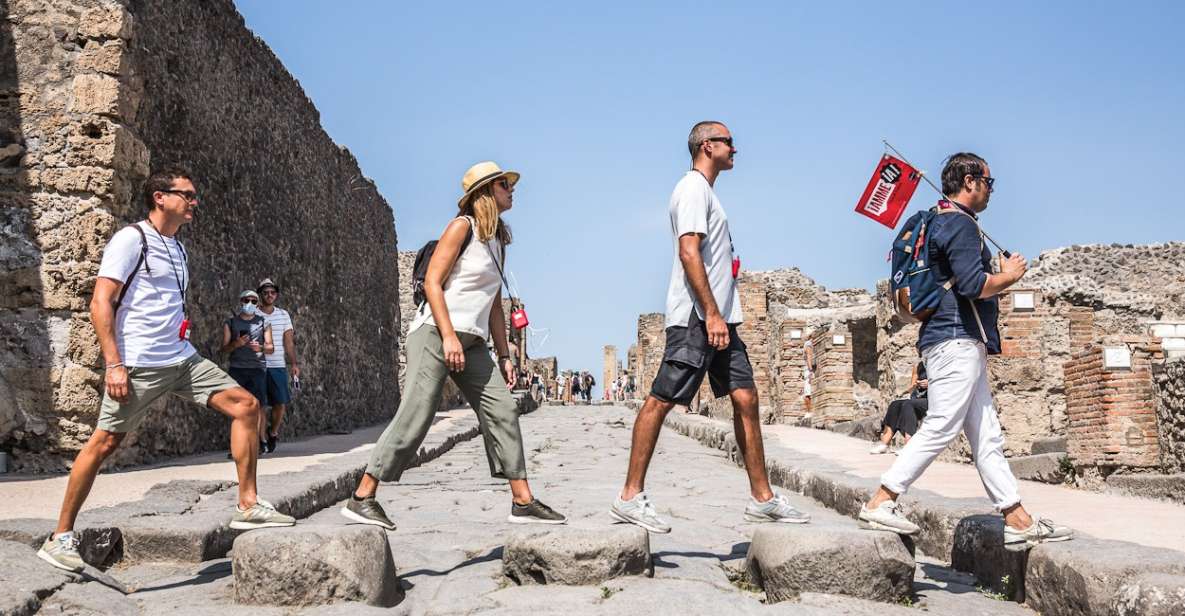
Pompeii is famous, which means crowds are the default. What I like about this experience is that it targets the most painful part of a Pompeii day: the slow start. With priority access, you get a fast-track entry right at the site entrance, so you’re not spending your limited time waiting while buses unload.
That time matters. The tour clocks in at about 2 to 2.5 hours, and it’s paced for focus. If you arrive late or spend too long in the ticket queue, you lose the best part: seeing how the city’s layout connects—from gate to forums to entertainment to food—while it still feels like a single place rather than a pile of buildings.
A small heads-up: the description mentions stress-free add-ons like round-trip transfers and hydrofoil tickets, but the pricing details also list transportation as not included. Translation: don’t assume your booking includes transport. Check what’s actually bundled for your specific selection before you plan your day.
You can also read our reviews of more tours and experiences in Pompei Campania.

Porta Marina: Your Shortcut to Getting Oriented
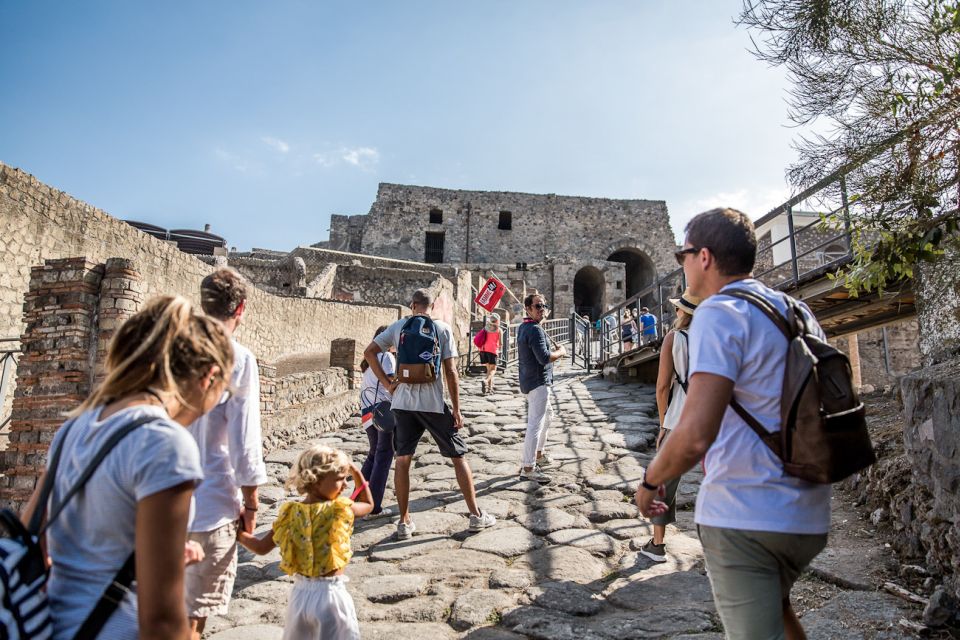
You meet your guide at the Pompeii entrance area for a stress-free start, and the opening stop is Porta Marina, one of Pompeii’s original gates. This is a smart first choice because a gate tells you something right away: where people entered, what the approach looked like, and how movement through the city likely began.
The guide then points your attention toward major landmarks so you can build a mental map while you walk. Even if you’ve seen Pompeii photos before, the scale can feel unreal in person. Starting with Porta Marina and then moving quickly into the city center helps you avoid that common problem: walking for an hour and realizing you never quite understood where you are.
If you’re worried about finding your guide, take note: meeting points can vary depending on the option you book. Some groups use a parking meeting point area (Pompei Parking Zeus is listed as an option), so follow your exact confirmation instructions instead of relying on guesswork.
Civil Forum and Basilica: Where Power, Business, and Religion Collided
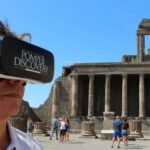
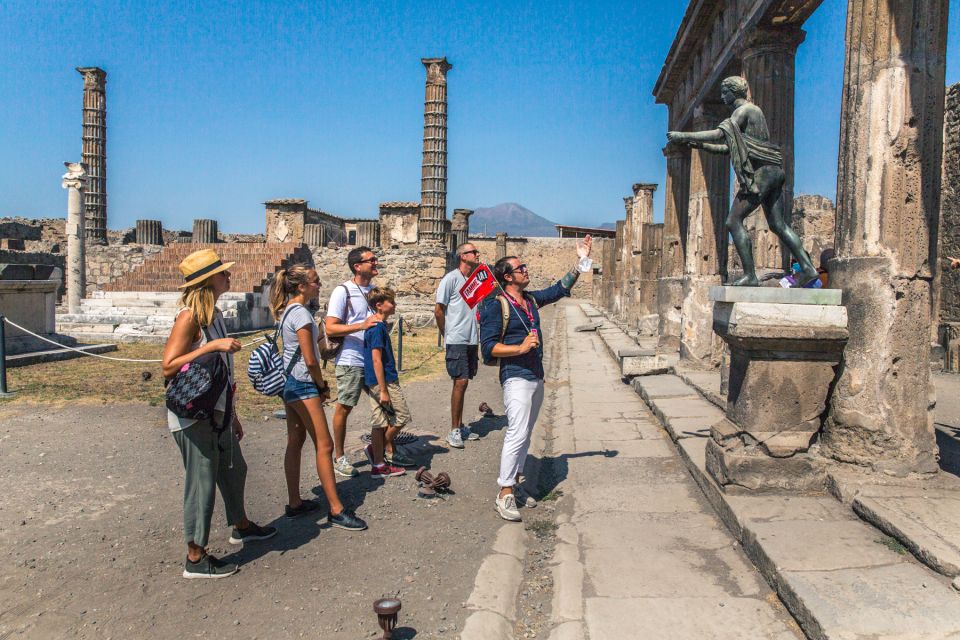
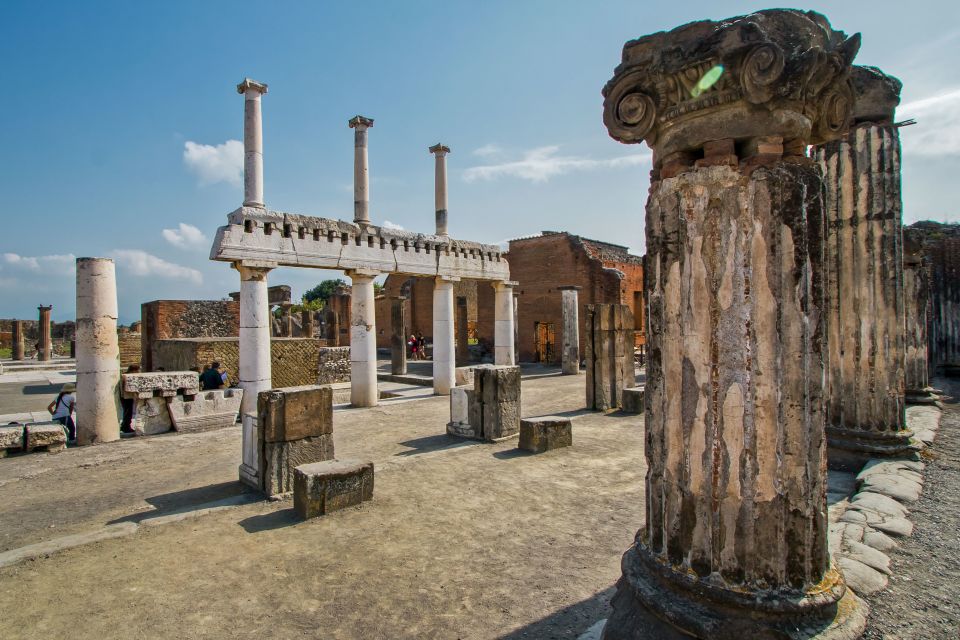
The first big “anchor” stop is the Civil Forum, described as Pompeii’s bustling political, religious, and commercial heart. This is where Pompeii stops being a set of ruins and starts behaving like a real city. The guide’s job here is to make the buildings feel functional: who would gather, what would happen there, and why certain spaces mattered.
Next comes the basilica, once used for legal affairs and business dealings. That detail is useful because it gives you a reason to look up and around rather than only at walls. If you know a space was used for meetings and disputes, you naturally start imagining how people moved, where they stood, and how the area shaped daily life.
One narrative thread runs through this section: Mount Vesuvius looming over the city. The guide doesn’t treat it like a dramatic postcard; it’s presented as the silent force behind the sudden end. It’s one of the most effective ways to keep the story grounded while you’re walking streets.
Via dell’Abbondanza and the Theater District: Daily Life With Public Entertainment
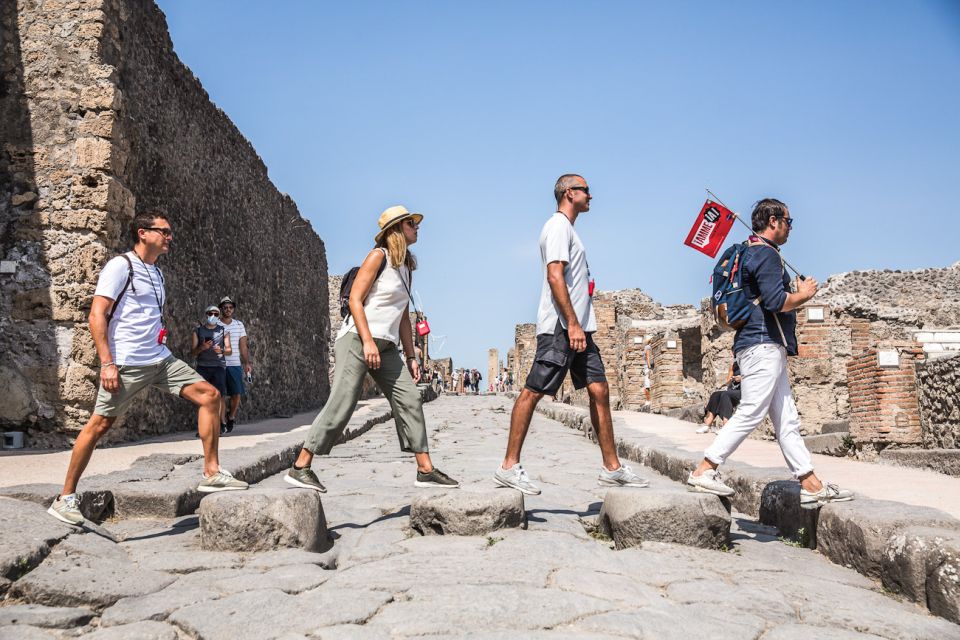
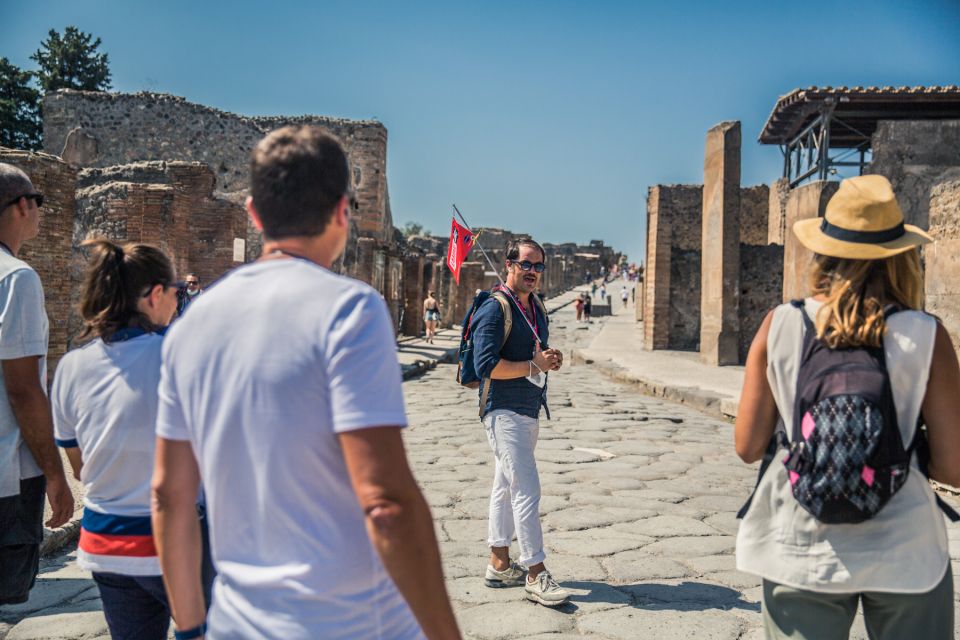
From the forum area, the tour heads onto Via dell’Abbondanza, the main street lined with shops and homes. One of the best practical details here is that you’ll hear about deep chariot grooves etched into the stone. That’s not just a cool fact. It tells you how heavy traffic shaped the road, and it helps you picture carts and wagons grinding through town.
Then you reach the Theater District, a cultural hub where art and entertainment met social life. The star stop is the Large Theater, an open-air venue used for comedies, dramas, and musical performances. Pompeii’s streets can feel like they were made for daily routines, but the theater reminds you that people planned nights out too.
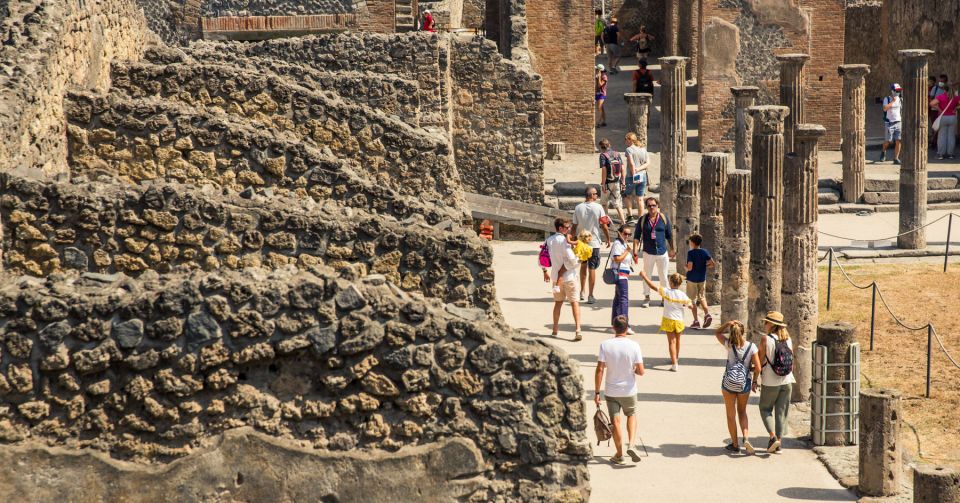
A quick reality check: theaters and public districts are often exposed. You’ll be walking on ancient surfaces with uneven footing, and summer sun can be intense. Wear grippy shoes and plan for heat.
Forum Baths, Thermopolium, and Pistrinum: How Romans Relaxed and Ate on the Go
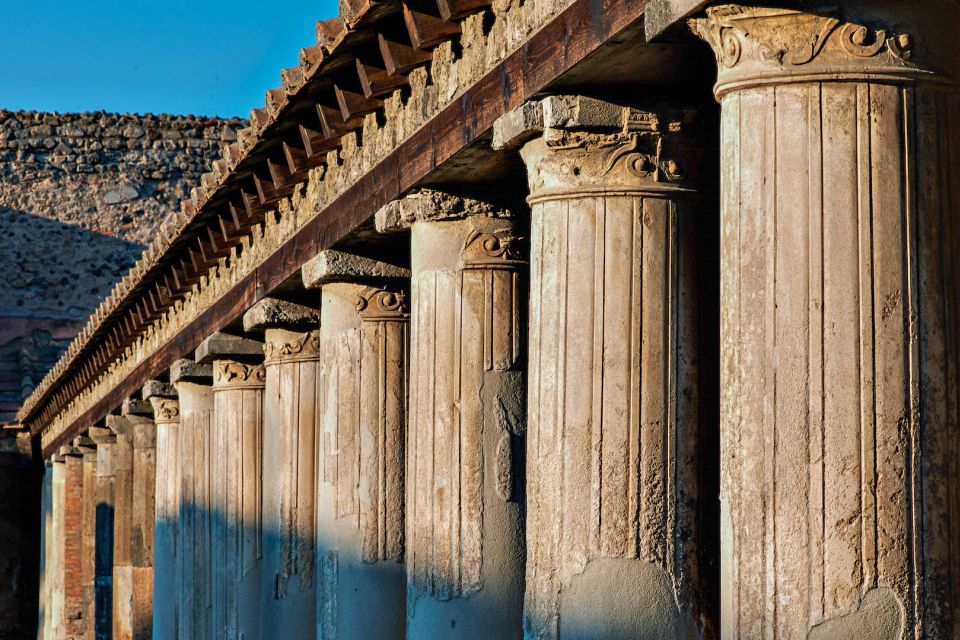
This part of the tour is for your brain if you love everyday details. After the political and entertainment landmarks, you get a smoother rhythm with places tied to routine.
First up: the Forum Baths. Baths show Roman wellness culture in a way that’s easier to understand than inscriptions or abstract explanations. When you see the layout for washing and resting, the city feels lived-in instead of frozen.
Next, the tour visits Thermopolium stops, ancient street food shops. The guide uses these to talk about quick meals and the kind of food people could grab without sitting down for a long time. There are also stops that include a pistrinum, or bakery, with millstones, ovens, and counters used to prepare hot meals.
One small benefit of including these food-related stops is that they give you a break from the “big buildings” mental mode. You’re still learning, but it feels more human.




House of the Faun and the Alexander Mosaic: Wealth You Can See
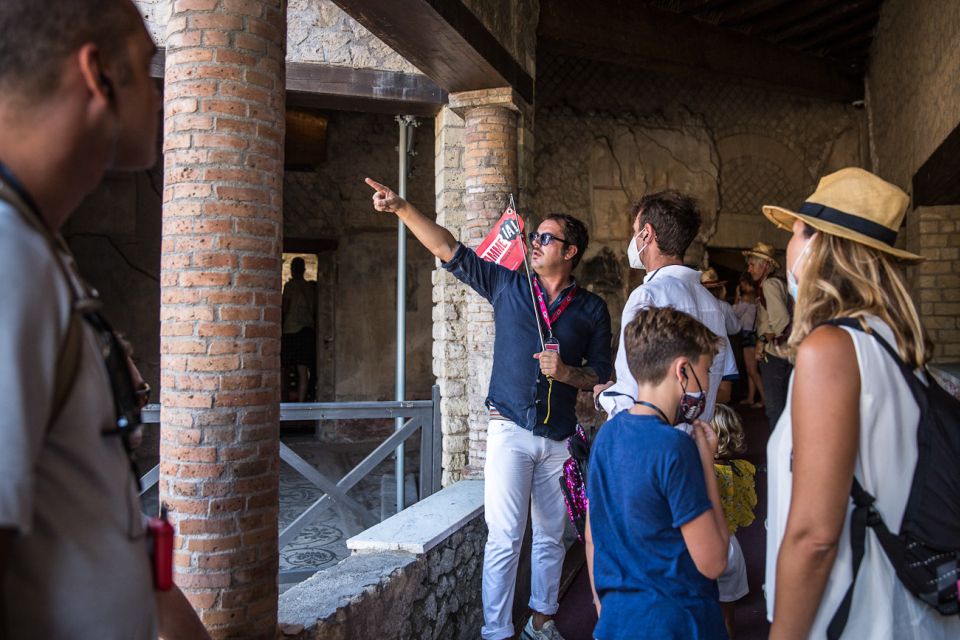
The House of the Faun is a major highlight, and it’s easy to see why. This grand Roman villa is especially famous for its mosaics, including the Alexander Mosaic—a standout masterpiece of ancient art and storytelling.
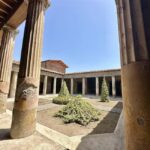
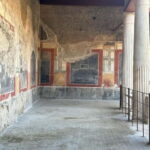
I like this stop because it teaches you something practical about interpretation. Pompeii isn’t only about how people lived when they were poor; it also shows how wealth functioned. A house like this is more than a shell. It’s a snapshot of lifestyle: how space was arranged, how decorative art mattered, and how status showed itself through design.
If you’ve only ever thought of Pompeii as a tragedy, this stop helps correct that. It brings you back to the fact that people spent time on aesthetics and comfort right up to the end.
Macellum Market Life and the Lupanare: Food and Taboo in One City
The tour also includes the Macellum, Pompeii’s food market. This is where trade would have happened—sounds, smells, and the everyday commerce vibe you won’t get from a museum label. It’s a strong final public-life stop because it ties together the earlier food sites into one bigger picture: how people bought meals, ingredients, and daily necessities.
Then there’s the Lupanare, Pompeii’s ancient brothel. The description highlights vividly decorated spaces and compact stone rooms. This stop is often emotionally heavier than the rest because the subject is so direct. I find it valuable anyway, as long as the guide handles it thoughtfully, since it shows the full range of life in the city.
One timing consideration: in at least one small-group experience, the guide chose to skip the brothel area to avoid lengthy queues and protect time for the rest of the itinerary. That means your best approach is simple: expect it, but don’t bet your entire emotional payoff on it. The plaster casts and the bigger route may still deliver more than enough impact.
Plaster Casts: When Pompeii Turns Personal
The tour’s emotional finale can hit hard. The experience includes a look at the plaster casts of Pompeii’s victims—men, women, and children shown frozen in their final moments.
I like this ending for one reason: it forces you to stop treating Pompeii like a sightseeing puzzle. Before this, you’re assembling daily life. After the casts, the story becomes unavoidably human. The guide framing matters here. You’ll get more than a quick glance if your guide takes time to explain what you’re seeing and why it matters.
If you’re traveling with kids, you’ll want to read the room in this section. Many families find that the guided context helps, because children get answers instead of scary silence.
How the 2–2.5 Hours Fit Together (And Why It Works)
The pacing is the real trick. Pompeii is huge, and a self-guided walk can turn into a frantic sprint that misses the point. This tour solves that by choosing a route that covers the city’s major categories of life: governance and courts, main street commerce, entertainment, bathing and food, elite homes, and the human ending.
Group size can vary, and there’s a practical note: site regulations may split groups into smaller parties, each with its own licensed guide. That’s not a flaw; it’s how the system stays manageable inside the ruins.
If you’re in a group of 8+, you’ll use audio headsets. That matters because Pompeii is full of hard-to-hear moments—wind, crowds, and the acoustics of open air. Headsets help you keep the narration synced with what you’re actually looking at, instead of guessing.
Also, the tour offers English, Spanish, French, and German, and the tour may operate in multiple languages. If language clarity matters for you, confirm your tour language in advance.
Price and Value: Is $43 Worth It?
At $43 per person, this is priced like a guided experience with added access. The main value drivers are:
- Priority access so you start earlier
- A licensed local guide doing live commentary instead of you reading everything yourself
- A route designed to be coherent in a short time window
If you’re the type who enjoys reading signs, you can tour Pompeii on your own. But if your goal is to understand the city’s layout and meaning in a couple hours, the guide is the difference between sightseeing and comprehension.
I also think the sweet spot for value is your time. With Pompeii, time gets eaten by logistics and wandering. Paying for a focused loop means you buy back your afternoon.
Practical Tips That Make Pompeii Easier
Here’s what I’d plan for based on how the experience runs:
- Wear comfortable shoes with grip. Ancient stone can be uneven.
- Bring sunscreen because a lot of the route is exposed.
- Consider shade help. One past group mentioned using an umbrella for hot, exposed stretches, and that’s a simple way to reduce discomfort.
- If you’re sensitive to heavy topics, pace yourself in the plaster cast segment. Let the guide’s framing guide you rather than rushing through.
One more important rule: unaccompanied minors aren’t allowed, so if you’re traveling as a family, you’ll need to attend with children.
Should You Book This Pompeii Guided Tour?
Yes, I’d book it if you want Pompeii to make sense quickly. This is a great fit for first-timers, couples on a tight schedule, and families who want the city explained in real time.
I’d skip or reconsider if you need wheelchair access (it’s listed as not suitable), if you hate walking in heat, or if you’re only interested in a few favorite spots and you’re willing to spend time hunting them down without a guide.
If you’re on the fence about paying for guidance, use this test: if you want the story connected to what you’re seeing at each stop, the $43 price feels fair. If you’re purely chasing photos and don’t care about the context, a self-guided visit might be cheaper.
FAQ
FAQ
How long is the Pompeii guided tour?
The tour lasts about 2 to 2.5 hours.
Do I get skip-the-line or priority access?
Yes. The experience includes priority access to the Pompeii Archaeological Site.
Where do I meet my guide?
The meeting point can vary depending on the option you book. Porta Marina is listed as a stop, and Pompei Parking Zeus is listed as a starting location option.
What languages are available for the live guide?
The tour is offered in English, Spanish, French, and German.
Are audio headsets provided?
Audio headsets are included for groups of 8 or more.
Is this tour wheelchair accessible?
No. It is not suitable for wheelchair users.
What should I bring?
Bring comfortable shoes and sunscreen.
Is priority entrance always available?
On the first Sunday of each month, priority entrance may not be available and is determined by crowds at the Pompeii Ruins ticket office.
Are minors allowed to join without an adult?
No. Unaccompanied minors are not allowed.