REVIEW · POMPEI CAMPANIA
Pompeii: Skip-the-Line Ticket and Guidebook with Itineraries
Book on GetYourGuide →Operated by Around Vesuvio · Bookable on GetYourGuide
Pompeii hits you in the first ten minutes. This combo is interesting because it pairs skip-the-line entry with a guidebook and map, so you can explore at your own pace from 9AM to 5PM. You’ll also get a clear way to see the big sights—amphitheater, frescoed rooms, and the casts connected to the eruption of Mount Vesuvius.
I love the flexibility of 2, 4, or 6-hour routes in the guidebook. I also like that the experience is built around simple navigation: a map plus site highlights you can chase without waiting around for a group schedule.
One thing to consider: this is self-guided. You’ll meet staff, get access using your voucher, and use the guidebook—so don’t expect a live instructor-style commentary walking you from stop to stop.
In This Review
- Key things to know before you go
- Pompeii, without the waiting: how the skip-the-line ticket really helps
- Entering at Piazza Anfiteatro: your easiest path in
- The guidebook and map: your independent Pompeii plan
- What the guidebook focuses on
- Picking the right route: 2 hours vs 4 hours vs 6 hours
- The 2-hour route: fast hits and core drama
- The 4-hour route: the sweet spot for most people
- The 6-hour route: your slower, fuller Pompeii day
- What you’ll see inside Pompeii: the stops worth planning around
- The amphitheater (a top “must”)
- Victim casts (the part that feels heavy)
- Frescoed houses (where Pompeii looks lived-in)
- Spas and temples (public life beyond the streets)
- Shops and Thermopolis (everyday life in plain view)
- Theaters and brothels (the entertainment and the edge)
- How much the $41 price buys you (and when it’s worth it)
- Real-world friction points (and how you can avoid them)
- Don’t count on your phone for the whole experience
- Give yourself a little buffer around ticket exchange
- Be clear about what you get: guidebook, not guided tour
- Practical tips to make your Pompeii day feel easier
- Who should book this Pompeii experience?
- Should you book this Pompeii skip-the-line ticket with guidebook routes?
- FAQ
- What does the Pompeii ticket include?
- How long can I visit Pompeii?
- Where do I meet staff?
- Where is the entrance for my reservation?
- What language options are available?
- Do I need to bring any documents?
- Is food included?
- Can I cancel and get a refund?
Key things to know before you go
- Skip-the-line access into Pompeii helps you spend more time inside the ruins.
- Self-guided format with a guidebook and updated map keeps you in control of your pace.
- Routes for 2, 4, or 6 hours help you decide how much ground to cover.
- Top sights are on your radar: amphitheater, victim casts, frescoed houses, spas, temples, shops, Thermopolis, theaters, and brothels.
- Entry from 9AM to 5PM gives you a full day window to fit Pompeii into your trip.
Pompeii, without the waiting: how the skip-the-line ticket really helps
Pompeii is popular for a reason, but popularity has a side effect: lines. This ticket package is designed to reduce the “stand around” part, so you can get moving toward the ruins faster and make better use of your day.
What I like about the skip-the-line setup is that it pairs well with the self-guided format. If you’re the type who wants to slow down for details—frescoes, street life in surviving shop areas, or the drama of the amphitheater—you’re less likely to feel rushed by a timed group.
You’ll still need to follow the usual on-site flow. So think of this as saving you time at the entrance, not removing all friction from a busy archaeological park.
You can also read our reviews of more tours and experiences in Pompei Campania


Entering at Piazza Anfiteatro: your easiest path in

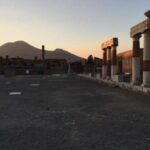
Your voucher-based entry is tied to the archaeological park entrance labeled Piazza Anfiteatro. That matters because Pompeii has multiple “you can get there” routes, and the quickest ones are the ones that match your reservation.
Here’s the practical rhythm:
- Meet staff (they’re usually in blue and yellow jackets) outside the provider’s office.
- Go to the information point at VIA ROMA 123, Pompei.
- Show your voucher to get smooth access to the Pompeii Archaeological Park.
The biggest win here is clarity. If you show up at the right place for the exchange/access point, you’re less likely to waste time hunting down the correct counter.
One small consideration: Pompeii signage can vary by language, and it’s easy to get disoriented once you cross into the site. I’d keep your guidebook map open right away so you’re not scrambling for orientation.
The guidebook and map: your independent Pompeii plan
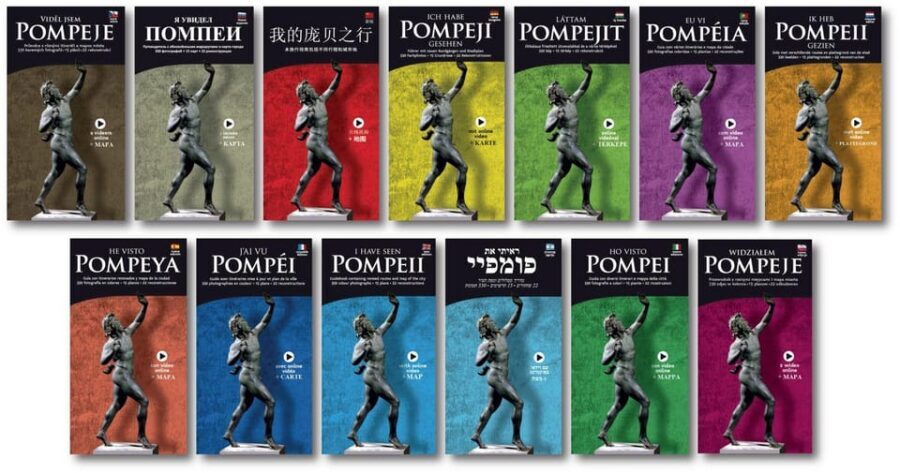
This experience doesn’t rely on a spoken lecture during your visit. Instead, it gives you a guidebook with updated map and routes for 2, 4, or 6 hours, letting you shape the visit around your energy and interests.
That’s a big deal in Pompeii. The ruins don’t “read” in a straight line. You’ll want to stop, compare spaces, and re-see details from different angles. A self-guided plan makes it easier to do that without feeling like you’re falling behind.
What the guidebook focuses on
Your guidebook is designed to connect the places you’re seeing with the bigger story:
- The history of Pompeii
- The eruption of Mount Vesuvius
- What the surviving structures suggest about everyday life
And then it points you toward the anchors most people come for:
- A preserved Roman amphitheater (called out as one of the best-preserved examples)
- The casts of the victims of the eruption
- Frescoed houses
- Spas and other public spaces
- Temples
- Shops and street-level commerce
- Thermopolis, described as the time’s coffee-fast-food style spot
- Theaters (plural)
- Brothels
It’s essentially a “see the stops, then understand what you’re looking at” system. That’s good value for people who want meaning without being tethered to a pace.
Picking the right route: 2 hours vs 4 hours vs 6 hours
Your guidebook’s time plans are the heart of this experience. You choose how deep you want to go, and the book helps you prioritize. Since Pompeii is spread out, the time you pick shapes what you can realistically see without constantly backtracking.
You can also read our reviews of more tours and experiences in Pompei Campania





The 2-hour route: fast hits and core drama
A 2-hour option works best if you’re short on time but still want the major emotional and visual highlights. In that shorter window, I’d focus on the big “wow” stops:
- The amphitheater
- The victim casts
- A sampling of the frescoed areas (at least one cluster of houses or richly decorated spaces)
Think of this as your essentials pass. You won’t see everything, but you’ll leave with the key images that make Pompeii unforgettable.
The 4-hour route: the sweet spot for most people
If you can spare half a day, the 4-hour route is usually the best balance. It gives time to see both the public drama and more everyday life:
- Add spas and other communal spaces
- Find a Thermopolis stop (the fast-food-at-the-coffee-shop concept is a fun way to make it feel human)
- Spend a little time in shops and temple areas so you don’t end up only looking at the most spectacular buildings
This is the route that tends to feel satisfying instead of “rushed highlights.”
The 6-hour route: your slower, fuller Pompeii day
The 6-hour plan suits you if you like details and you’re not just chasing photos. You’ll have enough time to spread out and include more of the range:
- More frescoed houses
- Additional theaters
- The brothel site
- More of the shops and street-level textures
- Extra breathing room between stops so you can actually take in what you’re looking at
This option also works well when you want to revisit a highlight after you’ve seen its context nearby. Pompeii makes more sense when you’re not moving every few minutes.
What you’ll see inside Pompeii: the stops worth planning around
Pompeii’s power comes from variety. You’re seeing entertainment, home life, worship, trade, and the aftermath of disaster—often in the same general area.
Here’s how the main categories tend to land, and what to watch for.
The amphitheater (a top “must”)
The amphitheater is one of the most memorable structures in the site, and it’s specifically called out here. Even if you don’t go deep into Roman architecture, it’s a strong anchor because it helps you visualize how crowds moved and how public life worked.
Practical tip: don’t just stand and look. Spend a few minutes taking in sightlines and the surrounding spaces. The setting makes the scale easier to understand.
Victim casts (the part that feels heavy)
The casts of the victims connect you directly to the eruption outcome of Mount Vesuvius. It’s not a “light and fun” stop, and that’s exactly why it matters.
Practical tip: give yourself time here. Even a short visit becomes more meaningful if you don’t rush.
Frescoed houses (where Pompeii looks lived-in)
Frescoed houses help you see the city as more than stone blocks. You’re looking at decorative surfaces and room layouts that show how people wanted their spaces to feel.
Practical tip: if you like art, slow down. If you’re short on time, pick one or two house areas and really look.
Spas and temples (public life beyond the streets)
Spas and temples add balance. They show how social and ritual life worked alongside daily routines.
If you choose the 4-hour or 6-hour route, make sure you don’t skip these. It’s easy to get tunnel vision on houses and then miss the “how the city organized itself” picture.
Shops and Thermopolis (everyday life in plain view)
The Thermopolis is described in this package as a coffee-fast food of the time. That framing helps you connect a surviving place with the idea of grabbing a drink or quick bite.
Thermopolis, shops, and street-level spaces are where Pompeii feels most everyday. Even if you don’t know every detail, you can still read the vibe.
Theaters and brothels (the entertainment and the edge)
The theaters and brothels broaden what you think Pompeii is. They aren’t just background; they show the range of what Romans did for fun, work, and pleasure.
The self-guided approach helps here because you can decide how much time you want without being pressured.
How much the $41 price buys you (and when it’s worth it)
At $41 per person for a day ticket, the value comes from two things you actually feel during the visit:
- Skip-the-line access, which saves time at a very busy site
- A guidebook with updated map and timed routes, which saves you planning work inside the ruins
You’re not paying extra for a full guided narration during your walk, which can be great if you prefer independent exploration. You also shouldn’t expect food included. You’ll handle food and beverages on your own, and transportation is not included, so budget for getting there and eating.
For who it’s best:
- You want a flexible Pompeii day with a plan that still feels personal
- You like maps and reading at your own speed
- You’re trying to cover a lot of “big Pompeii” stops without cramming
For who it might not be best:
- You’re expecting an actual human guide to walk you through everything (the self-guided structure here doesn’t match that expectation)
Real-world friction points (and how you can avoid them)
Even with a clean setup, Pompeii can throw curveballs. Here are the ones worth planning around, based on common confusion around this kind of voucher-based entry.
Don’t count on your phone for the whole experience
A clear map is part of the package for a reason. Once you start moving between areas, it’s easy to lose your place. Use the guidebook map early so you’re not constantly re-checking or guessing.
Also, if you find that direction signage isn’t consistently in your language, rely on the printed map and the route plan.
Give yourself a little buffer around ticket exchange
The process involves meeting staff and using a voucher to access the park. Sometimes that kind of setup requires an extra pickup step for paper documents before you can go in smoothly. So plan a short window of patience, especially if you’re arriving around a peak hour.
A good rule: don’t schedule the next tight connection immediately after your Pompeii entry slot.
Be clear about what you get: guidebook, not guided tour
There’s a simple mismatch that can cause disappointment: the included “guide” here is a book and map, not necessarily a person leading you on-site. If you want a live instructor walking you through Pompeii, this format is likely the wrong match.
Practical tips to make your Pompeii day feel easier
Pompeii days can feel long because there’s so much to see. These small decisions help your visit stay enjoyable.
- Wear comfortable shoes. This is non-negotiable for walking the ruins.
- Bring your passport or ID card, since entry may require it.
- Choose your route length before you enter, then stick to it loosely. The guidebook routes exist to keep you from wandering for hours with no plan.
- Use the time plan as your backbone, not as a jail. If you find one frescoed house you love, spend more time there and let the rest be flexible.
Also, if you’re traveling with youth pricing, note the eligibility rule: the 18–24 youth reduced price is only for EU citizens.
Who should book this Pompeii experience?
Book this option if:
- You want skip-the-line Pompeii entry plus a structured self-guided plan
- You like learning by reading while you walk
- You’re comfortable exploring on your own using a map and timed routes
Consider a different format if:
- You want a live instructor-style explanation throughout the whole visit
- You prefer a very strictly timed group pace and minimal reading
Should you book this Pompeii skip-the-line ticket with guidebook routes?
I’d book it if your top goal is to see Pompeii efficiently while keeping control of your pacing. The real win is that you’re not stuck waiting, and you’re not guessing what to prioritize once you’re inside. The amphitheater, the victim casts, frescoed areas, and the range of Roman life stops are all covered through the guidebook approach.
Skip it only if you’re specifically looking for a human guide leading you stop-by-stop. This package is built for you to explore independently with a guidebook in hand.
If you can only give Pompeii one afternoon, I’d lean toward the 4-hour route for the best balance of highlights and time to actually look.
FAQ
What does the Pompeii ticket include?
The package includes a skip-the-line ticket to Pompeii, a guidebook in multiple languages, and a Pompeii Ruins map with 2, 4, and 6-hour routes.
How long can I visit Pompeii?
This is a 1-day ticket. You can enter from 9AM to 5PM, and the guidebook offers routes for 2, 4, or 6 hours.
Where do I meet staff?
Meet the team outside the office (usually with blue and yellow jackets). Then you’ll go to the information point at VIA ROMA 123, Pompeii.
Where is the entrance for my reservation?
You enter the archaeological park at Piazza Anfiteatro.
What language options are available?
The experience is available in English, Italian, Spanish, and French.
Do I need to bring any documents?
Yes. Bring your passport or ID card.
Is food included?
No. Food and beverages are not included.
Can I cancel and get a refund?
Yes. Free cancellation is available up to 24 hours in advance for a full refund.