REVIEW · CYCLING TOURS
Highlights of Rome Bike Tour (Including Jubilee Sights)
Book on Viator →Operated by Fat Tire Tours Holdings LLC - Italy · Bookable on Viator
Rome feels huge, but this route makes it doable.
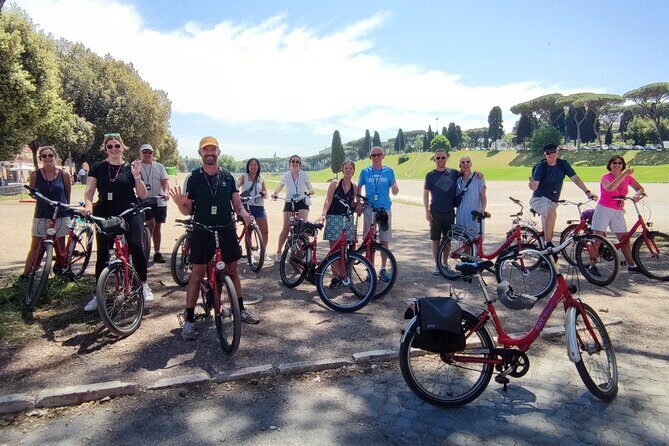
I love how the tour gives you an instant overview of Rome, from the Jewish Ghetto to the big imperial landmarks, all in about 3 hours. I also like the small-group vibe (max 14) and the humor-and-stories style guides bring, whether you get Daniele, Nico/Niko, Stefano, or Elena.
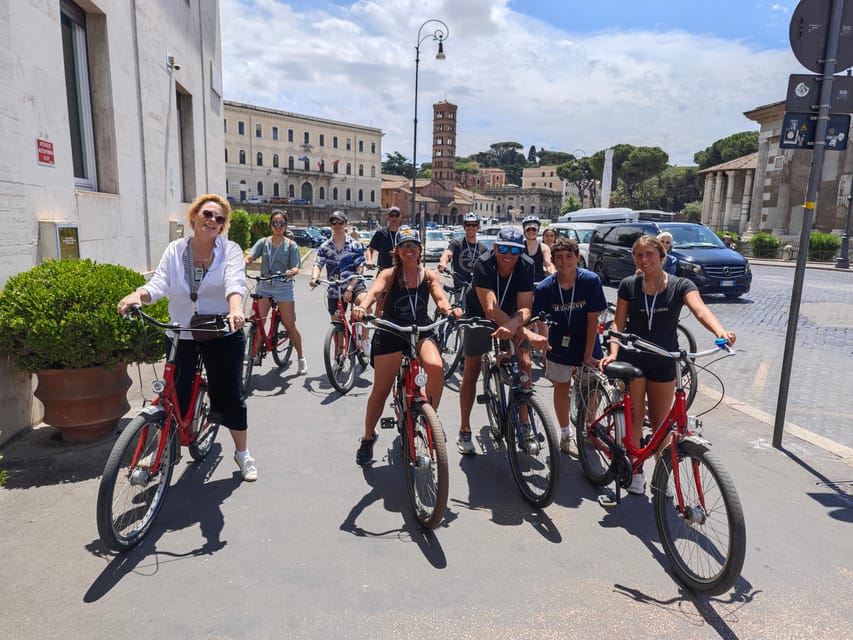
The practical plus is that biking keeps you moving, while you still get short stops to look, take photos, and ask questions. I love that you get bike support details like a helmet plus a front bike pouch and back rack for your stuff. One thing to consider: Rome’s cobblestones and traffic mean this is best done when you’re comfortable riding in a group.
In This Review
- Key Things to Know Before You Ride
- Why This Rome Bike Tour Hits the Sweet Spot
- Meeting at Via dei Delfini: What the Start Feels Like
- Choosing Your Bike Pace (Without Overthinking It)
- Stop 1: Antico Quartiere Ebraico (Rome’s Jewish Ghetto)
- Stop 2: Navona, Pantheon Area, and Campo de’ Fiori
- Stop 3: Piazza Navona and the Stadium Footprint
- Stop 4: Pantheon—Why Architects Still Can’t Ignore It
- Stop 5: Chiesa di Sant’Ignazio di Loyola (Outside Views and Stories)
- Stop 6: Tempio di Adriano (Hadrian’s Temple)
- Stop 7: Trevi Fountain—The Vergine Aqueduct in Motion
- Stop 8: Trajan’s Forum (and the Imperial Forums)
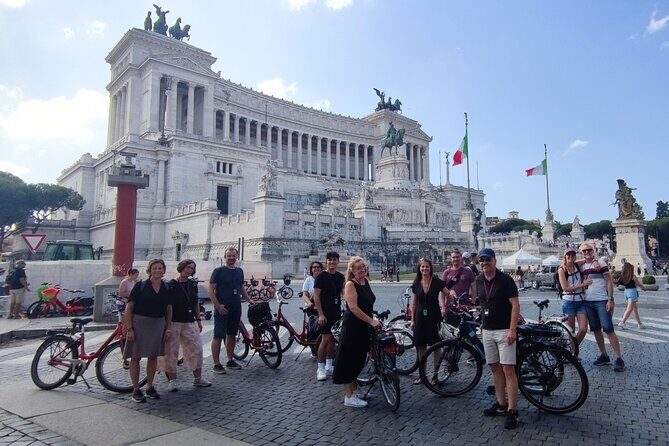
- Stop 9: Piazza Venezia and Ancient City Layers
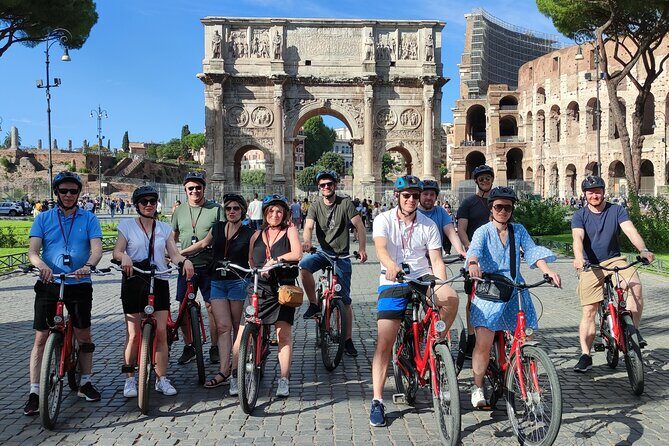
- Stop 10: Arch of Constantine—Propaganda Written in Stone
- Stop 11: Circus Maximus—Mass Entertainment Where Rome Began to Roar
- Safety and Real-Life Riding in Rome Traffic
- Tour Value: What You Pay for (and What You Still Need to Budget)
- Guides: When the Storytelling Is the Main Attraction
- Who This Tour Is Best For
- Should You Book This Rome Bike Tour?
- FAQ
- FAQ
- How long is the Rome Bike Tour?
- What’s included in the ticket price?
- Are entrance tickets included for stops like the Pantheon?
- Where do we meet for the tour?
- Is it okay to bring children?
- Can I cancel for a full refund?
Key Things to Know Before You Ride
- Small group, max 14: more attention, less waiting around.
- Helmets + bike storage: front pouch and rear rack for bags and essentials.
- An ideal “first Rome” sweep: ghetto, Baroque squares, Pantheon area, Trevi, and the forums/imperial core.
- Flat effort, uneven surfaces: easy pedaling, but expect cobbles and crowded streets.
- Some entries aren’t included: Pantheon’s ticket isn’t part of the price.
Why This Rome Bike Tour Hits the Sweet Spot
If Rome is on your list, you need two things fast: context and comfort. This tour is built for both. In roughly three hours, you get a guided route that stitches together major eras—ancient Rome, then Baroque Rome, then the more modern monumental look of Piazza Venezia—without turning it into a marathon.
What makes it work is the rhythm. You bike between stops instead of walking blocks and blocks in the heat. Then, you pause long enough to actually orient yourself: where you are, what you’re seeing, and why it mattered. For first-timers, that kind of framing is gold. It’s also a nice reset if you’ve just arrived and your legs need a gentle “let’s go” after travel.
And since it’s a small group, the guide can keep an eye on spacing and pacing. You feel looked after, especially when you’re riding through narrow streets and around crowds.
You can also read our reviews of more cycling tours in Rome
Meeting at Via dei Delfini: What the Start Feels Like
Your tour begins at Via dei Delfini 35 (00186 Roma). Plan to arrive about 15 minutes early. That buffer matters because you’ll need a bit of time to grab your bike, get fitted, and get briefed on the ride rules—especially important in city traffic.
At the start, you’ll get:
- Bike rental (choose the bike style that fits your pace/budget)
- Helmet
- Front bike pouch and back rack (handy for phones, small bags, and what you don’t want bouncing around in your hands)
The tour runs in English. That’s a simple detail, but it matters when a guide is sharing stories tied to what you’re looking at—so you can actually follow along instead of catching only fragments.
Choosing Your Bike Pace (Without Overthinking It)
The tour is designed so you can find a bike that suits you. The goal isn’t racing. It’s steady movement with regular short stops. One reason people love this kind of Rome intro is that you get to see a lot without feeling wrecked.
Some riders say they didn’t need extra help because Rome is mostly flat. Others like having the option of an easier assist on rough patches or longer stretches. My practical advice: if you’re unsure about your stamina, pick the easier setup. You’ll enjoy the sights more when you’re not secretly calculating how many hills you can survive.
Either way, cobblestones are the real challenge, not distance. Even when pedaling feels manageable, the surface can be bumpy and slick if it’s wet.
Stop 1: Antico Quartiere Ebraico (Rome’s Jewish Ghetto)
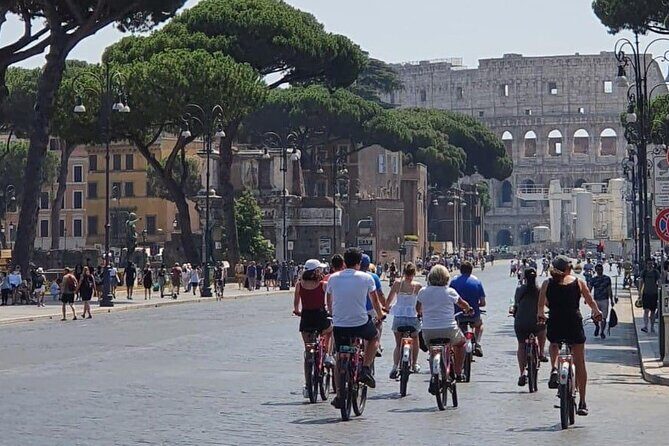
Your first big theme is Rome beyond the usual brochure sights: the Jewish Ghetto. This neighborhood is often described as one of the oldest in the world, created in 1555 on order of Pope Paul IV. It wasn’t just a place on a map—it came with rules, including the obligation to live there and carry a distinctive sign of community belonging.
In practical terms, this stop works as a tone-setter. Instead of jumping straight into grand monuments, you start with a human story. You’ll see how layers of religious and cultural life shaped the city’s streets, and you’ll come away with a deeper sense of why Rome’s history isn’t only about emperors and ruins.
Stop 2: Navona, Pantheon Area, and Campo de’ Fiori
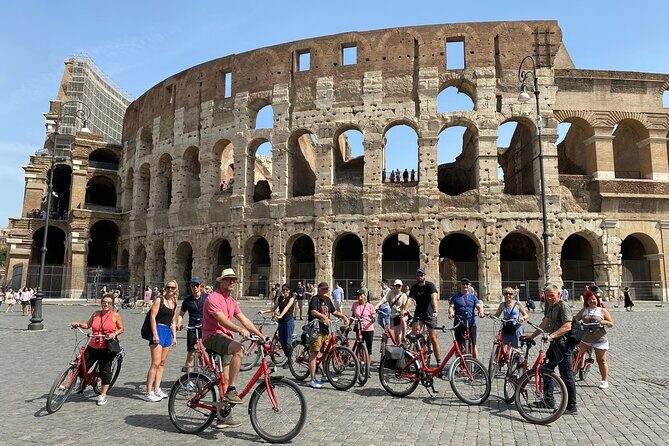
This is where the tour starts to feel like you’re riding through postcards—but with context. Campo de’ Fiori is a key square, lively in daylight with its market energy, then livelier still at night when terraces fill up. It’s the kind of place where Rome feels social, not just ancient.
From there, you head toward Piazza Navona and the broader area around the Pantheon. This section is about recognizing architectural “clues.” Baroque Rome can look dramatic, even when you don’t know exactly what you’re looking at. A good guide helps you notice patterns: the way squares form, how buildings frame streets, and how the city reuses older footprints.






Stop 3: Piazza Navona and the Stadium Footprint
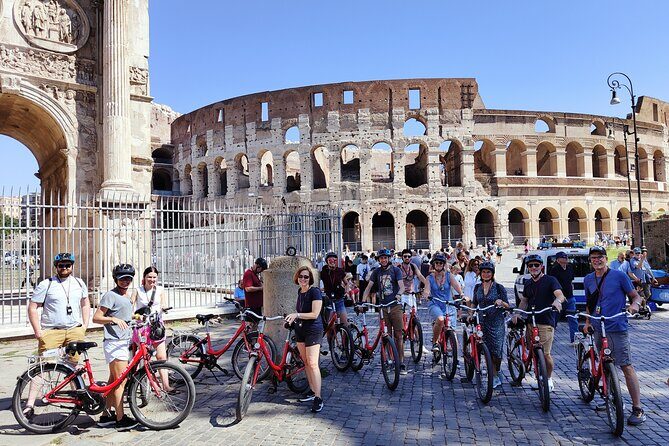
Piazza Navona is one of the most characteristic squares of Baroque Rome. The mind-bending detail is that its current shape traces an earlier world: the perimeter matches the ancient Stadium of Domitian. That stadium was built in 86 AD for athletics competitions and horse racing.
What you should do during your short stop: look at the geometry. Even if you’re not an architecture person, the shape helps you understand why the square feels the way it does. It’s a reminder that Rome loves reusing space—old systems become new layouts, and the city keeps building over itself.
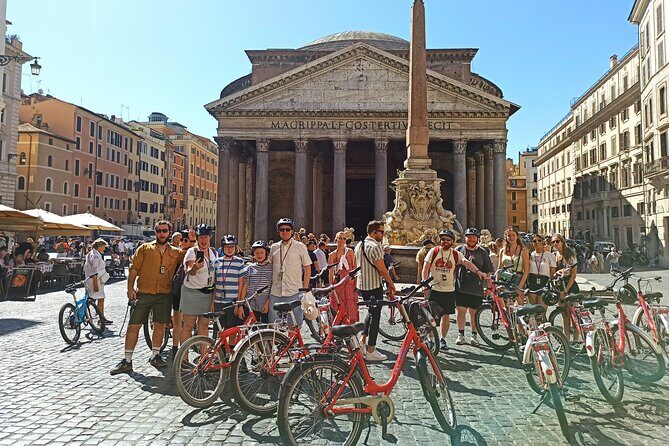
Stop 4: Pantheon—Why Architects Still Can’t Ignore It
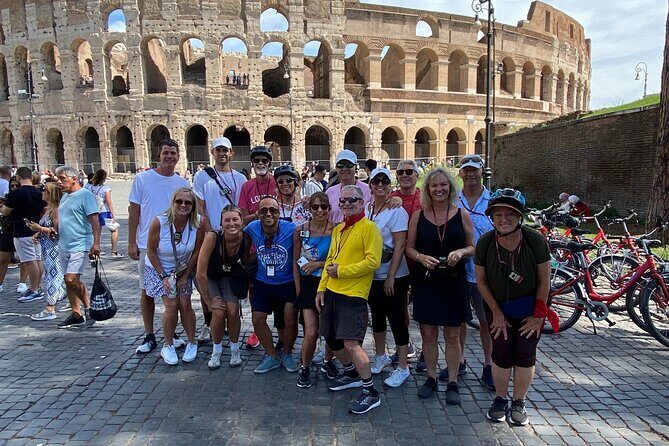
The Pantheon earns its status for a reason: harmony and proportion. You’ll hear how its design became a reference point for architects across centuries. The story tied to its commissioning goes back to 27 BC, when Marcus Vipsanius Agrippa commissioned a temple dedicated to all the gods.
This is also a great moment to decide how you want to spend your time. Some tours only point and move on. This one gives you a real stop. If you want to go inside, you should plan on handling the entrance ticket separately (it’s not included). If you prefer to stay outside, you’ll still leave with a clear sense of what makes the building special.
Stop 5: Chiesa di Sant’Ignazio di Loyola (Outside Views and Stories)
Sant’Ignazio di Loyola is handled as an outside viewpoint: you’ll get explanations and photos from outside rather than a full interior visit. That’s actually a smart use of time. Churches can take a lot longer than you expect, and Rome traffic doesn’t care about your schedule.
During this stop, listen for the details a guide focuses on. Even from outside, you can often pick up what the church is trying to do visually—how it uses style to communicate power and faith.
Stop 6: Tempio di Adriano (Hadrian’s Temple)
Next comes the Tempio di Adriano, connected to Emperor Hadrian. The building was likely commissioned to honor Hadrian’s wife, Vibia Sabina, who was deified after her death in 136. Works were finished around 145 A.D., credited to Hadrian’s successor, Antoninus Pius.
This stop is a good reminder of something Rome does constantly: it turns personal stories into public monuments. If you like the human side of empire—who’s remembered, how, and why—this is one of the most satisfying pauses.
Stop 7: Trevi Fountain—The Vergine Aqueduct in Motion
Trevi Fountain is famous for a reason, but the tour also gives you something beyond the usual postcard. You’ll learn how it connects to the terminal part of the Vergine aqueduct, and how it’s still used in a living way compared to many ancient aqueducts.
During your brief stop, don’t stress about a perfect photo. Use the time to understand the setting: where water comes from, why fountains became social landmarks, and how Rome built spectacle into daily infrastructure.
Stop 8: Trajan’s Forum (and the Imperial Forums)
Trajan’s Forum is one of the most interesting “big picture” stops because it helps you see how the center of power worked. You’ll get views and explanation of both the Trajan’s Forum and the Imperial Forum area.
This is a great place to pause for 10/10 orientation. Once you see the forums’ layout, the city’s later development makes more sense. You start to notice how Rome’s modern streets often trace older patterns—sometimes directly, sometimes indirectly.
Stop 9: Piazza Venezia and Ancient City Layers
Piazza Venezia sits between Via del Corso and Via dei Fori Imperiali. Its current form comes from renovations in the 19th and 20th centuries linked to the Monumento a Vittorio Emanuele II.
This stop is useful because it shows Rome isn’t stuck in the past. The city’s “ancient core” is still wrapped in later political ambition and monumental design. If you only visit classical ruins, Rome can feel frozen in time. This moment helps you see the timeline instead.
Stop 10: Arch of Constantine—Propaganda Written in Stone
The Arch of Constantine marks the triumph of Constantine over Maxentius on October 28, 312 A.D. It’s also described as a synthesis of Constantinian-era ideological propaganda.
A practical way to appreciate it: look at how arches work. They aren’t just decoration. They were built to declare victory and shape public memory. A guide’s explanation makes that feel less abstract and more real.
Stop 11: Circus Maximus—Mass Entertainment Where Rome Began to Roar
Circus Maximus is the largest public entertainment building in antiquity, and one of the largest ever. It’s massive by measurements and powerful by legend: it’s tied to the origin story of Rome, including the Rape of the Sabine Women.
When you’re standing near it, your brain has to switch into “scale mode.” Even if you don’t fully picture the races, you’ll feel the idea: crowds, spectacle, and political messaging. It’s a fitting closing chapter for a tour that began with cultural identity and moved through imperial power.
Safety and Real-Life Riding in Rome Traffic
Rome bike tours can sound scary in theory and less scary in practice. Most riders describe the ride as safe, with guides keeping the group together and often stopping to make sure no one is left behind.
Still, you should know the real risks:
- Cobblestones can be uneven and sometimes slick
- Traffic can be tight, especially on narrow streets
- Crowds can get chaotic quickly
One smart tip: if you can choose your day, aim for a morning or earlier slot. Friday evenings can be especially crowded, and it can make streets busier than you want during a bike tour.
Also, hearing can be imperfect while riding. Some people find headsets a bit hard to catch over motion and street noise. The fix is simple: pause-and-listen at stops, and don’t rely only on bike-time audio.
Tour Value: What You Pay for (and What You Still Need to Budget)
At $54.44 per person for about 3 hours, the value comes from packing a lot of high-demand Rome sights into one guided loop. You’re not paying for one monument—you’re paying for orientation across multiple areas, plus bike logistics handled for you.
Included items help you avoid extra spending and hassle:
- Bike rental
- Helmet
- Bike bag system (front pouch and back rack)
- A local guide
What’s not included:
- Drinks
- Some entrance tickets (notably Pantheon, and the tour notes that certain stops don’t include ticketing)
The “free vs not included” pattern can matter for budgeting. Trevi Fountain, Trajan’s Forum/Imperial Forums views, Arch of Constantine, and Circus Maximus are part of the route without ticket cost. Pantheon is not included, so if you want to go inside, add that to your day plan.
Guides: When the Storytelling Is the Main Attraction
The biggest reason this tour earns near-perfect ratings isn’t the bikes—it’s the guides. You’ll hear lots of small, human details tied to each stop. Names that show up in past groups include Daniele, Nico/Niko, Stefano, Mat/Matt, Marika, Sahrah, Elena, Arvin, and Elainia.
The best guides do two things well:
1) Keep the group moving without panic.
2) Give just enough depth so you leave with clearer mental pictures.
A small caution: not every guide has the same style or depth. If you’re the kind of traveler who wants a long, academic breakdown at each ruin, you might find the pacing too light. But if you want a focused overview that’s easy to follow and enjoyable to ride, it’s usually a strong match.
Who This Tour Is Best For
This is ideal for:
- First-time visitors who want a fast, guided sense of where Rome’s key sights fit together
- Travelers who prefer riding over long stretches of walking
- People who like history explained in plain language tied to real streets
It can be less ideal if:
- You’re not comfortable riding in a group
- You get nervous around cars and crowded corners
- You’re pregnant, since cobbled streets make bike tours strongly discouraged
Families: kids are welcome if they’ve been riding for a while and can manage navigating different surfaces in a group. Include your child’s height when reserving so you get the correct bike size. That said, it’s not recommended for children aged 1 and under, and anyone under 18 must be accompanied by an adult.
Should You Book This Rome Bike Tour?
If you’re doing Rome for the first time and you want a high-effort-to-effort ratio, I’d book it. You’ll get a clear overview across major zones—Jewish Ghetto, Campo de’ Fiori, Piazza Navona, the Pantheon area, Trevi, imperial monuments—and you’ll still have time to explore longer later on your own.
Skip it only if your priorities are strictly inside-access and deep, academic digging at every stop. This tour is built for movement, orientation, and short guided moments that make the big sights click.
FAQ
FAQ
How long is the Rome Bike Tour?
The tour runs about 3 hours.
What’s included in the ticket price?
You get a local guide, bike rental, a helmet, and a front bike pouch plus a back rack.
Are entrance tickets included for stops like the Pantheon?
Some stops are listed as free admission, while others are not included. The Pantheon stop, for example, has admission not included.
Where do we meet for the tour?
You meet at Via dei Delfini, 35, 00186 Roma RM, Italy. The tour ends back at the meeting point.
Is it okay to bring children?
Kids are welcome if they can already ride, can handle group riding on various surfaces, and you include their height to reserve the correct bike size. Everyone under 18 must be accompanied by an adult, and it’s not recommended for children aged 1 and under.
Can I cancel for a full refund?
Yes. You can cancel for free up to 24 hours in advance for a full refund. If you cancel less than 24 hours before the start time, the amount paid won’t be refunded.