REVIEW · COLOSSEUM TOURS
Rome: Colosseum and Ancient Rome Guided Walking Tour
Book on GetYourGuide →Operated by Know my City · Bookable on GetYourGuide
Three stops, one walk through power. In about 2.5 hours, you move from the Colosseum to the Roman Forum and up to the Palatine Hill Terrace, with a live guide putting the stones into context. One heads-up: on busy days, you may still queue for the metal detector check even with skip-the-line entry.
I like that the tour includes headsets, so you can hear your guide clearly without craning your neck. In strong past runs, guides like Alessandra and David have been praised for mixing sharp facts with humor, plus keeping time for questions at major points.
Wear comfortable shoes and expect real walking on ancient surfaces. It is not the right pick if you use a wheelchair or need mobility support, since the route is geared for people who can keep moving.
In This Review
- Quick hits you’ll feel on the ground
- What You Really Get in 2.5 Hours: Colosseum to Palatine Hill
- Meeting Point Reality and the Metal Detector Check
- Inside the Colosseum: How the Guide Brings the Arena to Life
- Roman Forum: Rome’s Civic Center, Explained as You Walk
- Palatine Hill and the Terrace Views: Imperial Power in Plain Sight
- What Makes the Guide Experience So Highly Rated
- Value at $58: When a Guided Day Beats DIY
- Who This Tour Is Best For, and Who Should Rethink It
- Should You Book This Colosseum and Ancient Rome Walking Tour?
- FAQ
- How long is the Rome Colosseum and Ancient Rome guided walking tour?
- Which ancient sites are included?
- Does the price include tickets and a guide?
- Is skip-the-line access included?
- What languages are the tours offered in?
- Where do I meet the tour, and where does it end?
- What should I bring for the tour?
- Is the tour suitable for wheelchair users or limited mobility?
Quick hits you’ll feel on the ground
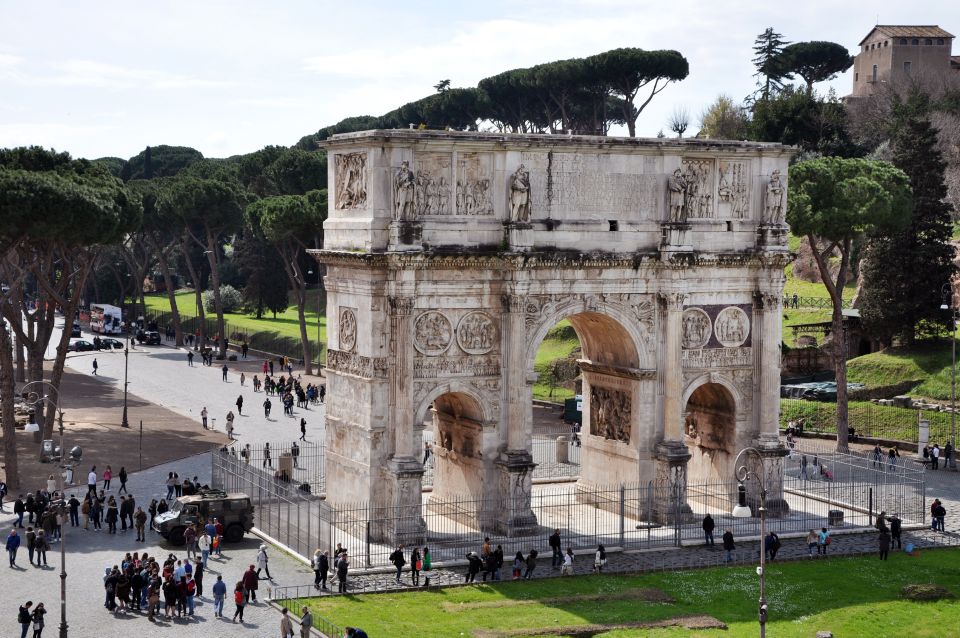
- Skip-the-line entry tickets are included, but the metal detector security line can still slow you on peak days
- Headsets help you hear the guide over crowd noise
- 75 minutes at the Colosseum gives time for the key views inside
- Roman Forum (45 minutes) focuses on Rome’s civic core, not just walls and columns
- Palatine Hill Terrace (45 minutes) adds high-value panoramic views and imperial context
- Guides with humor and Q&A are a big part of why the tour earns a high rating
What You Really Get in 2.5 Hours: Colosseum to Palatine Hill
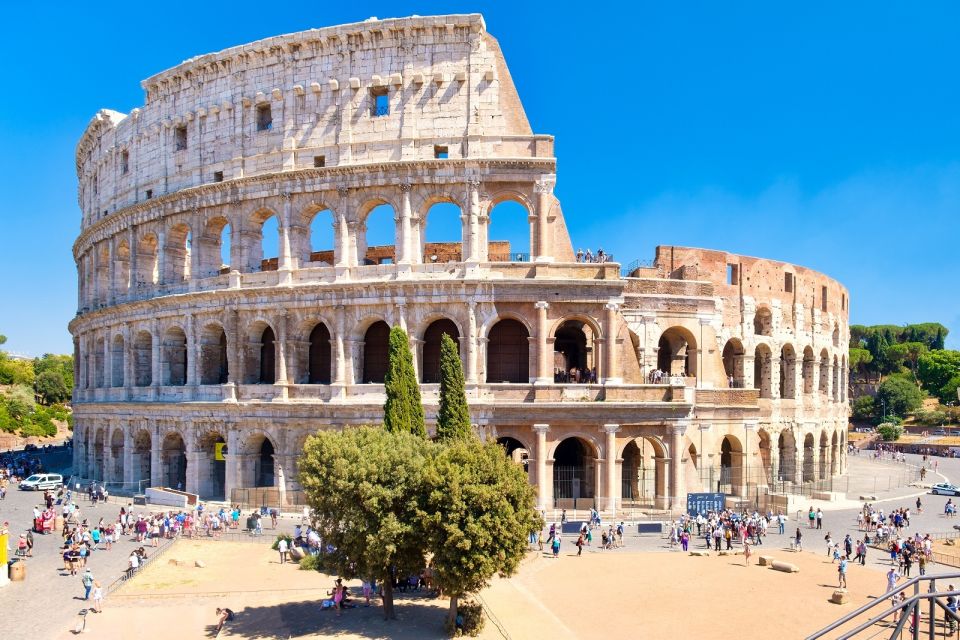
This is one of those Rome tours that saves you from the usual problem: standing in front of ruins that look impressive but don’t automatically make sense. The format is simple. You get guided time at three big hitters: the Colosseum, the Roman Forum, and Palatine Hill.
At a price of $58 per person, the value comes from what’s wrapped in. You’re not just paying for a guide’s storytelling. Your ticketing for the Colosseum, Roman Forum, and Palatine Hill is included, and you also get headsets so you can actually follow along. That matters, because ancient Rome sites are crowded and sound carries poorly in open-air spaces.
You should also expect a tour built around pacing and comprehension. There’s time for explanation at each stop, then a chance to look around before you move on. You will come away with mental pictures of how the parts connect: public politics and religion at the Forum, elite power on Palatine Hill, and mass entertainment at the Colosseum.
One more practical point: the order can shift. The plan you see may swap so you hit the Roman Forum and Palatine Hill before the Colosseum. That’s not a red flag. It just means you should stay flexible and listen when staff confirm the route at the meeting point.
You can also read our reviews of more walking tours in Rome



Meeting Point Reality and the Metal Detector Check

Meeting point details can vary depending on the option you book, and the listed starting address is L.go Gaetana Agnesi, 5. Since the exact location can be tricky to spot, I’d plan to arrive a bit early. Give yourself time to find the group and settle before security.
Here’s the big logistics issue, and it’s worth knowing up front. Even though the tour includes skip-the-line tickets, you still have to pass through a metal detector security check to enter the Colosseum. On busy days, there can be a queue for that scan. In practice, that means your experience can be smooth one day and slower the next, depending on crowd levels.
A few other do-not-bring items are listed, which is helpful if you’re packing light or traveling with a bag. Avoid weapons or sharp objects, and don’t bring luggage or large bags. Drones and selfie sticks are also not allowed. You should also skip alcohol and drugs, and avoid sprays or aerosols.
The tone of this tour is also set by the included headsets. When groups bunch up, you won’t be forced to play guessing games. Instead, you can stay oriented and keep listening while staff manage entry flow.
Inside the Colosseum: How the Guide Brings the Arena to Life
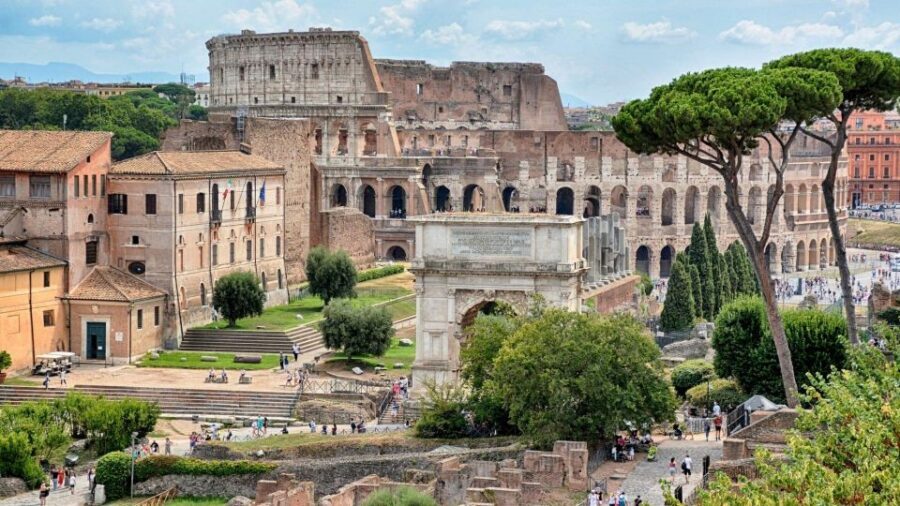
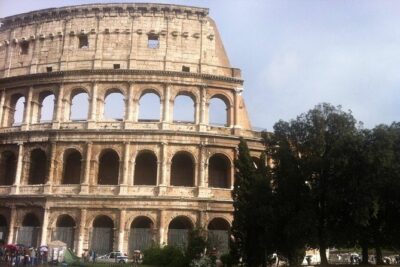
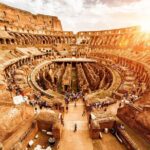
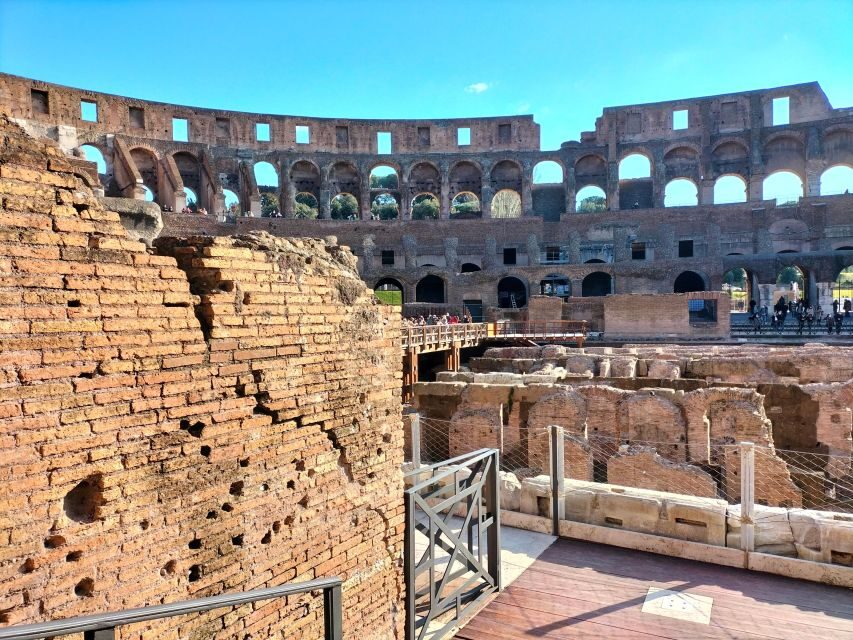
The Colosseum is the star attraction, and the tour gives it real time, not a quick photo stop. Expect about 75 minutes for the Colosseum visit with live commentary throughout.
This is where a guide earns their keep. Yes, the structure is massive on its own. But the explanations turn the place into something you can visualize. You’ll get context for what you’re looking at, then a guided walk that helps you connect the architecture to the spectacle.
You can also plan for a specific kind of viewpoint. While you’re on the first floor level, you’ll take in sweeping views that would have been familiar to spectators in the arena’s heyday. That’s a high-value moment because it helps your brain stop treating the Colosseum like a single wall. You start seeing levels, sight lines, and the sense of crowd energy.
What makes the guide experience stand out is the delivery style. Past guides you might encounter, including Alessandra, Alexandra, Radu, Ragu, and David, have been praised for being engaging and a bit funny, while still staying on topic. Several guests noted humor and clear explanation, and that combination is exactly what keeps a 75-minute indoor/outdoor walk from feeling like a lecture.
You’ll also notice a practical rhythm. Some guides provide short breaks so you can look around and take pictures without feeling rushed. If you enjoy asking questions, this is usually a good setup, since Q&A is part of the format and not something you tack on at the end.
Roman Forum: Rome’s Civic Center, Explained as You Walk
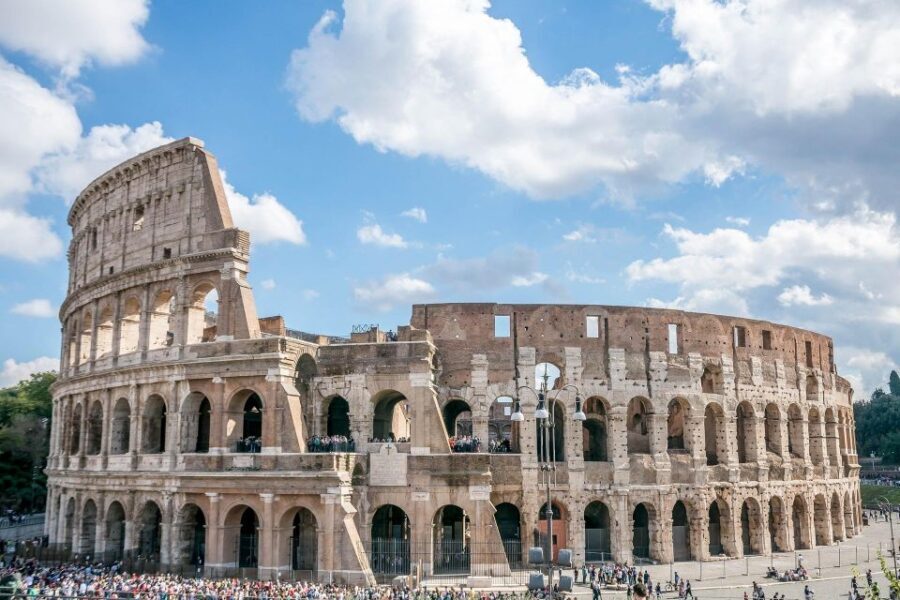
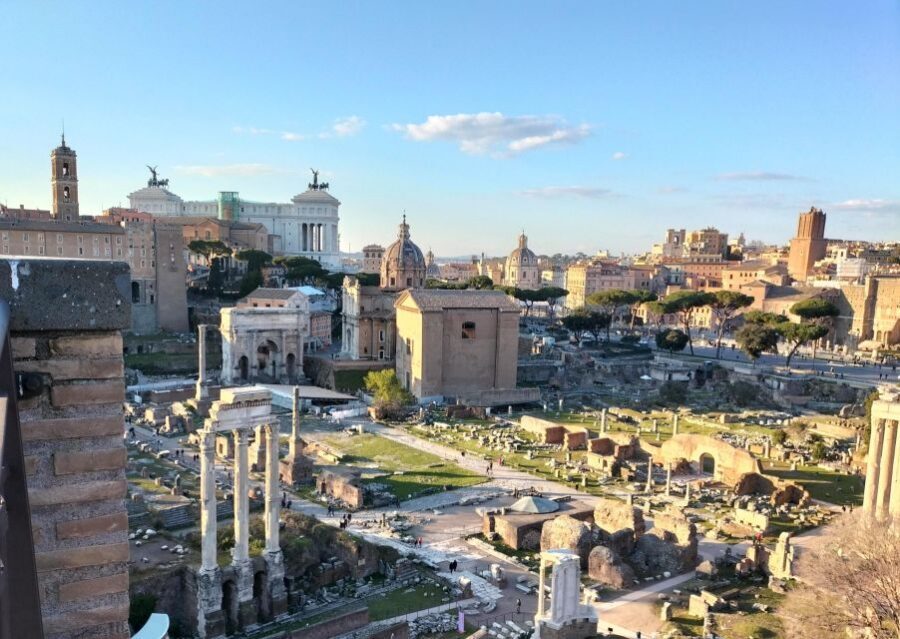
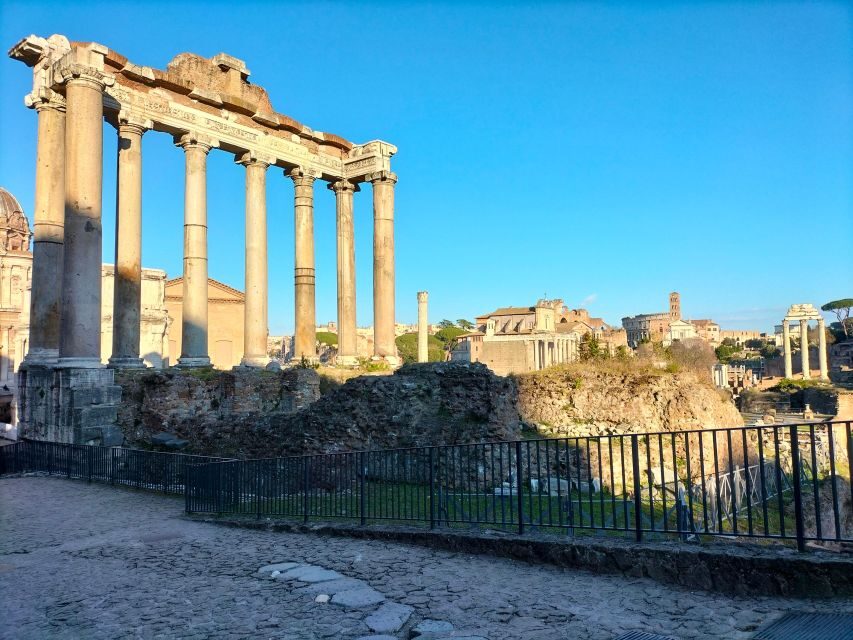
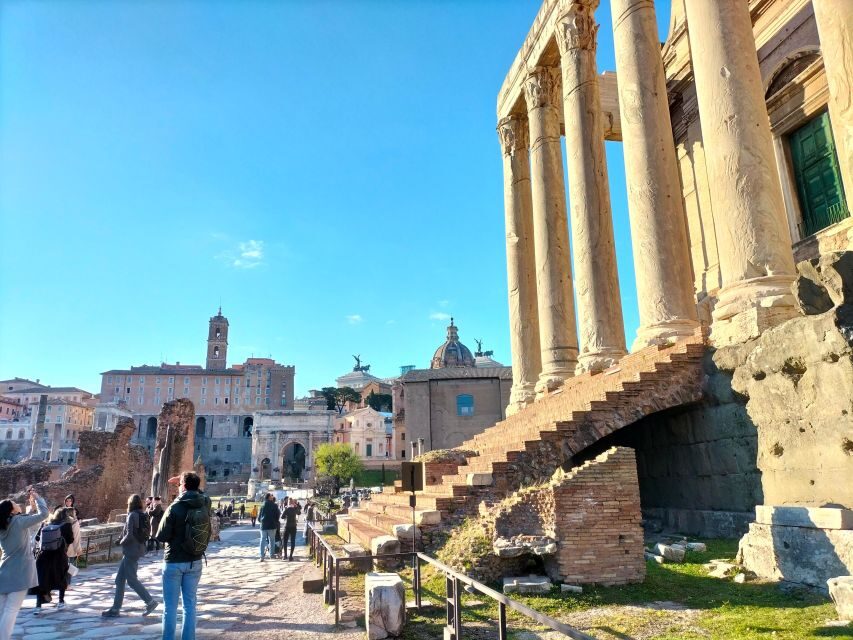
After the Colosseum, the tour shifts from spectacle to civic life. You head to the Roman Forum for about 45 minutes, and the goal is to show how this space worked in real time.
The Forum can be confusing if you’re just reading signs. It’s easy to get lost in fragments. A good guide fixes that by walking you through what each area represented and how the setting fit the daily flow of Roman public life.
Expect stories tied to political authority and public institutions. You’re not only looking at columns and broken stone. You’re hearing what decisions happened here, who mattered, and why the Forum was considered the heart of ancient Rome. That framing is what makes the walking meaningful.
In terms of experience, the headset makes a big difference again. The Forum area is open and noisy, and people naturally drift toward photo angles. With headsets, you stay anchored to the guide’s route and don’t lose the storyline when the crowd shifts.
One more thing I like about this stop: it tends to make the rest of the day click. After you’ve seen the Colosseum’s entertainment scale, the Forum shows the political engine behind it. Then Palatine Hill gives you the top-of-the-system viewpoint.
Palatine Hill and the Terrace Views: Imperial Power in Plain Sight
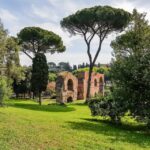
Palatine Hill is a must if you want to understand Roman rule beyond the battlefield. On this tour, you get about 45 minutes here, plus the Palatine Hill Terrace for panoramas.
The best part of Palatine Hill is that it’s not just ruins. It’s a place where you can feel proximity to power. You’ll walk through the remains connected to emperors and elite residences. The guide helps you interpret what you’re seeing, so the site feels like a living map of authority rather than a pile of stone.
The terrace views are a practical payoff. Standing where you can see modern Rome spread out, you get a sense of how the ancient spaces relate to the city you’re in today. That orientation makes your photos better, but it also improves your understanding while you’re there.
Some guides also add visual aids. One guest highlighted that their guide used before-and-after pictures to show how parts of the Palatine and Colosseum looked in the past. That kind of visual support can be a game changer, especially if your brain struggles with reconstructing what used to be whole.
And yes, humor helps here too. Guides praised for wit and entertaining storytelling often do it without skipping key points. That’s important on Palatine, because the area rewards attention. If you’re scanning silently on your own, it can feel repetitive. With a guide, it turns into a clear story of how rulers lived and how the city organized itself around that rule.
You can also read our reviews of more guided tours in Rome




What Makes the Guide Experience So Highly Rated
This tour’s reputation is heavily tied to guide performance. The standout patterns show up again and again: humor, clarity, and staying engaged with questions.
You may see different names depending on the day and language group. Past guides mentioned in bookings include Alessandra, Radu, David, Frederica, Eni, Ken, Arian, and Adriano. The common thread is that they don’t just recite facts. They help you see.
Several guests pointed out that guides used humor to keep things light, sometimes even a bit provocative, while still delivering accurate context. Others noted that the guides encouraged questions and answered them in a way that made the history stick.
There’s also a safety and flow element. One review mentioned how the guide kept the group organized and ensured people were safe while queuing and moving between stops. That’s not glamorous, but it matters. At the Colosseum and Forum, the crowd pressure is real. A strong guide keeps it from turning into a shuffle.
If you want the best odds of getting that great storytelling vibe, show up ready to listen. Bring water if you’re permitted in that moment (the data doesn’t list it, so follow local guidance), wear shoes that won’t slip, and keep your questions brief so the group doesn’t fall behind.
Value at $58: When a Guided Day Beats DIY
Sure, you can visit the Colosseum, Roman Forum, and Palatine Hill on your own. But DIY often has two weaknesses.
First, the sites are huge. Without a guide, you can spend time walking and photo hunting while missing the meaning of what you’re seeing. Second, the sound problem is real. Even with a walking pace you can control, figuring out what matters and what it meant is harder when you’re alone.
This tour attacks both issues with headsets and guided explanations. It also includes the key entry tickets for the sites you visit. So you’re paying for a packaged experience, not just a walking lecture.
At $58 for 2.5 hours, it’s also a practical choice if you have limited time in Rome. Three major sites in one outing helps you avoid the common trap of splitting them across multiple days, then spending the best energy getting through logistics and queuing instead of learning.
Is it the cheapest option? Maybe not. But if you value understanding over just checking boxes, the guide content and included tickets make the math feel fair.
Who This Tour Is Best For, and Who Should Rethink It
This is an excellent fit if you’re:
- A first-timer to Rome who wants the big ancient hits in one shot
- Someone who likes explanations that connect sites, not just standalone facts
- Traveling with kids or group members who need a narrative thread to stay engaged
It’s not a good fit if you have mobility challenges that prevent long walks or uneven surfaces. The tour is explicitly not suitable for people with mobility impairments or for wheelchair users.
If you know you’ll walk happily and listen closely, this outing is one of the most efficient ways to understand ancient Rome’s power system. You’ll see the entertainment engine, the political heart, and the elite residences, all in a coherent day arc.
Should You Book This Colosseum and Ancient Rome Walking Tour?
Yes, if your goal is meaning as much as it is sightseeing. The combination of Colosseum time, guided stops at the Roman Forum and Palatine Hill, and the included headsets makes this a strong choice for many visitors.
Book it with eyes open on two points. First, security lines can still happen at the Colosseum due to the metal detector check. Second, the route is not designed for wheelchairs or reduced mobility.
If you want a short, high-impact ancient Rome experience where you come away feeling oriented and informed, this is a solid bet.
FAQ
How long is the Rome Colosseum and Ancient Rome guided walking tour?
The tour lasts about 2.5 hours.
Which ancient sites are included?
You visit the Colosseum, the Roman Forum, and Palatine Hill.
Does the price include tickets and a guide?
Yes. Entry tickets for the Colosseum, Roman Forum, and Palatine Hill are included, along with a live tour guide and headsets.
Is skip-the-line access included?
Skip-the-line tickets are included, but you still must pass through a metal detector security check. On busy days, that can involve a queue.
What languages are the tours offered in?
The live guide is available in Spanish, English, German, and French.
Where do I meet the tour, and where does it end?
The meeting point may vary by option booked. Drop-off locations include Roman Forum and Via della Salara Vecchia, 5.
What should I bring for the tour?
Bring a passport or ID card and wear comfortable shoes.
Is the tour suitable for wheelchair users or limited mobility?
No. The tour is not suitable for people with mobility impairments or wheelchair users.