REVIEW · NAPLES
Herculaneum Guided Group Tour from Naples
Book on Viator →Operated by Worldtours · Bookable on Viator
Buried cities can feel spooky. Herculaneum stays specific. It’s smaller than Pompeii, closer to Naples, and full of everyday details that survived when the eruption covered the town.
Two things I really like about this tour are the round-trip pickup by air-conditioned minibus and the live archaeological guide (English is offered, and you may still hear more than one language depending on the group). A possible drawback: the pace is tight, and the site walk plus the short indoor stops can feel a bit strenuous on a hot day or if you have mobility limits.
In This Review
- Key things to know before you go
- Getting to Herculaneum: Naples pickup and the 3-hour reality check
- Entering Parco Acheologico Di Ercolano: your main two-hour focus
- Casa dei Cervi: the House of the Deer in 15 minutes
- Casa del Bicentenario: a quick hit for how rooms were used
- Partem Domus lignea: sliding panels and the “small” design choices
- Entrance fees, skip-the-line, and what you should verify
- The guide experience: clear English, microphones, and names you might hear
- Crowds and comparisons: why Herculaneum can feel calmer than Pompeii
- Who should book this (and who should plan carefully)
- Bottom line: should you book this Herculaneum guided group tour?
- FAQ
- What’s the duration of the Herculaneum guided group tour from Naples?
- What’s the price per person?
- Is pickup from Naples included?
- What time does the tour start?
- Are the ruins visits guided?
- Is admission to Herculaneum included?
- Is lunch included?
- Does the tour operate in all weather?
- How many travelers can be on the tour?
- Is English available?
- Is there free cancellation?
Key things to know before you go
- Pickup + drop-off from Naples saves you from figuring out transit or renting a car
- Skip-the-line entry means more time at the ruins, fewer delays at the gate
- A real guided experience with a local archaeological guide when there are at least 6 people
- Small-group upgrade options can cut the crowding down further (as few as eight people, at extra cost)
- Short house stops give you highlights fast, but you won’t have unlimited time to linger everywhere
- A maximum of 40 travelers keeps it manageable compared with bigger coach tours
Getting to Herculaneum: Naples pickup and the 3-hour reality check
This is a “let someone else drive” kind of day. You start from Starhotels Terminus near Piazza Giuseppe Garibaldi, and the tour runs about 3 hours total including time on the road. If you want to see Herculaneum without spending your morning checking schedules or hunting for a bus, that’s a big value.
You’ll get the pickup time and instructions by email about 24 hours after booking. The tour collects people at multiple pick-up points in Naples, then begins and ends in Naples, so you’re not stuck trying to return from the ruins on your own. If you’re coming from a cruise, plan ahead and make sure you provided the name of your cruise as requested at booking.
One small practical note: the day can hinge on traffic. Naples can be slow, and the minibus driver has to thread through it with multiple stops. In the best cases you’ll leave on time and arrive relaxed; in the weaker cases, you may wait a little at the pickup stage before everyone’s onboard.
You can also read our reviews of more guided tours in Naples


Entering Parco Acheologico Di Ercolano: your main two-hour focus
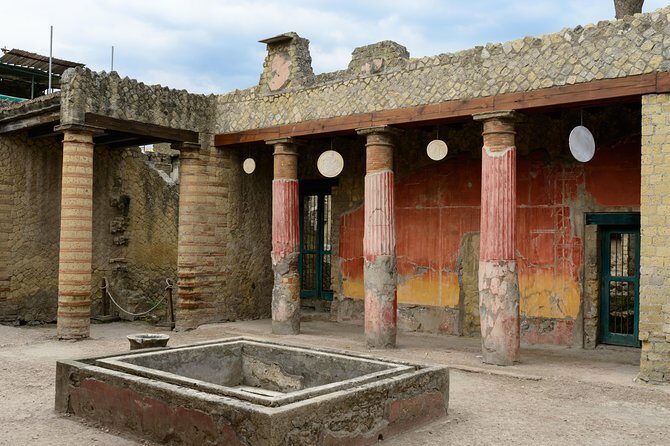
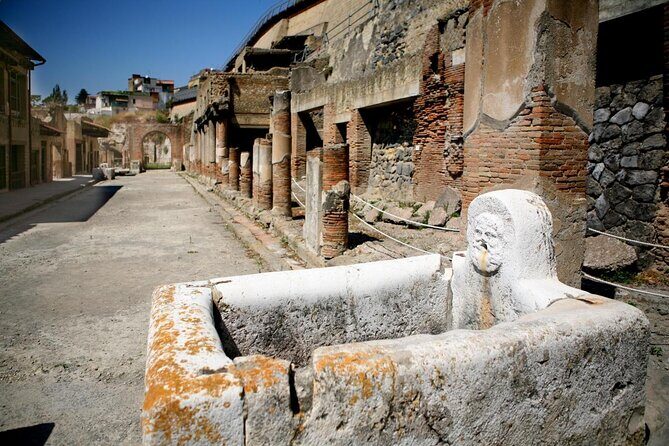
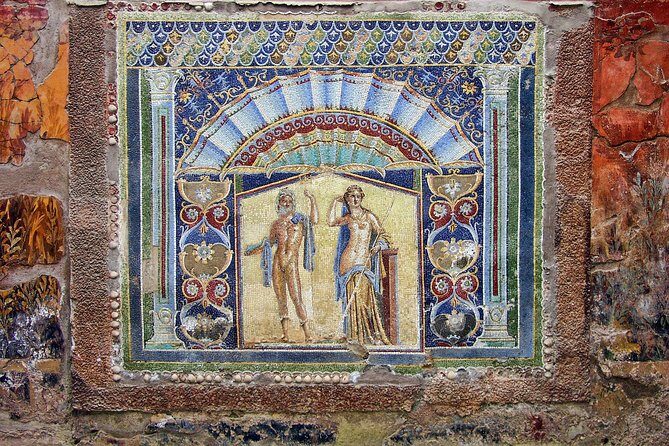
The heart of the visit is Parco Acheologico Di Ercolano, the main archaeological park for Herculaneum. Herculaneum was discovered in the 18th century, and it became internationally famous because so much of the town’s layout and materials survived under volcanic material.
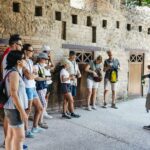
You get about two hours at the site, which is the right amount for a guided highlights route. Here’s the trick: Herculaneum works best when someone points out what you’re actually looking at—room shapes, construction styles, and how the eruption affected structures and objects. A good guide also connects the dots between the preserved items and daily life, not just dates and dates.
If you’ve done Pompeii already, you’ll likely notice the difference right away. Herculaneum feels more enclosed and “local,” because it’s tucked into a neighborhood-scale area and sits largely below the level of modern streets. That makes the experience feel tighter and often easier to manage in terms of crowds.
There’s also one thing to keep in mind when you’re staring at restoration work: some areas include visible reconstructions. One traveler specifically noted restored elements like added roofs, which can make a few parts feel a little less “purely uncovered.” It’s still worth seeing, just know that not everything is preserved exactly as it was in the ancient moment.
Casa dei Cervi: the House of the Deer in 15 minutes
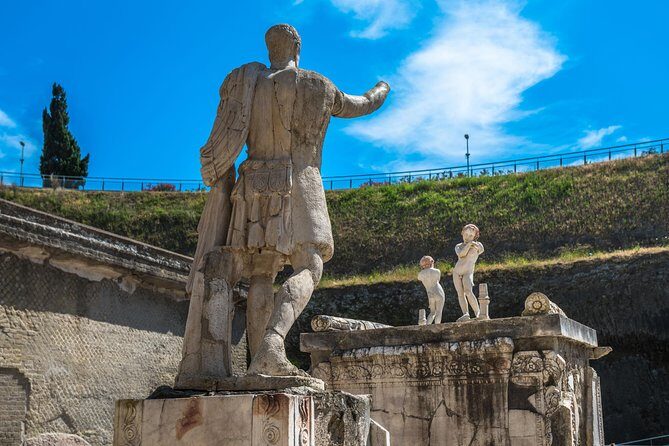
After the main park orientation, you jump into short “high-impact” stops. Casa dei Cervi, also called the House of the Deer, is one of those places where you can see how daily life shows up in details.
You only get about 15 minutes here, so the guide’s role matters. You’ll want them to explain what the deer motif is telling you and how interior features relate to social status and family routines. This is also where a microphone (or at least clear speaking) helps, because indoor spaces can swallow sound.
The benefit of this format is focus. You’re not wandering alone or distracted by your phone. You’re moving from point to point with just enough time to register the layout and then move on.
A consideration: if you’re the type who likes to sit and read every label, 15 minutes may feel fast. This is a highlights tour, not a slow museum stroll.
Casa del Bicentenario: a quick hit for how rooms were used
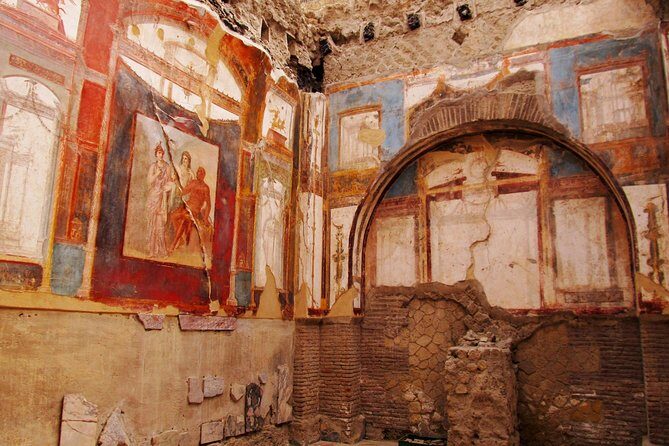
Next is Casa del Bicentenario. It’s another interior stop inside the excavated area, with about 10 minutes allocated. That short window can be frustrating if you want to study every surface, but it works if you’re listening for what changes between houses—small construction choices and room functions.
This is the kind of stop where you’ll get the most out of a strong guide. In past tours, guests have raved about guides like Lello, who explained history and archaeology clearly in English, and about Axel for keeping the timing tight and the content focused.
If you’re going in with a solid mental checklist—how rooms connect, what “public” vs “private” spaces might mean, and why certain artifacts survived—this short stop can still feel meaningful.
Partem Domus lignea: sliding panels and the “small” design choices
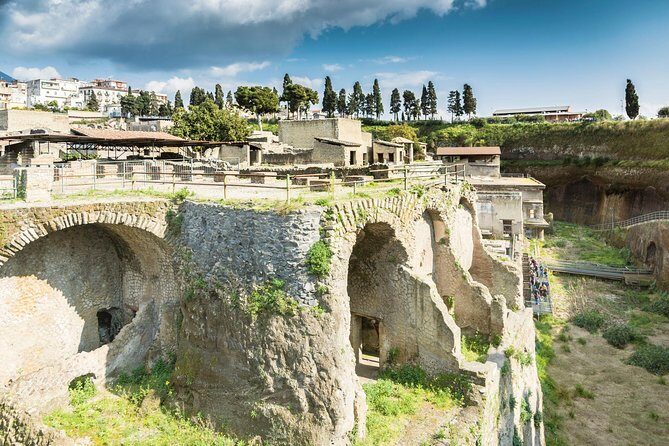
The final highlighted house stop is Partem Domus lignea, the so-called house with wooden sliding panels. You’ll have about 10 minutes for it.
Why does this matter? Because the survival of wood is unusual, and the presence of sliding elements points to how people controlled light, privacy, and airflow. This is where a guide’s explanation turns what looks like a wall feature into something you can actually imagine living with.
A practical tip: take your time getting your bearings when you arrive. Sliding-panel houses are easy to misunderstand if you don’t know what part is functional versus decorative. Ask a question if something feels confusing—many guides on this route seem happy to answer, and the experience improves when you’re not silently guessing.


Entrance fees, skip-the-line, and what you should verify
This tour package lists Herculaneum entrance fees and skip-the-line as included. That’s worth checking in your confirmation because the itinerary wording can be confusing at a glance, but the overall inclusions indicate you shouldn’t have to buy your main ticket on the day.
You’ll also get bottled water, which sounds basic until you’re out in the open and the day runs warm. One traveler noted it was around 98 degrees and felt that the two hours at the site was a bit long in those conditions. If you’re visiting in summer, go in expecting heat and plan accordingly.
Here’s the value angle: the money isn’t just paying for someone to point at stones. It’s paying for logistics—transport, timing, access, and a guided narrative that makes the site readable.
The guide experience: clear English, microphones, and names you might hear
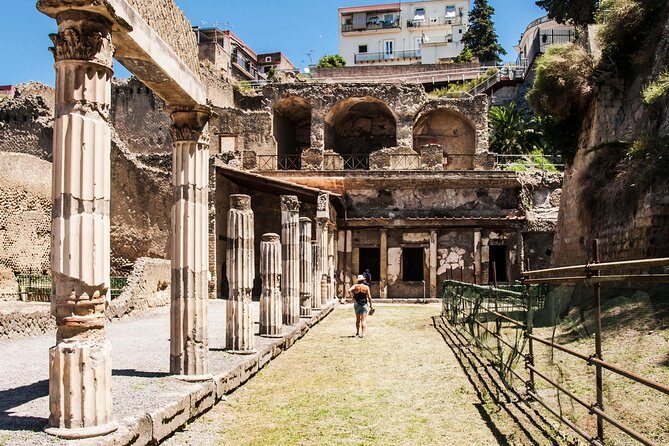
The guide quality is the make-or-break element on this kind of tour. When it clicks, you’ll feel like the ruins talk back. Multiple guests praised guides by name, including Lello, Carmen, Frederica, Rafaelo, Alessio, and Carmela. The common thread was clarity, good pacing, and the ability to answer questions.
But there are also caution flags. A couple of reviews complained about guides who were harder to understand, including one mention of a heavy accent and a lack of microphone/audio support. Others felt the group didn’t gather well before explanations, which can make you miss key context.
So what should you do? If you’re sensitive to audio, don’t sit too far back in the group. If the guide looks like they’re moving ahead, stay close so you’re not chasing the explanation. And bring your patience: this is a group format, and sometimes you’ll spend a few minutes “resetting” when the group moves between rooms.
If you want extra assurance, consider the small-group upgrade option. One review specifically loved the smaller setup because it reduced crowding inside structures and made it easier to see what the guide was talking about.
Crowds and comparisons: why Herculaneum can feel calmer than Pompeii
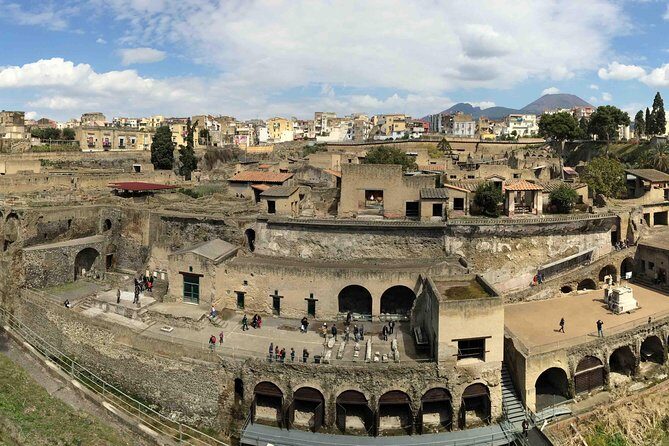
If you’re comparing against Pompeii, here’s the usual takeaway: Herculaneum is smaller and often easier to navigate. One traveler described it as much closer to Naples and noted that it can feel more “survived” in certain ways, with artifacts like jewelry and furniture preserved in ways that feel surprisingly familiar.
That smaller scale can reduce the chaotic “where do we stand” problems you can get at Pompeii. It also means a guided route can be more coherent because you’re not spending most of your time just trying to keep track of where the group is.
That said, you’re still visiting an active archaeological site in a working urban area. The experience depends on how your specific group and guide manage movement between indoor stops.
Who should book this (and who should plan carefully)
This tour is a strong fit if you want ancient Rome explained without the headache of self-transportation. It’s also a good choice if you like structured time blocks: two hours at the main park plus shorter highlights elsewhere.
It’s also great for people who want to avoid oversized crowds. With a maximum of 40 travelers, it tends to stay organized. And if you upgrade to a small group (as few as eight people), it can become much more interactive.
A possible mismatch: if you need a slower pace or have mobility limits, the site walk plus quick indoor viewing can feel strenuous. One guest flagged this exact issue and suggested that the tour may be challenging for anyone with mobility problems.
Also note that while the tour offers English, the group may end up multilingual in practice. If you’re booked for English-only and you strongly need it to be exclusively English, you may want to pay attention to how the operator confirms language setup closer to the date.
Bottom line: should you book this Herculaneum guided group tour?
If you’re visiting Naples and you want a guided route to Herculaneum without renting a car, I’d call this a good value. The package covers the hard parts: pickup/drop-off, air-conditioned transport, a local archaeological guide, bottled water, entrance access, and skip-the-line entry. You’re paying for convenience plus interpretation, not just transportation.
I’d book it if:
- You want a readable highlights route in about 3 hours
- You like guided explanation of preserved rooms and artifacts
- You prefer smaller-scale ruins compared with the biggest Pompeii crowds
I might think twice if:
- You’re extremely sensitive to audio clarity and hate when guides don’t use microphones
- You need lots of time to linger at each room
- You’re traveling with mobility concerns and want a gentler pace
If you do book, do one simple thing that pays off: arrive at the pickup point with extra buffer time, and be ready to follow the final pickup instructions exactly. That’s the best way to keep the day smooth and let you spend your energy on Herculaneum instead of logistics.
FAQ
What’s the duration of the Herculaneum guided group tour from Naples?
It runs for about 3 hours (approximately).
What’s the price per person?
The price is listed as $82.06 per person.
Is pickup from Naples included?
Yes. Hotel or port pickup and drop-off in Naples are included.
What time does the tour start?
The start time is 1:00 pm. Pickup timing is confirmed by email about 24 hours after booking.
Are the ruins visits guided?
Yes. A live local archaeological guide is included, with a guarantee when there are at least 6 people.
Is admission to Herculaneum included?
The tour includes the Herculaneum entrance fee and skip-the-line access, but it’s smart to double-check your booking details for what’s covered at each stop.
Is lunch included?
No. Lunch is not included.
Does the tour operate in all weather?
It operates in all weather conditions, and you should dress appropriately.
How many travelers can be on the tour?
The tour has a maximum of 40 travelers.
Is English available?
Yes. The tour is offered in English. A multilingual guide may operate depending on the group.
Is there free cancellation?
Yes. You can cancel up to 24 hours in advance for a full refund.