REVIEW · NAPLES
Pompeii: Private Tour with an Archaeologist
Book on GetYourGuide →Operated by Askos Tours · Bookable on GetYourGuide
Pompeii wakes up fast with the right guide. This private, 3-hour walk focuses on the western side of Pompeii, where you can connect buildings to the people who used them. I love the skip-the-line entry and that you get an archaeologist-guide who points out the small details that make the ruins feel human. One consideration: the description promises an archaeologist guide, and there’s a small chance your actual guide match may not line up, so it’s smart to confirm at booking.
You’ll move from gate to forum to houses, with time to ask questions along the way. Highlights include the Porta Marina area, the Temple of Apollo, the Foro Civile di Pompei, the Basilica, the House of Menander and the House of the Faun, plus the Lupanare, theaters, and the amphitheater.
It’s also a lot of walking in real weather. The guidance says umbrellas are not allowed, yet it also suggests bringing a small umbrella if it rains, so plan on a raincoat and double-check what works once you arrive.
In This Review
- Key takeaways before you go
- Why Pompeii feels different on this western walking route
- Meet at Porta Marina Superiore and get your bearings quickly
- Porta Marina: the city’s entrance, power in plain sight
- Temple of Apollo: religion you can picture, not just read about
- Foro Civile di Pompei and the Basilica: law, business, and daily pressure
- House of Menander: domestic life with real personality
- Forum Baths: the city’s routine built into stone
- Lupanare: social spaces that feel uncomfortable, and that’s the point
- House of the Faun: Pompeii’s luxury and everyday display
- Large Theatre: entertainment that also shapes public identity
- House of the Vettii: ownership and decoration that tell a story
- Amphitheater: the city at its loudest
- Price and value: what you’re really paying for
- The guide experience: why names like Nicoletta, Patrizia, Jasmine matter
- Weather, umbrellas, and why “bring something” matters
- Who this tour suits best
- Should you book this private Pompeii archaeologist tour?
- FAQ
- FAQ
- How long is the Pompeii private tour?
- Where do we meet the guide?
- What sights are included on the tour?
- Does the price include skip-the-line admission?
- Are earphones provided?
- What languages are available for the guide?
- Is this a private tour?
- What should I bring, and what are the rules about umbrellas or pets?
- Is entrance free on the first Sunday of the month?
- Is the tour wheelchair accessible?
Key takeaways before you go
- Skip-the-line plus a private certified guide means you spend your time inside Pompeii, not queued outside
- A focused western route ties together public life, neighborhoods, and entertainment
- You visit major sights in one loop instead of hunting them down on your own
- You see both homes and social spaces like the baths, theaters, and the Lupanare
- Questions are part of the deal in a private setting, not something you do between crowds
- Earphones are provided for bigger groups, so you don’t miss key details
Why Pompeii feels different on this western walking route
Pompeii can feel overwhelming fast. There’s so much stone and so many street corners that it’s easy to wander for hours and still miss the point.
What I like about this tour is the routing: it’s built as a story you can actually follow. You start at Porta Marina Superiore, then work through the western sweep where the city’s rhythm shows up clearly—religion, law and business, daily routines, and leisure. The result is that you don’t just see highlights; you understand how the pieces fit together.
The private format matters here. With an archaeologist guiding the flow, you’re not stuck with a fixed script. You can slow down at the places that grab you and ask follow-up questions when something doesn’t make sense.
You can also read our reviews of more private tours in Naples



Meet at Porta Marina Superiore and get your bearings quickly
Your meeting point is the Pompeii main gate called Porta Marina Superiore, in front of the bar-restaurant Hortus, the place with lemons and oranges hanging outside. That’s a helpful landmark, especially if you’re arriving from the station area and want to avoid last-minute confusion.
From the start, the guide’s job is to get you oriented. Pompeii isn’t like a small historic town where everything is on one main street. It’s a grid with neighborhoods and major public zones, and the guide helps you read what you’re looking at—entry gates, street layouts, and where people would have gathered.
One practical note: Pompeii is intense walking. Comfortable shoes aren’t optional here; the route packs in a lot of terrain in a short window.
Porta Marina: the city’s entrance, power in plain sight
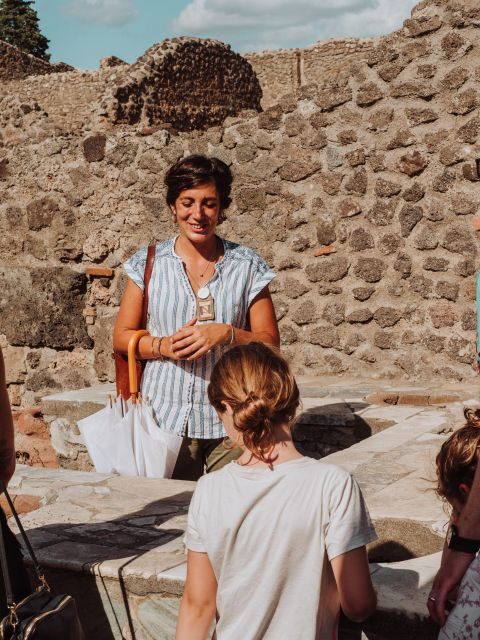
The first major stop is Porta Marina, Pompeii. This is where the city’s relationship with movement starts. Gates aren’t just decoration; they’re where you imagine incoming goods, travelers, and the everyday flow of people.
With a trained guide, you’re not limited to “this is a gate.” You can learn why this gate mattered, how entrances shaped daily life, and how Roman urban design supported a city that was very much alive until Vesuvius changed everything.
The drawback to keep in mind is time. In just 3 hours, the tour moves from gate to major sights and you won’t linger for an extra-long look at every single wall painting or doorway. If you love detail above all else, you’ll want to ask early which stops you should spend a bit more time on.
Temple of Apollo: religion you can picture, not just read about
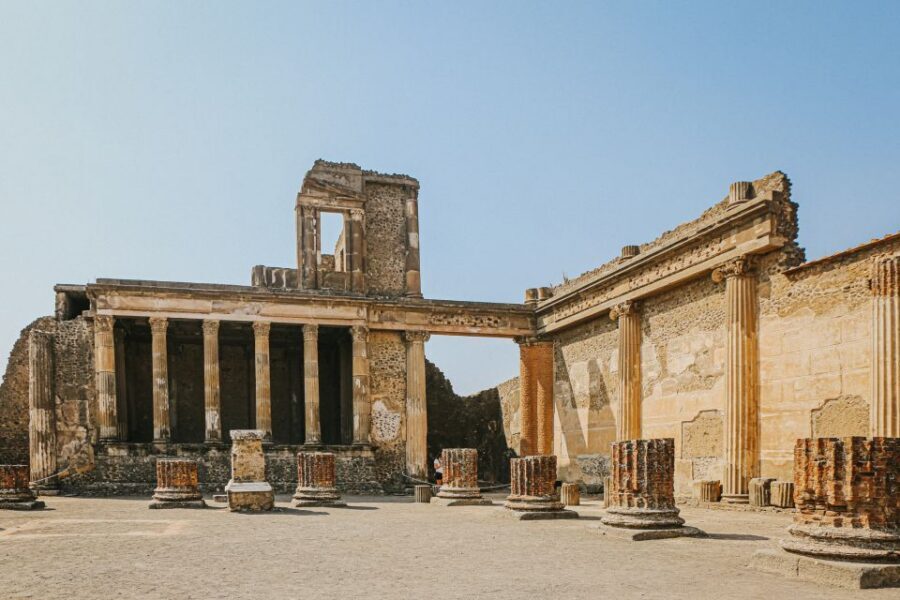
Next comes the Temple of Apollo. Temples can be hard to interpret when they’re reduced to fragments. A good guide turns the remains into a mental picture: what the religious space would have meant, how worship fit into civic life, and what kinds of public meaning a landmark like this carried.
This stop is valuable because it helps you stop thinking of Pompeii as “only homes and shops.” The Romans organized their public identity through places like this, and you’ll feel that shift as the tour continues into the forum area.
Foro Civile di Pompei and the Basilica: law, business, and daily pressure
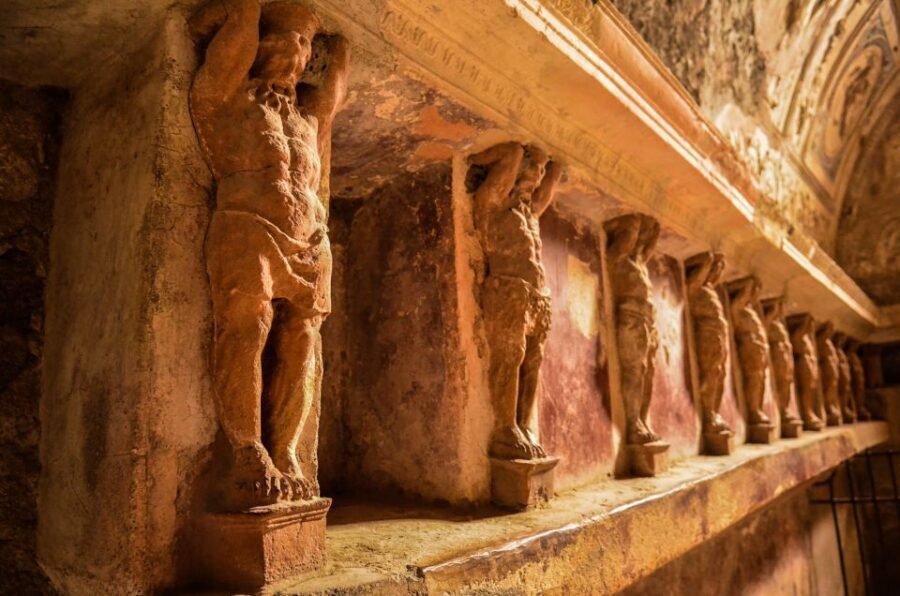
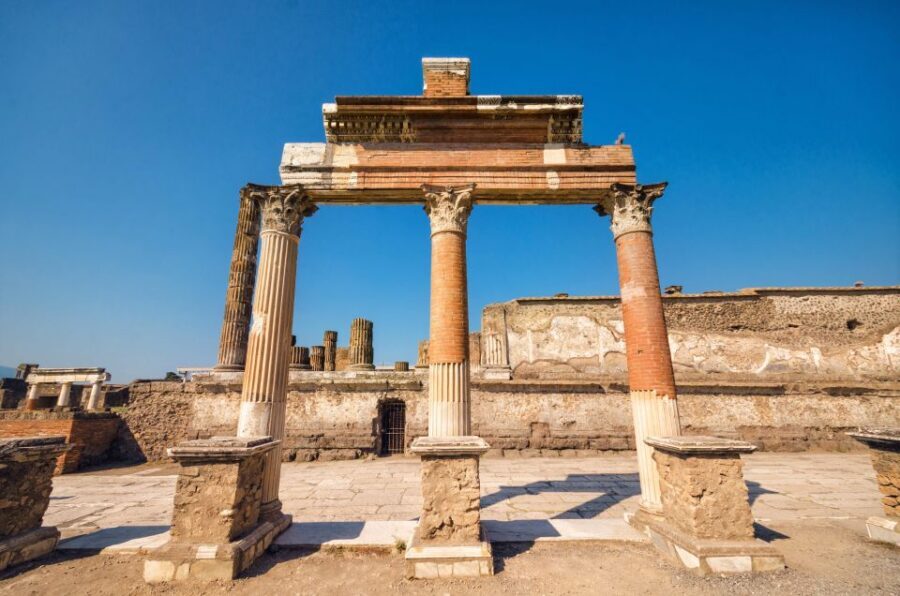
The tour then moves into the Foro Civile di Pompei and the Basilica. This is where Pompeii stops being scenic and starts being functional.
In the forum area, you’ll see the kind of public buildings that tell you how people managed civic life. The Basilica is especially important because it’s tied to meeting, administration, and the movement of people through public space. It’s not just architecture; it’s a social machine.
If you’re the type who enjoys understanding what a building did, not just what it looked like, this is one of the best zones on the route. It’s also one of the easiest places to get a little “how did people actually use this?” perspective—exactly the kind of thinking that a guide trained in archaeology can model for you.





House of Menander: domestic life with real personality
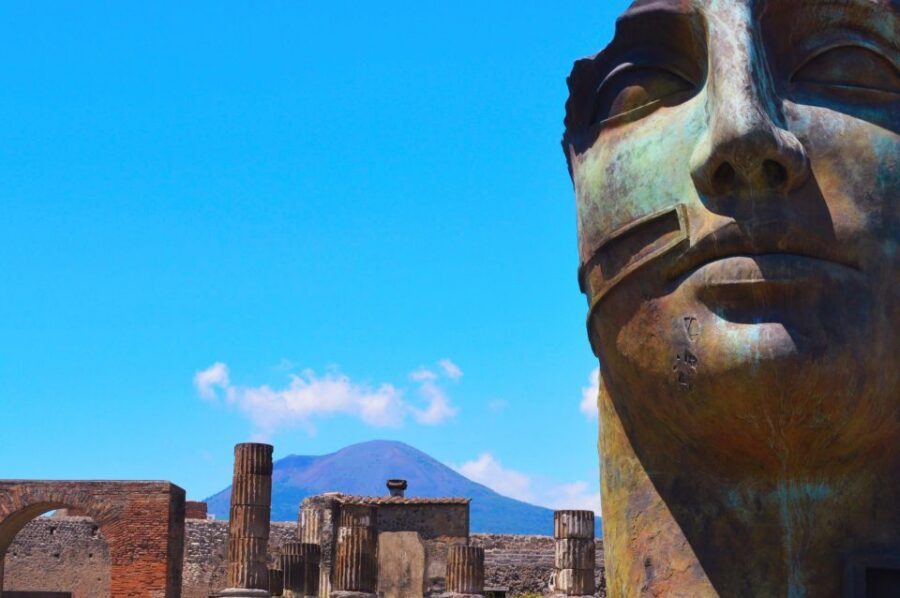
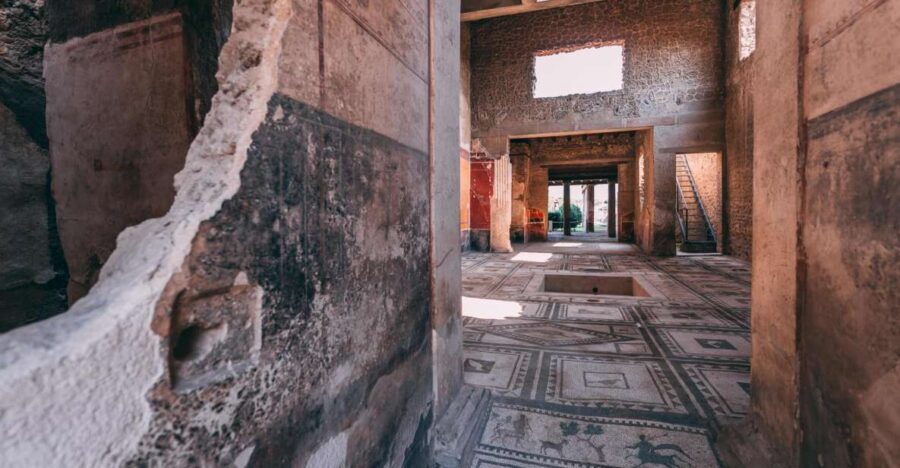
Then you shift from big public spaces into private rooms at the House of Menander. Houses in Pompeii can feel like a museum at first glance, but the best moments are the ones that connect to human behavior: who would have walked where, how rooms were used, and what daily routines looked like.
This stop is great for two reasons. First, it shows domestic architecture at a scale that makes sense to real life. Second, it helps you compare how private space worked alongside public buildings you’ve just seen.
A potential consideration: depending on the condition and access areas, some house interiors can be visually subtle from a distance. This is where a guide’s interpretation matters—otherwise you might miss why certain design choices were meaningful.
Forum Baths: the city’s routine built into stone
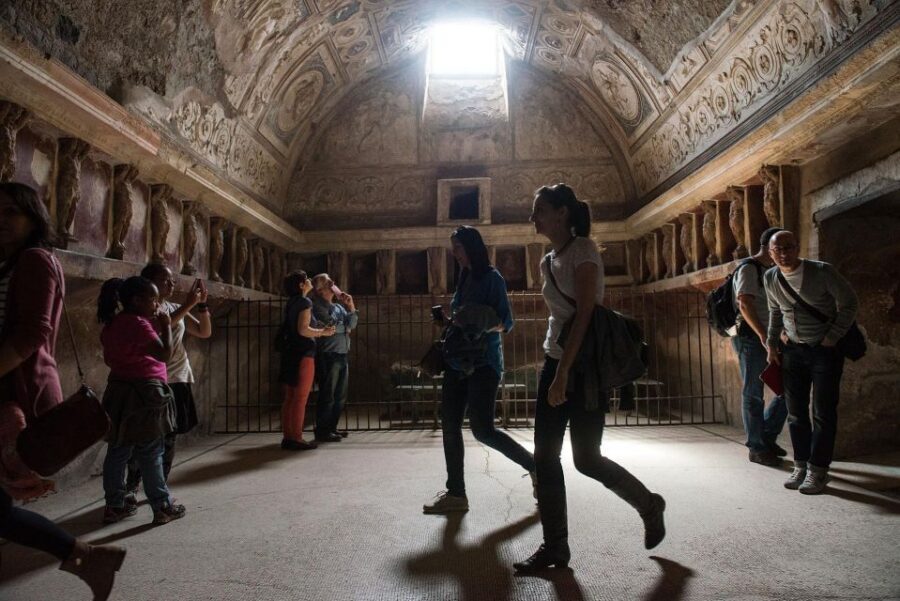
After Menander, the tour heads to the Forum Baths. Baths are one of the easiest ways to understand Roman life because they combine hygiene, leisure, and social interaction.
Even if you don’t know the details, you can usually grasp why this mattered: bathing and warming spaces weren’t rare events. They were part of routine, and they were also places to talk, meet, and pass time.
For many visitors, baths are a turning point emotionally. You stop thinking only about tragedy and start seeing the normal life that existed right up to 79 A.D.
Lupanare: social spaces that feel uncomfortable, and that’s the point
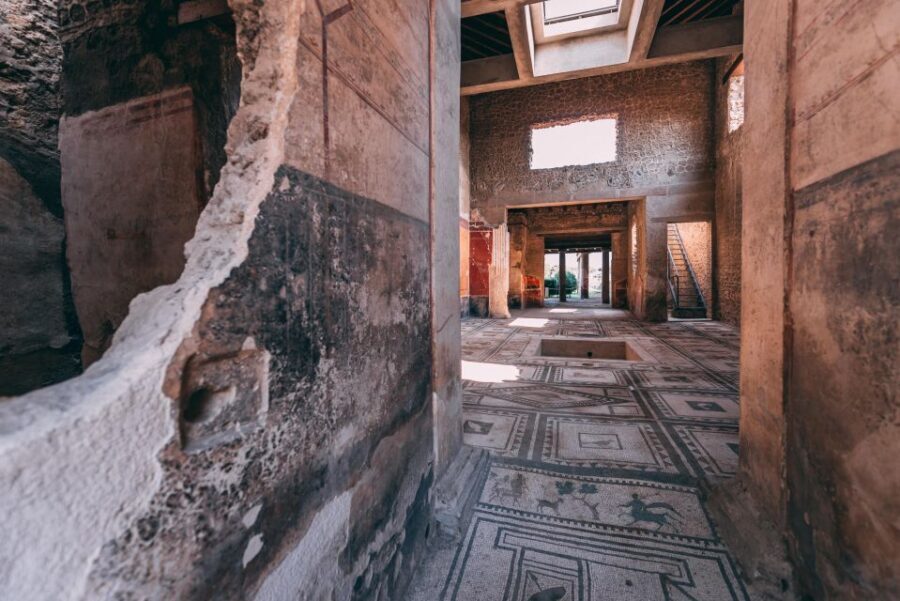
Then you visit the Lupanare. This is the brothel in Pompeii, a site that can hit you differently than temples and theaters.
It’s valuable because it shows Roman society’s realities in a way that isn’t polite or sanitized. You’ll likely learn how this space functioned and what its layout says about public and private boundaries in everyday life.
This isn’t a “fun photo stop,” and it doesn’t try to be. If you’re sensitive to adult themes, treat this as a historical lesson rather than entertainment.
House of the Faun: Pompeii’s luxury and everyday display
Next up is the House of the Faun. Pompeii homes range from simple to extremely detailed, and this is one that helps you understand how status could be shown through design.
The House of the Faun is a strong contrast after the baths and forum zone. You’re moving back into domestic space where decoration and layout tell you how a household wanted to be seen.
This stop is also a reminder that Pompeii wasn’t only a place of collective gatherings. Private wealth and private taste were built into the city’s streetscape.
Large Theatre: entertainment that also shapes public identity
Then you get to the Large Theatre. Theatres matter because they’re built for crowds and for shared experience. This is where you can imagine the schedule of performances and civic events that gave people a reason to gather.
With a guide, the focus tends to be on how the space worked and why entertainment was woven into urban life. Even the stone you can’t fully picture gets easier to understand once someone explains how people would move, watch, and react.
This is a good moment to take advantage of private guiding. When you’re standing inside the structure, it’s hard to see the bigger picture unless you’re shown how the seating and stage area function.
House of the Vettii: ownership and decoration that tell a story
The route continues to the House of the Vettii. Like other major homes, it’s an example of how wealth expressed itself through rooms and details.
This stop helps you round out your understanding of Pompeii by linking domestic design to identity. You’re not just looking at “a big house.” You’re seeing what the owners wanted to communicate through their space.
If you enjoy art, symbols, and house layout as a kind of language, this can be a highlight.
Amphitheater: the city at its loudest
Finally, you reach the Amphitheater of Pompeii. This is where Pompeii shifts again. Instead of smaller indoor social life, you’re in a place built for large-scale excitement.
An amphitheater isn’t only architecture. It’s a statement about public spectacle and how the city organized collective attention. With the guided context, you’ll have an easier time understanding what made places like this so central.
The walk ends back at the meeting point area, with an additional reference to drop-off at Scavi di Pompei – Biglietteria and Porta Marina Superiore, so you’re not left stranded.
Price and value: what you’re really paying for
The price is listed as $508.15 per group, up to 1. For many people, that sounds steep at first. Here’s the practical way to think about it:
- You’re paying for a private 3-hour guide trained in archaeology, not a general sightseeing host
- You’re paying to skip the ticket line, which saves time and stress
- You’re paying for interpretation at places where you’d otherwise miss meaning—houses, forums, and the “why” behind layouts
If you’re traveling solo, this tour often becomes good value because group tours rarely give you the time for questions. If you’re traveling as a couple, ask yourself if you’ll actually spend 3 hours independently at a level that matches what a guide can do for you. Pompeii rewards attention. A private guide helps you make sure you’re not just walking; you’re reading the city.
Also remember: Pompeii is huge. A guide can keep the route coherent and help you avoid the trap of seeing 20 things and understanding almost none.
The guide experience: why names like Nicoletta, Patrizia, Jasmine matter
The tour’s big selling point is that the guide isn’t just a presenter. This is an archaeologist-led approach, and the difference shows up in how explanations land.
You may be guided by professionals such as Nicoletta, Patrizia, Jasmine, Silvia, Serenella, or Laura. In past experiences tied to this tour, guides have been praised for turning small details into human stories and for being flexible enough to match your interests.
That matters because Pompeii is not only about facts. It’s about atmosphere and comprehension. A great guide helps you see the city as it was—streets, habits, public spaces, and private lives layered together—rather than as a flat collection of ruins.
One caution: while the tour promises a certified archaeologist-guide, there’s a reported mismatch in one case. If archaeologist credentials are a must for you, it’s worth clarifying the exact guide assignment before you commit.
Weather, umbrellas, and why “bring something” matters
This tour runs in any weather condition. If it rains, you’re told to bring a small umbrella and/or a raincoat. But the tour also states umbrellas are not allowed.
That contradiction is exactly why you should prepare with a raincoat and follow the guide’s on-the-ground rules. You don’t want to arrive with the wrong item and waste time figuring it out mid-tour.
Who this tour suits best
This is a strong fit if you:
- Want a structured walk through western Pompeii and don’t want to plan it stop-by-stop
- Enjoy asking questions and getting specific answers instead of rushing through exhibits
- Like the mix of public buildings and private houses, including the more complicated social spaces like the Lupanare
- Care about archaeology-based explanations, not just general sightseeing
It might be less ideal if you:
- Prefer very long, quiet time in one area rather than a 3-hour circuit
- Get overwhelmed by walking in heat or rain
- Are relying on a wheelchair and want certainty, since the info lists wheelchair accessibility but also labels it as not suitable for wheelchair users. Double-check with the provider before booking.
Should you book this private Pompeii archaeologist tour?
If you’re the kind of person who wants Pompeii to make sense, book it. The private format, the archaeologist-led explanations, and the tightly packed route through major sights are built for real understanding in limited time.
I’d especially recommend it if you’re visiting Pompeii for the first time or if you’ve been before but felt lost. A guide turns the “where am I?” problem into “now I get it,” and that’s the difference between seeing ruins and experiencing a city.
Only hold back if your priority is max time per stop, if weather-walking is a concern for you, or if you need firm accessibility confirmation. Otherwise, this is a smart way to get the most meaning out of Pompeii’s western side without wasting your hours.
FAQ
FAQ
How long is the Pompeii private tour?
The duration is 3 hours.
Where do we meet the guide?
Meet at Porta Marina Superiore, in front of the bar-restaurant Hortus with lemons and oranges hanging outside.
What sights are included on the tour?
The tour covers Porta Marina, the Temple of Apollo, the Foro Civile di Pompei, the Basilica, the House of Menander, the Forum Baths, the Lupanare, the House of the Faun, the Large Theatre, the House of the Vettii, and the Amphitheater of Pompeii.
Does the price include skip-the-line admission?
Yes. Skip-the-line admission fees are included.
Are earphones provided?
Earphones are provided for bigger groups.
What languages are available for the guide?
The live tour guide is available in Japanese, English, Spanish, Italian, German, French, Portuguese, Chinese, Russian.
Is this a private tour?
Yes. It’s listed as a private group.
What should I bring, and what are the rules about umbrellas or pets?
Bring comfortable shoes. Pets are not allowed. Umbrellas are listed as not allowed, though rain guidance also suggests bringing a small umbrella and/or a raincoat if it rains.
Is entrance free on the first Sunday of the month?
Entrance is free of charge on the first Sunday of each month, but entry is not guaranteed because tickets can’t be reserved ahead of time.
Is the tour wheelchair accessible?
The info says wheelchair accessible, but it is also labeled not suitable for wheelchair users. You should double-check for your specific needs before booking.