REVIEW · PRIVATE
Intro to Rome: Piazzas and Fountains Semi-Private Tour
Book on Viator →Operated by Through Eternity Tours · Bookable on Viator
Rome feels easier with a guide. This Intro to Rome: Piazzas and Fountains semi-private tour strings together the big-name sights at a calm, evening pace, so you spend less time figuring out where to go and more time noticing what you’re seeing. I really like the small group (max 10), and I also like the English-speaking guide who keeps the stories clear and moving.
The route hits the places you want to see first—Spanish Steps, Trevi Fountain, the Pantheon area, and Piazza Navona—without the usual scramble of moving through central Rome on your own at night. You’ll also get a practical bonus: headsets (for groups of 6 or more) so you can actually hear the guide while you’re surrounded by crowds.
One thing to plan for: it’s a walking tour with steps and uneven surfaces. If you have mobility concerns, tell the organizer ahead of time, and make sure you’re wearing comfortable walking shoes.
In This Review
- Key points at a glance
- Why a twilight piazza walk beats wandering on your own
- Price and what $41.12 really buys you
- Where you start at Piazza Navona and end at the Fontana della Barcaccia
- Walking comfort: steps, uneven streets, and what to bring
- The stop-by-stop route, and how to enjoy each square
- Stop 1: Spanish Steps (about 10 minutes)
- Stop 2: Piazza di Trevi (about 20 minutes)
- Stop 3: Trevi Fountain (about 10 minutes)
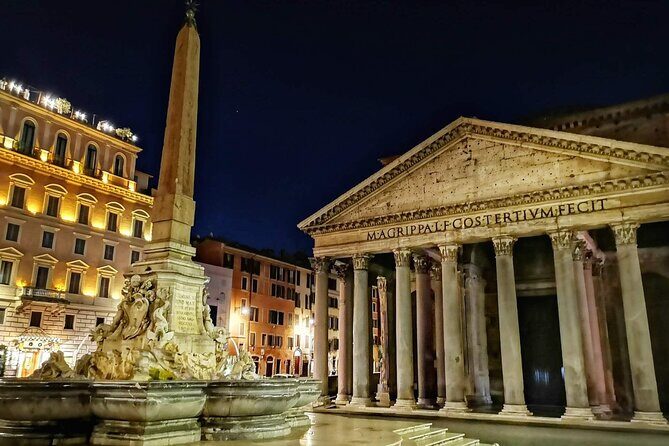
- Stop 4: Pantheon (about 10 minutes, entry depends on conditions)
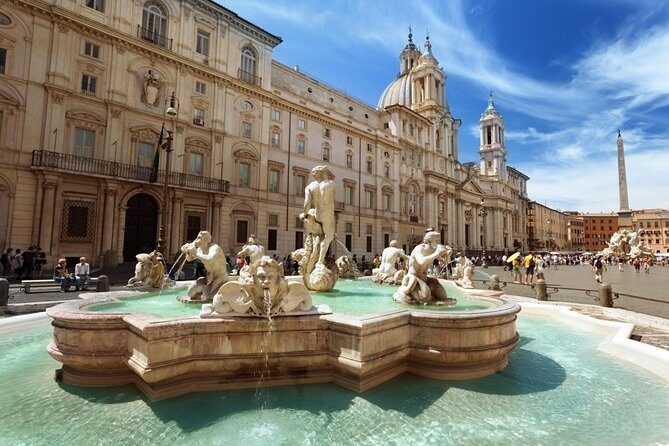
- Stop 5: Piazza Navona (about 20 minutes)
- Stop 6: Campo de’ Fiori (about 10 minutes)
- Stop 7: Piazza della Rotonda (about 5 minutes)
- Stop 8: Elephant and Minerva Obelisk (walk by, about 5 minutes)
- What the guide actually adds (beyond pointing)
- Who should book this Rome at twilight walk
- A few smart tips for a smoother evening
- Should you book this Rome piazzas and fountains tour?
- FAQ
- How long is the Intro to Rome: Piazzas and Fountains semi-private tour?
- What sights are included on the walk?
- Is the Pantheon entry guaranteed?
- What’s included in the price?
- Where does the tour start and end?
- Is transportation or food included?
- How difficult is the walking?
Key points at a glance
- Small group size (up to 10) keeps the walk friendly and easier to manage
- English guide + headsets (for groups of 6+) help you hear stories in busy areas
- Classic Rome in 2.5 hours: Spanish Steps, Trevi area, Pantheon, Piazza Navona, and more
- Short stop times mean you see highlights fast, but you won’t linger long at any one spot
- Pantheon entry may depend on timing; if lines/reservations are tough, you’ll get outside context so you don’t miss other stops
- Evening navigation is the point: you’re guided through central Rome after dark instead of guessing your route
Why a twilight piazza walk beats wandering on your own
This tour is built for your first night (or any night) in Rome when you want the highlights but don’t want the mental load. The guide leads you between major landmarks in a way that feels organized, even though you’re still walking through a very crowded city center.
What makes it work so well is the combination of timing and pacing. You hit the Spanish Steps, the Trevi area, and the Pantheon zone while the light is doing its best work. Then you carry that evening mood into Piazza Navona and nearby squares. Several guides have the right tone for this kind of walk too—names you may see include Lorenzo, Maria, Paulo, Tatiana, Brandon, Erturk, Thomas, Antonella, Stephanie, and Erika—so even when the route changes slightly to fit real conditions, the experience tends to stay lively and story-driven.
You can also read our reviews of more private tours in Rome



Price and what $41.12 really buys you
At $41.12 per person for about 2 hours 30 minutes, the value comes from what’s included and what it saves you.
You’re not just paying for a route. You’re getting:
- an expert English-speaking guide
- headsets for groups of 6 or more (so the tour stays audible)
- all fees and taxes
- mobile ticket entry
- and the key sights are handled so you’re not standing around trying to figure out logistics
Also, the tour is capped at 10 travelers, which matters more than it sounds. Smaller groups move better in tight streets, and you’re less likely to feel like a human traffic cone.
Where the price feels especially fair is the “highlight-to-time” ratio. In under three hours you cover Spanish Steps, the Trevi area, the Pantheon, Piazza Navona, Campo de’ Fiori, and a couple of quick walk-bys nearby. If you’re trying to keep Rome efficient without turning it into a checklist, this is the kind of tour that fits.
Where you start at Piazza Navona and end at the Fontana della Barcaccia
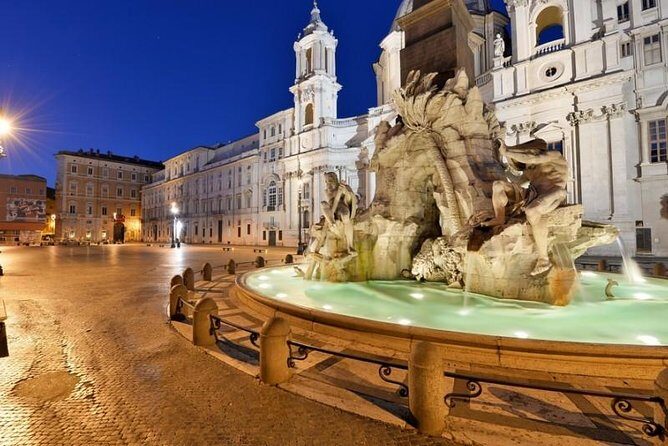
You start at Piazza Navona, 53 (00186 Roma). The walk ends at Fontana della Barcaccia in Piazza di Spagna (00187 Roma).
This is a smart setup if you want to keep your evenings flexible. You don’t have to backtrack to the same square at the end of the tour. Instead, you finish near one of the most photogenic fountain zones in the city center, and you can easily continue on your own afterward.
It’s also close to public transportation, which helps if you’re meeting the tour after dinner or using transit to get back to your hotel. The total time is listed at roughly 2 hours 30 minutes, so it’s realistic to squeeze into a tight itinerary.
Walking comfort: steps, uneven streets, and what to bring
Plan for real Rome walking. This tour runs through central areas with steps and uneven walkways. Comfortable shoes aren’t optional here.
I’d also bring:
- a bottle of water (the tour strongly recommends it)
- a phone with battery for photos, since you’ll want them at several stops
- patience for crowds, especially at Trevi and around the Pantheon area
If you have mobility concerns, the organizer asks you to flag it so they can accommodate you as best they can. That’s not a throwaway line—this route really does involve moving across different terrain.
Finally, keep an eye on messages during your trip. The Jubilee period can mean some monuments are under restoration, and that can affect what you see or how it’s approached.
The stop-by-stop route, and how to enjoy each square
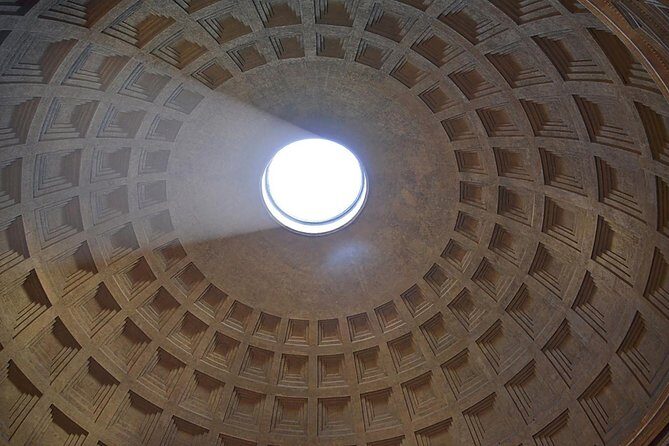






Stop 1: Spanish Steps (about 10 minutes)
The Spanish Steps stop is short by design. You get a quick orientation moment and a chance to see the classic stairway from the right perspective before the tour moves on.
Use this time to reset. Arrive ready to look around: Rome’s biggest landmarks work best when you take a few seconds to notice surrounding details, not just the postcard view.
Potential drawback: if you’re hoping for a long sit-down moment here, you won’t get it. This is a highlights tour, not a “stay and watch people” tour.
Stop 2: Piazza di Trevi (about 20 minutes)
Next comes Piazza di Trevi, where you spend more time. This longer block is useful because the Trevi area fills up quickly and you need room to reposition for photos.
This is also where the guide earns their keep. In the Trevi zone, you’re juggling crowds, viewpoints, and timing. A good guide helps you move efficiently without rushing you through the moment.
Practical tip: keep your phone and wallet secured. Crowds at major sights can attract pickpockets, and busy areas near Trevi are a known risk zone in Rome.
Stop 3: Trevi Fountain (about 10 minutes)
Trevi Fountain is listed as its own stop right after Piazza di Trevi, so you’ll likely get a closer, more focused look.
This brief duration still works because you’re not trying to “win” the whole fountain experience in one go. You’re meant to see it, get your photos, and then move on while the route stays on schedule.
A nice detail from real tour experiences: guides often build in time for photos and even small breaks like gelato stops near Trevi, as long as the group keeps moving.
Potential drawback: since time is limited, you’ll have to choose your photo angle quickly. Bring your best effort first rather than spending the whole stop repositioning.
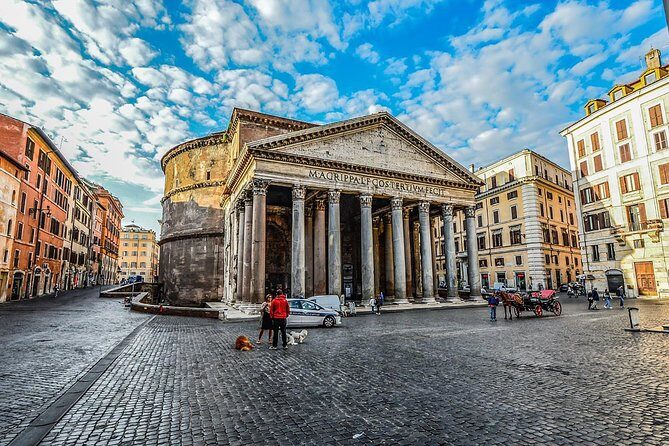
Stop 4: Pantheon (about 10 minutes, entry depends on conditions)
The Pantheon stop is where the tour can feel like a real upgrade versus a pure walking loop.
The plan includes the Pantheon with a ticket listed as free, but the tour also notes a practical contingency: if reservations aren’t possible on weekends or lines are too long, the guide explains from the outside so the rest of the itinerary doesn’t get skipped.
That matters. It means you still get historical context and guidance even if you can’t step inside. And if you can go in, it’s a major payoff during the tour.
My advice: if the Pantheon is your top priority, be mentally ready for either scenario. The best outcome is inside access, but the tour is structured to avoid “wasted time in a line.”
Stop 5: Piazza Navona (about 20 minutes)
Then it’s Piazza Navona. This stop is long enough to feel the atmosphere rather than just passing through.
Piazza Navona is the kind of place where evening light makes everything look more dramatic, and where the guide can explain context without you losing your place in the crowd.
You’ll also appreciate the time here if you want a calmer moment compared to Trevi. It’s still busy, but the square format helps you pause and look.
Potential drawback: it’s a popular area, so expect plenty of other people around you.
Stop 6: Campo de’ Fiori (about 10 minutes)
Campo de’ Fiori is a quick stop, but that’s exactly why it’s on the route. It adds variety without inflating the overall walking time.
Use this moment for a change of pace and a break in the sightseeing rhythm. It’s a good “transition square” between the bigger monument stops.
What to watch for: since this is short, don’t plan on deep photo sessions. Instead, get a feel for the square and move with the group.
Stop 7: Piazza della Rotonda (about 5 minutes)
This stop is very focused: a quick look at the piazza area with a fountain in front of the Pantheon.
Five minutes goes fast, so treat it as a visual punctuation mark in your Pantheon sequence. If you want one more picture before you move on, this is the moment.
Stop 8: Elephant and Minerva Obelisk (walk by, about 5 minutes)
The walk-by at the Elephant and Minerva Obelisk area is a small but memorable finale.
This quick section is ideal if you like Roman details—short, characterful moments that feel less famous than the headline attractions. It also keeps the tour moving toward the end point near Piazza di Spagna.
What the guide actually adds (beyond pointing)
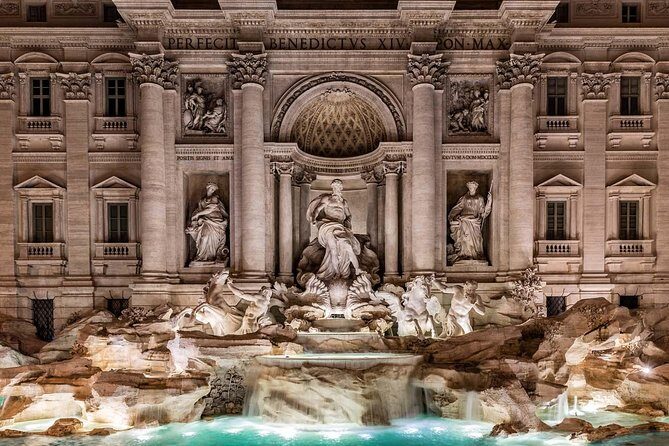
On this kind of walking tour, the guide is the difference between seeing sights and understanding what you’re looking at.
Several guides associated with this experience are praised for:
- storytelling that connects the sites to how Rome developed
- humor and personal anecdotes (for example, Paulo’s dry sense of humor stands out in real tour feedback)
- explaining symbolism and meanings, with Maria noted for that kind of interpretive approach
- tailoring the walk to your pace and interests, with examples including guides like Lorenzo adjusting for what a family wanted to see
Even if you only catch fragments of the story while you’re walking, it tends to stick because you’re hearing it right next to the place.
Headsets help a lot here. When you’re at Trevi or Piazza Navona, your ability to hear matters as much as your ability to see.
Who should book this Rome at twilight walk
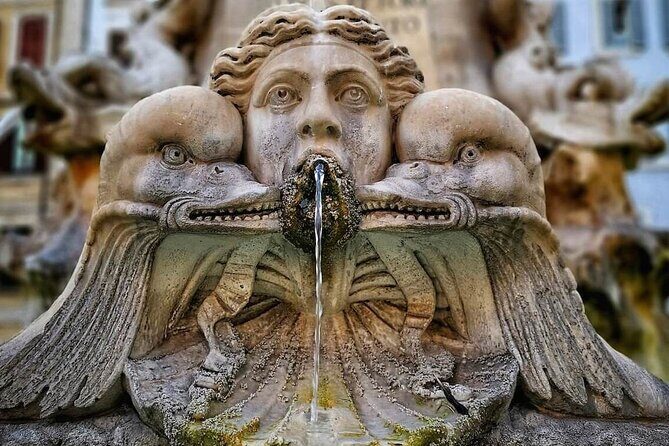
This tour fits best if you:
- want a first-night orientation to Rome’s most famous central sights
- prefer a guided route over self-navigating at night
- like history in story form rather than a museum-style lecture
- appreciate short stops and moving along at a steady pace
It also works for different travel styles. You’ll hear from solo visitors who found it efficient, and families too, including people touring with teenagers and even younger kids.
That said, it’s not ideal if you:
- need lots of time at one monument
- struggle with walking steps and uneven pavement
- want a slow, lounging pace
If you’re older or less steady on your feet, I’d be proactive about mobility needs before you go. The tour asks you to flag this for a reason.
A few smart tips for a smoother evening
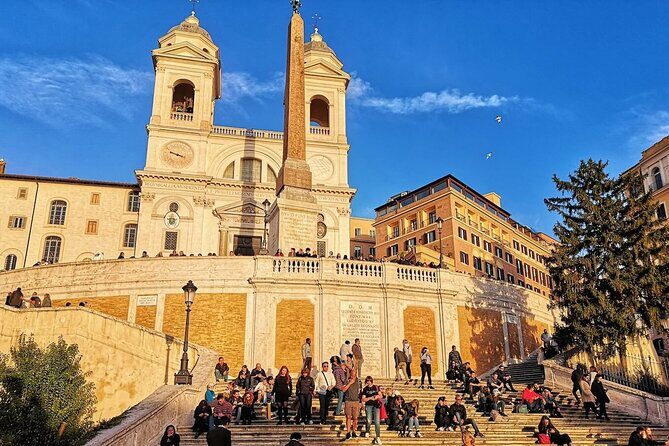
- Wear shoes you trust on cobblestones. Your feet will thank you more than your photos will.
- Keep valuables secure. Crowds plus sightseeing routes create the perfect conditions for opportunists.
- Don’t overpack your expectations for time inside the Pantheon. You might go in, or you might get outside context that still keeps the tour full.
- Bring water and plan for a steady walk. The tour timing is tight enough that bathroom breaks are hard to treat like “extra stops.”
- If you’re traveling during the Jubilee, watch for any messages about restoration changes.
Should you book this Rome piazzas and fountains tour?
If you want a compact, well-guided way to see Spanish Steps, Trevi Fountain, the Pantheon area, and Piazza Navona in one evening, this is a strong choice. The small group size, English guidance, and headsets for larger groups are the kinds of details that make it feel more comfortable than a larger crowd tour.
I’d book it if you’re the type who likes to learn while you walk and wants a practical route that saves energy. I’d think twice if you need long stays at individual landmarks or you can’t handle steps and uneven ground.
One last practical note: you get free cancellation up to 24 hours in advance, so if your schedule is flexible, you can lock it in now and adjust later.
FAQ
How long is the Intro to Rome: Piazzas and Fountains semi-private tour?
It runs about 2 hours 30 minutes.
What sights are included on the walk?
You’ll stop at the Spanish Steps, Piazza di Trevi and Trevi Fountain, the Pantheon area, Piazza Navona, Campo de’ Fiori, Piazza della Rotonda, and you’ll walk by the Elephant and Minerva Obelisk.
Is the Pantheon entry guaranteed?
Not always. If Pantheon reservations aren’t possible on weekends or if lines are too long, the guide will explain from the outside so you don’t miss other stops.
What’s included in the price?
An expert English-speaking guide, a small group format, headsets for groups of 6 or more, and all fees and taxes. Admission tickets for the included sights are listed as free.
Where does the tour start and end?
It starts at Piazza Navona, 53, and ends at Fontana della Barcaccia in Piazza di Spagna.
Is transportation or food included?
No. Transportation to and from the meeting and end points, plus food and beverages, are not included.
How difficult is the walking?
It’s a central Rome walking tour with steps and uneven walkways. Comfortable walking shoes and a bottle of water are strongly recommended, and you should notify the operator if anyone has mobility concerns.