REVIEW · POMPEI CAMPANIA
Pompeii: 2-Hour Guided Tour with an Archaeologist
Book on GetYourGuide →Operated by Askos Tours · Bookable on GetYourGuide
Pompeii is better with a guide. This 2-hour Pompeii tour with an archaeologist turns a huge archaeological site into a tight story you can actually follow, and it hits the big public places plus the smaller details that explain daily life. I especially like the stop-by-stop pacing (it never feels like you’re just rushing) and the way the guide frames the eruption tragedy with context and respect, like when Rosalina brought Pompeii to life with fire and focus. One thing to weigh: Pompeii is spread out and 2 hours is not long, so you’ll want sturdy shoes and realistic expectations.
I also love that you start on the western side near Porta Marina, where you get a mix of courts, temples, homes, shops, and performance spaces without wasting time guessing where to go. Guides like Tonia and Enzo are praised for making Pompeii feel human, and you get that same benefit here with an expert approach. The main drawback is the logistics of meeting up—one guide spot can be hard to find if your phone GPS is clueless—so plan a few minutes buffer.
In This Review
- Key points before you go
- Why This 2-Hour Archaeologist Tour Works in Pompeii’s Big Maze
- Starting at Porta Marina: The Real-World Map Problem (and How to Beat It)
- Temple of Apollo and the Western Route You’ll Follow
- Forum Civile and the Basilica: Where Politics Felt Immediate
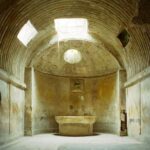
- Forum Baths and Daily Stops That Explain How Romans Lived
- The Lupanar (Old Brothel): A Tour Stop With Real Context
- House of Menander, House of the Faun, and More: Seeing Pompeii as People Lived It
- House-of-Culture Stops: Theater and Amphitheater for Roman Entertainment
- Plaster Casts and the 79 AD Moment That Stops Time
- How Pompeii Was Buried, Rediscovered, and Framed by UNESCO
- Gear, Timing, and the Real Walking Plan in Campania
- Price and Value: What $175.74 Buys You in Real Time
- Who This Tour Fits Best (and Who Might Want More Time)
- Should You Book This Pompeii Tour?
- FAQ
- How long is the Pompeii guided tour with an archaeologist?
- Where do I meet for the tour, and where does it end?
- What sights are included during the 2-hour visit?
- Are Pompeii entry tickets included in the price?
- What languages are offered for the live guide?
- Is this tour private or shared?
- What should I bring to enjoy the walk comfortably?
- Is the tour wheelchair accessible?
- Is Pompeii free on the first Sunday of the month?
Key points before you go
- A focused archaeologist-led route across Pompeii’s western zone in only 2 hours
- Forum + Basilica + baths for the everyday rhythm of Roman public life
- The Lupanar (brothel) and real domestic spaces, explained with context
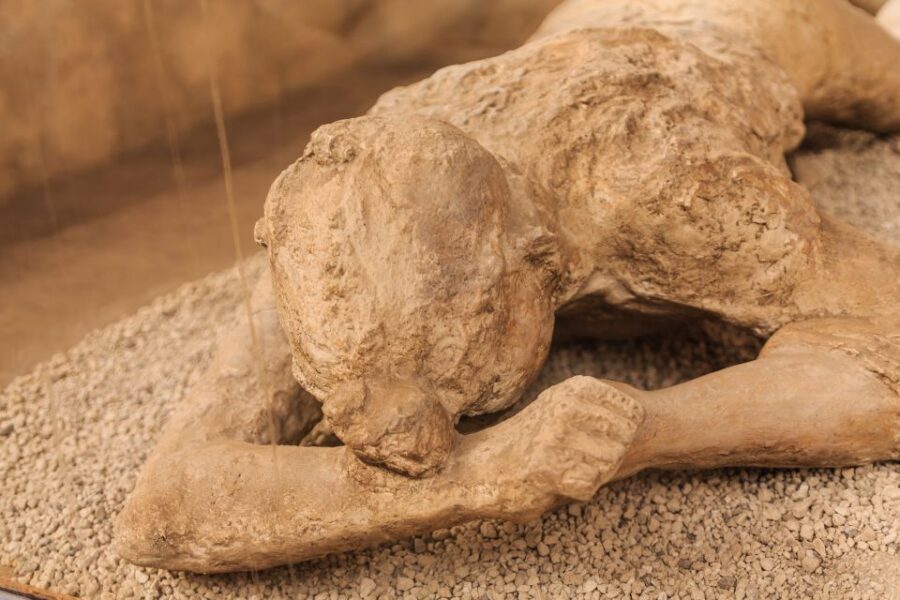
- Plaster casts that bring the 79 AD disaster into sharp, emotional focus
- Portable comfort: disposable earphones for bigger groups, plus a private-group feel
- Good value for structured time when you’d rather not study ruins alone for hours
Why This 2-Hour Archaeologist Tour Works in Pompeii’s Big Maze
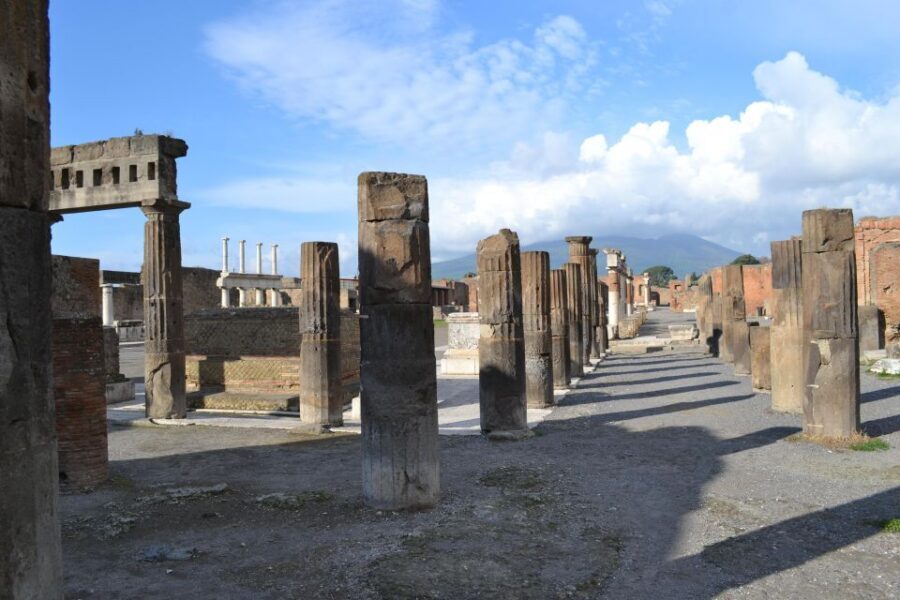
Pompeii can make your head spin fast. The site is enormous, and without a plan you spend more time orbiting buildings than understanding them. This tour is built for clarity: you get expert commentary and a guided walking route through the most important western highlights, all in two hours.
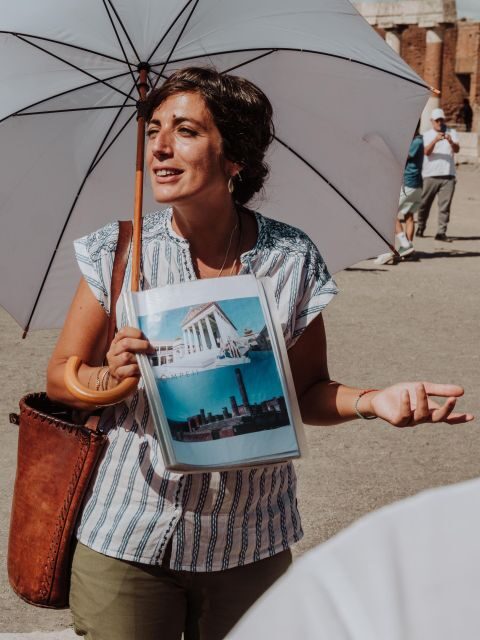
The biggest win is pacing. You’re not asked to speed-run the city, and you’re not left to guess what you’re looking at. Guides such as Paola, Giancarlo, and Alessandro are repeatedly praised for keeping things organized and easy to follow, even on hot days.
The second win is the blend of public and private life. Pompeii isn’t just temples and theaters. You also get courts, baths, small commercial spots, homes with famous layouts, and even the Lupanar—all connected to what Romans actually did from morning to night.
You can also read our reviews of more guided tours in Pompei Campania


Starting at Porta Marina: The Real-World Map Problem (and How to Beat It)
You meet at Porta Marina Superiore, with location options that include Via Villa dei Misteri, 2. In practice, this matters because Pompeii’s entrance areas can be confusing, and one review noted the meeting location not showing well in GPS.
My advice is simple: look up the meeting point address and walk direction before you go. Then give yourself a cushion. With Pompeii heat and crowds, arriving five minutes late can turn a smooth start into stress.
Another detail I appreciate is the tour structure around getting you set in the right part of Pompeii quickly. Starting at Porta Marina helps you skip the early “where do I even begin?” feeling and get you moving into the thick of the main buildings.
Temple of Apollo and the Western Route You’ll Follow
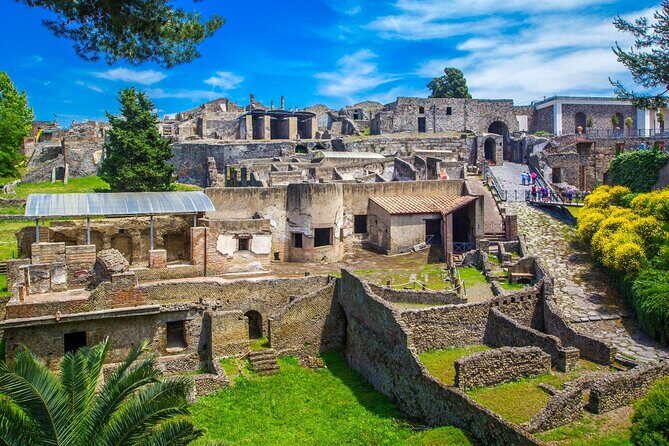
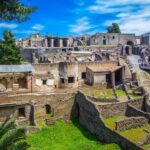
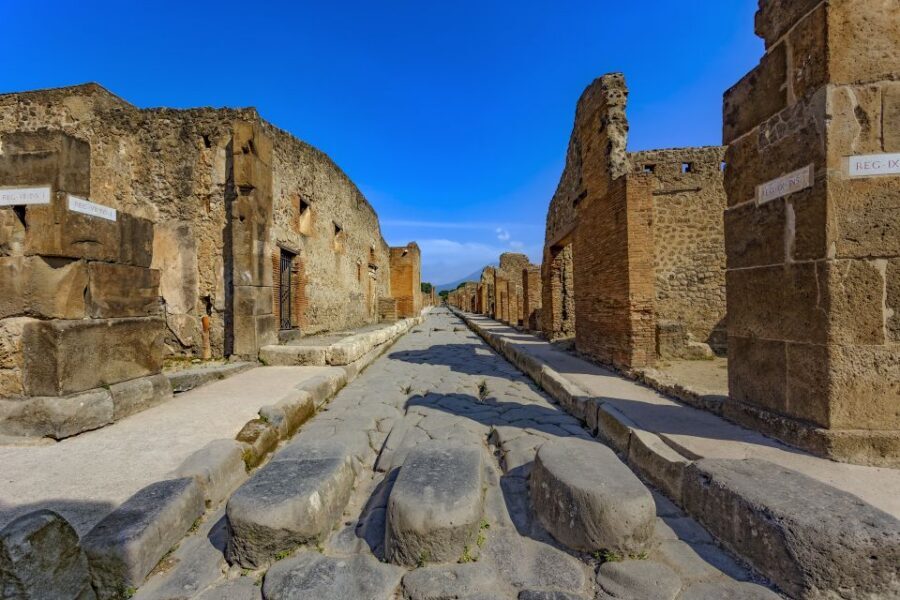
Once you’re inside, the route helps you understand Pompeii as a functioning city, not a pile of stones. You’ll walk through the western part where you’ll see major public buildings, homes, and shops clustered in a way that makes sense when someone explains the layout.
You’ll pass key landmarks that anchor the story. The tour includes the Temple of Apollo, and that’s a useful anchor because temples in Pompeii weren’t abstract monuments. They were tied to civic identity and regular Roman religious life.
From there, the path keeps moving you through spaces that people used for work, decisions, business, and entertainment. That’s the magic of a good archaeologist guide: you start to recognize patterns, like how power shows up in architecture and how everyday life shows up in small layout choices.
Forum Civile and the Basilica: Where Politics Felt Immediate
The Forum is the beating heart of Pompeii’s public life, and you don’t just get a photo stop. You get the why behind it: the Forum was the center of political and social activity in Roman times. When someone points out the logic of the space, the ruins feel less random.
Next comes the Basilica, also described as the court house. This is where Pompeii’s legal and civic side becomes tangible. Even if you don’t read Latin or Roman law, you can feel the purpose: it’s a place built for decisions, gatherings, and the flow of people who had business to do.
This is one of my favorite parts of the tour because it teaches you how to look. Instead of seeing “big building,” you start seeing function: who used it, what happened there, and why it looked the way it did.
Forum Baths and Daily Stops That Explain How Romans Lived
A city is more than its monuments. Pompeii’s thermal baths show how Romans handled relaxation, hygiene, conversation, and social time. On a hot visit, it’s also a practical reminder that people were living outdoors, indoors, and everywhere between—so you’ll understand why shade, water, and daily routines mattered.
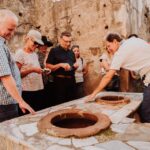
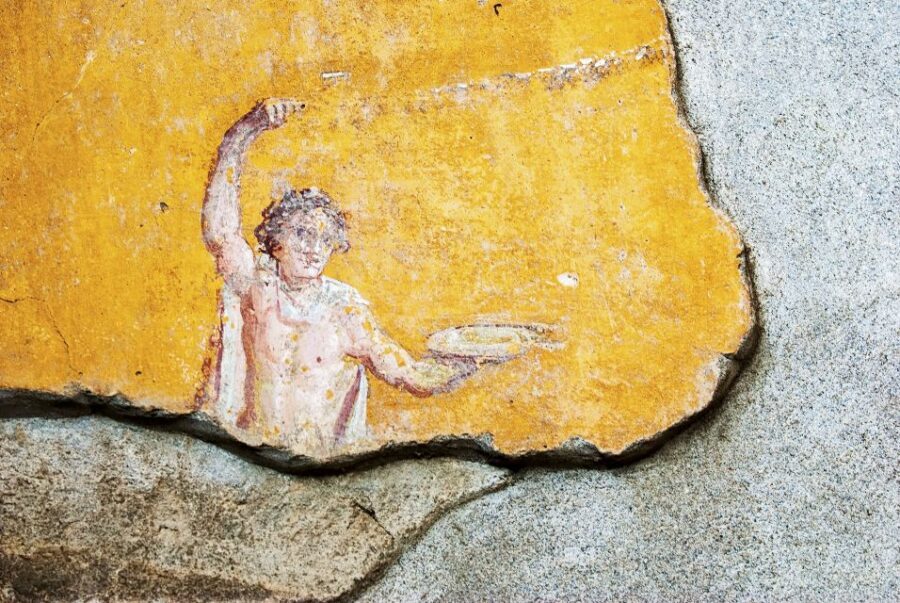
The tour also includes spots tied to food and small commerce. You’ll visit a bakery area where you can still see remnants of utensils, and the tour highlights even seeing the remains of food. That kind of detail is exactly why Pompeii hits harder than many other ruins: you’re not just looking at walls, you’re looking at objects that people used.
Another included stop is Termopolium Capuano, a type of Roman fast-food counter. That helps you connect the dots between “where people gathered” and “how people ate when they had limited time.”
One caution: these stops are meaningful, but Pompeii is still hot and uneven. Bring water, and don’t plan to treat this like a brisk museum loop. Your shoes will matter more than you think.
You can also read our reviews of more tours and experiences in Pompei Campania
The Lupanar (Old Brothel): A Tour Stop With Real Context
The Lupanar is included, and it’s one of those Pompeii sights that can feel awkward if you walk in without explanation. The value here is that your guide puts it in context so it becomes part of a broader picture of Roman life rather than shock tourism.
You’ll also learn how spaces were organized and used. The tour frames Pompeii as a complete picture of daily society at a single moment in history, and that includes uncomfortable realities.
I like that the tour handles this with a sense of respect. You’re asked to look at the building as evidence, not as entertainment, and that keeps the experience grounded.
House of Menander, House of the Faun, and More: Seeing Pompeii as People Lived It
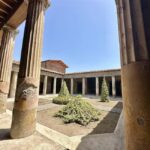
This is where Pompeii stops being only a city of public statements and becomes a city of homes. The tour includes multiple domestic sites, and each one helps you understand a different side of private life.
You’ll see the House of Menander and the House of the Faun, plus other included houses such as the House of the Tragic Poet and the House of the Vettii. The names are part of how the archaeology community labels and identifies spaces, but the bigger benefit is what the guide helps you notice: layouts, room purpose, and how status and taste showed up in architecture.
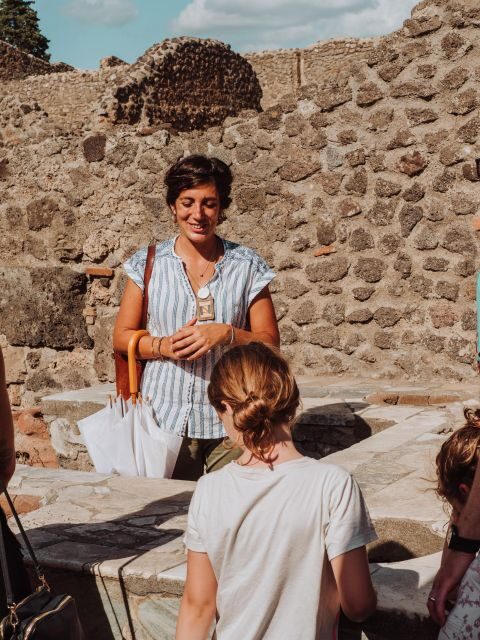
One reason I’m glad this tour is private-group style is that it makes these spaces easier to interpret in real time. You can hear explanations that turn vague viewing into clear understanding, and you can ask quick questions without feeling like you’re holding up a huge group.
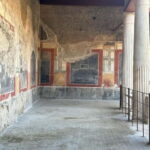
Then there’s the special effect Pompeii provides: some structures are remarkably intact compared to what you might expect from an outdoor ruin. When a guide connects that intactness to how the city was preserved, the houses feel less like fragments and more like recovered rooms of a lost life.
House-of-Culture Stops: Theater and Amphitheater for Roman Entertainment
The tour also includes performance spaces, including the Large Theatre and the Amphitheater of Pompeii. These aren’t only historical trivia. In Pompeii, entertainment was civic life too—public gatherings, social energy, and the shared rhythm of festivals and events.
Watching how Romans built spaces for audiences gives you a sharper read on how city life worked. You begin to see that culture, politics, and daily movement were all connected by shared public spaces.
If you’re the kind of person who likes to understand how communities organized themselves, these theater stops will give you quick payoff. They also break up the heavier emotion of the disaster story later, which helps your brain reset.
Plaster Casts and the 79 AD Moment That Stops Time
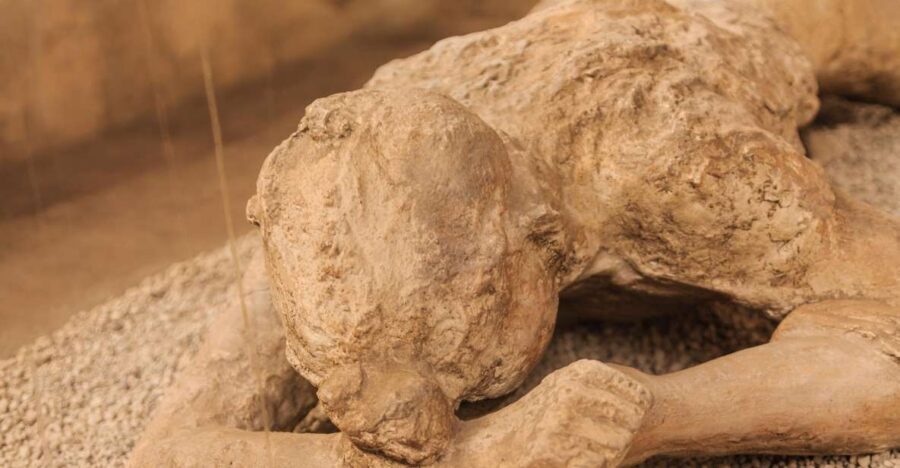
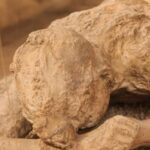
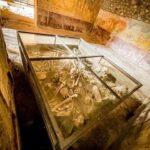
The tour includes visits connected to the plaster casts of humans and animals at the moment of their death. This is the part of Pompeii that stays with you, because it turns a historical event into bodies—into people frozen in the last moments of panic and survival.
It’s intense. You’re guided to look at the casts and understand why they matter, not just to stare. The tour also includes the idea of the city being buried under molten ash and lava during the Vesuvius eruption in 79 AD, which is the key to understanding why what’s left is so startlingly detailed.
I appreciate that the guides described in the reviews—like Felicia’s passion and Chiara’s ability to answer questions—are praised for telling stories with respect. That tone matters here. Without it, the casts can feel like entertainment. With it, they feel like evidence and remembrance.
How Pompeii Was Buried, Rediscovered, and Framed by UNESCO
The eruption story isn’t just dramatic. It explains the survival of details: ash and lava sealed the city in a way that preserved structures and everyday traces. During your tour, you’ll learn how Pompeii was buried and then rediscovered in the 18th century, when excavation and study began to bring the site back into the world’s awareness.
You’ll also hear why Pompeii and Herculaneum were recognized by UNESCO. The reasoning is tied to how they provide a complete and vivid picture of daily society at a specific moment in history, without parallel anywhere else.
For me, this context is what makes the tour worth doing with an archaeologist. A self-guided walk can be beautiful, but you can also miss the big picture. Here, the guide connects the dots so you walk away understanding why Pompeii is not just old—it’s uniquely informative.
Gear, Timing, and the Real Walking Plan in Campania
Pompeii is outdoors. Even with a guide managing the route, you’ll be on your feet. Bring comfortable shoes, plus sunglasses, a sun hat, and water. The tour’s two-hour format is friendly, but Pompeii doesn’t stop being hot because you have a timetable.
You also get disposable earphones for bigger groups, which is useful if you’re in a busier time slot. If you’ve ever tried to catch a guide’s voice over a crowd, you know why this matters.
Timing note: on the first Sunday of each month, entrance is free of charge. Tickets can’t be reserved ahead of time, so entry is not guaranteed. If that matters to you, plan to arrive early and be flexible.
There’s also an access detail you should check carefully before booking: the activity description says wheelchair accessible, but it also states not suitable for wheelchair users. Because that’s inconsistent, I’d confirm the exact on-site conditions and your route pace with the provider.
Price and Value: What $175.74 Buys You in Real Time
At $175.74 per person, this isn’t a bargain tour. But it can still be good value depending on what you want from Pompeii.
Here’s what you get that justifies the cost:
- A live guide with an archaeologist-led approach
- Pompeii entry tickets included
- A tight two-hour structure so you don’t lose time wandering
- A private-group feel, which usually means less waiting and more direct explanation
- Disposable earphones for larger groups, which helps you actually hear what matters
The real money saver is your attention. Pompeii is the kind of place where wrong pacing can waste hours. For many people, paying for a strong guide is cheaper than spending half a day trying to “figure it out” alone—and missing the emotional and historical points along the way.
Where the price may feel steep is if you already know Pompeii well and prefer total freedom. If you’re happy reading on your own and you don’t care about interpretation, you can DIY. But if you want your visit to feel coherent—like a real guided narrative—this tour has a strong case.
Who This Tour Fits Best (and Who Might Want More Time)
This is a great pick if you want:
- A first visit to Pompeii with clear highlights
- An archaeologist’s explanations that translate ruins into daily life
- A schedule that doesn’t swallow your whole day
It’s also a nice match for groups who want organization without the stress of self-guided logistics. Reviews praise the private guide format for keeping things well-paced, including comments about navigating quieter routes on busy hot days.
Who might want something longer? If you tend to linger, sketch, or take time with details in every building, two hours may feel like a fast pass. Pompeii rewards slow attention, and this tour gives you an expertly guided sample of the best and most meaningful parts.
Should You Book This Pompeii Tour?
I’d book it if you want your Pompeii visit to feel like a guided story with strong interpretation, not a random walk through ruins. The combination of Forum + Basilica + baths + Lupanar + plaster casts is a smart mix of civic life, private life, and the disaster that made Pompeii famous.
Skip it only if you already know Pompeii deeply, you want lots of independent time inside buildings, or you’re worried you’ll need more than two hours to feel satisfied. In Pompeii, two hours is a taste—not a full meal—but this one is a well-cooked taste, with an archaeologist behind the plate.
FAQ
How long is the Pompeii guided tour with an archaeologist?
The tour lasts 2 hours. Starting times vary, so you’ll need to check availability for the time slots.
Where do I meet for the tour, and where does it end?
The meeting point can vary based on the option you book, and it includes locations around Porta Marina (including Via Villa dei Misteri, 2). The activity ends back at the meeting point.
What sights are included during the 2-hour visit?
You’ll see major Pompeii highlights such as the Forum, the Basilica, the thermal baths, and the Lupanar (brothel). The tour also includes stops like the Temple of Apollo and several houses, plus the plaster casts connected to the disaster.
Are Pompeii entry tickets included in the price?
Yes. Pompeii entry tickets are included.
What languages are offered for the live guide?
Live tour guide languages include French, German, Spanish, Italian, and English.
Is this tour private or shared?
This is listed as a private group.
What should I bring to enjoy the walk comfortably?
Bring comfortable shoes, sunglasses, a sun hat, and water.
Is the tour wheelchair accessible?
The activity information says wheelchair accessible, but it also says not suitable for wheelchair users. Because of that contradiction, confirm the exact on-site conditions with the provider before you book.
Is Pompeii free on the first Sunday of the month?
Yes, entrance is free on the first Sunday of each month, but tickets cannot be reserved ahead of time, so entry is not guaranteed.