REVIEW · ROME
Rome: Tour of St. Clement’s Basilica Underground Temples
Book on GetYourGuide →Operated by Touriks · Bookable on GetYourGuide
That’s what makes St. Clement special. You start in a 12th-century basilica and end underground, in spaces where pagan cults, early Christianity, and secret symbolism overlap. I love how the tour is built like a time machine, with the golden apse mosaic setting the stage before you descend, and I love the way the guide connects what you see (martyrs, rituals, and layers of the city) into one clear story—guides like Francesca and Lorenzo are often praised for exactly this kind of explanation. One thing to consider: the underground areas can feel tight and dark, so claustrophobia can be a real issue, and the site isn’t wheelchair accessible.
You’ll also get a rare look at Rome’s pre-Christian spiritual world, including an extremely well-preserved Mithraic temple and an underground river atmosphere that feels genuinely eerie. When people mention guides by name, Paul is a standout (an actual archeology/academia-type profile), and that matters here because the frescoes and symbols are easy to miss without a narrator who knows how to point them out. The only drawback I’d flag is that the optional Santo Stefano Rotondo add-on depends on schedules and liturgical events, so your best plan is to book it but stay flexible.
In This Review
- Key things to know before you go
- Entering St. Clement’s: the golden mosaic that sets the rules
- The layered descent: from St. Clement’s world to early Christian frescoes
- The Mithraic temple and the underground river: Rome before Christianity
- Understanding the symbolism: why your guide matters most here
- The optional extension: Santo Stefano Rotondo’s circular martyrdom frescoes
- Price and time: is $70 per person worth it?
- Practical tips: clothing rules, photography limits, and comfort
- Who should book this tour (and who should skip it)
- Should you book the St. Clement underground tour?
- FAQ
- FAQ
- How deep is the underground portion at St. Clement’s?
- How long is the tour?
- What’s included in the price?
- Can I add Santo Stefano Rotondo?
- Is this tour wheelchair accessible?
- Is photography or video allowed?
Key things to know before you go
- 14 meters below the basilica: the tour is physically and emotionally a descent into layered Rome
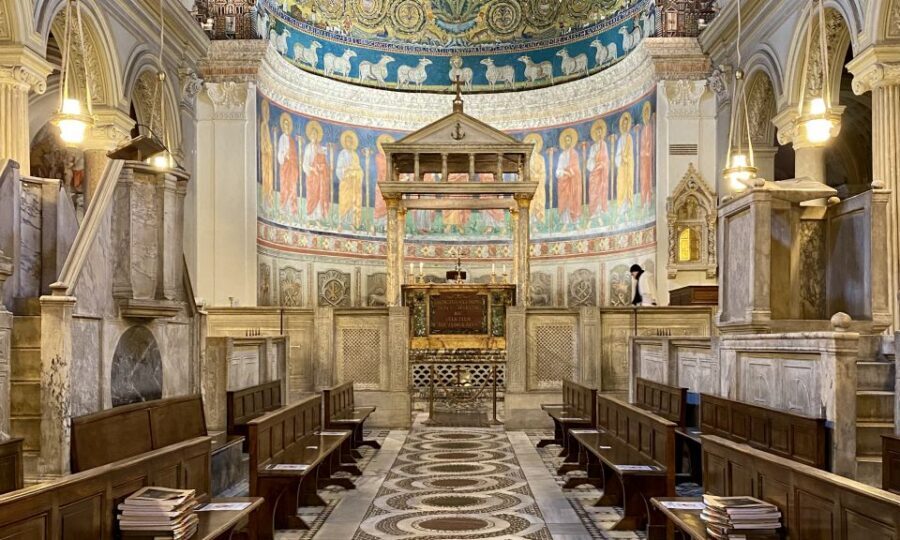
- Golden mosaic context first: you learn what you’re looking at before you go underground
- Mithraic temple + underground river: one of the best-preserved Mithraic spaces in the city
- 4th-century martyr frescoes: early-Christian stories of persecution and suffering, shown in paint
- Optional Santo Stefano Rotondo: added time for circular architecture and martyrdom frescoes
- Headsets included: helpful in stone corridors and rooms that swallow sound
Entering St. Clement’s: the golden mosaic that sets the rules
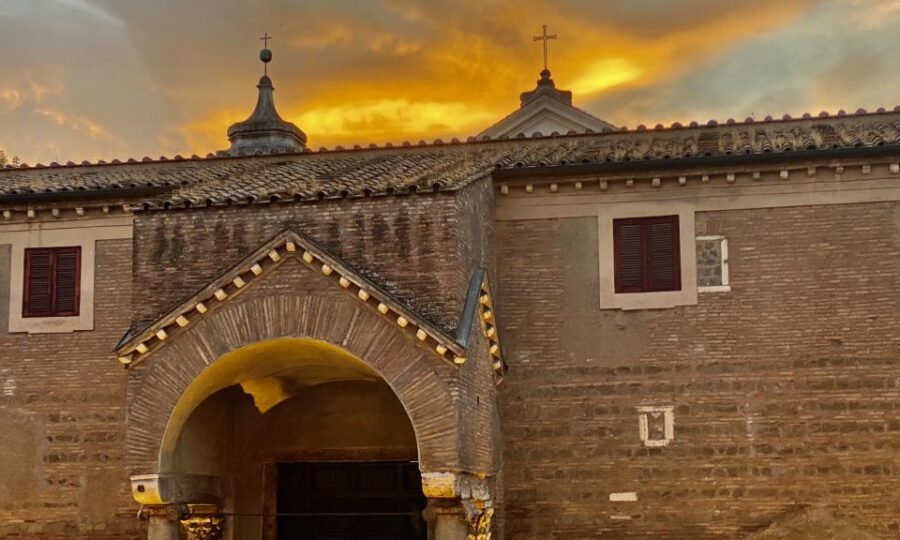
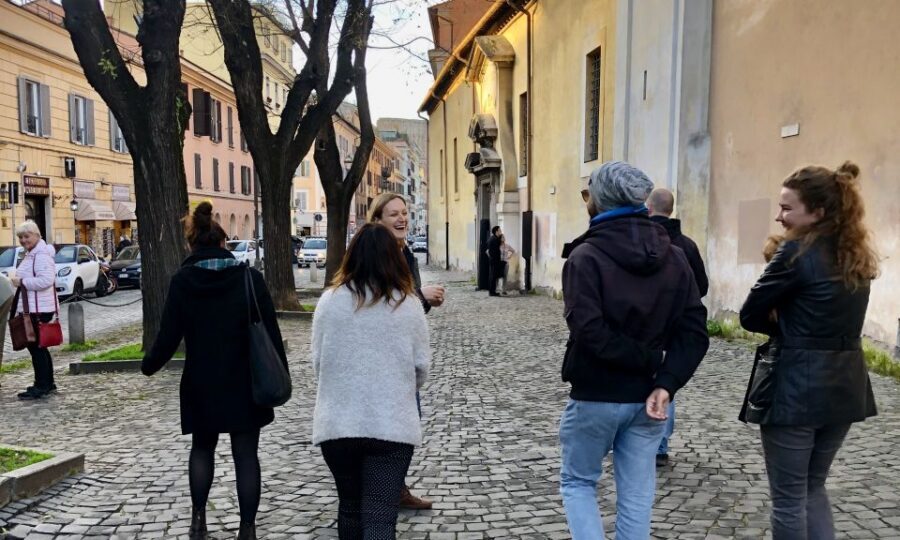
Most tours begin at Piazza di San Clemente (the meeting point can also be listed at Basilica di San Clemente al Laterano, depending on your option). Either way, you’re heading for a basilica that’s famous for one thing: it wasn’t built on blank ground. It was built on top of earlier Rome—religion, street life, and all.
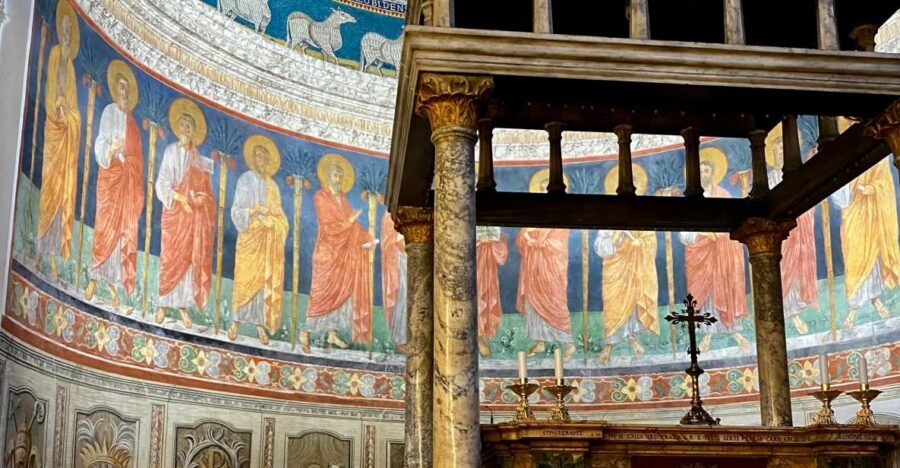
Before anyone takes you underground, you first stand in the 12th-century basilica and look at the apse mosaic. This isn’t just pretty decoration. The guide explains the spiritual symbolism of the mosaic and how it fits into Christian storytelling. For you, this matters because once you go down 14 meters, it’s very easy to treat everything like spooky sightseeing. The mosaic gives you a frame: you start to recognize what the church wanted to communicate, and then you see how the layers below connect to older beliefs.
This is where I think the best guides earn their pay. People who have taken this tour often single out guides for enthusiasm and clear explanations (Francesca is one name you’ll hear), and that’s not a random compliment. In spaces like this, details don’t stay “optional.” They become the difference between seeing artifacts and understanding why they were placed where they were.
You can also read our reviews of more tours and experiences in Rome.



The layered descent: from St. Clement’s world to early Christian frescoes
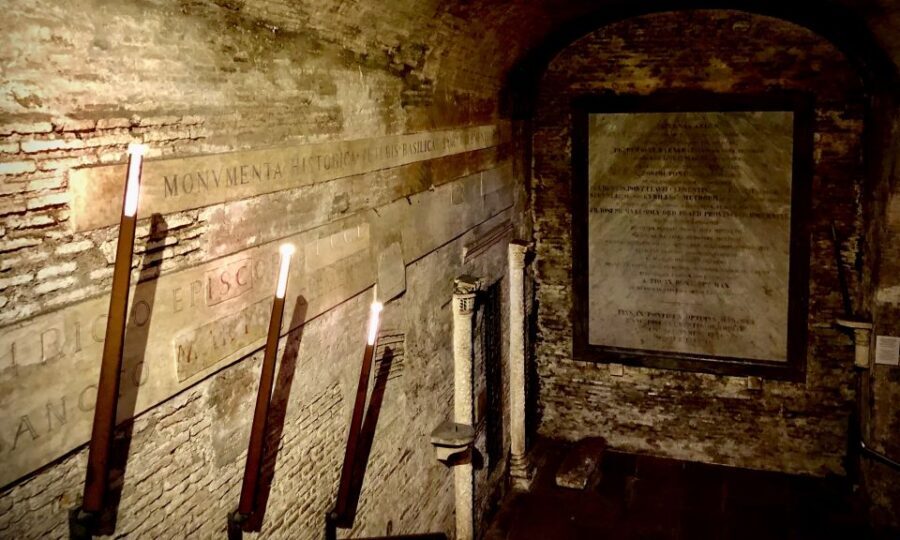
Next comes the drop. You go 14 meters down into the older complex beneath the basilica. The tour focuses on an underground 4th-century church built directly over the home of St. Clement, described as the third pope of Rome. That’s the backbone of the experience: the idea that Christian sacred space absorbed earlier space.
In this lower church, you’ll see some of the earliest Christian frescoes associated with martyrs. The paintings depict the lives and martyrdoms of early Christians, with the persecution context explained by your guide. What you should take seriously here is the emotional tone the images create. Even without a complicated lesson on doctrine, the frescoes communicate fear, endurance, and faith under pressure.
The practical upside of going with a guide is that frescoes are rarely “obvious.” Painted scenes often overlap with architecture and worn surfaces. A good guide points out what to look for—gestures, figures, story elements—so you don’t just walk through the room wondering what you’re supposed to notice.
There’s also a slow shift in how you experience the building. From above, you get the sense of a grand church. Below, you feel like you’re inside a sealed memory box. It’s not just history—it’s physical history, in stone and damp air, with echoes.
The Mithraic temple and the underground river: Rome before Christianity
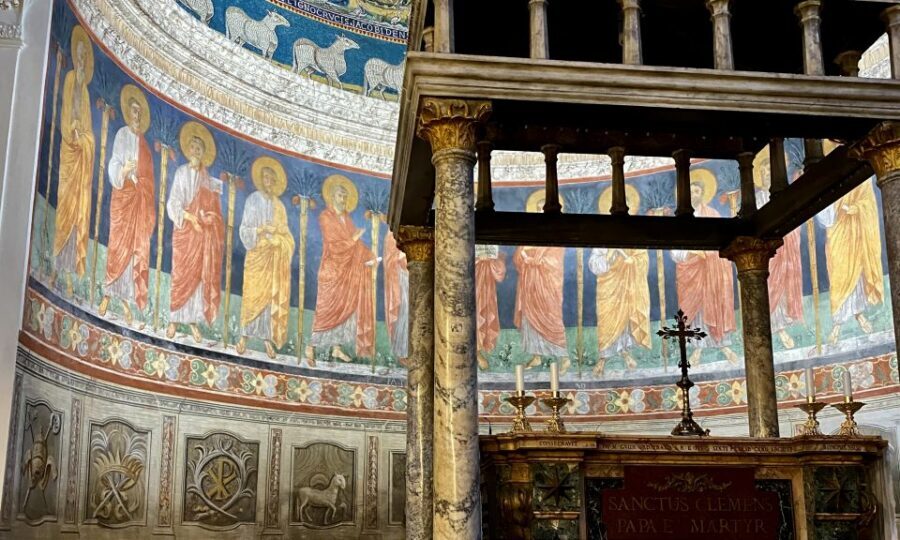
Then the tour changes gears again. At the lower levels you’ll reach one of Rome’s best-preserved Mithraic temples, a major relic of Roman pagan cult life. This is where the tour earns its “off-the-beaten-path” reputation, because you’re not just seeing a church. You’re seeing part of the spiritual landscape that existed before Christianity took over public imagination.
Mithraism is often talked about in big-picture terms, but underground temples like this make it real. You’ll also hear about hidden rituals and esoteric rites—your guide will connect what the cult believed and why sites like this mattered. I like this approach because it doesn’t treat paganism like a strange sideshow. It places Mithraic devotion in the real world of Roman religion: practices, community, and the search for meaning.
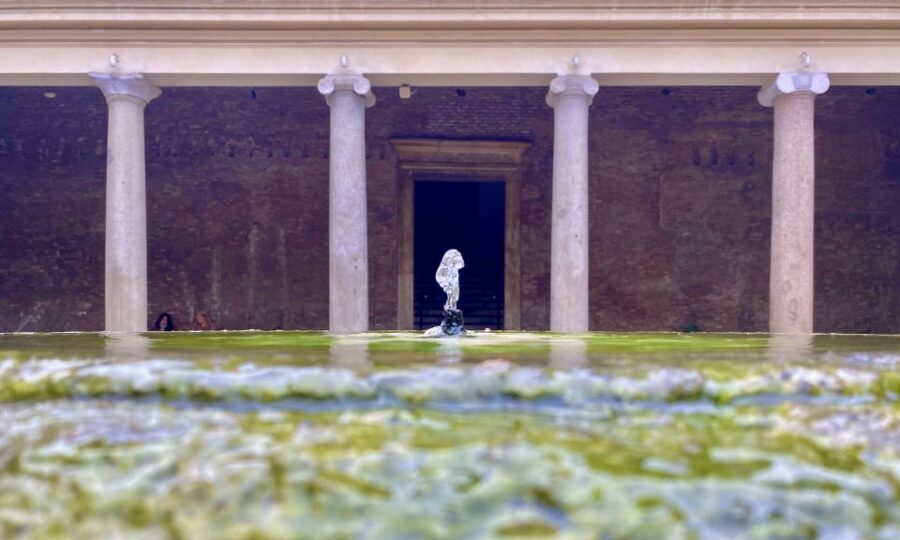
One of the most memorable elements is the underground river atmosphere. It’s not a loud gimmick. It’s the kind of environmental detail that makes the space feel active, alive, and slightly uncanny. That added sensory layer helps you understand why people built sacred spaces the way they did. Water, stone, echoes—these aren’t accidental.
If you’re into archaeology, pay attention to the guide’s pacing here. The Mithraic area can feel like a puzzle, and the best guides take you through it step by step so you don’t get lost in impressive-but-uninterpreted stone.
Understanding the symbolism: why your guide matters most here
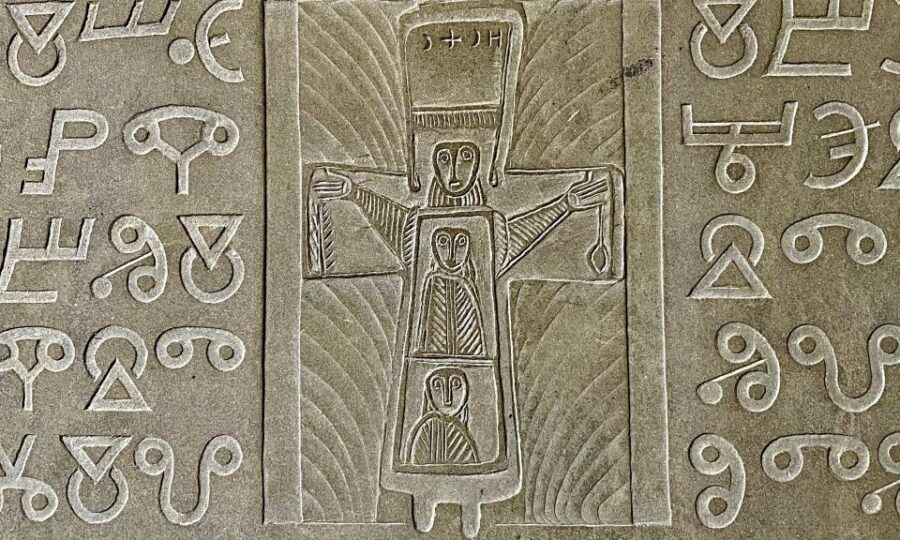
This tour works because the guide’s job isn’t only facts. It’s translation—turning architecture and imagery into something you can “read.” The early Christian frescoes, the apse mosaic symbolism, and the Mithraic temple all point to a similar idea: religions reshape existing spaces and reuse meaning.
You’ll see this layering in how the site is organized. The 12th-century basilica isn’t separate from what’s underneath. It’s built on the past, physically and symbolically. And that’s why tours without a guide often feel incomplete. You can absolutely walk through the rooms and admire the art. But to connect pagan cult spaces to early Christian martyr narratives, you need someone to help you connect the dots.
This is also why names from past tours come up repeatedly. People often mention guides like Paul (described as an archeologist and professor) and Tom, and you can guess why: in a place like San Clemente, accuracy and storytelling pace both matter. When a guide answers questions well and explains symbolism without rushing, the whole experience clicks.
The optional extension: Santo Stefano Rotondo’s circular martyrdom frescoes
If you choose the extension, you’ll add about 45 minutes at Santo Stefano Rotondo. There’s usually a short walk between the sites—roughly 15 minutes on foot—and then you move into a different atmosphere.
Santo Stefano Rotondo is known for its circular architecture and for haunting frescoes focused on early Christian martyrdom. This is a continuation of the same stories you see below at San Clemente, but with a different artistic language and a different spatial feel. Instead of descending into an under-church “time capsule,” you’re stepping into a church designed to shape how the eye moves around the space.
A key caution: these frescoes include graphic martyrdom scenes, and the information notes they may not be appropriate for children. For you, that means you should judge the tone of the extension based on the group. Adults who handle dark art okay will probably find it powerful rather than shocking. Families with kids who get easily upset should consider whether the first basilica alone is enough.
Also, the extension can occasionally be unavailable due to special events or liturgical celebrations. If it’s not offered that day, your tour adjusts to keep the total duration the same. So you still get the core experience.



Price and time: is $70 per person worth it?
At about $70 per person for a tour that runs 1 to 2 hours depending on whether you add Santo Stefano Rotondo, the value depends on what you want from Rome.
If you just want quick highlights, there are cheaper options that don’t involve stairs down into stone rooms. But if you want a high-density, one-of-a-kind “Rome layers” experience, this price makes sense. You’re paying for:
- a live guide who translates architecture and frescoes into a coherent story
- entrance to San Clemente
- optional guided time at Santo Stefano Rotondo
- headsets to hear clearly in stone spaces
You’re also getting a strong return on your time. The total outing stays compact, and the underground portion is genuinely distinctive. In a city where you can spend half a day in a single neighborhood with only moderate payoff, this feels like a focused hit.
One more value point: this can work well even if your group is small. While group size isn’t guaranteed, some guests report very small groups, and you can also book private group options.
Practical tips: clothing rules, photography limits, and comfort
Underground means temperature and surfaces change. You’ll want comfortable shoes, because you’re moving through historic spaces with uneven footing and stairs.
The site has a clear dress code:
- no shorts
- no short skirts
- no sleeveless shirts
Inside rules include:
- no video recording
- no photography inside
Also, no food and drinks, no pets, and no weapons or sharp objects. If you’re traveling light, that part is easy—just plan to keep your hands free.
Finally, remember this is an underground tour. If you’re worried about tight spaces, take the warning seriously: it isn’t suited to people with claustrophobia. And it’s not accessible for wheelchair users due to architectural structures inside and under the basilica. If that affects you, consider sticking to Rome sites that are fully street-level.
Who should book this tour (and who should skip it)
This is a great fit if you want early Christian art plus pagan Roman religious context in one visit. You should especially like it if:
- you enjoy frescoes, symbolism, and architectural layers
- you want the “before Christianity” part of Roman religion explained clearly
- you like guided interpretation more than solo wandering
It’s not the best fit if you:
- can’t handle enclosed spaces (claustrophobia warning is explicit)
- need wheelchair accessibility (the tour is not accessible)
- are traveling with kids who may be sensitive to graphic martyrdom imagery
If you fall somewhere in the middle, the core San Clemente experience may still be worth doing even without the Santo Stefano Rotondo extension, depending on your comfort level with darker scenes.
Should you book the St. Clement underground tour?
Yes, if you want a concentrated dose of Rome that goes beyond the usual “big-name” sights. The best reason to book is the structure: you start with the golden apse mosaic, you descend into early Christian frescoes, and then you reach the Mithraic temple—so the story doesn’t feel like random ruins. It’s a sequence.
I’d book especially if you value strong guiding. Multiple people highlight guides who are easy to follow, enthusiastic, and able to answer questions, and that matters in a place where symbolism is the whole point.
FAQ
FAQ
How deep is the underground portion at St. Clement’s?
The tour goes 14 meters below the Basilica of San Clemente.
How long is the tour?
The guided experience is listed as 1 hour for St. Clement’s, with an optional extension adding about 45 minutes for Santo Stefano Rotondo. The overall duration is described as 1 to 2 hours depending on the option.
What’s included in the price?
It includes an expert live guide, entrance fees to the Basilica di San Clemente, and headsets. If you select the extension, guided access to Santo Stefano Rotondo is also included.
Can I add Santo Stefano Rotondo?
Yes. There is an optional 45-minute guided visit to Santo Stefano Rotondo. It may occasionally be unavailable due to special events or liturgical celebrations, and the itinerary may adjust while keeping the overall duration unchanged.
Is this tour wheelchair accessible?
No. The tour unfortunately is not accessible to wheelchair users.
Is photography or video allowed?
No. Video recording is not allowed, and photography inside the sites is not allowed.