REVIEW · CITY TOURS
Vatican City: Sistine Chapel, Museums, Basilica Private Tour
Book on GetYourGuide →Operated by Crazy4rome srls · Bookable on GetYourGuide
The Vatican feels like a maze. This private tour turns that maze into a clear route through the art and faith of Vatican City, with skip-the-line entry and a private guide pacing you through the biggest hits. I love the way it’s built around the areas you actually need to see, and I love the focus on specific masterpieces and courtyards rather than aimless wandering. One consideration: at four hours, it’s a fast, high-density visit, so if you prefer slow and quiet, you may want extra time on your own afterward.
You’ll start at TMark Hotel Vaticano and spend the bulk of your time inside the Vatican Museums before heading to the Sistine Chapel and then St. Peter’s Basilica. The flow matters here: you move with purpose, hit the major rooms, and still get a proper look at the “wow” spaces like the ceiling of the Sistine Chapel and Bernini’s work in the Basilica.
Dress and crowd realities are real in the Vatican. Bring a passport or ID, and plan clothing that fits the rules (no shorts, no short skirts, no sleeveless shirts), plus headsets if your group ends up larger than five people.
In This Review
- Key highlights at a glance
- A 4-hour Vatican circuit: Museums, Sistine Chapel, and St. Peter’s in one plan
- Meeting at TMark Hotel Vaticano and beating the first entry crush
- Vatican Museums highlights: pine cone courtyards, Egyptian echoes, and Raphael rooms
- Cortile della Pigna and the pine cone fountain
- Cortile Ottagono: the octagonal rhythm
- Egyptian Museum: Ancient Egypt artifacts in modern Vatican halls
- Gallery of Candelabra: 2nd-century pieces from Otricoli
- Gallery of Tapestries: Flemish tapestries tied to Raphael’s students
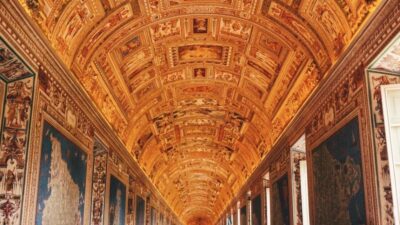
- Gallery of Maps: historic views of the world
- Renaissance rooms linked to Julius II: Raphael’s apartments and Borgia connections
- Sistine Chapel: getting the most from 30 minutes without feeling rushed
- St. Peter’s Basilica and St. Peter’s Square: where art meets spirituality
- Private guide quality that matters: language choice, crowd flow, and pacing
- What to bring and what to wear (so entry goes smoothly)
- Price and value: is $717.06 per group up to 1 worth it?
- Who should book this Vatican private tour (and who might not)
- Should you book this Vatican City private tour?
Key highlights at a glance
- Vatican Museums route focused on the most important rooms, not random sections
- Cortile della Pigna with the pine cone fountain tied to ancient Roman religious mythology
- Candelabra and antiquities including 2nd-century pieces from Otricoli
- Raphael connections through the apartments painted for Julius II and students’ Flemish tapestries
- Sistine Chapel ceiling and Last Judgment with guided orientation in a 30-minute block
- St. Peter’s Basilica must-sees including Michelangelo’s Pietà and Bernini’s Baldacchino
A 4-hour Vatican circuit: Museums, Sistine Chapel, and St. Peter’s in one plan
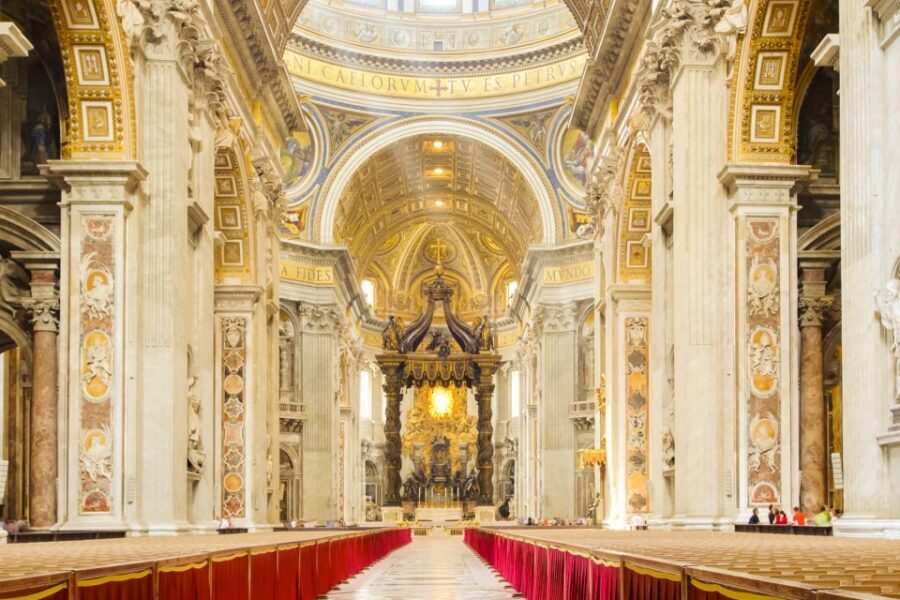
This is a tightly run “big three” Vatican experience: Vatican Museums first, then the Sistine Chapel, and finally St. Peter’s Basilica and St. Peter’s Square. The attraction isn’t just that these places are famous. It’s that they’re famous for different reasons, and the tour structure helps you feel the shift—from art history and ancient objects, to Renaissance masterpiece painting, to lived spiritual space in the Basilica.
The time breakdown is honest: about two hours for the Museums, half an hour in the Sistine Chapel, and one hour in St. Peter’s Basilica, followed by a short orientation at St. Peter’s Square. That means you’ll see the main rooms without getting stuck in the long waits that can flatten a day in Rome. It also means you won’t have unlimited linger time in every room, so the guide’s focus is part of the value.
If you want to understand what you’re looking at—why a courtyard matters, what a room theme is, why a painting type was commissioned—this structure is built for you. If you’re the type who loves to slowly sit with one artwork for a long stretch, you’ll still get the highlights, but you might wish you had more hours to go deeper.
You can also read our reviews of more city tours in Rome

Meeting at TMark Hotel Vaticano and beating the first entry crush
The tour starts at a practical meeting point: at the entrance of the Vatican Museums, Viale Vaticano 99, at the exit of TMark Hotel. That matters because the Vatican has a lot of entrances and a lot of foot traffic. Meeting at a clearly stated location lowers the risk of “where do we go?” stress right before you need your energy.
The big win here is the skip-the-line ticket included for the Vatican Museums. In a place like this, line time can swallow your day. With a private guide, you also don’t just enter faster—you’re guided faster into the meaningful rooms so you feel like your time counts.
You should also plan to bring your passport or ID, since you’ll need it for entry. And do remember that the tour ends back at the meeting point, so you aren’t left figuring out transit after you’ve finished the big sites.
Vatican Museums highlights: pine cone courtyards, Egyptian echoes, and Raphael rooms
The Vatican Museums can feel endless if you go in with no plan. This tour helps you avoid the “I saw a lot, but I’m not sure what” problem by steering you toward major highlights and tying them together with context.
Here are some of the standout moments you’ll route through:
Cortile della Pigna and the pine cone fountain
You’ll visit the Cortile della Pigna, famous for its pine cone fountain. The detail I like is the ancient connection: the pine cone once stood next to the Temple of Isis. That’s the kind of breadcrumb that makes a courtyard more than scenery. Suddenly, you’re not just looking at a big object—you’re looking at a cultural message recycled through time.
Cortile Ottagono: the octagonal rhythm
Next up is the Cortile Ottagono, the octagonal courtyard. Courtyards like this are where you can quickly reset. Your eyes get a visual break from paintings and galleries. It’s also a good place to notice how Vatican architecture and sculpture create a kind of stage set for different eras.
You can also read our reviews of more private tours in Rome



Egyptian Museum: Ancient Egypt artifacts in modern Vatican halls
You’ll also see antiquities from Ancient Egypt, including the Egyptian Museum. Even if your knowledge of Egyptian history is limited, the presence of these artifacts gives you a broader sense of the Vatican collection as a whole: it’s not just Renaissance and Roman Catholic art. It’s a museum built from centuries of collecting, preserving, and re-contextualizing.
Gallery of Candelabra: 2nd-century pieces from Otricoli
Another highlight is the Gallery of Candelabra, where you’ll see candelabra from Otricoli dating to the 2nd century. This is one of those moments where a guide’s framing helps. A simple “here’s an object” visit can flatten. With context, you understand what kind of culture made it, and why it ended up in this collection.
Gallery of Tapestries: Flemish tapestries tied to Raphael’s students
The Gallery of Tapestries brings in Flemish tapestries created by students associated with Raphael’s artistic circle. Tapestries are often overlooked compared to painting, but here they matter because they show craftsmanship at a large scale and connect back to Renaissance influence.
This is a great stop if you want the Vatican to feel more hands-on. It’s visual art, yes, but it’s also woven material culture.
Gallery of Maps: historic views of the world
Then come historic maps in the Gallery of Maps. This is the kind of room that can turn a “museum visit” into a “Rome thinking session,” because it shows what people believed about the world at the time those maps were made. It’s not about accuracy in the modern sense. It’s about worldview.
Renaissance rooms linked to Julius II: Raphael’s apartments and Borgia connections
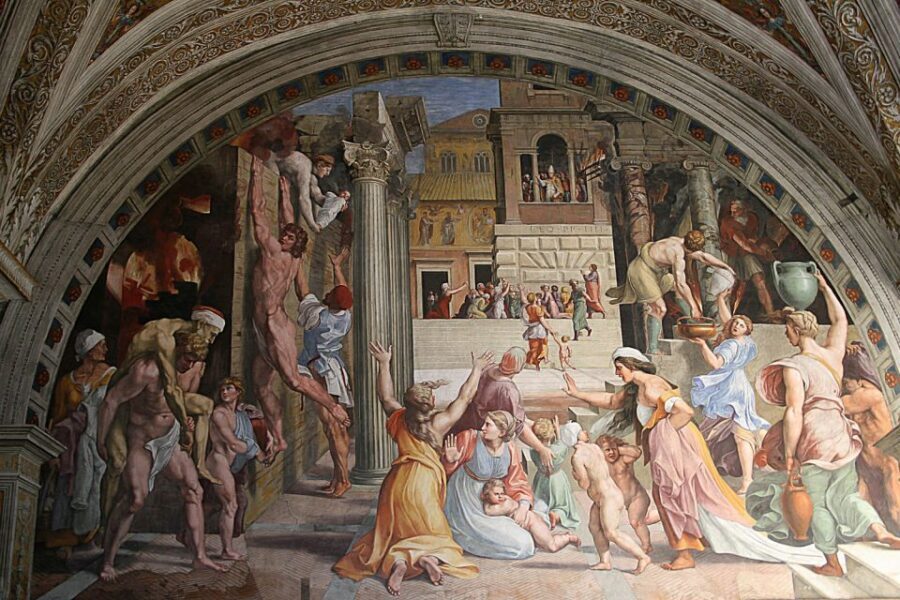
You’ll also visit one of the beautiful Renaissance rooms, then enter the apartments that Raphael painted for Julius II. These rooms are valuable because they connect you directly to patronage and power—who commissioned art, and what that art was supposed to signal.
After that, you’ll go into the private chambers of Borgia Pope Alexander VI. That shift adds a different kind of energy to your museum time. You’re moving from major court art into a more politically charged layer of Vatican history.
The practical takeaway: this Museums portion is designed so you don’t just clock rooms. You build a mental story across ancient objects, Renaissance art, and papal commissions.
Sistine Chapel: getting the most from 30 minutes without feeling rushed
The Sistine Chapel stop is 30 minutes, guided. That’s short, but it’s also realistic. The Sistine Chapel works best when you don’t arrive already overwhelmed by the full museum experience. With a focused route, you arrive ready to notice the key visual moments.
The main targets are Michelangelo’s ceiling painting and the frescoes in the chapel, including the Last Judgment. The reason this guided orientation helps is simple: from a distance, it can be hard to separate what you’re seeing into meaningful parts. A guide can point you toward the big compositions and help you understand the structure of the narrative across the ceiling and the chapel’s focal wall.
Also, the tour’s order helps. By the time you reach the Sistine Chapel, you’ve already built a foundation of context through Raphael, Julius II, and the broader museum narrative. That makes Michelangelo feel less like an isolated “masterpiece moment” and more like a culmination of the Vatican’s artistic ambition.
If your top priority is Michelangelo’s work and you want to avoid guesswork, this is a strong plan.
St. Peter’s Basilica and St. Peter’s Square: where art meets spirituality
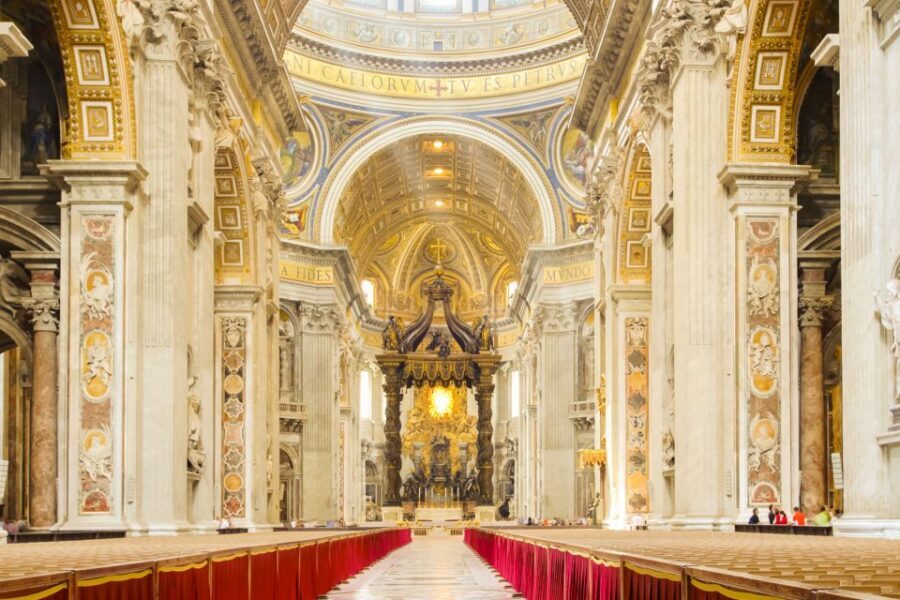
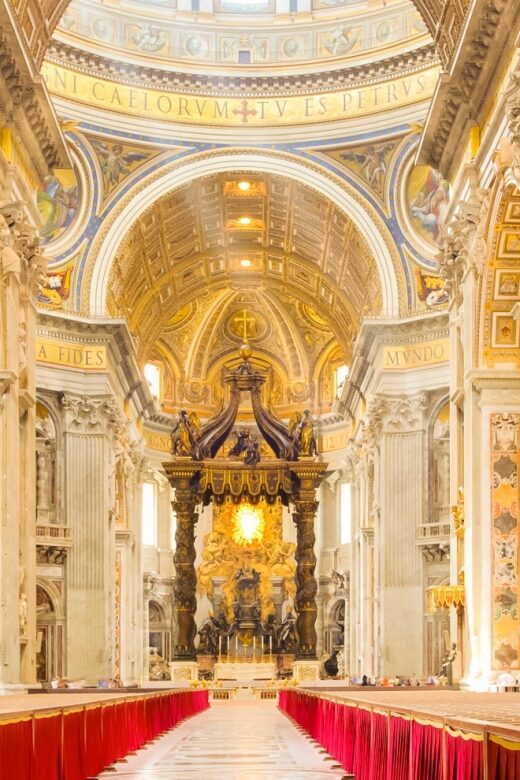
After the Sistine Chapel, you move into St. Peter’s Basilica for a one-hour guided visit. This part is about both scale and meaning. The Basilica isn’t just a place to look; it’s a space meant to be felt. Your guide’s job here is to point out major artworks and connect them to how the church presents faith through art.
Two items you’ll be able to focus on are:
- Michelangelo’s Pietà
- Gian Lorenzo Bernini’s St. Peter’s Baldachin
These aren’t random “famous works.” They represent different kinds of artistic impact. Michelangelo’s work draws you toward emotion and form, while Bernini’s Baldachin is all about grandeur and theatrical presence—architecture and sculpture working together.
Then you’ll finish with a visit at St. Peter’s Square for about 30 minutes. That square is useful because it gives you orientation. You’re not just inside the Basilica; you’re stepping out into the broader public space tied to papal life and Catholic tradition.
Private guide quality that matters: language choice, crowd flow, and pacing
This is a private group tour with a live guide. Languages offered include Spanish, Dutch, English, French, Portuguese, German, Italian, and Russian. In the Vatican, language quality isn’t a small detail. Clear explanations help you move faster mentally, and that’s the real time-saver.
You may also run into a practical crowd rule: headsets are necessary for groups of more than five people, available at €3 per person. That’s good to know because it prevents the classic problem—everyone leaning in, everyone missing parts. If you’re with a small group, you might not need them, but it’s worth planning for.
One more thing: the tour includes a wheelchair-accessible option. If mobility matters for you, having a guide who can keep the route practical is a real advantage. The Vatican is packed, and your visit quality depends heavily on how well someone can navigate it while staying oriented.
What to bring and what to wear (so entry goes smoothly)
This tour has a couple of hard requirements, and they’re easy to handle if you plan ahead.
Bring:
- Passport or ID card
Dress rules (not allowed):
- Shorts
- Short skirts
- Sleeveless shirts
This is the kind of situation where last-minute outfit changes can eat time. I’d rather you prepare once than risk getting held back at the door.
Also remember: food and drinks aren’t included. Plan a simple break strategy before and after. Vatican days are long on the body even when they’re short on time.
Price and value: is $717.06 per group up to 1 worth it?
At $717.06 per group (listed for up to 1 traveler), this is not a budget-friendly tour. So the value question is fair.
Here’s what you’re paying for, and why it can be worth it:
- Skip-the-line ticket for the Vatican Museums
- Admission coverage for the Sistine Chapel
- Entry and guided time for St. Peter’s Basilica
- A private guide for the full route (Museums, Sistine Chapel, Basilica, and Square)
If you only have a half day in Rome and you want the major sites with less stress, the math can make sense. The time you gain from skipping queues is money saved in the bigger sense: fewer wasted minutes, more meaningful viewing.
If you’re traveling with a larger group, this type of private pricing can be harder to justify. But if you’re a solo traveler, a couple, or someone who wants focused attention (including mobility considerations), the value often lands more cleanly.
A practical way to judge it for your trip: ask yourself if you want structure and interpretation, or if you’d rather wander and learn as you go. This tour is built for structure.
Who should book this Vatican private tour (and who might not)
This fits best if you:
- Want a focused highlights route through Vatican Museums, Sistine Chapel, and St. Peter’s Basilica
- Prefer a guide to help you connect what you’re seeing (not just check items off a list)
- Have limited time and want to reduce wasted waiting
- Care about getting the most from major artworks like Michelangelo’s Last Judgment and Bernini’s Baldachin
You might want a different approach if you:
- Are the type who needs lots of time in one room before moving on
- Prefer a fully self-directed visit with no scheduled flow
Still, even if you’re more flexible, this kind of private route can work as your “anchor visit,” and then you can add extra independent time where you personally want more.
Should you book this Vatican City private tour?
If you want the Vatican’s biggest moments in one clean, guided half-day—Museums through Sistine to St. Peter’s—this is a strong option. The biggest reasons to book are the skip-the-line entry and the way the route is organized around meaningful highlights, including Raphael-linked rooms and major works in the Basilica.
Before you book, do two quick checks: make sure your clothing follows the Vatican dress rules, and decide if four hours is enough for your style of travel. If you’re okay with a brisk but guided pace, you’ll likely leave with a clearer sense of what you saw and why it mattered.