REVIEW · ROME
Rome: Dark Past Walking Tour with Capuchin Crypt Ticket
Book on GetYourGuide →Operated by Rome - Tour · Bookable on GetYourGuide
Rome is famous for the bright stuff. This tour goes straight for the shadows. You start in the Capuchin Crypt, then wind through Rome’s big landmarks while your guide stitches together facts, legends, and the kind of stories locals still love to repeat. I especially liked the small-group feel and the way guides such as Fabienne and Sarah can make history feel like a live conversation instead of a lecture.
Two things I love here: first, you get a real entrance ticket to the crypt (not just a look from the outside), and second, the walking route links icons that you’d normally see one by one, turning them into one connected evening. The main drawback is that the experience is not for everyone: it’s a no-photo, bone-filled stop, and the route includes walking through busy areas and some steps. It also isn’t recommended for people with limited mobility.
In This Review
- Key highlights you’ll actually care about
- Start at Piazza Barberini: the quick way to begin without wasting time
- Capuchin Crypt: what you’ll see in 30 minutes (and what to watch for)
- Trevi Fountain: coin-toss myth meets the real crowd problem
- Pantheon: ancient myths, one walking pause that feels like a reset
- Piazza Navona: Baroque spectacle plus a little ghost-story chemistry
- Campo de’ Fiori and Giordano Bruno: the “sad” history stop
- Chiesa Santa Maria dell’Orazione e della Morte: the final mystery
- What you’re paying for: is $76 worth it for 2 hours?
- Who should book this dark-past walk (and who should skip it)
- Tips to get the most out of the evening
- Should you book this Rome Dark Past tour with the Capuchin Crypt ticket?
- FAQ
- How long is the Rome Dark Past walking tour?
- Where do I meet the guide?
- What’s included in the price?
- Is food or drinks included?
- Which languages is the guide available in?
- Can I take photos or videos inside the Capuchin Crypt?
- Is the tour suitable for children or mobility needs?
- What should I bring and what should I avoid wearing?
Key highlights you’ll actually care about
- Capuchin Crypt ticket included: you visit the underground rooms, with a guided 30-minute slot.
- No photos inside the crypt: you’ll rely on your eyes and memory (and your guide’s context).
- Trevi Fountain + Pantheon, linked by stories: you’ll hear legends tied to real monuments.
- Baroque squares and one brutal name: Piazza Navona’s ghostly palaces and Campo de’ Fiori’s Giordano Bruno.
- Small group with headsets: you can hear the guide without sprinting through the crowd.
Start at Piazza Barberini: the quick way to begin without wasting time
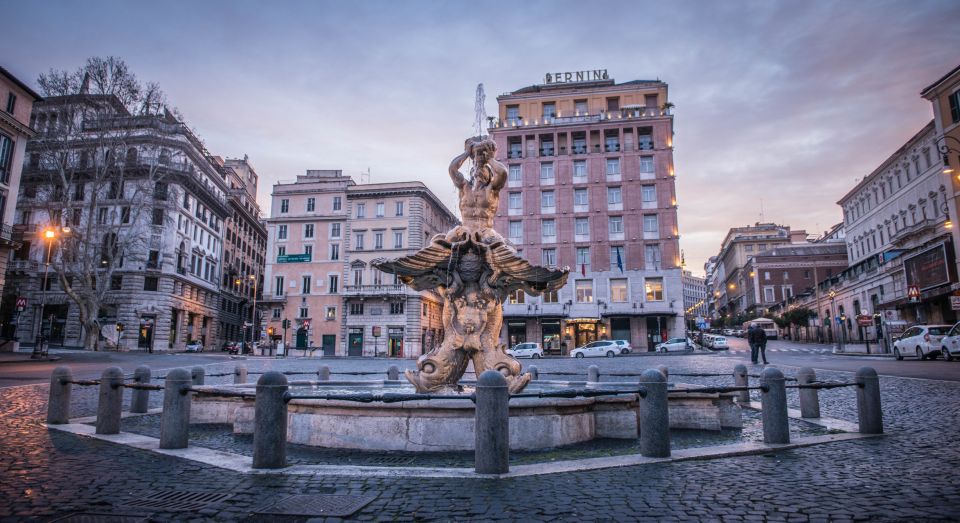
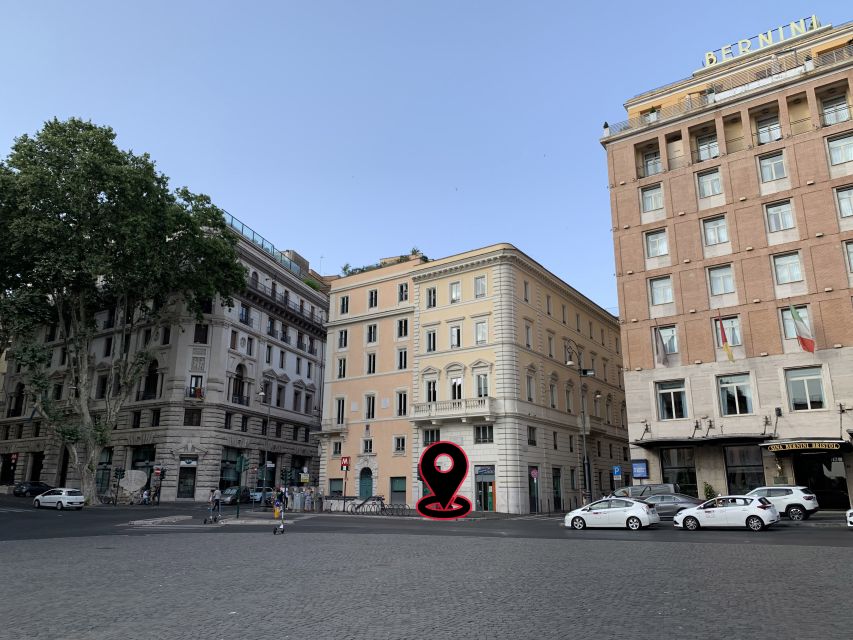
The meeting point is at the corner of Piazza Barberini, 21 and Via di S. Nicola da Tolentino, next to Hotel Bernini. This matters more than you might think. Rome is easy to get turned around in after dark, so meeting right by a major landmark helps you start clean.
The tour lasts about 2 hours, and the format is designed for pace. Expect a mix of short walks and guided stops—enough time to see the monuments, but not so long that you feel stuck in transit. You’ll also get headsets, which are a big deal in Rome when foot traffic gets heavy around Trevi and the major squares.
Guides on this route vary by language and style, but the common theme in the feedback is strong storytelling. You may hear the name Fabienne or Sarah attached to past tours—both praised for clear explanations and energizing delivery.
You can also read our reviews of more tours and experiences in Rome.



Capuchin Crypt: what you’ll see in 30 minutes (and what to watch for)
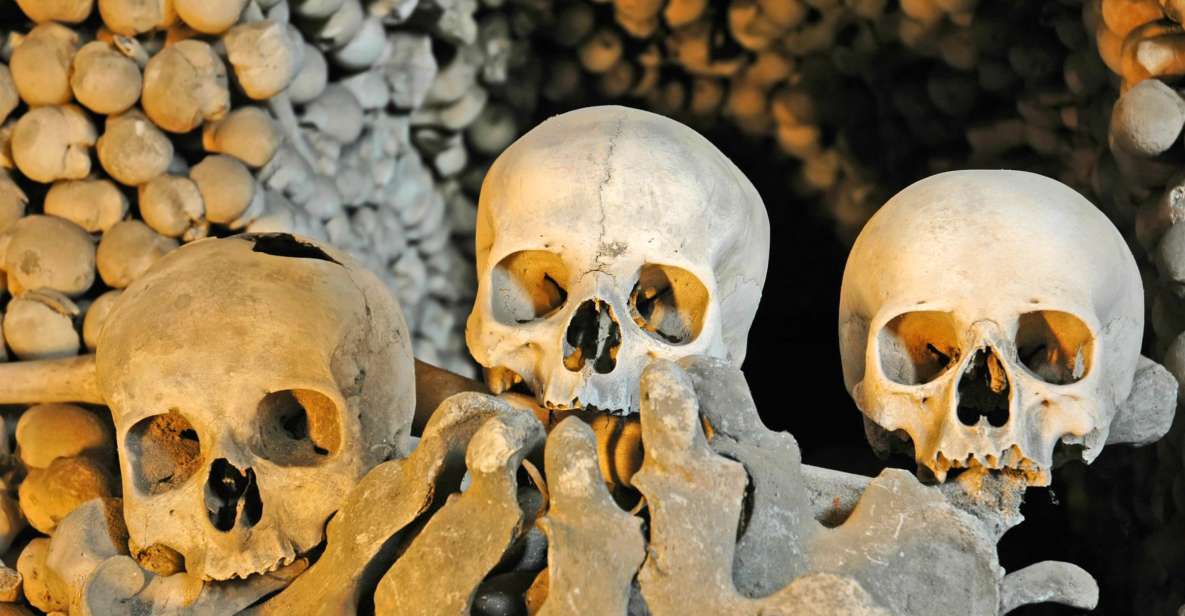
The first and most intense stop is the Capuchin Crypt, where you’ll get a guided visit for about 30 minutes. This is the place that sets the tone for the whole evening: underground rooms decorated with the skeletal remains of Capuchin Friars. It’s not a vague “dark history” theme. It’s literal.
Here’s what you should be mentally prepared for:
- It’s underground, so the atmosphere feels closed and focused.
- You’ll be surrounded by human remains arranged in ways that can be unsettling.
- The guide’s job is to make sense of what you’re seeing—religion, death rituals, and the story Rome built around them.
Important rules before you go in: no pictures or videos are allowed inside the crypt. So don’t plan to capture it like an attraction. Plan to experience it, then talk it through with your guide as you come back up.
Also note the clothing rules. Shorts, short skirts, and sleeveless shirts aren’t allowed, and this is one of those moments where dressing appropriately also saves you from last-minute stress. Bring your ID or passport, and wear comfortable shoes—because after the crypt you’ll be walking again.
Trevi Fountain: coin-toss myth meets the real crowd problem
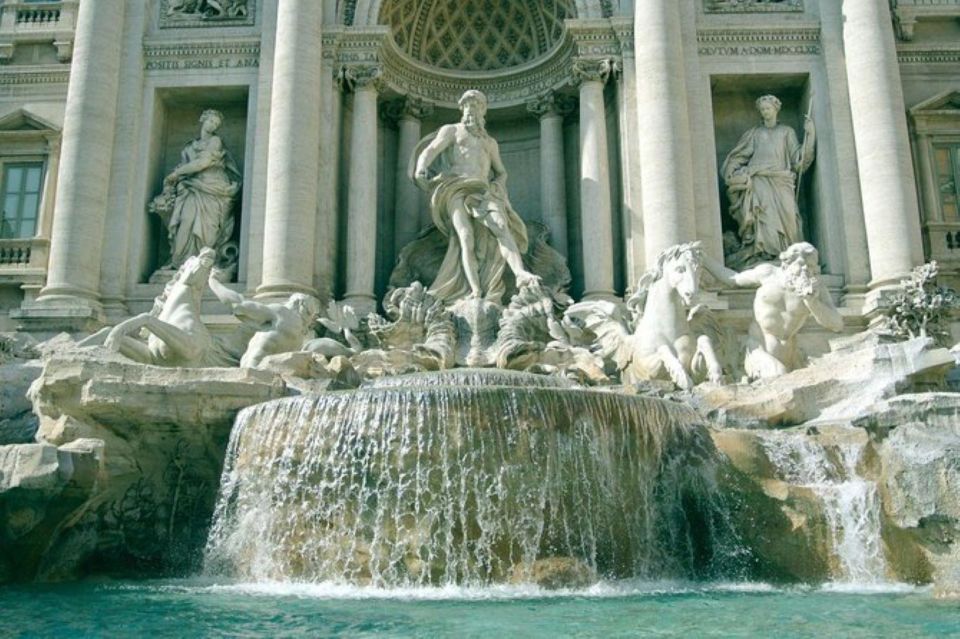
After the crypt, you head to the Trevi Fountain for about 20 minutes of guided time. Trevi is famously crowded, and this stop can either feel magical or chaotic depending on how you handle the flow.
The value of a guide here is practical: you get help timing your moments so you can actually look at the fountain rather than just stand in the stampede. In past tours, guides have been praised for navigating Trevi’s bustle so it stays enjoyable.
You’ll also hear the stories tied to wishes—this is where the classic ritual fits the place. You’ll be shown the connection between the fountain and the legend of making a wish, including the well-known coin toss idea, and your guide ties it to the monument’s Baroque personality.
A small consideration: you won’t have unlimited time at Trevi. Plan to decide early what you want most—full façade view, a few angles for photos outside the main crowd flow, or listening for the myth-and-history layer.
Pantheon: ancient myths, one walking pause that feels like a reset
Next is the Pantheon, with around 15 minutes guided. This is one of those Rome stops where you can easily fall into autopilot—big building, check the box, move on.
A dark-past tour changes that. Your guide connects myths to what’s physically in front of you, so the Pantheon doesn’t feel like a separate chapter from the crypt. It becomes another stop in the same theme of Rome turning belief into stone.
In a short visit, the best strategy is to let the guide point out what to notice rather than trying to do everything yourself. With only 15 minutes, focus on the main visual anchors your guide brings up, then take a breath once you understand what you’re looking at. This is the “reset” moment where the walk turns less grim and more reflective.
Piazza Navona: Baroque spectacle plus a little ghost-story chemistry
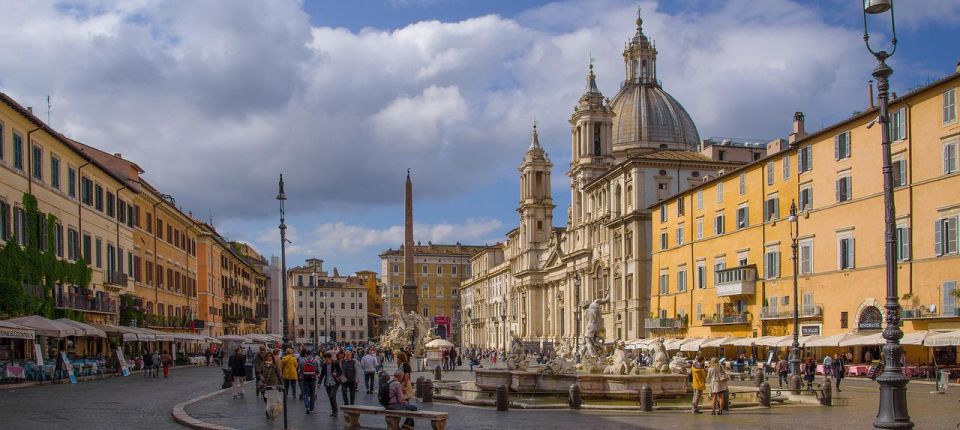
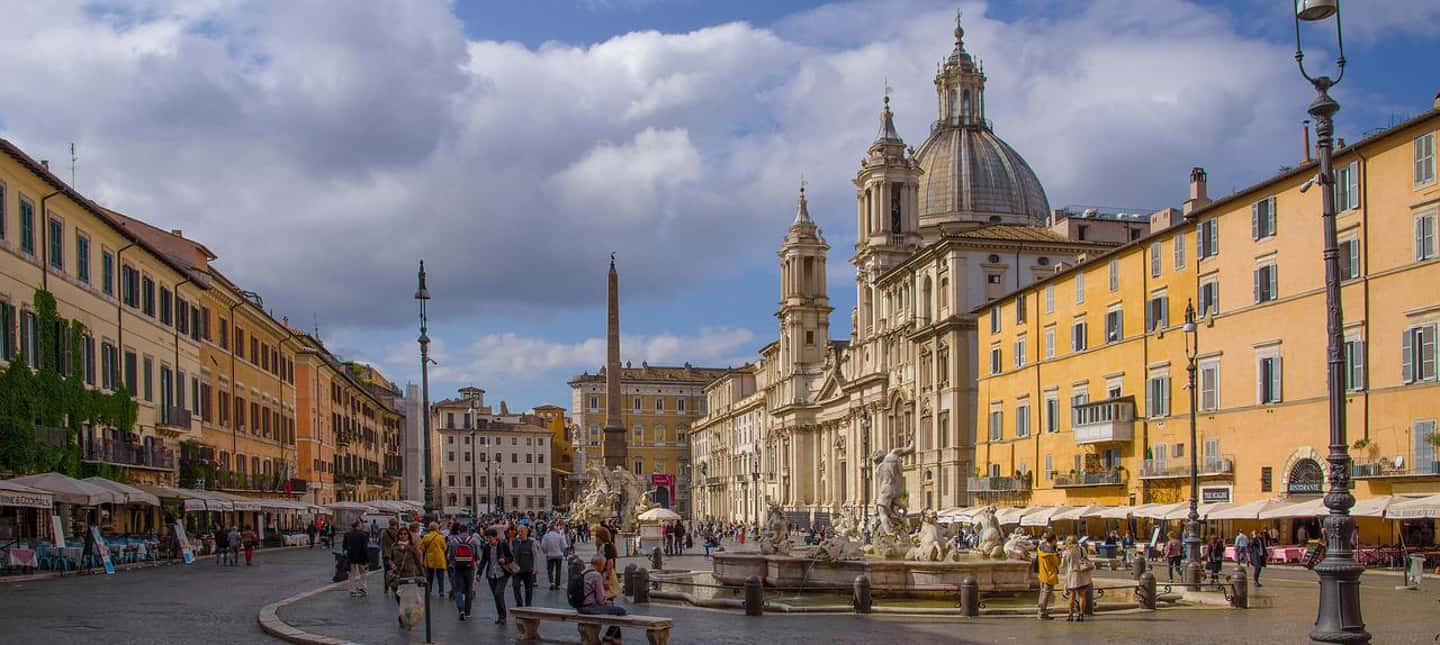
From Pantheon you move to Piazza Navona for about 15 minutes. This is pure Baroque stagecraft: the square is dramatic even without a spooky theme. The guide adds that extra layer—talk of spectral presences and legends connected to the palaces facing the square.
Why this stop works so well in this kind of tour: Piazza Navona is already a show. Your guide helps you read it as more than postcard architecture. You learn to connect the setting to the kinds of stories Rome likes to keep alive—stories that stick because the buildings are so visually loud.
If you’re the type who likes your history with a human pulse (fear, humor, survival, superstition), this is where it often clicks. Some guides are especially strong at mixing scary and funny details, with feedback praising guides for animated storytelling and personal tone.



Campo de’ Fiori and Giordano Bruno: the “sad” history stop
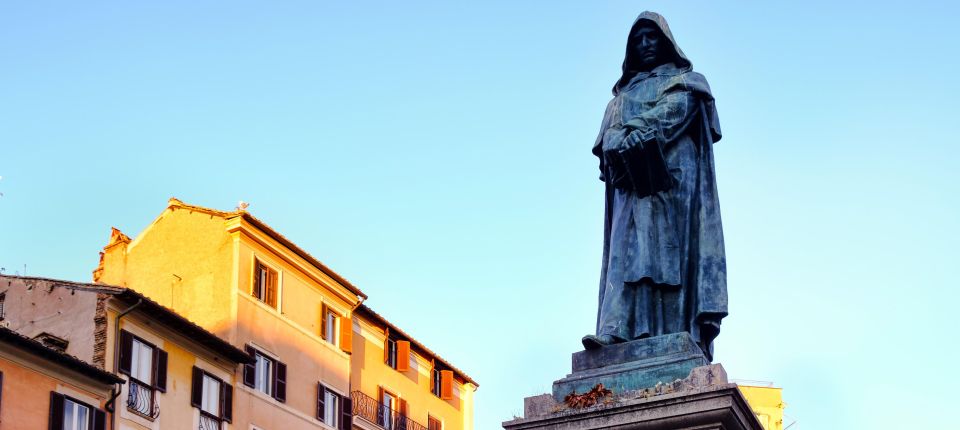
You’ll then head to Campo de’ Fiori for about 15 minutes, where the tour focuses on the history of Giordano Bruno. This is one of those moments when the tour stops being just “fun spooky” and becomes more serious.
The key point for you: Bruno’s story matters in the bigger context of Rome as a place where ideas, authority, and survival collided. Your guide frames it as impressive but sad, which fits the tone of the whole night. The square itself is lively in daylight; at night, with the guide’s explanation, it feels sharper, more weighted.
For me, this stop is a good reason to choose a guided format. Without context, Campo de’ Fiori can feel like another convenient square. With context, it becomes a meaningful location you’ll remember for more than the vibe.
Chiesa Santa Maria dell’Orazione e della Morte: the final mystery
The walk finishes at Chiesa Santa Maria dell’Orazione e della Morte (also called the Church of St. Mary of the Oration and Death). This is your last guided stop, and it’s meant to land the theme: secrets, mystery, and how Rome handles death in both sacred and public spaces.
Your guide unravels the church’s enigmatic tales and leaves you with that Rome feeling—where the surface looks familiar, but the story underneath has layers you only learn if someone points them out.
This ending is also practical. By the time you reach the finish church, you’ve already seen the crypt, major legends, and the serious Bruno story. Ending on a church that matches the theme gives the tour a satisfying close instead of turning into random sightseeing.
What you’re paying for: is $76 worth it for 2 hours?
$76 per person sounds like a lot until you break down what’s included and what you’re avoiding.
You get:
- A live guide
- The Capuchin Crypt entrance ticket
- Headsets
- A route that covers multiple major icons in one flow
The crypt ticket alone usually makes this kind of tour cost-competitive compared with piecing things together on your own, especially when you want the guided context. Also, headsets are a real value feature. In Rome, you’ll hear more and strain less, particularly near Trevi and in open squares where voices carry weirdly.
The biggest value is the time efficiency. In 2 hours you cover: crypt + Trevi + Pantheon + Piazza Navona + Campo de’ Fiori + a final church. That’s a lot of ground for one guided evening, especially with a small-group format.
The trade-off: you’re not getting a slow museum-style experience. This is a walking tour with tight stop windows—built for people who want stories and sightlines, not long lingering.
Who should book this dark-past walk (and who should skip it)
This tour is best for you if:
- You want more than standard monuments and prefer legends tied to real locations.
- You like story-driven guiding. Feedback repeatedly praises guides for passionate, animated narration—people highlighted guides like Célia and Go for turning facts into a night you’ll remember.
- You’re comfortable with macabre themes and curious about how Rome frames death and memory.
Skip it if:
- You’re traveling with children under 12.
- You use a wheelchair or have limited mobility. The tour is not recommended for that.
- You dislike walking at night through crowded areas.
- You want lots of photos. No pictures or videos are allowed inside the crypt, and the theme is built to be experienced rather than captured.
One more practical heads-up: there’s a strict stance on timing. If you arrive late, you won’t be allowed to join the tour. Show up a few minutes early so you’re not stressed trying to find the guide.
Tips to get the most out of the evening
A few practical choices will make this smoother:
- Wear comfortable shoes with grip for cobblestones.
- Bring an umbrella just in case. Rome weather can flip fast.
- Dress within the rules: no shorts, no short skirts, no sleeveless shirts.
- Don’t plan to multitask during the crypt. The value is in listening and looking carefully.
Also, choose your expectations. This tour is not only about shock value. It’s about how stories attach to places—so the Trevi coin myth, Pantheon references, Navona’s palaces, Bruno’s fate, and the final church all connect into one narrative.
Should you book this Rome Dark Past tour with the Capuchin Crypt ticket?
I’d book it if you want a smart, time-efficient way to see Rome’s icons while also learning the city’s darker thread. The Capuchin Crypt ticket included and the guided story flow make it feel like more than a checklist. If you like guided evenings with strong narration—some guides are praised for being personable and even giving helpful dinner tips—this is exactly your kind of experience.
I wouldn’t book it if you’re sensitive to graphic reminders of mortality, you need lots of mobility support, or you need the freedom to take photos in every stop. For the right person, though, this is one of those Rome nights that changes how you see the city the next day.
FAQ
How long is the Rome Dark Past walking tour?
The tour runs for about 2 hours.
Where do I meet the guide?
Meet at the corner of Piazza Barberini, 21 and Via di S. Nicola da Tolentino, next to the Hotel Bernini.
What’s included in the price?
You get a guide, the Capuchin Crypt entrance ticket, and headsets.
Is food or drinks included?
No. Food and drinks are not included.
Which languages is the guide available in?
The live guide is available in English, Italian, Portuguese, Russian, Spanish, and French.
Can I take photos or videos inside the Capuchin Crypt?
No. Pictures or videos are not allowed inside the Crypt of the Capuchins.
Is the tour suitable for children or mobility needs?
It is not recommended for people with limited mobility, wheelchair users, or young children, and it is listed as not suitable for children under 12.
What should I bring and what should I avoid wearing?
Bring your passport or ID card, comfortable shoes, and an umbrella. Avoid shorts, short skirts, and sleeveless shirts. Also don’t bring luggage or large bags.