REVIEW · NAPLES
From Naples: Free Time in Amalfi & Positano
Book on GetYourGuide →Operated by TRAMVIA - Beducci Travel Bus · Bookable on GetYourGuide
The Amalfi Coast, simplified. This day trip strings together Positano and Amalfi with a comfy bus ride, live commentary on the way, and free time that lets you wander at your own pace. I especially like how the crew keeps things moving without micromanaging your schedule, and how drivers like Antonio (often praised for handling tight roads) make the trip feel safe and controlled.
My other big win is the combo of “plan” and “free time”: you get an audio guide for the coast views and then real breathing room in both towns. The ferry portion from Positano to Amalfi is a favorite moment for many people, and it’s the kind of perspective you can’t fake from land. One drawback to consider: your time is split and timed, so if you want a long, slow day in only one town, this may feel a bit compact.
In This Review
- Key things to know before you go
- Why this Naples day trip is such a practical win
- Getting on the right bus: Naples pick-up points and timing
- The bus ride to Positano: where the tour earns its keep
- Positano free time: Santa Maria Assunta, lanes, and your gelato strategy
- Boat time matters: how to enjoy the ferry to Amalfi
- Amalfi Coast time: Piazza Duomo and the Sant’Andrea cathedral area
- Audio guide and onboard support: getting context without a full guide in town
- Price and value: is $71 per person actually fair?
- Who should book this tour from Naples
- Should you book this Naples trip to Positano and Amalfi?
- FAQ
- How long is the Naples to Positano and Amalfi day trip?
- Where are the pick-up locations in Naples?
- How much free time do I get in Positano?
- How do you travel from Positano to Amalfi?
- How much free time do I get in Amalfi?
- Is there a live guide inside Positano and Amalfi?
- What languages are available for the audio guide?
- Do I need to budget for food and drinks?
- What if plans are delayed due to traffic or special events?
Key things to know before you go
- Pick-up is easy around central Naples with several morning stops near big landmarks and busier streets.
- Positano gets about 3 hours, enough for the main sights and a meal or gelato.
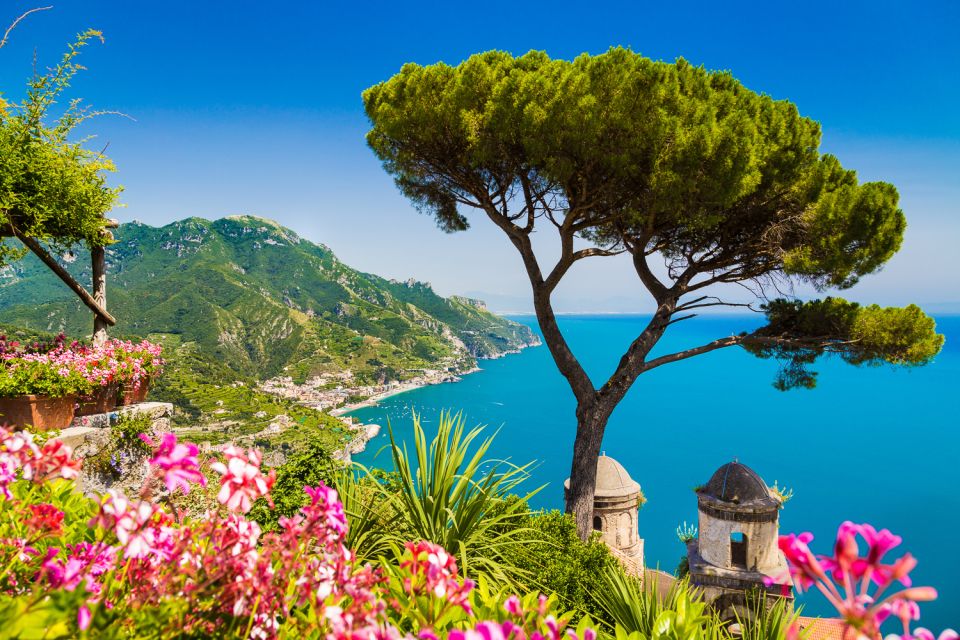
- You’ll likely ride a ferry to Amalfi (summer planning), and it changes the whole feel of the coastline.
- Amalfi town time is about 2 hours, plus extra time in Piazza Duomo for photos and walking.
- You’re supported by an onboard assistant, but there’s no guaranteed live guide roaming inside the towns.
- Audio is included in multiple languages (English, French, German, Italian, Spanish), so you can explore without guessing.
Why this Naples day trip is such a practical win
If you’re basing yourself in Naples and want the Amalfi Coast without extra stress, this is one of the cleanest formats: bus down, free time on the coast, then back to Naples. The value isn’t only that you save time—it’s that you save mental energy. You don’t have to figure out transport between towns, and you don’t have to manage tickets while everyone else is hustling.
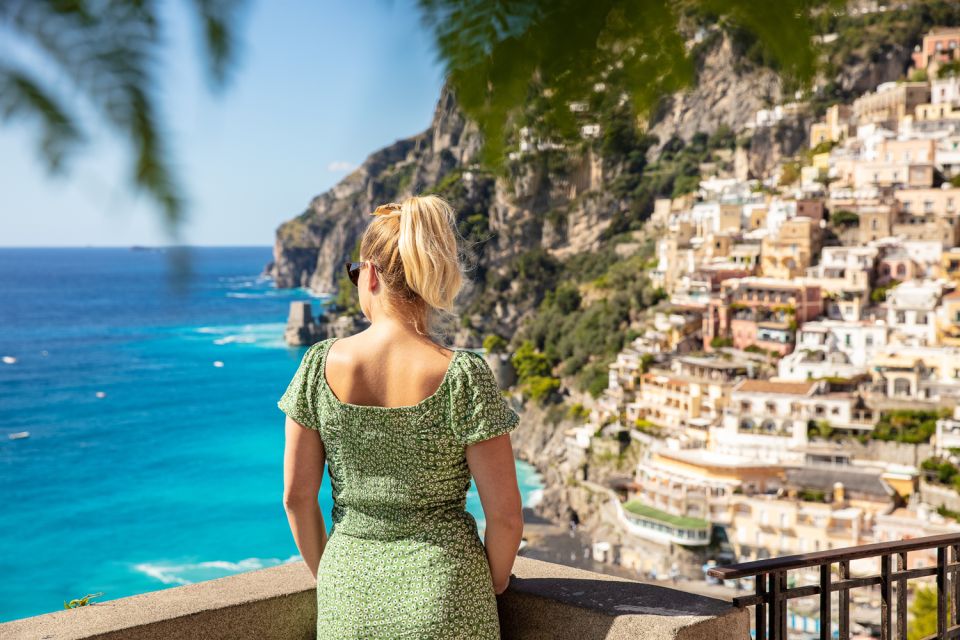
I also like that it’s built for real walking. Positano and Amalfi are famous, sure, but they’re also full of stairs, slopes, and narrow lanes. “Free time” here isn’t just sitting on a terrace—it’s enough time to actually explore and choose where you want to slow down.
The other thing that stands out is the way the operation is described again and again: clear instructions, smooth coordination, and drivers who know how to handle the narrow coastal roads. Names pop up repeatedly—Antonio, Ciro, Fede/Federica, Maria, Paolo, and others—which tells me you’re usually getting a well-rehearsed team, not a last-minute scramble.
You can also read our reviews of more tours and experiences in Naples.



Getting on the right bus: Naples pick-up points and timing
You start near central Naples at Via Monteoliveto 20, with a series of nearby pick-up stops depending on your scheduled time. The morning list is specific—Via Toledo 368 near KFC, Via Medina 39 by Mc Donald’s, Via San Carlo by Galleria Umberto l, Piazza Bovio 6 next to Pomodorino Restaurant, and C.so Lucci 199 under Hotel d’Anna. In plain terms: you won’t be sent to some remote corner. You’ll board in the busier, easier-to-find parts of town.
From there, it’s about a 1.5-hour coach ride before Positano. That early start matters because it gives you daylight and breathing room. And because the bus ride includes live commentary along the way, you get context while you’re traveling—so when you arrive, you understand what you’re looking at instead of just taking photos and hoping you’ll remember later.
One caution: you’re boarding at a specific time. Arrive a bit early, and if you’re using maps, double-check street names. Naples can be quick and chaotic in spots.
The bus ride to Positano: where the tour earns its keep
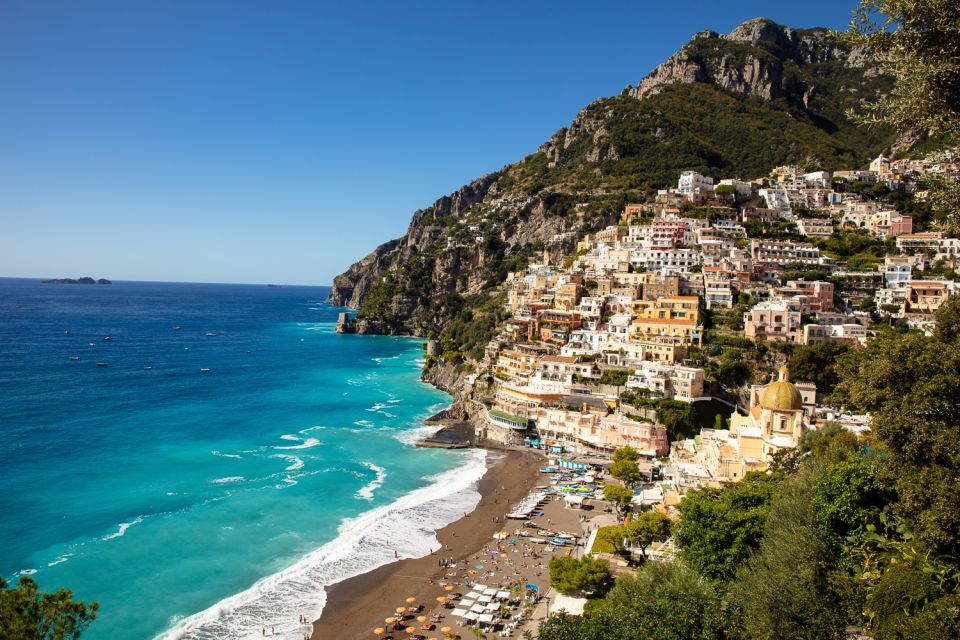
This is not just a transfer. The commentary and the route itself help set expectations for what makes the coast so dramatic. You’ll be moving through areas where the views appear in sudden angles, not in one neat postcard sweep. That’s part of why the drivers are consistently praised: good road handling lets you actually enjoy the ride rather than gripping your seat.
If you’re the type who gets nervous in tight traffic or on winding roads, you should know the coach routing includes narrow turns typical of the Amalfi approach. Most people find it fine because the drivers are experienced—again, Antonio is a name that keeps coming up—but it’s still a real driving environment, not highway cruising.
Positano free time: Santa Maria Assunta, lanes, and your gelato strategy
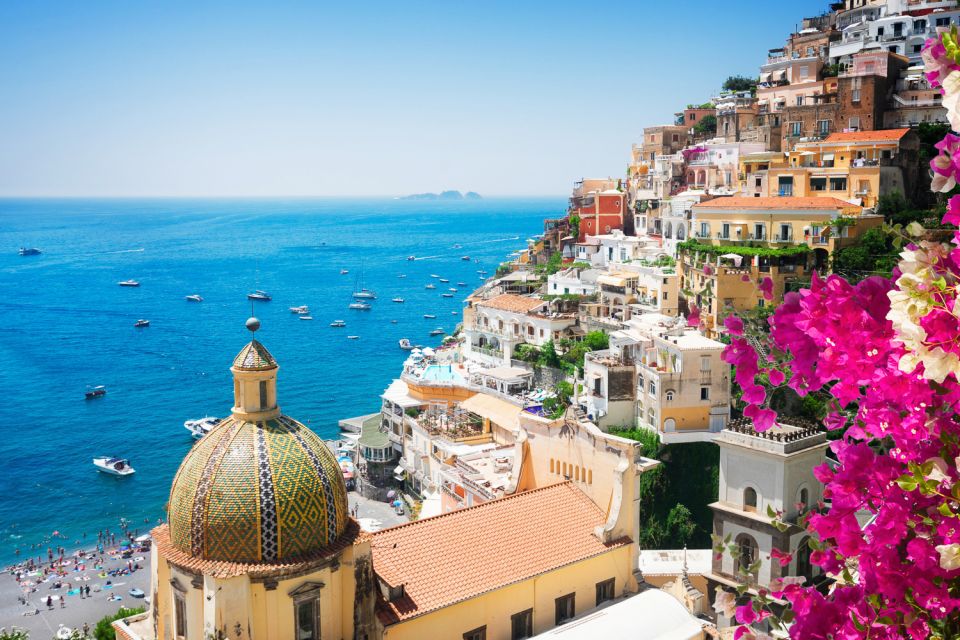
Positano is where your “free time” actually gets to work. You get around 3 hours in town, starting after your arrival. That’s enough time to walk past the main scenery and still pause for the good stuff—shopping, photo spots, and food.
The highlight you’ll likely orient around is the Church of Santa Maria Assunta (with the domed church that’s one of Positano’s landmarks). Even if you don’t go inside, aiming your route toward that area helps you structure your wander. From there, Positano’s “vertical streets” pattern becomes easier to navigate: you’re moving up and down, not just across.
Here’s how I’d use the time:
- First 45–60 minutes: get your bearings and grab a few key photos before the lanes get crowded.
- Middle chunk: pick a lane or two for wandering and window-shopping (fashion stores are part of the Positano identity).
- Last 30–45 minutes: eat or snack—homemade gelato is a common “treat yourself” moment, and you’ll also see lunch options suited to people who want a seaside meal.
One practical consideration: Positano is compact, but movement can feel steep and stop-and-go. Wear shoes you can trust, and plan that you’ll likely do more stairs than you expect.
Boat time matters: how to enjoy the ferry to Amalfi
After your Positano time, the schedule calls for the ferry from Positano Port to Amalfi, typically departing around 13:30. That sea crossing is more than a shortcut. It changes your whole sense of the coast—suddenly you’re seeing how the cliffs, towns, and curves align from water level.
In summer planning, the route is set up as a boat transfer, though the operation notes that adverse sea conditions can affect plans. Translation: have flexibility in your head and don’t treat it like a guaranteed “perfect sea” moment. The good news is that the day is still structured to get you to Amalfi with enough time to explore.
If you want to make this ferry segment memorable, don’t just sit with your phone. Walk or reposition when you can, and look for angles where the town outlines stack on the cliff face. That’s what your bus route can’t fully show.
Also, a small but smart tip: treat the ferry as your “reset” break. You’re moving from one walking zone (Positano) to another (Amalfi), and the sea air plus a short break helps the rest of the day feel lighter.



Amalfi Coast time: Piazza Duomo and the Sant’Andrea cathedral area
Once you reach Amalfi, you’re given about 2 hours for the coast visit, plus time around Piazza Duomo. This is your chance to slow down and actually experience Amalfi as a town, not just a viewpoint.
One of the specific sights you’ll connect to in your planning is the cathedral dedicated to Sant’Andrea. Even if you only catch pieces from the outside or from nearby streets, it gives your walk a focal point, and it helps you avoid getting lost in scenic but directionless wandering.
Piazza Duomo is also where it’s easier to regroup. Many people use this time for a few key photos, a short stroll for atmosphere, and a relaxed pause before the ride back to Naples. If you want lemon-themed drinks, this is generally where you’ll spot the kind of options people talk about—lemon lemonade and limoncello.
A note on food expectations: lunch is not included, so you’ll be making choices on the spot. If you’re picky about seating or want a more budget-friendly meal, aim earlier in your Amalfi time, before you commit to whichever restaurant happens to look easiest.
Audio guide and onboard support: getting context without a full guide in town
This trip includes a free audio guide and a tour assistant onboard, plus live commentary during the bus ride. The big advantage of audio here is timing: you can explore without waiting for a full-group pace, and you can replay or focus on what interests you most.
Audio is available in English, French, German, Italian, Spanish, which matters if you’re traveling with others who prefer different languages. It also helps you understand the coast views while you’re still on the road—so the towns make more sense when you arrive.
One trade-off: the tour data notes there isn’t a guaranteed live guide roaming inside Positano or Amalfi. That’s why the best moments depend on you. If you like your sightseeing structured, use the audio to get context and then let your legs do the rest. If you’re more spontaneous, you’ll still be fine because the day is built around free time in both towns.
From the reviews, what keeps coming up is how well the guides and drivers handle questions and keep the group moving. People mention names like Maria, Ciro, Fede/Federica, Paolo, and Alessandro, with frequent praise for friendly, helpful explanations. One practical detail that shows up a lot: guides set up easy communication—some mention WhatsApp—so you can find your way back without panic.
Price and value: is $71 per person actually fair?
At around $71 per person for an 8–9 hour day, the price makes sense for a very specific reason: you’re buying transport from Naples plus the ferry plus guidance support (audio and commentary). If you were to piece it together alone—coach, schedules, ferry tickets, and the headache of timing—it can become more expensive, and it becomes more stressful.
So the value question comes down to what you’re optimizing for:
- If you want to see both Positano and Amalfi in one day with minimal planning, this price often feels fair.
- If you only care about one town and want to linger longer, you might get more satisfaction from a slower, single-destination approach.
- If you love structure, the onboard commentary and audio help, but you’ll still do the walking yourself.
Also remember the “not included” side: food and drinks aren’t part of the ticket. That’s normal for a day like this, but it means your real cost depends on whether you grab gelato, do a sit-down lunch, or buy lemon treats.
Who should book this tour from Naples
This tour fits best if you:
- Are short on time in Naples and want the Amalfi Coast without transfer headaches.
- Want a balance of guided context (bus commentary + audio) and self-paced exploring (free time in both towns).
- Like the idea of seeing the coast from both road and sea (ferry ride).
It may feel less perfect if you:
- Want to spend most of the day in one town and only dabble in the other.
- Get overwhelmed by stairs and uneven walking. (Positano in particular can be steeper than first-time expectations.)
- Strictly dislike boat schedules or any chance of adjustments due to conditions.
Should you book this Naples trip to Positano and Amalfi?
Yes—if your goal is efficient, scenic Amalfi time with low planning stress. The format is straightforward: bus from central Naples, about 3 hours in Positano, ferry to Amalfi, then time around Amalfi’s core sights before heading back.
I’d book it especially if you’re traveling as a first-timer or you’re coordinating with people who don’t want to spend hours figuring out logistics. The repeated praise for drivers like Antonio and guides like Ciro and Maria points to the same thing: the operation usually runs smoothly, and that matters on the Amalfi Coast where delays are easy.
If your priority is one long, slow day in just one town, consider a more focused alternative. But for most people visiting Naples, this is one of the easiest ways to tick off Positano and Amalfi without losing your whole day to planning.
FAQ
How long is the Naples to Positano and Amalfi day trip?
The duration is listed as 8–9 hours.
Where are the pick-up locations in Naples?
You’ll be picked up at Via Monteoliveto 20 or one of several other central stops at scheduled times, including Via Toledo 368, Via Medina 39, Via San Carlo, Piazza Bovio 6, and C.so Lucci 199.
How much free time do I get in Positano?
You get free time in Positano for about 3 hours.
How do you travel from Positano to Amalfi?
The tour includes transportation by ferry from Positano to Amalfi (it’s planned by boat in summer, with possible changes if sea conditions are adverse).
How much free time do I get in Amalfi?
You get free time in Amalfi for about 2 hours, including time around Piazza Duomo.
Is there a live guide inside Positano and Amalfi?
A tour assistant is onboard, but the tour data notes that a live guide in Amalfi or Positano is not included, so you’ll rely on the audio guide and your own exploration during free time.
What languages are available for the audio guide?
The audio guide is included in English, French, German, Italian, and Spanish.
Do I need to budget for food and drinks?
Yes. Food and drinks are not included.
What if plans are delayed due to traffic or special events?
The provider notes they do their best to return on time, but they can’t be held responsible for delays caused by traffic or special events.