REVIEW · NAPLES
Pompeii and Mount Vesuvius excursion from Naples
Book on GetYourGuide →Operated by Askos Tours · Bookable on GetYourGuide
Pompeii and Vesuvius in one easy day. I like how this tour strings together Naples-to-Vesuvius transport with a live-guided Pompeii walk, so you spend less time figuring things out and more time seeing real places. The crater hike plus the Pompeii route means you get both natural drama and Roman street life, without long gaps.
One thing to consider: the midday break is often tied to a nearby shopping complex, so if you want a more classic, sit-down Italian lunch right inside Pompeii, you may find the setup a bit modern.
In This Review
- Quick hits
- Naples Pickup and the Ride That Sets the Tone
- Mount Vesuvius Crater Hike: Audioguide, Timing, and Bay Views
- What to expect at the top
- A note on the audioguide
- Pompeii Highlights: Two Hours of Ruins That Tell Real Stories
- Porta Marina
- Basilica and the public center
- Temple of Apollo and the Foro Civile
- Macellum (market life)
- Lupanare
- Houses: Menander, Vettii, and the Faun
- Thermopolium and the everyday street
- Baths and theaters
- The real value of the two-hour format
- Lunch Break Near Pompeii: What Works, What Doesn’t
- Why the Pompeii Guide Matters So Much
- Pace, Comfort, and Who This Day Trip Fits Best
- How hard is Vesuvius?
- Who should book
- Who should think twice
- Booking Decision: Should You Book This Pompeii and Vesuvius Tour?
- FAQ
- Where is the meeting point for this tour?
- How long is the Pompeii and Vesuvius excursion?
- How large is the group?
- Is Pompeii visited with a live guide?
- How is the Mount Vesuvius part guided?
- Do I need to pay for Mount Vesuvius entry?
- What transportation is included?
- What language is the tour offered in?
- What should I bring or wear?
- Is it suitable for young children or wheelchair users?
Quick hits
- Small group up to 16 keeps the day from feeling like a conveyor belt.
- Pompeii is guided live in English across the key highlights in about two hours.
- Vesuvius uses an audioguide plus expert leader support, not a full live narration the whole time.
- Vesuvius entry ticket costs 11€, while the rest of the day’s logistics are handled.
- Expect wind and a chill at the top, even when the Naples streets feel mild.
- You’ll follow a smart Pompeii route, from major gates and temples to houses and theaters.
Naples Pickup and the Ride That Sets the Tone
Your day starts outside Starhotels Terminus, across from Naples Central Station. The tour leader meets you holding an ASKOS TOURS sign, which is a small detail that saves you stress—especially if you arrive a few minutes early and are still trying to understand where everyone is clustering.
From there, you roll by bus to the volcano area. The ride is short enough that you don’t feel stuck on wheels all morning, but long enough to settle in, use the restroom, and get your legs ready. If you’re traveling with luggage, plan ahead: there may not be room for suitcases on the minibus, and you may need to leave bags at a luggage deposit before you join the group.
This is a practical tour style. You’re not just buying access to two attractions—you’re buying a schedule that actually works.
You can also read our reviews of more tours and experiences in Naples.

Mount Vesuvius Crater Hike: Audioguide, Timing, and Bay Views
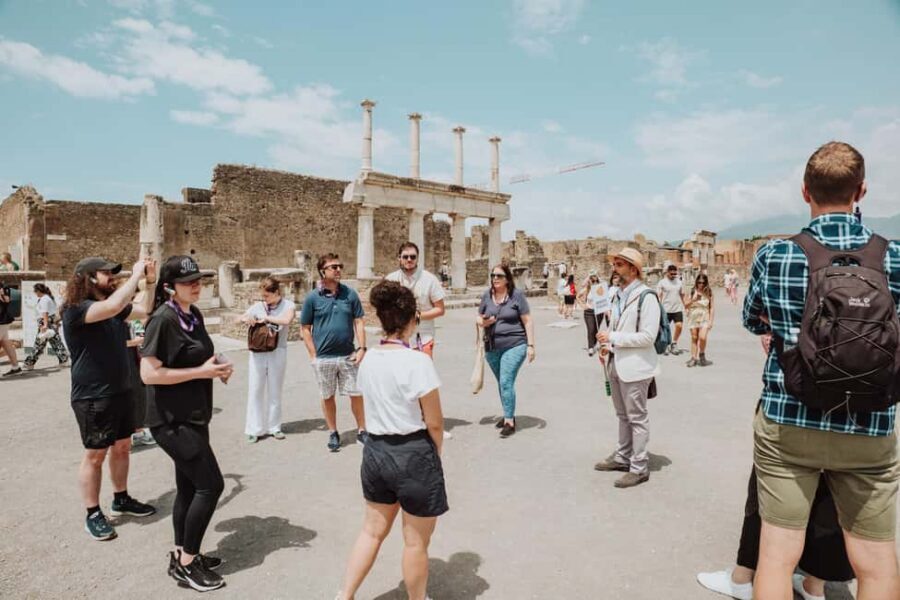
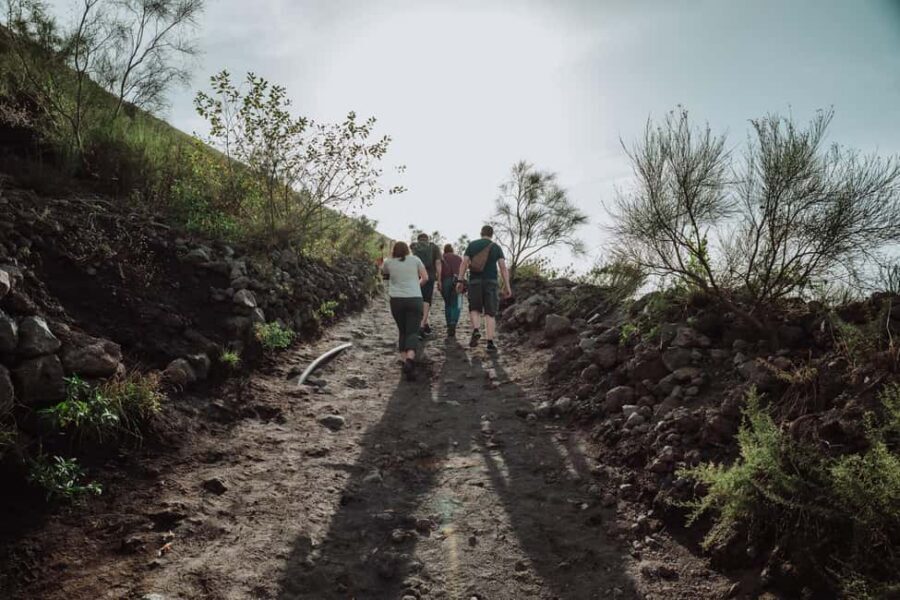
Once you reach Vesuvius, you start the hike—about 1.5 hours on foot. The goal isn’t technical climbing. It’s a mountain walk to the crater edge where the views can be stunning when the weather cooperates.
Here’s how the experience is designed:
- You’ll use an audioguide during the Vesuvius portion.
- An expert tour leader assists you through the hike and helps you navigate questions along the way.
In other words, you’re not left entirely on your own with a phone app. But you also shouldn’t expect the same style of constant live storytelling as you’ll get in Pompeii.
What to expect at the top
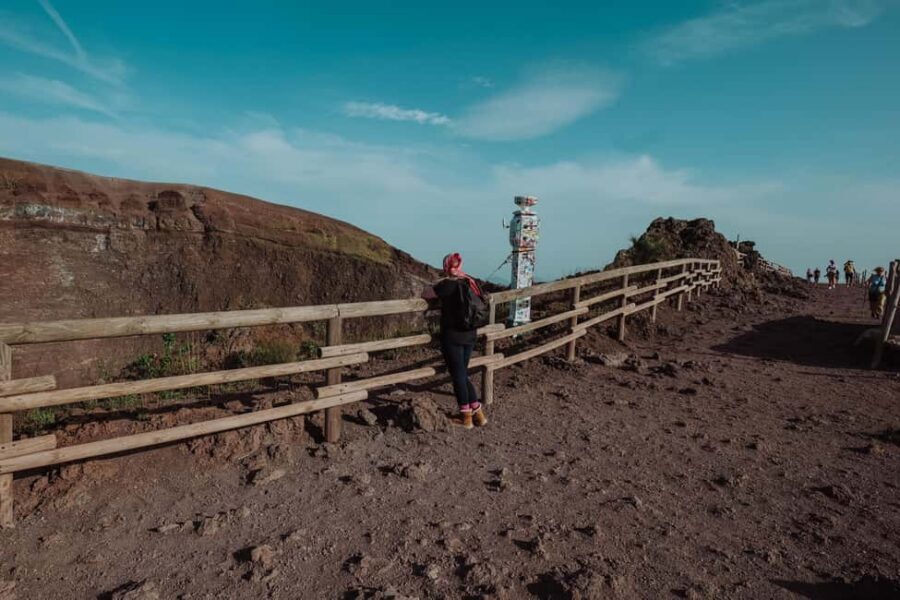
The payoff is the Bay of Naples panorama. You get a sense of where the city sits against the water and hills, which makes the volcano feel more than a dramatic postcard.
Do bring warm layers. Multiple guides mention wind and chill at the crater area. Even if you’re comfortable in Naples, the top can feel colder and sharper. Closed-toe shoes matter here too—Pompeii will reward them, and Vesuvius will test them.
A note on the audioguide
Some people find the audioguide app easy to use. Others say it can feel a little dull, and they prefer to just take in the sights. That’s not a deal-breaker, but it is a heads-up: if you’re the type who needs human storytelling nonstop, you may wish the Vesuvius part were more fully guided.
Pompeii Highlights: Two Hours of Ruins That Tell Real Stories
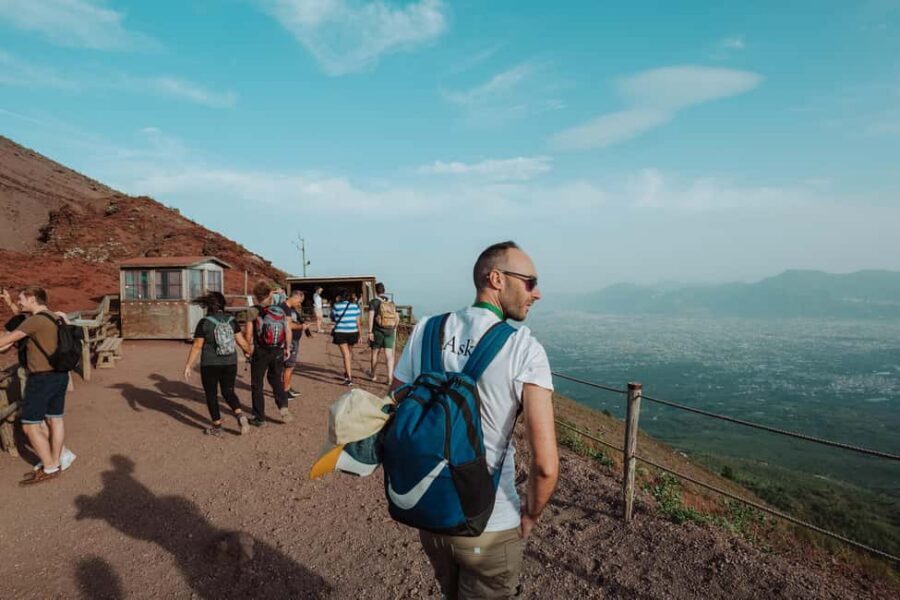
Pompeii is enormous, so doing it “right” usually means choosing a route and sticking with it. This tour does that for you, with a live in-person guide for about two hours through the most important and most readable areas.
A short break comes first, then you start your guided highlights. In practice, the break can run longer than the scheduled pause at the archaeological site, and it’s often used for lunch options near Pompeii—sometimes including a newer shopping complex with fast food and sit-down choices.
Then the guided portion begins with major landmarks, hitting spots that help you understand how the city worked:


Porta Marina
You start at one of the entry areas. It’s a strong opening because it frames Pompeii as a living city with movement and arrivals—not just a museum of stones.
Basilica and the public center
Next you move to the Basilica, a key Roman civic space. When your guide explains the role of these buildings, you start noticing how often daily life in Pompeii was organized around public gathering and administration.
Temple of Apollo and the Foro Civile
The Temple of Apollo and the Foro Civile help connect religion, politics, and social life. Temples weren’t only worship spaces—they were landmarks that shaped how people navigated and interpreted the city.
Macellum (market life)
The Macellum of Pompeii brings you to the food and market angle. It’s one of the best ways to make Pompeii feel normal again: trade, meals, and the rhythm of commerce.
Lupanare
The Lupanare is the famous brothel area. It’s one of those sites that can feel surprising, but it also makes Pompeii feel human. Your guide’s job is to keep it factual and contextual, so you don’t end up with a sensational impression.
Houses: Menander, Vettii, and the Faun
Then you shift from streets to homes, including:
- House of Menander
- House of the Vettii
- House of the Faun
Even in short stops, these houses show you class differences—how wealthy families lived, displayed art, and built private spaces away from the public road.
Thermopolium and the everyday street
The Thermopolium is about quick meals and daily routines. It’s a useful counterpoint to the big-name houses because it reminds you that most people weren’t living in villas.
Baths and theaters
You wrap with parts like Terme Stabiane and the Teatro Piccolo, plus the Large Theatre. This is where Pompeii’s “community life” comes through. Baths weren’t only for cleanliness. Theaters weren’t only for entertainment. They were social hubs.
The real value of the two-hour format
Two hours isn’t enough to “see all of Pompeii.” But it is enough to learn how to read Pompeii. With the right guide, you finish the tour knowing where to look and what to pay attention to if you go back on your own later.
Lunch Break Near Pompeii: What Works, What Doesn’t
The tour includes time to eat, but the style of lunch can be mixed depending on the day. The schedule gives a break at the archaeological area, and in real life it can translate into a longer stop near Pompeii—often around MaxiMall, a newer complex.
This isn’t automatically bad. If you’re traveling in the shoulder season or you’re hungry and need predictable options, a mall food court can be a lifesaver. People also like the variety of quick eateries there.
But if your dream is a slower, more traditional Italian lunch inside a historic setting, this part may feel like the tour loses some atmosphere. The best move is to treat the break as practical fuel: grab something you’ll eat fast, then use your time to focus on Pompeii.
Why the Pompeii Guide Matters So Much
Pompeii is a special kind of place. You can wander it alone, sure. But you’ll understand it much faster when someone connects the dots: why a space was used, what people did there, and what the layout was trying to communicate.
The Pompeii guides on this tour have a strong track record for turning ruins into story. Names like Pablo, Julia, Nicoletta (described as an archaeologist in feedback), Ilaria, Antonio, Sergio, and Antonieta show up often. What these guides share in common is enthusiasm paired with structure: they don’t just point at walls. They guide you from stop to stop in a way that builds understanding.
That’s what you want from a guided Pompeii tour with limited time. You want to leave feeling like you got the city’s logic, not just a list of sights.
Pace, Comfort, and Who This Day Trip Fits Best
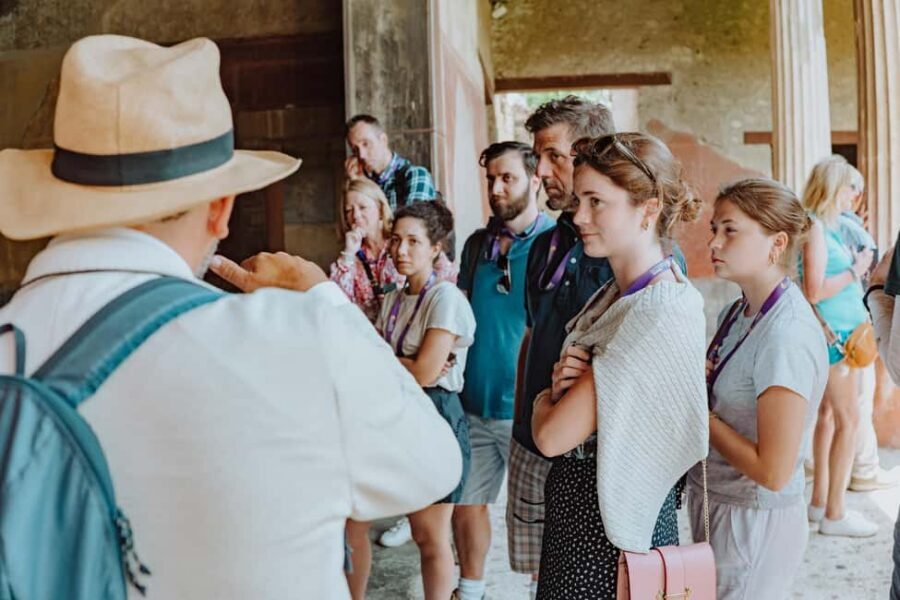
This is a 7-hour full-day excursion with transportation and assistance built in. The small-group size (up to 16 people) helps keep the pace human. You get enough time on Vesuvius to reach the crater edge, then enough time in Pompeii to cover the biggest, most readable highlights.
How hard is Vesuvius?
It varies by fitness and weather. Some people describe the climb as manageable, even mentioning younger travelers. Others call it hard going, especially if you aren’t used to steep paths and wind.
My practical take: wear sensible shoes, bring a warm layer, and don’t treat Vesuvius like a casual stroll.
Who should book
This fits best if you:
- Want a first-time Pompeii route without spending hours planning
- Like the idea of both Roman ruins and a volcano crater view in one day
- Prefer a guided experience, especially for Pompeii’s layout
Who should think twice
It’s not suitable for:
- Children under 6
- People with mobility impairments
- Wheelchair users
Also, if you hate group pacing and want long, unscheduled wandering time, you might feel constrained by Pompeii’s two-hour guided window.
Booking Decision: Should You Book This Pompeii and Vesuvius Tour?
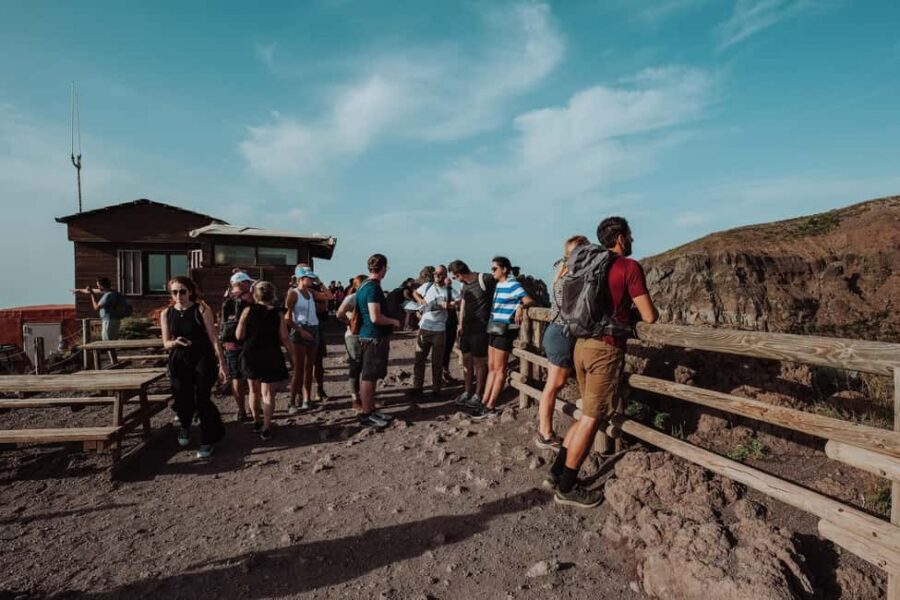
If you’re trying to cover Pompeii and Vesuvius in one day from Naples, I think this tour is a strong choice because it handles the hardest part: logistics. You’re not wasting time on ticket lines and route confusion, and you get a live guide where it matters most.
Book it if you’ll appreciate a highlight route and you want human explanations rather than solo navigation. Consider it a smart “orientation day” for Pompeii, with crater views as the dramatic bonus.
Skip it if your priority is maximum time inside Pompeii, a fully traditional lunch setup, or if you need accessibility accommodations this tour can’t provide. And pack for the cold at the top. Vesuvius doesn’t care that you came from sunny Naples.
FAQ
Where is the meeting point for this tour?
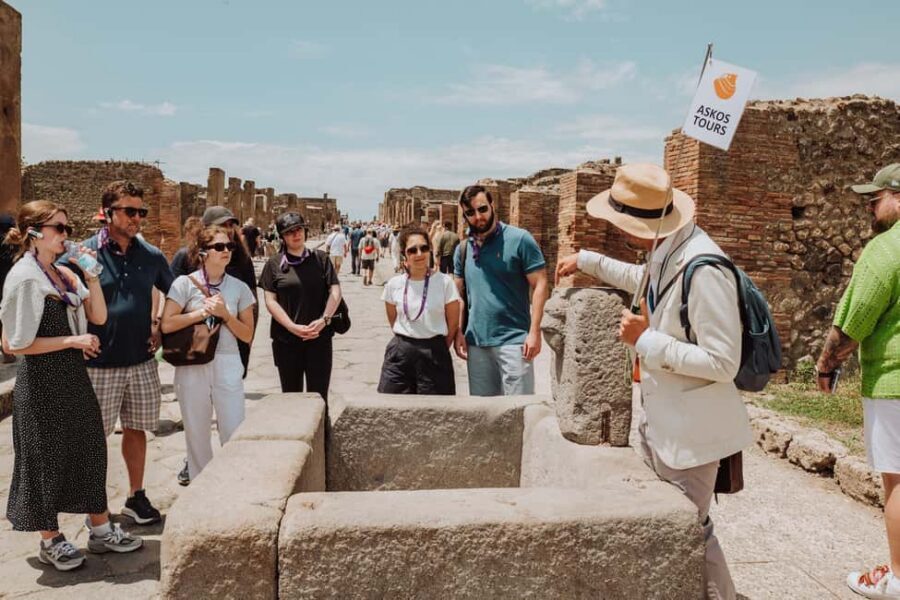
You meet outside Starhotels Terminus, opposite Naples Central Station. The tour leader holds an ASKOS TOURS sign.
How long is the Pompeii and Vesuvius excursion?
The tour duration is 7 hours.
How large is the group?
It’s a small group experience with up to 16 participants.
Is Pompeii visited with a live guide?
Yes. Pompeii is covered with a live in-person English guide.
How is the Mount Vesuvius part guided?
The Vesuvius hike uses an audioguide, with an expert tour leader assisting during the experience.
Do I need to pay for Mount Vesuvius entry?
Yes. The entry ticket to Mount Vesuvius costs 11.00 euros.
What transportation is included?
Round-trip transportation from Naples is included, along with tour leader assistance throughout the day.
What language is the tour offered in?
The tour is in English.
What should I bring or wear?
Bring passport or ID, comfortable shoes, and comfortable clothes with closed-toe shoes. For Vesuvius, warm clothes are a smart idea due to wind and chilly conditions at the top.
Is it suitable for young children or wheelchair users?
No. It is not suitable for children under 6 and not suitable for people with mobility impairments or wheelchair users.