REVIEW · VATICAN TOURS
Holy Pizza! Fun Pizza & Gelato Making by Vatican + Delish Wine
Book on Viator →Operated by Holy Pizza · Bookable on Viator
This class turns pizza into a skill you can repeat. I love the small-group setup (max 8) because you get real back-and-forth as you learn dough handling, shaping, and baking. I also love that the lesson is taught by a Roman pizzaiolo, the kind of chef who talks through the why, not just the how. One thing to consider: it’s a focused 2-hour session, so you’ll want to show up ready to work, not just watch.
You’ll start from flour, salt, yeast, and water, then move through resting time, dough texture, sauce, toppings, and baking in a typical home oven. Along the way you’ll sip wine or beer with Italian snacks, and finish with strawberry gelato you make yourself and can actually recreate later.
In This Review
- Key highlights worth planning for
- Roman Pizza Starts With Ingredients, Not Vibes
- What I like about the Roman approach
- Dough Resting Time: The Real Scheduling Secret
- Shaping the Dough for That Crunch-to-Soft Ratio
- Sauce, Toppings, and the Part People Usually Mess Up
- Gelato Workshop: Strawberry Gelato That Teaches Timing
- Wine, Beer, Antipasto, and the Pace That Works for Families
- Who will appreciate this most?
- The Instructors: Roman Pizza Energy and Gelato Precision
- Where You’ll Meet Near the Vatican (And Why Location Matters)
- Price and Value: Is $102.25 Worth It?
- What the Whole 2-Hour Timeline Feels Like
- Small-Group Size: Why Max 8 Changes Everything
- Should You Book Holy Pizza? My Clear Take
- FAQ
- What is the duration of the pizza and gelato class in Rome?
- How big is the group?
- What language is the class taught in?
- What food and drinks are included?
- Where does the class start and end?
- Can dietary restrictions be accommodated?
- What is the cancellation policy?
Key highlights worth planning for
- Max 8 people means hands-on time instead of standing around
- Roman-style process starts at the dough ingredients and ends at home-oven baking
- Wine or beer + antipasto keeps the mood easy and family-friendly
- Gelato is not an add-on—you learn steps and timing for the texture
- Take-home recipes so your next pizza night doesn’t have to be a guess
Roman Pizza Starts With Ingredients, Not Vibes
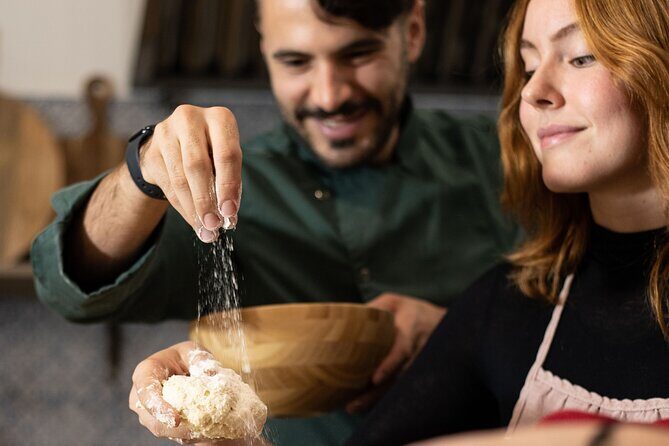
If you’ve ever tried to make pizza at home and ended up with either tough crust or sad, dense dough, this is the class that helps you fix the root problems. The big idea here is learning what drives Roman pizza dough: flour choice, yeast behavior, rest time, and how you shape the dough for that crunchy-to-soft balance.
You don’t jump straight to toppings. You build the dough first—flour, salt, yeast, and water—and the chef walks you through what the dough should feel like at each stage. That’s the real “magic,” and it’s practical. Once you understand what the dough is telling you, you can stop guessing later.
And yes, you’ll eat what you make. That matters. Cooking classes sometimes teach you a method but serve you something else. Here, you’re going from hands to oven to plate in the same session.
You can also read our reviews of more wine tours in Rome


What I like about the Roman approach
Roman pizza dough is a different world from thick, bread-y styles. The class leans into the Roman method, including:
- Resting time (so the dough develops properly)
- Shaping technique (to get the right texture)
- How sauce and toppings behave (so you don’t end up with a soggy mess)
Even if you’re not a “serious cook,” this is the kind of lesson that makes you smarter with your next grocery run.
Dough Resting Time: The Real Scheduling Secret
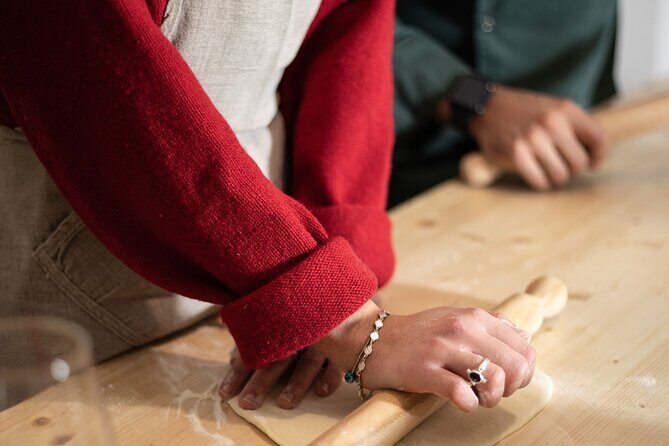
Most people think pizza fails because of heat. Sure, the oven matters. But the dough rest time is where the dough transforms. In this class, you’ll learn how much resting time the dough needs and why that timing isn’t random.
From a practical standpoint, here’s what you’ll leave understanding:
- The dough needs time to relax and become easier to shape.
- Resting helps the structure form so the crust bakes up with better texture.
- The dough stage you reach changes everything about how toppings and sauce sit on top.
This is especially valuable if you travel and cook later at home. You won’t be working in an Italian kitchen with ideal conditions. The more you know the “why” behind the rest, the less you’re at the mercy of your home oven and ingredients.
And because the class covers making pizza in a typical home oven, you’re not stuck hoping your kitchen magically turns into a pizzeria.
Shaping the Dough for That Crunch-to-Soft Ratio
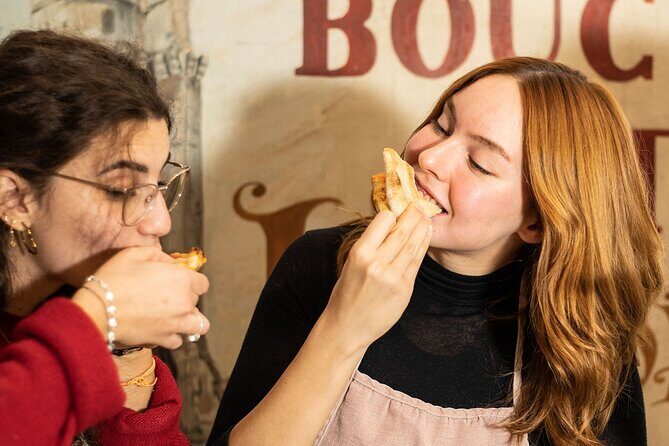
The class includes how to shape dough so you get the ideal mix of texture—crisp where it should be crisp, tender where it should be tender. This is one of those skills that sounds simple until you try it.
What you’re aiming for is dough that:
- Stretches without tearing
- Holds together during baking
- Creates a crust texture that doesn’t stay chewy forever
The chef’s instructions are the key part. Even the small cues—how you handle the dough, what you do at the edge, how you move from one stage to the next—make a difference.
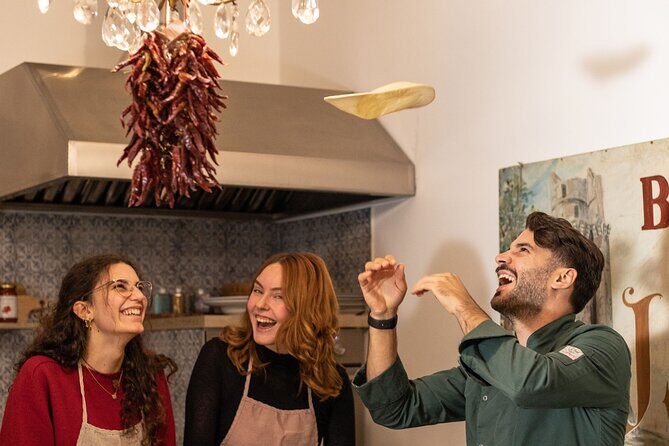
If you have kids in your group, this is also where the class stays fun. Shaping dough is physical. It gives everyone something to do besides watch.
Sauce, Toppings, and the Part People Usually Mess Up
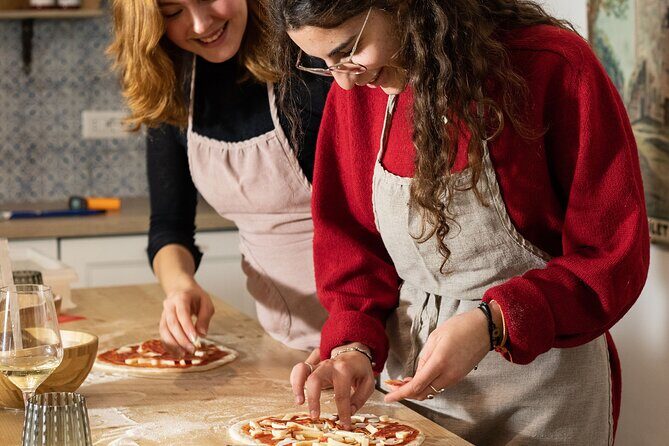
After the dough is handled, you move into the sauce and toppings. This is where pizza-making classes can get too vague—like, add sauce, add cheese, done.
Here, you’re learning the practical logic of what goes on top and how it affects the final result. The class covers:
- Sauce approach
- Toppings choices
- How those choices work with baking in a home oven
That helps you avoid the common problems:
- Too much sauce leading to sogginess
- Toppings that steam instead of bake
- A final pizza that tastes good but doesn’t have great crust texture
You also get to build your own pizza (with options for your toppings), then cook it. That turns lessons into something you can repeat rather than a memory of an amazing dinner.






Gelato Workshop: Strawberry Gelato That Teaches Timing
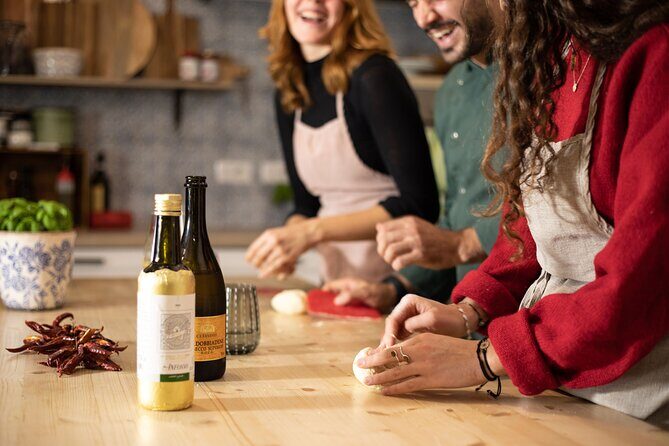
Pizza is only half the payoff. The other half is gelato, and it’s not treated like dessert theater.
You’ll learn the steps for making gelato and how to get the texture right—especially important because gelato is different from ice cream in how it sets and feels in the mouth. One instructor-led tip that comes through clearly: good gelato has a specific texture, and timing matters.
In the class, you make strawberry gelato. You also get enough explanation to understand the process rather than just following a “turn the crank” routine. Once you know the timing and ingredients, you’ll understand why some gelato tastes perfect and some tastes icy or grainy.
One important note for your expectations: you might end up wanting to buy a gelato maker afterward. Not because it’s a sales pitch—because the steps make the results feel achievable at home.
Wine, Beer, Antipasto, and the Pace That Works for Families
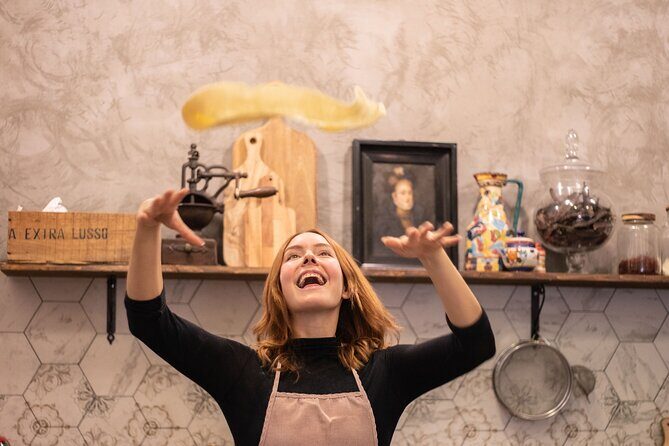
This is a fun night class, not a stiff cooking seminar. You’ll sip wine or beer while you work, and you’ll have antipasto while you build your pizza. That rhythm matters. It keeps energy up while dough rests and you move through stages.
It’s also explicitly family-friendly. Families describe a low-key, laugh-friendly atmosphere, with kids staying engaged during the hands-on parts. Some families mention extra kid-focused treats like pops to keep little ones happy.
Because it’s small (up to 8), the pace is more adaptable. If your group needs a moment—kids needing help stretching dough, adults asking follow-up questions—you’re not lost in a crowd.
Who will appreciate this most?
- Families who want one productive break from sightseeing
- Couples who like hands-on experiences more than museum hours
- Food lovers who want the “method” behind great results
The Instructors: Roman Pizza Energy and Gelato Precision
One of the best parts of this experience is the teaching style. Across different sessions, you may be guided by chefs such as Carla, Gianluca, Mara, Marco, Luca, and gelato instruction can be led by Peter (names vary by group). What stays consistent is the focus on clear instruction and patience—especially for first-timers.
I like that the class blends:
- Professional culinary technique
- Entertainment and personality (so the room doesn’t feel like a lecture)
- Q&A time, so you can ask why the dough behaves a certain way
If English is your language, good news: it’s offered in English, and the instructors are described as engaging and comfortable talking through the process.
If you have dietary restrictions, ask when you book. At least one participant reported vegan accommodation was possible. The safest move is to send your needs ahead of time so the team can plan ingredients.
Where You’ll Meet Near the Vatican (And Why Location Matters)
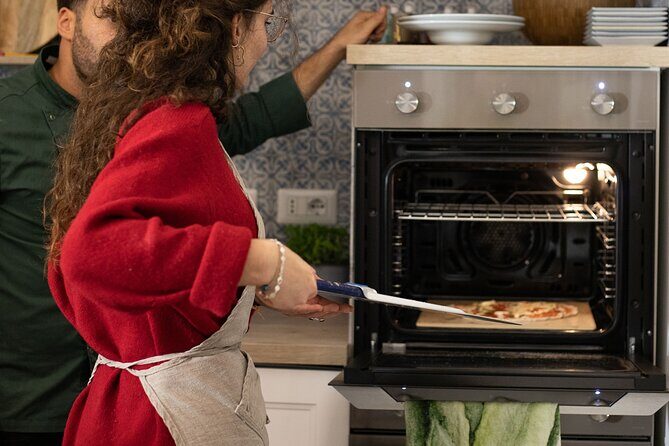
You’ll meet at Via Simone de Saint Bon, 57, 00195 Roma RM, Italy, and you’ll return there when the class ends. The location is convenient if you’re staying near Rome’s Vatican area, and it’s near public transportation, which helps if you don’t want to rely on taxis late in the evening.
Also, it helps that you’ll get a mobile ticket. Less time hunting for paperwork, more time getting settled and starting.
Since the class is about 2 hours, pick a time when you’re not rushing from another big ticket stop. Cooking goes smoother when you’re not running on empty.
Price and Value: Is $102.25 Worth It?
Let’s talk money without the fluff. At $102.25 per person for about 2 hours, you’re paying for four real things:
- Hands-on instruction with a Roman pizza specialist
You’re learning dough, shaping, sauce, toppings, and how to bake it in a home oven.
- Included food and drinks
Wine or beer plus antipasto mean you’re not paying extra for your evening meal at a restaurant.
- Gelato you actually make
This adds a full second skill set, not just a few bites of dessert.
- Take-home recipes
You leave with the steps and guidance needed to reproduce the results later.
For comparison, a pizza dinner plus a separate dessert might cost less upfront, but it won’t give you the method. The cost starts to make more sense if you:
- plan to cook at home soon after your trip, and/or
- care about learning technique rather than just tasting food
Two practical value tips:
- Book early if you can—this experience is often reserved about 40 days in advance on average.
- If you’re traveling as a family, the small-group size can help the whole evening feel organized instead of chaotic.
What the Whole 2-Hour Timeline Feels Like
You won’t get a minute-by-minute schedule listed here, but the flow is clear. Expect an evening built around dough stages:
- Start with dough ingredients (flour, salt, yeast, water) and learn the process from the beginning
- Work through rest and shaping so you end up with dough ready to bake
- Add sauce and toppings and personalize your pizza
- Bake in the home-oven setup and eat what you made
- Switch to gelato prep and finish with strawberry gelato
In a class like this, the “in-between” moments (waiting for rest and prep stages) are where wine/beer and antipasto help keep the energy up, especially for kids.
Small-Group Size: Why Max 8 Changes Everything
Max 8 travelers is a big deal for cooking classes. It affects:
- how often you get one-on-one corrections
- how quickly questions get answered
- whether kids can participate without getting lost
The class also feels more social. You’re not just in a line. You’re in a shared workspace with a chef who can watch your dough and respond. That’s exactly what makes the lesson stick.
Should You Book Holy Pizza? My Clear Take
Book this class if you want a genuinely practical Rome evening: pizza dough skills, Roman technique, and gelato that teaches more than taste. It’s a strong choice for families because it’s hands-on, lighthearted, and not overly formal.
Skip it (or think twice) if you prefer passive experiences or you’re looking for a long sit-down meal with lots of touring time built in. This is a working kitchen session, and you’ll get the most out of it if you’re willing to roll up your sleeves.
If you’re close to the Vatican area and want something memorable that also travels home with you in your recipe notebook, this is a very smart use of an evening.
FAQ
What is the duration of the pizza and gelato class in Rome?
It’s about 2 hours (approx.).
How big is the group?
The class has a maximum of 8 people.
What language is the class taught in?
The experience is offered in English.
What food and drinks are included?
You’ll make and eat Roman pizza, and you’ll have antipasto while you work. You’ll also sip wine or beer. Dessert includes strawberry gelato that you make.
Where does the class start and end?
It starts at Via Simone de Saint Bon, 57, 00195 Roma RM, Italy, and ends back at the same meeting point.
Can dietary restrictions be accommodated?
The information provided doesn’t list specific diets, but one participant reported vegan accommodation was possible. If you have a restriction, confirm it when booking.
What is the cancellation policy?
Free cancellation is available if you cancel up to 24 hours in advance for a full refund. If you cancel less than 24 hours before, the amount paid is not refunded.