REVIEW · POMPEI CAMPANIA
Pompeii: Skip-the-Line Ticket with Audio Guide and Map
Book on GetYourGuide →Operated by VISITING CAMPANIA S.R.L. · Bookable on GetYourGuide
Pompeii feels huge at first glance. With a skip-the-line ticket plus an audio guide and map, you can tackle the site at your own rhythm instead of rushing with a crowd. Pompeii draws about 3 million visitors a year, and the archaeology covers roughly 66 hectares, so smart navigation matters.
What I like most is the freedom: you’re not boxed into one set route, which is ideal when you want more time on frescoed homes or less time on the areas you’re less interested in. I also like that the audio guide is multilingual (English, Chinese, French, Italian, German, Hebrew, Russian, Spanish, Portuguese), plus you get an updated map to help you stay oriented.
The main drawback to plan around is that Pompeii is big, hot, and walk-heavy. You’ll want solid shoes and water, and this ticket isn’t a fit if you have mobility impairments. Also, food and drinks are not included, and on-site breaks can be tricky to time if you’re exploring on your schedule.
In This Review
- Key things to know before you go
- Skip-the-line entry: where you’ll save real time
- Getting your audio guide and map to actually work
- A one-day Pompeii plan that doesn’t feel rushed
- Domus and frescoes: seeing everyday Roman life close up
- Spas and temples: where the city’s public life shows up
- Thermopolis and shops: the ancient version of grab-and-go
- Theaters and brothels: culture, entertainment, and uncomfortable realism
- The victims’ casts and the amphitheater: where the story hits hardest
- Practical stuff for a comfortable Pompeii day
- Value for $44: what you’re really paying for
- Who this Pompeii ticket suits best
- Should you book this Pompeii skip-the-line audio ticket?
- FAQ
- How long is the Pompeii ticket valid?
- What’s included in the price?
- Is food included?
- What languages are available for the audio guide?
- Do I need to bring anything?
- Can I bring luggage or large bags?
- Is this experience suitable for people with mobility impairments?
- Is there free cancellation?
Key things to know before you go
- Skip-the-line entry helps you start exploring faster at a busy site
- Audio guide at your pace means you can linger in domus, baths, temples, and theaters
- Updated map keeps you from drifting aimlessly across 66 hectares
- Big walking day: bring water, sunscreen, and comfortable shoes
- Food not included: plan breaks yourself before you get hungry
- Map and audio may not match perfectly in every moment, so stay flexible
Skip-the-line entry: where you’ll save real time
At Pompeii, time can disappear fast. The ruins are expansive, and once you’re inside, every minute spent figuring out where to go feels like it’s stealing from your actual sightseeing time. This ticket is built to help you bypass that “waiting to start” problem with skip-the-line access.
If you’re arriving at a typical busy hour, that shortcut can be the difference between a relaxed morning and a cramped one. If you’re going earlier, it may still be worth confirming your entry flow when you pick up your materials, since any site can have small queues depending on the exact ticketing situation.
Bottom line: you’re buying convenience. And at Pompeii, convenience buys you more ruins per hour.
You can also read our reviews of more tours and experiences in Pompei Campania


Getting your audio guide and map to actually work

This experience includes your entrance ticket, an audio guide, and an updated map. That trio is what makes self-guided Pompeii feel doable instead of overwhelming.
The audio guide is the core tool. It’s there to give you structure for a site where there’s a lot to see and not every spot comes with easy explanations. I like that the audio guide supports a long list of languages, because it means you’re not stuck with only one commentary style.
The map is the support act, and you’ll use it constantly. One thing to be aware of: the map can feel a bit complicated, and not every location you’ll spot may have a perfect match in what the audio guide plays at that exact stop. So here’s the practical way to use this:
- Pick a manageable route for your morning and early afternoon.
- Use the map to confirm you’re in the right zone.
- Use the audio guide to decide when to slow down.
This approach helps you avoid the frustrating loop of re-checking everything—because Pompeii is not the place for constant backtracking.
A one-day Pompeii plan that doesn’t feel rushed
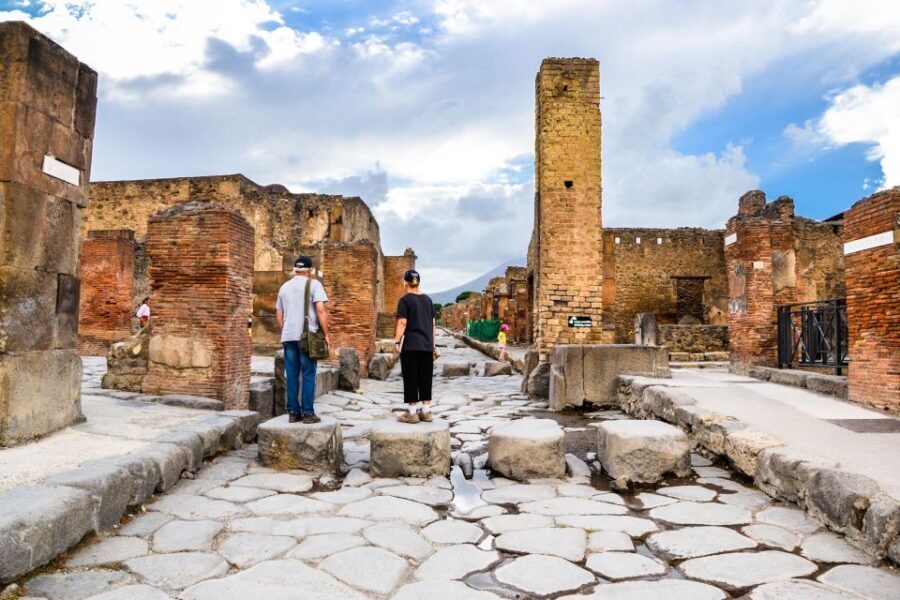
You get a ticket valid for 1 day, and Pompeii’s size means your day needs structure even if you’re not on a tour bus. A good mindset: treat it like exploring multiple mini-neighborhoods rather than trying to “see everything.”
A realistic full-day rhythm is to start early enough to beat some of the heat, then plan on a long walking stretch with breaks. One practical target that works well for many people is a schedule roughly from late morning to early evening, giving you time for major highlights without burning out.
You’ll cover:
- frescoed houses (domus)
- spas and public buildings
- temples and shops
- thermopolis (ancient fast food)
- theaters and brothels
- casts of victims of the eruption
- one of the best-preserved Roman amphitheaters
The trick is pacing. Spend your energy on the areas that visually reward your attention—especially the domus with wall paintings and the preserved performance spaces. Then use the audio guide to add meaning so you don’t just see stones; you understand what you’re looking at.
Domus and frescoes: seeing everyday Roman life close up
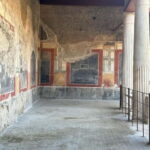
Pompeii’s domus (frescoed houses) are where the site really grabs you. Even if you’re not a “museum person,” these homes tend to make you stop. You get a window into how people lived—decorations, spaces, and the everyday architecture that turns a ruin into a story.
With the audio guide, you can connect the visuals to explanations as you move through. This is especially valuable because Pompeii doesn’t behave like a tidy indoor exhibit. It’s outdoors, scattered, and layered with time—so the audio helps you keep your bearings and makes each doorway and room feel intentional.
The only drawback here is time and attention. Domus can pull you in for longer than you planned. That’s good—unless you try to cram every house back-to-back. I suggest choosing a couple of domus to go deep on and treating the rest as highlights you glance, read, and move on.
Spas and temples: where the city’s public life shows up
Pompeii isn’t only private homes. It’s packed with public spaces—spas, temples, and civic architecture—and these are great stops for understanding the bigger picture of Roman city life.
Spas help you imagine daily routines beyond home life. Temples give you a sense of how religion and community were built into the city’s layout. The audio guide is handy here because these areas can be visually impressive but less immediately obvious without context.
If you’re the type who likes stories that connect places to people, this section of Pompeii is a strong match. If you’re less interested in architecture or public institutions, focus on the stops that sound most intriguing from the audio guide prompts and keep moving.
You can also read our reviews of more guided tours in Pompei Campania



Thermopolis and shops: the ancient version of grab-and-go
One of Pompeii’s most fun angles is how normal it feels—yes, it’s tragic and ancient, but people still wanted food and quick service. That’s why the thermopolis matters. A thermopolis is basically an ancient fast-food setup, where you’d grab something hot or quick rather than waiting for a full meal.
Add shops to the mix and you start to see the city as a functioning place, not just a preserved disaster scene. This is where self-guided exploring pays off, because you can pause where your curiosity lands. If food history interests you, slow down here. If you’d rather spend time in the domus and theaters, you can skim through quickly.
Practical note: food and drinks aren’t included with your ticket, and the site environment is hot and active. You’ll be glad you brought water, and it’s smart to plan your break before you feel overheated.
Theaters and brothels: culture, entertainment, and uncomfortable realism

Pompeii doesn’t sanitize itself. You’ll pass through spaces tied to entertainment and sexuality, including theaters and brothels. It can be intense, but it’s also part of what makes Pompeii such a strong study of a real city.
The theater areas tend to feel more emotionally distant until you understand the purpose. Then the scale and design click. The brothel spaces, on the other hand, can feel more personal—because they relate to human behavior and daily transactions, not grand monuments.
The audio guide helps you handle this shift. Without it, you might just see rooms and structures. With it, you get context about how these sites functioned.
Keep your comfort in mind. If a topic feels too heavy for your day, you can give yourself a short break, then return when you’re ready.
The victims’ casts and the amphitheater: where the story hits hardest
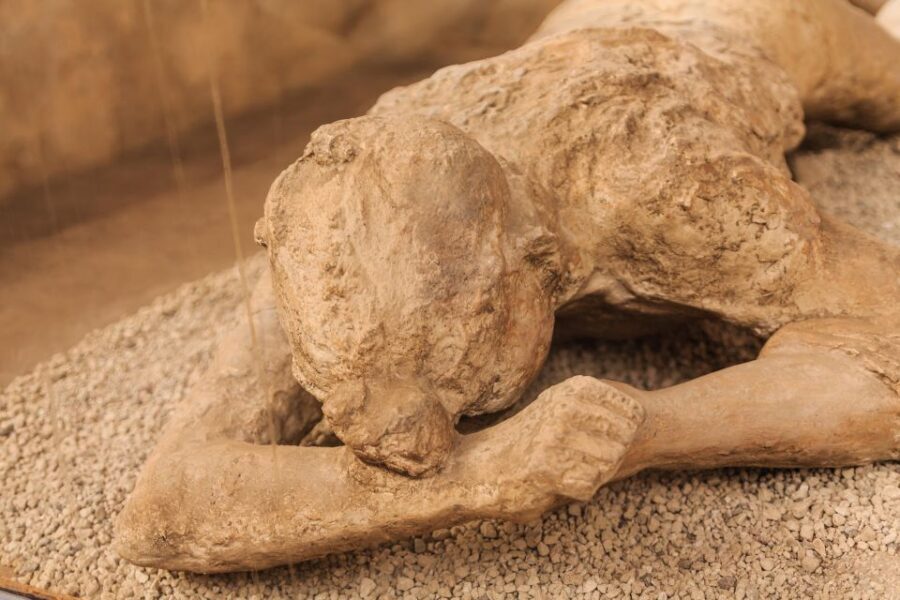
For many people, the casts of the victims of the eruption are a turning point. They bring the tragedy into focus in a way that’s hard to ignore. This section is where Pompeii stops feeling like ancient sightseeing and starts feeling like a human story you can’t fully un-know.
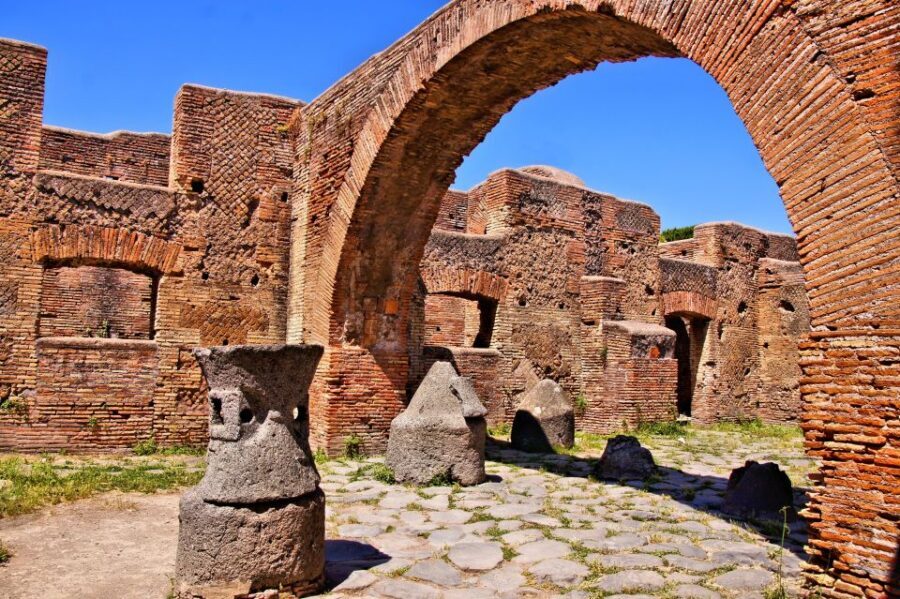
After that, the Roman amphitheater—described as one of the best-preserved—lands differently. Instead of focusing on the disaster, you shift back toward the city’s life: performances, gatherings, and public moments.
I like this pairing for self-guided visitors because it creates contrast in your memory. You get the emotional weight, then you get a sense of what made the city matter day-to-day.
If you’re planning your day, consider saving these stops for when your energy is stable. These are the places where you’ll likely want time to absorb what you’re seeing.
Practical stuff for a comfortable Pompeii day
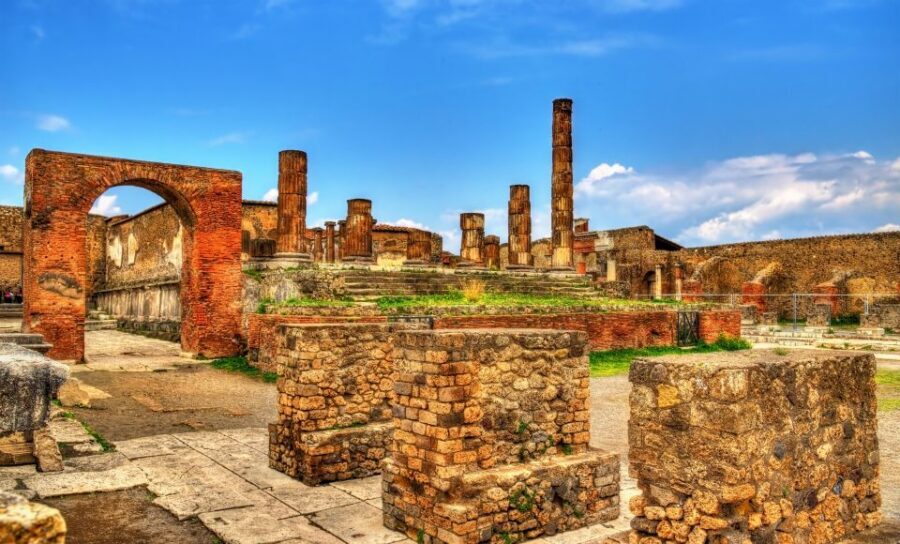
Pompeii is a walking event outdoors. The essentials matter more than almost anything else.
What to bring:
- comfortable shoes
- a hat
- sunscreen
- water
Not allowed:
- luggage or large bags
And it’s not suitable for people with mobility impairments, so plan accordingly.
Also remember: food and drinks aren’t included. That means you’ll want to think ahead about when you’ll take breaks, how much water you’ll need, and how you’ll handle heat while exploring.
Signage can be uneven in places, so don’t assume you’ll always know instantly where to go next. Your map is part of your plan, not something you should “figure out later.”
Value for $44: what you’re really paying for
At about $44 per person for a 1-day ticket with an audio guide and updated map, the value comes down to time and mental load.
If you’re the kind of visitor who:
- hates standing in line,
- wants to explore at your own pace,
- and benefits from on-site context while walking,
…then this ticket is a smart buy. You’re paying to reduce friction, and Pompeii’s scale makes friction expensive.
If you already know Pompeii well and you’d rather do everything from your own guidebook, you might find the audio less essential. But even then, the map and self-guided structure can help you avoid wasting time chasing the wrong clusters of ruins.
Where you can lose value: if the audio-mapped stops don’t line up perfectly with how you’re navigating at that moment, you might spend extra time reorienting. That’s why the “pick a manageable route” approach matters. You’re not trying to cover every corner; you’re trying to enjoy the best parts without stress.
Who this Pompeii ticket suits best
This experience is a great fit if you want to roam independently but still have strong structure. It’s especially suited to:
- couples and small groups who don’t want to stay in lockstep
- visitors who learn best through explanations as they walk
- people who want a low-stress alternative to a guided group schedule
It’s a poor fit if:
- you have mobility impairments and need step-free access
- you prefer fully guided commentary with a live human leading every stop
- you arrive without the mindset to do a serious walking day and plan for heat
Should you book this Pompeii skip-the-line audio ticket?
I’d book it if you want the freedom to explore at your own pace without sacrificing context. The skip-the-line entry plus an audio guide in many languages is a strong combo for a site as large as Pompeii. You’ll get more enjoyment when you can slow down in the places that matter to you, from frescoed domus to the amphitheater.
If you hate using a map or you’re expecting an ultra-simple, perfectly synchronized audio experience at every single stop, you might want a backup plan—because Pompeii can be navigationally challenging on foot.
FAQ
How long is the Pompeii ticket valid?
The ticket is valid for 1 day.
What’s included in the price?
You get Pompeii entrance, an audio guide, and an updated map.
Is food included?
No. Food and drinks are not included.
What languages are available for the audio guide?
The audio guide is available in English, Chinese, French, Italian, German, Hebrew, Russian, Spanish, and Portuguese.
Do I need to bring anything?
Yes. Bring comfortable shoes, a hat, sunscreen, and water.
Can I bring luggage or large bags?
No. Luggage or large bags are not allowed.
Is this experience suitable for people with mobility impairments?
No, it is not suitable for people with mobility impairments.
Is there free cancellation?
Yes. You can cancel up to 24 hours in advance for a full refund.