REVIEW · CITY TOURS
Pantheon and the Best of Rome City Private Tour
Book on Viator →Operated by Europe Odyssey Tours di Rahul Raghavan & C.sas · Bookable on Viator
Rome’s best hits in one walk.
This private tour strings together the places you actually picture when you think of Rome: the Pantheon plus the Trevi Fountain, Piazza Navona, and Capitoline Hill, with stops chosen to move you through the city efficiently. I like that you’re not locked into a rigid script; your guide can tweak the route to match what you care about (and you can choose a morning or afternoon start). I also like the crowd-smart feel, since guides such as Eugene have earned praise for routing you in a way that helps you avoid cruise-ship traffic and see more without feeling like you’re sprinting.
Here’s the main consideration: this is a walking tour, and some legs include stairs and uneven pavement. Also, snacks and bottled water aren’t included, so you’ll want to plan for that—especially in warmer months or if you tend to get hungry mid-tour.
In This Review
- Key reasons this tour works well
- How the private tour actually feels: pace, guidance, and smart routing
- Piazza Venezia viewpoint: Marcellus, the Forum, and Mamertine Prison
- Largo Argentina: Caesar’s assassination area and Trajan’s Column
- Trevi Fountain: Baroque drama and easy wish-making
- Hadrian’s Temple and Sant’Agnese in Agone: two Roman eras without the detour
- Pantheon: the dome you won’t believe is real
- St. Louis of the French and Piazza Navona’s Four Rivers
- Capitoline Hill: Jupiter Optimus Maximus and the city’s key viewpoint
- Price and value: where $204.26 really goes
- Who should book this tour (and who might prefer something else)
- Quick check: should you book this tour?
- FAQ
- How long is the Pantheon and the Best of Rome City Private Tour?
- Where does the tour start and end?
- Is this a private tour?
- Is Pantheon admission included?
- Does the tour offer morning and afternoon options?
- What language is the tour offered in?
- Are snacks and bottled water included?
- Cancellation and weather: what happens if plans change?
Key reasons this tour works well
- Private, interest-adjustable route: your guide can shift emphasis to your priorities instead of forcing a one-size itinerary.
- Pantheon time with admission included: you spend a dedicated block here, not just a quick look from the sidewalk.
- Viewpoints built into the route: Piazza Venezia / Capitoline area gives you big-city perspective instead of only street-level sights.
- Baroque and iconic photo stops: Trevi Fountain and Piazza Navona are timed for enjoyable looking and pictures.
- Caravaggio in a low-key stop: you get to see the Church of St. Louis of the French and its three St. Matthew paintings.
How the private tour actually feels: pace, guidance, and smart routing
This tour is short on paper—about three hours—but it’s packed in a way that makes sense. You start near Piazza Navona and end near Largo di Torre Argentina, so you’re not zig-zagging across the city like a pinball. The private format matters here. You won’t be herded with a large group, and your guide can slow down for questions, hover longer where you’re interested, or skip pace-killers if you want to keep moving.
One thing that stands out from the way guides are described is the emphasis on route choices. Eugene, in particular, is praised for taking a path that helps you get to the most important sites before the worst of the crowd waves. Even if you don’t get that exact guide, you can expect the goal to be the same: get your bearings fast and then use your time where Rome is most memorable.
You’ll also have a practical tool: a mobile ticket is included, which helps on days when Rome’s ticket lines and meeting-point confusion can add stress. And because it’s offered in English, you can focus on the story instead of playing translation roulette.
One more value point: the tour is built so that many stops have free admission. That keeps the overall cost from ballooning with add-ons, while the one major paid entrance—Pantheon—is included.
You can also read our reviews of more city tours in Rome


Piazza Venezia viewpoint: Marcellus, the Forum, and Mamertine Prison
The tour begins at Piazza Navona (meeting at the Embassy of Brazil area) and starts with Piazza Venezia / the ancient city viewpoints. If you’ve ever looked at Rome photos and thought, okay, but where do all these ruins fit together, this first stop is designed to answer that.
From the heights of Piazza Venezia, you get a spread of sights: the Theatre of Marcellus, the Mayor’s office area, the Roman Forum, and the Mamertine prison. That name—Mamertine prison—matters. It’s where St. Paul was imprisoned, and your guide can connect that religious thread to the older Roman spaces around it. You’re looking at layers at once: politics, entertainment, and later religious history, all in the same skyline.
What I’d watch for: ask your guide to point out the visual links between what you see now and what you’ll see later at the Forum-area stops. Even with no special training, this viewpoint helps your brain “map” Rome so later walls don’t feel like random stone blocks.
Possible downside: it’s a short stop (about 15 minutes), so if you want to linger for photos, bring a phone that won’t constantly lose focus. And if you’re sensitive to stairs, let your guide know early so they can adjust your route.
Largo Argentina: Caesar’s assassination area and Trajan’s Column
Next you go to the Area Sacra di Largo Argentina. This spot works well because it’s not just a ruin field—it’s a named moment in Roman history. This is the area linked to the Curia of Pompey and the assassination of Caesar, one of those events that becomes a hinge for everything that follows in Roman politics.
After that, you’ll move through a neighborhood context that’s usually hard to piece together on your own. You get an introduction to the Forum of Julius Caesar, the Market, and the Column of Trajan. You’re basically getting a guided “orientation walk” through the ancient city’s layout—where power sat, how people moved, and what symbols Rome used to advertise authority.
Why this stop is valuable: it gives you story continuity. You start with the higher viewpoint, then you descend into the parts of Rome where major turning points happened. If you’re traveling with kids or teens, this is often a great anchor stop because it connects the ruins to a dramatic plot.
Watchouts: the time is again around 15 minutes, so it’s not meant for deep archaeology study. Think of it as a fast, clear explanation that sets you up for the bigger highlights like Trevi and the Pantheon.
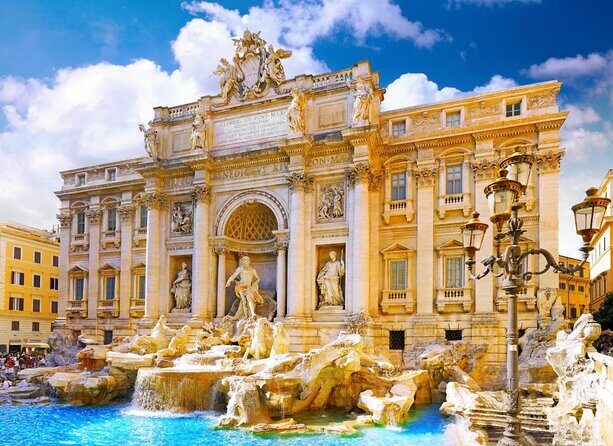
Trevi Fountain: Baroque drama and easy wish-making
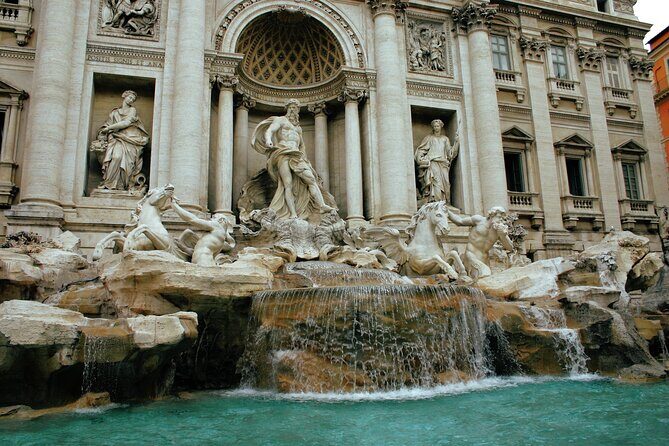
Trevi Fountain is the one Rome stop almost everyone knows. That’s a good thing. When a landmark is this famous, a good guide can make it feel more than just a postcard.
You’ll spend about 20 minutes here. The tour focuses on the Baroque jewel of the fountain and the tradition of tossing a coin into the water. Even if you’ve heard the superstition before, this is one of those moments where you’ll feel the ritual just by standing there and watching others try to get their coin to land. You’ll also have time to do the practical version: check angles for photos, grab a spot that doesn’t block a walkway, and then just take it in.
The real value isn’t the coin—it’s the timing. A private guide and a planned route can mean you see Trevi without it turning into an endless squeeze. Your guide can also help you interpret what you’re seeing in plain language: Baroque style as visual storytelling, not just decorative curves.
What to consider: this is also one of the most crowded areas. The tour’s “best of Rome” structure usually helps, but you should still expect busy streets right around the fountain.
Hadrian’s Temple and Sant’Agnese in Agone: two Roman eras without the detour
After Trevi, you’ll move toward key spots in the Campus Martius area and then toward the church complex near the route.
Stop 4 is Hadrian’s Temple, described as the Temple of Hadrian built by his adoptive son and successor Antoninus Pius in 145. It’s now incorporated into a later building in the Piazza di Pietra area, which is a very Rome type of fact. Rome doesn’t just preserve the past; it stacks it. You’ll see how older Roman design gets absorbed into later city life.
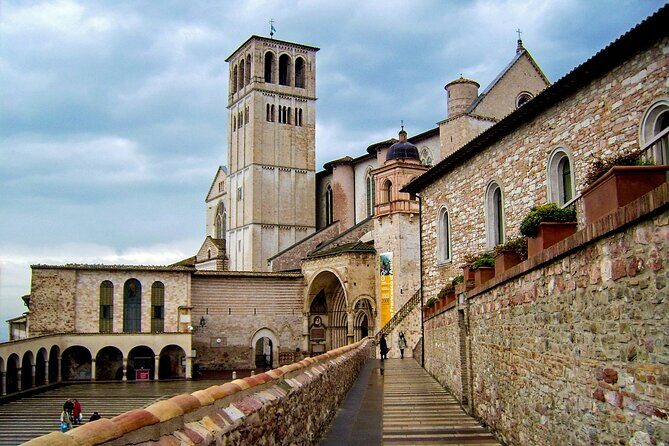
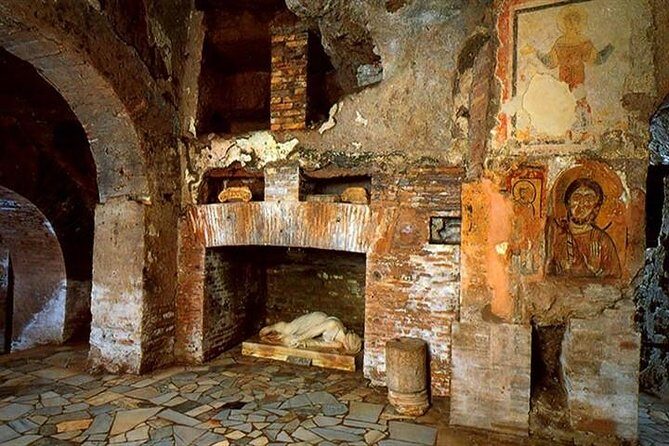
Stop 5 is Chiesa di Sant’Agnese in Agone, also linked to the Basilica di Sant’Agnese Fuori le Mura. The description here highlights mosaics, the shrine of St. Agnes, and the catacombs. If you’re someone who likes religious art, this gives you a different side of Rome than the classic “ancient ruins” vibe.
Why I like pairing these two stops: they show Rome’s time machine. In one block you’re talking about a Roman emperor’s deified legacy and architecture that’s been folded into later streets. In the next, you shift to a Christian-era story and the visual language of mosaics and shrines.
Possible drawback: these stops are shorter (about 15 to 20 minutes each). If you prefer slow, museum-like pacing, you may want to pair this tour with one longer targeted visit later in your trip.
You can also read our reviews of more private tours in Rome



Pantheon: the dome you won’t believe is real
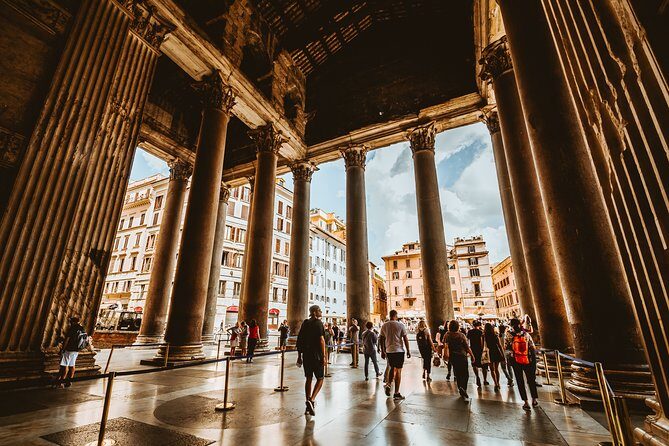
Then comes the big one: the Pantheon. You’ll spend about 30 minutes here, and the admission is included.
The Pantheon is described as a 2000-year-old temple with a free-standing concrete dome and no support system. That’s the kind of claim that’s hard to picture until you’re standing inside and your brain finally matches the explanation. Even if you don’t care about architecture, you’ll feel how the space is built for effect—light, scale, and a sense that the building is holding its breath.
What makes this stop special on a tour like this: you’re not rushed past it. Thirty minutes is enough time to get inside, look up, and still step back out without feeling like you only saw the doorway. It also anchors the whole day. Everything else—Trevi, Piazza Navona, Capitoline—feels more meaningful when you’ve already seen Rome’s engineering and design peak.
Practical note: this is a big interior moment, so plan for that mental switch. You’ll want your camera ready, but also take a moment without taking photos. It helps the space land.
St. Louis of the French and Piazza Navona’s Four Rivers
Next you’ll head to the Church of St. Louis of the French, set between the Pantheon and Piazza Navona. This stop sounds like a “small church” on paper, but it gets people excited because it’s tied to three major Caravaggio paintings: The Calling of Saint Matthew, The Inspiration of Saint Matthew, and The Martyrdom of Saint Matthew.
You’ll spend about 20 minutes here, and the focus is as much on the art story as it is on the building. Even if you don’t know Caravaggio by name, your guide can help you recognize what makes these works famous—dramatic religious scenes with a punchy, human feel.
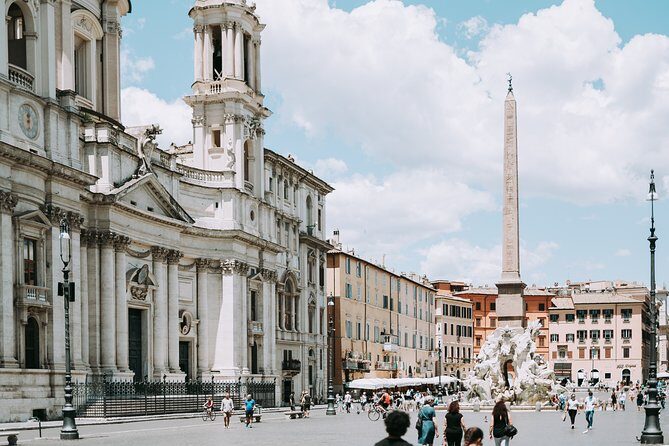
Then you’ll continue to Piazza Navona for about 30 minutes. This is the big open-air payoff: the fountain of the four rivers and baroque architecture you can actually walk through. Piazza Navona is one of those places where the city feels like it’s performing for you—street life, artists, and the sense that you’re in the center of the Rome movie.
Why this pairing is smart: St. Louis of the French gives you high-impact religious art in a relatively compact stop. Piazza Navona then gives you the outdoor “Rome stage.” You get both sides of the coin: art inside and atmosphere outside.
Capitoline Hill: Jupiter Optimus Maximus and the city’s key viewpoint
Your last major stop is Capitoline Hill, about 15 minutes. It may be the smallest of Rome’s seven hills, but it’s one of the most important in terms of ancient function. This is where the Temple of Jupiter Optimus Maximus sat, the key sanctuary of ancient Rome.
What you should take away from this stop is less about memorizing names and more about understanding role. Rome’s hills weren’t just pretty—each one anchored political, religious, or civic power. Capitoline Hill is where that story comes into focus.
What to ask your guide here: ask them to tie Capitoline back to what you saw earlier at Piazza Venezia. The best part of a tour like this is when viewpoints and ruin stops connect into one mental map.
Price and value: where $204.26 really goes
At $204.26 per person for around three hours, this isn’t an ultra-budget option. But it does spend your money in a way that usually feels fair.
Here’s what’s clearly part of the value:
- Experienced guide: the tour quality hinges on explanations and route choices.
- Pantheon admission included: you’re covering the one major paid entrance in the itinerary.
- Many stops are free: Trevi Fountain, Piazza Navona, Largo Argentina area stops, and several churches/points are listed with free admission.
- Private format: you only share the tour with your group, not a big bus-load.
- Flexible timing: you can choose morning or afternoon.
- Mobile ticket: less friction once you’re on the ground.
What isn’t included matters too: snacks and bottled water. That’s easy to fix, but it’s a real cost and comfort factor. If you tend to snack often, add a small stop on your own before you meet—or carry a light snack.
Also, since this tour can be booked ahead (on average about 60 days), I’d treat it like a popular slot. If your dates are set, don’t wait until the last minute.
Who should book this tour (and who might prefer something else)
This works best if you want:
- a fast, guided sampler of Rome’s top sights without spending your day planning logistics
- a guide who can adjust to your interests
- a tour that includes a true highlight stop at the Pantheon, not a quick drive-by
It may not be ideal if:
- you dislike walking or stairs
- you want longer time for museums or detailed independent exploration
- you’re expecting a food-focused tour (snacks aren’t included)
Weather matters. The experience requires good weather, and if it’s canceled due to poor weather, you’ll be offered another date or a full refund.
On the good side for travelers with needs: service animals are allowed, and most travelers can participate. It’s also near public transportation, which helps if you’re using transit to reach the start point.
Quick check: should you book this tour?
If you’re in Rome for a short time—three days or less—and you want to hit the Pantheon, Trevi, Piazza Navona, and a meaningful ancient-city perspective without turning your trip into homework, I think this is a smart booking. The price feels more justified when you value the included Pantheon entry and the time saved by having a guide connect the dots between stops.
I’d book it especially if you like the idea of a private guide who can shift the emphasis and if you want your route to be crowd-aware. And pack a small plan for comfort: water, a snack, and a mindset that this is a walk-first day.
FAQ
How long is the Pantheon and the Best of Rome City Private Tour?
It’s about 3 hours (approx.).
Where does the tour start and end?
It starts at the Embassy of Brazil, Piazza Navona, 14, 00186 Roma RM, Italy, and ends at Largo di Torre Argentina, 00186 Roma RM, Italy.
Is this a private tour?
Yes. It’s a private tour/activity, so only your group will participate.
Is Pantheon admission included?
Yes. Pantheon is listed as included, while other stops are listed as free admission.
Does the tour offer morning and afternoon options?
Yes. You can choose from a morning or afternoon tour for flexibility.
What language is the tour offered in?
It’s offered in English.
Are snacks and bottled water included?
No. Snacks and bottled water are not included.
Cancellation and weather: what happens if plans change?
You can cancel for a full refund up to 24 hours before the experience’s start time. The experience requires good weather, and if it’s canceled due to poor weather, you’ll be offered a different date or a full refund.