REVIEW · POMPEI CAMPANIA
Pompeii Ruins 2-Hours Guided Tour and priority entry ticket
Book on GetYourGuide →Operated by Tempio Travel Sorrento · Bookable on GetYourGuide
Pompeii hits hard in two hours. This guided walk takes you through the UNESCO site preserved by Mount Vesuvius’ eruption in 79 AD, with a guide to help you connect what you see to how people actually lived. I especially like that the tour keeps you moving at a good pace instead of letting you drift around confused.
Two things I really like: the focus on everyday Roman life (not just big monuments), and the hands-on-feeling details like remarkably preserved mosaics, frescoes, cooking utensils, and termopolia. The guide also helps you keep your bearings, which matters because the site can feel like a maze.
One consideration: this is a shared group tour, so you’ll be following a set route and timing. If you want total freedom from the start, you might feel a little boxed in until you get the time to explore on your own after the guided portion.
In This Review
- Key highlights you’ll feel fast
- Why this 2-hour Pompeii tour works
- Meeting point at Pompei Train Station: where to start
- Priority entry: the time-saver that actually matters
- The guided route: what you’ll see in 2 hours
- Forum, theaters, villas, and public baths
- Bakery displays and cooking tools still on display
- Termopolia: quick-meal counters from Roman street life
- Mosaics, frescoes, and restored-looking rooms
- Body casts and the eruption’s tragic reality
- 79 AD explained the way you’ll actually remember
- Headsets and shared-group pacing: hearing the guide clearly
- After the guided tour: explore without losing your mind
- What it’s like for different travel styles
- Price and value: is $37.58 worth it?
- Practical tips to make the most of your visit
- Who should book this tour
- Should you book Pompeii Ruins 2-Hours Guided Tour and priority entry ticket?
- FAQ
- Where is the meeting point for this Pompeii tour?
- What time and duration should I expect?
- What’s included with the guided tour?
- Is the tour offered in English?
- Does this tour use priority entry?
- Is it a private tour?
Key highlights you’ll feel fast
- Priority entry to skip the ticket line and start sightseeing with less waiting
- Expert guide leading a route through the most significant areas of the site
- Mosaics, frescoes, and termopolia that show daily life in striking detail
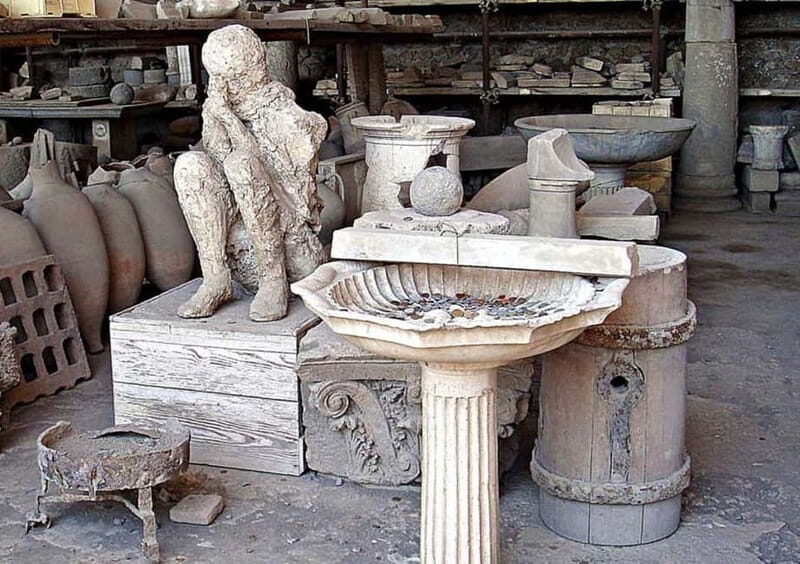
- Body casts that bring the eruption’s tragedy into a very human focus
- A planned route through Forum, theaters, villas, public baths, and a bakery with utensils
- Headsets (for groups of 16+), making the English/Italian guide easier to hear on busy days
Why this 2-hour Pompeii tour works
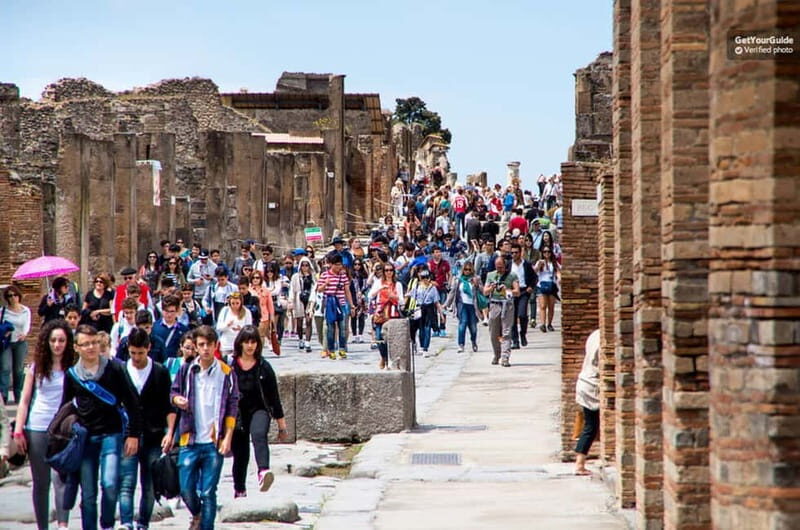
Two hours at Pompeii is either too short or just right, depending on how you do it. With a guide, you get the best parts without spending your time hunting for the Forum or guessing what a space was used for. You’re also less likely to get turned around in the labyrinth of streets and ruins.
I like that the tour is built around meaning, not just seeing structures. You’re not only looking at stone walls—you’re learning how Roman Republic city life looked before it was buried, and why certain rooms matter. That context makes the artifacts feel personal, even when they’re centuries old.
The priority entry part also helps the experience. Pompeii is popular, and waiting in line doesn’t add anything to the story. By saving that time, you can spend your energy where it counts: the big sights and the details like mosaics and cooking tools.
You can also read our reviews of more tours and experiences in Pompei Campania


Meeting point at Pompei Train Station: where to start
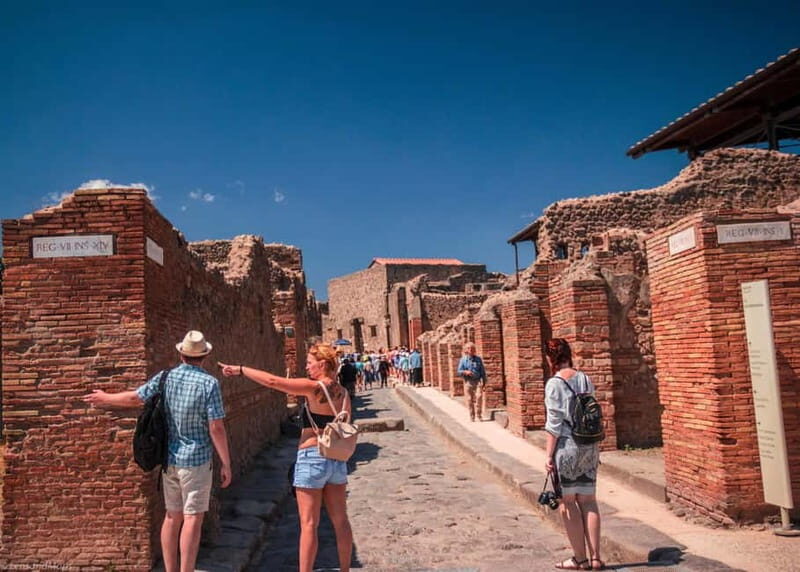
You’ll meet at the Tempio Travel Office at Pompei Circumvesuviana Station, on the first floor. Plan to arrive at least 15 minutes early so you’re not rushed at check-in. It’s the kind of practical timing that keeps the tour from slipping behind.
From there, you’ll start the guided route around Via Villa dei Misteri, 1. This matters because it gets you oriented at the beginning, instead of wandering in the wrong direction and losing momentum. The tour also ends back at the same meeting point, which is convenient if you’re using public transport.
If you’re coming in from Naples or the Amalfi Coast, this is a very workable setup. You don’t have to figure out how to get everyone to the ruins on your own. Your day has a clear start and a clear end point.
Priority entry: the time-saver that actually matters
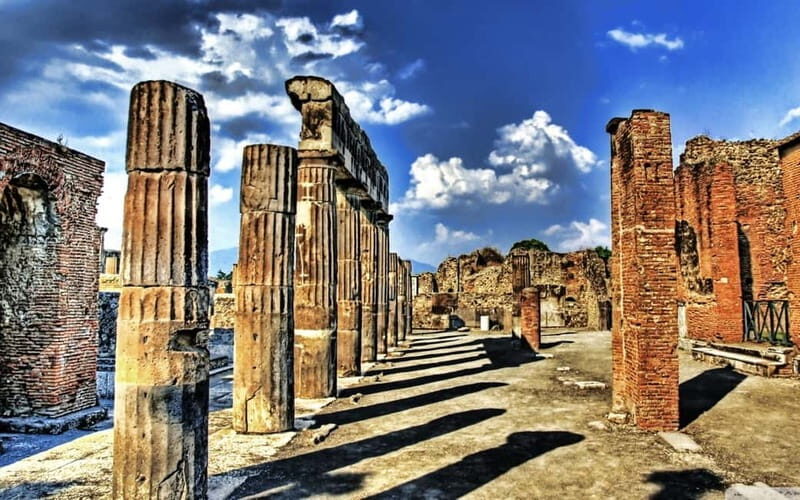
Skipping the ticket line isn’t a luxury at Pompeii—it’s practical. A 2-hour guided tour doesn’t leave much room for delays, so shaving off that waiting time helps you get closer to the full sightseeing window. You’ll still have plenty to see once you’re in, including both major landmarks and the smaller “wow” details.
Think of it like this: the line takes time, but it doesn’t build understanding. Priority entry gives you that understanding sooner. And once you’re inside, you’ll be glad someone is keeping the itinerary moving at a steady pace.
You’ll also have guidance right away on where to go and what to notice. That’s one of the biggest differences between wandering on your own and seeing Pompeii with a route.
The guided route: what you’ll see in 2 hours
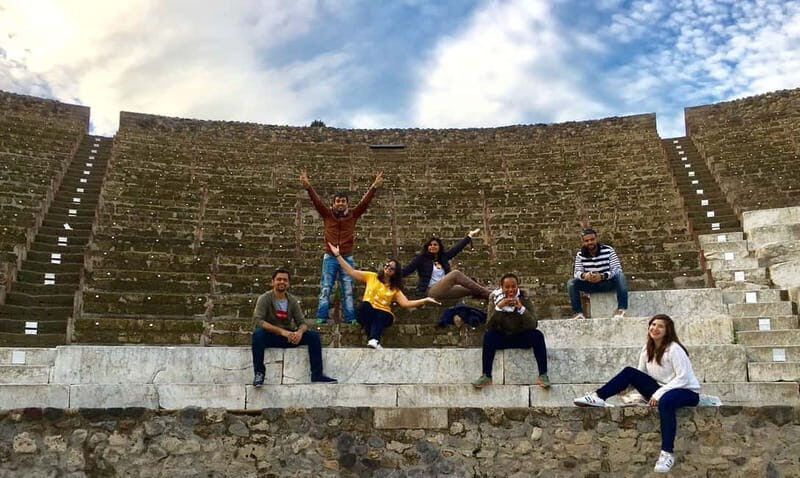
The tour is centered on significant parts of Pompeii, with time spent where the details tell the story. You’ll navigate the ruins with your guide, instead of trying to follow a map while crossing uneven ground. The route includes public spaces and private life—so you get a more balanced feel for the city.
Here’s what your guided portion is designed to cover:
Forum, theaters, villas, and public baths
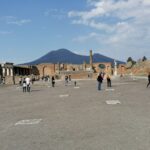
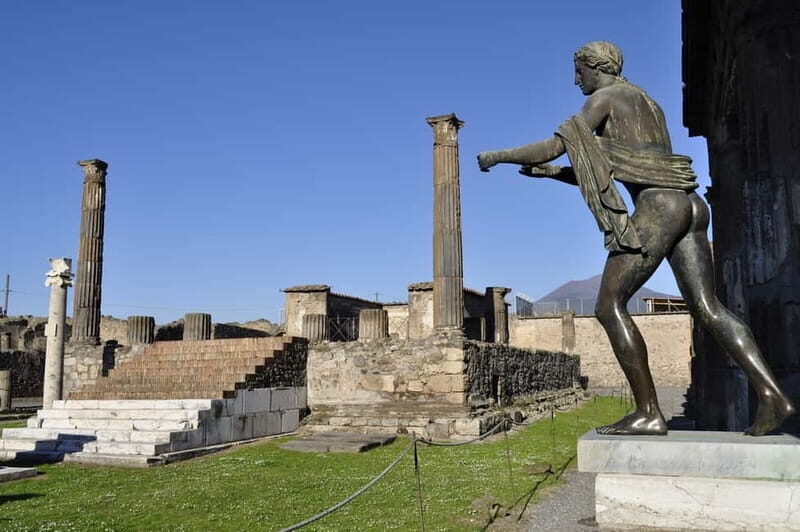
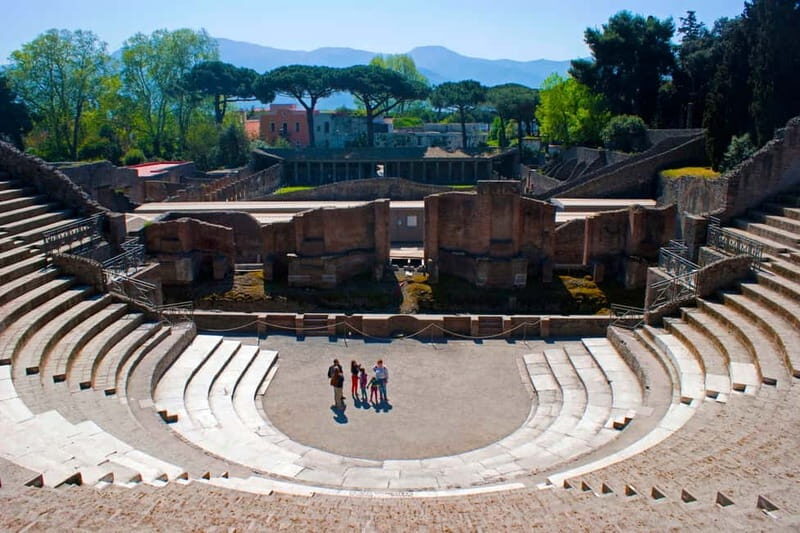
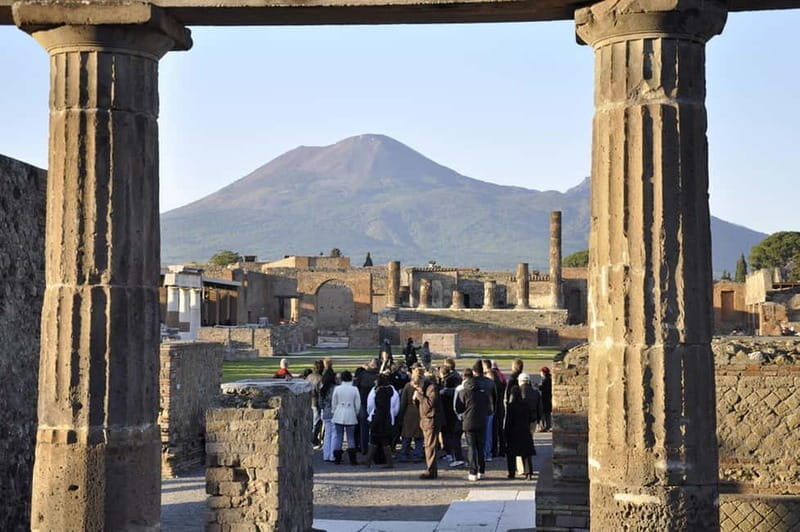
You’ll see key civic and social areas, including the Forum, as well as theaters and major villas. Public baths come up too, which is important because baths weren’t only about hygiene—they were places to meet and talk. Seeing these areas with explanations helps you understand how a city ran day to day.
You can also read our reviews of more guided tours in Pompei Campania


Bakery displays and cooking tools still on display
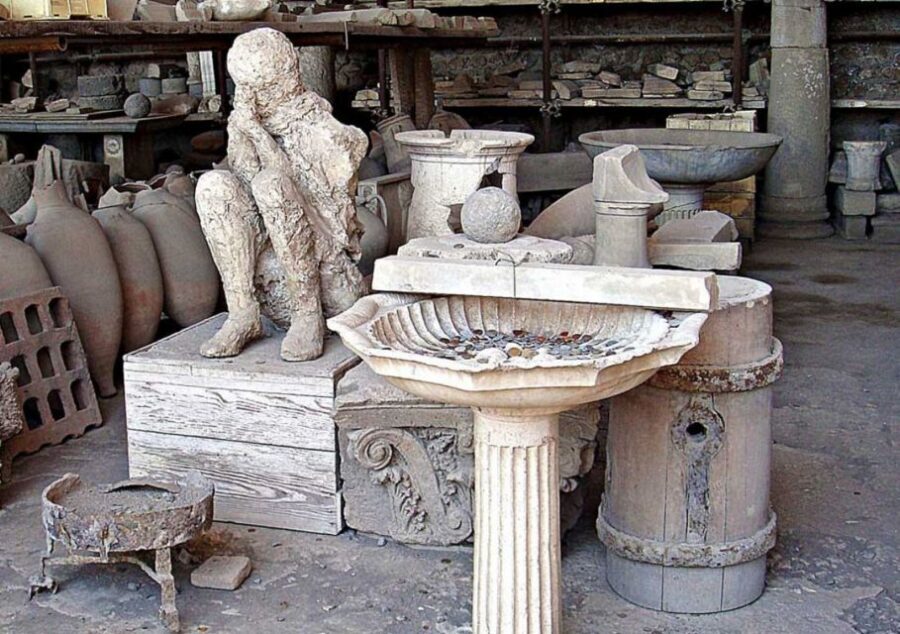
One of the most memorable kinds of stops is the bakery area with cooking utensils still on display. That’s the kind of detail that turns “ancient Rome” into a real working kitchen. Even if you don’t know much Latin history, you can picture the routine: prepare, cook, sell, repeat.
Termopolia: quick-meal counters from Roman street life
You’ll also discover the termopolia, which were essentially food and drink counters for people on the move. This is a strong way to connect ruins with daily habits. It’s also one of those stops that makes Pompeii feel less like a museum and more like a city you could almost walk through today.
Mosaics, frescoes, and restored-looking rooms
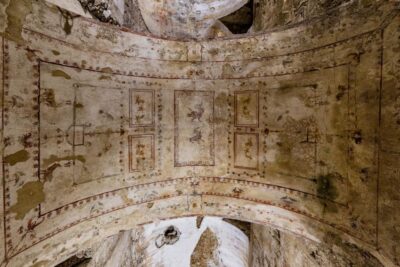
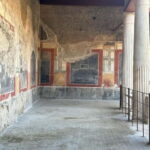
Another major focus is remarkably well preserved mosaics and frescoes. These are visual records of taste, wealth, and everyday decoration. Up close, they help you understand that people didn’t live in plain, gray spaces; they lived among color and patterned floors.
Body casts and the eruption’s tragic reality
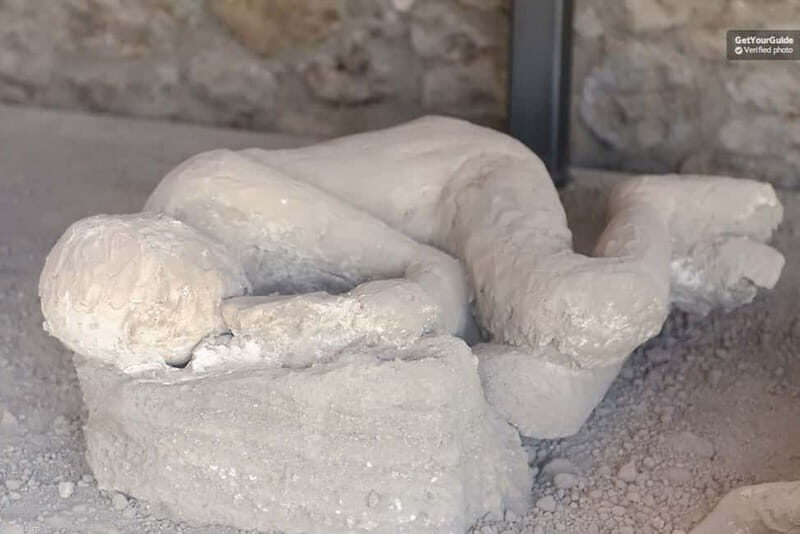
The tour doesn’t shy away from the disaster. You’ll learn about the eruption in 79 AD and see body casts that freeze the terror of that moment more than 2,000 years ago. It’s heavy, but it’s also a key part of Pompeii’s truth. The guide’s storytelling is what helps this feel human instead of just “dark exhibits.”
79 AD explained the way you’ll actually remember
Pompeii works because it preserved the ordinary. The eruption story matters, but it’s the combination of ordinary life plus catastrophe that stays with you. A guided tour helps you hold both ideas at once: what the city was, and what happened when Vesuvius erupted.
You’ll hear about the tragic events of 79 AD as you move through the remains. This is better than reading a timeline before you arrive, because the timeline lands right beside the spaces where people lived and worked. You’re not just learning facts—you’re connecting the eruption to real places and real activities.
If you like storytelling that’s anchored in physical details, this is a good fit. The guide takes you around the preserved city and ties each stop to what people did there before it was buried.
Headsets and shared-group pacing: hearing the guide clearly
Your tour includes audio support in addition to the live guide, with headsets used for groups of 16 or more. That’s a practical detail, especially in a crowded archaeological site where voices can carry poorly. It helps you get the explanations even if the group is walking in a tight cluster.
Since this is a shared tour, the pacing is guided, not DIY. You’ll follow the group through the most important areas, and you won’t have endless time at every mosaic or every doorway. Still, the structure is what makes a 2-hour visit feel complete.
This setup is ideal if you don’t want to spend your entire day “figuring it out.” You’ll get the big hits and the interpretive context without having to study a guidebook for hours.
After the guided tour: explore without losing your mind
Once the 2-hour guided portion ends, you’ll have freedom to explore the archaeological site on your own. That’s a smart pairing: let the guide show you what matters, then you can return to what grabbed your attention.
This is also where you can slow down. If mosaics caught your eye, you can spend more time looking closely. If the Forum felt like the center of city life, you can pause for more scenes in that area. And if termopolia sounded fascinating during the explanation, you can linger and look for additional context around those spaces.
The site is big enough that going alone from the start can feel like constant work. The guided portion helps you learn the layout and the logic of what you’re seeing, so your self-guided time feels more like discovery.
What it’s like for different travel styles
This tour suits a few common styles of travel:
- First-timers who want the highlights with context, fast
- History-minded travelers who care about everyday life, not only famous ruins
- People short on time who still want a strong Pompeii experience
If you’re the type who enjoys wandering for hours with no structure, you might prefer a longer self-guided visit after you’ve done the essentials. But for many people, this is the best “start here” option because you leave with an understanding of what to look for next.
If you’re traveling with someone who wants different types of sights, the mix helps. You get civic spaces, domestic life, food counters, decorative floors, and disaster-era material all in one loop.
Price and value: is $37.58 worth it?
At $37.58 per person for a 2-hour guided tour with priority entry, you’re paying for three things: a guided route, a ticket that lets you skip the line, and the headsets/audio setup. In practice, that’s the difference between spending your limited time searching and spending your limited time learning.
Is it cheaper than DIY? Yes, in many cases. But DIY has hidden costs: time waiting, time getting oriented, and missed context. Pompeii is not small, and it’s easy to waste time if you don’t know where the big points of reference are.
For this tour price, you’re buying efficient sightseeing plus interpretation. That tends to be the best value when you only have a couple of hours—especially at a site where crowding and confusion can eat into your day.
Practical tips to make the most of your visit
Comfort matters at Pompeii. You’ll be walking on uneven ancient surfaces and moving between multiple areas in a short time. Wear comfortable shoes, not “nice but risky” footwear.
In summer, bring a sunhat and water. Pompeii can be exposed, and you don’t want to start rationing your energy halfway through. This kind of small prep keeps you focused on what you came for: mosaics, cooking utensils, and the eruption story.
Also, don’t plan your day too tightly. Even with priority entry, a shared tour means set timing and a group rhythm. Build in breathing room around your arrival and your return to the meeting point.
Who should book this tour
I’d book this if you want Pompeii to feel clear and meaningful, not like a puzzle. The tour is designed for a first solid pass through the site, with the Forum, theaters, villas, public baths, a bakery, termopolia, mosaics, frescoes, and body casts all woven into a 2-hour experience.
You’ll especially like it if:
- you’re visiting for the first time and want the main highlights with explanations
- you prefer an organized route over navigation stress
- you want to learn how Romans lived, ate, worked, and gathered
If you already know Pompeii well and want total control, you might find the set route limiting. In that case, a longer self-guided plan could fit better. But for most people, this tour is a smart way to get a strong Pompeii “core” in a short window.
Should you book Pompeii Ruins 2-Hours Guided Tour and priority entry ticket?
If you’re weighing this against DIY, I’d lean toward booking it. Priority entry plus a guide-driven route is exactly what you want at Pompeii when time is tight. You get the most significant areas, plus the kind of detail—mosaics, frescoes, cooking utensils, termopolia, and body casts—that makes the place stick in your mind.
Book it if you like structure, clear explanations, and a planned overview that still leaves room to wander afterward. Skip it only if you know you want long, independent pacing from the gate and you’re comfortable navigating the ruins without help.
FAQ
Where is the meeting point for this Pompeii tour?
You’ll meet at the Tempio Travel Office at Pompei Circumvesuviana Station, located on the first floor. You should arrive at least 15 minutes before departure.
What time and duration should I expect?
The tour duration is 2 hours. Starting times depend on availability, so you’ll need to check the schedule for the day you’re visiting.
What’s included with the guided tour?
The tour includes a skip-the-line entrance ticket, a 2-hour guided tour of Pompeii, and audio support through headsets. After the guided part, you’ll have freedom to explore the archaeological site on your own.
Is the tour offered in English?
Yes. The live tour guide is available in English and Italian, and the audio guide is also provided in English and Italian.
Does this tour use priority entry?
Yes. It includes skip-the-line entrance, so you can get into Pompeii without waiting in the main ticket line.
Is it a private tour?
No, it’s a shared guided tour. Headsets for listening to the guide are available for groups of 16 or more.