Rome has a palace under your feet. This 2-hour visit takes you through Nero’s excavated Golden House, then uses virtual reality to help you picture what the rooms looked like at their height. I also like that the guide is an archaeologist who ties the site to what happened after the fire of 64 A.D. and how the Domus Aurea echoed into later interest, including the Renaissance. One possible drawback: it’s underground and active, with steps, staircases, and uneven surfaces.
You’ll meet at Oppio Caffè, right by the corner of Via Nicola Salvi and Via delle Terme di Tito, and your guide will be holding a Through Eternity sign. The ticket price includes exclusive access, the VR add-on, a reserved entry, and an express security check, which makes the whole thing feel smoother than trying to piece it together yourself.
In This Review
- Key takeaways before you go
- Nero’s Golden House: Why this underground stop feels otherworldly
- Entering Domus Aurea: Meeting at Oppio Caffè and moving fast
- The 2-hour guided walk: rooms, vaults, and the feeling of scale
- VR and multimedia: what the palace looked like when it was new
- Domus Aurea through Nero and onward to the Renaissance
- Price and value: is $55 for 2 hours worth it?
- Who should book this Domus Aurea tour?
- Should you book Domus Aurea now? My practical take
- FAQ
- How long is the Rome Domus Aurea guided group tour?
- Where do I meet the guide?
- Is virtual reality included?
- What is included in the ticket price?
- What should I bring?
- Is the tour refundable?
Key takeaways before you go
- Exclusive access to excavated rooms at Domus Aurea, not just a quick look
- VR that reconstructs the palace so the scale makes sense fast
- An archaeologist-led English tour, focused on architecture and daily life
- A guided story from Nero through later rediscovery, including links up to the Renaissance
- Underground walking with steps means good shoes matter more than fashion
Nero’s Golden House: Why this underground stop feels otherworldly
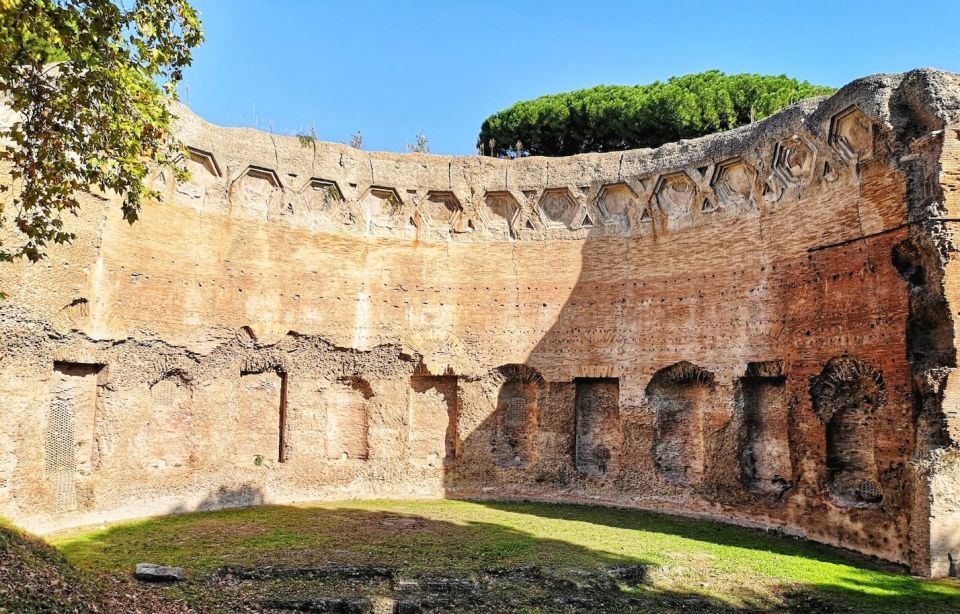
The Domus Aurea, Nero’s Golden House, isn’t just famous because it was grand. It feels strange because it’s buried. After a major fire in 64 A.D., Nero ordered architects to build an immense palace over the smoldering remains of parts of Rome. The result reads like science fiction: a rotating dining room open to the starry sky and a massive artificial lake are just two of the headline ideas people associate with the palace.
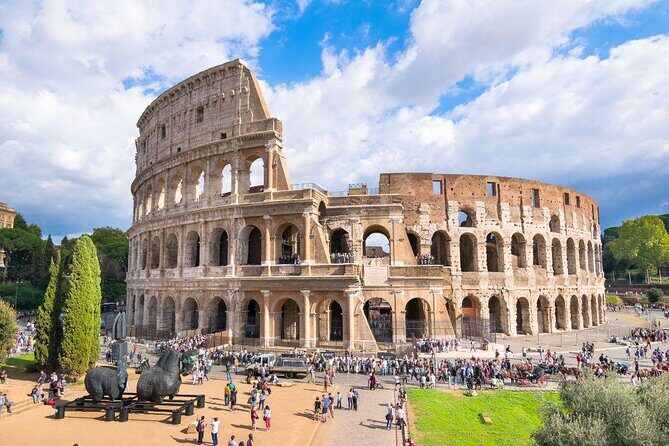
In 68 A.D., Nero died by suicide, and his successors tried to erase the memory of the emperor and his excesses. The palace was bulldozed, and the artificial lake was filled in. Only a few years later, the Flavian Amphitheatre was erected on that changed landscape. Centuries went by, and the Domus Aurea essentially became a time capsule beneath the city.
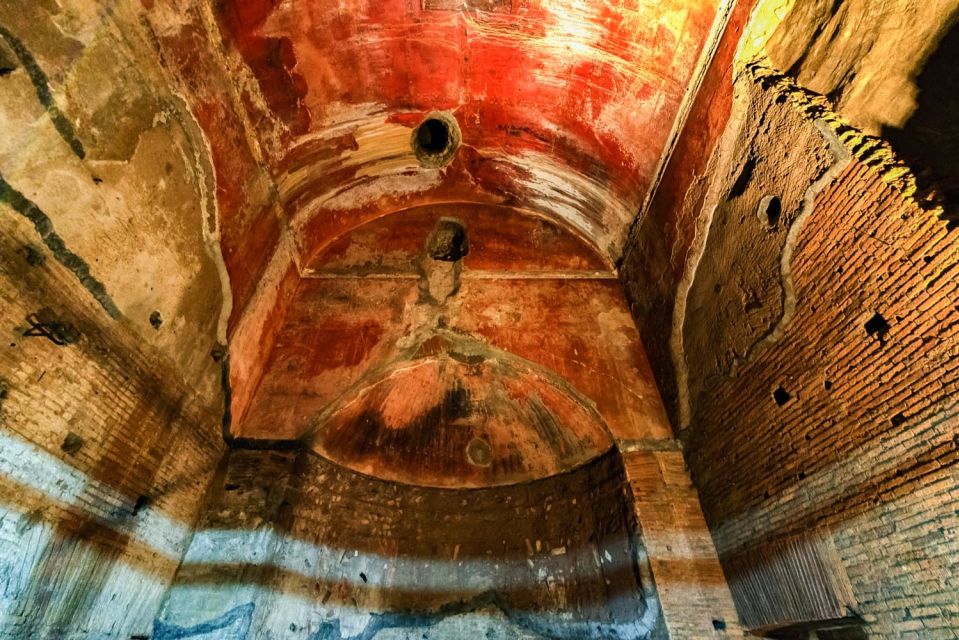
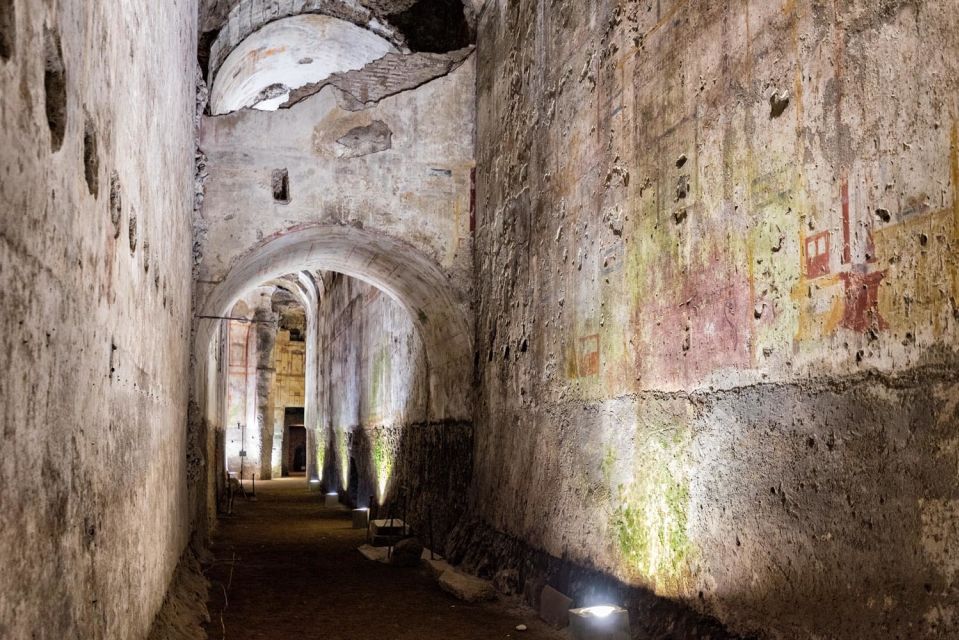
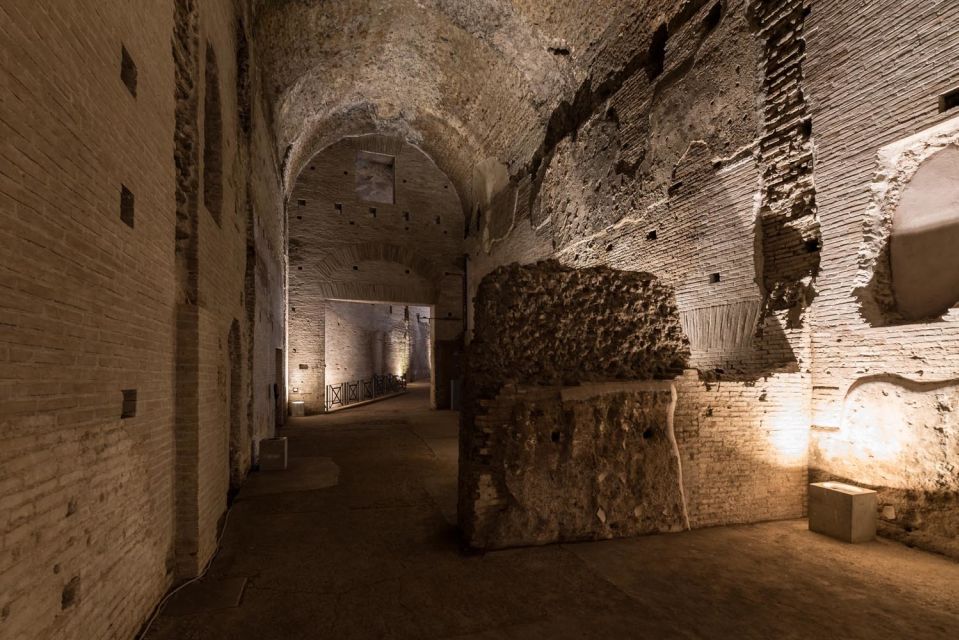
That’s why the walking route matters. You’re not wandering through a flat “museum box.” You’re descending into excavated remains that are still part of an active archaeological setting. Even when the restored areas are the focus, the underground setting changes how you see everything. Fresco fragments, vaulted shapes, and the layout of the rooms all help you grasp why this was meant to look unreal—both in design and in attitude.
Entering Domus Aurea: Meeting at Oppio Caffè and moving fast
The tour starts at Oppio Caffè, at the corner of Via Nicola Salvi and Via delle Terme di Tito. If you’re using GPS, a handy reference is Via delle Terme di Tito 72. Your guide will be easy to spot with a Through Eternity sign or flag.
This matters because Domus Aurea isn’t a “show up and wander” place. It’s a working site with controlled access, so the schedule and entry flow are part of the experience. The ticket includes an express security check, so you’re not burning time waiting in a line before you even begin.
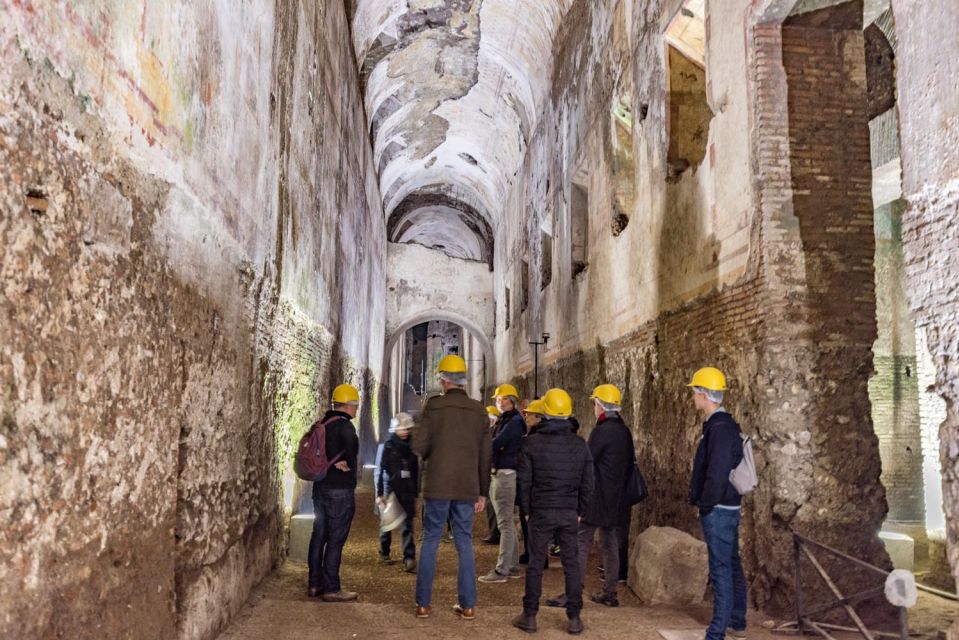
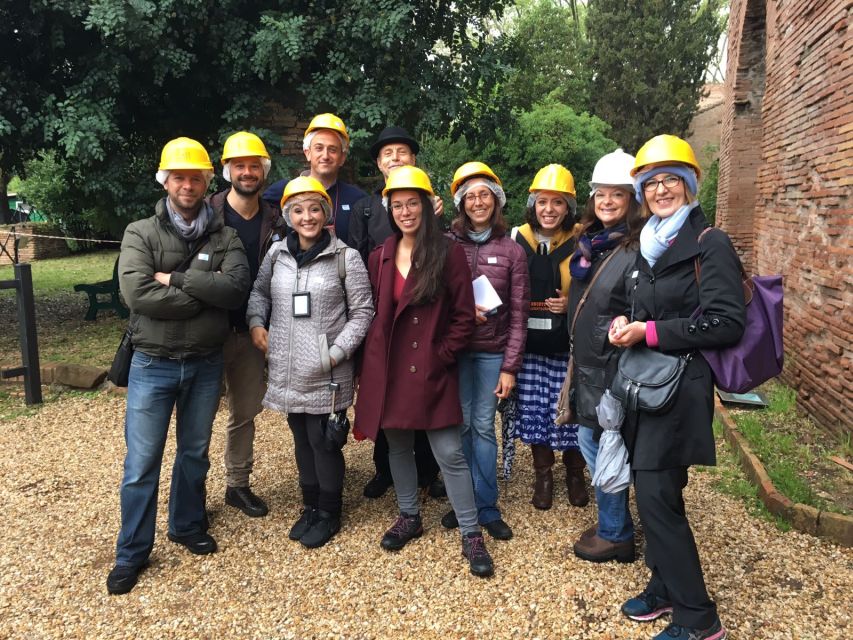
It’s also a walking tour with real steps and uneven surfaces. Bring comfortable shoes you trust on stairs. And yes, bring warm clothing. Underground spaces can feel noticeably cooler than the streets above, especially if you’re in there for the full 2-hour session.
One more practical point: luggage or large bags aren’t allowed. If you’re traveling with extra gear, pack light for this day so you don’t spend your energy dealing with storage rules.
The 2-hour guided walk: rooms, vaults, and the feeling of scale
Once you’re inside, the pace is built for understanding. You’ll explore excavated ruins of Nero’s Golden House with an English-speaking guide, and the emphasis stays on what you can actually see: architecture, room sequence, and how the spaces were meant to impress.
You get an insider look at the life and times of Nero, not just a list of facts. The story connects big events—like the fire and the emperor’s rise and fall—to the way the palace was designed to project power. Nero wasn’t building a house that fit into the city; he was trying to overwrite the city’s memory.
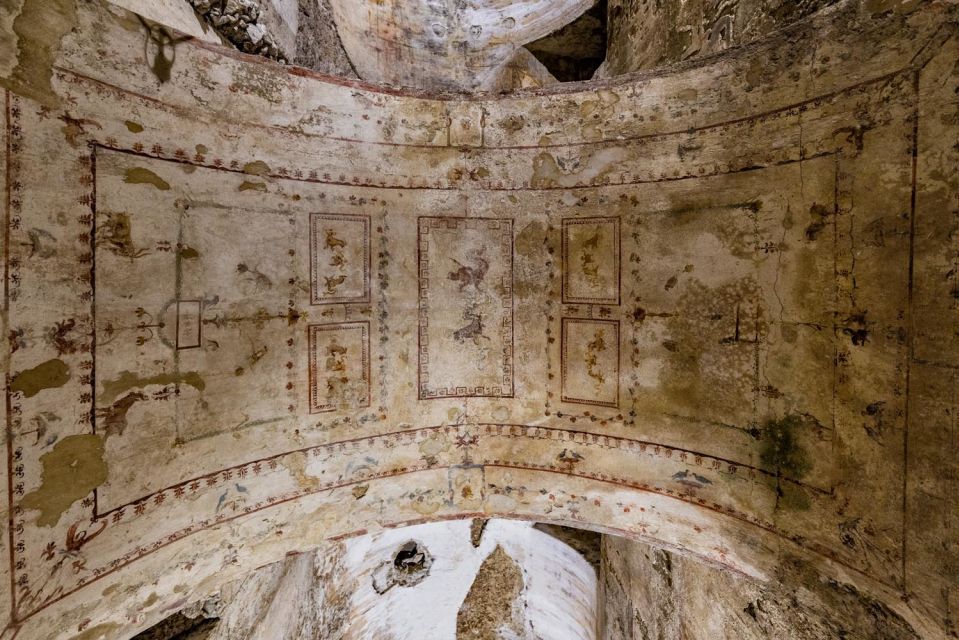
Here’s what makes this walk special for me as a practical visitor: the guide helps you interpret the shapes. Vaults matter. Fresco placement matters. Even when you’re viewing restored sections rather than complete original rooms, you start to “read” the palace like a system, not a pile of pretty walls. That’s where the site becomes more than a novelty.
A number of guides who lead this tour are praised for answering questions and keeping families engaged. You’ll also hear details that go beyond pure architecture. One of the ways the tour experience often lands is through how it connects artistic taste and symbolism—sometimes including references to influences beyond Rome—to show why Nero’s palace looked the way it did.
Possible drawback to plan for: a small number of people note that sound clarity can vary depending on where you’re standing and how a guide projects. If you’re traveling with kids or you know you’ll struggle with hearing in groups, choose a spot where you can see the guide and listen from close range rather than trailing at the back.
VR and multimedia: what the palace looked like when it was new
The highlight many people remember most is the virtual reality experience. It’s included in your $55 ticket, and it changes the visit from “interesting ruins” into “I finally get what the whole thing was meant to be.”
This VR portion helps you reconstruct buildings and terrain from Nero’s time. In plain terms: it gives you back your sense of scale. In the underground setting, your brain can struggle to imagine the palace complete—especially with sections restored to different degrees. VR bridges that gap, and it does it quickly, right when you need it.
You’ll also see other multimedia elements used during the tour. People specifically call out multimedia and digital reconstruction as a big part of understanding what survived and what didn’t. A few guests even describe VR as futuristic or like a Google-style view, which is a good clue: it’s not just a static video. It’s designed to show you structure and context.
The value of VR here is practical. It helps you connect what you’re seeing physically—vault shapes, room spacing, and decorative surfaces—with what the palace originally aimed to communicate: luxury, control, and a kind of imperial theater.
Domus Aurea through Nero and onward to the Renaissance
You don’t just come away knowing Nero lived there. You come away understanding the chain of consequences around him.
The tour frames the palace as a reaction to disaster and politics. After the fire of 64 A.D., architects fashioned an immense dwelling over the remains. That original plan tells you a lot about Nero’s mindset. Then the timeline pivots to his death in 68 A.D. and the attempt to wipe the palace from the Roman narrative.
But the tour doesn’t stop at the ancient timeline. One of the listed highlights is learning about the Domus Aurea up to the Renaissance. That matters because it connects this underground site to how later Europeans thought about antiquity and Roman style. You see the Domus Aurea not just as an artifact, but as an idea that kept reappearing in different eras.
In the real world, it’s easy to visit Rome in a “one monument per day” loop. This tour helps break that habit. It gives you context you can carry to other sights above ground, because it explains what people were seeing and valuing when they looked back at Roman art and architecture later on.
Price and value: is $55 for 2 hours worth it?
At $55 per person, this tour sits in the “pay for access and expertise” category. The key thing is that your price isn’t only for a guide. It includes exclusive access to Domus Aurea, the VR experience, an English-speaking archaeologist guide, and tickets plus reservation fees. It also includes express security.
So what you’re paying for is not just entry. You’re paying for:
- access to an active archaeological setting with controlled visitation
- a guided interpretation that helps you make sense of restored and excavated spaces
- VR, which would be hard to replicate on your own
Because the tour is only 2 hours, you’re also buying focus. You’re not waiting around for a long day to become “the day you finally reach the underground rooms.” You get in, you see the key parts, and you finish while the information is still fresh.
Is it good value for everyone? If you love Roman history but want lots of free roaming time, you might find the fixed schedule a little limiting. If you’re the type who likes guided context and wants the site to click quickly, the mix of architecture + VR + archaeologist-led storytelling makes the $55 feel reasonable.
Who should book this Domus Aurea tour?
This tour fits best if you:
- want a guided look at Nero’s palace with an archaeologist leading the story
- enjoy architecture, frescoes, and how a space was designed to work socially and politically
- like technology that explains what you can’t easily picture on your own
- want a smaller-group feel rather than a rush-through
It may not be a great match if you:
- have mobility limitations or need wheelchair access (it’s not suitable for wheelchair users)
- can’t manage stairs and uneven surfaces
- need to bring large bags or extra luggage
Families often like it too. Several people mention that guides were good at handling kids’ questions, which is a sign the narration isn’t only aimed at adults.
Should you book Domus Aurea now? My practical take
If you care about seeing the Domus Aurea when it’s actually accessible to visitors and not just “a place you keep postponing,” this is a strong choice. The combination of exclusive access and VR reconstruction turns an underground site into something you can really understand in a short amount of time.
I’d book it if you want the palace to feel real. Not just pretty ruins, but a functioning stage of imperial life—one where rotating spaces, artificial lakes, and jaw-dropping frescoes are explained in context.
I’d hesitate only if you know you struggle with stairs, uneven ground, and cooler underground temperatures, or if you hate guided tours and prefer to wander at your own pace. For everyone else, this is one of those Rome experiences that gives you a different kind of wow than the usual skyline photos.
FAQ
How long is the Rome Domus Aurea guided group tour?
The tour duration is 2 hours.
Where do I meet the guide?
Meet your guide at the corner of Via Nicola Salvi and Via delle Terme di Tito, in front of Oppio Caffè. If you need GPS, use Via delle Terme di Tito 72.
Is virtual reality included?
Yes. The virtual reality experience is included in the tour.
What is included in the ticket price?
Tickets and reservation fees are included, along with exclusive access to the Domus Aurea, an English-speaking archaeologist guide, and express security check.
What should I bring?
Bring comfortable shoes, warm clothing, and water.
Is the tour refundable?
No. This activity is non-refundable.