REVIEW · ROME
Rome: Colosseum, Forum, and Palatine Hill Guided Tour
Book on GetYourGuide →Operated by Rome in tours · Bookable on GetYourGuide
Three ancient stops. One smart plan.
This Colosseum, Forum, and Palatine Hill tour strings Rome’s biggest power story together, from gladiator spectacle to imperial homes and courtroom politics. I like that you get expert local guide context (often with archaeology or history training) plus headsets, so the ruins come with real explanations instead of guessing.
One thing to factor in: security checks happen at both the Colosseum and the Forum, and on the first Sunday of the month free entry can mean real waiting even though it’s still guided. If you hate lines, this is the part to plan for.
Key takeaways before you go
- Skip-the-line access for faster entry through the busy core sites
- Headsets included so you can hear your guide clearly while walking
- A tight 2.5-hour pace that hits the Colosseum, Palatine Hill, and the Forum in sequence
- Palatine Hill stories tied to early Rome and imperial “Houses of the Emperors”
- Forum focus on politics and speeches, including the Mark Antony link
- On-site water refills are available at fountains inside the archaeological areas
In This Review
- What This 2.5-Hour Colosseum-Forum-Palatine Tour Really Gives You
- Meeting at Piazza del Colosseo and Getting Through Security
- Colosseum Time: Reconstructions, Gladiator Gear, and a Crowd in Your Head
- A small drawback to accept at the Colosseum
- Palatine Hill: Imperial Houses and the Myth That Built the City
- Watch your sun
- Roman Forum: Where Politics, Law, and Public Speeches Happened
- A reality check: you’ll be walking
- Headsets, Small-Group Pace, and Why the Guide Makes or Breaks It
- Price Check: Is $223.17 Worth It?
- What to Bring (and What to Leave Behind)
- Who This Tour Suits Best
- Should You Book This Colosseum, Forum, and Palatine Hill Tour?
- FAQ
- FAQ
- How long is the Rome Colosseum, Forum, and Palatine Hill guided tour?
- Where do I meet the guide?
- What’s included in the price?
- Is there skip-the-line access?
- Do I need to bring anything specific?
- Is it wheelchair accessible?
What This 2.5-Hour Colosseum-Forum-Palatine Tour Really Gives You
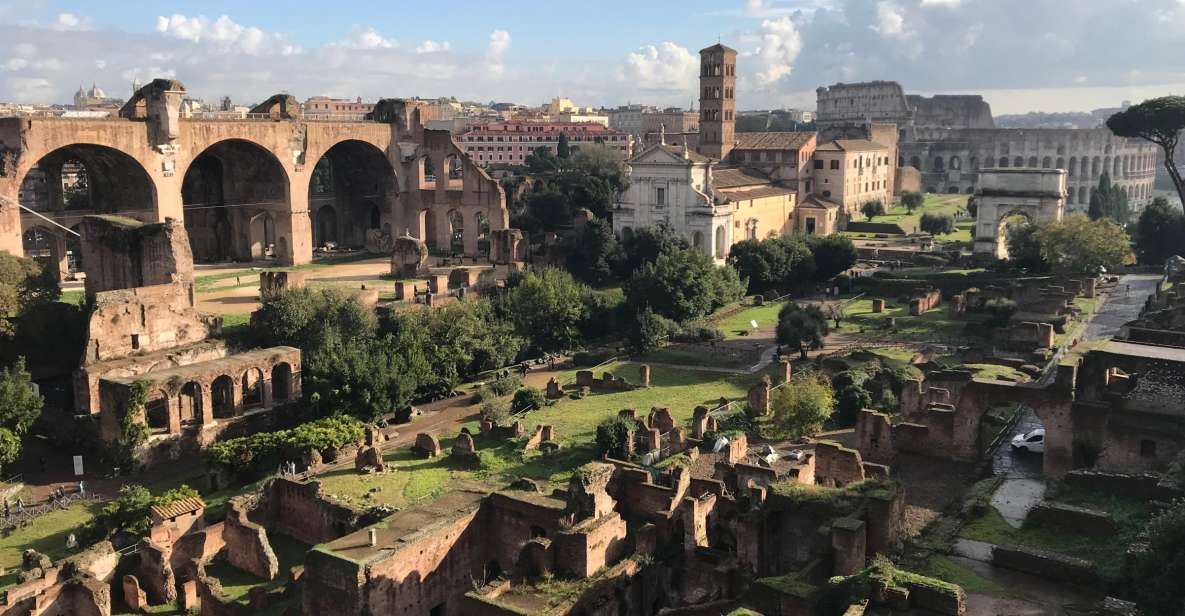
This is a tour built for people who want the essentials without spending a full day trapped in ancient-site lines. In about 2.5 hours, you cover three of Rome’s most important archaeological zones: the Colosseum, Palatine Hill, and the Roman Forum. That’s not “everything.” It’s the strongest thread of the story, in the time most people actually have.
I like the structure because each stop answers a different question. The Colosseum answers how Rome entertained power. Palatine Hill answers how power lived. The Forum answers how power argued, judged, and made decisions. Put together, the ruins stop feeling like random piles of stone.
Small-group format is the other big value piece. You’re not fighting for your place at every arch and column, and your guide can keep the pace moving while still stopping to explain what you’re looking at. If you’re the kind of person who likes to understand what you see (instead of only taking photos), you’ll probably enjoy this.
Meeting at Piazza del Colosseo and Getting Through Security
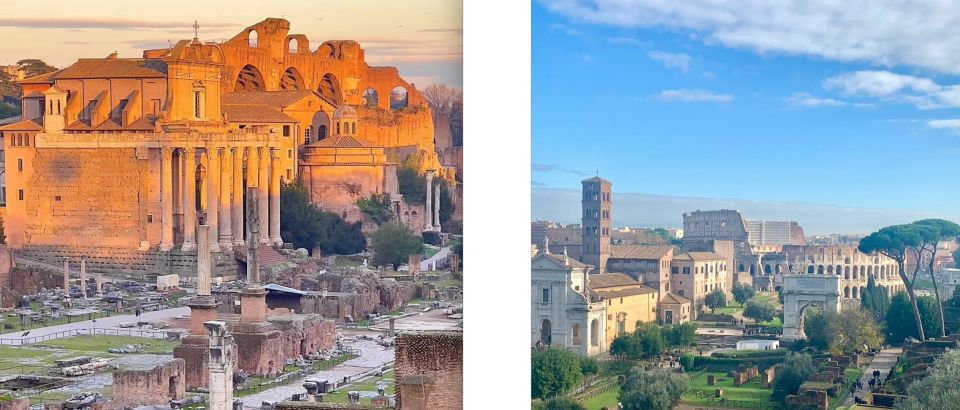
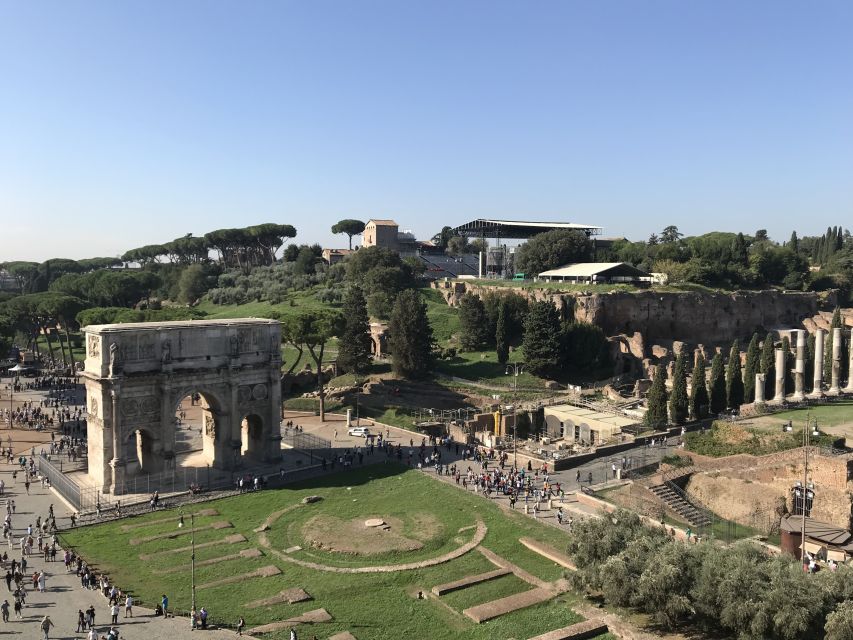
Your meeting point is at Piazza del Colosseo, 58, on the short side of the Arch of Constantine facing Palatine Hill, near a small column by a street lamp. If you get there a few minutes early, you’ll have an easier time spotting your group.
Plan for friction. This tour includes skip-the-line, but Rome still requires a security check at both the Colosseum and the Roman Forum. That’s not the tour provider being difficult. It’s just how the sites operate, and it’s easiest to treat it like part of the experience.
There’s also a special-case schedule reality. Every first Sunday of the month the monuments have free access, but entry can’t be pre-organized. That means you may still wait for tickets. The guidance in the details is clear: you’ll meet at 8:00 a.m. to reduce crowd pressure, and your guide will use waiting time to introduce the tour and keep you engaged. Depending on season, lines can be shorter or longer—one account mentioned waiting close to three hours on a free-entry day—so if that day matters to you, build in extra patience.
You can also read our reviews of more tours and experiences in Rome.



Colosseum Time: Reconstructions, Gladiator Gear, and a Crowd in Your Head
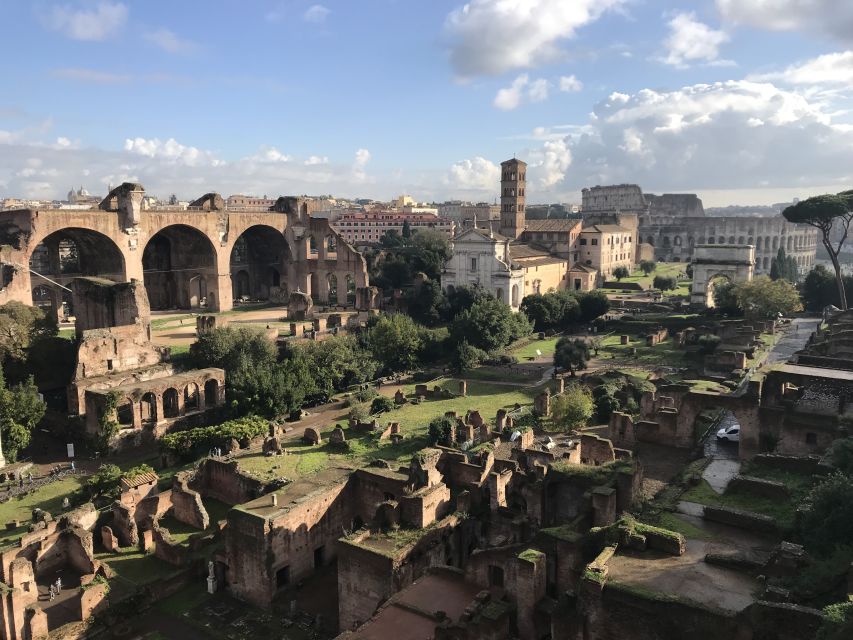
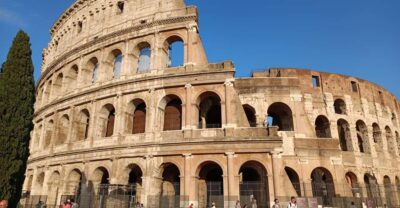
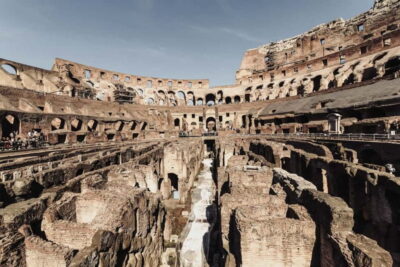
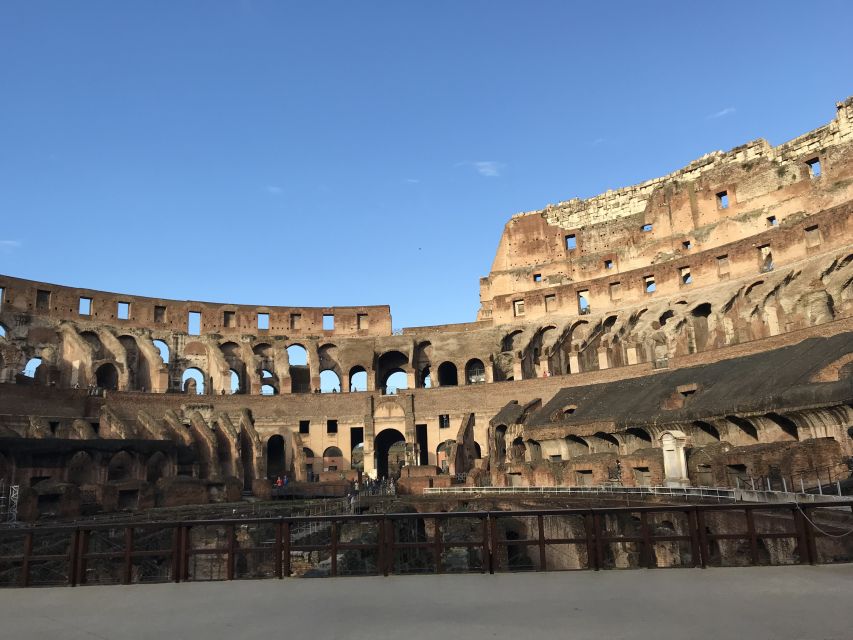
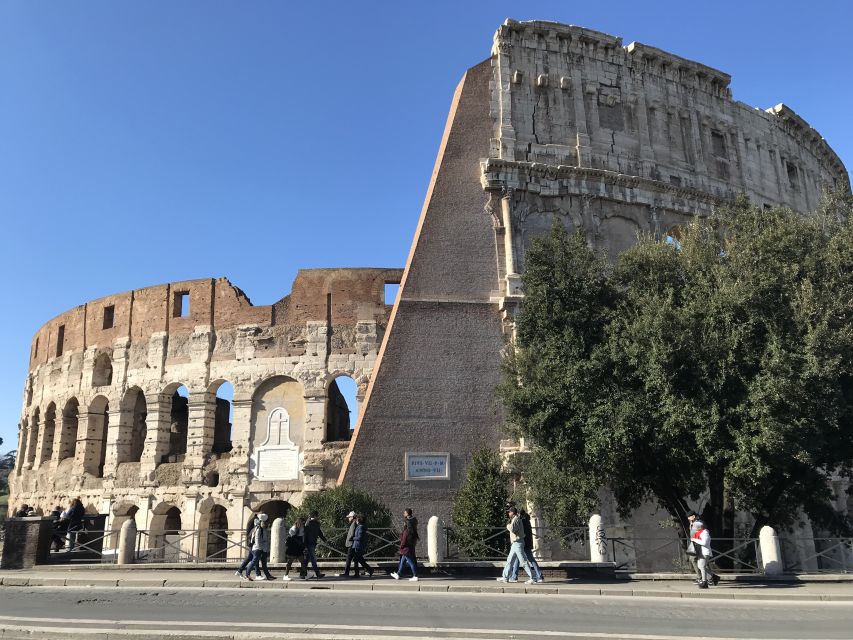
The tour’s first major stop is the Colosseum, with about 1 hour for the guided visit and walking. This is where you get the spectacle in your head, even though most of the original building materials are gone.
The Colosseum experience here is guided, not just scenic. You’ll see explanations built around how the arena worked and what made the fights feel high-stakes to the crowd—things like the fancy armor, helmets, gladiators, fighters, and weapons that were designed to impress an audience. Even in ruins, those details help you picture the rhythm of an event: noise, spectacle, and performance.
Practical note: the Colosseum is big, and the ground can be uneven. You’ll want comfortable shoes you trust. This tour’s pacing is tight, so if your feet hurt early, you’ll feel it at every later stop.
Also, yes, it’s a UNESCO heavyweight and one of the so-called Seven Wonders of the World, but the guide focus matters more than the title. If you come curious, you’ll leave with a mental map of what you saw and why it mattered.
A small drawback to accept at the Colosseum
Even with skip-the-line access, the site is busy. If your stress level spikes when you’re standing, know that security + crowds can still take bite out of your time.
Palatine Hill: Imperial Houses and the Myth That Built the City
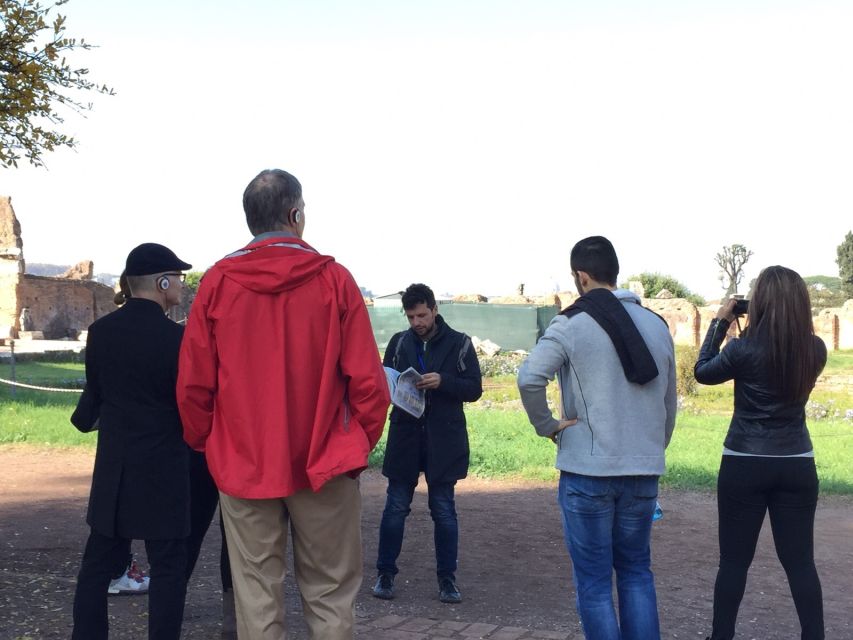
Next you head to Palatine Hill for about 45 minutes. This is one of those places where it’s easy to look and think, so what? But a good guide makes the ground feel purposeful.
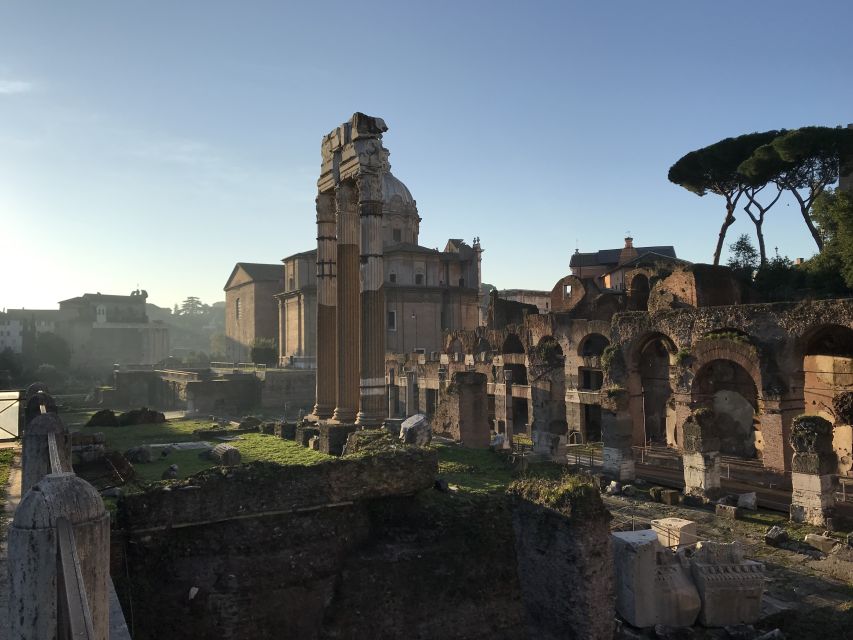
Palatine Hill is tied to the origins of Rome. In the details provided, the south-western corner of the hill is where wooden huts of the first Romans were found. That’s the “how it started” layer. Then there’s the myth layer: Romulus and Remus, abandoned and raised by the she-wolf, linked to the same hill area.
What you’ll also get on this stop is the imperial angle. The highlights include the Houses of the Emperors on Palatine Hill. In other words, you’re moving from Rome’s beginnings to Rome’s ruling-class comfort and control. The ruins can feel scattered on your own, but the guided route helps connect buildings and purposes.
If you like archaeology that explains power in everyday terms, you’ll likely enjoy this part. It’s not just legends and dates. It’s the physical evidence of who had the best view, the best access, and the most influence.
Watch your sun
Palatine Hill is exposed in many areas. The practical advice you should follow is simple: wear sunscreen and consider a hat in summer, because your time in this section is outdoors and timed for efficiency.



Roman Forum: Where Politics, Law, and Public Speeches Happened
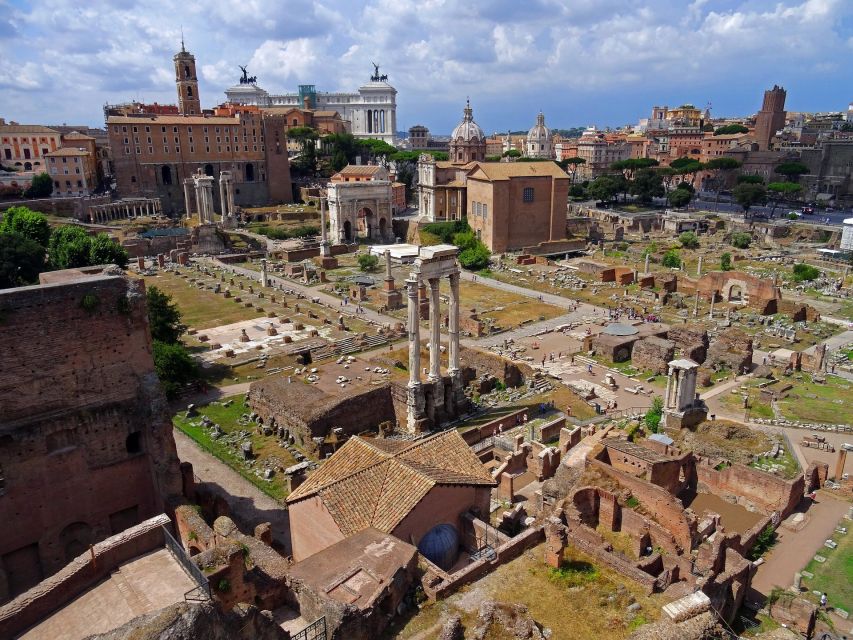
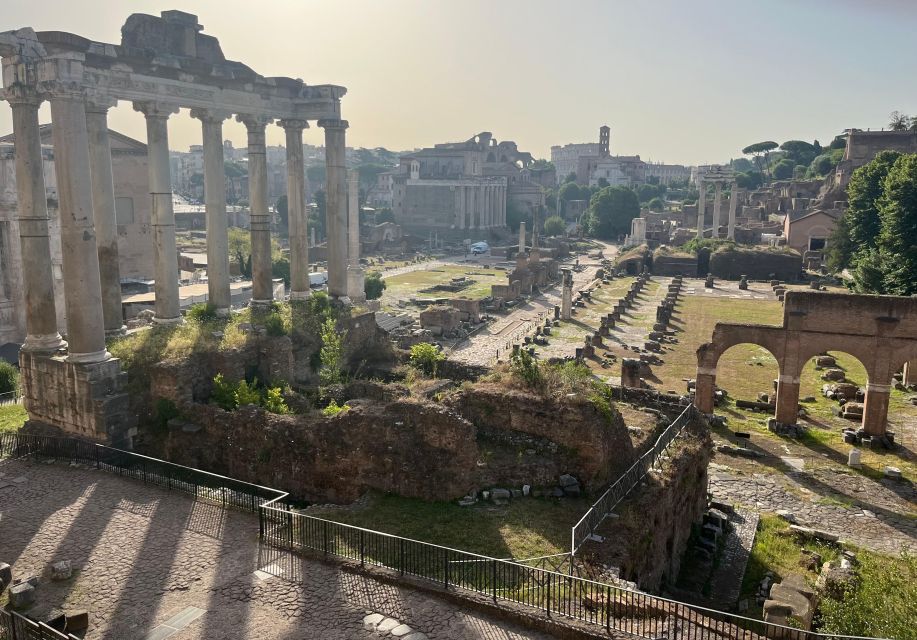
The final major stop is the Roman Forum for about 45 minutes. This is the downtown stage of Ancient Rome—less arena, more administration. Think square, meeting place, and decision-making engine.
The guide emphasis here is exactly what makes the Forum click: it wasn’t just where people walked. It was a center for political power and the administration of justice. The area is described as having spaces for different kinds of activity, including banks, shopping-like spaces, and religious buildings.
Then comes the storytelling anchor: famous speeches, including Mark Antony’s speech regarding Julius Caesar. That kind of reference helps the Forum feel less like a museum yard and more like a living civic space where words mattered.
Because the time is limited, you’ll want to keep your attention during the first minutes. The Forum is complex. A guide helps you stop treating it like one big open area and start seeing it as multiple connected settings.
A reality check: you’ll be walking
This tour includes walking at each stop. You’re not trapped behind ropes all day, and you’ll likely feel the pace more than the “heat” of the Colosseum. Comfortable shoes matter again here.
Headsets, Small-Group Pace, and Why the Guide Makes or Breaks It
This is one of those tours where the included headsets aren’t a luxury. With ruins and wind and crowds, hearing your guide clearly can be the difference between understanding and nodding along. Since headsets are included, you’re set up to follow the story even when you’re a few steps away.
The other big factor is the guide quality. The names that show up in the provided feedback include guides such as Antonieta, Alissia, Ferdinando, Alessio, and Fernando. Several are described as strong at storytelling, keeping people engaged even when weather turns, and linking explanations to the real archaeological context. Some also mention adjusting to families and kids in the group, which is a nice sign if you’re traveling with younger travelers who need motion and interaction.
In short: this tour works best when the guide is doing the talking with structure. When that clicks, you’ll feel like you’re walking through a coherent narrative instead of ticking off landmarks.
Price Check: Is $223.17 Worth It?
At $223.17 per person for a 2.5-hour small-group guided tour, the cost isn’t cheap. But you’re paying for three things that add real value in Rome:
- Time savings
You get skip-the-ticket line access, plus a guided route that helps you spend minutes where it matters.
- Expert guide labor
The tour includes a professional archaeologist, historian, or art historian local guide. That’s not just reciting facts. It’s interpreting what you’re looking at.
- Hearing and flow
Headsets make the guide’s explanations usable in a noisy outdoor environment. That helps you get more meaning per minute.
If you’re the type who can read a guidebook and enjoy ruins anyway, you could probably do a DIY version. But if you want the “why” behind the Colosseum, the Palatine houses, and the Forum’s civic role—this price can feel fair for what you get.
What to Bring (and What to Leave Behind)
The essentials are straightforward:
- Passport or ID card
- Comfortable shoes (you’ll walk)
- Sunscreen and a hat in summer
- Reusable water bottle
Good news: the details say bottles of water can be refilled at fountains inside the archaeological areas. That helps you stay hydrated without constantly buying drinks.
What not to bring: luggage or large bags aren’t allowed. If you’re traveling light, great. If you’re carrying big gear, plan ahead so you’re not stuck dealing with storage or hassles before you even reach the monuments.
Who This Tour Suits Best
This tour fits best if you want a concentrated hit of the biggest ancient sites with an expert guide and you prefer to spend your energy on understanding, not logistics.
You’ll likely be happy if you:
- Like walking with a plan and stops that make sense
- Want the Colosseum, Palatine Hill, and the Forum in one guided thread
- Appreciate hearing details clearly via headsets
It’s also not suitable for wheelchair users, based on the information provided. If that’s you, you’ll want a different format designed around accessibility.
Should You Book This Colosseum, Forum, and Palatine Hill Tour?
If your priority is to leave Rome feeling you truly understood what the Colosseum, Palatine Hill, and Roman Forum represent, I’d book it. The biggest reason is simple: the tour is set up to explain what you’re seeing in a way that makes the ruins connect.
Skip it only if you’re extremely line-averse and can’t handle security checks and the possibility of heavy waiting on the first Sunday. If that sounds like you, pick another day or plan extra time.
FAQ
FAQ
How long is the Rome Colosseum, Forum, and Palatine Hill guided tour?
It lasts about 2.5 hours. Exact starting times vary, so you’ll need to check availability for when it runs.
Where do I meet the guide?
Meet at Piazza del Colosseo, 58, at the short side of the Arch of Constantine facing Palatine Hill, near a small column by a street lamp.
What’s included in the price?
The tour includes access to the Colosseum, Roman Forum, and Palatine Hill, a local professional guide (archaeologist, historian, or art historian), and headsets.
Is there skip-the-line access?
Yes. The tour includes skip-the-ticket line access for the sites.
Do I need to bring anything specific?
Bring a passport or ID card, comfortable shoes, and sunscreen. A reusable water bottle is also recommended since you can refill at fountains inside the sites.
Is it wheelchair accessible?
No. It’s listed as not suitable for wheelchair users.