REVIEW · POMPEI CAMPANIA
Pompeii: Entry Ticket & Guided Tour with an Expert Historian
Book on GetYourGuide →Operated by Vox City International · Bookable on GetYourGuide
Pompeii is easier when someone explains it. This skip-the-line ticket gets you into the Pompeii Archaeological Park fast, then a professional art historian guides you through the sights you’ll recognize right away. I like that you get both the guided picture and the freedom to keep going on your own afterward with a smartphone audio guide (130+ points).
Two things I really like: the historian-style storytelling and the practical logistics. You’ll use radio guides during the tour, so you’re not constantly craning your neck or trying to hear from the back of the group, and you can choose English, Spanish, or Italian for the live guide. One consideration: the guided portion is only about 2 hours, so you’ll see a “greatest-hits” slice, not the entire park.
Finally, don’t go in expecting the suburban villas on this ticket. The tour includes major core areas, but it specifically does not include the suburban villas like the Villa of the Mysteries, Villa of Diomedes, and Villa Regina—so if those are your priority, plan a longer add-on visit.
In This Review
- Key Highlights Worth Planning For
- Pompeii in Two Hours: What the Skip-the-Line Really Buys
- Meeting at Piazza Esedra and Getting Your Audio Plan Set
- Entering the Pompeii Archaeological Park: Your First Sense of Place
- Roman Temples and Public Space: What You’re Looking At and Why It Matters
- Pompeii Forum: Trading Hub and Political Center in Human Terms
- The Eruption Story: Ash, Plaster Casts, and the Weight of Vesuvius
- Listening On Your Own: The 130+ Audio Guide Points After the Tour
- Guided Tour Languages and the Human Touch of Expert Interpretation
- What This Ticket Doesn’t Include: Suburban Villas You May Want Later
- Price and Value: Is $58 a Good Deal for This Setup?
- Who This Tour Fits Best (and When to Choose a Longer Visit)
- Should You Book This Pompeii Entry Ticket and Historian Tour?
- FAQ
- How long is the Pompeii guided tour?
- Does this ticket include skip-the-line entry?
- Where do I meet the guide?
- What languages are available for the live guided tour?
- Is the audio guide included?
- Are the suburban villas included?
- What should I bring for the audio guide?
Key Highlights Worth Planning For
- Skip-the-line entry to Pompeii Archaeological Park to save time at the start
- 2-hour live tour led by a professional art historian in English, Spanish, or Italian
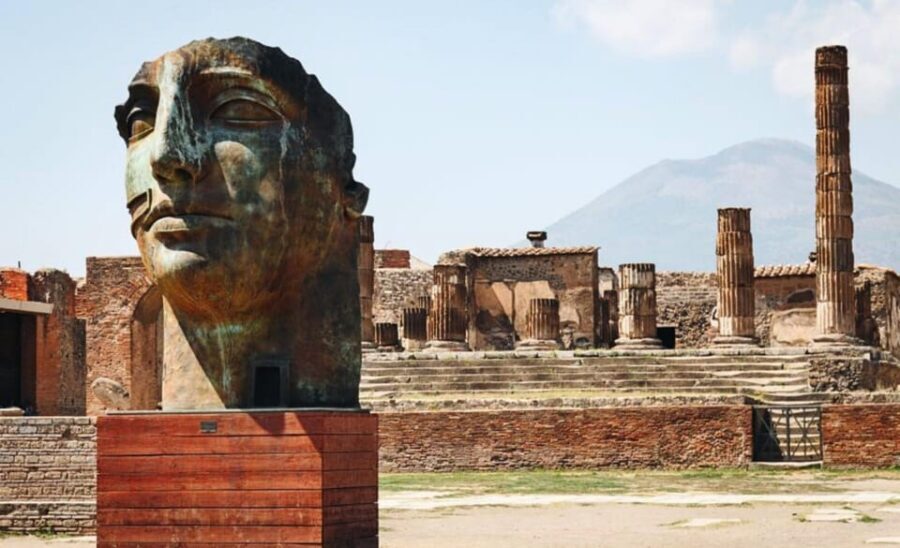
- Forum and major landmarks that connect politics, trade, and everyday life
- Ash, plaster casts, and Vesuvius impact as part of the emotional story of the eruption
- 130+ audio guide points you can use after the tour from your phone
Pompeii in Two Hours: What the Skip-the-Line Really Buys

Pompeii can feel like a fire hose if you arrive cold. This experience is set up so you get through the hardest part first: getting inside without wasting your energy standing in line. With the skip-the-line entry, you start your visit with momentum, which matters because the park is huge and the best views are time-sensitive.
The tour duration is 2 hours, which is a sweet spot for many people. You’ll get enough structure to understand what you’re looking at, but you’re also not locked into a long commitment. If you’re the type who enjoys wandering, you’ll appreciate that the ticket also lets you continue independently after the guided portion with the app audio.
Is it a full-day alternative? Not really. Pompeii Archaeological Park covers 44 hectares, and most people spend 2–4 hours overall. Think of this as a high-efficiency way to get the meaning, then choose how much extra time you want to add afterward.
You can also read our reviews of more tours and experiences in Pompei Campania



Meeting at Piazza Esedra and Getting Your Audio Plan Set

You’ll meet your guide and exchange your voucher for official entry tickets at the Vox City info point in Piazza Esedra, in front of Hotel Vittoria. That matters because it’s not at the entrance to the park—so arrive with a little buffer and don’t leave your meeting point to last-second guessing.
The tour departs at your booked time slot, and you’re advised to arrive about 5 minutes early if possible. That’s not a “be early if you feel like it” suggestion; it’s one of those small rules that makes the difference between a calm start and a rushed one.
Before you even step into Pompeii, do one smart move: scan the QR code on your voucher to download the audio guide prior to arrival. That way, you’re not fiddling with signal or battery while you should be learning.
Also note the practical audio setup: you’ll have radio guides during the live tour, but the audio guide app requires your own phone. The info also says a headset isn’t included, so bring your own earbuds. It’s the kind of tiny thing that keeps the experience comfortable instead of annoying.
Entering the Pompeii Archaeological Park: Your First Sense of Place

Once you’re inside, the tour is designed to build orientation quickly. You’ll walk through major Roman landmarks so you’re not just seeing walls and streets—you’re understanding what those spaces were for.
The goal is to give you a snapshot of life in ancient Rome frozen in time by the eruption of Mount Vesuvius. That theme isn’t just a dramatic headline; it helps your brain connect details like street layout, building function, and public spaces to the story of what happened.
A big advantage here is that Pompeii is famously walkable but still confusing without context. A historian-led route helps you recognize patterns, like which areas served public life and which were more private or domestic.
And because you’re using radio guides, you can actually keep moving while listening. That’s an underrated comfort. Pompeii is long enough that stopping too often can kill your pace.
Roman Temples and Public Space: What You’re Looking At and Why It Matters
One of the tour’s early strengths is that it prioritizes recognizable civic landmarks, including the Roman temples. These aren’t just impressive ruins; they help you understand how public worship, status, and community identity worked in Roman cities.
When you’re on-site, it’s easy to get stuck thinking in terms of architecture only—columns, arches, stones. A good guide turns that into function: who used the space, what it signaled, and why it would have mattered day to day.
You’ll also get a clear sense of the city’s layout through the route itself. Even with limited time, the historian route tends to connect what you see to the larger idea of a living city. If you’ve ever visited a museum and wished it had a story thread, this is that—just outside, with real buildings.
Pompeii Forum: Trading Hub and Political Center in Human Terms

The tour highlights the Pompeii Forum, and that’s not random. The Forum was the city’s social and administrative core—part trading center, part political meeting space. Seeing it on foot helps you understand why people would have gathered there and what they would have discussed.
The best part of a historian-led walk through the Forum is that you don’t just learn names and dates. You learn how space shaped behavior. Where would someone wait? Where would people talk? How would the flow of movement signal power and commerce?
This kind of explanation is especially valuable in Pompeii because the ruins don’t come with labels the way a typical museum does. The historian’s job is to interpret what’s left, and the tour is built around doing that where it counts most.
You can also read our reviews of more guided tours in Pompei Campania





The Eruption Story: Ash, Plaster Casts, and the Weight of Vesuvius
Then comes the part that can hit you in the gut: the dramatic impact of the eruption on the city. You’ll see ash-covered homes and haunting plaster casts of victims as part of the tour’s narrative.
This is where the tour’s structure earns its keep. If you encounter these elements without context, you might feel shocked but still unsure what you’re truly looking at. With a historian guiding your attention, you’re better prepared to connect the physical evidence to the event it records.
The presence of Mount Vesuvius in the background of the story also gives you a geographic anchor. Even if you’ve read about the eruption before, seeing the ruins with that looming context can make the tragedy feel immediate rather than abstract.
A note on pacing: this section is emotionally heavy, so it’s smart to travel in a way that doesn’t rush you through it. If you’re the type who wants time to absorb, use the app audio after the guided tour to revisit key spots at your own speed.
Listening On Your Own: The 130+ Audio Guide Points After the Tour

When the 2-hour tour ends, you keep the value rolling. Your ticket includes an in-app audio guide with 130+ points of interest, and you can explore independently using your smartphone.
This is a big deal because Pompeii has a “choose your own route” feel. One person might want more time in public buildings, another might prefer residential details. The audio guide gives you a way to slow down without waiting for a group schedule.
The audio guide is also multilingual: it includes commentary in English, Spanish, Italian, French, and German. That flexibility matters if you’re traveling with friends or family who speak different languages, or if you want to switch languages during your own exploration.
Just remember the practical side again: you’ll need your phone, and the info says a headset isn’t included. Bring earbuds, charge your phone if you can, and download the content when you have a chance (the QR step helps).
Guided Tour Languages and the Human Touch of Expert Interpretation
The live guided tour is available in English, Spanish, or Italian. That’s useful if you’re picky about nuance, since translation quality can vary in ruins-focused tours.
In Spanish, a guide named Rafael comes up in recent experience reports, and that’s a great sign if you’re choosing the Spanish option. The broader point is that you’re not just getting directions—you’re getting an art-history style lens, which often changes how you notice visual details.
Also, the tour uses radio guides, which makes it easier to hear clearly while walking. In a site with lots of open space and competing noise, that kind of audio setup is practical value, not a luxury.
If you’re someone who thinks you’ll learn better by walking and listening rather than reading signs, this format fits you.
What This Ticket Doesn’t Include: Suburban Villas You May Want Later

Here’s the trade-off you should know up front. This tour does not include access to the suburban villas, including the Villa of the Mysteries, Villa of Diomedes, and Villa Regina.
Those villas can be a big draw for people who want the contrast between urban life and elite countryside residences. Since they’re not included here, you’ll need to decide whether your priorities align with the city-core focus of this experience.
If you mainly want the heart of Pompeii—the Forum, main landmarks, and the eruption story—this ticket is well aimed. If you’re specifically chasing those outlying villas, you might want to book something longer or add a separate visit.
Price and Value: Is $58 a Good Deal for This Setup?
At $58 per person for a 2-hour guided experience plus skip-the-line entry and an included app audio guide, the value is strongest if you care about context. Pompeii tickets alone can still leave you scrambling to piece together what you’re seeing. Paying for an expert-led narrative is what turns ruins into understanding.
You’re also getting a bundle of helpful extras:
- skip-the-line entry
- live historian tour (with radio guides)
- multilingual audio guide with 130+ points of interest
- multilingual audio commentary options
That means you’re not just paying for a guide voice for two hours. You’re paying for a structured start and a tool for continued exploring after the tour.
The biggest “value risk” is time. If you only want a quick glance, then the historian portion may feel like more than you need. But if you want your visit to feel coherent, you’re paying for exactly that.
Who This Tour Fits Best (and When to Choose a Longer Visit)
This tour fits best if you want structure, context, and efficiency without locking yourself into a full day. I’d point it toward:
- first-time Pompeii visitors who need orientation
- people who learn best by listening and walking
- couples or small groups who want a guided core but still want freedom afterward
- travelers who dislike long lines and want to start learning immediately
You might want a longer visit or a different add-on if:
- the suburban villas are your top priority
- you want a deeper, slower exploration of every district
- you’re hoping for a longer guided narrative than about 2 hours
If you do choose this tour, use the audio guide afterward like a second act. That’s how you turn a great intro into a satisfying full experience.
Should You Book This Pompeii Entry Ticket and Historian Tour?
I’d book it if you want Pompeii to make sense quickly. The combination of skip-the-line entry, a historian-led route through major landmarks, radio guides for easy listening, and a 130+ point audio app afterward is a strong way to balance learning and independence.
Don’t book it expecting the suburban villas included, because this tour focuses on the core highlights. If your dream Pompeii includes the Villa of the Mysteries or the Villa of Diomedes, you’ll likely need a separate plan.
If you’re ready for a high-impact introduction plus the freedom to roam after, this is a smart, practical way to experience Pompeii without getting lost in the ruins.
FAQ
How long is the Pompeii guided tour?
The duration is 2 hours.
Does this ticket include skip-the-line entry?
Yes. It includes a skip-the-line entry ticket to the Pompeii Archaeological Park.
Where do I meet the guide?
Meet your tour guide and exchange your voucher for official entry tickets at the Vox City info point in Piazza Esedra, in front of Hotel Vittoria.
What languages are available for the live guided tour?
The guided tour is available in English, Spanish, or Italian.
Is the audio guide included?
Yes. Your ticket includes an in-app audio guide with 130+ points of interest, plus multilingual audio commentary options.
Are the suburban villas included?
No. Access to the suburban villas (including the Villa of the Mysteries, Villa of Diomedes, and Villa Regina) is not included.
What should I bring for the audio guide?
You’ll need your own mobile device. A headset is not included, so bring earbuds if you want to listen comfortably.