REVIEW · POMPEII
Pompeii Small Group with an Archaeologist and Skip The Line
Book on Viator →Operated by ELIANA SANDRETTI · Bookable on Viator
Pompeii clicks when you have a guide. This small-group Pompeii tour puts an archaeologist in charge and gets you skip-the-line entry so you spend more time walking among the ruins and less time stuck in queues. I also like that the pace is relaxed enough to ask questions, not just follow a stream of people.
The main trade-off is time: it’s about 2 hours, so you’ll see the highest-impact spots rather than every street and every house. And because it runs as a group experience with a traveler minimum, you could occasionally get an adjusted arrangement if the group doesn’t fill.
In This Review
- Key Highlights You’ll Actually Feel During the Visit
- Skip-the-Line Entry and Why It Matters in Pompeii
- The Archaeologist Guide Factor (and Why the Name Matters)
- Your 2-Hour Route: What You’ll See (and What You’ll Skip)
- Stop-by-Stop: Pompeii’s Highlights in Human Scale
- What the Price Really Buys: $217.69 Per Person
- Practical Tips So You Don’t Waste Your “Highlight Hours”
- Who This Tour Fits Best
- Should You Book This Pompeii Small Group With an Archaeologist?
- FAQ
- FAQ
- How long is the Pompeii Small Group with an Archaeologist tour?
- How many people are in the group?
- Is skip-the-line admission included?
- What language is the tour offered in?
- Where is the meeting point?
- What’s included in the price?
- Are food and drinks included?
- Is transportation included?
- Is this tour dependent on good weather?
- Is there free cancellation?
Key Highlights You’ll Actually Feel During the Visit
- Skip-the-line entry with your ticket ready so you start walking fast
- Archaeologist-style storytelling (guides like Eliana Sandretti are credited with real hands-on Pompeii work)
- A tight route through Pompeii’s “greatest hits” in about 2 hours
- Fresco stops you won’t get as a quick selfie circuit (like the Stabian Baths)
- Small group size (max 10) so you’re not yelling over everyone’s audio guide
- Stops that show real everyday life, from theaters to baths to the forum to Casa del Fauno
Skip-the-Line Entry and Why It Matters in Pompeii
Pompeii is big. Like, big in a way that can feel rude to your schedule. Even if you’re excited, nothing ruins the mood faster than waiting at an entrance with your heart already halfway into the ruins.
This tour helps you get into Pompeii first with fast-track, skip-the-line admission. You’re also using a mobile ticket, so there’s less fumbling at the start. For me, the value is not just saving minutes. It’s psychological: you arrive, you walk, you start seeing real walls and floor patterns right away.
Another smart part is the flow. The itinerary is built around the idea that you’re covering the highlights inside the archaeological park, not meandering like you’re browsing a mall. That matters because Pompeii rewards momentum, but only if someone keeps you from getting lost.
You can also read our reviews of more tours and experiences in Pompeii

The Archaeologist Guide Factor (and Why the Name Matters)
The biggest upgrade here is that your guide isn’t just reciting a script. This experience is led by an authorized guide and an archaeologist, with Eliana Sandretti specifically named as the provider in the experience details. The standout theme in the feedback is that the guide’s explanations make Pompeii feel like a lived place, not a museum diorama.
You’ll notice this in how the tour talks about architecture and daily routines: what a building was for, why a space was designed a certain way, and how discoveries are understood in the present. Some guides are described as giving non-recycled talking points, and several people highlight that the guide encourages questions. That is exactly what you want at Pompeii. There are enough visual details to spark a dozen questions—why that layout, what that fresco shows, who used that space.
Also worth knowing: the guide may vary day to day due to scheduling and operations. Names like Eliana Sandretti and other guides (including Francesco and Dario in the feedback) appear, but the constant is the role: you’re there with real archaeological framing, not just general sightseeing commentary.
Your 2-Hour Route: What You’ll See (and What You’ll Skip)
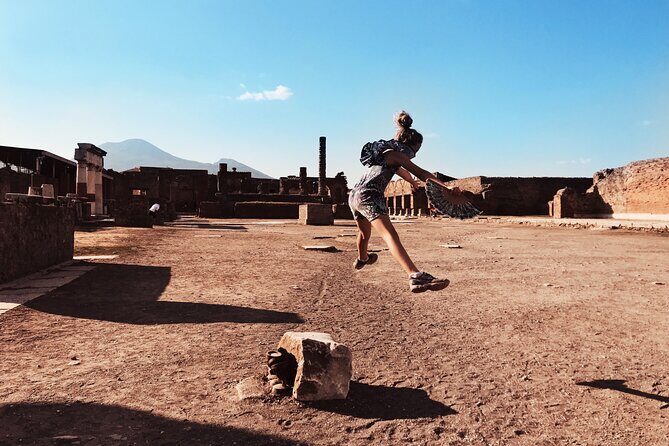
This is an about-2-hour walk that focuses on key zones, with short stops that add up to a satisfying circuit. Each stop is typically around 10–15 minutes for the main sights, so you get enough time to look closely, but the schedule keeps you moving.
That means you won’t see absolutely everything in Pompeii. You will, however, hit the spots that help you understand the city quickly: where people performed, where people bathed, where justice happened, and what elite homes and everyday neighborhoods looked like.
The tour ends back at the meeting point, so you’re not left figuring out how to exit or where to regroup.
Stop-by-Stop: Pompeii’s Highlights in Human Scale
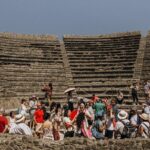
Small Theater: Performances and a Different Side of Pompeii
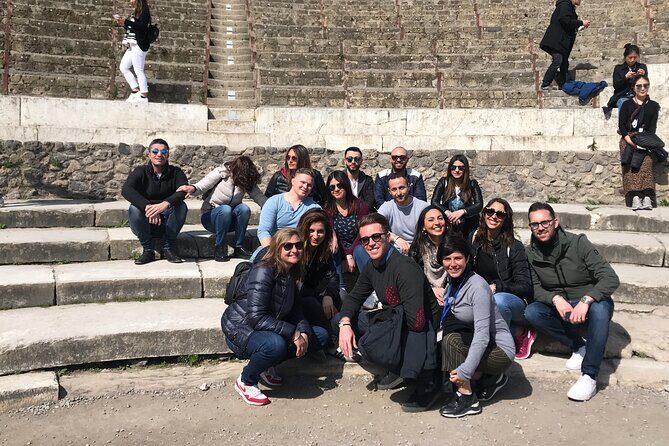
You begin at the Pompeii Archaeological Park with your skip-the-line entry. Then you move toward a smaller theater—an early reminder that the city wasn’t only about commerce and crisis. Theater spaces in the Roman world were social engines: people gathered, performed, and talked.
For a first stop, it’s a good choice. It helps you shift your brain from “I’m looking at ruins” to “I’m looking at a functioning city layout.”
Possible drawback: short theater visits can feel like a sprint if you’re a slow reader of inscriptions or you like to stare at every carved detail. If you’re that type, you’ll still enjoy it, but you may want to plan a longer independent visit later.
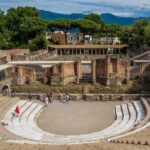
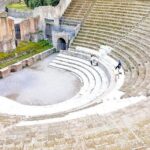
Teatro Grande: Big Stages, Greek-Roman Tradition
Next comes Teatro Grande, with a stop designed around the major performance tradition—Greek-Roman comedies and tragedies. This is one of those places where scale matters. Even in partial ruin, the seating shape and stage orientation tell you a lot about how spectators would have experienced sound and movement.
You only have about 15 minutes here, so you’ll want to pick a viewpoint quickly. Look from the audience area toward the stage first, then scan the space for what remains.
Granai del Foro: Barns, Forum Life, and the Casts of 79 AD
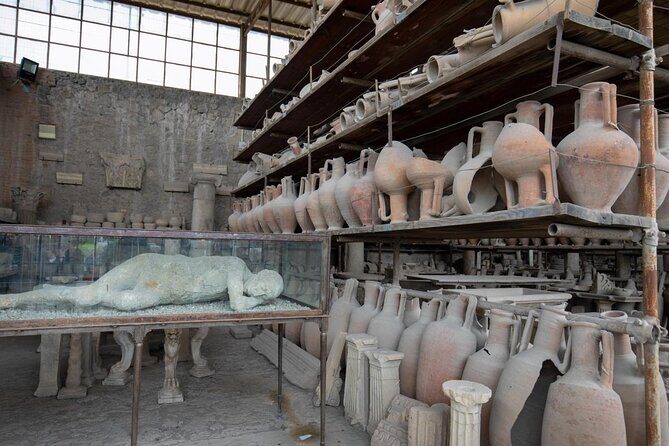
Then you head to Granai del Foro, the barns of the forum. This stop is where the tour turns from architecture to tragedy and evidence—specifically the casts of victims who died during the eruption of 79 AD.
This is an intense moment, and the time is brief (around 15 minutes). What makes it work on a tour like this is that you don’t just see shapes in a room. You get context about what the site represents and how archaeologists interpret these remains.
Consideration: if you’re sensitive to disaster-related exhibits, go slow and take a breath before you enter. It’s not the only heavy stop on this itinerary, but it’s one of the most direct.
Stabian Baths (Terme Stabiane): Frescoes You’ll Actually Remember
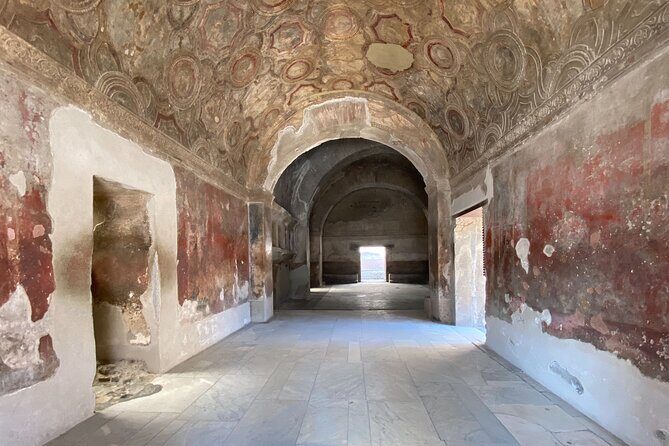
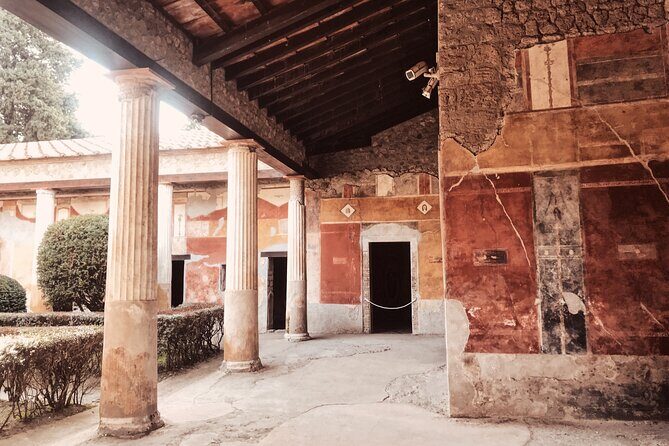
Next is the Stabian Baths, where colorful frescoes survive in a way that makes people stop talking. This stop is often described as unforgettable because baths were part of social life, not just hygiene.
You’ll have around 15 minutes, which is just enough time to catch the visual punch and understand why baths matter: they were daily rhythm spaces where people relaxed, talked, and rotated through routine.
If you love wall paintings, plan to linger a bit at the best-preserved areas even if it means you move a touch slower than the group. The guide can help you find what’s most meaningful.
Foro di Pompei: The Main Square and the City’s Pulse
Then comes the Foro di Pompei, the city’s main square. A forum is where politics, religion, business, and public life collide. Even if you don’t catch every detail, you’ll understand the idea immediately: this was the city’s meeting point.
Your stop here is about 10 minutes. It’s a quick hit, so look for the layout cues: where people would have moved, what buildings ring the space, and how the forum connects to bigger civic areas.
Basilica of Pompeii: Justice and Courtroom Life
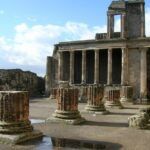
After that, you visit Pompei La Basilica, described as the ancient seat of the court where justice was administered. This is another “why the room exists” stop. A basilica isn’t just a big hall—it’s built for legal and public proceedings.
The time is about 15 minutes, which makes this best for understanding how civic power operated in everyday life. Watch how the space is arranged and how the architecture directs movement. The guide’s explanation is where this becomes clearer.
Temple of Jupiter: Big View With Vesuvius in Frame
Then you admire the Temple of Jupiter, with Vesuvius as the backdrop. That view is the kind of geographic detail that changes your whole mental map of Pompeii. You’re not just walking ruins—you’re standing in a landscape that shaped the city and its fate.
This portion doesn’t take long, but it lands well. It’s where you can step back and see the “where” behind the “what.”
Quadriporticus of the Theatres + Gladiator Barracks: Training, Housing, Reality
Now the tour brings you to the Quadriporticus of the theatres, with a stop connected to the gladiator training area: the gladiator barracks. You’ll see apartments and where fighters trained.
This is a great pairing for a short tour because it connects performance to workforce. Gladiators weren’t just characters in a show. They were trained professionals living in a specific environment, under rules and routines.
Time is about 15 minutes here, so again, you’ll get a clear overview rather than a deep archaeological excavation. Still, it’s enough to understand the function of rooms and the logic of the complex.
Lupanar: The Old Red Light District
Next is the Lupanar, often associated with the city’s older red light district. This stop is brief (about 15 minutes), but it can be one of the most eye-opening from a “real life” perspective.
If you’re expecting purely formal Roman sites, this one snaps the tour back to human reality. You’ll see how the city included spaces for paid sex and how that fits into urban design.
A quick heads-up: this stop is adult-content related in theme. If that bothers you, you might keep expectations in mind and focus on the architecture and social context rather than the sensational angle.
Temple of Venus: Civic Religion and City Identity
Then you visit the Temple of Venus, where the divinity of the city was venerated. Religion in Pompeii wasn’t just distant belief. It was part of public identity and local culture.
This is a shorter stop, but the value is in the framing: you start to connect temples not just as monuments, but as signals of how people organized their lives.
Casa del Fauno: One of Pompeii’s Luxe Homes
Finally, you reach Casa del Fauno, one of the richest and most luxurious residences in Pompeii. This stop is about 15 minutes, and it’s the right capstone for a short tour: elite domestic life in stone and plaster.
The guide’s explanations make a huge difference here because the house details can be confusing without context. You’ll likely notice layout, the role of courtyards and rooms, and why certain spaces mattered socially.
If you love interiors and want to understand class and daily routines, this stop is the one that may make you wish you had two extra hours.
What the Price Really Buys: $217.69 Per Person
At $217.69 per person, this isn’t a bargain ticket. But it’s also not priced like a random stroll.
You’re paying for three big things:
- Skip-the-line access that saves time and stress
- A small group capped at 10, so your attention doesn’t get chopped into noise
- An archaeologist-led explanation, which is what turns Pompeii from ruins into a readable city
If you’re visiting Pompeii on a short trip or you only have a couple hours to spare, a guided circuit often makes the most sense. It’s also a good choice if you don’t want to plan your own route through multiple distant zones.
But if you’re the type who loves roaming freely and you can handle figuring out major sites on your own, you might decide to self-guide. The tour’s price becomes most worth it when you value interpretation, timing, and not wasting your limited time.

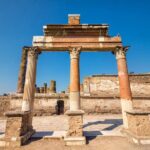
Practical Tips So You Don’t Waste Your “Highlight Hours”
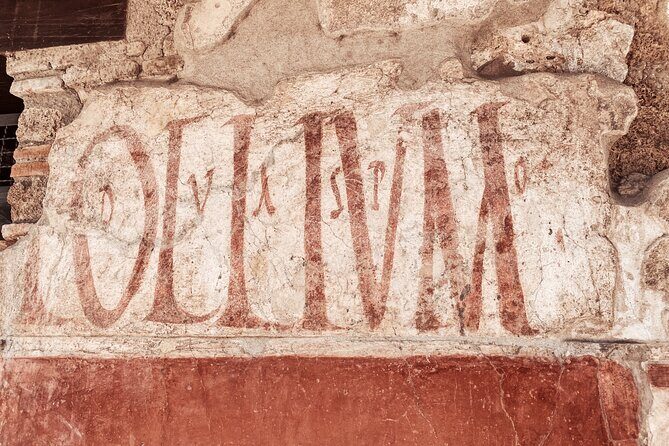
Pompeii rewards preparation. Here are the practical things that tend to help most on a guided, short format:
- Wear shoes that handle uneven ground. Pompeii floors can be bumpy, and you’ll be moving between zones.
- Bring water, sunscreen, and a hat or umbrella if you’re touring in warm months. The feedback repeatedly mentions heat planning as a must.
- Plan your posture for listening. Some people noted it was hard to hear when noise surrounds you or when a guide is further away. So face the guide when possible, and don’t be afraid to ask for clarification.
- Ask questions early. The tour’s structure is short, so start with the questions that shape what you notice next—why this building worked the way it did, what a particular fresco signals, or how archaeologists interpret the evidence.
One more tip: if your schedule is tight, consider aiming for a time when the site isn’t maxed out. The feedback suggests later starting times can feel less chaotic.
Who This Tour Fits Best
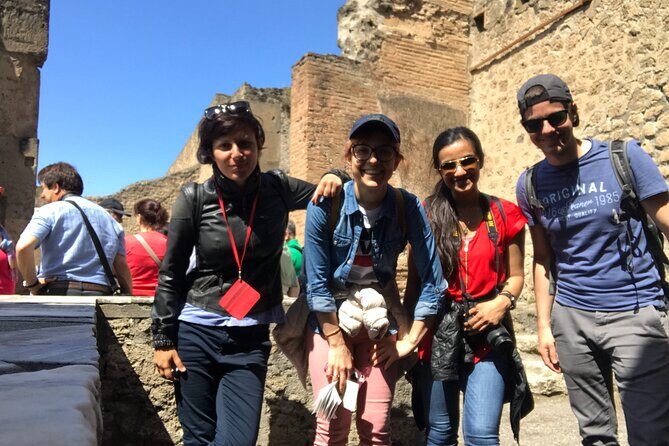
This is a strong fit for:
- People with limited time in Pompeii who still want a guided route through major zones
- Travelers who like history told with architecture and evidence, not just dates
- Families who need a manageable pace (there’s mention of patience with a stroller and a guide who adapts to the group)
- Anyone who wants a small group where questions aren’t awkward
It may be less ideal for:
- Visitors who want to spend 3–4 hours lingering in one house or one forum corner
- People who get overwhelmed by adult-themed stops, since the Lupanar is part of the route
- Anyone expecting a perfect quiet environment for listening, since Pompeii can be noisy in peak periods
Should You Book This Pompeii Small Group With an Archaeologist?
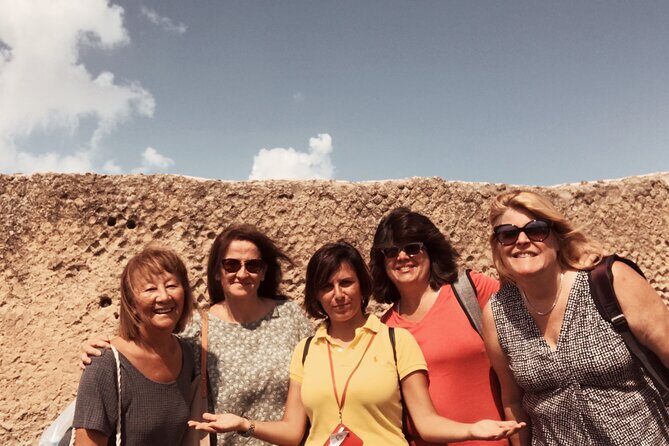
My take: if you’re going to Pompeii for a short window and you want the city to make sense fast, this is a smart use of time. The skip-the-line entry plus small group size plus archaeologist framing is the combo that turns “cool ruins” into “I get how this city worked.”
Book it especially if you care about explanations you can build on—forum life, baths, performance culture, civic justice, and what elite homes reveal about class. And if you’re lucky enough to be guided by someone like Eliana Sandretti, the experience can feel unusually alive, not just instructional.
If you’re mostly there for photos and you plan to return for a second, longer visit, you might save money and self-guide. But for a one-shot Pompeii day, this tour is set up for winners: start fast, see the key places, and leave with a clear picture.
FAQ
FAQ
How long is the Pompeii Small Group with an Archaeologist tour?
The tour lasts about 2 hours.
How many people are in the group?
The group is limited to a maximum of 10 travelers.
Is skip-the-line admission included?
Yes. You get fast-track skip-the-line entry, and admission tickets are included.
What language is the tour offered in?
The tour is offered in English.
Where is the meeting point?
The meeting point is at Ristorante Suisse, Piazza Esedra, 10/13, 80045 Pompei NA, Italy.
What’s included in the price?
Included items are the authorized tourist guide and assistance, tickets for entrance, and the archaeologist & tour guide, plus fees and taxes for the entrance ticket.
Are food and drinks included?
No. Food and drinks are not included.
Is transportation included?
No. Transport is not included.
Is this tour dependent on good weather?
Yes. The experience requires good weather, and if it’s canceled due to poor weather, you’ll be offered a different date or a full refund.
Is there free cancellation?
Yes. You can cancel up to 24 hours in advance for a full refund.