REVIEW · POMPEI CAMPANIA
Pompeii: Skip The Line Entrance Tickets + Audioguides
Book on GetYourGuide →Operated by Pompeii Apartments · Bookable on GetYourGuide
Pompeii is big, and crowds make it harder. This skip-the-line setup is built for people who want to go at their own speed while still getting guided context. Two things I really like: you get priority access through Porta Marina Inferiore, and you follow an audio guide device that uses numbered prompts to keep you oriented.
There is one real catch to plan around: the audio guide is a device-only experience, so you’ll need the right kind of headphones (standard jack), and you should not assume you’ll be given one at the counter. If you’re expecting to hear everything hands-free without bringing anything, read that part twice.
In This Review
- Key Things I’d Focus on Before You Go
- Porta Marina Inferiore Priority: Why This Entrance Matters
- Where You Pick Up the Artecard + Audio Guide Device
- The Audio Guide Device: How the Number System Helps
- A note based on real-world friction
- Mapping Your Own Route Through Pompeii
- How to use the map without over-planning
- What the Visit Feels Like in Practice (Without a Group Schedule)
- Pacing Tips to Make the Most of One Day
- Price and Value: Is $46 a Fair Trade for Skip-the-Line + Audio?
- Practical Rules That Affect Your Day
- What you need to bring
- What you cannot bring
- Device timing matters
- Parking Tip If You’re Driving
- Who This Pompeii Plan Fits Best
- Should You Book This Pompeii Skip-the-Line + Audio Guide?
- FAQ
- Where do I exchange my voucher for the Artecard and audio guide?
- Which entrance do I use to enter Pompeii?
- What languages are available on the audio guide?
- Do I need headphones, and are they included?
- Is an ID deposit required?
- Is food allowed during the visit?
Key Things I’d Focus on Before You Go
- Priority entry at Porta Marina Inferiore (Piazza Esedra) to bypass standard queues
- Audio guide device in English, Italian, Spanish, German, French with numbered explanations
- Collect everything at the EAV station area (Villa dei Misteri 1) and get a map plus help
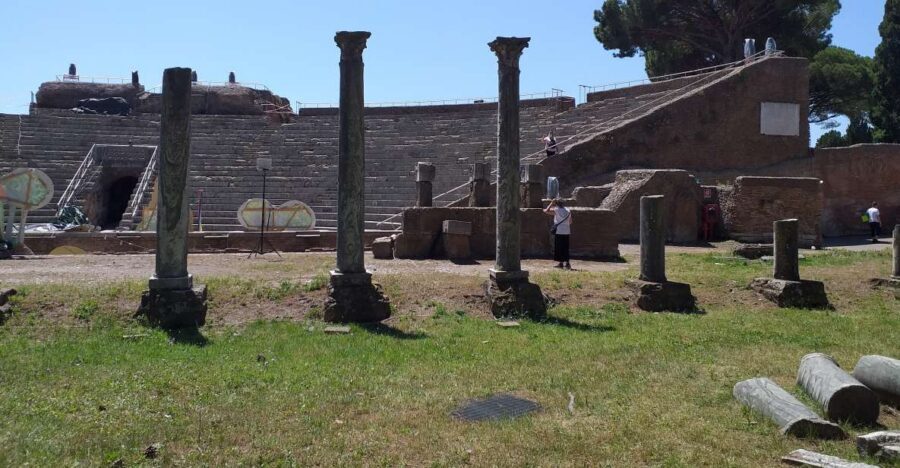
- Self-paced walking route across houses, temples, theatres, and city streets
- ID deposit required for the audio device and you must return it before the office closes
- Headphones not included (standard universal jack only)
Porta Marina Inferiore Priority: Why This Entrance Matters

Pompeii can feel like a choose-your-own-adventure—until you hit a long line. This package aims to reduce that first friction by sending you through a dedicated access queue at Porta Marina Inferiore, in Piazza Esedra. Instead of playing roulette with whichever entrance is most crowded, you’re routed to a specific point with priority entry.
For many first-time visitors, that time saved early in the day is the difference between seeing the highlights and feeling stuck in a slow-moving crowd. More importantly, arriving to Pompeii sooner gives you more control over your pace. You can spend time standing still at a particularly good viewpoint, then keep moving when you feel ready.
The main consideration is simple: the priority line is only as useful as your ability to arrive at the right moment and follow the exchange steps correctly. If you miss that flow, you can end up back in regular crowd dynamics.
You can also read our reviews of more tours and experiences in Pompei Campania



Where You Pick Up the Artecard + Audio Guide Device
Before you walk into Pompeii, you’ll exchange your voucher at the partner office in the train-station area. The location is clearly tied to the EAV station Circumvesuviana Pompei Scavi – Villa dei Misteri, at Villa dei Misteri 1, on the first floor. The office is associated with Tempio Travel.
After you collect your full Artecard ticket and the audio guide device, you then head to the entrance. The transfer is short: the dedicated priority line at Porta Marina Inferiore (Piazza Esedra) is about a hundred metres away, so you’re not losing your morning to complicated transfers.
A small but practical benefit here: you also get multilingual assistance and an informative map at the office. That matters because Pompeii is not the kind of site where you can wing it confidently without at least knowing how to find the areas you want to focus on.
If you’re traveling with limited time, I’d treat the pick-up window like part of your visit. Plan to be at the station office soon after it opens, so you’re not rushing while trying to get oriented.
The Audio Guide Device: How the Number System Helps

The audio guide is one of the core reasons to buy this package. It’s designed to guide you through Pompeii at your own pace—covering houses, temples, theatres, and streets—without you needing a group schedule.
Here’s the key detail: the device uses numbers on the equipment to trigger explanations for the sights you’re looking at. That matters because it keeps the commentary connected to what you’re viewing in front of you, rather than offering vague “general Pompeii” talk. The description also emphasizes that the numbering approach is meant to deliver accurate, up-to-date information.
You can use the device hands-free or with standard wired headphones using a standard jack. Headset/earphones are not included, and the listing specifies that they are not iPhone-style connectors. So bring a simple pair you already trust with the right plug type.
One more important practical point: you need an ID as a deposit for the device, and you’ll be responsible for the device if anything happens (loss, theft, or damage). You also need to return the device before the office closes. In plain terms: plan your day so you’re not sprinting back at the end, and keep the device in a safe pocket or small day bag.
A note based on real-world friction
The experience claims the audioguide is the one officially authorized for tour operators by the Pompeii Archaeological Park. However, there’s also a risk in the real world: if you don’t get a matching setup, you might end up trying to use numbers on the device that don’t correspond to what you can hear. Since you can’t fix that easily on-site, I’d recommend doing a quick check at the start—turn the device on, select a language, and confirm you understand how the numbering works with the stops you’re seeing.
Mapping Your Own Route Through Pompeii
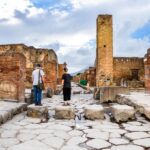
This isn’t a scripted walking tour with set time slots. It’s a self-paced visit with structured audio guidance. That combination is good for people who like options. You can spend extra time where you personally feel curiosity—then move on before the place starts to feel like “just more ruins.”
Because the site is made of clusters—houses, temples, theatres, and street lines—you can build a route that matches your energy:
- If you like architecture and everyday life, you’ll probably hover longer around residential house areas.
- If you’re more into public space and civic life, you’ll spend more time on streets and civic-type zones.
- If you’re drawn to performance spaces, focus on theatre areas.
The map you receive at the office is there for a reason. Even if you’re not following it turn-by-turn, it helps you understand how far you’ve already walked and what’s still ahead. Pompeii is large enough that “I’ll just see a few more” can turn into “I’m exhausted” faster than you expect.
You can also read our reviews of more tours and experiences in Pompei Campania





How to use the map without over-planning
I don’t think you need a perfect itinerary. But I do recommend this simple method:
- Use the map at the start to pick your main zones for the day.
- When you stop for a numbered audio point, let that decide what you do next for a short stretch.
- Every hour or so, glance at the map again to make sure you’re not accidentally drifting away from the areas you still want.
This keeps the day from turning into wandering with no satisfying payoff.
What the Visit Feels Like in Practice (Without a Group Schedule)
A big advantage of a device-based visit is that it fits how people actually travel. One person wants slow and detailed. Another person wants quick context so they can move on. The audio guide system supports that.
You’ll get commentary tied to what you’re looking at, and you’ll be able to pause, back up slightly, and restart when you want. You won’t have to stay locked to a pace set by a guide trying to herd a group.
That said, Pompeii is still Pompeii: you’ll be walking on uneven surfaces, and you’ll likely be shifting your attention between wide views and close-up details. That can be uncomfortable if you’re sensitive to motion or get queasy easily.
This package also isn’t recommended for people with heart problems, and it’s not a good match if you have motion sickness. The “audio” doesn’t remove the physical reality of the site.
Pacing Tips to Make the Most of One Day
You’re buying a 1-day experience, so you want momentum. The priority entrance helps you start sooner, but you still need a plan for energy management.
Here’s what I’d do to keep the visit enjoyable rather than exhausting:
- Wear comfortable shoes from the start. Pompeii is not a “pretty sneakers” day.
- Use the audio guide in blocks. Don’t listen for every minute at full intensity; pause when you feel mentally loaded.
- Take short breaks when you hit a “wide street moment.” You’ll see more by standing still and letting your eyes reorganize than by walking continuously.
If you’re the type who wants maximum coverage, you can still use the audio device to guide you. Just don’t try to treat the entire site like a checklist. A good Pompeii day usually includes a few strong stops and a few “wow, that’s larger than I expected” moments.
Price and Value: Is $46 a Fair Trade for Skip-the-Line + Audio?
At $46 per person for an Artecard skip-the-line ticket plus an audio guide device and map, this can be a good value—if you’ll actually use the audio and you value saving time at the entrance.
Here’s the value math in real travel terms:
- You get to bypass standard queueing at the Porta Marina Inferiore entrance. If you hate lines, this alone can justify the price because it turns waiting time into walking time.
- You’re not just paying for entry. You’re paying for a multilingual audio device (English, Italian, Spanish, German, French) plus a map and help at the office.
- The package is designed for a self-paced visit, so you’re paying for flexibility, not a fixed group schedule.
Where cost can feel less “worth it” is if you show up without the correct headphones plan, or if you end up with confusion about how to use the numbered system. That’s not a reason to avoid the experience—it’s a reason to prepare so you don’t lose the main benefit.
Also note what’s not included: food and drinks, and the headphones. Pompeii is easy to snack near, but this package doesn’t provide it. So plan on buying food separately or simply bringing a strategy for hydration that respects the park rules.
Practical Rules That Affect Your Day
There are a few constraints that shape your experience more than you might expect.
What you need to bring
- Passport or ID card (ID is required as a deposit for the audio device)
- Comfortable shoes and clothes
- Your own standard jack headphones if you want wired audio (not included)
What you cannot bring
- Food
- Alcohol and drugs
That food rule is a big one for families and long-day planners. Even if you usually like to picnic at sites, you’ll need to follow the park’s no-food approach.
Device timing matters
The audio device must be returned before the office closes. That means your end time isn’t flexible in the same way an unlimited ticket is. Plan your last audio segment so you still have a buffer to return the device without stress.
Parking Tip If You’re Driving
If you’re arriving by car, there’s a potentially helpful note: if open and available from 01/04, you may get free parking at Osteria Nonna Cherubina, Via Andolfi 46, 80045 Pompei. It’s described as not gated, so you’re still responsible for how and when you park.
This is the kind of detail that can save money, but it’s also conditional. Treat it as a bonus, not a guarantee.
Who This Pompeii Plan Fits Best
This experience is best for you if you want:
- Self-paced exploring instead of a timed group tour
- Priority entrance at Porta Marina Inferiore to reduce waiting
- A multilingual audio device in your chosen language
- A structured way to cover houses, temples, theatres, and streets without memorizing a route
It’s less ideal if:
- You hate handheld devices and don’t want to manage a rental-style item with an ID deposit
- You’re counting on getting headphones provided for you
- You have limited stamina for walking and uneven ground
- You have heart problems or motion sickness
If you’re visiting with kids, the same general advice applies: comfort, stamina, and headphone availability become more important.
Should You Book This Pompeii Skip-the-Line + Audio Guide?
I’d book this if you value a smoother arrival and you’ll use the audio device features. The priority queue at Porta Marina Inferiore, plus the number-based audio system and the map, is a strong combination for a one-day visit where you don’t want to waste time guessing.
I’d also book it if you like the idea of slowing down when something catches your eye. Pompeii rewards that kind of attention, and a device guide lets you choose the tempo.
Before you commit, do these two sanity checks:
- Make sure you have standard jack headphones ready, since the package doesn’t include them.
- Plan your day so you can return the device before the office closes without rushing.
If you want the best outcome, treat this as a well-organized route into Pompeii—not as a replacement for comfortable shoes and smart pacing.
FAQ
Where do I exchange my voucher for the Artecard and audio guide?
You exchange your voucher at the office on the first floor of the EAV station Circumvesuviana Pompei Scavi – Villa dei Misteri, at Villa dei Misteri 1 street. The office is associated with Tempio Travel.
Which entrance do I use to enter Pompeii?
You enter through Porta Marina Inferiore, located in Piazza Esedra, with a dedicated priority access line.
What languages are available on the audio guide?
The audio guide device is available in English, Italian, Spanish, German, and French.
Do I need headphones, and are they included?
Headphones are not included. If you use them, they must work with a standard universal jack (not iPhone ones).
Is an ID deposit required?
Yes. A valid passport or ID card is required as a deposit for the audio guide device, and it is returned when you return the device.
Is food allowed during the visit?
No. Food is not allowed, and the same rule applies to alcohol and drugs.