REVIEW · HISTORICAL TOURS
Rome Historical True Crime Tour
Book on Viator →Operated by City Stories Tours · Bookable on Viator
Rome looks different after dark.
This 2-hour Historical True Crime Tour turns well-known places into backdrops for murder, betrayal, and hauntings, guided on foot through lesser-seen corners. I especially like the small group (max 15) and the way the guide keeps things moving from stop to stop without losing the thread. The one thing to plan for: Rome can be loud, and the audio can be harder in narrow streets if you’re not close to the guide.
This walk starts at 8:00 pm and is built for pacing—short story stops, then moving on. You’ll get the “dark Rome” perspective while still picking up practical wayfinding, so you leave with a better sense of how the city actually connects on foot. Also note the tour is more about gritty backstreets than stacking up big-ticket landmarks.
If you want a serious, gory story style, this fits. If you want a more standard sightseeing route, you might feel like you’re walking past famous buildings without “tourist-photo” focus. Either way, come with comfortable shoes and a willingness to hear unsettling tales.
In This Review
- Key Things I’d Put on Your Must-Do List
- Worth It for $30.07: What You Get (and What You Don’t)
- The 8:00 pm Timing: Night Stories, Night Navigation
- Campo de’ Fiori: Where the Tour Hooks You Fast
- Piazza Farnese: Renaissance Beauty With a Darker Footnote
- Vicolo delle Grotte to Ponte Sisto: Swindlers, Secrets, and Suspicious Deaths
- Via Giulia: Monks, Macabre Tasks, and Organized Fear
- Via di Monserrato: The Prison History and Borgia-Style Power
- Gelato Now, Death Then: Via dei Banchi Vecchi
- Via del Banco di Santo Spirito: The Executioner’s House
- Castel Sant’Angelo: Tomb, Fortress, Prison, and Execution Ground
- The Storytelling Style: Facts, Horror, and the Right Amount of Humor
- How to Prepare So You Hear Every Word
- Who Should Book This Rome Historical True Crime Tour
- Should You Book It?
- FAQ
- How long is the Rome Historical True Crime Tour?
- Where does the tour start and end?
- What time does the tour begin?
- Is the tour offered in English?
- Is food and drink included?
- Do I need to buy admission tickets at the stops?
- Can people with sight or hearing needs participate, and are service animals allowed?
Key Things I’d Put on Your Must-Do List
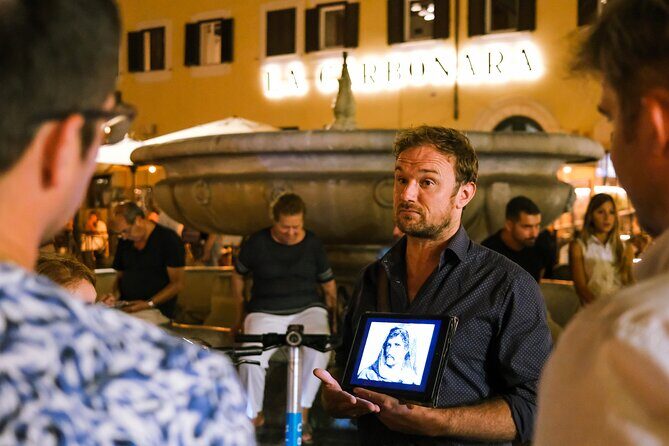
- Small group size (up to 15) keeps the experience personal and easier to follow in tight streets.
- English-speaking expert guide tells the stories clearly, with an evidence-first approach plus a few well-timed chills.
- Free admission at listed stops means you’re paying for the guide and the experience, not entry fees.
- A tightly planned 2-hour night route from Campo de’ Fiori to Ponte Sant’Angelo.
- Dark backstreets + major “execution history” locations give the tour its own distinct flavor.
- Loud-city reality check: bring a “stand where you can hear” mindset.
Worth It for $30.07: What You Get (and What You Don’t)
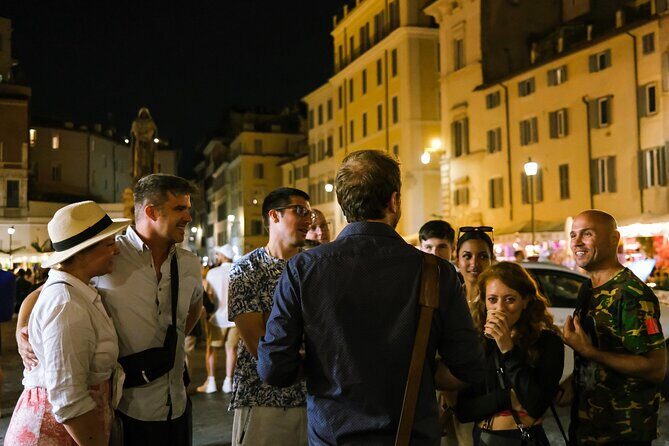
At $30.07 per person for about 2 hours, this tour is priced like a smart budget splurge. You’re not just buying a walking route—you’re paying for an English-speaking expert guide, a structured story arc, and a small group that keeps you from being lost in the crowd.
Here’s what’s included: the English-speaking expert guide and a maximum group size of 15. You also get a mobile ticket, which makes last-minute logistics simpler. And the tour info lists free admission for each stop, so you’re not hit with entry fees along the way.
What’s not included: food and drink. The plan includes a rest stop offered at a café, but you should expect to buy your own. Rain and sun protection are also not provided. And, like most Rome walking experiences, gratuities are optional, but it’s worth having a little cash or card ready if the guide does a great job.
Value-wise, the big win is that Rome’s darker side can be hard to piece together on your own. This tour gives you names, locations, and a story thread you can remember later when you’re staring at the same stone from a different angle.
You can also read our reviews of more historical tours in Rome



The 8:00 pm Timing: Night Stories, Night Navigation
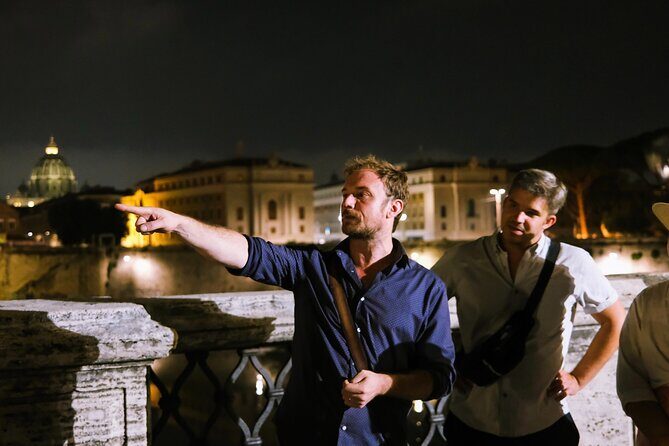
Starting at 8:00 pm matters. In the evening, Rome’s street life shifts: squares feel less crowded, alleys feel narrower, and your imagination does more work. The “true crime / dark history” theme fits that mood well, especially when you’re moving quickly between a handful of key spots.
The route ends at Ponte Sant’Angelo, near Castel Sant’Angelo, so you’re finishing in a powerful location rather than stopping somewhere random. You’ll start at Campo de’ Fiori (00186 Roma RM) and end back in the same general central Rome zone, which is convenient for getting dinner after.
One practical note: the route is on foot and includes some backstreets. Even though the tour info says most travelers can participate, the experience is still more “active walking” than “sit and view.” If you’re sensitive to crowds or have mobility limits, wear shoes you can walk in comfortably for the full duration.
Campo de’ Fiori: Where the Tour Hooks You Fast
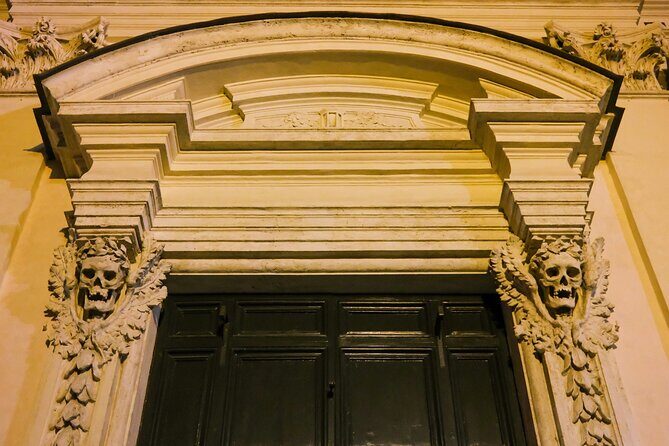
Stop 1: Campo de’ Fiori sets the tone immediately. This is one of Rome’s most famous squares, and it’s the kind of place where you can easily walk past without thinking about what happened there long ago. Your guide meets you here and launches the first story, so you’re not waiting 20 minutes to feel oriented.
Why this first stop works: you get an easy anchor point. Later, when you’re deeper in the lanes, you can look back and say, I know how this connects.
Practical tip: arrive a few minutes early if you can. Campo de’ Fiori can be busy, and getting a good spot helps with hearing once the walk starts.
Piazza Farnese: Renaissance Beauty With a Darker Footnote
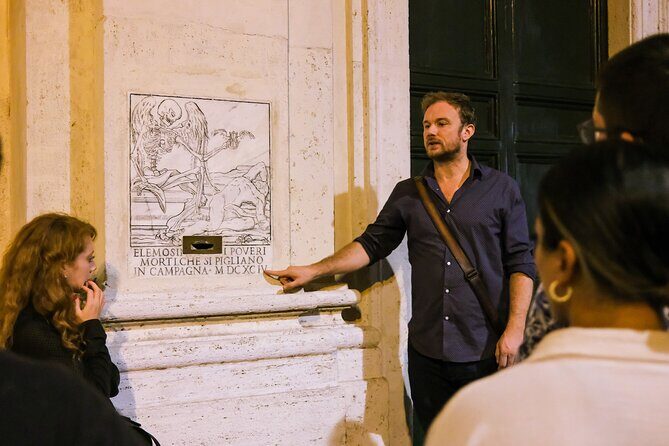
Stop 2: Piazza Farnese keeps the rhythm. You learn about the Renaissance Palazzo Farnese, then your guide adds the lesser-known darker history tied to the square.
What I like about starting with this contrast is that it trains your eye. Rome often looks “pretty” from the outside, but the stories behind walls can be brutal. Once you understand that pattern, the later prison-and-execution stops hit harder.
This is a shorter stop (about 5 minutes), so don’t expect long explanations at every location. Think of it as an organized walk where each stop is a chapter break.
Vicolo delle Grotte to Ponte Sisto: Swindlers, Secrets, and Suspicious Deaths
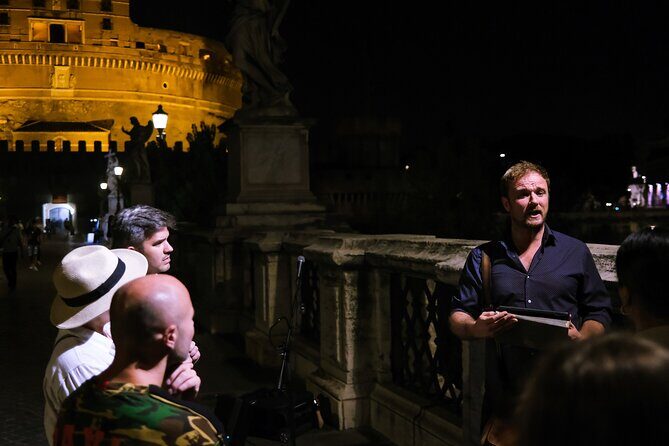
Stop 3: Vicolo delle Grotte takes you into darker backstreet territory. This is the kind of narrow lane where you can almost feel how rumors and schemes spread. You’ll hear a tale tied to a notorious swindler—or possibly a magician, depending on how the story is told.
Then comes Stop 4: Ponte Sisto, where your guide tells a story about a woman who ruled Rome after the suspicious deaths of two rich husbands. It’s a short stop (about 10 minutes), but it’s loaded with power dynamics—money, influence, and who benefits when people vanish.
What makes these stops valuable: they’re not just “scary places.” They show how Rome’s geography supported the dark side—tight lanes for hidden meetings, bridges and crossings for turning points in investigations.
Practical consideration: if you’re hard of hearing, position yourself where you can face the guide. Narrow lanes and busy streets can make sound carry unevenly.






Via Giulia: Monks, Macabre Tasks, and Organized Fear
Stop 5: Via Giulia shifts the story from street-level drama to institutional power. You’ll learn about an order of monks with a macabre task—and how it may have intersected with criminal interests.
This stop is about 10 minutes, and it’s a good example of what I like in this kind of tour: it doesn’t treat “crime” as random. Instead, it connects violence and punishment to systems—religion, authority, and the people who had jobs to do in the shadows.
If your idea of true crime is mostly modern serial killers and police work, this might refresh your understanding. It’s crime as social function, not just personal evil.
Via di Monserrato: The Prison History and Borgia-Style Power
Stop 6: Via di Monserrato leans hard into prisons and fear. You’ll hear about the history of one of the world’s harshest prisons, plus stories connected to the Borgia family—described as ruling Rome like a mafia.
It’s about 15 minutes, which is longer than some stops, so it’s likely where the guide slows down to land the context. This is also a moment to pay attention to what your guide is comparing: how political families used violence, and how punishment became theater.
Balanced viewpoint: not every city street story has a clean, modern timeline. Some details are presented as tradition or legend. The tour’s value is less about courtroom certainty and more about the way these stories shaped Rome’s reputation.
Gelato Now, Death Then: Via dei Banchi Vecchi
Stop 7: Via dei Banchi Vecchi is one of those Rome moments where the present feels almost disrespectful—because what’s there now (including a gelato shop) can sit on top of a much darker business past.
You’ll hear how the site used to be something else and connect it to a woman said to be responsible for deaths of hundreds of men. It’s a grim story, and the shock factor is part of why it sticks in your memory.
Why it matters: Rome is full of reused spaces. You’re training yourself to notice the layers, which makes your later wandering more interesting and more meaningful.
Practical tip: keep your expectations realistic. This isn’t a “sit down and absorb” stop. It’s a quick historical punch.
Via del Banco di Santo Spirito: The Executioner’s House
Stop 8: Via del Banco di Santo Spirito brings the tour to a person rather than just a place. You’ll see the house of Rome’s most famous—and long-lasting—executioner, along with stories about his life.
This is another short stop (about 10 minutes), but it changes the emotional angle. Instead of only focusing on victims and villains, you also consider the machinery: the role of someone who carried out punishment for years.
If you’re sensitive to gore, this is where your “how far is too far” gut-check comes in. The tour description clearly aims for a chilling experience, including murder and hauntings themes. I’d treat it like a night of dark storytelling, not light comedy.
Castel Sant’Angelo: Tomb, Fortress, Prison, and Execution Ground
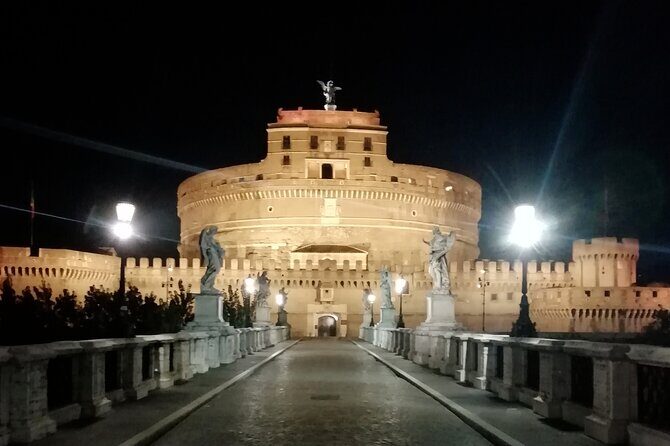
Stop 9: Castel Sant’Angelo is the finish line. It’s also the reason the earlier stops feel like build-up instead of random horror stories.
You’ll hear how the site moved from an emperor’s tomb to a fortress and then a prison, becoming one of Rome’s main execution locations. And the tour wraps with the tale of a tragic family who were all executed at this spot.
This end point works on multiple levels:
- It gives you a landmark you’ll recognize later.
- It turns fear into a physical place you can revisit.
- It offers emotional closure to the story thread you’ve been hearing for the last two hours.
If you time your arrival well, you can leave the tour and keep exploring Castel Sant’Angelo’s surroundings right away.
The Storytelling Style: Facts, Horror, and the Right Amount of Humor
The guide approach seems to balance hard facts with a dramatic storytelling voice. One thing I’d count on: the best guides keep things factual enough to be credible, then add just enough imaginative horror to make you lean in.
There’s also a clear sense of pacing. The stop lengths (mostly 5–15 minutes) keep the evening from dragging. And the guide style described as enthusiastic and character-focused tends to make the people in these stories feel alive, even when the subject matter is heavy.
If you’re touring with kids, the content can still land well when it’s told like spooky history instead of graphic violence. I’d still use common sense: this is a dark-history walk, so it’s not the same vibe as gelato and fountains.
How to Prepare So You Hear Every Word
Rome is loud. This tour happens in that reality. To get the most out of it:
- Stand where you can face the guide. If you’re off to the side, hearing drops fast in crowded streets.
- Bring comfortable shoes. You’ll be on foot for the full 2 hours.
- Layer up. Even in mild weather, evenings near rivers and stone walls can feel cooler.
- If rain is in the forecast, plan for it since rain protection isn’t included.
If you’re someone who needs audio support, it’s worth asking what the guide uses (a microphone isn’t guaranteed in the info you have). The tour provider’s own notes suggest they work on projection when microphones aren’t possible, but your best move is to choose a front-and-center spot.
Who Should Book This Rome Historical True Crime Tour
This tour fits you if you like:
- Dark history told through real locations.
- A budget-friendly guided walk that’s more about storytelling than ticketed attractions.
- Seeing Rome through unexpected lanes and squares, not just the postcard circuit.
It’s also a solid option for a first-time visit if you want orientation plus a fresh angle. After this, you’ll start noticing what you usually miss: side streets, hidden corners, and how punishment and politics shaped the city’s layout.
Skip it (or consider a different style tour) if:
- You want nonstop famous monuments and big photo stops.
- You’re easily bothered by gory or execution-focused storytelling.
- You strongly rely on clear audio and can’t adjust your position in noisy areas.
Should You Book It?
I’d book this Rome Historical True Crime Tour if you’re excited by the idea of a guided walk that’s equal parts place-based history and chilling storytelling. The price is reasonable for the guide time, the group size is small, and each stop builds toward one big conclusion at Castel Sant’Angelo.
Just go in with the right expectations. This isn’t a comfort-tour of bright squares and easy facts. It’s a focused, dark night walk through backstreets, prisons, and execution sites—told in a way that aims to keep you entertained without turning the whole thing into pure spectacle.
If that sounds like your kind of Rome, you’ll probably have a great evening.
FAQ
How long is the Rome Historical True Crime Tour?
The tour runs for about 2 hours (approx.).
Where does the tour start and end?
It starts in Campo de’ Fiori, 00186 Roma RM, Italy and ends at Ponte Sant’Angelo, 00186 Roma RM, Italy.
What time does the tour begin?
The tour starts at 8:00 pm.
Is the tour offered in English?
Yes. The tour is offered in English.
Is food and drink included?
Food and drink are not included. A rest stop will be offered at a café during the tour.
Do I need to buy admission tickets at the stops?
The tour information lists admission as free at each of the stops included in the route.
Can people with sight or hearing needs participate, and are service animals allowed?
Service animals are allowed. The tour notes that interpreters can be provided for sight/hearing impaired guests, and most travelers can participate.