REVIEW · HISTORICAL TOURS
Piazza del Popolo and Historical Sights Walking Tour in Rome
Book on Viator →Operated by Rome's Ultimate Free Walking Tours · Bookable on Viator
Rome history feels like a movie.
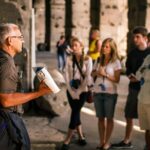
This guided walking route strings together major sights from Piazza del Popolo all the way to Castel Sant’Angelo, with stories that explain what you’re seeing and why it matters. I love the small group size (max 15) and the way the guide keeps the pace easy while still hitting big landmarks like the Pantheon and Piazza Navona. One thing to consider: some stops are quick pass-bys, so if you want lots of sit-down time or long photo pauses, you may wish you had more time in Rome.
I also like that this tour is simple and practical: English-speaking guides, a mobile ticket, and a schedule built for moving through Rome efficiently in about 2 hours 30 minutes. On past runs, guides such as Justin, Luccio, Nick, and Claus were highlighted for strong explanations and for answering questions on the spot, which is exactly what you want when you’re trying to make sense of 2,000+ years in one afternoon. Since it’s tip based at the end, you get a chance to pay the guide based on how much you got out of the walk.
In This Review
- Key points before you go
- Piazza del Popolo as your fast-track launchpad
- The 2.5-hour plan that links Ancient Rome to the Vatican edge
- Stop 1: Porta del Popolo (Porta Flaminia) and why gates matter
- Stop 2: Piazza del Popolo, Bernini’s twin churches, and Ramses II’s obelisk
- Stop 3: Mausoleum of Augustus (you pass by, but you get the meaning)
- Stop 4: Palazzo Borghese and the feeling of power in stone
- Stop 5: Gelateria della Palma for gelato (and a needed break)
- Stop 6: The Pantheon and the art-plus-tomb story
- Stop 7: Piazza Navona, Domitian’s stadium shape, and street-level drama
- Stop 8: Via dei Coronari and Renaissance-era pilgrim steps
- Stop 9: St. Angelo Bridge and the story behind the arches
- Stop 10: Castel Sant’Angelo, Hadrian’s ashes, and medieval Rome
- Stop 11: Via della Conciliazione and your first Vatican-style view
- Price, group size, and the tip-based model that makes sense
- What you’ll feel during the walk (and who it fits best)
- Should you book this Piazza del Popolo to Castel Sant’Angelo tour?
- FAQ
- How long is the Piazza del Popolo and Historical Sights walking tour?
- Where does the tour start and end?
- What language is the tour offered in?
- Is this tour free, or do I pay something upfront?
- What group size is it?
- Do I get a mobile ticket?
- Are service animals allowed?
Key points before you go
- Small group size (15 max) makes it feel relaxed and easy to ask questions
- Route packed with top Roman stops: Porta del Popolo, Piazza del Popolo, Pantheon, Piazza Navona, Castel Sant’Angelo
- A gelato + bathroom break at Gelateria della Palma with 150+ flavors
- Time-saving context for monuments like Bernini’s twin churches and the Obelisk of Ramses II
- Guided walkthrough of the city’s layout from ancient Rome to your first look toward Vatican
- Tip-based at the end, with a low per-person booking price
Piazza del Popolo as your fast-track launchpad
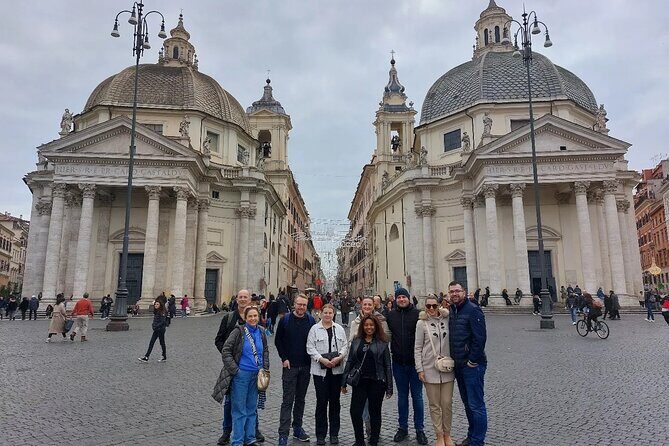
Piazza del Popolo is a smart place to start because it sits at a crossroads of Rome’s story. You begin right at Porta del Popolo (Porta Flaminia), so you’re not just looking at pretty squares. You’re learning how people entered the city long ago, and why this area has always been important.
From the start, the guide helps you connect the dots: gates, power, monuments, and how later Rome reused older ideas in new ways. If you’ve ever felt overwhelmed by Rome’s “where do I even go first?” problem, this kind of start gives you a handle on the city.
You can also read our reviews of more walking tours in Rome

The 2.5-hour plan that links Ancient Rome to the Vatican edge
This is not a random stroll. It’s a 2 hours 30 minutes walking route designed to check off major landmarks without you spending half the day figuring out logistics.
The flow is especially good because you’re moving from:
- A city gate and a grand piazza
- Into imperial-era monuments
- Across classic central Rome streets
- Then finishing with big views toward St. Peter’s Basilica from the Tiber river area
A helpful detail: the schedule lists admission ticket free for each stop, which means less time hunting for tickets and more time simply walking, listening, and looking closely.
Stop 1: Porta del Popolo (Porta Flaminia) and why gates matter
You kick things off at Porta del Popolo, also known as Porta Flaminia. The cool part here is that gates aren’t just stone frames. They were the city’s checkpoints—where arrivals became stories, and where Rome’s power showed up immediately.
Even if you’ve seen gates before, this start sets the tone. Instead of only treating the landmarks as postcards, you understand them as part of how Rome functioned.
Stop 2: Piazza del Popolo, Bernini’s twin churches, and Ramses II’s obelisk
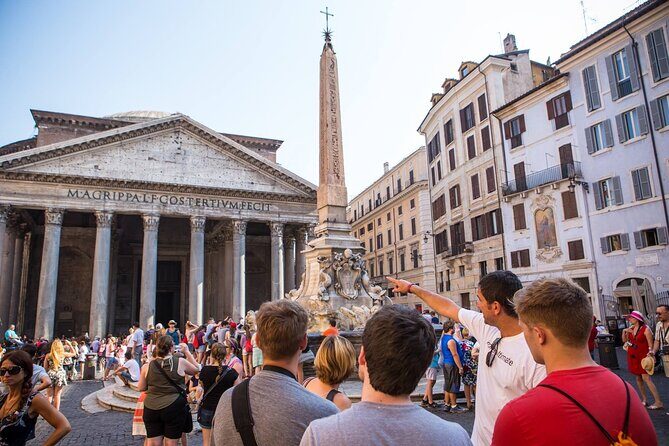
Then you step into Piazza del Popolo—and the square delivers fast. You’ll walk through it with the guide pointing out the twin churches designed by Bernini, plus the Obelisk of Ramses II standing as a dramatic focal point.
Here’s the value of the guided approach: without context, you might just admire symmetry and size. With the guide, the square turns into a lesson on how different eras shaped Rome’s “stage,” using religion, architecture, and reused monuments to make an impression.
This is also the kind of stop where you’ll want your phone camera ready, but don’t overdo it. The guide’s job is to keep you moving while you still notice the details.
Stop 3: Mausoleum of Augustus (you pass by, but you get the meaning)
From Piazza del Popolo, your route goes past the Mausoleum of Augustus, tied to Octavian Augustus, the first Roman emperor. You’re not touring inside here—you’re learning what the monument represents and how it connects to the start of the Julio-Claudian dynasty.
I like this approach because it keeps the day from becoming too “museum-heavy.” A quick, story-driven pass can still help you understand what you’re seeing as you move through the city.
If you’re the type who loves background connections—who was in charge, when, and why—you’ll appreciate that this tour keeps that thread going.
You can also read our reviews of more historical tours in Rome


Stop 4: Palazzo Borghese and the feeling of power in stone
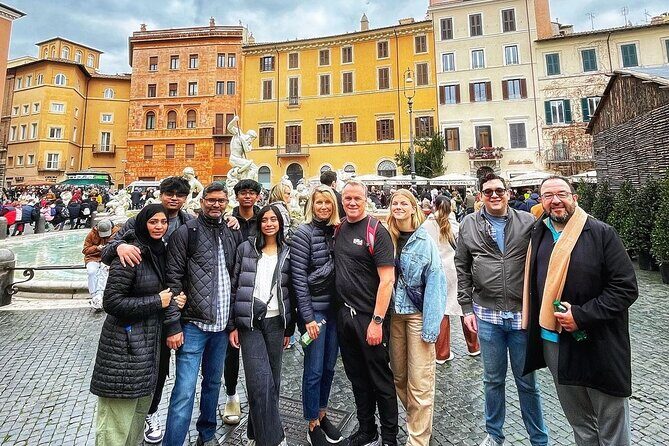
Next you pass through the area connected to the 16th-century Palazzo Borghese, tied to the Borghese family, known for their influence.
The practical benefit is that you learn how Rome’s elite shaped the city’s look. Even when you’re not stopping for long at a single building, you start recognizing patterns: who funded what, and how that support shows up in the architecture.
Stop 5: Gelateria della Palma for gelato (and a needed break)
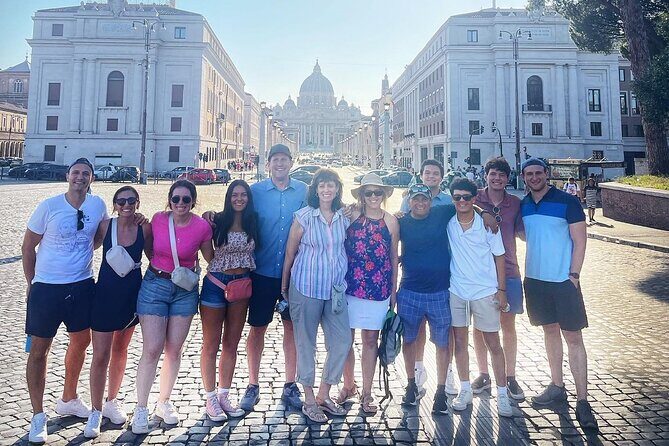
At some point, your legs will ask for mercy. That’s where the schedule smartly adds Gelateria della Palma for a gelato break, and yes, it’s also a bathroom stop.
This place is described as one of Rome’s famous gelato shops, with over 150 flavors. That’s the kind of option set you only want when you’re not rushing, so the timing here works.
Tip from my perspective: try to pick a flavor that connects to your mood. If you’re still full of excitement, go for something bold; if the day feels long, choose a simpler taste. Either way, you’ll reset your energy for the big stops ahead.
Stop 6: The Pantheon and the art-plus-tomb story
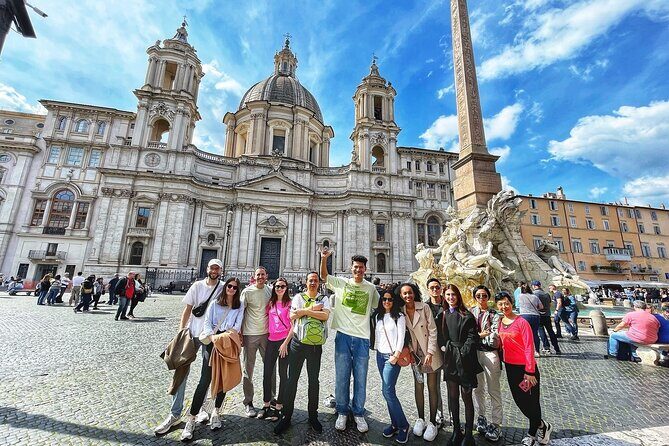
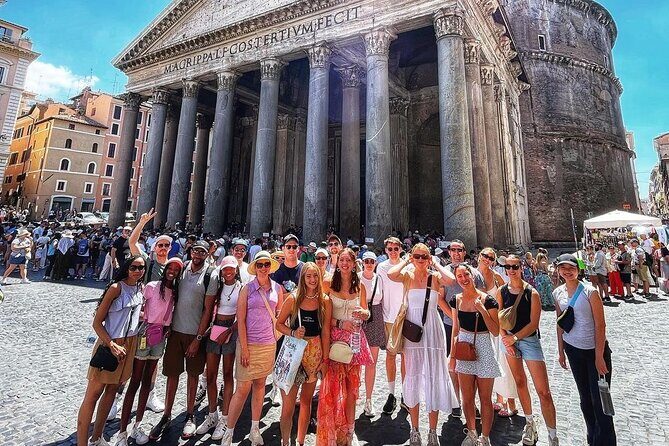
The Pantheon is one of the tour’s major stops. It’s also one of those places where everyone has an opinion, but a guide makes the difference between seeing a building and understanding its layers.
You’ll hear it described as the Temple of all the gods, and you’ll also learn the Pantheon’s connection to notable burials—such as Raphael and the first Italian royalties mentioned in the tour details.
The value here is timing. When you arrive with context, you notice more: how the monument is designed to communicate authority, and how Rome treated art, faith, and power as one package. And since the schedule includes time there without separate tickets listed, it’s a smooth way to work it into a walking day.
Stop 7: Piazza Navona, Domitian’s stadium shape, and street-level drama
Then comes Piazza Navona. You’ll walk through it with the guide explaining that it was originally known and still shaped like the stadium of Domitian.
This is one of my favorite “wait, what?” moments in central Rome. Many piazzas look timeless, but Piazza Navona’s layout is a reminder that today’s squares often sit on top of older structures.
The tour time here is enough to notice the geometry and the energy, without turning it into a long stop where you get tired. It’s the kind of place where you can pause for a photo, then keep moving with the story still fresh.
Stop 8: Via dei Coronari and Renaissance-era pilgrim steps
After Piazza Navona, you continue along Via dei Coronari. The guide frames it as a street that feels connected to the Renaissance, with the idea of walking through the steps of original pilgrims.
This part works well for a simple reason: it slows you down without stopping the momentum. You get a better sense of Rome as something lived in, not just viewed from a distance.
If you’re the type who likes streets as much as buildings, this is a good segment to enjoy—especially for people who want photos that look like Rome, not just monuments.
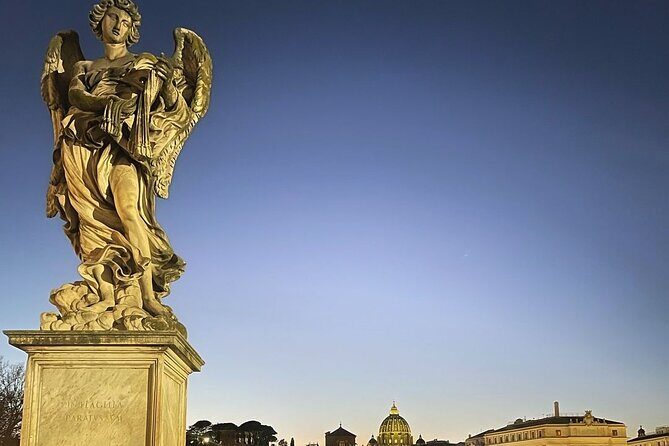
Stop 9: St. Angelo Bridge and the story behind the arches
Next is St. Angelo Bridge, also called the Bridge of Angels in the tour’s framing. You’ll hear the story connected to the martyrdom of Christ, told through the bridge’s visual symbolism.
This is one of those “you’ll never know without a guide” places. From the street, the bridge is impressive but generic-looking. With the explanation, the details start to feel intentional.
You’re also moving into prime photo territory: river views plus statues and arches create natural stopping points without forcing you to stand still forever.
Stop 10: Castel Sant’Angelo, Hadrian’s ashes, and medieval Rome
After crossing the Tiber through Ponte Sant’Angelo, you reach Castel Sant’Angelo. The tour explains it as a medieval structure originally built to host the ashes of Emperor Hadrian.
Even a short stop here helps you understand why this building became so central later on. It’s a reminder that Rome kept repurposing powerful sites, layer after layer.
If you like architecture that looks like it has seen everything, Castel Sant’Angelo does that instantly.
Stop 11: Via della Conciliazione and your first Vatican-style view
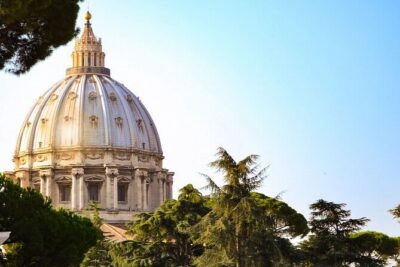
The walk concludes at Castel Sant’Angelo with a view over St. Peter’s Basilica, framed by Via della Conciliazione. The tour describes the avenue’s design as the work of architects connected to Mussolini.
This finish matters because it changes how you experience Vatican from the outside. Instead of arriving from nowhere, you’ve already spent hours understanding how Rome’s power centers moved and expanded. That makes the first big sight feel less random.
And it’s a practical payoff: after the walk, you can use this viewpoint as a reference point when you decide whether to go deeper into Vatican later.
Price, group size, and the tip-based model that makes sense
The price shown is $4.23 per person, and the tour is tip based at the end. That’s an unusual combo, but it can be great value if you’re aiming for context and not just a sightseeing checklist.
Here’s what you’re really paying for:
- A guide who explains what you’re seeing as you walk
- Small-group structure (max 15)
- An efficient route that strings multiple major sights together in one go
- A planned break with gelato so you don’t burn your energy on empty errands
The fact that this tour has a 4.9 average rating and a strong recommendation rate also signals that the format works for most people—especially those who want a guide to connect details into a story.
Still, one practical note: since you’re walking for about 2.5 hours, bring comfortable shoes and accept that you won’t spend equal time at every stop.
What you’ll feel during the walk (and who it fits best)
This tour tends to work best when you’re in a curious mood. You’ll be moving through major landmarks but you’re also learning how to interpret them—what to notice and what it means.
It’s a good fit for:
- First-time visitors who want an anchor route across central Rome
- People who prefer walking and chatting over sitting in a bus all day
- Travelers who want a relaxed group feel and room to ask questions
It’s less ideal if you want to fully enter every major site for a long time. The plan is built for time efficiency, not for slow wandering or deep museum-style visits.
Should you book this Piazza del Popolo to Castel Sant’Angelo tour?
Yes, if your priority is understanding Rome fast—especially the shift from imperial landmarks into the Vatican-area view. The small group and the guide-driven storytelling make it a good first-choice afternoon tour.
I’d skip it if you already plan to spend your limited time in Rome inside ticketed interiors for hours. This walk is built to connect the dots and keep moving, with a gelato break to keep you comfortable.
If you book, come ready with one goal: learn what you’re looking at. If you do that, you’ll leave with a much clearer map in your head—and a more meaningful first look at the sights you came for.
FAQ
How long is the Piazza del Popolo and Historical Sights walking tour?
The tour lasts about 2 hours 30 minutes.
Where does the tour start and end?
It starts at Piazza del Popolo (00187 Roma RM) and ends outside Castel Sant’Angelo with a view over St. Peter’s Basilica, finishing near Piazza PiaP.za Pia (00193 Roma RM).
What language is the tour offered in?
The tour is offered in English.
Is this tour free, or do I pay something upfront?
The price is listed as $4.23 per person. The tour is tip based at the end.
What group size is it?
It has a maximum of 15 travelers.
Do I get a mobile ticket?
Yes, it includes a mobile ticket.
Are service animals allowed?
Service animals are allowed.