REVIEW · COLOSSEUM TOURS
Rome: Colosseum, Palatine Hill and Roman Forum Guider Tour
Book on GetYourGuide →Operated by Discovery Live Tours · Bookable on GetYourGuide
Rome’s ancient big-hitters are all here.
This Colosseum, Roman Forum, and Palatine Hill tour is a focused way to see three linked power centers of the Roman Empire in one go, with a guide who turns scattered stones into a real place you can picture. I like that it skips the ticket line so you spend more time inside the sites. I also like the built-in interpretation—this is led by a certified guide with a university background in history and/or art. One thing to plan for: the guided commentary is mainly concentrated on the Colosseum, while Palatine Hill and the Forum are more self-guided.
The details matter at these sites, and this tour is set up for the real-world pace of Rome. Meeting with a guide holding a yellow umbrella at the Colosseo metro entrance helps you avoid the early scramble. And when the guide is on top of the stories, you get the human side of the empire—names I’ve seen associated with this experience include Rosa and Nadezhda, both praised for making the ancient world feel personal through lively explanations (including daily life and gossip-style anecdotes).
Finally, keep it simple: bring your ID, travel light, and expect changes if opening hours shift. You won’t get hotel pickup, so you should plan to arrive at the meeting point on time and ready to walk. If you’re not comfortable with crowd flow and uneven ancient surfaces, you may want a different style of visit.
In This Review
- Key highlights worth planning for
- Why this Colosseum + Forum + Palatine Hill route feels worth it
- Meeting at Colosseo: find the yellow umbrella fast
- Entering the Colosseum: skip the line and walk into the arena story
- Palatine Hill exploration: imperial homes and a real sense of altitude
- Roman Forum time: power center, street-level drama
- What the certified guide actually adds (and why it’s often the best value)
- Headsets, IDs, and light packing: how to avoid annoying friction
- Price of $96.29: where the money goes and what you get for it
- Who should book this tour (and who might want a different fit)
- Booking decision: should you book this tour?
- FAQ
- What time should I arrive?
- Where exactly is the meeting point?
- Are tickets included, and do we skip the ticket line?
- Do I need to bring an ID?
- Is there a headset provided?
- What languages are the guides available in?
- Is luggage allowed?
- Is this tour suitable for people with mobility impairments?
- Is the booking refundable if I cancel?
Key highlights worth planning for
- Skip-the-line entry so your time goes to the sights, not the queue
- Certified university-trained guide for context that turns ruins into a timeline
- Colosseum floor access feel where you can picture seating and arena drama
- Yellow-umbrella meet-up at Colosseo metro to keep you from hunting the group
- Headsets for larger groups so you can actually hear in busy areas
- Palatine Hill and the Forum self-exploration time after the main guided moment
Why this Colosseum + Forum + Palatine Hill route feels worth it
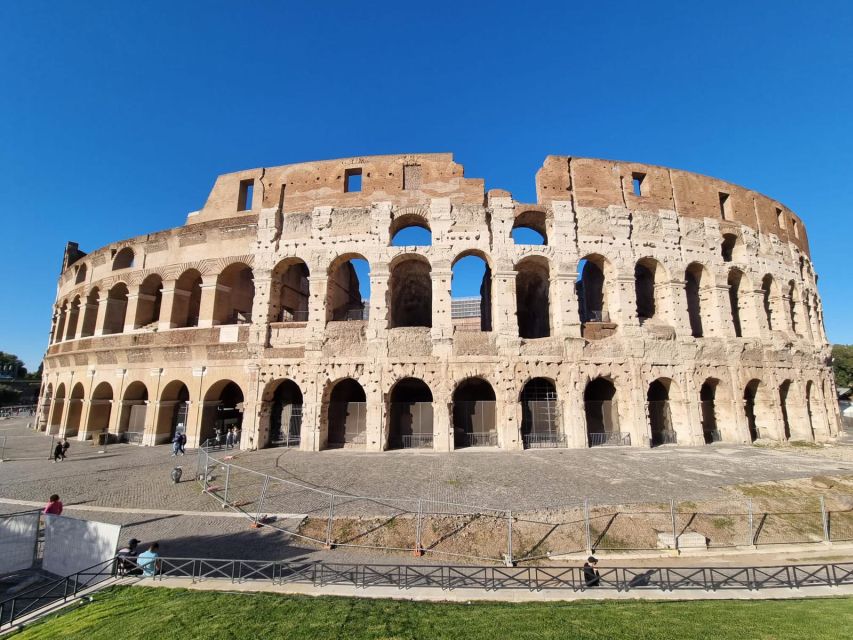
This tour works because it follows how the city made sense back then. The Colosseum wasn’t just entertainment—it was public spectacle with politics in the background. A short walk later, the Roman Forum is where Rome ran on religion, commerce, and power. Then you head toward Palatine Hill, tied to the residences and status of the elite.
Instead of treating these places like separate museum stops, you get a connected story arc: spectacle, governance, and wealth. That matters because these sites are huge and easy to misunderstand if you’re wandering alone. A good guide helps you notice what you’re looking at—arch shapes, layers of construction, and why particular buildings were where they were.
Value-wise, the tour is priced at $96.29 per person, and the “why pay for a guide” part is clear: you’re paying for time saved (skip-the-line) plus the ability to make quick sense of what would otherwise feel like scattered ruins. It’s also a practical match if you have limited time in Rome and want the big three without spending your whole day figuring out routes and entrances.
Meeting at Colosseo: find the yellow umbrella fast
Your day begins at the front of the metro station Colosseo. Arrive 15 minutes early. Your guide will be holding a yellow umbrella, and you’ll want to be at the right level.
Here’s the small-but-important tip: the Colosseo metro area has more than one entrance/exit level. Plan to meet at the ground-level entrance/exit area, not an upper one. If you show up and wander around looking for the umbrella, you’ll burn precious minutes while your group is already forming.
Also, remember: this tour starts at the metro meeting point and ends back there. There’s no hotel pickup/drop-off, so you’re responsible for getting there, which is typical for Rome site tours. The upside is flexibility—you can fit this into almost any stay plan if you’re organized with your transport and timing.
Entering the Colosseum: skip the line and walk into the arena story
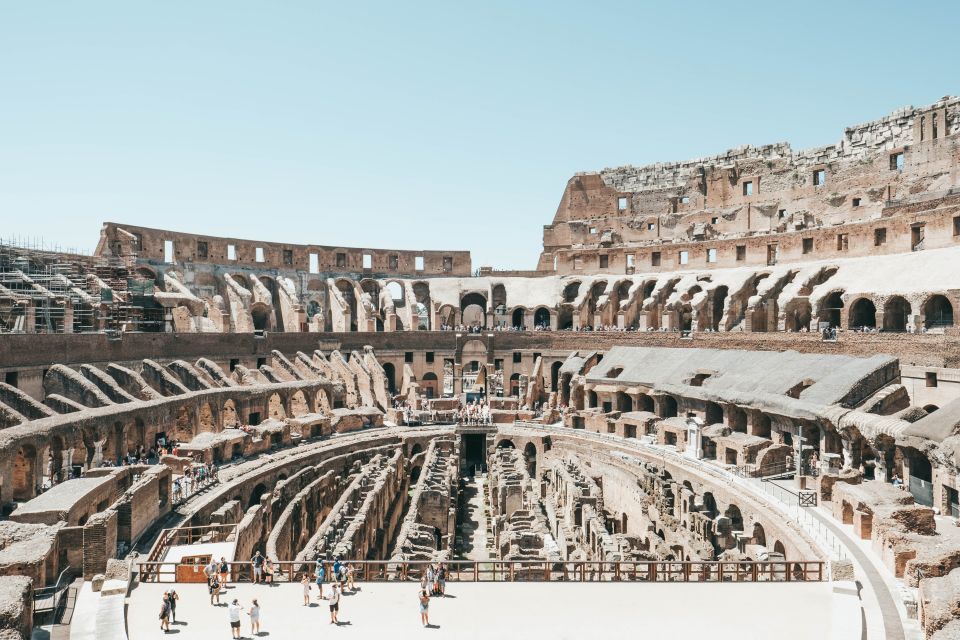
The Colosseum is the emotional centerpiece of this whole experience, and that’s where the guide time is concentrated. You get a photo stop and then about one hour of guided touring focused on what you’re seeing inside.
The real payoff starts with the entry. With skip-the-ticket-line access, you avoid the worst of the slow churn outside. That matters at the Colosseum, where the wait can eat up your energy before you even reach the best viewing angles.
Once you’re in, the guide helps you connect the space to what happened there. You’re looking at the arena where gladiatorial battles and other spectacles took place, and you’re also able to walk on floors associated with the spectator experience—areas that help you picture how crowds looked and moved. You’ll hear about the scale too: sources tied to this tour describe the 50,000–80,000 spectators who once filled the structure.
What makes the guided portion useful is that the Colosseum isn’t just “a big stadium.” It’s an engineered stage for public performance: dramatic events, high-profile entertainment, and the kind of spectacle that sent a message. You’ll also get help understanding the space layout, so it stops being a photo-op and becomes a place with logic.
Palatine Hill exploration: imperial homes and a real sense of altitude
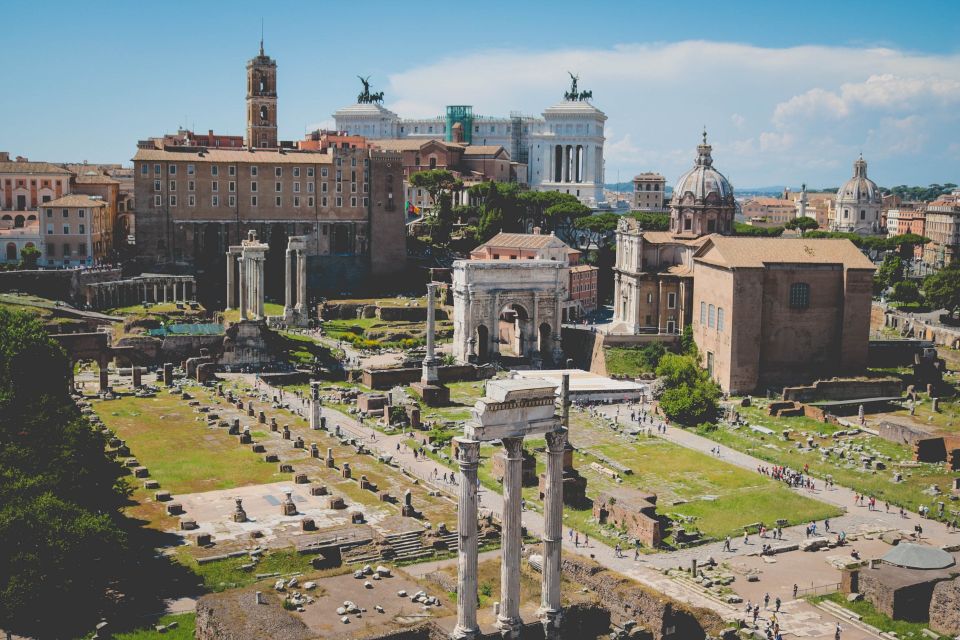
After the Colosseum, you’ll head to Palatine Hill. This is where Rome’s elite lived, and it’s the sort of area that rewards even a modest amount of interpretation.
Your time here includes visiting the hill area with guidance provided up front, then time to make sense of the terrain and viewpoints at your own pace. Palatine is famed for sumptuous residences built by wealthy patricians, and it’s also linked to political power in a very physical way: Octavian Augustus chose the seat of the Imperial Palace here.
That point changes how you look at the ruins. When you understand that emperors and top officials weren’t just hanging out nearby, you start noticing why certain buildings and vantage spots were positioned where they were. The hill’s slope and layout naturally guide your eye toward the “why” behind the remains.
One practical thing: this is an active site. Even if you don’t feel like you’re climbing a mountain, you will be walking on uneven ground and dealing with Rome’s sun-and-shadows rhythm. If you like viewpoints and don’t mind a steady pace, you’ll enjoy how Palatine connects the past to the city skyline you’re standing in.
Roman Forum time: power center, street-level drama
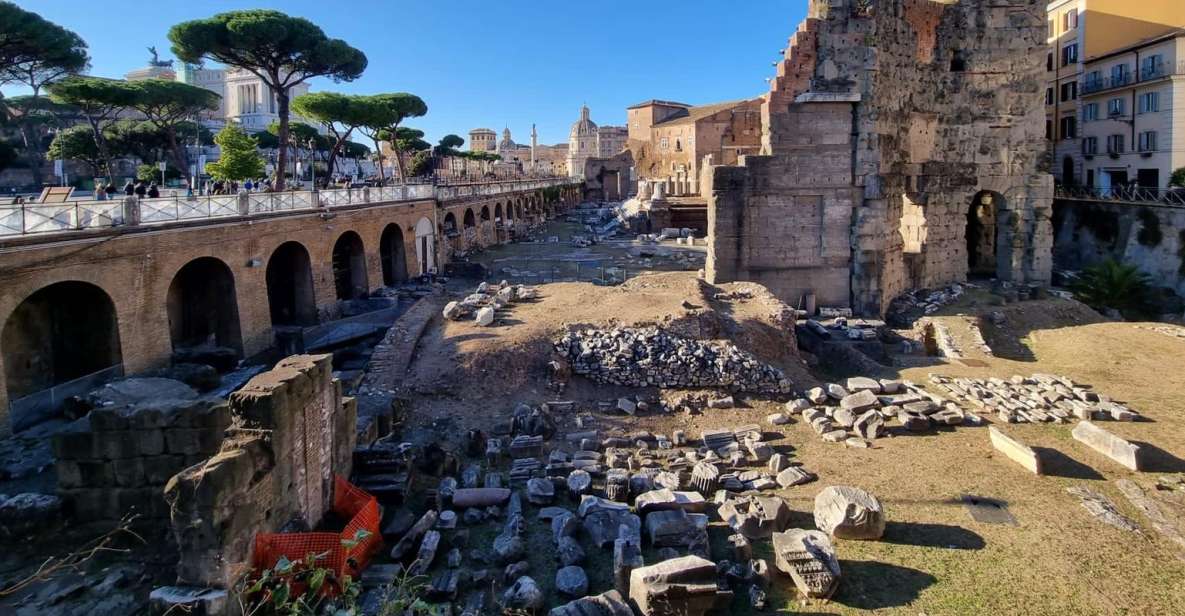
The final major stop is the Roman Forum, Rome’s old commercial, religious, and political hub. This is where you’ll spend the end portion of the tour with a mix of break time, photo stops, and guided explanation.
The Forum is famous for “ruins,” but the best way to experience it is as a working center that once ran like a daily machine. Once you understand what the Forum did—markets and religion and politics happening in the same zone—you stop seeing isolated columns and start imagining schedules, crowds, and ceremonies.
This is also a good moment to take stock. The tour includes a break element, plus time for photos. Use that time intentionally. Look for views back toward the direction you came from, and try to match what you learned about Colosseum spectacle and Palatine status to the public-facing role of the Forum.
Two practical notes help you enjoy this area:
- Expect crowds and slow movement. Plan to move when the group moves.
- Use your notes or your guide’s key points. A guided framework makes the Forum much easier to follow.
What the certified guide actually adds (and why it’s often the best value)
The guide is certified and has a university degree in history and/or art. That matters more than people expect. At the Colosseum and Forum, the “facts” are easy to find. What’s harder is sorting facts into the right story so you don’t leave thinking you saw cool rocks but learned almost nothing.
From the way guides are described for this experience, the strongest praised quality is their ability to make daily life feel real, not just grand events. Names that come up include Rosa and Nadezhda, both highlighted for being kind and for presenting information in an engaging way. One standout theme is the blend of official history with human details—how people lived, what daily society felt like, and even the gossip-style angle that helps ancient Rome stick in your mind.
That tone is practical too. When a guide gives you a quick mental picture—who was where, why something was built, what a crowd would do—you can walk the site and still understand what you’re looking at without constant stopping.
Also, don’t underestimate the headset detail. Headsets for groups larger than five aren’t a luxury when you’re in a loud crowd environment. They keep the narration clear when the path is crowded and background noise is high.
Headsets, IDs, and light packing: how to avoid annoying friction
There are a few “small rules” that can make or break a smooth start.
First: bring your passport or ID card. The tour requires that all visitors carry IDs. This is not the time to travel with a phone-only mindset.
Second: travel light. Luggage or large bags are not allowed. If you’re carrying bulky items, you may have trouble at entry points. Keep it minimal: day bag, water, and whatever you need for comfort.
Third: meeting time and location. If you arrive late or wander to the wrong metro exit, you’ll feel it fast. That’s why the yellow umbrella and the ground-level meeting location matter.
Finally: opening hours can change. The sites you’re visiting have schedules that can shift, so your day may feel slightly different depending on timing. This tour is built to work within normal site operations, but your best plan is to show up early, stay flexible, and follow your guide’s lead.
Price of $96.29: where the money goes and what you get for it
At $96.29 per person, this isn’t a budget “grab-and-go” ticket, so you want to know what you’re paying for. Here’s the value breakdown that makes the price make sense:
- Skip-the-ticket-line: that’s time saved up front, which you can spend inside the sites where it counts.
- Certified guide with a university degree: you’re paying for interpretation, not just access.
- Three major Roman icons in one plan: you’re bundling Colosseum, Palatine Hill, and Roman Forum without piecing together separate tours.
- Headsets when needed: makes the experience more comfortable and ensures you can hear the guide’s explanations.
You do not get hotel pickup/drop-off, so factor that into your transportation plan. Food and drinks also aren’t included, so bring a water bottle and plan meals around your tour timing.
What I like about the value here is that the price aligns with where you’d otherwise pay attention. If you go solo, you’d spend time waiting, and you might miss the “why” behind what you’re seeing. This tour tries to solve that in a structured way.
Who should book this tour (and who might want a different fit)
This is a strong fit if you want the big Roman highlights without guessing. It’s especially good for:
- First-time visitors who want a guided framework for the Colosseum and Roman power centers
- People who like stories about how the empire worked, not just architecture photos
- Travelers comfortable walking through crowded, active historic sites
It’s less ideal if you:
- Need mobility-friendly routing, since the tour is not suitable for people with mobility impairments
- Prefer a fully self-paced visit where you can wander freely without a guided structure
It also works well for mixed-travel groups. If one person wants more explanation and another just wants time to roam after, the Colosseum guided focus plus self-exploration at Palatine and the Forum hits a practical balance.
Booking decision: should you book this tour?
If you have limited time and want the Colosseum, Roman Forum, and Palatine Hill to make sense fast, I’d book it. The combination of skip-the-line entry, a certified guide, and the story-driven approach gives you a better return than doing each site alone.
Book with lead time. The booking guidance shown for this experience asks you to plan ahead (it’s listed as needing at least a few days’ notice, with a minimum of 5 days noted). Also, the tour carries a non-refundable policy, so only lock it in if your Rome dates are solid.
FAQ
What time should I arrive?
Arrive 15 minutes before the tour starts at the front of the metro station Colosseo. Your guide will be holding a yellow umbrella.
Where exactly is the meeting point?
Meet at the front of the metro station Colosseo. The guide will be holding a yellow umbrella, and the meeting is at the station entrance area.
Are tickets included, and do we skip the ticket line?
The experience includes skip-the-ticket-line access, which helps you avoid waiting outside.
Do I need to bring an ID?
Yes. All visitors must carry a passport or ID card.
Is there a headset provided?
Headsets are included for groups larger than 5.
What languages are the guides available in?
The live tour guide is available in Russian, English, and Italian.
Is luggage allowed?
No. Luggage or large bags are not allowed.
Is this tour suitable for people with mobility impairments?
No, this experience is listed as not suitable for people with mobility impairments.
Is the booking refundable if I cancel?
No. The cancellation policy is non-refundable.