REVIEW · OSTIA ANTICA TOURS
Ostia Antica: Archaeological Guided Private Tour
Book on GetYourGuide →Operated by Blue Cat Tours · Bookable on GetYourGuide
Roman life survives in plain sight. Ostia Antica is one of the easiest ancient places to read like a real city, and this private archaeological guide helps you do that with professional graphic reconstructions and clear explanations of daily routines. You’ll connect what you see in the streets and buildings to what life looked like before the settlement was abandoned in the 9th century.
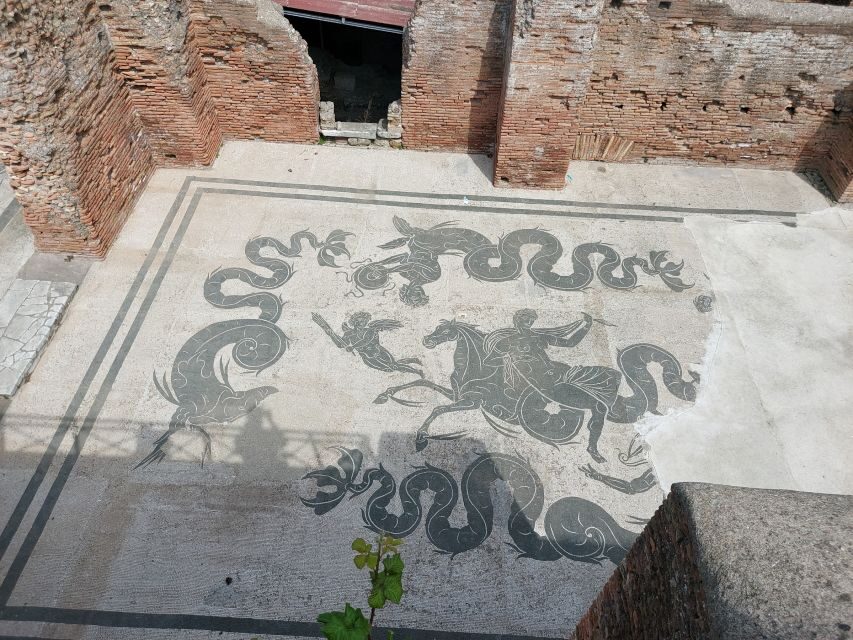
I especially like the way the route follows the city’s main bones, including the Decumanus Maximus and major public squares. I also like the big showpieces that anchor the story, like the Capitolium and the Teatro di Ostia—monuments that suddenly feel less like random ruins and more like where people actually gathered.
One consideration: it’s a walking tour, and in winter the mosaic floors are covered for preservation, so you may not see the Baths of Neptune mosaics during those months.
In This Review
- Key highlights to look for on this tour
- Why Ostia Antica reads like a real city
- Following the Decumanus Maximus like the city’s main spine
- Baths of Neptune mosaics: a must-see, with a winter twist
- Capitolium and Forum Square: religion meets civic life
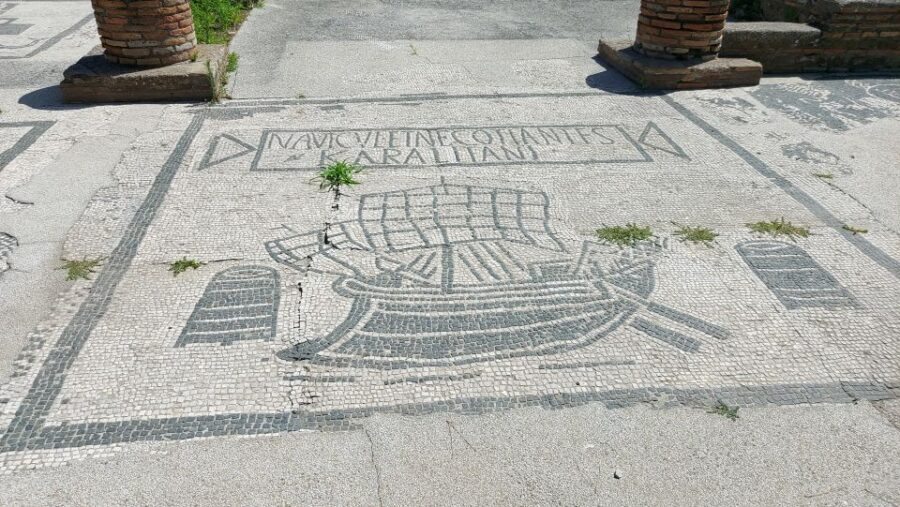
- Piazzale delle Corporazioni: shops, signs, and everyday commerce
- Teatro di Ostia: entertainment at city scale
- Insulae, domus, thermopolium, and latrinae: daily life you can picture
- What makes a 2-hour private format good value
- Booking fit: who should take this tour
- Should you book Ostia Antica: Archaeological Guided Private Tour?
- FAQ
- How long is the Ostia Antica guided private tour?
- Where does the tour meet and end?
- Is this tour private?
- What sites are included in the tour?
- What’s included in the price?
- Are food and drinks included?
- Is it wheelchair accessible?
- Will I see the mosaics at the Baths of Neptune?
- Need help choosing a time?
Key highlights to look for on this tour
- Private, guided pacing through the biggest areas of Parco Archeologico di Ostia Antica without feeling rushed
- Graphic reconstructions that help you picture buildings beyond what’s left in stone
- Decumanus Maximus city walk so you’re not just hopping between monuments
- Capitolium plus Forum Square for a clear view of Roman religion and civic space
- Theater and public entertainment at Teatro di Ostia, explained in context
- Seasonal mosaics reality check at the Baths of Neptune if you’re touring in winter
Why Ostia Antica reads like a real city
Ostia Antica is the first Roman colony, founded in the seventh century BC at the mouth of the River Tiber. That origin matters, because you’re not just walking through ruins from one era—you’re seeing a place that grew into a working city.
What makes this kind of guided private tour click is the emphasis on how spaces functioned. You don’t only hear about temples and theaters; you also get the everyday map: where people shopped, ate, traveled through apartment blocks (insulae), lived in richer homes (domus), and used public toilets (latrinae). The result is that your brain starts organizing the site the way Romans would have.
Another smart touch is how the guide uses reconstructions. You’ll often stand in front of partial remains and still get a clean mental picture of what stood there—useful when you’re trying to understand scale and layout.
You can also read our reviews of more guided tours in Rome



Following the Decumanus Maximus like the city’s main spine
A strong part of this tour is the walk along the Decumanus Maximus, the city’s main street. This is the difference between seeing Ostia Antica as scattered highlights and understanding it as a place with a built-in rhythm.
As you move along the route, you’ll get context for why certain buildings sit where they do. The Decumanus is where the city’s traffic would have flowed—people going to work, to public events, to meals, and to civic life. When your guide connects each stop back to this street, the site feels navigable instead of confusing.
Practical tip: wear comfortable shoes. Even a “2 hours” walking tour can still feel like real walking once you add slowdowns for explanations and photos.
Baths of Neptune mosaics: a must-see, with a winter twist
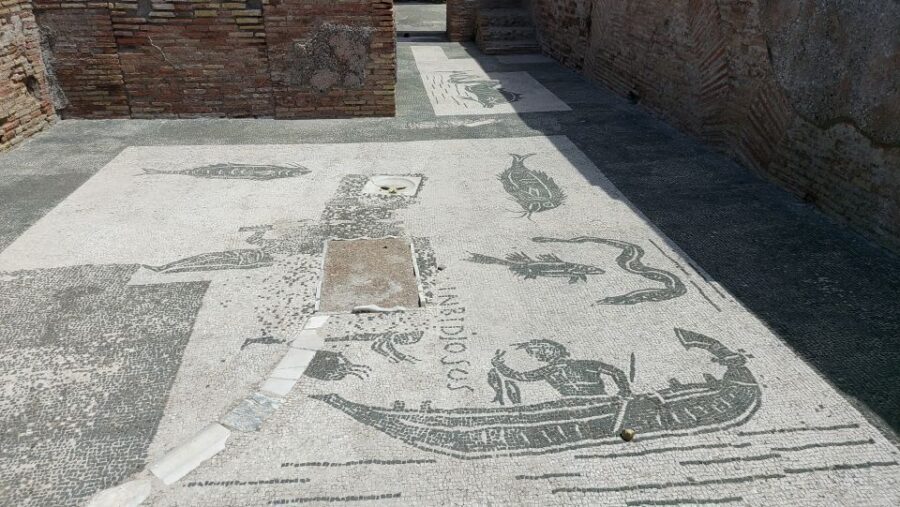
One stop that grabs attention is the Baths of Neptune. The tour includes a chance to admire the splendid mosaics there, and your guide will help you see what you’re looking at beyond the surface level.
Important seasonal note: in winter, the mosaic floors are covered for preservation reasons, so they are not visible during visits in winter. If you’re traveling in colder months, expect the guide to explain the mosaics and their setting without you getting the full visual payoff.
Even with that limitation, the baths area still matters. Baths were social spaces, not just places to wash. So whether you see the mosaics or not, this is one of the stops that helps you understand how Romans spent leisure time.
Capitolium and Forum Square: religion meets civic life
The Forum Square is where you start to feel how power worked in Roman cities. Dominating the space is the Capitolium, a major temple dedicated to Jupiter, Juno, and Minerva. That triad isn’t just a fun fact; it’s a key to understanding the city’s identity and priorities.
On this tour, you’ll move through the space with the guide’s framing: this is the kind of location where politics, religion, and public messaging overlap. The temple’s presence turns the square into more than a meeting spot—it becomes a focal point for how people understood authority.
Why this stop is worth your time: it gives you a readable explanation for why so many ruins revolve around public buildings. When you understand the logic of the Forum, other areas start making more sense.
Piazzale delle Corporazioni: shops, signs, and everyday commerce
Next up is the Piazzale delle Corporazioni. The name alone hints at something practical: this is tied to organized groups connected to trade and business. Your guide’s job is to translate that into a picture you can actually hold in your mind.
You’ll likely spend time connecting what you see to the surrounding economic life of the city. Even if you’re not a history specialist, this is where Ostia Antica can feel surprisingly relatable. Think: work routines, commerce, and the places where locals would have recognized brands and regulars.
This is also a good place for your brain to start expecting “living details.” You’re not just seeing architecture; you’re spotting the clues that the city had a daily economic engine.
You can also read our reviews of more private tours in Rome




Teatro di Ostia: entertainment at city scale
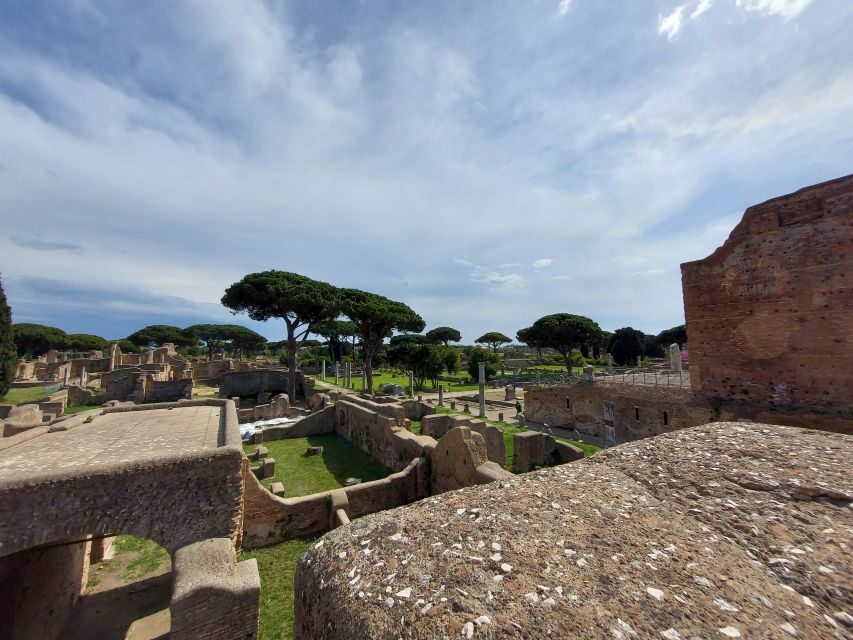
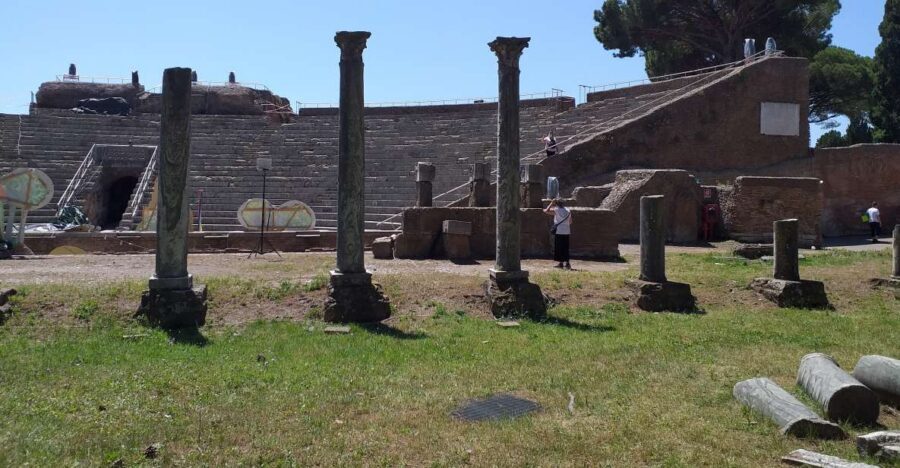
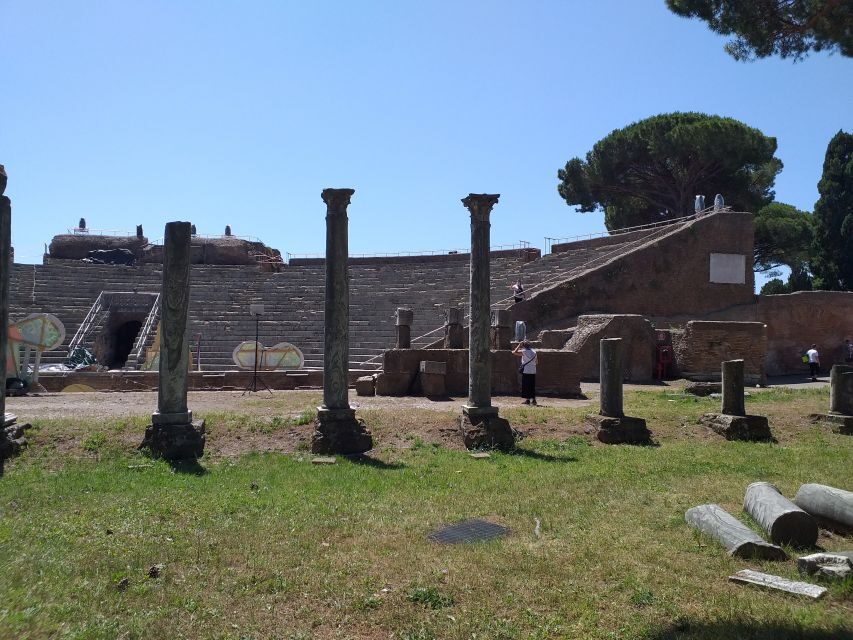
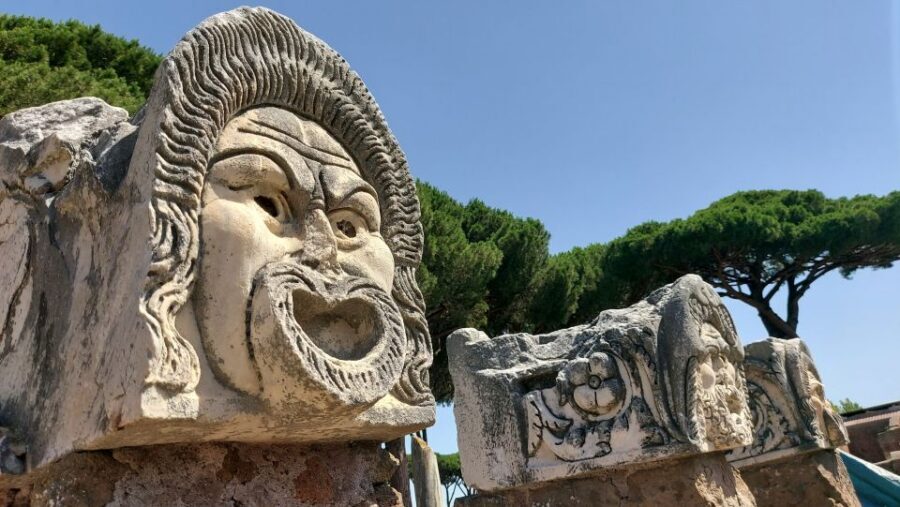
The Teatro di Ostia is one of those ruins that makes you immediately imagine sound and movement. A theater is built for crowds, and this stop shows how public entertainment shaped daily Roman life.
On a guided private tour, the value is in explanation: you’re not left to guess how the theater fit into the rest of the city. Your guide can connect the theater to the broader flow of public spaces—where people would go after work, how events would draw attention, and why such construction mattered.
What to expect in practical terms: you’ll spend time in/near the theater area, then carry that sense of crowd energy into your next steps. If you like architecture, this is the one that often turns questions into “oh, that’s how it worked.”
Insulae, domus, thermopolium, and latrinae: daily life you can picture
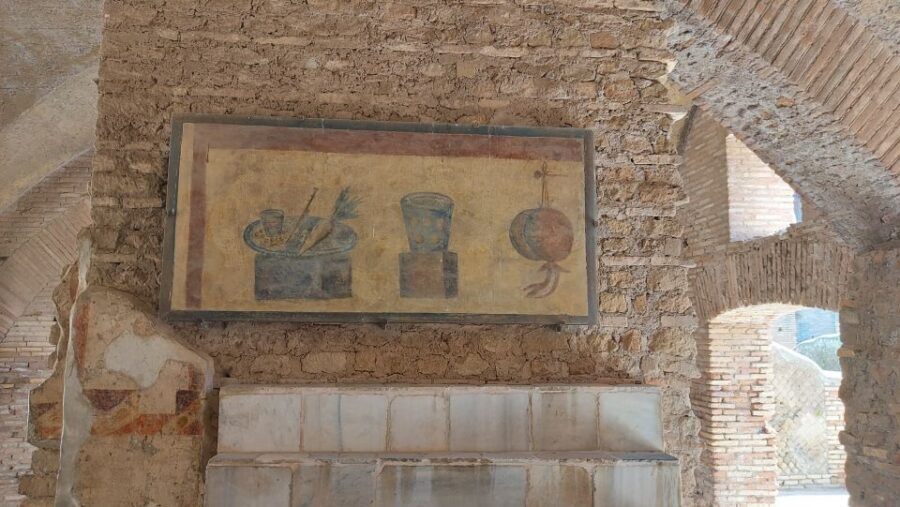
This tour does something many ancient site tours skip: it pays real attention to everyday places, not only monuments.
Here’s what you’ll get a guided look at, and why it matters:
- Insulae: the ancestors of apartment buildings. These help you understand how the majority of residents would have lived, not just elite households.
- Domus: the richer villas of the patricians. You see contrasts that make the city’s social structure clearer.
- Thermopolium: your guide will explain it as something similar to our fast-food spots. That comparison is useful because it turns a term into a mental image—quick meals and stop-in service.
- Latrinae: public toilets. This stop can be surprisingly fascinating because it forces you to confront how public and communal Roman daily life really was.
The tour’s reconstructions support all of this. Standing in front of the ruins, you can’t always guess the exact feel of the place. The graphic help bridges that gap so you walk away with a more complete picture of routine life.
Small note for comfort: some areas can be uneven or structured. Take your time, especially if you’re traveling with kids or if anyone in your group has mobility limits. The tour is listed as wheelchair accessible, but it’s still a walking experience.
What makes a 2-hour private format good value
At $155.20 per person for a 2-hour private guided tour, this isn’t the cheapest option. The question is whether it’s worth it for you—and the answer is usually yes if you care about clarity.
Here’s why the value tends to work:
- Entry tickets are included, so you’re not juggling extra ticket purchases while you’re trying to coordinate a visit.
- Skip-the-ticket-line helps you spend time in the park, not waiting outside it.
- A private guide means the explanations can track your pace and interests, instead of being generic.
If you’re the type who wants more than a photo-stop tour, a private 2 hours can be ideal at Ostia Antica because the site is packed with meaningful spots. With a guide, you don’t just move from A to B—you learn how the city functions.
Also, the private format has shown real flexibility in practice. Reviews include praise for Francesca being accommodating for groups that included adults and children, and adjusting the tour to match interests. Another review highlights that the guide was prepared and helpful, which matters at archaeology sites where good interpretation makes a huge difference.
Booking fit: who should take this tour
This is a strong pick if:
- You want an organized, high-impact introduction to Ostia Antica’s top areas in a short time.
- You like guided interpretation that connects ruins to daily life—food, housing, civic space, and religion.
- You’re traveling with kids or mixed-age groups and want a guide who can keep things moving at the right level.
It might be less ideal if:
- You want a completely independent self-guided wander with zero structure.
- You’re expecting to spend many hours in depth across every section of the park. This tour is purpose-built for a focused 2-hour slice.
Should you book Ostia Antica: Archaeological Guided Private Tour?
I’d book it if you want a smart, time-efficient way to understand Ostia Antica, not just photograph it. The big value comes from the guided route through major landmarks—Decumanus Maximus, Baths of Neptune, Forum Square and the Capitolium, Piazzale delle Corporazioni, and Teatro di Ostia—plus the everyday-life stops like insulae, domus, thermopolium, and latrinae.
If you’re visiting in winter, go in knowing the mosaic floors may be covered. Still, the tour’s interpretation should keep the experience meaningful even when the visual mosaics aren’t on display.
Also, if you prefer a guide who can adapt—especially for families—this is the kind of private tour that tends to fit well, based on the feedback tied to Francesca’s accommodating style.
FAQ
How long is the Ostia Antica guided private tour?
The tour duration is 2 hours.
Where does the tour meet and end?
The guide will have a sign with your name on it. The tour ends back at the meeting point.
Is this tour private?
Yes, it’s a private group experience.
What sites are included in the tour?
The main highlights include Parco Archeologico di Ostia Antica, Capitolium, Piazzale delle Corporazioni, and Teatro di Ostia.
What’s included in the price?
The price includes a private guided tour and entry tickets.
Are food and drinks included?
No. Food and drinks are not included.
Is it wheelchair accessible?
Yes, the tour is listed as wheelchair accessible. It is also a walking tour.
Will I see the mosaics at the Baths of Neptune?
In winter, mosaic floors are covered for preservation, so they are not visible during visits in winter.
Need help choosing a time?
If you tell me your travel month and group type (adults, kids, mobility needs), I can suggest whether this is a great match for your schedule and expectations.