REVIEW · POMPEII
Private Day Tour of Pompeii, Sorrento and Positano with Pick Up
Book on Viator →Operated by A DRIVE INTO THE BLUE · Bookable on Viator
Pompeii plus the coast in one day works. This private tour strings together UNESCO Pompeii with scenic stops along the Amalfi Coast, then adds town time in Positano and Sorrento. I like that it starts with pickup from your hotel or pier, so you spend less time figuring out transportation and more time seeing things. I also like the Pompeii focus, with a professional guide option at the ruins (the guides I saw named in the write-ups include Antonio / Antonino and Celestine).
The main thing to consider is pace. You get a couple hours in Pompeii, then several quick sightseeing stops, and finally multiple shorter windows on the coast. It is a full day, and if you want to linger slowly, you may wish you had more time.
That said, this is a smart way to do the highlights without renting a car or joining a big bus. The private vehicle helps on curvy coastal roads, and you can ask questions in real time as you move from place to place.
In This Review
- Key Points I’d Plan Around
- A Private Day With Pickup That Actually Saves Time
- Pompeii Archaeological Park: Your Main Ticket Moment
- Hotel Vittoria Gate and the City’s Layout: Getting Your Bearings Fast
- Thermopolium, Big Houses, and Baths: Everyday Life in Stops You Can See
- Lupanar, Theatre, and Amphitheatre: The Places That Feel Most Human
- Positano: Church Dome Tiles, Marina Grande Beach Time
- Sorrento: Piazza Tasso and Via San Cesareo Shopping Stroll
- Price and Value: What $181.41 Covers, and What Costs Extra
- Who Should Book This Tour (and Who Might Want Something Else)
- Should You Book This Private Pompeii + Amalfi Coast Day?
- FAQ
- Is this a private tour?
- How long is the tour?
- What is included in the price?
- What is not included?
- Do I need to bring an entry ticket for Pompeii?
- Do you pick up from hotels and from cruise ships?
- What happens if weather is poor?
Key Points I’d Plan Around
- Hotel or pier pickup so you are not wrestling buses or taxis all morning
- Pompeii entry is extra (about €18), while many smaller stops are listed as free
- A real guided Pompeii walkthrough is available when you choose the ruins guide option
- Short, high-impact time in Positano and Sorrento (good for first-timers, less ideal for slow travelers)
- Photo pull-offs and comfort breaks are part of how the day is managed, not an afterthought
A Private Day With Pickup That Actually Saves Time
This is the kind of day trip you do when you want maximum “wow per hour,” but you still want a comfortable pace. Instead of meeting somewhere random, you get a pickup from places like hotels, ports, and train stations across the Campania area. If you are on a cruise, you give your ship details and docking timing so the driver can meet you when you are actually ready to go.
The private setup matters more than you might think. Pompeii and the Amalfi Coast are both famous for traffic, confusing roads, and slowdowns. Having a driver who handles the route means you can focus on the day instead of the driving. And because it is your group only, you are not packed into a loud bus while you try to listen to your guide.
Your day runs about 8 to 9 hours. That length is a sweet spot for doing Pompeii plus the coast, but it also explains why Pompeii time is capped and why Positano and Sorrento are more “sample” than “deep dive.”
You can also read our reviews of more private tours in Pompeii



Pompeii Archaeological Park: Your Main Ticket Moment
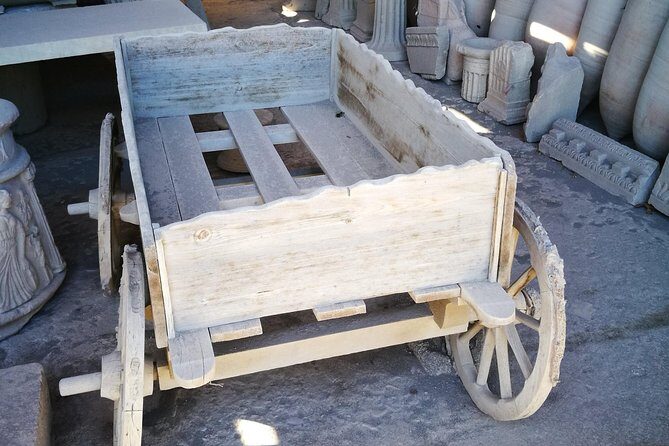
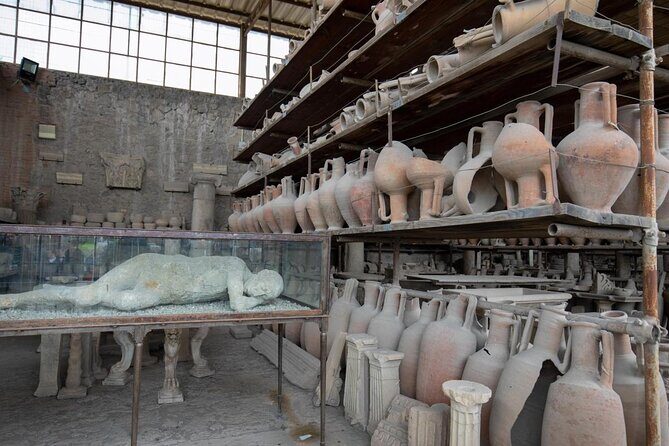
Pompeii is where your money and your time concentrate. The schedule gives you about 2 hours at the Pompeii Archaeological Park, and that is also the stop with the ticket cost. Pompeii admission is listed as not included, at €18 per person.
Two practical tips make a big difference here:
- Buy your Pompeii entry ticket in advance so you are not stuck at the gates.
- Try to arrive right when the site opens. The first stretch tends to be easier, and the ruins feel more manageable before the crowds thicken.
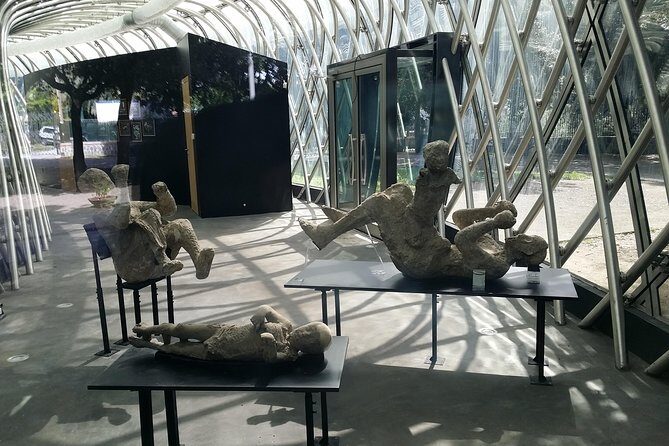
Inside, the experience is built around walking and stopping. You do not just get a quick “stand here, see that” tour. The guide’s job is to connect the street layout and public spaces to real everyday life—what people did, where they went, and how the city worked before the eruption.
One small downside: with only about two hours inside the park, you will move through many highlights fairly quickly. If you are the type who wants to read every inscription and study every floor mosaic for a long time, you may feel slightly rushed. If you want the main Pompeii story arc without burning a full day, this length is realistic.
Hotel Vittoria Gate and the City’s Layout: Getting Your Bearings Fast
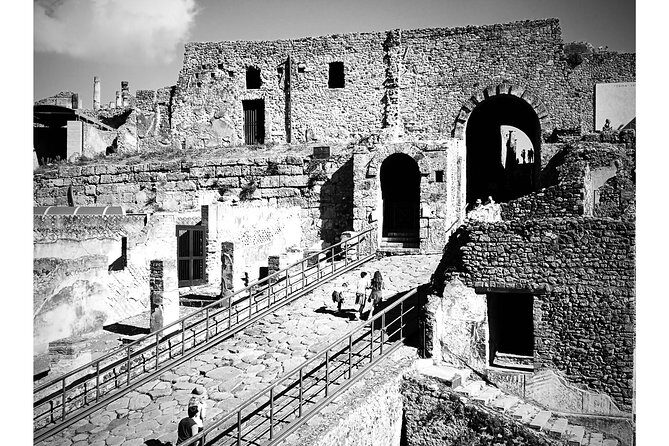
Right after entering the area, you hit a set of points that help you understand Pompeii’s structure. One quick stop is the Hotel Vittoria gate, described as providing access to the west of the city and noted as the most impressive among the seven gates.
These short “connector” stops might seem small—think five minutes rather than an hour—but they do real work. When you see a gate and understand which area it connects to, the rest of Pompeii makes more sense. You start spotting the logic in where the public buildings cluster and where everyday trade would have happened.
Next comes the Forum (Foro de Pompeya), around 15 minutes. This is the civil and public heart of the city: administration, justice, business management, and trade activity like markets, plus main citizen worship areas. It is the kind of space that helps you feel how the city functioned day to day.
Then you step into the Basilica area, about five minutes. The guide explains how that building served business and administration of justice, with access from the Forum through multiple entrances supported by tuff pillars. The key idea for you: this is not just Roman architecture. It is where decisions got made, commerce happened, and people gathered.
Thermopolium, Big Houses, and Baths: Everyday Life in Stops You Can See
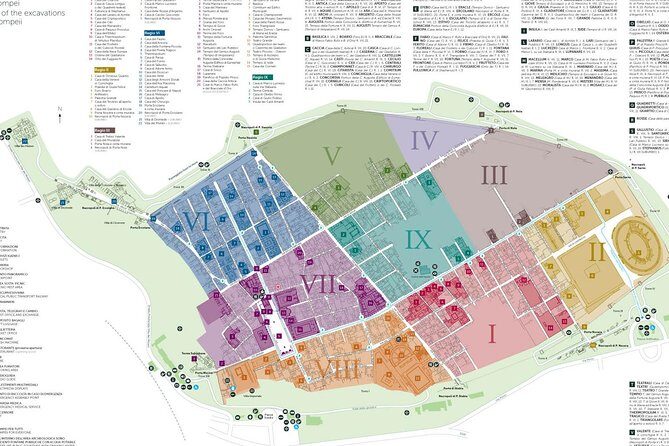
Pompeii gets even more interesting when you shift from public buildings to places tied to routines.
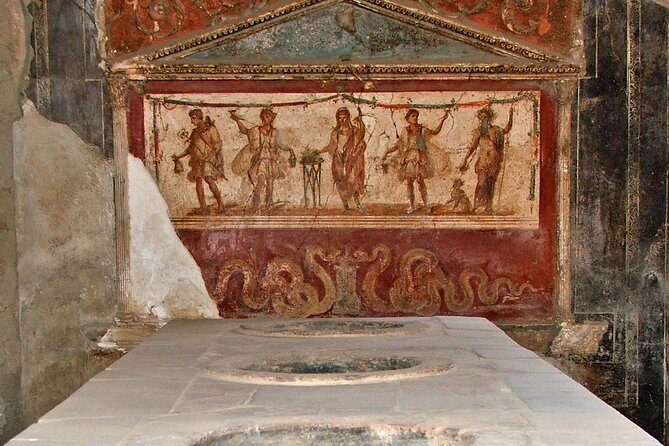
A Thermopolium (Thermopolium VI) is one of those. It is a small cook-shop where hot food was sold. Even though you only get about five minutes here, it makes a point. You see the city was not only temples and courts. It had street-level food culture too.
Then the tour moves into domestic life with two notable houses:
- Casa del Fauno (about 10 minutes): a large house covering an entire block, roughly 3,000 sqm, dating back to the 2nd century BC (based on original layout).
- Casa dei Vettii (about 10 minutes): one of Pompeii’s richest and best-known homes. It is associated with Priapus, and the schedule highlights the door-side symbolism tied to the owners Aulus Vettius Restitutus and Aulus Vettius Conviva, who became wealthy through trade.
Why I like these stops for first-timers: the homes give you scale. You see how wealth showed up in space, layout, and decoration. You also get a sense of how different lives could be in the same city—public crowds in the Forum, quick meals at a street shop, and then private wealth behind stone walls.
After that, you hit the Stabian Baths (Terme Stabiane) for about 10 minutes. This stop is great for understanding routine. The tour describes the pool area and the colonnade leading to men’s quarters, with stages from the apodyterium (dressing room) to the frigidarium, tepidarium, and calidarium. In other words, it is a whole sequence, not just a pool.
If you want one mental hook for Pompeii, use this: public life, private life, then communal leisure. Baths do that in a way you can picture quickly.
Lupanar, Theatre, and Amphitheatre: The Places That Feel Most Human
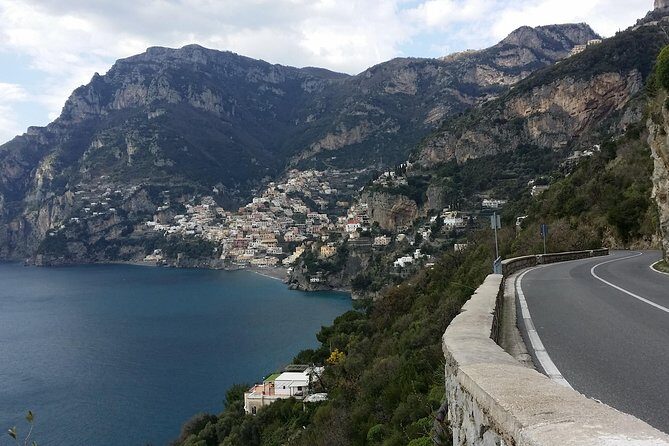
The tour does not dodge the more edgy parts of Pompeii. The Lupanar (brothel) is included for about 10 minutes. The description covers the two-floor layout, built-in beds, curtain-covered rooms, and a latrine at the end of a corridor. It even notes that erotic wall paintings informed customers about activity inside.
You might feel a bit uncomfortable here, and that is normal. But it also makes Pompeii feel less like a museum and more like a real city with real behavior. It is part of why this place hits hard: it shows the full range of human life under Roman rule.
Then you shift to entertainment:
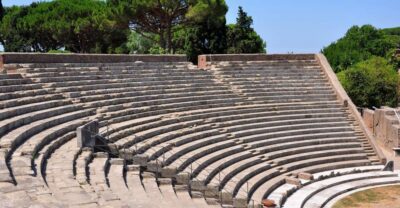
- Teatro Grande (about 10 minutes): built using the hill’s slope, with auditorium areas and corridors.
- Anfiteatro Romano (about 10 minutes): described as the oldest known Roman amphitheatre, built around 70 BC.
These stops help balance the day. You get public drama in the theatre and spectacle in the amphitheatre. Even with short time windows, the structures are distinct enough that your brain registers them fast.
One more practical point: wear shoes you can walk in for hours, even if each stop is “only” 5 to 15 minutes. Pompeii is flat in places, but you still walk a lot of ground overall.





Positano: Church Dome Tiles, Marina Grande Beach Time
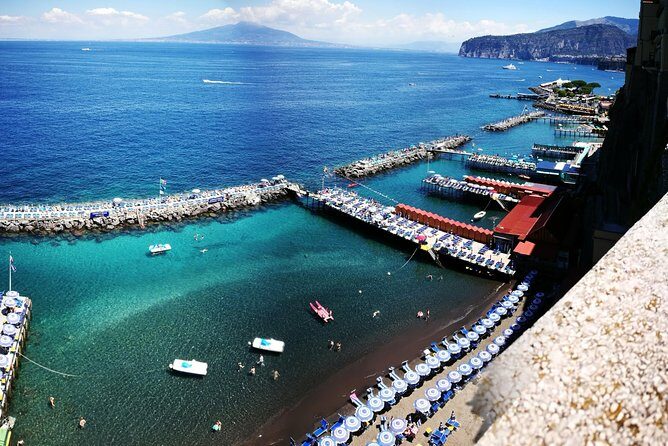
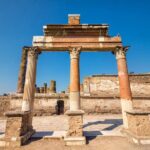
After Pompeii, the tour switches gears to the Amalfi Coast. Positano is scheduled for about 1 hour 20 minutes, plus extra short stops.
You pass by the Chiesa di Santa Maria Assunta for about 10 minutes, noted for its majolica-tiled dome and a thirteenth-century Byzantine icon of a black Madonna. Even if you only step in briefly, the dome is the kind of landmark that helps you orient yourself visually in Positano.
Then you get around 20 minutes at Spiaggia di Positano Marina Grande, the main beach. Twenty minutes sounds short, but on this coast, that window often feels like the right amount: enough time to see the water and take a few photos without burning your whole afternoon waiting around.
The most important thing to know about Positano time is what it really is: a sightseeing pause with a view-first attitude. If you want beach hours, you will want a separate plan. For a day trip that already includes Pompeii, this is a sensible trade.
Also, the drive along the coast can be twisty. In the write-ups, I saw mention that this could bother people who get car sick, so if that is you, pack something and ask your driver for seating advice.
Sorrento: Piazza Tasso and Via San Cesareo Shopping Stroll
Next comes Sorrento, scheduled for about 1 hour 40 minutes at Piazza Tasso, plus about 20 minutes for Via San Cesareo shopping.
Piazza Tasso is a practical stop: it is lively, easy to find, and it gives you a chance to stretch your legs in town rather than only looking at ruins. Via San Cesareo is your shopping and wandering corridor, so it works well for picking up small gifts or snacks.
One thing I like about this day’s design is that it lets you shift from ancient stone to modern street life. In Sorrento, you can browse without a strict checklist. That freedom matters when you have already spent the morning walking Roman streets.
If you are planning your own lunch, aim to work with the timing you have. Guides in the write-ups suggested port-side lunches after Pompeii, and the logic is solid: you are already in coast country, you will feel better after lunch, and you avoid the problem of trying to eat during the most time-stressed part of the day.
Price and Value: What $181.41 Covers, and What Costs Extra
At $181.41 per person, you are paying for a private day that includes pickup and round-trip transport from the Sorrento-area (and nearby meeting points), plus a driver, bottled water, and a mobile ticket. The tour also notes group discounts, though you are still only with your own party.
The one extra cost to budget for is Pompeii admission, listed at €18 per person. Everything else in the stop list is marked as free in the schedule.
Also, here is the big value question for you: do you want the ruins guide? The tour states that a professional guide at the ruins is included if the option is selected. In the write-ups, the guide experience often sounded like the difference between seeing ruins and understanding them. So if you want context as you walk, pick the guided option.
One more value point: private doesn’t just mean comfort. It often means efficiency. A guide who can adjust the flow in the moment helps you get better use of your limited time windows.
For whom this is a strong match: couples, families, and small groups who want a single-day highlight plan without driving themselves through traffic and narrow roads. If you are traveling solo and want the most control with less waiting, it still fits, just expect the cost to be higher than group tours.
Who Should Book This Tour (and Who Might Want Something Else)
This is a great pick if you want:
- Pompeii highlights without dedicating an entire day inside the archaeological park
- Real coastal views plus town time in Positano and Sorrento
- A private vehicle with pickup and drop-off that removes stress
I’d be slightly cautious if:
- You hate being on a tight schedule. The tour includes many stops, each with a short window.
- You want long beach time in Positano. The beach window here is brief by design.
If you get carsick, plan for curvy roads. If you have mobility limits, you should ask ahead how close the vehicle can get to your exact pickup spot, since the tour notes that pickup can shift to a car-accessible location when streets are not reachable.
Should You Book This Private Pompeii + Amalfi Coast Day?
If you want a one-day plan that hits Pompeii first, then uses the coast for scenic and town breaks, I think you should book it. The structure makes sense: Pompeii gets the guided focus, then the coast adds contrast, and Sorrento gives you an easy place to wander.
I would book especially if you care about context in Pompeii and want the private pickup. Just budget for the Pompeii ticket, wear good walking shoes, and treat Positano and Sorrento as tasting portions, not full stays.
FAQ
Is this a private tour?
Yes. It is listed as a private tour/activity, so only your group participates.
How long is the tour?
The duration is listed as about 8 to 9 hours.
What is included in the price?
Included items are private tour, pickup from the region’s hotels/ports/train station/airport areas (as applicable), bottled water, a driver, and a professional guide at the ruins if you select that option.
What is not included?
Food and drinks are not included, and the Pompeii Archaeological Park entrance ticket is not included (listed at €18.00 per person).
Do I need to bring an entry ticket for Pompeii?
Yes. Pompeii Archaeological Park admission is listed as not included, so you should plan to purchase that ticket separately.
Do you pick up from hotels and from cruise ships?
Pickup is offered from hotels and also for cruise docking in the Naples area, Salerno & Amalfi coast area, and Sorrento’s area. You need to provide cruise details such as ship name and docking/disembarkation/re-boarding times.
What happens if weather is poor?
This experience requires good weather. If it is canceled due to poor weather, you will be offered a different date or a full refund.