REVIEW · POMPEII
Pompeii Skip-the-Line Tour for Kids & Families with Archaelogist
Book on Viator →Operated by Tours of Pompeii with Lello & Co. · Bookable on Viator
Pompeii can feel huge for kids.
This family-focused tour keeps things moving, using a kid-friendly guide and a smart route through the ruins, with the Roman story told in a way younger minds can follow. I like that you get skip-the-line tickets so you lose less vacation time at the gate, and I really like the kids-first approach—the guide adapts the pace and the explanations to your children’s ages and interests.
One thing to consider: Pompeii is still uneven stone and hot sun. The tour calls for moderate physical fitness, and the schedule is tight at about 2 hours, so it’s less for families who want long wandering and lots of stops for photos.
In This Review
- Key highlights that make this tour worth a spot
- Pompeii with kids: why this tour format works
- Entering Pompeii fast: the meeting point and first momentum
- Stop 1: Teatro areas, acoustic tricks, and the Forum street life
- Stop 2: Guided time inside the Archaeological Park
- Stop 3: The Stabian Baths (Terme Stabiane) and Roman daily rhythm
- Stop 4: Teatro Grande and the fun of how theatres worked
- Stop 5: Casa del Menandro and why one house can teach a lot
- Stop 6: Via dell’Abbondanza and Pompeii as a living street
- Price and value: what you’re really paying for
- Guides that make or break a family day
- Heat, pacing, and what to bring for an easier day
- Who this tour is best for
- Should you book this Pompeii Skip-the-Line family tour?
Key highlights that make this tour worth a spot
- Family-ready storytelling: kid-focused explanations that still cover the big Roman ideas adults care about.
- Fast-track entry built in: you’re not stuck in a slow queue at the entrance.
- Iconic sites in a short loop: Teatro Grande, Stabian Baths, Casa del Menandro, Forum area, and Via dell’Abbondanza.
- Hands-on style activities: scavenger-hunt style challenges and team-based moments can turn ruins into a game.
- Guides who handle the harder moments carefully: you can expect a gentler approach suited to children’s comfort levels.
- Heat management gets attention: the best guides build shade and water breaks into the route.
Pompeii with kids: why this tour format works
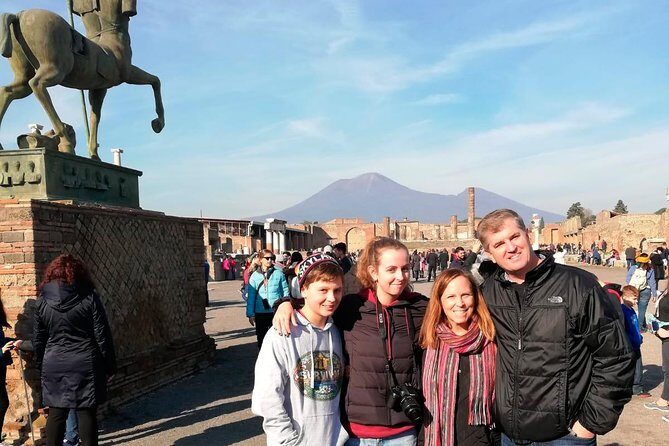
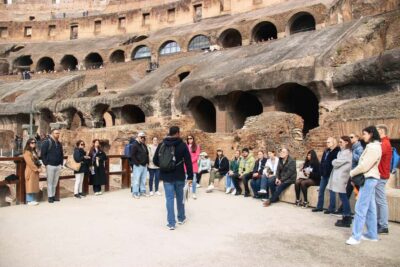
Pompeii is a superstar site, but it can also be… tiring. You walk past stone walls that once held real lives, and kids often ask the same question every five minutes: why should I care? This tour answers that with a guide who talks to children like real people, not like silent museum props.
The biggest advantage is time. The tour runs about 2 hours, and it’s designed to hit major “wow” spots without dragging. That matters in Pompeii, where crowds and heat can turn a great day sour fast. Getting skip-the-line tickets also helps you start strong, before the energy drops.
I also like that it’s private for your group. That usually means fewer interruptions, fewer stressed kids, and more chances for your child to ask questions without waiting for a microphone and a crowd.
You can also read our reviews of more tours and experiences in Pompeii

Entering Pompeii fast: the meeting point and first momentum
You start at Hotel Vittoria Piazzа Esedra, 80045 Pompei NA, Italy, and the tour ends back at the same meeting point. The location is near public transportation, which is helpful if you’re using buses or trains during your Naples-area stay.
The practical win here is simple: you should aim to arrive a little early, then let the guide do the hard part—getting you set up and moving. Since you’ll have a mobile ticket and fast-track entry, you’ll spend less time sorting paperwork and more time seeing the ruins.
If you can choose your start time, go earlier in the day. You’ll usually find less crowd pressure and less peak heat, which keeps kids happier through Teatro stairs, bath-house corridors, and open-air streets.
Stop 1: Teatro areas, acoustic tricks, and the Forum street life
Stop 1 is the “get the story rolling” part, starting with the main theatre area and then widening into Pompeii’s public life. This is where the guide uses theatrics—sometimes literally—to make Roman buildings feel alive.
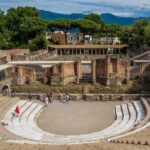
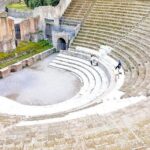
You’ll get a look toward Teatro Grande, and you’ll also hear about the acoustic perfection associated with the nearby Teatro Piccolo. For kids, acoustics are a cheat code. It’s not just sight-seeing. It’s a sensory hook, which helps children remember what they saw a minute ago.
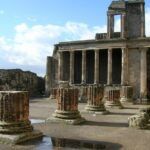
From there, the tour shifts into domestic and city highlights, including Casa del Menandro, and then continues along key areas like the principal commercial street and the Forum—Pompeii’s main square with markets. That market-and-street context is a big value for families: kids see these places not as random ruins, but as where people ate, shopped, argued, and planned.
Potential drawback: because this portion is fast-paced, very shy kids might take a few minutes to warm up. If your child needs extra time, tell the guide early. A good family guide can slow down just enough to make questions feel safe.
Stop 2: Guided time inside the Archaeological Park
After you’ve set the scene, you get a focused guided segment in the Archaeological Park of Pompeii. The point isn’t to cover every corner. The point is to help kids make sense of what they’re looking at—how a city layout worked, how daily life was organized, and why Pompeii’s ruins still tell stories.
This is also the part of the tour where a kids-first approach really shows. Instead of treating the park like a long list of sights, the guide typically turns landmarks into clues: what a room suggests, what a street implies about movement and trade, and what a public building signaled to citizens.
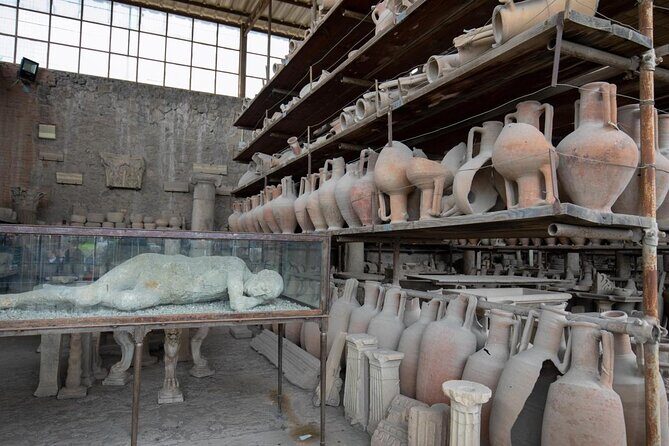
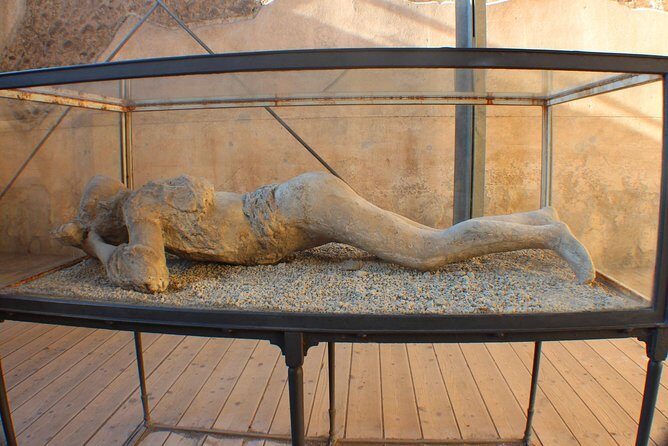
What to watch for: Pompeii contains moments that some families find emotionally tough, such as plaster-cast scenes. The tour is explicitly framed for kids, and many guides adjust how they approach sensitive content. Still, if your child is likely to be uncomfortable, ask the guide about what can be skipped or handled more gently.
Stop 3: The Stabian Baths (Terme Stabiane) and Roman daily rhythm
Stop 3 takes you into the Stabian Baths (Terme Stabiane). Baths are a smart choice for families because they’re instantly understandable. People showered, exercised, socialized, and relaxed. A bath complex is basically a Roman version of a community hub—without the Wi-Fi.
In a family tour, this kind of site works because it invites questions that don’t require heavy background reading. Kids can point out spaces and ask how people used them. Adults get context too: baths reveal social patterns, architecture, and the Roman obsession with routines.
Possible drawback: bath areas can feel darker and more enclosed than open streets. If you have a kid who hates narrow corridors or dim rooms, bring that up. A good guide can pace you and choose the moments that stay engaging.

Stop 4: Teatro Grande and the fun of how theatres worked
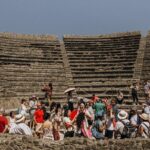
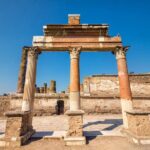
Stop 4 is Teatro Grande, with the guide spotlighting the theatre as a place for community experience. This is where Pompeii’s Roman culture becomes tangible. The theatre wasn’t just for performances—it was a public gathering space that shaped civic identity.
If the guide uses the same style as the best family-led Pompeii tours, you’ll get explanations that connect the theatre to real human behavior: waiting, reacting, and sharing a spectacle. For kids, theatre is always a winner because it’s already part of their world. They get to imagine the audience, the mood, and the drama.
One tip for your family: let kids do the acting during breaks. Ask them to point out where the performers stood and where the audience sat. It turns a seated viewing into active learning.
Stop 5: Casa del Menandro and why one house can teach a lot
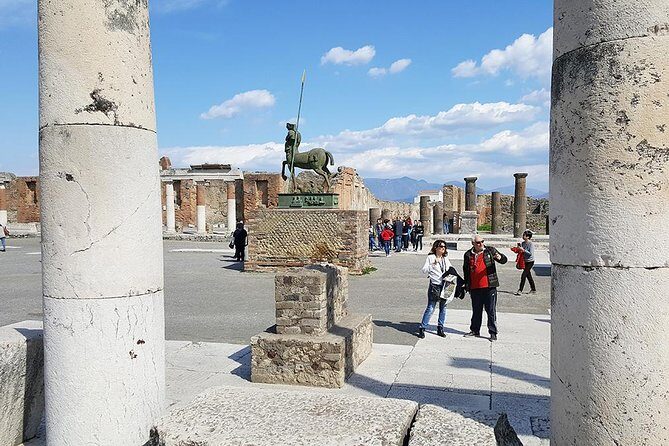
Stop 5 is Casa del Menandro, and this is one of the most rewarding stops for families who want more than “big rocks in a field.” Pompeii’s houses show what daily life looked like—rooms, decoration choices, and how families moved through space.
This home is especially famous for the richness of its decorations, and the tour frames it as a standout example for why Pompeii matters. For kids, a house visit can be tricky if it turns into a long lecture. The value here is that the guide presents home life as story: who did what, what the rooms suggest, and how style and status appeared in everyday choices.
Possible drawback: homes can also feel visually busy. If you have a child who gets overwhelmed easily, ask the guide to focus on just one or two rooms or details, then wrap up. The tour is short, so you’ll likely still see the highlights.
Stop 6: Via dell’Abbondanza and Pompeii as a living street
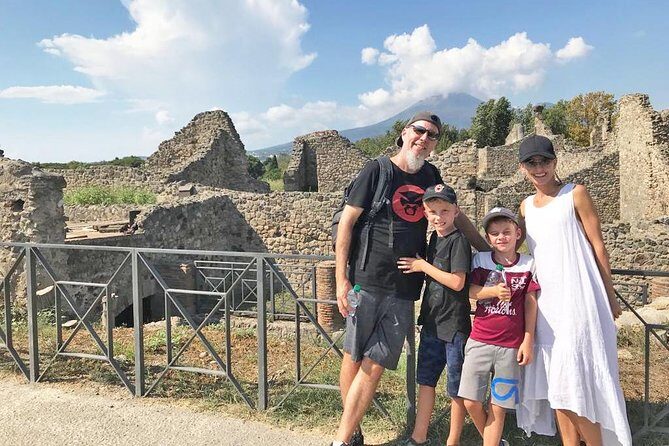
Stop 6 moves you along Via dell’Abbondanza, the famous street of commerce. This is where Pompeii stops being a set of buildings and becomes a real city grid in your head.
Walking a main street gives kids an immediate sense of scale and purpose. It’s easier to understand trade when you’re literally moving through the route that shoppers and workers used. Adults also appreciate the “how cities function” angle—streets weren’t random. They shaped movement, commerce, and social life.
This final stop is also a great moment to connect the dots from earlier pieces: theatre as community, baths as social routine, houses as private life, and the Forum as civic center.
Price and value: what you’re really paying for
At $107.63 per person for roughly 2 hours, this isn’t a bargain-basement ticket. But it isn’t just another tour with a generic guide, either.
You’re paying for three high-value ingredients:
- Fast-track entry that saves time and frustration at the entrance.
- A kids-friendly guide who can keep attention and translate Roman life into something children can grasp.
- A route that hits key Pompeii moments without turning the day into a long slog in heat and crowds.
If you’re traveling as a family, those points add up. Kids don’t just need information. They need momentum—something to do, something to watch, and frequent story payoffs. Many guides on this route use game-like engagement such as scavenger-hunt style challenges or team-based moments. That’s not fluff. It’s what makes the difference between watching kids fidget for two hours and having them actually care.
So yes, it costs more than wandering on your own. But for many families, it’s a better use of limited vacation stamina.
Guides that make or break a family day
The guide experience is the real reason this tour gets such strong results. Different names come up again and again, including Lello, Marina, Claira, Roberta, Ines, and Clelia. The pattern across them is what you want for Pompeii with kids: clear storytelling, humor, and patience.
Some guides bring tools that help kids visualize what they can’t see. One example from the field is using an iPad to show clips of what Pompeii looked like or how events unfolded. That sort of support works well because kids can connect the physical ruins to an imagined scene.
Small details also matter. A few family tours include little gestures like small gifts for kids, which sounds minor, but it reinforces that the experience is meant for children, not just adults who tolerate kids.
What you should do before you go: if your child has specific needs—short attention span, sensitivity to darker topics, or lots of questions—tell the guide at the start. A private, customized setup is designed for that.
Heat, pacing, and what to bring for an easier day
Pompeii’s layout means there’s limited shade at many points. One of the recurring strengths of family-style guides is that they look for shady spots and keep kids comfortable, including encouraging water. Still, don’t rely only on luck.
Bring:
- Water for everyone
- Sun protection (hat and sunscreen)
- Comfortable shoes for stone paths
- A small snack if your kids tend to get cranky mid-tour
If you’re going in peak summer, choose the earliest entry time you can. It’s one of the simplest ways to improve the whole day—less crowd pressure, less overheating, and better patience.
Who this tour is best for
This is a strong fit if you want:
- A family-friendly, guided Pompeii visit that keeps kids engaged
- A short, focused route that hits major highlights
- A guide who can handle different ages in the same group
It also works well for mixed groups—kids plus grandparents—because the explanations can land on multiple levels. Kids get the story and the challenge. Adults get context about Roman life, architecture, and excavation ideas.
If your kids are old enough to enjoy bigger concepts, the Roman setting becomes a history lesson with jokes and visuals. If your kids are young, the tour can still work thanks to interaction and pacing.
Should you book this Pompeii Skip-the-Line family tour?
If you’re bringing kids to Pompeii, I think this tour is the kind of choice that protects your vacation mood. You spend less time in line, you cover the most important sites in about two hours, and you have a guide who can keep the story moving for children.
You might skip it if you already have a flexible, low-stress plan and you’re happy wandering slowly on your own. Also, if your group wants full freedom to linger in every corner, a timed route may feel a bit structured.
For most families, the decision is easy: if you want Pompeii highlights without the grind, this is a smart way to do it—especially with kids in tow.