REVIEW · POMPEI CAMPANIA
Pompeii Skip the Line Ticket + Guide Book with itineraries
Book on GetYourGuide →Operated by VISITING CAMPANIA S.R.L. · Bookable on GetYourGuide
Pompeii hits fast, even before you enter. This setup gives you skip-the-line entrance plus a guide book with timed itineraries, so you can see the big moments without needing to herd your schedule. The best part is that you get to choose your pace instead of being pushed from stop to stop.
I especially like that the book comes with an updated map and shows you the places that matter most, from frescoed houses to the Roman amphitheater. I also like the flexibility: you can enter anytime during 9:00 am to 5:00 pm and spend as much time as you want with the parts that grab you.
One caution: reviews suggest the skip-the-line benefit may be limited at the start. You may still queue for security checks (bag scan), so it is not magic, but it can still help once you are past that point.
In This Review
- Key points before you go
- A Skip-the-Line Ticket That Still Needs Security First
- Meeting at Piazza Anfiteatro: How to Start Without Confusion
- Your Guide Book Itineraries: Two, Four, or Six Hours of Real Choice
- The 2-hour plan (best for first-timers who want the core)
- The 4-hour plan (my favorite length for balance)
- The 6-hour plan (best if you like details)
- What You’ll See Inside Pompeii: From Streets and Wall Paintings to the Amphitheater
- Frescoed houses and everyday living spaces
- Spas and temples: public life made visible
- Shops and the thermopolis (fast food of the time)
- Theaters and brothels: entertainment and taboo
- The casts of victims: the stop that changes the mood
- The Roman amphitheater: one of the best-preserved stages
- Timing Tips That Actually Help: When Pompeii Feels Quieter
- Practical Stuff That Determines Your Comfort: Walking, Shade, and Facilities
- Price and Value: Is $41 Worth It?
- Who This Is Best For
- Should You Book This Pompeii Ticket + Guide Book?
- FAQ
- What is included with the Pompeii ticket?
- Is this a guided tour with a person leading you?
- Where do I enter Pompeii?
- Where do I meet staff?
- How long can I visit?
- What should I bring?
- Are food and drinks included?
- Is the skip-the-line ticket guaranteed to remove all waiting?
- Does the ticket include a guide book in multiple languages?
Key points before you go
- Skip-the-line ticket for faster entry after security screening
- Guide book + updated map with 2, 4, or 6-hour itineraries
- Self-paced visit from 9:00 am to 5:00 pm, no set tour pace
- Big Pompeii essentials included in the routes: houses, baths, temples, shops, theaters, brothels, and casts
- Timing matters: arriving earlier helps, and it can feel quieter after 4:30 pm
A Skip-the-Line Ticket That Still Needs Security First
Let’s set expectations clearly. A skip-the-line ticket is designed to get you in faster through the main entrance process. In practice, you may still hit a queue for security bag scanning. That is normal at major archaeological sites, and it is also why you should not assume you will be instantly through the turnstiles the moment you arrive.
Where this option tends to help is once you are through security. After that, the ticket experience is typically straightforward: you scan your barcode and pass through the entry area at a reasonable speed. If your goal is to maximize daylight in a large site, even a partial time-saving effect is valuable at Pompeii, where it is easy to burn hours just walking without a plan.
The other thing I like is that you are not locked into one specific route with one specific group. If you want to spend extra time near the casts of the eruption victims or linger over wall paintings, you can. If you decide you want to see the amphitheater sooner, you can adjust.
You can also read our reviews of more tours and experiences in Pompei Campania


Meeting at Piazza Anfiteatro: How to Start Without Confusion
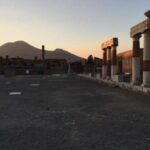
Your entrance point is clearly defined: Piazza Anfiteatro. Once you arrive, you will meet staff at the information point at Via Roma 123, Pompei. The practical trick is this: keep your voucher handy, because you will show it to staff for easy access to the Pompeii Archaeological Park.
That matters because Pompeii is big, and you do not want to waste your first 20 minutes hunting for the right gate or standing around while your preferred start time slips away. If you are visiting on your own, a firm meeting/entry reference like this is a real quality-of-life improvement.
Also note the provider: VISITING CAMPANIA S.R.L. That can help if you ever need to confirm details with the operator on the day.
Your Guide Book Itineraries: Two, Four, or Six Hours of Real Choice
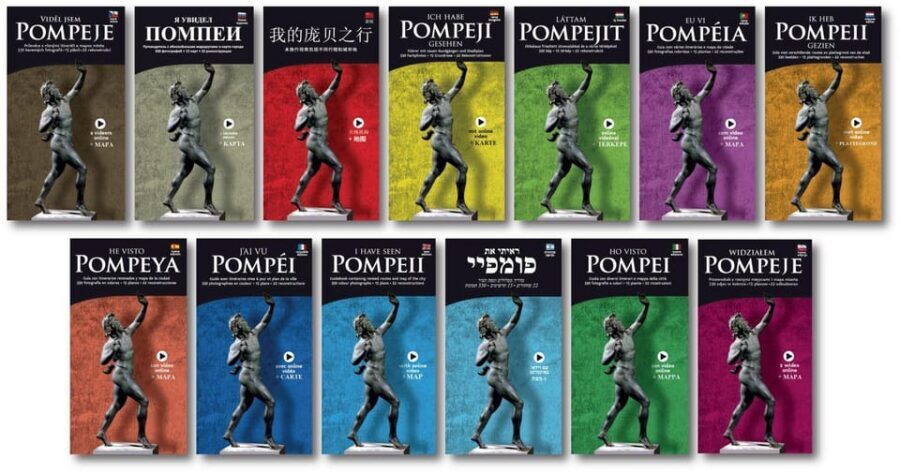
This experience is not a live narrated tour. What you get is a guide book plus an updated map, with itineraries designed for 2, 4, or 6 hours. One book is provided for every two reservations, so if you are traveling as a pair, you should both be able to reference the same guide.
Why this works well: Pompeii rewards curiosity, but only if you can steer your attention. Without guidance, it is easy to wander into the site’s smaller streets and miss the most meaningful areas. With an itinerary, you can hit the highlights while still having freedom to slow down.
The 2-hour plan (best for first-timers who want the core)
In a short visit, you will usually focus on the headline Pompeii moments. The book’s routes point you toward the most recognizable stops, including places like the Roman amphitheater and other key public areas (think theaters and major gathering spaces). This is a solid choice if you are also visiting another area around Naples or if you simply want a fast, high-impact experience.
A drawback of going short: you will feel the distance between clusters of ruins. Pompeii is not built for quick in-and-out. If you pick the 2-hour route, plan your energy, wear sturdy shoes, and keep your expectations realistic about how much ground you can cover.
The 4-hour plan (my favorite length for balance)
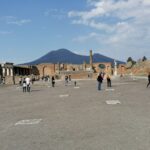
Four hours is where this self-guided style shines. You can follow the route for the big sights, then add time where something grabs you—like frescoed houses, spas, or the thermopolis, the ancient street-side counter where people grabbed fast food (yes, Pompeii had its own version of quick stops).
Four hours also gives you room to slow down for the most emotionally intense section: the casts of victims from the eruption. Those stop points are easier to handle when you are not rushing.
You can also read our reviews of more guided tours in Pompei Campania



The 6-hour plan (best if you like details)
Six hours lets you read, look longer, and keep returning to areas that catch your eye. The book’s itinerary will still guide you toward key zones, but you are more likely to notice smaller things: workshop/shop fronts, street layouts, and the rhythm of daily life suggested by public buildings.
If you are the type who enjoys comparing different kinds of spaces—public vs. private, work vs. worship—this longer choice tends to feel more satisfying.
What You’ll See Inside Pompeii: From Streets and Wall Paintings to the Amphitheater
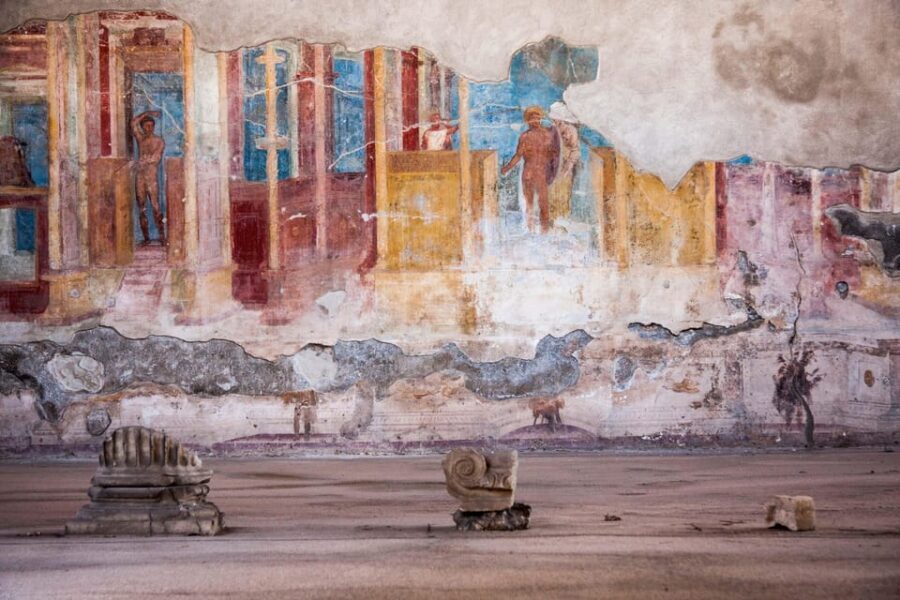
Pompeii is a whole city in ruins, and this guidebook style helps you catch more of it. Here are the main categories included in what the book routes you toward, and what they mean for your visit.
Frescoed houses and everyday living spaces
You will walk through millenary streets and see frescoed houses that show how people decorated private spaces. Even if you are not a history nerd, these homes tend to make the city feel human. Look for wall art and layout cues; they help you understand that Pompeii was not only temples and theaters—it was also bedrooms, dining rooms, and daily routines.
Tradeoff: if you only have 2 hours, these detailed areas can become a blur. The map and route help, but your pace still matters.
Spas and temples: public life made visible
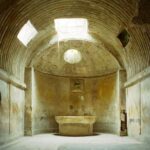
The spas and temples are part of what makes Pompeii more than a collection of buildings. Spas explain social habits: people gathered, bathed, and talked. Temples show beliefs and how communities organized themselves.
If you like architecture, you will find these stops especially useful. They also make good rest points because you can orient your mind around how different parts of the city function.
Shops and the thermopolis (fast food of the time)
The inclusion of shops and Thermopolis is a smart move for a self-guided visit. Instead of only seeing civic monuments, you get a glimpse into consumption and daily errands. Thermopolis sites are fascinating because they make the past feel ordinary—like street life, but with Roman ingredients.
Theaters and brothels: entertainment and taboo
Pompeii was not polite in the way modern tourist imagination sometimes prefers. You can visit theaters and also areas associated with brothels. If you are curious about how ancient Romans organized entertainment and social life, this part of the route gives you context that many first-time visitors would otherwise miss.
Sensitivity note: the subject matter is adult, so if that would bother you, just know it is part of the site’s catalog of what survived and what can be interpreted through excavations.
The casts of victims: the stop that changes the mood
The casts of the victims of the eruption are the emotional center of Pompeii for many people. In a self-paced format, you control how long you stay. I like that because you can handle it your way: brief and respectful, or longer and reflective—without feeling like someone is counting down to the next room.
The Roman amphitheater: one of the best-preserved stages
One highlight is one of the best-preserved Roman amphitheaters. This is the place where you can start to picture crowds. The scale helps you understand why entertainment mattered and why public events were a big deal.
If you get tired walking, this is a stop worth prioritizing. It gives you a strong visual payoff without requiring you to interpret too much on the spot.
Timing Tips That Actually Help: When Pompeii Feels Quieter
Pompeii can be crowded, but there is a pattern that helps. One review pointed out that the site can feel much quieter after 4:30 pm.
That is not just about fewer people—it also changes how you perceive the ruins. Late in the day, the light can flatter stone and fresco remnants, and you get more room to study details. If you can, choose an entry time that gives you both at least a couple hours before late afternoon and the option to finish the day when it calms down.
Also, because you can enter between 9:00 am and 5:00 pm, you have room to react. If you arrive and feel overwhelmed, you can still redirect your day using the guidebook itineraries and stick to a calmer section rather than pushing through peak congestion everywhere.
Practical Stuff That Determines Your Comfort: Walking, Shade, and Facilities
Pompeii is famous, but the ground truth is simple: you walk a lot. One review mentioned the site is massive and can be a long walk if you are unsure where to go. That is exactly why the updated map and the timed routes matter. Still, you should plan your comfort like you would for a long hike.
Bring:
- Comfortable shoes (non-negotiable)
- Water
- Sun hat
- Comfortable clothes
One more practical tip from a review: you might want clearer info on where facilities like toilets and cafes are. Since that detail is not guaranteed in the materials you are carrying, it is smart to check around on arrival and orient early. If you know where those basics are, you waste less time later.
Finally, think about how you will pace rest. Pompeii is easier when you treat the day as stops plus walking, not walking plus stops.
Price and Value: Is $41 Worth It?
At $41 per person for a 1-day entry with a guide book and updated map, the value depends on one key question: do you want to self-navigate with structure?
If your answer is yes, this can be good value. You are getting:
- Pompeii entrance ticket
- A guide book with itineraries for 2, 4, or 6 hours
- Updated map
- A way to choose how much time you spend at each highlight
Where it might feel less worth it: if you were hoping for a guaranteed, no-queue experience from the moment you arrive. Reviews suggest you may still queue for security bag scanning, and at least one person felt the time saved was limited because they still had to retrieve tickets and then queue at the entrance. If the day is packed, that can narrow the practical benefit.
Still, even with those caveats, a guide book can pay off quickly. Pompeii is not intuitive to navigate by intuition alone, and the itineraries give you momentum so you see more of what you came for.
Who This Is Best For
This setup fits best if you:
- Want control over your pace
- Like using a guide book and map rather than following a group
- Have limited time but still want Pompeii’s core highlights
- Prefer flexibility to spend extra moments at casts, houses, or public spaces
It may not be ideal if you:
- Want a fully guided, narrative experience with a person speaking throughout
- Expect the skip-the-line ticket to eliminate all waiting
- Are sensitive to walking and uneven terrain (the data here only confirms you should wear comfortable shoes, not mobility features)
Should You Book This Pompeii Ticket + Guide Book?
My take: it is a smart booking for many people because it gives you structure without locking you into a group pace. The combination of a skip-the-line ticket (with the realistic security caveat), plus a map and itineraries for different time blocks, is exactly the kind of value that helps you enjoy Pompeii instead of just surviving it.
If you are short on time, pick the 2-hour route and go straight for the amphitheater and the emotional anchors like the casts. If you can spare half a day, 4 hours is the sweet spot for balancing big sights with breathing room. And if you love details, 6 hours lets you read, look, and repeat.
If you think the phrase skip the line means no waiting at all, adjust your expectations. Plan to arrive with shoes on, water in hand, and a simple plan for where you want to be late afternoon, when Pompeii can feel calmer.
FAQ
What is included with the Pompeii ticket?
You get a Pompeii entrance ticket, a guide book (one book for every two reservations), an updated map, and itineraries for 2, 4, or 6 hours.
Is this a guided tour with a person leading you?
The experience is self-paced. The materials include a guide book and map. A guide is listed as not included.
Where do I enter Pompeii?
You enter through the Pompeii Archaeological Park entrance at Piazza Anfiteatro.
Where do I meet staff?
You meet staff at the information point located at Via Roma 123, Pompei. Show your voucher to the staff for easy access.
How long can I visit?
This is valid for 1 day. You can enter the site from 9:00 am until 5:00 pm.
What should I bring?
Bring a passport or ID card, comfortable shoes, a sun hat, water, and comfortable clothes.
Are food and drinks included?
No. Food and drinks are not included.
Is the skip-the-line ticket guaranteed to remove all waiting?
It is described as a skip-the-line ticket, but you may still need to go through security screening like bag scanning before entry.
Does the ticket include a guide book in multiple languages?
Yes. The guide book is available in 13 languages, and the listed instructor languages include English, Italian, Spanish, and French.