REVIEW · POMPEI CAMPANIA
Pompeii Guided Tour with Archaeologist
Book on GetYourGuide →Operated by Max travel · Bookable on GetYourGuide
Pompeii hits harder when you’re moving fast. This 2-hour Pompeii guided tour with a regional archaeologist gets you from the main gate at Porta Marina Superiore to the key sights—like the forum, suburban baths, and plaster casts—while your guide explains what you’re actually looking at. I love the skip-the-line flow and the small group setup (max 16) that keeps the experience efficient and easy to follow.
There is one timing thing to know. Between meeting up, getting the radioline gear, and settling in, you may lose a chunk of the “2 hours,” so show up a few minutes early and be ready to walk.
Once you’re inside, the guide ties everything together: daily life in Pompeii’s ruins and what the Vesuvius eruption in 79 A.D. changed. After the tour, you can stay in the ruins as long as you want and ask for practical recommendations for what to see next.
In This Review
- Key things that make this Pompeii tour worth your time
- Porta Marina Superiore: a calmer way to start Pompeii
- A focused 2-hour walk that targets the heart of the ruins
- Forum time: seeing the city’s public center with guidance
- Suburban baths: why this stop feels practical, not just scenic
- Plaster casts: getting meaning from what you see
- The 79 A.D. eruption story: Vesuvius explained in a human way
- Small group touring (up to 16): you get real interaction
- What’s included in the $64 price—and where the value really comes from
- Where you can go after: staying inside Pompeii on your terms
- Who this Pompeii archaeologist tour is best for
- Should you book this Pompeii guided tour?
- FAQ
- How long is the Pompeii guided tour with an archaeologist?
- Where do I meet the guide?
- What is included in the $64 per person price?
- Is the Villa of the Mysteries included?
- How big is the group?
- What languages is the live guide available in?
- Can I keep exploring after the guided part ends?
Key things that make this Pompeii tour worth your time

- Skip the long queue at the main entrance with an express security check
- Regional archaeologist guide for 2 hours plus clear explanations as you walk
- Small group size (max 16) so the tour doesn’t feel crowded or rushed
- Stops at the forum, suburban baths, and plaster casts—the most memorable areas
- Focused scope (you’re not doing everything in the park, and that’s part of the value)
- You can keep exploring after the tour with guide tips on what to prioritize
Porta Marina Superiore: a calmer way to start Pompeii
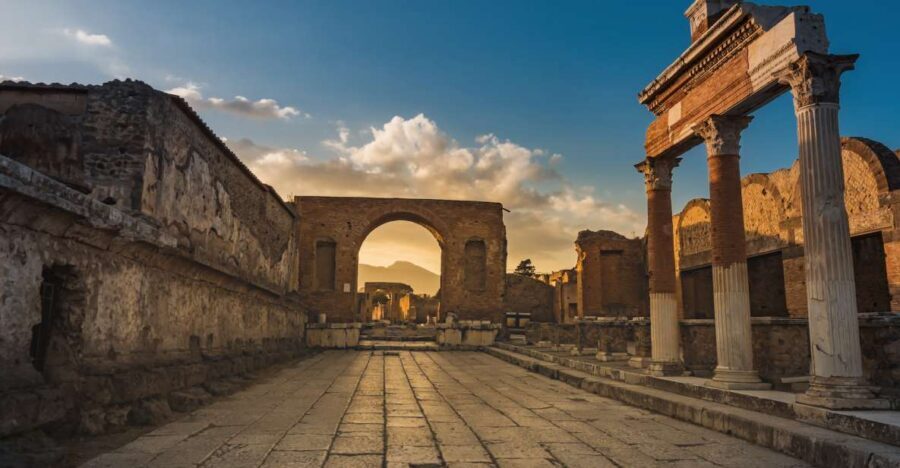
The best part of Pompeii tours is not the big speech once you’re already deep inside. It’s the start—because the ruins are popular and logistics can steal your energy.
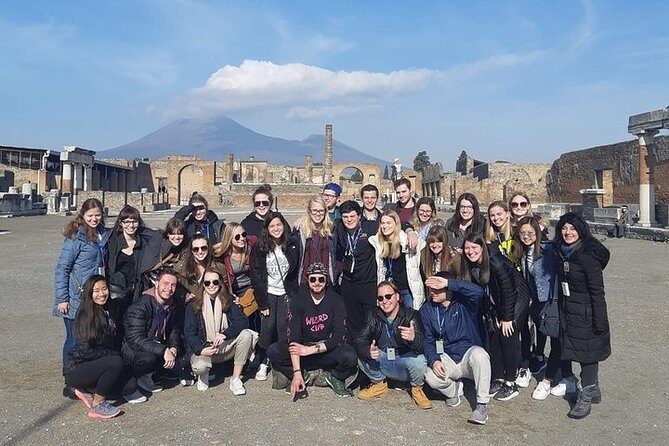
This experience meets at the main entrance called Porta Marina Superiore. You’re meant to look for the guide holding the company sign, then move through an express security check to cut down the long queue at the gate. Translation: you spend less time shuffling with everyone else and more time actually seeing the city.
I also like that the tour is designed to be easy to follow right from the start. Instead of being handed a map and told good luck, you’re guided toward the most suggestive places. That matters in Pompeii, where it’s easy to get oriented—then get lost in the scale.
One small practical caution: there’s a chance of confusion if you’re not at the exact meeting entrance. The information you have should keep you grounded—Porta Marina Superiore main entrance, guide with the company sign. If you arrive and feel like you’re in the wrong place, pause and re-check before you wander.
You can also read our reviews of more guided tours in Pompei Campania


A focused 2-hour walk that targets the heart of the ruins
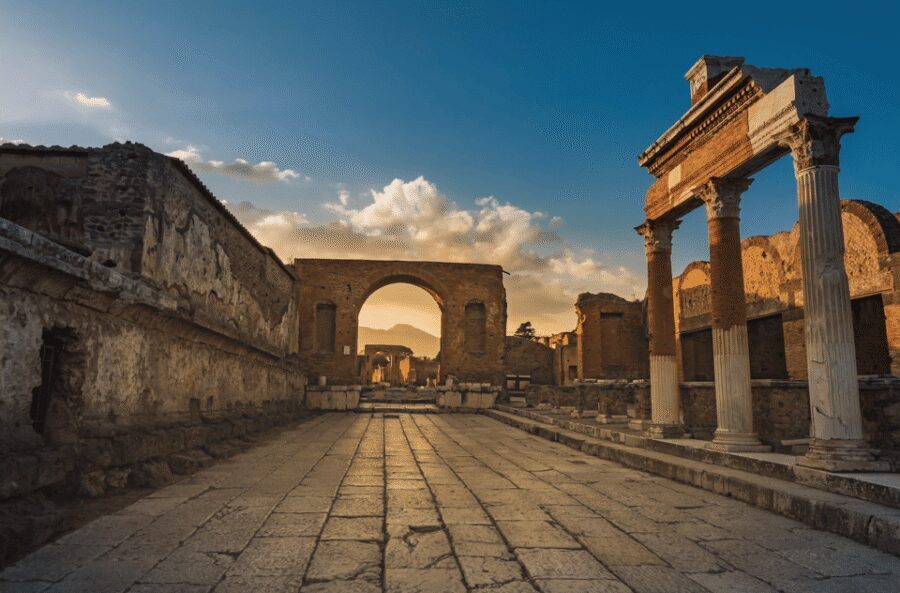
Pompeii is huge. Trying to “cover it all” in a single visit is a common trap. This tour takes a smarter approach: it’s built around the main places, for a set duration of 2 hours, shared in a group of up to 16 people.
That short, targeted format is a real advantage. You get a concentrated story of the city—how daily life worked and what you’re seeing—without turning your day into a nonstop marathon.
Expect to move through several key areas, rather than staying in one spot for a long lecture. The payoff is momentum: you’ll keep connecting objects and spaces as you go, and your guide’s explanations will help you make sense of what might otherwise feel like scattered ruins.
Is the timing perfect? Not always. One booking note pointed out that the “2 hours” can effectively start later than you’d hope due to the time taken for meeting and distributing radiolines. That doesn’t ruin the tour, but it does mean your best move is simple: arrive early, keep water handy, and mentally plan for a guided block that may feel slightly less than 120 minutes once everything starts.
Forum time: seeing the city’s public center with guidance
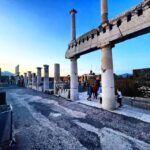
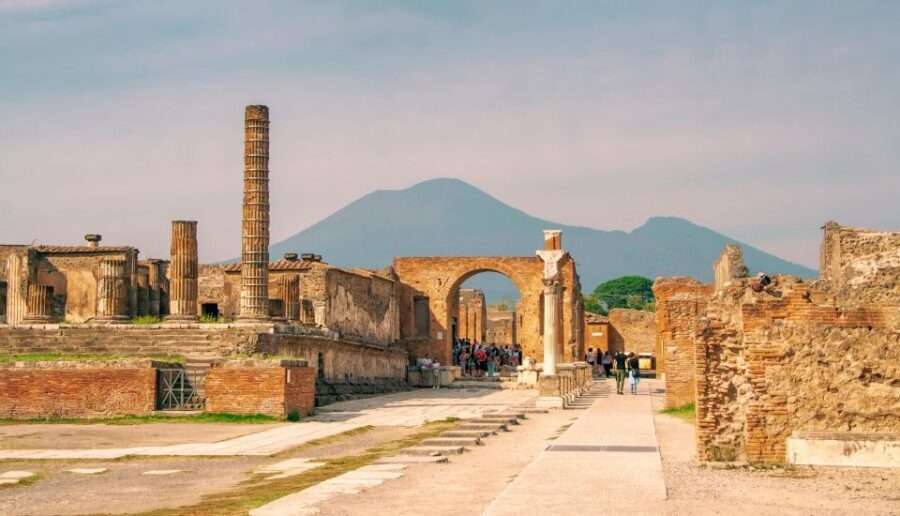
One of the tour highlights is the forum. Even if you’ve never read a word about Pompeii, your guide’s job is to connect the forum to everyday life in the city—so you’re not just walking past stones.
This is where a good archaeologist-style explanation earns its keep. A guided stop like this helps you understand why the forum matters in the overall layout, and how people would have used public space as part of regular life. Instead of guessing, you get a framework that makes everything else easier to interpret.
The best way to get value at stops like the forum is to listen for how your guide links spaces to routines. When you hear the guide connect place to daily behavior, you’ll start noticing details you might otherwise miss—like how different sections of the city feel designed for movement, gathering, and interaction.
If you’re the kind of traveler who gets restless with long stops, don’t worry. The tour keeps you moving between sites. You won’t feel stuck, but you’ll still get enough context to remember what you saw.
Suburban baths: why this stop feels practical, not just scenic
Next up: the suburban baths. This is a terrific choice for a guided format because it’s the kind of place that tells you a lot about routine—how people spent time, what spaces served everyday needs, and how city life worked beyond the most dramatic monuments.
Again, the key benefit isn’t that baths look impressive on a postcard. It’s that your guide turns the ruins into a readable experience. You’ll walk through the ruins with explanations that help you understand the function of what you’re seeing.
And since the tour is in a small group (up to 16), you’re less likely to feel like you’re watching from the back of a crowd. You can actually track what the guide is pointing out, and you can ask questions when something doesn’t click.
One more practical reason this stop works: it breaks up the emotional intensity. Pompeii can feel like it’s asking you to stare at tragedy and scale. Baths keep the day grounded, reminding you this was a functioning city before 79 A.D.
Plaster casts: getting meaning from what you see
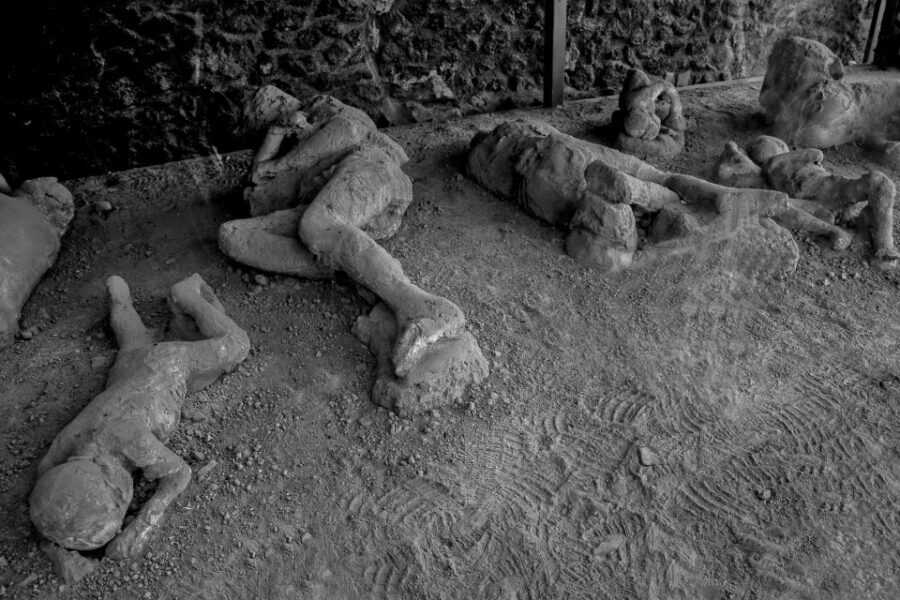
The tour also includes the plaster casts. This is usually the moment when Pompeii stops being “ruins you’ve heard about” and becomes personal—because you’re facing remains that connect to real people.
The guide explanations matter here. Without context, plaster casts can feel like a museum display you just rush past. With a guide, you’re guided to understand how to look at what’s in front of you and how it fits into the bigger story of the eruption.
This stop is also ideal for small-group touring. You can absorb the scene at a human pace instead of being pulled along by a large bus load. If you’re traveling with anyone who likes asking questions, this is the sort of area where a live archaeologist guide can handle curiosity without rushing you.
It’s also worth noting a practical reality: this tour is designed as a “main highlights” route. You’ll see plaster casts, but you won’t be doing an all-day museum-style marathon. That balance is part of what makes the guided format feel efficient.




The 79 A.D. eruption story: Vesuvius explained in a human way
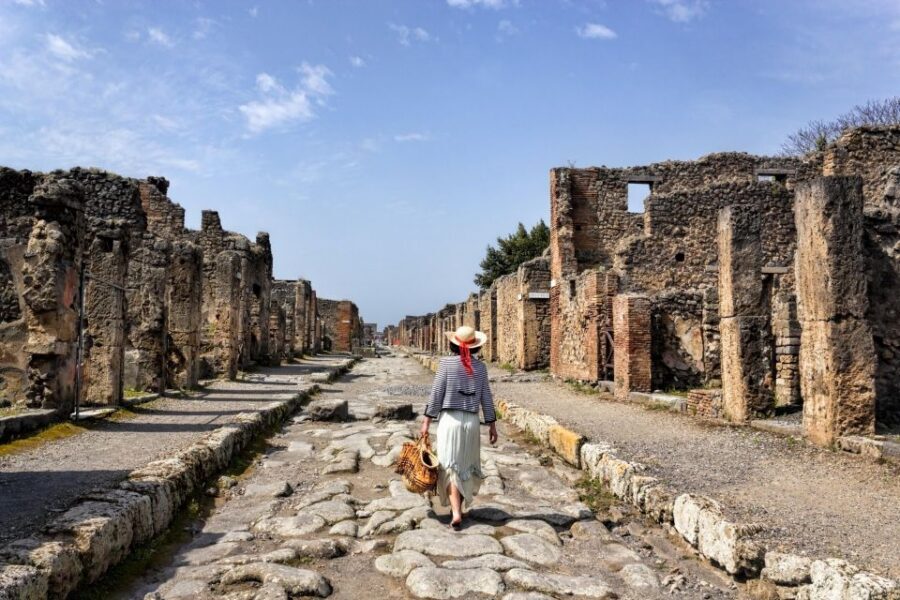
Your guide doesn’t just point at ruins. You’ll learn about the eruption of Vesuvius in 79 A.D., with the story woven into what you’re seeing across the stops.
That matters because Pompeii isn’t just architecture. It’s a city frozen in time. When you understand what caused the city’s sudden stop, you start reading the ruins differently. You’re not just looking at rooms—you’re looking at evidence.
On this tour, that context is delivered while you’re walking through central spaces. So you’re not stuck with a facts-only lecture. Instead, you’re building a mental timeline that helps the ruins make sense.
If you’ve visited historical sites before, you might know the pattern: you get dates first, then you walk through empty rooms. This tour flips that. You’re moving through the city’s layout and daily-use spaces, then your guide connects it to what happened in 79 A.D.
Small group touring (up to 16): you get real interaction
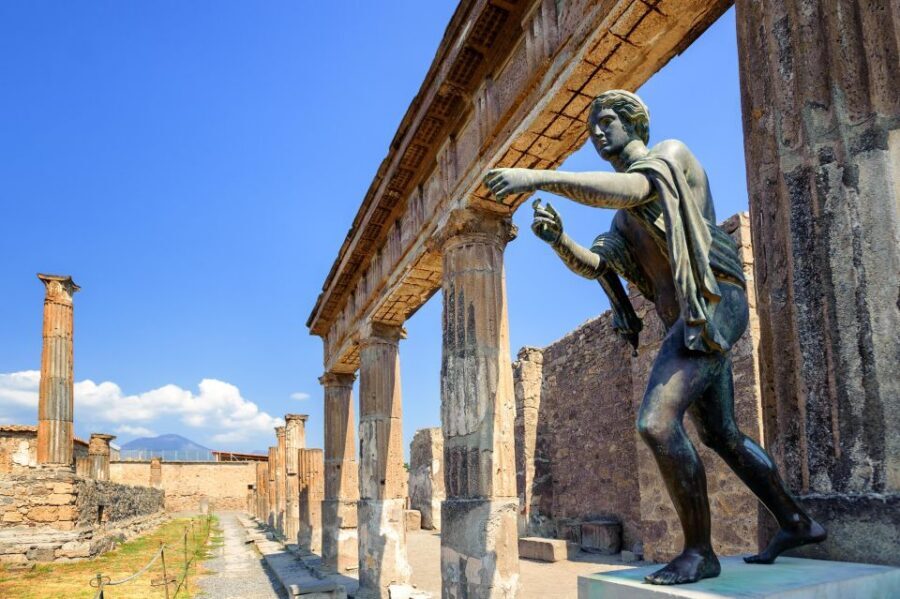
A max group size of 16 is a big deal in Pompeii. Larger crowds tend to flatten the tour into a race: point, walk, photo, repeat.
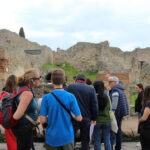
Here, the small group structure supports a different feel. You get live, on-the-spot explanations from the regional archaeologist, and there’s room to follow along at an actual human pace.
Language support is also part of the experience. The tour is offered in English and Italian with a live guide. One detailed note described the guide switching between Italian and English smoothly without making anyone feel awkward—exactly what you want if you’re traveling with friends or family who speak different languages.
You might also notice the tour uses radiolines. That’s there so you can hear clearly while walking. It’s a plus for comprehension, especially if the group is moving through areas with natural noise. The only downside: it can add a small start-up delay, as mentioned earlier, so arrive early enough that you don’t feel rushed during setup.
What’s included in the $64 price—and where the value really comes from
The price is $64 per person for a 2-hour guided tour with a regional archaeologist. It also includes your entry daily ticket.
So you’re not paying for a guide-only experience where you still have to sort out admission. You’re paying for a combined package: ticket + interpretation + priority line handling. That priority matters because the main entrance queue can be a time sink.
Is $64 expensive? It depends on your style. If you’re the type who enjoys wandering with a map, you might prefer to DIY and spend less. But if you want the ruins to “talk back” to you—daily life, what places meant, and the eruption story—a guided route compresses years of context into two hours.
Also, the tour is focused. It covers roughly the main highlights rather than the full archaeological park. That’s not a negative if your goal is to leave Pompeii with a clear understanding of the core areas, then explore further on your own.
One clear “not included” item: the Villa of the Mysteries is excluded from this tour. So if that’s a top must-see for you, plan to add it separately after (or before) your guided time.
Where you can go after: staying inside Pompeii on your terms
One smart perk is that after the tour, you can stay inside the ruins as long as you want. Then you can ask your guide for recommendations on other important places to visit in the surrounding area.
This is how I like to travel: get your bearings with a guide, then switch into “you time.” After your structured stops—forum, baths, plaster casts—you’ll be better prepared to navigate the rest.
If you’re aiming to visit more than the essentials, ask your guide what to prioritize next based on your interests. Since Villa of the Mysteries isn’t part of this tour, that’s often the kind of follow-up conversation that helps you plan the rest of your day.
Who this Pompeii archaeologist tour is best for
This is a strong match for:
- First-timers who want the main sites without wasting half their morning in lines
- People who learn better by hearing explanations while walking
- Anyone traveling in a small group that wants structure but not chaos
- Travelers who want a short guided experience and then the freedom to explore on their own
It may be less ideal if:
- You’re hoping to see everything in the park during one guide-led session
- Villa of the Mysteries is your single top priority and you don’t want to add anything else
Should you book this Pompeii guided tour?
If you want a high-value way to see the most important parts of Pompeii with a real archaeologist leading the story, this one is an easy yes. The combination of skip-the-line entry, a 2-hour focused route, and a small group (max 16) makes it a practical choice for a place as big as Pompeii.
Book it if you like guided context while you’re walking—especially for understanding Pompeii’s daily life and the Vesuvius eruption in 79 A.D. Just factor in the reality of start-up time at the beginning (meeting plus radioline setup), arrive early, and remember that the Villa of the Mysteries isn’t included, so you’ll need a separate plan for that stop.
FAQ
How long is the Pompeii guided tour with an archaeologist?
The tour lasts 2 hours.
Where do I meet the guide?
You meet at the main entrance of Pompeii’s ruins called Porta Marina Superiore.
What is included in the $64 per person price?
The price includes the entry daily ticket and a 2-hour guided tour with a regional archaeologist.
Is the Villa of the Mysteries included?
No, the Villa of the Mysteries is not included.
How big is the group?
It’s shared in a small group with a maximum of 16 people.
What languages is the live guide available in?
The tour guide is available in English and Italian.
Can I keep exploring after the guided part ends?
Yes. You can stay inside the ruins as long as you want after the tour, and you can ask your guide for recommendations for other nearby places to visit.