REVIEW · POMPEII
Pompeii 360° – 4-hour tour with an expert Guide in archaeology
Book on Viator →Operated by Guide Centre Sorrento · Bookable on Viator
Pompeii moves fast, in a good way. This Pompeii 360° tour strings together the big archaeological hits in about four hours, with an archaeology expert guide to connect what you’re seeing to how the city actually worked. You get a clear route through the park without losing time guessing where to stand or what to look for.
I also love that the stops are tightly chosen for variety: amphitheater, temples with Vesuvius views, forum life, major villas with mosaics, and even the Stabian Baths. That mix is what makes the ruins feel less like random stones. The only real consideration is logistics: the tour price does not include the €20 Pompeii park entrance ticket, so budget that on top.
In This Review
- Key things I’d pay attention to before you go
- Pompeii 360°: why a 4-hour guide tour makes sense
- Meeting at Piazza Esedra and handling the ticket reality
- The route that covers Pompeii’s core story
- Stop 1: Anfiteatro Romano (the oldest amphitheater angle)
- Stop 2: Orto dei Fuggiaschi and the story of survival
- Stop 3: Tempio di Giove Capitolino and the Vesuvius photo spot
- Stop 4: Foro de Pompeya (the city’s center of power)
- Stops 5 and 14: Casa del Fauno (scale first, then the famous art)
- Stop 6: Temple of Apollo (restoration + another Vesuvius viewpoint)
- Stop 7: Casa del Cinghiale (a quick mosaic hit near the Forum)
- Stop 8: Via dell’Abbondanza (shopping street reality)
- Stop 9: Odeon and Teatro Piccolo (marble floor detail)
- Stop 10: Stabian Baths (Roman leisure, gym, and recovery rooms)
- Stop 11: Casa dei Vettii (major frescoes and mosaics)
- Stop 12: Basilica (courthouse, not what the name suggests)
- Stop 13: Tempio di Venere (panoramic temple spot)
- Stop 15: Lupanar (optional house of pleasure stop)
- Stop 16: House of Venus in the Shell (garden + birth of Venus fresco)
- What I’d say about the guides (based on what stood out)
- The price: does $203.70 feel fair?
- Practical tips for your comfort and timing
- Should you book Pompeii 360°?
- FAQ
- How long is the Pompeii 360° tour?
- Is the Pompeii park entrance fee included?
- What’s included in the tour besides the guide?
- What language is the tour offered in?
- Where do we meet, and where does the tour end?
- Is this a private tour?
- What should I wear or bring?
- Can children or teens get into Pompeii for less?
- Can I cancel and get a refund?
- How far in advance is this tour usually booked?
Key things I’d pay attention to before you go
- Private tour, your group only: no fighting for space or tuning out half the guide.
- Expert archaeology focus: you’ll get context for temples, villas, and daily-life spots, not just place names.
- Lots of major sites packed into 4 hours: the route is designed so you see more than the first “greatest hits” sweep.
- Vesuvius viewpoints built in: you’ll hit the places designed for that scenic angle.
- You can include the Lupanar stop if you want: it’s optional, so you control the tone of the tour.
- Comfort matters: the schedule is stop-and-walk—plan for walking shoes and a steady pace.
Pompeii 360°: why a 4-hour guide tour makes sense
If Pompeii is on your list, you’ll quickly learn one thing: the site is huge, and you can’t casually absorb it. A four-hour guided plan is a practical sweet spot because it gives you both direction and momentum. Instead of wandering, you move through the park with an expert explaining what you’re actually looking at.
This tour leans into the part of Pompeii that beginners usually miss: the city’s mix of public life and private life. You’ll see civic spaces like the forum and basilica, then switch gears to homes and their art, then end up at places connected to health and leisure like the baths. That rhythm helps you understand Pompeii as a living city, not just a museum of ruins.
You can also read our reviews of more guided tours in Pompeii


Meeting at Piazza Esedra and handling the ticket reality
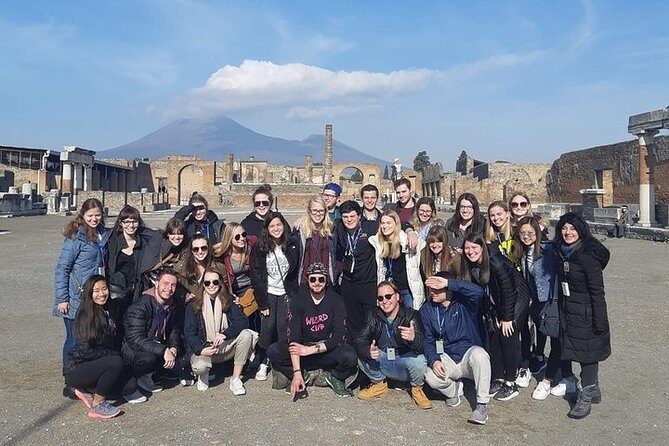
You start and end at Piazza Esedra (80045 Pompei NA). It’s a straightforward meeting point, and the tour keeps things simple by returning you back there at the end, though you can finish at the exit of Piazza Esedra if that’s easier for your schedule.
One detail you should not ignore: the €20 per-person Pompeii Archaeological Park ticket is not included. The tour includes admissions for each listed stop, but the park entrance fee is separate. If you’re doing budgeting, count that €20 as part of your true cost, and plan to keep your ticket info handy for the day.
The route that covers Pompeii’s core story
The itinerary is built like a guided walk-through of the city’s “big chapters.” You start at the oldest Roman amphitheater and then move through public, religious, and commercial areas before you transition into homes, art, and recreation. It’s the kind of structure that keeps you from getting lost in the weeds.
Also, the schedule is designed for flow: many stops are around 5 to 15 minutes, which means you’ll see the highlights without turning the day into a stamina test. If you’re the type who hates rushing, tell your guide early. This is a private tour, so it’s easier to adjust than on a mass group schedule.
Stop 1: Anfiteatro Romano (the oldest amphitheater angle)
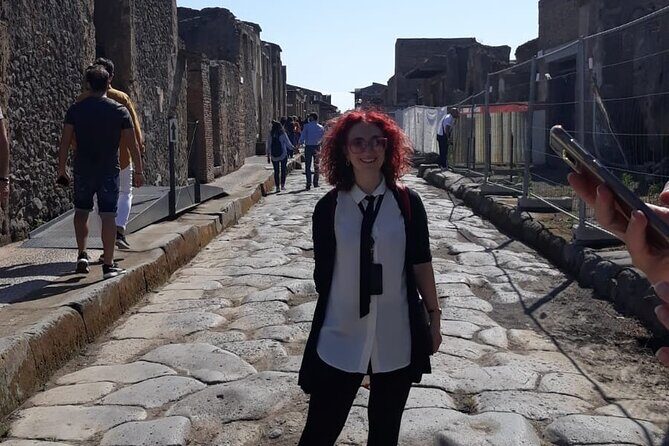
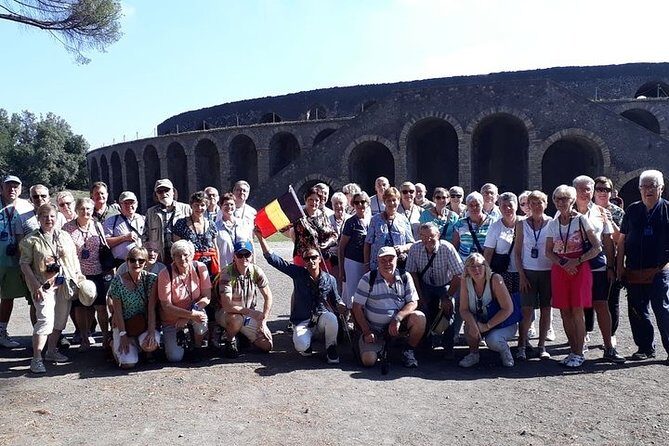
You begin at the Roman amphitheater, described as the oldest in the Roman world and noted for being very well preserved. Even if you’ve seen amphitheaters elsewhere, this one gives you a clear sense of how spectacles were part of daily life.
Practical tip: bring a phone camera mindset here. Amphitheaters are built to frame views and movement, so you’ll get better photos when you pause for composition rather than just shooting while walking.
Stop 2: Orto dei Fuggiaschi and the story of survival
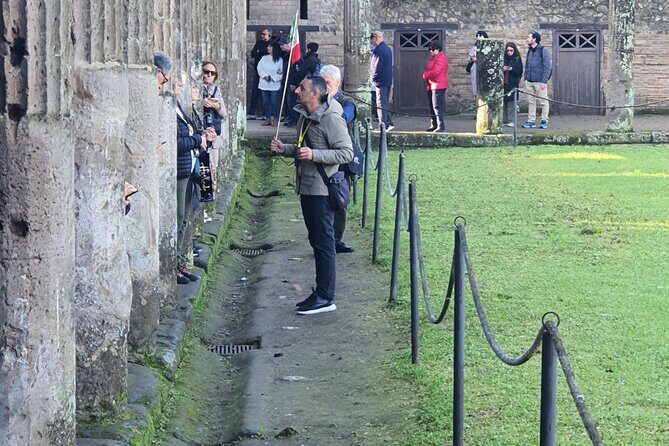
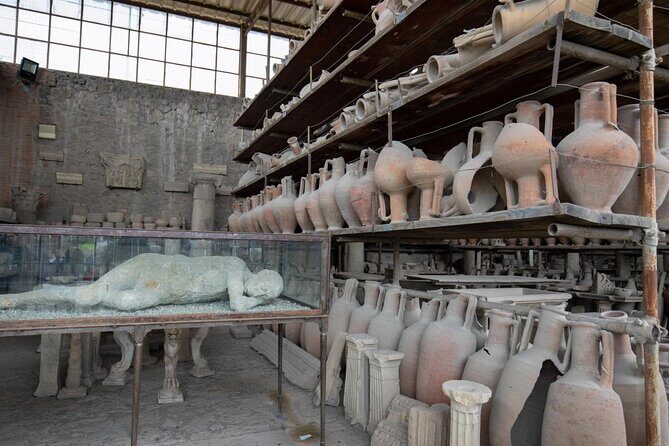
Next comes Orto dei Fuggiaschi, a garden area connected to people who hid during the eruption. What makes this stop memorable is the plaster casts you’ll be able to admire—an instantly moving reminder that Pompeii wasn’t just archaeology; it was real human panic and real human bodies.
This is the kind of stop where you’ll benefit from a guide who can explain what you’re seeing without turning it into gloom-only theater. It’s historical, but it’s also about the eruption’s human impact.

Stop 3: Tempio di Giove Capitolino and the Vesuvius photo spot
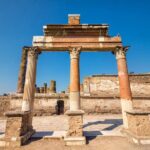
At Tempio di Giove Capitolino, the highlight is a view: it’s one of Pompeii’s famous vantage points with Mount Vesuvius in the background. The tour gives you a short, focused window here, so you can grab that postcard view and move on without spending half your time waiting for the light.
If you want great photos, aim for a quick plan: take one wider shot to include the temple and Vesuvius, then take one closer angle to show architectural detail. A guide’s timing helps here.
Stop 4: Foro de Pompeya (the city’s center of power)
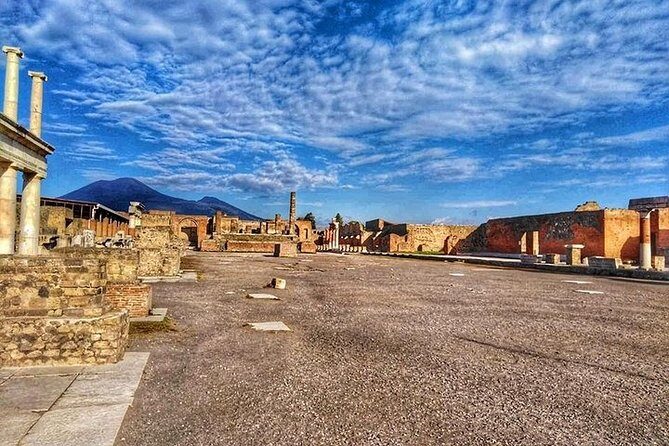
The Forum of Pompeii is where civic, religious, political, and economic life overlapped. That blend is why the forum matters. In a short time, you’ll get a sense of how people organized work, worship, and decisions in the same shared space.
This stop also includes a photo pause with Vesuvius behind. If you’re trying to understand Pompeii’s layout, the forum is your anchor point: once you “get” the center, everything else feels more connected.
Stops 5 and 14: Casa del Fauno (scale first, then the famous art)
You’ll encounter Casa del Fauno in two stages. First, you get the big picture: it’s described as Pompeii’s largest house, with gardens and multicolor mosaics. Then you return for the headline features—like the statue of the faun and the mosaic of Alexander the Great.
This two-step approach is smart. The first time, you learn the house as a place with rooms, gardens, and space. The second time, you focus on specific famous art. Together, it’s easier to appreciate why mosaics and statues weren’t decoration alone; they were identity and messaging.
If you’re a detail person, this is where you’ll slow down naturally. The mosaic of Alexander is one of those works that makes the scale of ancient craftsmanship hit you.
Stop 6: Temple of Apollo (restoration + another Vesuvius viewpoint)
The Temple of Apollo is one of the city’s more ancient religious sites, and it’s noted as having been restored not long ago. You also get another strong view toward Vesuvius, which makes this temple a good contrast to the earlier Jupiter vantage point.
Apollo is tied to the god of the sun, with the tour also noting the twin sister Diana tied to the moon. Even if you don’t care about mythology, the guide framing helps you connect the temple to how ancient people mapped the world with religion.
Stop 7: Casa del Cinghiale (a quick mosaic hit near the Forum)
The House of the Wildboar (Casa del Cinghiale) is a short stop, but it’s still worth it. You’re close to the Forum, and you’ll see a beautiful mosaic floor tied to that home.
Think of this as a palette cleanser after larger monuments. It reminds you that private art and private wealth sat right next to public life.
Stop 8: Via dell’Abbondanza (shopping street reality)
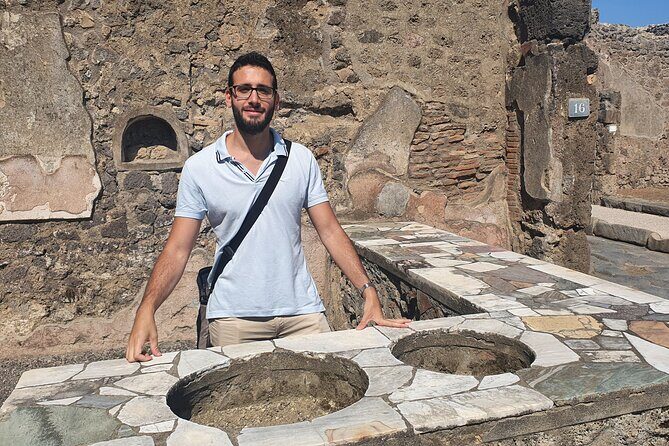
Next is Via dell’Abbondanza, the main commercial street. This is where Pompeii starts feeling less ceremonial. You’ll see shops, houses, and public fountains along the walking line.
This stop is also great for pacing yourself. You can take a breath, look up and down the street, and notice how the city’s everyday infrastructure supported trade and movement.
Stop 9: Odeon and Teatro Piccolo (marble floor detail)
You’ll visit the small theater (Odeon – Teatro Piccolo). The standout detail is the precious marble floor, plus the fact that this smaller venue was used for music and poetry.
Here’s the practical benefit of a guided stop: you’ll know what you’re looking at. Small theaters often look like architectural leftovers if you don’t get the function explained. With a guide, you start to see where performances fit into the social calendar.
Stop 10: Stabian Baths (Roman leisure, gym, and recovery rooms)
The Stabian Baths are a strong middle-of-the-tour payoff. You’ll see a typical Roman thermal bath complex, including a gym, swimming pool area, and rooms linked to sauna and massages.
This is one of the best spots to understand daily life. Baths were social, practical, and health-related. When you hear the guide connect the different rooms, it stops being “a building with tiles” and becomes a routine—exercise, relaxation, and conversation.
Stop 11: Casa dei Vettii (major frescoes and mosaics)
At Casa dei Vettii, the emphasis is preservation and art. The tour focuses on mythological frescoes and mosaics described as of estimable beauty, which makes this home a favorite kind of stop: a house where the art still reads well.
This is also where your “photo discipline” matters. Try not to burn your whole time photographing. Spend a minute orienting, then step back for one full-context shot, then come in for details.
Stop 12: Basilica (courthouse, not what the name suggests)
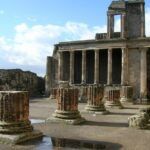
The Basilica is not a church-type religious building, even though the word sounds like it could be. It’s an ancient Roman courthouse, and the tour points you toward the building’s features and details.
This is useful because it teaches you to trust function, not labels. Pompeii has plenty of names that can trick you if you don’t have context.
Stop 13: Tempio di Venere (panoramic temple spot)
Temple of Venus is located in a panoramic spot. That means you’re getting another view moment built into the route. It’s also a good reminder that religion in Pompeii had visual staging—places where you could see and be seen.
If you’re planning your day around photos, Venus can be an easy win. Look for a spot where you can frame the temple and still see the distance.
Stop 15: Lupanar (optional house of pleasure stop)
The Lupanar is the one stop that comes with choice. The tour says you can visit at the customer’s discretion, and it’s connected with erotic frescoes.
This is exactly the kind of stop where private touring helps. You can opt in if it fits your interests, or skip it if you’d rather keep the tour family-friendly or more focused on architecture and art.
Stop 16: House of Venus in the Shell (garden + birth of Venus fresco)
You end with the House of Venus in the Shell, close to the amphitheater. The highlights here are the beautiful garden and a fresco representing the birth of Venus.
This ending is a nice emotional close. After temples and civic sites, you’re back to a private setting—again showing how art and domestic life were intertwined.
What I’d say about the guides (based on what stood out)
The strongest repeated theme is how guides bring the ruins to life with clear, practical explanations and a friendly, flexible approach. I saw multiple accounts of guides being professional and able to give insights you wouldn’t pick up on your own.
Specific guide names that popped up include Luciano, Eugenia, Annalise, Martina, and Ernesto. One thing I like about this kind of operation is that you’re not stuck with a rigid script: there are notes about flexibility, like meeting at a different entrance or tailoring what you focus on, and even helping families keep things educational without losing patience.
There’s also a good sign in the detail: guides are described as interactive and attentive to the group. If you’ve ever been on a tour where you feel like you’re being recited at, this seems like the opposite vibe—more two-way, more responsive, and more human.
The price: does $203.70 feel fair?
At $203.70 per person, the tour price sounds high until you break it down. First, you’re paying for a private archaeology-focused guide and a multi-stop route that includes admissions for many individual sites. Second, Pompeii itself is a pay-to-enter park, so that €20 entrance ticket still needs to be added for the full day.
For value, this tour makes the most sense if you want more than the basics. If you’re willing to pay for guidance—especially for mosaics, household art, and function-based explanations—this can be a solid deal. If you’re the type who enjoys wandering without structure, you might spend less on self-guided entry. But you’d likely miss the “why this matters” layer that makes Pompeii click.
Practical tips for your comfort and timing
You’ll want to show up ready for a walking day. The suggested dress code is simple: comfortable clothing and shoes, plus a hat and sunglasses for sun. Backpacks should be no larger than 30x30x15, which matters because security and crowd flow can be tight.
Also think about energy management. Since the tour is built from many short stops, you’ll be more comfortable if you hydrate early and keep your pacing steady.
Should you book Pompeii 360°?
I’d book it if you want Pompeii to feel understandable, not just impressive. The mix of amphitheater, forum center, villas with famous art, and baths gives you a rounded view of public and private life. It’s also a strong choice if you appreciate expert archaeology guidance and want someone who can help you read the site quickly.
I’d hesitate if you’re on a tight budget for Pompeii entrance fees, or if you strongly prefer long, unhurried self-guided browsing at a slower pace. This is a tour with stops and flow, not a “sit and linger for hours” plan.
If you’re balancing time, interest, and learning, Pompeii 360° is a very reasonable way to get the most out of a short visit.
FAQ
How long is the Pompeii 360° tour?
It lasts about 4 hours.
Is the Pompeii park entrance fee included?
No. The Archaeological Park of Pompeii entrance ticket costs €20 per person and is not included in the tour price.
What’s included in the tour besides the guide?
The tour includes a licensed archaeology expert guide, taxes, and private tour service. Admission tickets for each listed stop are included as part of the tour.
What language is the tour offered in?
The tour is offered in English.
Where do we meet, and where does the tour end?
The meeting point is Piazza Esedra, 80045 Pompei NA, Italy, and the tour ends at the same place. At the customer’s discretion, it can end at the exit of Piazza Esedra.
Is this a private tour?
Yes. Only your group participates.
What should I wear or bring?
Wear sunglasses, a hat, comfortable clothing, and comfortable shoes. Backpacks should not be larger than 30x30x15.
Can children or teens get into Pompeii for less?
Under 18 get a free ticket to the Archaeological Park of Pompeii. EU citizens aged 18 to 25 with valid ID get entry for €2 per person.
Can I cancel and get a refund?
Yes, free cancellation is offered. You can cancel up to 24 hours in advance of the experience start time for a full refund.
How far in advance is this tour usually booked?
On average, it’s booked 23 days in advance.