REVIEW · BORGHESE GALLERY TOURS
Rome: Galleria Borghese Museum Entry Ticket and Guided Tour
Book on GetYourGuide →Operated by TLight · Bookable on GetYourGuide
Two hours can feel like a museum marathon. This visit is interesting because Galleria Borghese is built to be experienced in sequence, and a guide helps you read what you’re seeing instead of just walking past it. I especially love the way the tour spotlights Caravaggio and Bernini, then ties that drama to the room-by-room ceiling and sculpture details. One drawback: the museum is big, so if you want to stop for long, slow staring, this 2-hour format will keep you moving.
The ticket includes a real guide and headsets, which matters here because you want clear explanations without shouting across a crowd. You’ll also get the most famous names in the collection, from Caravaggio’s dark intensity to Bernini’s high-drama sculptures like Apollo and Daphne. The other thing I like is that you’re guided through the “why,” not only the “what.”
Here’s my practical caution: you’ll need to travel light. Large bags and luggage aren’t allowed, so plan to bring only essentials—ID and whatever helps you stand comfortably for a while.
In This Review
- Key highlights worth centering
- Galleria Borghese: art that feels staged for your eyes
- Meeting at Piazzale Scipione Borghese and getting in calmly
- Caravaggio highlights: the collection’s dark spotlight
- Bernini on the move: Proserpine to Apollo and Daphne
- The Salone ceiling and room sequence you’ll actually notice
- How the 2 hours are paced (and what you might want to prioritize)
- Price and value: does $94 make sense for the Borghese?
- Who should book this guided entry?
- Should you book this Rome Galleria Borghese tour?
- FAQ
- How long is the Galleria Borghese guided tour?
- What is the price per person?
- Where is the meeting point?
- What’s included in the experience?
- What languages are available for the live guide?
- What’s not included?
- What do I need to bring, and is there anything I can’t bring?
- Is it accessible and does it run in rain?
Key highlights worth centering
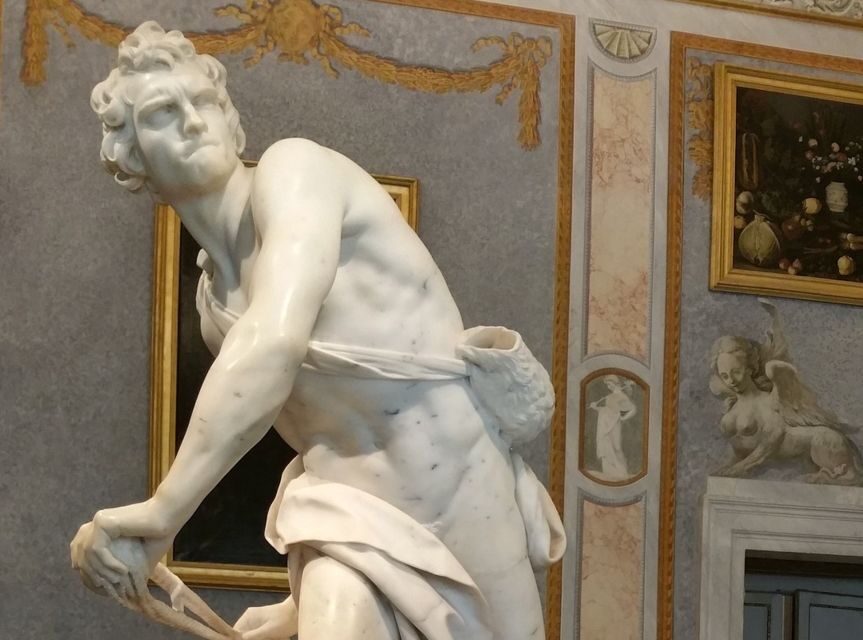
- Caravaggio hits include St John the Baptist, plus other major works in the collection like Sick Bacchus and Saint Jerome Writing.
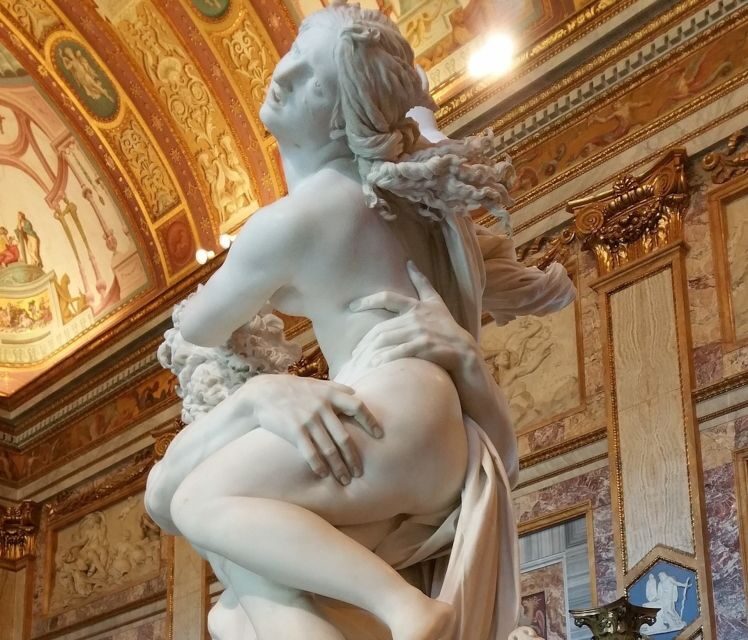
- Bernini in full motion: you’ll see Rape of Proserpine and Apollo and Daphne, the sort of sculptures that make you walk around them.
- The Salone ceiling fresco by Mariano Rossi uses foreshortening so well it feels almost three-dimensional.
- A room-by-room art “story”: from the Chamber of Ceres (Oedipus and the Sphinx) to scenes like the Fall of Phaeton.
- Clear listening with headsets in a museum setting where group explanations can otherwise get muffled.
Galleria Borghese: art that feels staged for your eyes
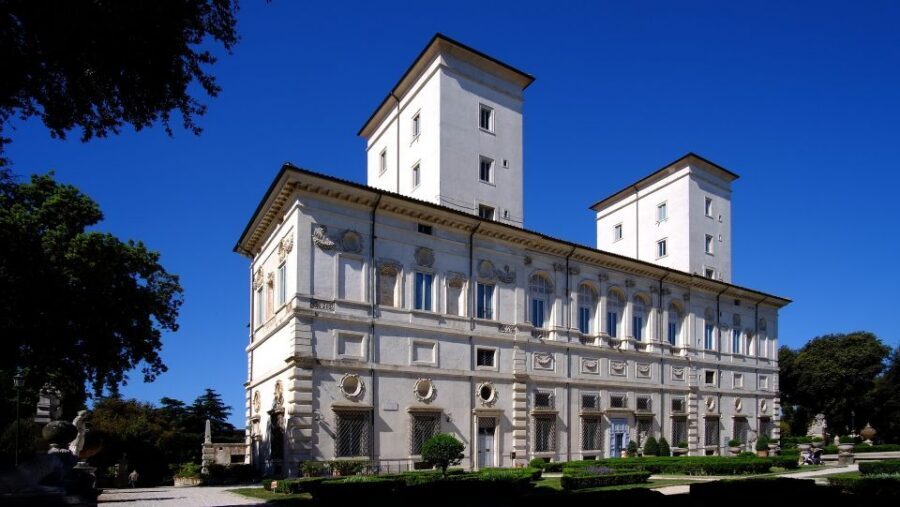
The Galleria Borghese works like a visual script. You’re not just touring a storage room of masterpieces. You’re moving through designed spaces where painting, sculpture, and even ceiling frescoes talk to each other.
Cardinal Scipione Borghese—Pope Paul V’s nephew—started this collection as a personal passion project, and it shows in the focus. You get a lot of Caravaggio and a huge chunk of Bernini’s work, especially the kinds of sculptures that scream Baroque emotion. That matters, because if you like one artist, you usually end up loving the other once you see how the mood shifts from paint to marble.
The gallery also does something clever with visual emphasis. One room’s fresco technique prepares your eyes for the next sculpture’s physical drama. For example, the Salone features a ceiling fresco by Mariano Rossi where the foreshortening trick is so convincing that it almost reads as depth rather than paint. That single detail trains you to “see in 3D,” and then the sculpture rooms feel even more alive.
If you’re the kind of person who likes to know what you’re looking at without turning the day into a homework assignment, this guided format is a smart choice.
You can also read our reviews of more tours and experiences in Rome



Meeting at Piazzale Scipione Borghese and getting in calmly
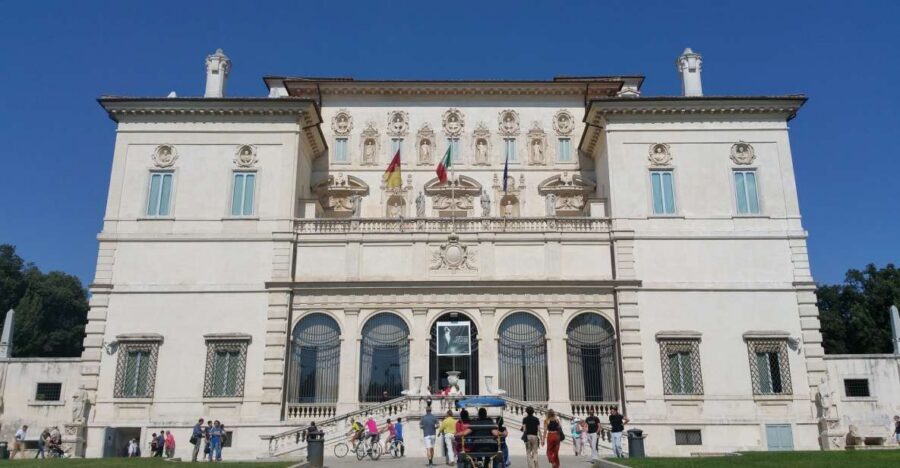
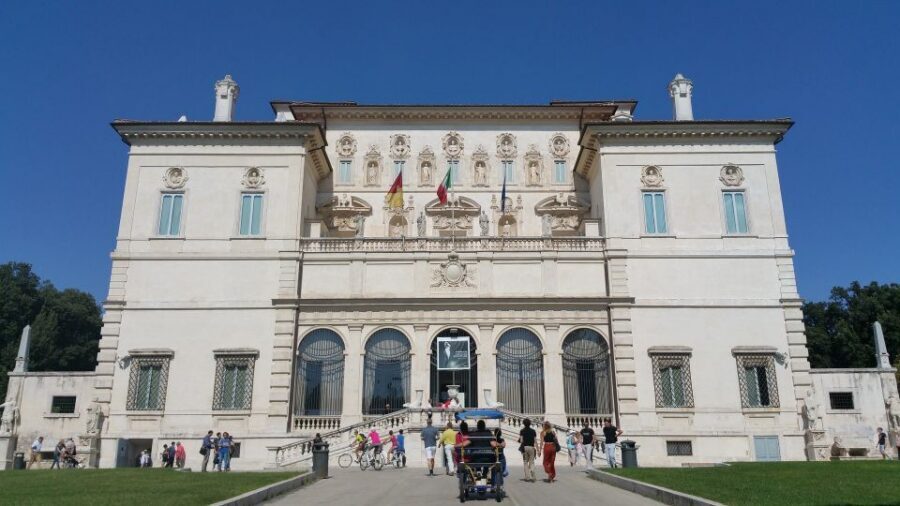
Your meeting point is Piazzale Scipione Borghese, 5. Look for your guide holding a red flag with the Saints Tour logo.
This kind of front-end setup is more important than it sounds. The Borghese area can be busy, and you don’t want to waste your limited museum time hunting for your group. Having a clear landmark and a visible flag also helps if you arrive a few minutes early and want to get settled.
Plan to show up with a simple checklist:
- Bring your passport or ID card
- Travel without luggage or large bags (those aren’t allowed)
- Bring a lightweight layer for indoor temperature swings (no promises, but museums vary)
The tour runs rain or shine, so treat this as a commit-to-your-plan outing. If bad weather slows you down outside, you still want to be ready when the museum moment begins.
Caravaggio highlights: the collection’s dark spotlight
Caravaggio is a big reason people make the trip to the Borghese. And in a guided visit, you don’t just see the famous images—you get help connecting them to the gallery’s wider tone.
In this collection, you’ll find two paintings by Caravaggio called out as key highlights: St John the Baptist and other major works such as Boy with Basket of Fruit, Saint Jerome Writing, and Sick Bacchus. Even if you’ve seen Caravaggio reproductions before, the real paintings tend to hit differently in person because of how directly the figures command attention.
What I like about seeing Caravaggio here with a guide is that the guide’s focus changes your viewing pace. Instead of scanning the scene randomly, you’ll learn what to look for: the contrast between darkness and skin tones, how the subject’s posture pulls your eye, and how Caravaggio’s lighting makes the moment feel close enough to step into.
Caravaggio also pairs well with what comes next. When you’re finished with the paintings, the tour’s switch to Bernini’s sculpture feels like a shift from psychological intensity to physical spectacle. The guided flow matters because it keeps the day coherent.
If you’re a first-time Borghese visitor, you’ll probably walk out feeling like you actually understood the collection’s priorities, not just its biggest names.
Bernini on the move: Proserpine to Apollo and Daphne
Bernini is the sculpture reason most people remember the Borghese long after they’ve left Rome. In this tour, you get to see signature works that show off his range—from early myth and youth to Baroque drama at full volume.
You’ll see Rape of Proserpine. This is the kind of work where your brain starts rotating around the sculpture before your body even catches up. The action is set in stone, but it’s staged like theater—movement implied even when everything is still.
You’ll also see Apollo and Daphne, another standout. Bernini builds tension into the pose and the surrounding “stage,” so even when you’re viewing from a fixed position, the sculpture feels like it’s reacting to you. It’s also a great bridge piece for understanding Bernini’s broader style: the myth becomes believable because the forms look alive.
The gallery’s Bernini collection doesn’t stop at those two. You also have the context of other secular works, including pieces that help chart his development, like early works Goat Amalthea with Child Jupiter and myth scenes including Faun and Aeneas, Anchises and Ascanius. There’s even a mention of David as a seminal Baroque sculpture—useful context if you’re curious how Bernini learned to turn drama into form.
A guide helps you not just spot the names, but understand why the gallery chose these sculptures. Bernini’s secular work here shows how the artist used emotion, motion, and anatomy to make the moment feel present.
The Salone ceiling and room sequence you’ll actually notice
This is where the Galleria Borghese feels different from a typical museum visit. The tour doesn’t treat ceiling frescoes like background decoration. It points them out as part of the experience.
The Salone is the big one. Mariano Rossi’s ceiling fresco uses foreshortening so effectively that it almost looks three-dimensional. The scene depicts Marcus Furius Camillus relieving the siege of the Capitol by the Gauls. That subject matters less than the technique, because once you’ve trained your eyes to read depth in the ceiling, the rest of the gallery starts to look like it was designed as one continuous visual story.
Then you move into a sequence of spaces with their own identity:
- The first room of the Salone is the Chamber of Ceres, featuring a marble vase depicting Oedipus and the Sphinx.
- Another room has a ceiling fresco by Francesco Caccianiga showing the Fall of Phaeton.
- Later, the tour reaches the sculpture-focused rooms, including the stop that includes Bernini’s Apollo and Daphne.
I like this approach because it changes your posture. You stop defaulting to “look straight ahead” museum mode and start scanning ceilings and edges—exactly where the Borghese rewards attention.
If you’re the type who thinks you don’t care about ceilings, this is a good test case. The Borghese ceiling work is not fussy. It’s visual trickery used to tell a story you can feel.
You can also read our reviews of more guided tours in Rome




How the 2 hours are paced (and what you might want to prioritize)
This experience is designed for about 2 hours inside the museum. The flow is built around highlights: you start with the main gallery tour and then focus on the sculpture ground-floor highlights, including the rooms tied to the major Bernini works.
That pacing is both a strength and a constraint.
It’s a strength because:
- you get a curated path through the most iconic objects
- you hear explanations through headsets instead of trying to piece it together
- you don’t spend the whole day lost in art you didn’t know you’d care about
It’s a constraint because you won’t have unlimited time in front of each piece. If you love one artist more than the rest, you should mentally decide in advance which pieces you want to spend extra attention on. For most people, that means building your priority list around Caravaggio’s named highlights (St John the Baptist) and Bernini’s major sculptures (Rape of Proserpine and Apollo and Daphne).
Also, be ready for group movement. A 2-hour plan works best when you treat the visit like a sprint with smart stops, not a drifting stroll.
One note from a scheduling reality check: I’ve seen issues pop up where the actual time in the museum can be shorter than expected. If your day is tightly timed, keep that in mind and plan a little cushion so you don’t feel rushed by the whole schedule.
Price and value: does $94 make sense for the Borghese?
At $94 per person, you’re paying for three things: the entry ticket, a guided visit, and headsets so you can hear the guide clearly. You’re not paying for a fancy extra service like hotel pickup or meals, and that’s fine—you’re already in Rome with lots of great food options that don’t need to be wrapped into the museum cost.
So is it worth it?
In my view, it makes sense if:
- you want to see the biggest Caravaggio and Bernini works without guessing your way through
- you’re happy with a 2-hour run that prioritizes “most important first”
- you value hearing explanations you can’t easily get by reading wall labels quickly
It can feel steep if you’re someone who prefers a fully independent visit and plans to spend most of the day lingering slowly. But even then, the headsets plus guide often pay back your money through time saved and confusion avoided.
There’s also a practical value point: places can get expensive for late availability, and you’ll be better off securing your slot ahead of time. This isn’t just about saving a few dollars—it’s about guaranteeing you get into one of Rome’s most in-demand galleries.
Who should book this guided entry?
This tour works especially well if you:
- love Caravaggio and Bernini and want to hit their biggest strengths in one stop
- want help understanding what you’re seeing, especially with the ceiling fresco techniques and sculpture drama
- don’t want to spend your day coordinating complicated plans inside a famous museum
It’s also a decent choice for families or mixed-age groups. A guide can keep teenagers interested by turning the art into a story with pace, not a lecture with silence. I’ve heard of guides like Silvia delivering a smooth, highlights-focused session for a smaller family group, with plenty of patience.
If you’re traveling with mobility needs, the good news is that the tour is wheelchair accessible.
Should you book this Rome Galleria Borghese tour?
If your goal is the greatest hits—Caravaggio’s intensity, Bernini’s motion, and ceiling fresco artistry that actually changes how you see—then I’d book this.
Do it if you like guided explanations, you’re comfortable with a 2-hour pace, and you’ll travel light (no large bags). Skip it if you’re looking for a slow, self-led wandering day with zero structure.
My bottom line: for most people, the value lands in the combo of ticket access, a guide who keeps the art readable, and headsets that make the tour feel smooth.
FAQ
How long is the Galleria Borghese guided tour?
The tour duration is 2 hours.
What is the price per person?
The price is $94 per person.
Where is the meeting point?
The meeting point is Piazzale Scipione Borghese, 5. Your guide will be holding a red flag with the Saints Tour logo.
What’s included in the experience?
It includes a guide, an entry ticket, and headsets to hear the guide clearly.
What languages are available for the live guide?
The live guide is available in French, Italian, and English.
What’s not included?
Hotel pickup and drop-off, plus food and drinks, are not included.
What do I need to bring, and is there anything I can’t bring?
Bring your passport or ID card. Luggage or large bags are not allowed.
Is it accessible and does it run in rain?
Yes, it is wheelchair accessible, and the tour takes place rain or shine.