REVIEW · MOTORBIKE & SCOOTER RENTALS
Exploring Rome on a Vintage Vespa Adventure Journey
Book on Viator →Bookable on Viator
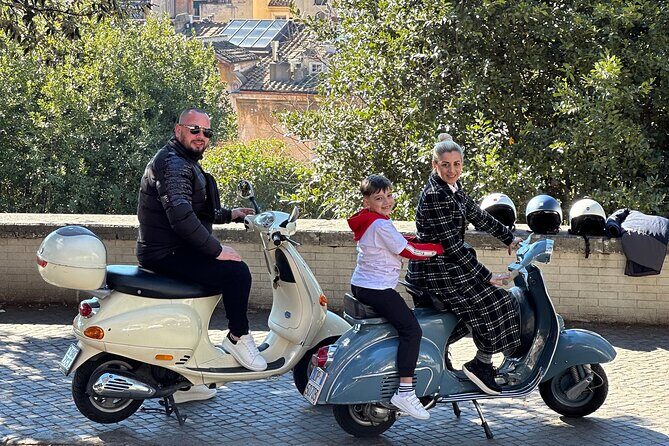
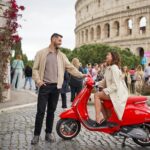
Rome is better on two wheels. This vintage Vespa adventure threads together Rome’s must-sees with real-time stories from a licensed guide—the kind of mix that helps you actually understand what you’re looking at, not just pose in front of it.
I really like two things about this tour: the chance to see famous landmarks and the less-obvious corners you’d miss if you only hop between museums, and the way the stops stay short (about 10 to 20 minutes) so you cover more ground without feeling stuck in one long line. A smart touch is that the guidance is available in English, Spanish, or Italian, so you can follow along closely as you roll from piazza to piazza.
One consideration: you’ll need good weather. If conditions are poor, the experience may be rescheduled or refunded, and you should plan for the fact that a scooter-style outing means you’ll be moving outdoors for the full ride window.
In This Review
- Key highlights worth aiming for
- Why a vintage Vespa fits Rome’s tight streets
- Price and time: what $177.44 gets you (and what it doesn’t)
- Meeting at Piazza di Pasquino and how the route flows
- Pantheon: the oculus light show you can understand fast
- Piazza del Popolo: People’s Square and a church you’ll notice
- Piazza Navona: from Domitian’s stadium to today’s piazza scene
- Trevi Fountain: the biggest Baroque moment, with quick context
- Campo de’ Fiori: markets by day, darker stories by night
- Spanish Steps and Trinità dei Monti: 135 steps with a mission
- Piramide Cestia: a preserved ancient pyramid you can actually spot
- Piazza Venezia to the Colosseum: power, symbolism, and scale
- Circo Massimo and Terrazza del Gianicolo: big spaces for a calmer view
- Trastevere mood and St. Peter’s Square under the colonnades
- Should you book? The best match for you
- FAQ
- How long is the Vespa tour?
- What is the price per person?
- Is a mobile ticket included?
- What languages are available for the live guide?
- What is included in the price?
- Is dinner included?
- Where do you meet for the tour?
- Do the stops require paid admission?
- Is this tour private?
- What happens if the weather is poor?
- FAQ
- When do I receive confirmation after booking?
- What is the cancellation window?
- Do you need to cancel at least 24 hours before?
- What if I cancel less than 24 hours before?
- Can I request changes after booking?
- Is the tour near public transportation?
- Is the tour limited to certain traveler levels?
- What is the tour format at the end?
- What should I bring since snacks are included but not dinner?
- Is English definitely available?
Key highlights worth aiming for
- Narrow-street friendly route: the Vespa format makes tight lanes feel manageable.
- Real-time storytelling: a licensed guide explains what you’re seeing at each stop.
- Big-sight coverage in ~3 hours: short stops keep momentum.
- Language choice on the move: English, Spanish, or Italian live guidance.
- Snack + soda included: a small break that keeps energy up mid-ride.
Why a vintage Vespa fits Rome’s tight streets
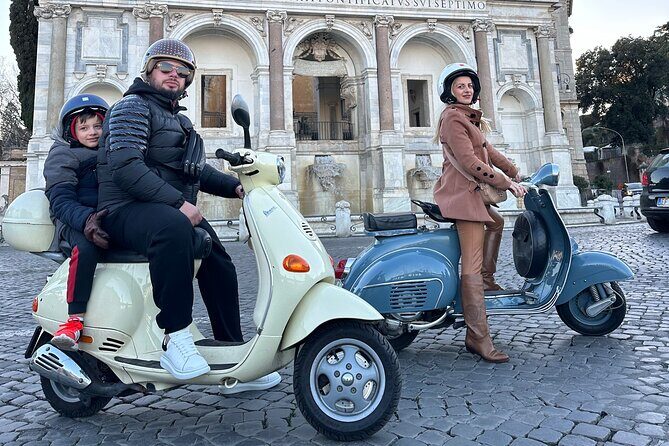
Rome can be stubborn for cars—narrow roads, constant turning, and the simple fact that some streets were designed long before modern traffic. A Vespa approach helps you get a closer, more flexible feel for the city. You’re not just sightseeing from one sidewalk angle; you’re moving through Rome the way locals do, which changes how the city reads.
The best part is the pacing. This is not a “stay forever at one monument” plan. Instead, you get a sequence of landmark stops where your guide can connect the dots while you’re still in the right neighborhood. That matters because Rome is packed: if you wait until the end of the day to ask what something is, your brain has already moved on.
You can also read our reviews of more tours and experiences in Rome

Price and time: what $177.44 gets you (and what it doesn’t)
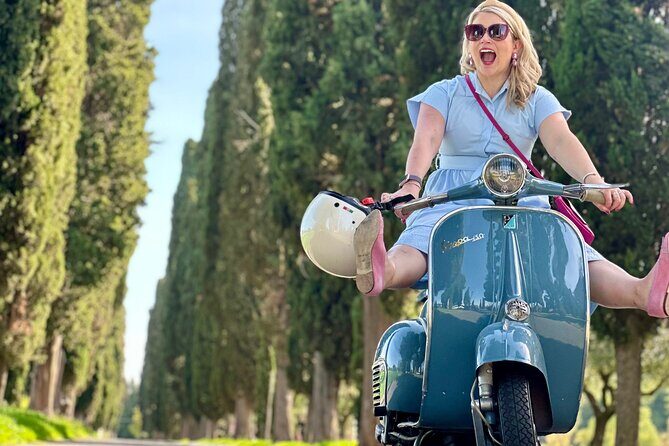
At $177.44 per person for about 3 hours, you’re paying for three things at once: guided narration, transportation by Vespa, and quick access stops at major sites. You also get snacks and soda/pop, which sounds small until you realize Rome days often run long, and hunger can wreck your attention fast.
What’s not included is dinner. That’s not a dealbreaker, but it does shape how you plan your evening. If you want a relaxed night after the ride, you’ll usually be better off booking something closer to your appetite rather than expecting the tour to cover food later.
Meeting at Piazza di Pasquino and how the route flows
Your tour starts at Piazza di Pasquino, 1, 00186 Roma RM and ends back at the meeting point. That “back to base” design is practical in a city where getting back across neighborhoods can be annoying—especially if your timing is tight.
The route you’ll experience is a sweep through classic Rome layers: ancient monuments, major piazzas, and viewpoints that change the perspective of the city. The stop durations are fairly compact—often 10 to 20 minutes—so think of each one as a guided “hit” rather than a slow self-guided crawl.
Pantheon: the oculus light show you can understand fast
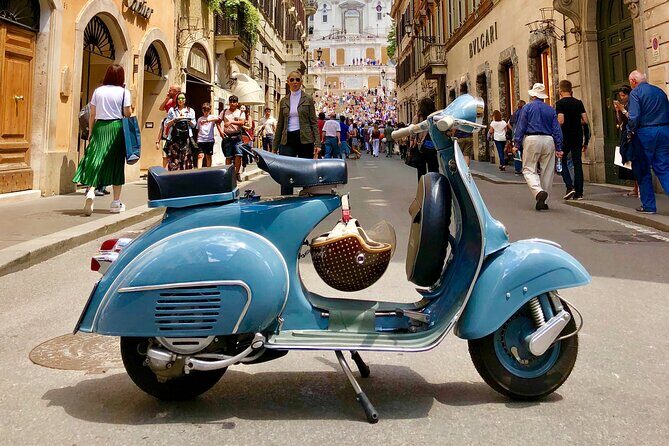
The Pantheon stop is built around one of ancient Rome’s clearest visual ideas: the oculus—the open center at the top. It’s not just a design feature; it’s the reason the interior light feels dramatic even when you’re standing there for a short time.
The tour lists the Pantheon as free admission for this visit, and the time window is about 20 minutes. That’s enough to take in the geometry, spot the main architectural cues, and get your guide’s explanation of how this building became one of the best-preserved ancient structures in Rome.
Possible downside: the Pantheon is famous, so even on a short stop, it can be visually busy. The guide’s job is to help you focus—so follow along and don’t let yourself get pulled into random photo detours.
Piazza del Popolo: People’s Square and a church you’ll notice
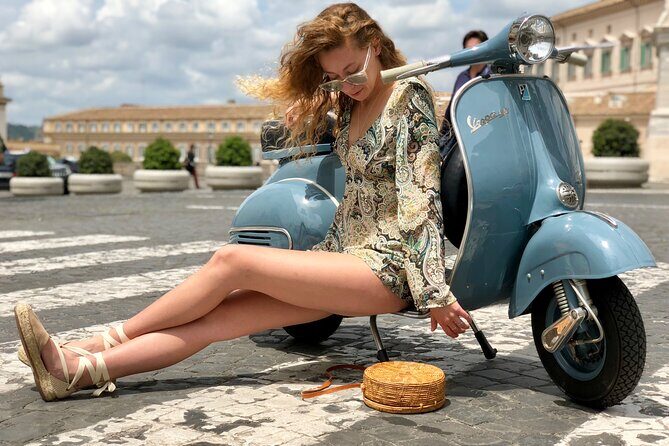
Piazza del Popolo is labeled “People’s Square,” but the name connects to older roots—poplars linked to Latin populus and Italian pioppo. It’s one of those piazzas that works as a mental reset between big monuments.
Your time here is about 10 minutes, with free admission for the stop. This short window is perfect for getting the “map” in your head: you’ll understand why the square is positioned the way it is and how it ties into the city’s broader flow.
You can also read our reviews of more tours and experiences in Rome
Piazza Navona: from Domitian’s stadium to today’s piazza scene
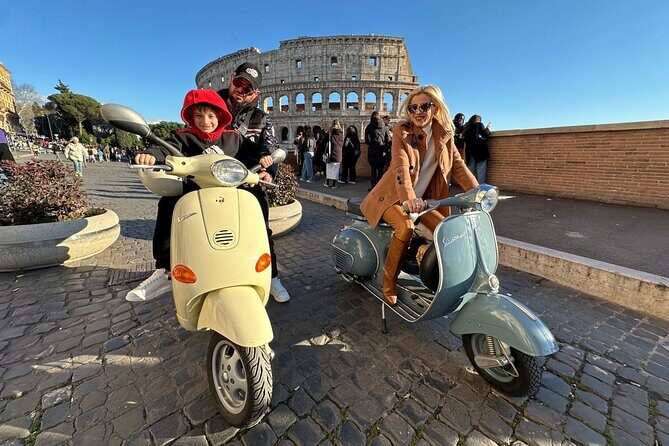
Next comes Piazza Navona, a spot that feels like a theater set because the layout is so specific. The tour notes that this area was the Stadium of Domitian, built in 85 AD, later restored in the 3rd century, and built to hold around 30,000 spectators.
Here’s the practical value: when you see the piazza’s shape with that context, it stops being just “a pretty square.” It becomes a visible reminder that Roman entertainment and Roman civic life overlapped. Your time is about 20 minutes, again with free admission listed.
Trevi Fountain: the biggest Baroque moment, with quick context
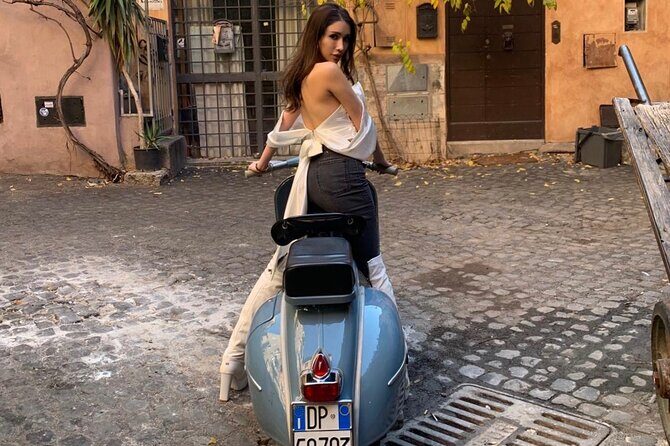
Fontana di Trevi is one of those places you’ve probably seen in photos. What you gain with a guided short stop is a better sense of why it’s so iconic: the tour details it as the largest Baroque fountain in the city and completed in 1762, with Nicola Salvi as designer and Giuseppe Pannini among those who carried it forward.
You’ll have about 15 minutes and free admission listed. That’s enough for the classic viewing angles and for hearing the story of how this fountain became a centerpiece of Rome’s “look here” energy.
Tip for your own comfort: keep your expectations realistic. You’re not going to read every detail from the center in 15 minutes. Your job is to enjoy the scene, then let the guide point out the key features worth remembering.
Campo de’ Fiori: markets by day, darker stories by night
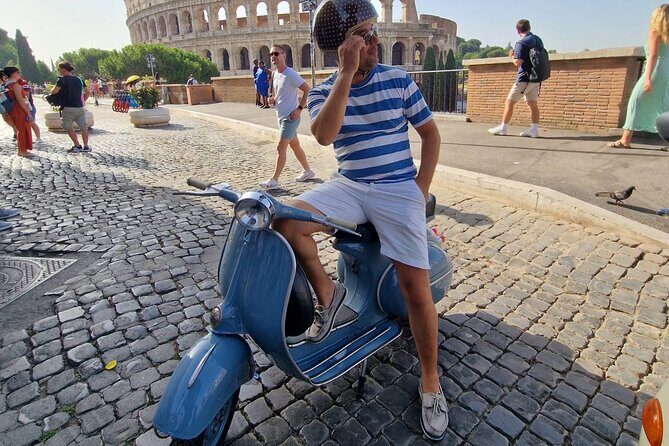
Campo de’ Fiori sits between Piazza Navona and Piazza Farnese and is known for its market atmosphere—flowers, fruit, meat, and fish from wooden stalls. The tour also doesn’t sugarcoat the square’s past: it mentions executions there, including the burning of philosopher and monk Giordano Bruno in 1600 for heresy.
Time here is about 15 minutes with free admission listed. This stop is a good “balance break” because it’s not just monument spotting. It’s everyday Rome—how people shop, snack, and wander.
A key consideration: the square’s energy can feel intense at peak times. Since your stop is short, you’ll get more out of it if you don’t try to do everything at once. Watch what’s happening, listen to the guide’s framing, and decide quickly what you want to photograph.
Spanish Steps and Trinità dei Monti: 135 steps with a mission
The Piazza di Spagna area centers on the Spanish Steps, climbing between Piazza di Spagna and Piazza Trinità dei Monti. The tour notes the stairway has 135 steps and links the church of Trinità dei Monti at the top with the Spanish Embassy to the Holy See near the bottom.
You’ll have about 15 minutes here with free admission listed. Even in that brief time, it’s a strong viewpoint stop because the steps give you a sense of Rome’s vertical rhythm. If you’re planning your day, this is the place to slow down for a moment and actually look across the city lines.
Piramide Cestia: a preserved ancient pyramid you can actually spot
Most people know Rome for temples and coliseums. Few expect a pyramid. Piramide Cestia is described as an ancient Roman pyramid built as a tomb for Gaius Cestius, styled in a way compared to Nubian pyramids, and positioned at a fork between ancient roads.
This is a great stop for your “Rome has surprises” file. Time is about 15 minutes with free admission listed. The guide’s storytelling helps too, because the reason it survives so well is tied to how it was incorporated into city fortifications.
If you’re the type who likes off-the-main-route sights, this is one of the moments you’ll appreciate.
Piazza Venezia to the Colosseum: power, symbolism, and scale
The tour includes Piazza Venezia, where you’ll see Monumento a Vittorio Emanuele II—also called Altare della Patria. The details in the tour notes are impressive: started in 1885 by Giuseppe Sacconi, completed in 1911, and tied to the crypt where the Unknown Soldier was buried in 1921.
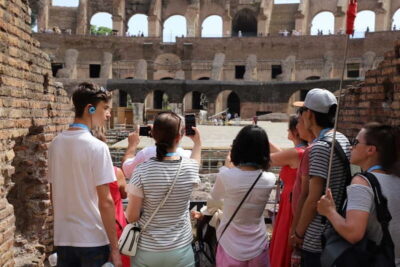
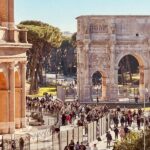
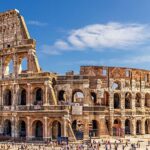
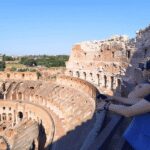
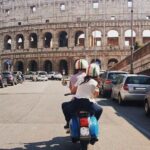
Then the route moves to the Colosseum, with construction beginning under Vespasian and completed in 80 AD under Titus. The tour also notes later modifications under Domitian and identifies the site as the Flavian Amphitheatre.
Time here is about 20 minutes at the Colosseum, with free admission listed for the stop. You won’t get a full museum-level experience in that window. But you will get something useful: a guided frame that helps you read the building’s purpose and scale without losing the bigger picture.
Circo Massimo and Terrazza del Gianicolo: big spaces for a calmer view
Circo Massimo is next—an ancient chariot-racing stadium and entertainment venue between the Aventine and Palatine hills. The tour describes it as the first and largest stadium in ancient Rome, built for a crowd estimated at over 150,000 people, and notes it’s now a public park used for events and festivals.
You’ll have about 10 minutes here, free admission listed. Short stop, big payoff. It’s one of the best places to reset your eyes after dense monument viewing.
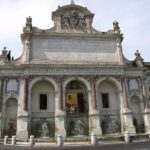
Then you’ll head to Terrazza del Gianicolo, part of the Janiculum (Janiculan Hill) area. The tour notes it’s the second-tallest hill in contemporary Rome and includes the Baroque Fontana dell’Acqua Paola built by Pope Paul V. Time is about 20 minutes, free admission listed.
This is where you feel the city’s size. Use the time to step back and look over the neighborhoods rather than only snapping photos of stone details.
Trastevere mood and St. Peter’s Square under the colonnades
Between the sights, the tour also captures the vibe of Trastevere—defined by narrow cobbled streets, ancient houses, and a night-time pull from pubs and restaurants. The tour description also adds a historical note: across the Tiber, the area once known as Ripa Etrusca had limited connection to the rest of Rome, with only a small wooden bridge called Pons Sublicius.
This part matters because it keeps your day from feeling like a checklist. It gives Rome a human pace, even if you only experience it briefly.
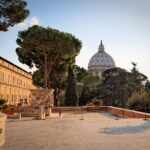
Then you arrive at St. Peter’s Basilica and St. Peter’s Square. The tour highlights the Vatican obelisk, the Bernini-designed colonnades, and the idea that the square embraces visitors in the “maternal arms” of the Church. Time is about 15 minutes, free admission listed.
Practical takeaway: St. Peter’s Square is huge. In a short stop, you’ll get the best value if you focus on the main compositional elements your guide points out, rather than trying to see everything at once.
Should you book? The best match for you
I’d book this tour if you want to see Rome with momentum and context—a guided Vespa ride that hits the iconic monuments while still giving time for piazza corners and side streets. It’s especially a good fit if this is your first serious Rome day (or your second time and you still want a fresh angle), because the route is set up to help you connect each place to the next.
I’d think twice if you hate being outdoors for long stretches, since the experience requires good weather. And if you’re hoping for slow, linger-at-one-place touring, the short stop format may feel fast.
If you do book, I’d choose it with a simple plan: wear comfortable clothes for riding, bring a phone camera that can handle crowds, and use the guide’s live language options so you actually understand what you’re looking at instead of just nodding along.
FAQ
How long is the Vespa tour?
The tour lasts about 3 hours.
What is the price per person?
The price is $177.44 per person.
Is a mobile ticket included?
Yes, the tour includes a mobile ticket.
What languages are available for the live guide?
The guide is available in English, Spanish, and Italian.
What is included in the price?
Included are snacks, soda/pop, and a licensed guide.
Is dinner included?
No, dinner is not included.
Where do you meet for the tour?
The meeting point is Piazza di Pasquino, 1, 00186 Roma RM, Italy.
Do the stops require paid admission?
Admission tickets are listed as free for the stops included in the itinerary.
Is this tour private?
Yes, it’s private. Only your group will participate.
What happens if the weather is poor?
The experience requires good weather. If it’s canceled due to poor weather, you’ll be offered a different date or a full refund.
FAQ
When do I receive confirmation after booking?
Confirmation is received within 48 hours of booking, subject to availability.
What is the cancellation window?
You can cancel for free up to 24 hours in advance for a full refund.
Do you need to cancel at least 24 hours before?
Yes. To receive a full refund, you must cancel at least 24 hours before the experience’s start time.
What if I cancel less than 24 hours before?
If you cancel less than 24 hours before, the amount paid is not refunded.
Can I request changes after booking?
Changes made less than 24 hours before the start time will not be accepted.
Is the tour near public transportation?
Yes, it’s near public transportation.
Is the tour limited to certain traveler levels?
Most travelers can participate.
What is the tour format at the end?
The activity ends back at the meeting point.
What should I bring since snacks are included but not dinner?
Plan to have dinner on your own after the tour, since dinner is not included.
Is English definitely available?
Yes, it’s offered in English, and live guidance is also available in Spanish and Italian.