REVIEW · COFFEE EXPERIENCES
Rome: Highlights Vespa Sidecar Tour with Coffee and Gelato
Book on GetYourGuide →Operated by Romaround Tours · Bookable on GetYourGuide
Rome feels different at Vespa speed.
This 3-hour Vespa sidecar tour threads the needle between must-see landmarks and calmer backstreets, so you get that Rome-wide sense of where things actually sit. I especially like how the ride keeps you moving with just enough context at each stop, and I like the included coffee/tea and gelato breaks that make the day feel easy, not rushed.
One thing to keep in mind: it’s designed for short photo stops and quick looks, so if you’re the type who likes to linger for 45 minutes per sight, you may wish you had a second day for on-your-own exploring.
In This Review
- Key highlights to look for
- Where your Rome adventure starts: Piazza di S. Marco and the Vespa setup
- Piazza Venezia to the Colosseum: seeing Rome’s “wow” factor from the road
- Baths of Caracalla and the Pyramid of Cestius: the stops that feel less touristy
- Aventine Hill and Giardino degli Aranci: where the day slows down
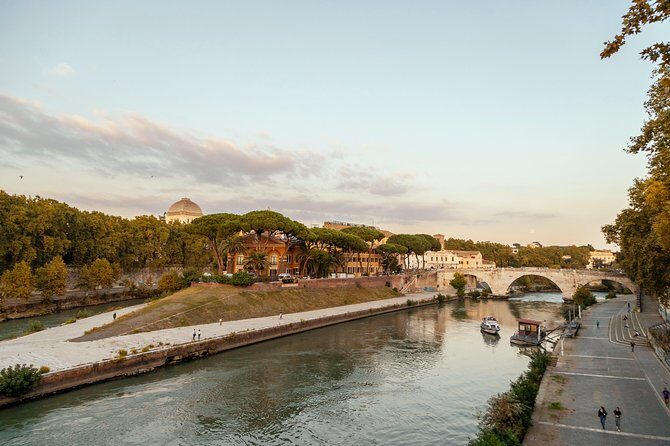
- Circus Maximus to Trastevere: coffee, time to wander, and the Rome mood shift
- Janiculum Hill and Fontanone: the panoramic finish that lands
- The Vespa sidecar ride: what it feels like and who it suits best
- Coffee and gelato breaks that actually matter
- Price and value: why $141.61 can feel fair (if this is your style)
- If you get motion sickness, plan smart
- Should you book this Rome Vespa sidecar tour?
- FAQ
- Where is the tour meeting point and where does it end?
- How long is the Rome Vespa sidecar highlights tour?
- What is included in the price?
- What languages are the guides available in?
- What happens if it rains?
- How does the sidecar seating work for couples and solo travelers?
- Are there limits on who can participate?
Key highlights to look for
- Piazza di S. Marco (48) meetup that’s easy to find and gives you a central start/end point
- Colosseum-area photo time paired with real street-level context from the guide
- Orange Tree Garden (Giardino degli Aranci) for a hilltop reset and wide Rome views
- Trastevere break with coffee and time to snack while the city feels like the city
- Janiculum Hill + Fontanone views to close with panoramas instead of just more monuments
Where your Rome adventure starts: Piazza di S. Marco and the Vespa setup
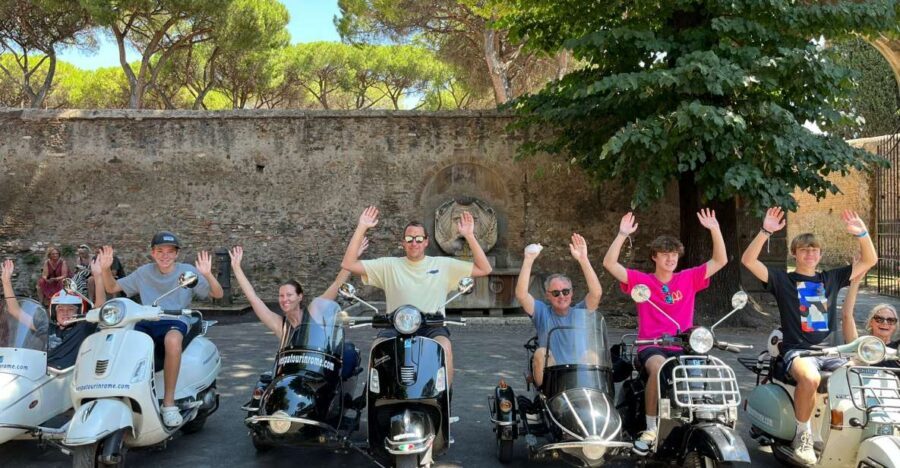
You meet at Piazza di S. Marco, 48, and yes, you’ll spot the vespa sidecars waiting right there. The experience is run rain or shine, and you’ll get ponchos if the weather turns wet, which matters in Rome where plans can flip fast.
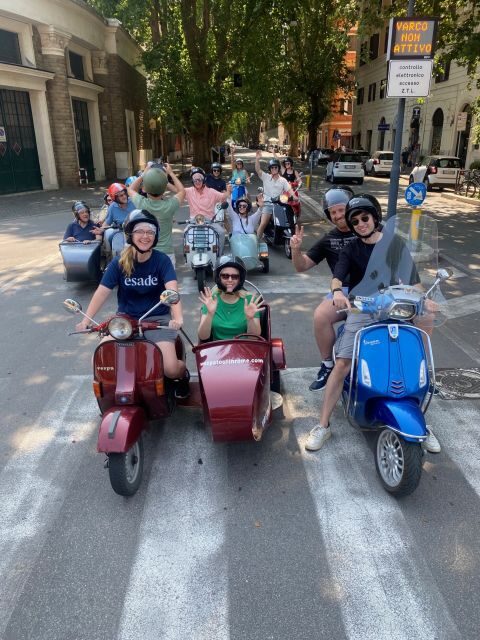
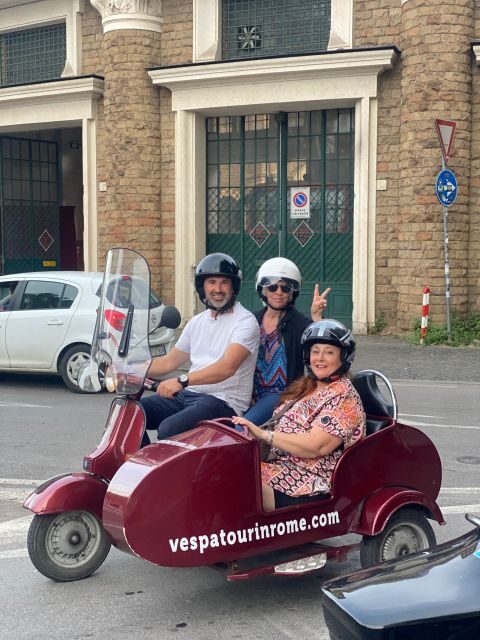
Your ride is built around the sidecar format: one Vespa sidecar fits 2 guests (one passenger rides behind the driver, and one sits in the sidecar). If your group has an odd number, they add a second Vespa; if you’re solo, you ride on a single Vespa with the driver. Everyone gets a helmet, which is a small detail that keeps the whole thing feeling practical and safe.
If you want this to feel comfortable, wear flat, grippy shoes and skip anything bulky. The tour doesn’t allow high-heeled shoes, large luggage, walking sticks, or crutches—so plan for a light bag day.
You can also read our reviews of more tours and experiences in Rome.



Piazza Venezia to the Colosseum: seeing Rome’s “wow” factor from the road
After you roll out from Piazza di S. Marco, the tour hits Piazza Venezia first for a scenic drive segment (about half an hour). This is useful because it gives you a sense of orientation before you start stacking monuments one after another.
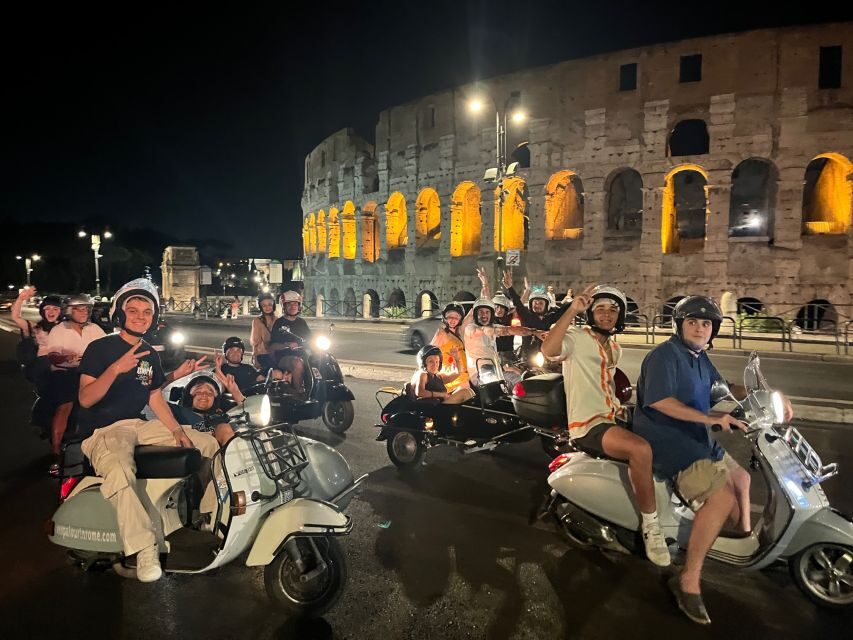
Then comes the big one: the Colosseum stop. You’ll get guided time plus a photo stop—around 15 minutes—with viewpoints along the way as you travel. What I like about the Vespa format here is that you’re not stuck in one angle. You see how Rome’s scale works, how streets funnel traffic around ancient landmarks, and how quickly the city can change from monumental to residential.
A fair consideration: 15 minutes sounds short because it is short. But that’s the point—this isn’t a museum marathon. It’s an efficient way to get the key sights on your mental map, so your later self-guided exploring makes more sense.
Baths of Caracalla and the Pyramid of Cestius: the stops that feel less touristy
Next up, you pass the Baths of Caracalla for a photo stop with guided commentary (about 10 minutes). The timing works because you don’t waste an hour shuffling around in crowds. You get the visual moment, the story beats, and then you’re back moving.
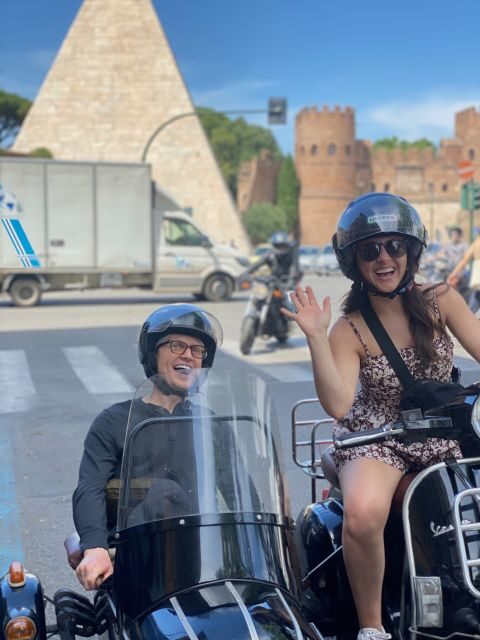
Right after that, the tour heads to the Pyramid of Cestius. You’ll get another photo stop plus some guided time (around 10 minutes). This is one of those Rome landmarks that looks “wrong” in the best way—geometric and memorable—and it tends to stick in your head because it’s not as common on standard highlight routes.
The drawback to know: these are quick stops. You’ll likely take photos and learn the basics, but you won’t have the kind of time that lets you wander slowly or read everything in-depth. If your goal is depth, you’ll want to pair this with a longer visit later.
Aventine Hill and Giardino degli Aranci: where the day slows down
A big reason this tour earns repeat praise is the balance between major sights and hilltop quiet. You climb toward Aventine Hill, then you pause at Giardino degli Aranci (Orange Tree Garden).
You’ll have about 15 minutes of break time and photo moments here, plus guided context. I like this part because it gives your body a rest from traffic heat and constant street movement. It also gives you wide views of Rome in a way that feels calmer than the Colosseum area—less “spotlight,” more “big picture.”
If you’re sensitive to motion or standing, note that the timing is short enough that you can enjoy the view without turning it into a workout. Still, this is a hilly ride, so expect that Rome’s terrain comes through during the transfer.
Circus Maximus to Trastevere: coffee, time to wander, and the Rome mood shift
From the Aventine area, you ride past Circus Maximus with guided touring and scenic drive time. It’s one of those landmarks where the area can feel surprisingly open, and seeing it from the road helps you understand its size in context.
Then the mood changes again when you reach Trastevere. Here you get a break (about 20 minutes) with coffee and free time, plus a food tasting element. Since the tour includes gelato and coffee/tea, this stop is where that “simple reward” feeling clicks—sit, sip, and let Rome’s energy catch up with your brain.
What to do in that short window: treat it like a reset. Walk a little, take a couple photos, and then come back ready for the next climb. Don’t cram every side street into 20 minutes—this is Rome, not a checklist.
You can also read our reviews of more tours and experiences in Rome

Janiculum Hill and Fontanone: the panoramic finish that lands

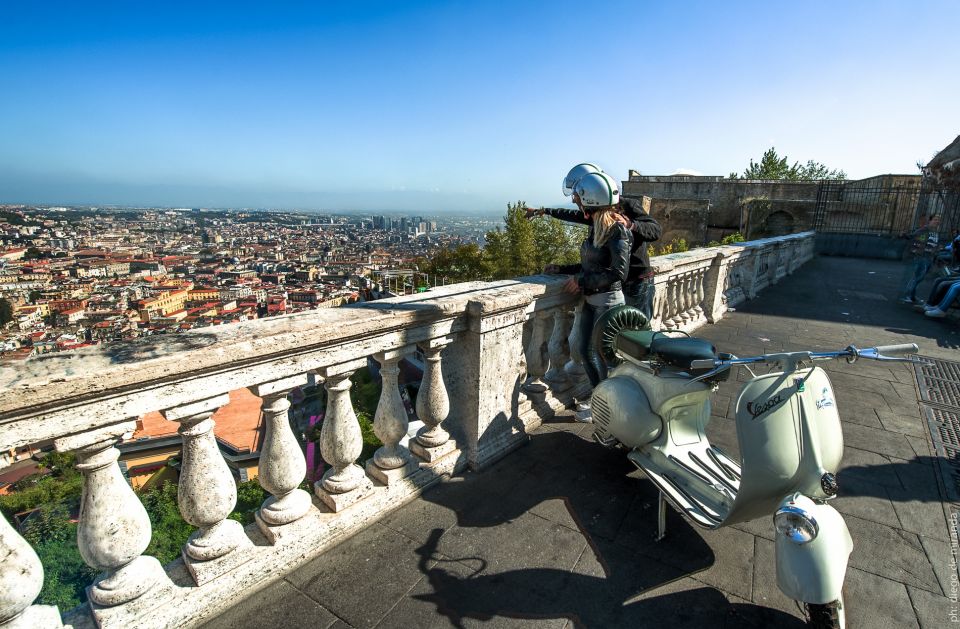
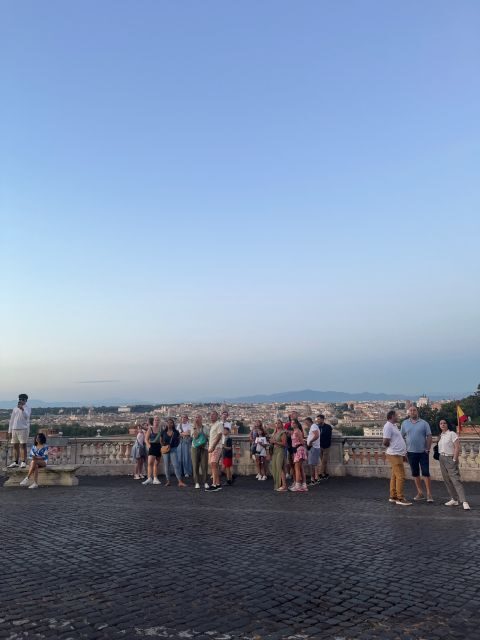
To close, the tour heads to Janiculum Hill. You’ll have guided photo stop time and scenic views on the way (about 15 minutes), finishing with views from Fontanone.
This is a smart design move. Instead of ending with another monument stop, you end with panoramas—so your brain leaves Rome with a map, not just pictures. I like hilltop endings because they make distances feel real and help you understand why some viewpoints are worth the climb.
You also end back where you started: Piazza di S. Marco, 48. That matters. You’re not stranded across town, and you can keep exploring without burning more time on transit.
The Vespa sidecar ride: what it feels like and who it suits best
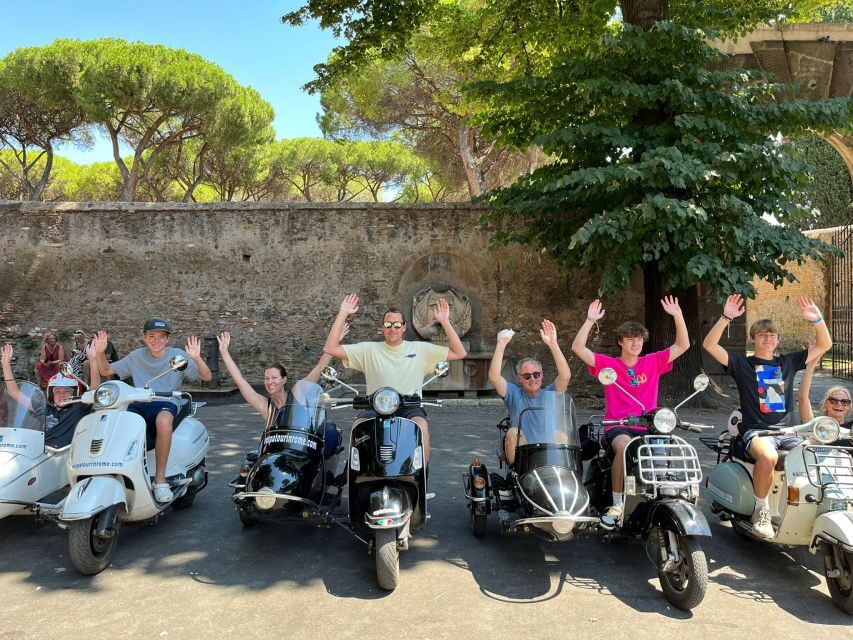
This tour is built for people who want to see Rome without spending the whole day on foot. The best description is simple: you get the speed of a car, the open-air fun of a scooter, and the guided context of a walking tour—without the long legs part.
The hilly routes can feel a bit like a roller-coaster, especially when you’re doing the climb-and-descend rhythm of Rome. That’s fun for many people. For others, it can be a bit much if you’re very motion-sensitive.
A quick reality check on fit:
- Max weight is 220 lbs / 100 kg per participant
- The tour isn’t suitable for children under 5
- You’ll need closed-toe, flat shoes (high heels are not allowed)
- Plan for no large bags or luggage
- Bring layers if you’re riding in cooler weather, since it’s outdoors and you’ll get exposed on the move (ponchos are provided if it rains)
And because the sidecar holds two guests, it’s also great for couples or friends who want to experience the ride together. You can even switch who’s riding where if the setup allows it within your group, which tends to make people feel like they got the full Vespa moment.
Coffee and gelato breaks that actually matter
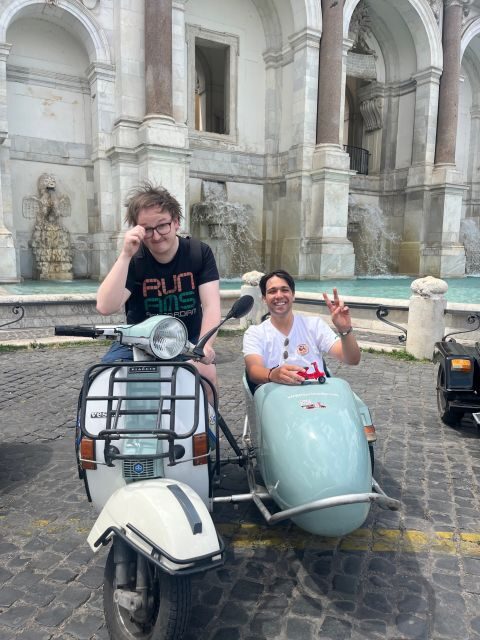
Yes, it’s part of the ticket price. But it’s also part of the flow. Having coffee/tea and gelato included keeps energy up during the climbs and helps the day feel like an enjoyable outing rather than a sightseeing sprint.
In Trastevere, the break is timed so you can enjoy the neighborhood while you still have daylight for photos. And that gelato moment tends to be a highlight for people because it feels like Rome’s culture, not just a tourist perk.
If you’re someone who gets hangry between monuments, this is one of the smartest things about this tour. You don’t have to find a café, negotiate a stop, and then hope it lines up with your next ride segment.
Price and value: why $141.61 can feel fair (if this is your style)
At $141.61 per person for a 3-hour guided Vespa sidecar experience, you’re paying for more than a view. You’re paying for:
- a live guide (English and Spanish available)
- a professional driver
- Vespa transportation for a route that would be time-consuming and hard to stitch together on your own
- helmet use
- coffee/tea and gelato included
That combination is what makes the price feel reasonable. You’re not just paying for access to landmarks—you’re paying for efficient movement between areas that are far apart and for a guide who explains what you’re seeing while you ride.
Where it’s best value: if you want a fast orientation of Rome, a story-driven route, and you’d rather spend your legs exploring later on your own schedule. It’s also a strong option when you want the big hits without paying the opportunity cost of long walks in the heat.
If you get motion sickness, plan smart
This isn’t in the rules, but it affects comfort. The ride includes hills and street turns. If you’re prone to motion sickness, consider taking precautions before you meet. Stick to light snacks before the tour if heavy meals upset your stomach.
Also, be ready for outdoor time even when you’re not walking. The ponchos help with rain, but they won’t make you warm if it’s cold. Layers are your friend.
Should you book this Rome Vespa sidecar tour?
Book it if you want:
- an efficient Rome overview in 3 hours
- famous landmarks plus streets and views that feel more personal
- a break-friendly plan with coffee and gelato
- a fun way to do hills without turning the day into a leg day
Skip it if you want to linger at one site for a long time, or if you strongly dislike moving vehicle rides. Also take the restrictions seriously—no large bags, no walking aids, and the 220 lbs / 100 kg limit.
FAQ
Where is the tour meeting point and where does it end?
You meet at Piazza di S. Marco, 48 and the tour ends back at the same location.
How long is the Rome Vespa sidecar highlights tour?
The tour lasts 3 hours.
What is included in the price?
It includes a guide, a driver, Vespa transportation, a helmet, and coffee or tea plus gelato.
What languages are the guides available in?
The live tour guide is available in English and Spanish.
What happens if it rains?
The tour runs rain or shine, and you’re provided with ponchos if it’s raining.
How does the sidecar seating work for couples and solo travelers?
One Vespa sidecar is for 2 guests (one passenger rides behind the driver; the other sits in the sidecar). If you’re solo, you’ll ride on a single Vespa with the driver. If there’s an odd number of guests, an extra Vespa is added.
Are there limits on who can participate?
The tour is not suitable for children under 5 and the max weight is 220 lbs / 100 kg. It also doesn’t allow high-heeled shoes, luggage or large bags, walking sticks, or crutches.